Results by title
89 books match the query 'Interpersonal relations' and 4 start with a
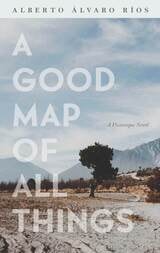
A Good Map of All Things
A Picaresque NovelAlberto Álvaro Ríos
University of Arizona Press, 2020
In Alberto Álvaro Ríos’s new picaresque novel, momentous adventure and quiet connection brings twenty people to life in a small town in northern Mexico. A Good Map of All Things is home to characters whose lives are interwoven but whose stories are their own, adding warmth and humor to this continually surprising communal narrative. The stories take place in the mid-twentieth century, in the high desert near the border—a stretch of land generally referred to as the Pimería Alta—an ancient passage through the desert that connected the territory of Tucson in the north and Guaymas and Hermosillo in the south. The United States is off in the distance, a little difficult to see, and, in the middle of the century, not the only thing to think about. Mexico City is somewhere to the south, but nobody can say where and nobody has ever seen it.
Ríos has created a whimsical yet familiar town, where brightly unique characters love fiercely and nurture those around them. The people in A Good Map of All Things have secrets and fears, successes and happiness, winters and summers. They are people who do not make the news, but who are living their lives for the long haul, without lotteries or easy answers or particular luck. Theirs is the everyday, with its small but meaningful joy. Whether your heart belongs to a small town in Mexico or a bustling metropolis, Alberto Álvaro Ríos has crafted a book that is overflowing with comfort, warmth, and the familiar embrace of a tightly woven community.
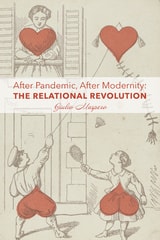
After Pandemic, After Modernity
The Relational RevolutionGiulio Maspero
St. Augustine's Press, 2022
Without Trinitarian framework ancient and new idols emerge, as the Covid-19 tragedies have shown. Yet post-pandemic must be a moment of clarity and realism, as we can see how necessary it is that humanity place itself in relation to something beyond. The post-modern journey, however, must be in the spirit of Christian humanism or else any so-called progress will no longer be unable to speak authentically of our humanity. That is to say, the relational dimension of human life will be erased right along with the other ills that plague our earth.

After the End of History
The Curious Fate of American MaterialismRobert E. Lane
University of Michigan Press, 2005
--David O. Sears, Professor of Psychology and Political Science, UCLA
"Lane's deep knowledge of the sources of human happiness enables him to develop a powerful critique of economic theory."
---Robert A. Dahl, Sterling Professor Emeritus of Political Science, Yale University
Robert E. Lane is the Eugene Meyer Professor Emeritus of Political Science at Yale University. His previous publications include The Loss of Happiness in Market Democracies (2000) and The Market Experience (1991).
Aging in the Church
How Social Relationships Affect HealthNeal M. Krause
Templeton Press, 2008
A growing number of studies indicate that older people in the church form social ties that have a significant positive impact on their physical and mental health. In Aging in the Church, Neal Krause comprehensively assesses the various relationships that stem from church involvement.
Among the many types of relationships Krause explores are close companion friendships, social-support structures (such as assistance provided by fellow church members during difficult times), and interactions that arise from Bible study and prayer groups. Through his thorough investigation of the underlying links between these relationships and the ways they relate to attributes like forgiveness, hope, gratitude, and altruism, the author hopes to explain why older adults who are involved in religious activities tend to enjoy better physical and mental health than those who are not engaged in religious communities. Going beyond merely reviewing the existing research on this subject, Aging in the Church provides a blueprint for taking research on church-based social relationships and health to the next level by identifying conceptual and methodological issues that investigators will confront as they delve more deeply into these connections.
Though these are complex issues, readers will find plain language and literature drawn from a wide array of disciplines, including sociology, psychology, public health, medicine, psychiatry, nursing, social work, gerontology, and theology. Literature, poetry, philosophy, and ethical ideas supplement the insights from these diverse fields. As a result, Aging in the Church takes on a genuinely interdisciplinary focus that will appeal to various scholars, researchers, and students.