Results by title
100 books match the query 'Kings and rulers' and 12 start with a
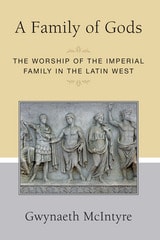
A Family of Gods
The Worship of the Imperial Family in the Latin WestGwynaeth McIntyre
University of Michigan Press, 2016
Roman politics and religion were inherently linked as the Romans attempted to explain the world and their place within it. As Roman territory expanded and power became consolidated into the hands of one man, people throughout the empire sought to define their relationship with the emperor by granting honors to him. This collection of practices has been labeled “emperor worship” or “ruler cult,” but this tells only half the story: imperial family members also became an important part of this construction of power and almost half of the individuals deified in Rome were wives, sisters, children, and other family members of the emperor.
In A Family of Gods, Gwynaeth McIntyre expands current “ruler cult” discussions by including other deified individuals, and by looking at how communities in the period 44 BCE to 337 CE sought to connect themselves with the imperial power structure through establishing priesthoods and cult practices. This work focuses on the priests dedicated to the worship of the imperial family in order to contextualize their role in how imperial power was perceived in the provincial communities and the ways in which communities chose to employ religious practices. Special emphasis is given to the provinces in Gaul, Spain, and North Africa.
This book draws on epigraphic evidence but incorporates literary, numismatic, and archaeological evidence where applicable. It will be of interest to scholars of Roman imperial cult as well as Roman imperialism, and religious and political history.
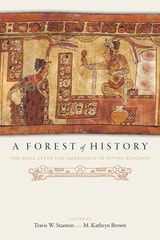
A Forest of History
The Maya after the Emergence of Divine KingshipTravis W. Stanton
University Press of Colorado, 2020
These original papers present new, cutting-edge research focusing on the social changes leading up to the spread of divine kingship across the lowlands in the first part of the Early Classic. The contributors continue avenues of inquiry such as the timing of the Classic Maya collapse across the southern lowlands, the nature of Maya warfare, the notion of usurpation and “stranger-kings” in the Classic period, the social relationships between the ruler and elite of the Classic period Yaxchilán polity, and struggles for sociopolitical dominance among the later Classic period polities of Chichén Itzá, Cobá, and the Puuc kingdoms.
Many of the interpretations and approaches in A Forest of Kings have withstood the test of time, while others have not; a complete understanding of the Classic Maya world is still developing. In A Forest of History recent discoveries are considered in the context of prior scholarship, illustrating both the progress the field has made in the past quarter century and the myriad questions that remain. The volume will be a significant contribution to the literature for students, scholars, and general readers interested in Mesoamerican and Maya archaeology.
Contributors:
Wendy Ashmore, Arlen F. Chase, Diane Z. Chase, Wilberth Cruz Alvarado, Arthur A. Demarest, Keith Eppich, David A. Freidel, Charles W. Golden, Stanley P. Guenter, Annabeth Headrick, Aline Magnoni, Joyce Marcus, Marilyn A. Masson, Damaris Menéndez, Susan Milbrath, Olivia C. Navarro-Farr, José Osorio León, Carlos Peraza Lope, Juan Carlos Pérez Calderón, Griselda Pérez Robles, Francisco Pérez Ruíz, Michelle Rich, Jeremy A. Sabloff, Andrew K. Scherer, Karl A. Taube
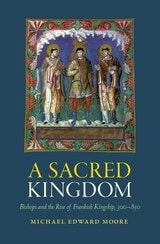
A Sacred Kingdom
Bishops and the Rise of Frankish Kingship, 300-850Michael Edward Moore
Catholic University of America Press, 2011
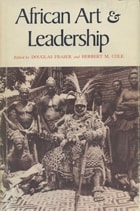
African Art and Leadership
Edited by Douglas Fraser and Herbert M. Cole
University of Wisconsin Press, 1972

African Royal Court Art
Michèle Coquet
University of Chicago Press, 1998
More than ornamentation, royal objects embodied the strength and status of African rulers. The gold-plated stools of the Ashanti, the delicately carved ivory bracelets of the Edo-these objects were meant not simply to adorn but to affirm and enhance the power and prestige of the wearer. Unlike the abstract style frequently seen in African ritual art, realism became manifest in courtly arts. Realism directly linked the symbolic value of the object-a portrait or relief-with the physical person of the king. The contours of the monarch's face, his political and military exploits rendered on palace walls, became visual histories, the work of art in essence corroborating the ruler's sovereign might.
Richly illustrated and wonderfully detailed, Coquet's influential volume offers both a splendid visual presentation and an authoritative analysis of African royal arts.
"[This] beautiful and exciting book emphasizes the skillful court art of the Benin, Dahomey, and the Kongo. A very interesting and unusual approach to the art of the continent that has been too easily situated 'outside of history.'"—Le Figaro
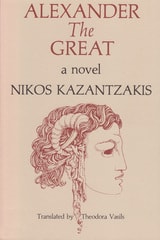
Alexander The Great
A NovelNikos Kazantzakis
Ohio University Press, 1982
Nikos Kazantzakis is no stranger to the heroes of Greek antiquity. In this historical novel based on the life of Alexander the Great, Kazantzakis has drawn on both the rich tradition of Greek legend and the documented manuscripts from the archives of history to recreate an Alexander in all his many-faceted images—Alexander the god; Alexander the descendant of Heracles performing the twelve labors; Alexander the mystic, the daring visionary destined to carry out a divine mission; Alexander the flesh-and-blood mortal who, on occasion, is not above the common soldier’s brawling and drinking.
The novel, which resists the temptation to portray Alexander in the mantle of purely romantic legend, covers his life from age fifteen to his death at age thirty-two. It opens with Alexander’s first exploit, the taming of the horse, Bucephalas, and is seen in great part through the eyes of his young neighbor who eventually becomes an officer in his army and follows him on his campaign to conquer the world.
The book, which was written primarily as an educational adjunct for young readers, is intended for the adult mind as well, and like the legends of old, is entertaining as well as instructive for readers of all ages. It was originally published in Greece in serial form in 1940, and was republished in a complete volume in 1979.
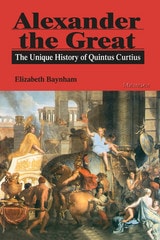
Alexander the Great
The Unique History of Quintus CurtiusElizabeth Baynham
University of Michigan Press, 2004
The reign and personality of Alexander the Great---one of the most romantic and powerful kings in history---have remained a source of fascination from antiquity to the present. But because the ancient information surrounding the conqueror is rich, contradictory, and complex, every historian of this near-mythical ruler-whether ancient or modern-invariably creates his or her own Alexander.
The unique work of one such ancient historian, Quintus Curtius, is the subject of Elizabeth Baynham's book. She mines Curtius' study of power for his contemporary perspective, historical methodology, and his portrait of the famous king and presents us with a brilliant, multifaceted study of this unique account regarding one of the most fascinating rulers in history.
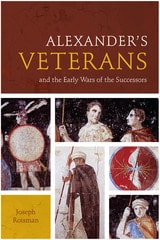
Alexander’s Veterans and the Early Wars of the Successors
By Joseph Roisman
University of Texas Press, 2012
This first focused analysis of veterans’ experiences in ancient Greece offers a fresh, “bottom-up” perspective on important military and political aspects of early Hellenistic history.
Runner-up, PROSE Award, Classics and Ancient History, 2013
From antiquity until now, most writers who have chronicled the events following the death of Alexander the Great have viewed this history through the careers, ambitions, and perspectives of Alexander’s elite successors. Few historians have probed the experiences and attitudes of the ordinary soldiers who followed Alexander on his campaigns and who were divided among his successors as they fought for control of his empire after his death. Yet the veterans played an important role in helping to shape the character and contours of the Hellenistic world.
This pathfinding book offers the first in-depth investigation of the Macedonian veterans’ experience during a crucial turning point in Greek history (323–316 BCE). Joseph Roisman discusses the military, social, and political circumstances that shaped the history of Alexander’s veterans, giving special attention to issues such as the soldiers’ conduct on and off the battlefield, the army assemblies, the volatile relationship between the troops and their generals, and other related themes, all from the perspective of the rank-and-file. Roisman also reexamines the biases of the ancient sources and how they affected ancient and modern depictions of Alexander’s veterans, as well as Alexander’s conflicts with his army, the veterans’ motives and goals, and their political contributions to Hellenistic history. He pays special attention to the Silver Shields, a group of Macedonian veterans famous for their invincibility and martial prowess, and assesses whether or not they deserved their formidable reputation.

Alfred the Great
The King and His EnglandEleanor Shipley Duckett
University of Chicago Press, 1958
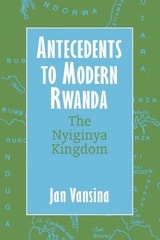
Antecedents to Modern Rwanda
The Nyiginya KingdomJan Vansina
University of Wisconsin Press, 2004
2001 French edition, Katharla Publishers
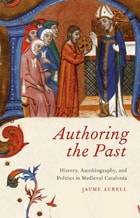
Authoring the Past
History, Autobiography, and Politics in Medieval CataloniaJaume Aurell
University of Chicago Press, 2012
Authoring the Past surveys medieval Catalan historiography, shedding light on the emergence and evolution of historical writing and autobiography in the Middle Ages, on questions of authority and authorship, and on the links between history and politics during the period. Jaume Aurell examines texts from the late twelfth to the late fourteenth century—including the Latin Gesta comitum Barcinonensium and four texts in medieval Catalan: James I’s Llibre dels fets, the Crònica of Bernat Desclot, the Crònica of Ramon Muntaner, and the Crònica of Peter the Ceremonious—and outlines the different motivations for the writing of each.
For Aurell, these chronicles are not mere archaeological artifacts but rather documents that speak to their writers’ specific contemporary social and political purposes. He argues that these Catalonian counts and Aragonese kings were attempting to use their role as authors to legitimize their monarchical status, their growing political and economic power, and their aggressive expansionist policies in the Mediterranean. By analyzing these texts alongside one another, Aurell demonstrates the shifting contexts in which chronicles were conceived, written, and read throughout the Middle Ages.
The first study of its kind to make medieval Catalonian writings available to English-speaking audiences, Authoring the Past will be of interest to scholars of history and comparative literature, students of Hispanic and Romance medieval studies, and medievalists who study the chronicle tradition in other languages.
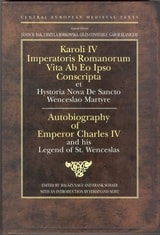
Autobiography of Emperor Charles IV and his Legend of St Wenceslas
Balázs Nagy
Central European University Press, 2001
One of the few autobiographies to have survived from the Middle Ages, this life history of one of the most influential rulers of the fourteenth century, Charles IV of Bohemia, covers his life from birth until his election as King of Germany in 1346.
Charles IV describes his childhood, spent mainly in the court of French kings, his juvenile years, his marriage and his first steps into the international political scene during the early part of the fourteenth century.
A unique addition to this volume is the first ever English translation of the Legend of Saint Wenceslas, written by Charles IV of Luxemburg.