Results by title
118 books match the query 'Latter Day Saint churches' and 9 start with a
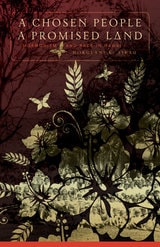
A Chosen People, a Promised Land
Mormonism and Race in Hawai’iHokulani K. Aikau
University of Minnesota Press, 2012
Christianity figured prominently in the imperial and colonial exploitation and dispossession of indigenous peoples worldwide, yet many indigenous people embrace Christian faith as part of their cultural and ethnic identities. A Chosen People, a Promised Land gets to the heart of this contradiction by exploring how Native Hawaiian members of the Church of Jesus Christ of Latter-Day Saints (more commonly known as Mormons) understand and negotiate their place in this quintessentially American religion.
Mormon missionaries arrived in Hawai‘i in 1850, a mere twenty years after Joseph Smith founded the church. Hokulani K. Aikau traces how Native Hawaiians became integrated into the religious doctrine of the church as a “chosen people”—even at a time when exclusionary racial policies regarding black members of the church were being codified. Aikau shows how Hawaiians and other Polynesian saints came to be considered chosen and how they were able to use their venerated status toward their own spiritual, cultural, and pragmatic ends.
Using the words of Native Hawaiian Latter-Day Saints to illuminate the intersections of race, colonization, and religion, A Chosen People, a Promised Land examines Polynesian Mormon articulations of faith and identity within a larger political context of self-determination.
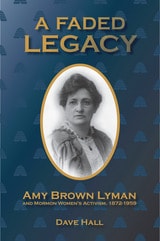
A Faded Legacy
Amy Brown Lyman and Mormon Women's Activism, 1872 - 1959Dave Hall
University of Utah Press, 2015
Placing Lyman’s story within a local and national context, award-winning author Dave Hall examines the roots and trajectory of Mormon women’s activism. Born into a polygamist family, Lyman entered the larger sphere of public life at the time when the practice of polygamy was ending and Mormonism had begun assimilating mainstream trends. The book follows her life as she prepared for a career, married, and sought meaning in a rapidly changing society. It recounts her involvement in the Relief Society, the Mormon women’s charity group that she led for many years and sought to transform into a force for social welfare, and it considers the influence of her connections with national and international women’s organizations. The final period of Lyman’s life, in which she resigned from the Relief Society amidst personal tragedy, offers insight into the reasons Mormon women abandoned their activist heritage for a more conservative role, a stance that is again evolving.
Winner of the Mormon History Association's Best First Book Award.
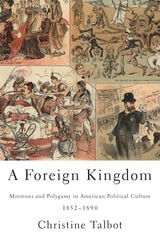
A Foreign Kingdom
Mormons and Polygamy in American Political Culture, 1852-1890Christine Talbot
University of Illinois Press, 2013
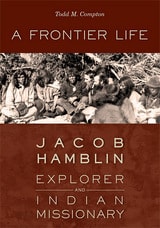
A Frontier Life
Jacob Hamblin, Explorer and Indian MissionaryTodd M. Compton
University of Utah Press, 2013
Winner of the Evans Biography Award, the John Whitmer Historical Society Best Biography Award, and the Francis Armstrong Madsen Best Book Award
Frontiersman, colonizer, missionary to the Indians, and explorer of the American West, Jacob Hamblin has long been one of the most enigmatic figures in Mormon history. In this defining biography, Todd Compton examines and disentangles many of the myths and controversies surrounding Hamblin. His Grand Canyon adventures and explorations as a guide alongside John Wesley Powell are well documented, as are his roles as a missionary, cultural liaison, and negotiator to the Indian tribes of southern Utah and Arizona. Hamblin struggled in this latter role, sometimes unable to bridge the gulf between Mormonism and Indian culture. He disavowed violent conflict and ceaselessly sought peaceful resolutions where others resorted to punitive action. He strove above all for mutual understanding in the absence of conversion.
A Frontier Life provides a rich narrative that fleshes out a picture of a sometimes vilified figure, particularly in regard to his connection to the infamous Mountain Meadows Massacre, where Compton provides nuanced discussion clarifying Hamblin’s post-massacre role—he was not present at the massacre, but reported on it to both Brigham Young and military investigators. Compton’s engagement with Mormon historiography and previous Hamblin portrayals will make this work of particular interest to both scholars and students. The casual reader will take pleasure in learning of a true pioneer who lived life at the geographical, cultural, and spiritual boundaries of his era. This dramatic, entertaining biography is a truly significant contribution to Mormon history.
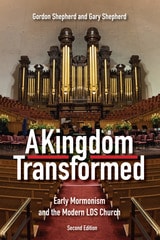
A Kingdom Transformed
Early Mormonism and the Modern LDS Church, New EditionGordon Shepherd and Gary Shepherd
University of Utah Press, 2015
The first edition showed how early twentieth century LDS leaders were fairly liberal in mainstreaming church doctrines and social teaching, but by mid-twentieth century, as the church became more stable, accepted, and successful, church authorities reversed several earlier modifications and began emphasizing a stricter, more conservative theology that coincided with an increasingly conservative political orientation. The new book adds current issues of concern, such as the role of women in the church and international growth versus member retention. It also introduces a new conceptual framework for interpreting findings.
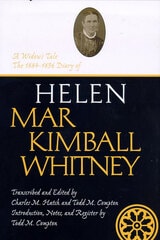
A Widow's Tale
1884-1896 Diary of Helen Mar Kimball WhitneyCharles M. Hatch and Todd Compton
Utah State University Press, 2003
Mormon culture has produced during its history an unusual number of historically valuable personal writings. Few such diaries, journals, and memoirs published have provided as rich and well rounded a window into their authors' lives and worlds as the diary of Helen Mar Kimball Whitney. Because it provides a rare account of the widely experienced situations and problems faced by widows, her record has relevance far beyond Mormon history though.
As a teenager Helen Kimball had been a polygamous wife of Mormon founder Joseph Smith. She subsequently married Horace Whitney. Her children included the noted Mormon author, religious authority, and politician Orson F. Whitney. She herself was a leading woman in her church and society and a writer known especially for her defense of plural marriage. Upon Horace's death, she began keeping a diary. In it, she recorded her economic, physical, and psychological struggles to meet the challenges of widowhood. Her writing was introspective and revelatory. She also commented on the changing society around her, as Salt Lake City in the last decades of the nineteenth century underwent rapid transformation, modernizing and opening up from its pioneer beginnings. She remained a well-connected member of an elite group of leading Latter-day Saint women, and prominent Utah and Mormon historical figures appear frequently in her daily entries. Above all, though, her diary is an unusual record of difficulties faced in many times and places by women, of all classes, whose husbands died and left them without sufficient means to carry on the types of lives to which they had been accustomed.
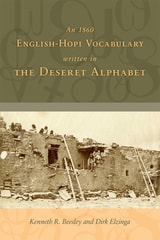
An 1860 English-Hopi Vocabulary Written in the Deseret Alphabet
Kenneth R. Beesley
University of Utah Press, 2014
The volume reproduces all 486 vocabulary entries of the original manuscript, presenting the Deseret and the modern English and Hopi translations. It explains the history of the Deseret Alphabet as well as that of the Mormon missions to the Hopi, while fleshing out the background of the two missionaries, Marion Jackson Shelton, who wrote the manuscript, and his companion, Thales Hastings Haskell. The book will be of interest to linguists, historians, ethnographers, and others who are curious about the unique combination of topics this work connects.
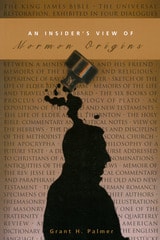
An Insider's View of Mormon Origins
Grant Palmer
Signature Books, 2002
He finds that much of what we take for granted as literal history has been tailored over the years—slightly modified, added to, one aspect emphasized over another—to the point that the original narratives have been nearly lost. What was experienced as a spiritual or metaphysical event, something from a different dimension, often has been refashioned as if it were a physical, objective occurrence. This is not how the first Saints interpreted these events. Historians who have looked closer at the foundational stories and source documents have restored elements, including a nineteenth-century world view, that have been misunderstood, if not forgotten.
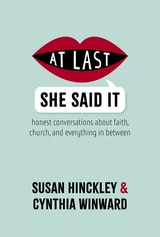
At Last She Said It
Honest Conversations About Faith, Church, and Everything in BetweenSusan Hinckley and Cynthia Winward
Signature Books, 2025
“Women of faith, discussing complicated things.” That’s how authors Susan Hinckley and Cynthia Winward describe At Last She Said It, and they don’t expect the knots to untangle themselves. Even with two very different personalities and a decade or so between them, as their friendship developed they kept stumbling onto what felt like an uncanny amount of common ground in their church experiences. Often their conversations ended with, “Why isn’t anyone talking about this? Someone should do a podcast!” So they did. They had a hunch they weren’t the only women wishing they had a place to discuss the things they were thinking about, a lot of which they’d never said—or heard—out loud. That hunch was right. Their 200-and-counting recorded conversations have been downloaded some two million times. Hinckley and Winward have learned, right along with their listeners, that there’s no power quite like finding out you’re not alone.
Their book now asks Latter-day Saints to think about old ideas in new ways. Stretching can be uncomfortable, but the willingness to consider diverse perspectives—even on the things we hold most dear—feels essential in an evolving world. So does being open to changing our minds, including how we think about ourselves. Faith is alive when it’s growing, and growing means change. Hopefully, these conversations will be the beginning of thousands more.