Results by title
98 books match the query 'Law enforcement' and 5 start with a

A Police State
Politics and Public Safety in Minneapolis, 1945–2020Michael J. Lansing
University of Chicago Press, 2027
How the police in Minneapolis used electoral politics to accrue power and avoid accountability.
The 2020 murder of George Floyd made Minneapolis synonymous with unjust policing and the pain and outrage left in its wake. The city became ground zero for police reform in the United States—even though liberal politicians in Minnesota had promised, and delivered, police reforms for decades. Centered on professionalization, these changes inadvertently exacerbated injustice. Better training and higher standards broadened the influence of the police, who then claimed expertise in public safety. They deployed it to bargain for governmental support, even when they treated residents unfairly. Though Black, Indigenous, and gay residents resisted, the political power amassed by the police rendered real change almost impossible.
In A Police State, historian and fourth-generation Minneapolis resident Michael J. Lansing chronicles how the police became a political force in one of the nation’s most liberal cities. Lansing shows how, in the years after World War II, public safety policies that appealed to voters in the overwhelmingly white city protected and expanded police discretion. As union members, administrators, and citizens, officers shaped these policies to shield themselves and their violent actions from scrutiny. They campaigned for better wages, secured legal safeguards, resisted race-neutral policing, and elected one of their own to the mayor’s office. Ultimately, they used democratic institutions to cultivate and sustain a police state that protected white people and harmed people of color. Lansing uncovers this dysfunctional relationship between a city and its cops while illuminating a larger American story about reform, resistance, and democracy.
A significant exploration of policing politics, this book helps us understand the history that led to George Floyd’s murder—and insists that the future of community safety depends on reenvisioning the role of police in our society.
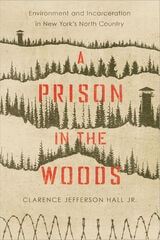
A Prison in the Woods
Environment and Incarceration in New York's North CountryClarence Jefferson Hall
University of Massachusetts Press, 2020
Clarence Jefferson Hall Jr. reveals that the introduction of correctional facilities—especially in the last three decades of the twentieth century—unearthed long-standing conflicts over the proper uses of Adirondack nature, particularly since these sites have contributed to deforestation, pollution, and habitat decline, even as they've provided jobs and spurred economic growth. Additionally, prison plans have challenged individuals' commitment to environmental protection, tested the strength of environmental regulations, endangered environmental and public health, and exposed tensions around race, class, place, and belonging in the isolated prison towns of America's largest state park.
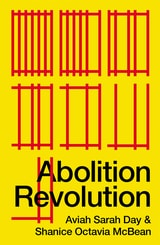
Abolition Revolution
Aviah Day
Pluto Press, 2022
George Floyd's murder in Minneapolis triggered abolitionist shockwaves. Calls to defund the police found receptive ears around the world. Shortly after, Sarah Everard's murder by a serving police officer sparked a national abolitionist movement in Britain. But to abolish the police, prisons and borders, we must confront the legacy of Empire.
Abolition Revolution is a guide to abolitionist politics in Britain, drawing out rich histories of resistance from rebellion in the colonies to grassroots responses to carceral systems today. The authors argue that abolition is key to reconceptualising revolution for our times - linking it with materialist feminisms, anti-capitalist class struggle, internationalist solidarity and anti-colonialism.
Perfect for reading groups and activist meetings, this is an invaluable book for those new to abolitionist politics - whilst simultaneously telling a passionate and authoritative story about the need for abolition and revolution in Britain and globally.
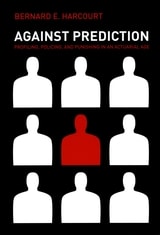
Against Prediction
Profiling, Policing, and Punishing in an Actuarial AgeBernard E. Harcourt
University of Chicago Press, 2006
From random security checks at airports to the use of risk assessment in sentencing, actuarial methods are being used more than ever to determine whom law enforcement officials target and punish. And with the exception of racial profiling on our highways and streets, most people favor these methods because they believe they’re a more cost-effective way to fight crime.
In Against Prediction, Bernard E. Harcourt challenges this growing reliance on actuarial methods. These prediction tools, he demonstrates, may in fact increase the overall amount of crime in society, depending on the relative responsiveness of the profiled populations to heightened security. They may also aggravate the difficulties that minorities already have obtaining work, education, and a better quality of life—thus perpetuating the pattern of criminal behavior. Ultimately, Harcourt shows how the perceived success of actuarial methods has begun to distort our very conception of just punishment and to obscure alternate visions of social order. In place of the actuarial, he proposes instead a turn to randomization in punishment and policing. The presumption, Harcourt concludes, should be against prediction.
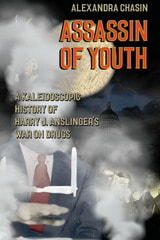
Assassin of Youth
A Kaleidoscopic History of Harry J. Anslinger’s War on DrugsAlexandra Chasin
University of Chicago Press, 2016
In Assassin of Youth, Alexandra Chasin gives us a lyrical, digressive, funny, and ultimately riveting quasi-biography of Anslinger. Her treatment of the man, his times, and the world that arose around and through him is part cultural history, part kaleidoscopic meditation. Each of the short chapters is anchored in a historical document—the court decision in Webb v. US (1925), a 1935 map of East Harlem, FBN training materials from the 1950s, a personal letter from the Treasury Department in 1985—each of which opens onto Anslinger and his context. From the Pharmacopeia of 1820 to death of Sandra Bland in 2015, from the Pennsylvania Railroad to the last passenger pigeon, and with forays into gangster lives, CIA operatives, and popular detective stories, Chasin covers impressive ground. Assassin of Youth is as riotous and loose a history of drug laws as can be imagined—and yet it culminates in an arresting and precise revision of the emergence of drug prohibition.
Today, even as marijuana is slowly being legalized, we still have not fully reckoned with the racist and xenophobic foundations of our cultural appetite for the severe punishment of drug offenders. In Assassin of Youth, Chasin shows us the deep, twisted roots of both our love and our hatred for drug prohibition.