Results by title
102 books match the query 'Limits' and 8 start with a
A Defense of the Catholic Religion
The Necessity, Existence, and Limits of an Infallible ChurchBeda Mayr, OSB
Catholic University of America Press, 2023
A Watershed Moment
The American West in the Age of LimitsEdited by Robert Frodeman, Evelyn Brister, and Luther Propst
University of Utah Press, 2024
The volume presents practical approaches to land use, land management, and community planning that are motivated by philosophical views on justice, quality of life, and sustainability in the American West. The contributors are policymakers, government employees, land and water managers, urban planners, biologists, tribal members, writers, and academics from a variety of backgrounds and perspectives. The result is a compelling vision of place-based, policy-oriented sustainability across the West.
Abraham Lincoln’s Statesmanship and the Limits of Liberal Democracy
Jon D. Schaff
Southern Illinois University Press, 2019
Though Lincoln’s presidency is inextricably linked to the Civil War, and he is best known for his defense of the Union and executive wartime leadership, Lincoln believed that Congress should be at the helm of public policy making. Likewise, Lincoln may have embraced limited government in vague terms, but he strongly supported effective rule of law and distribution of income and wealth. Placing the Lincoln presidency within a deeper and more meaningful historical context, Abraham Lincoln’s Statesmanship and the Limits of Liberal Democracy highlights Lincoln’s significance in the development of American power institutions and social movement politics.
Using Lincoln’s prepresidential and presidential words and actions, this book argues that decent government demands a balance of competing goods and the strong statesmanship that Lincoln exemplified. Instead of relying too heavily on the will of the people and institutional solutions to help prevent tyranny, Jon D. Schaff proposes that American democracy would be better served by a moderate and prudential statesmanship such as Lincoln’s, which would help limit democratic excesses.
Schaff explains how Lincoln’s views on prudence, moderation, natural rights, and economics contain the notion of limits, then views Lincoln’s political and presidential leadership through the same lens. He compares Lincoln’s views on governmental powers with the defense of unlimited government by twentieth-century progressives and shows how Lincoln’s theory of labor anticipated twentieth-century distributist economic thought. Schaff’s unique exploration falls squarely between historians who consider Lincoln a protoprogressive and those who say his presidency was a harbinger of industrialized, corporatized America.
In analyzing Lincoln’s approach, Abraham Lincoln’s Statesmanship and the Limits of Liberal Democracy rejects the idea he was a revolutionary statesman and instead lifts up Lincoln’s own affinity for limited presidential power, making the case for a modest approach to presidential power today based on this understanding of Lincoln’s statesmanship. As a counterpoint to the contemporary landscape of bitter, uncivil politics, Schaff points to Lincoln’s statesmanship as a model for better ways of engaging in politics in a democracy.

After Queer Theory
The Limits of Sexual PoliticsJames Penney
Pluto Press, 2013
After Queer Theory makes the provocative claim that queer theory has run its course, made obsolete by the elaboration of its own logic within capitalism. James Penney argues that far from signalling the end of anti-homophobic criticism, however, the end of queer presents the occasion to rethink the relation between sexuality and politics.
Through a critical return to Marxism and psychoanalysis (Freud and Lacan), Penney insists that the way to implant sexuality in the field of political antagonism is paradoxically to abandon the exhausted premise of a politicised sexuality.
After Queer Theory argues that it is necessary to wrest sexuality from the dead end of identity politics, opening it up to a universal emancipatory struggle beyond the reach of capitalism's powers of commodification.
American Immunity
War Crimes and the Limits of International LawPatrick Hagopian
University of Massachusetts Press, 2013
In 1955 the Supreme Court ruled that veterans of the U.S. armed forces could not be court-martialed for overseas crimes that were not detected until after they had left military service. Territorial limitations placed such acts beyond the jurisdiction of civilian courts, and there was no other American court in which they could be adjudicated. As a result, a jurisdictional gap emerged that for decades exempted former troops from prosecution for war crimes. “This was not merely a theoretical possibility,” Patrick Hagopian writes. Over a dozen former soldiers who participated in the My Lai massacre did in fact “get away with murder.” Further court rulings expanded the gap to cover civilian employees and contractors that accompanied the armed forces.
In American Immunity, Hagopian places what he calls the “superpower exemption” in the context of a long-standing tension between international law and U.S. sovereignty. He shows that despite the U.S. role in promulgating universal standards of international law and forming institutions where those standards can be enforced, the United States has repeatedly refused to submit its own citizens and troops to the jurisdiction of international tribunals and failed to uphold international standards of justice in its own courts.
In 2000 Congress attempted to close the jurisdictional gap with passage of the Military Extraterritorial Jurisdiction Act. The effectiveness of that legislation is still in question, however, since it remains unclear how willing civilian American juries will be to convict veterans for conduct in foreign war zones.
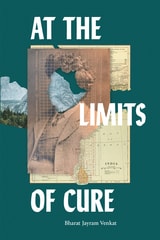
At the Limits of Cure
Bharat Jayram Venkat
Duke University Press, 2021
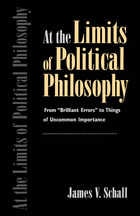
At the Limits of Political Philosophy
From "Brilliant Errors" to Things of Uncommon ImportanceJames V. Schall
Catholic University of America Press, 1996

Avant-Garde Performance and the Limits of Criticism
Approaching the Living Theatre, Happenings/Fluxus, and the Black Arts MovementMike Sell
University of Michigan Press, 2005
Mike Sell's study is groundbreaking in its consideration of the avant-garde in relationship to a crucial but rarely considered agent: the scholar and critic. The book examines the role of the scholar and critic in the cultural struggles of radical artists and activists and reveals how avant-garde performance identifies the very limits of critical consideration. The book also explores the popularization of the avant-garde: how formerly subversive art is eventually discovered by the mass media, is gobbled up by the marketplace, and eventually finds its way onto the syllabi of college and university courses. Avant-Garde Performance and the Limits of Criticism is a timely and significant book that will become a standard reference for scholars in the fields of avant-garde literary criticism, theater history, critical theory, and performance studies.
"A provocative exploration of relations between the historical avant-garde and Cold War vanguard art and theatre. Sell's compelling historical and cultural narrative shows how the connections between the two exist at a very deep level of radical politics and aesthetics--an amazing concoction of rigorous scholarship, interdisciplinary learning, and progressive theorizing."
--Michael Vanden Heuvel, University of Wisconsin, Madison
"One of the most sophisticated, engaged, and engaging studies of the avant-garde in the United States that I've read-an important study that will raise the bar not only on scholarship of the Black Arts Movement, but on U.S. avant-gardism generally."
--James Smethurst, University of Massachusetts
A volume in the series Theater: Theory/Text/Performance. A list of recent titles in the series appears at the front of this volume.