Results by title
133 books match the query 'Mammals' and 10 start with a

A Barrel of Monkeys
A Compendium of Collective Nouns for AnimalsCompiled by Samuel Fanous
Bodleian Library Publishing, 2015
A Barrel of Monkeys brings together more than one hundred collective nouns for animals, from a bloat of hippopotamuses to a caravan of camels, a tower of giraffes, and a leap of leopards. The rivalry between male rhinoceroses becomes especially apt when the rowdy ungulates are characterized as a crash of rhinos. An ambush of tigers is an apt characterization of the skillful hunters that silently stalk their prey. A blend of wordplay, puns, and alliteration, some of the terms collected here are now commonplace, like a pride of lions. Others aren’t heard much these days, but many—like a dazzle of zebras or a prickle of porcupines—richly deserve a comeback.
With charming illustrations by the eighteenth-century artist and naturalist Thomas Bewick, A Barrel of Monkeys is the perfect follow-up to A Conspiracy of Ravens, the Bodleian Library’s book of bird words. Not even a crash of rhinos can stop readers from smiling at this second collection.

A General History of Quadrupeds
The Figures Engraved on WoodThomas Bewick
University of Chicago Press, 2009
In the late eighteenth century, the British took greater interest than ever before in observing and recording all aspects of the natural world. Travelers and colonists returning from far-flung lands provided dazzling accounts of such exotic creatures as elephants, baboons, and kangaroos. The engraver Thomas Bewick (1753–1828) harnessed this newfound interest by assembling the most comprehensive illustrated guide to nature of his day.
A General History of Quadrupeds, first published in 1790, showcases Bewick’s groundbreaking engraving techniques that allowed text and images to be published on the same page. From anteaters to zebras, armadillos to wolverines, this delightful volume features engravings of over four hundred animals alongside descriptions of their characteristics as scientifically understood at the time. Quadrupeds reaffirms Bewick’s place in history as an incomparable illustrator, one whose influence on natural history and book printing still endures today.
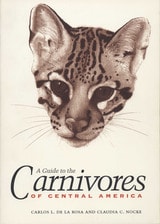
A Guide to the Carnivores of Central America
Natural History, Ecology, and ConservationBy Carlos L. de la Rosa and Claudia C. Nocke
University of Texas Press, 2000
Carnivores such as pumas, jaguars, and ocelots have roamed the neotropical forests of Central America for millennia. Enshrined in the myths of the ancient Maya, they still inspire awe in the region's current inhabitants, as well as in the ecotourists and researchers who come to experience Central America's diverse and increasingly endangered natural environment.
This book is one of the first field guides dedicated to the carnivores of Central America. It describes the four indigenous families—wild cats, raccoons and their relatives, skunks and their relatives, and wild canids—and their individual species that live in the region. The authors introduce each species by recounting a first-person encounter with it, followed by concise explanations of its taxonomy, scientific name, English and Spanish common names, habitat, natural history, and conservation status. Range maps show the animal's past and current distribution, while Claudia Nocke's black-and-white drawings portray it visually.
The concluding chapter looks to the carnivores' future, including threats posed by habitat destruction and other human activities, and describes some current conservation programs. Designed for citizens of and visitors to Central America, as well as specialists, this book offers an excellent introduction to a group of fascinating, threatened, and still imperfectly understood animals.
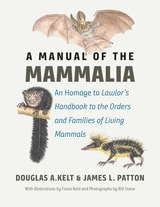
A Manual of the Mammalia
An Homage to Lawlor’s “Handbook to the Orders and Families of Living Mammals”Douglas A. Kelt and James L. Patton
University of Chicago Press, 2020
The taxonomy of recent mammals has lately undergone tremendous revision, but it has been decades since the last update to Timothy E. Lawlor’s acclaimed identification guide the Handbook to the Orders and Families of Living Mammals. Integrating the latest advances in research, Douglas A. Kelt and James L. Patton provide this long-overdue update in their new, wholly original work, A Manual of the Mammalia.
Complemented by global range maps, high-resolution photographs of skulls and mandibles by Bill Stone, and the outstanding artwork of Fiona Reid, this book provides an overview of biological attributes of each higher taxon while highlighting key and diagnostic characters needed to identify skulls and skins of all recent mammalian orders and most families. Kelt and Patton also place taxa in their currently understood supra-familial clades, and discuss current challenges in higher mammal taxonomy. Including a comprehensive review of mammalian anatomy to provide a foundation for understanding all characters employed throughout, A Manual of the Mammalia is both a user-friendly handbook for students learning to identify higher mammal taxa and a uniquely comprehensive, up-to-date reference for mammalogists and mammal-lovers from across the globe.
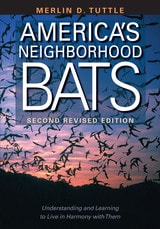
America's Neighborhood Bats
Understanding and Learning to Live in Harmony with ThemBy Merlin D. Tuttle
University of Texas Press, 2005
Since its first publication in 1988, America's Neighborhood Bats has changed the way we look at bats by underscoring their harmless and beneficial nature. In this second revised edition, Merlin Tuttle offers bat aficionados the most up-to-date bat facts, including a wealth of new information on bat house design and current threats to bat survival.

American Pronghorn
Social Adaptations and the Ghosts of Predators PastJohn A. Byers
University of Chicago Press, 1997
In this elegantly written book, John A. Byers argues that these mystifying behaviors evolved in response to the dangerous predators with whom pronghorn shared their grassland home for nearly four million years: among them fleet hyenas, lions, and cheetahs. Although these predators died out ten thousand years ago, pronghorn still behave as if they were present—as if they were living with the ghosts of predators past.
Byers's provocative hypothesis will stimulate behavioral ecologists and mammalogists to consider whether other species' adaptations are also haunted by selective pressures from predators past. The book will also find a ready audience among evolutionary biologists and paleontologists.
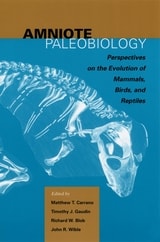
Amniote Paleobiology
Perspectives on the Evolution of Mammals, Birds, and ReptilesEdited by Matthew T. Carrano, Timothy J. Gaudin, Richard W. Blob, and John R. Wi
University of Chicago Press, 2006
A collaborative effort of twenty-four researchers, Amniote Paleobiology presents thirteen new and important scientific perspectives on the evolution and biology of this familiar group. It includes new discoveries of dinosaurs and primitive relatives of mammals; studies of mammalian chewing and locomotion; and examinations of the evolutionary process in plesiosaurs, mammals, and dinosaurs. Emphasizing the rich variety of analytical techniques available to vertebrate paleontologists—from traditional description to multivariate morphometrics and complex three-dimensional kinematics—Amniote Paleobiology seeks to understand how species are related to each other and what these relationships reveal about changes in anatomy and function over time. A timely synthesis of modern contributions to the field of evolutionary studies, Amniote Paleobiology furthers our understanding of this diverse group.

An Atlas of Cat Anatomy
Hazel E. Field and Mary E. Taylor
University of Chicago Press, 1969

Antipredator Defenses in Birds and Mammals
Tim Caro
University of Chicago Press, 2005
In Antipredator Defenses in Birds and Mammals, Tim Caro ambitiously synthesizes predator defenses in birds and mammals and integrates all functional and evolutionary perspectives on antipredator defenses that have developed over the last century. Structured chronologically along a hypothetical sequence of predation—Caro evokes a gazelle fawn desperate to survive a cheetah attack to illustrate the continuum of the evolution of antipredator defenses—Antipredator Defenses in Birds and Mammals considers the defenses that prey use to avoid detection by predators; the benefits of living in groups; morphological and behavioral defenses in individuals and groups; and, finally, flight and adaptations of last resort.
Antipredator Defenses in Birds and Mammals will be of interest to both specialists and general readers interested in ecological issues.
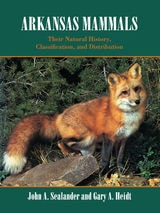
Arkansas Mammals
Their Natural History, Classification, and DistributionJohn A. Sealander
University of Arkansas Press, 1990
Heavily illustrated with color photographs, Arkansas Mammals is the comprehensive guide to the state’s mammal population. Endangered or threatened species of mammals and missing species known to have been present in recent times are discussed, along with non-native species that have become an important part of the mammal fauna in Arkansas and adjacent states.