Results by title
98 books match the query 'Marginality, Social' and 7 start with a
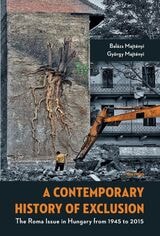
A Contemporary History of Exclusion
The Roma Issue in Hungary from 1945 to 2015György Majtényi
Central European University Press, 2016
The volume presents the changing situation of the Roma in the second half of the 20th century and examines the politics of the Hungarian state regarding minorities by analyzing legal regulations, policy documents, archival sources and sociological surveys. In the first phase analyzed (1945-61), the authors show the efforts of forced assimilation by the communist state. The second phase (1961-89) began with the party resolution denying nationality status to the Roma. Gypsy culture was equivalent with culture of poverty that must be eliminated. Forced assimilation through labor activities continued. The Roma adapted to new conditions and yet kept their distinct identity. From the 1970s, Roma intellectuals began an emancipatory movement, and its legacy is felt until this day. Although the third phase (1989-2010) brought about freedoms and rights for the Roma, with large sums spent on various Roma-related programs, the situation on the ground nevertheless did not improve. Segregation and marginalization continues, and it is rampant. The authors powerfully conclude: while Roma became part of the political community, they are still not part of the national one. Subjects: Romanies—Hungary. Romanies—Hungary—Social conditions. Marginality, Social—Hungary. Romanies—Legal status, laws, etc.—Hungary. Minorities—Government policy—Hungary. Hungary—Ethnic relations. Hungary—Social policy.
[more]
A Report of the International Commission for Central American Recovery and Development
William L. Ascher and Ann Hubbard, editors
Duke University Press, 1989
The 1980s were one of the most turbulent decades in Central America’s history, a history that has been marked by more than its share of strife and upheaval. The wars, economic hardship, and political unrest and instability that have dominated news of the region have been years in the making, the products of flawed and inequitable economic, social, and political structures.
The International Commission for Central American Recovery and Development (ICCARD) was formed to provide a thorough diagnosis and analysis of Central America’s problems and to draft a comprehensive long-term strategy to move the region from decline to development. In this report ICCARD—through forty-five international experts in economics, public policy, management, and development it assembled for this purpose—attempts to rise above rhetoric and simplistic remedies to focus on well-reasoned, thorough, and realistic approaches to economic and social development.
This volume reviews the unequal access of marginal groups to political and economic participation, the precarious situation of Central American financial institutions, the international debt situation, the prospects for regional political and economic integration, and other aspects of regional development. Each of these challenges is addressed by specific recommendations to the Central American governments, the governments of the industrialized nations, and international organizations.
[more]

Abandoned Families
Social Isolation in the Twenty-First CenturyKristin S. Seefeldt
Russell Sage Foundation, 2016
Choosing whom to marry involves more than emotion, as racial politics, cultural mores, and local demographics all shape romantic choices. In Marriage Vows and Racial Choices, sociologist Jessica Vasquez-Tokos explores the decisions of Latinos who marry either within or outside of their racial and ethnic groups. Drawing from in-depth interviews with nearly 50 couples, she examines their marital choices and how these unions influence their identities as Americans.
Vasquez-Tokos finds that their experiences in childhood, adolescence, and young adulthood shape their perceptions of race, which in turn influence their romantic expectations. Most Latinos marry other Latinos, but those who intermarry tend to marry whites. She finds that some Latina women who had domineering fathers assumed that most Latino men shared this trait and gravitated toward white men who differed from their fathers. Other Latina respondents who married white men fused ideas of race and class and perceived whites as higher status and considered themselves to be “marrying up.” Latinos who married non-Latino minorities—African Americans, Asian Americans, and Native Americans—often sought out non-white partners because they shared similar experiences of racial marginalization. Latinos who married Latinos of a different national origin expressed a desire for shared cultural commonalities with their partners, but—like those who married whites—often associated their own national-origin groups with oppressive gender roles.
Vasquez-Tokos also investigates how racial and cultural identities are maintained or altered for the respondents’ children. Within Latino-white marriages, biculturalism—in contrast with Latinos adopting a white “American” identity—is likely to emerge. For instance, white women who married Latino men often embraced aspects of Latino culture and passed it along to their children. Yet, for these children, upholding Latino cultural ties depended on their proximity to other Latinos, particularly extended family members. Both location and family relationships shape how parents and children from interracial families understand themselves culturally.
As interracial marriages become more common, Marriage Vows and Racial Choices shows how race, gender, and class influence our marital choices and personal lives.
[more]
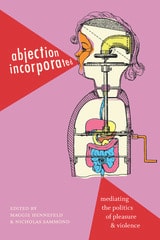
Abjection Incorporated
Mediating the Politics of Pleasure and ViolenceMargaret Hennefeld and Nicholas Sammond, editors
Duke University Press, 2019
From the films of Larry Clark to the feminist comedy of Amy Schumer to the fall of Louis C. K., comedic, graphic, and violent moments of abjection have permeated twentieth- and twenty-first-century social and political discourse. The contributors to Abjection Incorporated move beyond simple critiques of abjection as a punitive form of social death, illustrating how it has become a contested mode of political and cultural capital—empowering for some but oppressive for others. Escaping abjection's usual confines of psychoanalysis and aesthetic modernism, core to theories of abjection by thinkers such as Kristeva and Bataille, the contributors examine a range of media, including literature, photography, film, television, talking dolls, comics, and manga. Whether analyzing how comedic abjection can help mobilize feminist politics or how expressions of abjection inflect class, race, and gender hierarchies, the contributors demonstrate the importance of competing uses of abjection to contemporary society and politics. They emphasize abjection's role in circumscribing the boundaries of the human and how the threats abjection poses to the self and other, far from simply negative, open up possibilities for radically new politics.
Contributors. Meredith Bak, Eugenie Brinkema, James Leo Cahill, Michelle Cho, Maggie Hennefeld, Rob King, Thomas Lamarre, Sylvère Lotringer, Rijuta Mehta, Mark Mulroney, Nicholas Sammond, Yiman Wang, Rebecca Wanzo
Contributors. Meredith Bak, Eugenie Brinkema, James Leo Cahill, Michelle Cho, Maggie Hennefeld, Rob King, Thomas Lamarre, Sylvère Lotringer, Rijuta Mehta, Mark Mulroney, Nicholas Sammond, Yiman Wang, Rebecca Wanzo
[more]
African Underclass
Urbanization, Crime & Colonial Order in Dar es Salaam 1919-61Andrew Burton
Ohio University Press, 2005
African Underclass examines the social, political, and administrative repercussions of rapid urbanization in colonial Dar es Salaam, and the evolution of official policy that viewed urbanization as inextricably linked with social disorder. This policy marginalized numbers of young Africans entering the town---and thus, paradoxically, the policy itself subverted the colonial order. "Well researched and sharply written---one of the best and most stimulating accounts of urbanization in Eastern Africa to have been produced in recent years."---John McCracken, emeritus professor of history, University of StirlingAndrew Burton is assistant director of the British Institute in Eastern Africa.
[more]
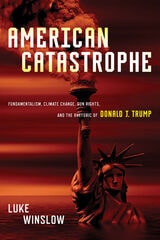
American Catastrophe
Fundamentalism, Climate Change, Gun Rights, and the Rhetoric of Donald J. TrumpLuke Winslow
The Ohio State University Press, 2020
On the face of it, most of us would agree that catastrophe is harmful and avoiding it is key to human survival and progress. And yet, the planet warms, 30,000 more Americans are killed by guns each year, and Donald J. Trump creates political chaos with his rage tweets. American Catastrophe explores such examples to argue that, in fact, we live in an age where catastrophe not only functions as a dominant organizing rhetoric but further as an appealing and unifying force for many communities across America.
Luke Winslow introduces the rhetorical homology as a critical tool useful for understanding how catastrophic appeals unite Americans across disparate religious, ecological, cultural, and political spheres. More specifically, the four case study chapters examining Christian fundamentalism, anti-environmentalism, gun rights messaging, and the administration of Donald Trump reveal a consistent formal pattern oriented toward catastrophe. In teasing out this orientation toward catastrophe, Winslow offers a fresh, provocative, and insightful contribution to our most pressing social challenges.
Luke Winslow introduces the rhetorical homology as a critical tool useful for understanding how catastrophic appeals unite Americans across disparate religious, ecological, cultural, and political spheres. More specifically, the four case study chapters examining Christian fundamentalism, anti-environmentalism, gun rights messaging, and the administration of Donald Trump reveal a consistent formal pattern oriented toward catastrophe. In teasing out this orientation toward catastrophe, Winslow offers a fresh, provocative, and insightful contribution to our most pressing social challenges.
[more]
At the Margins
Minority Groups in Premodern ItalyStephen J. Milner
University of Minnesota Press, 2005
Slaves, foundlings, prostitutes, nuns, homosexuals, exiles, the elderly, and mountain communities - such groups stood at the margins of society in premodern Italy. But where precisely the margins were was not so easily determined. Examining these minorities as the buffer zones between more readily recognizable centers, At the Margins explores identity as a process rather than a fixed entity, stressing the multiplicity of groups to which individuals belonged. By tracing the shifting relations of social margins to centers in Italy between the thirteenth and seventeenth centuries - and showing how these shifts in turn relate to social order and identity formation - the authors challenge entrenched ideas about the nature of the Renaissance and its role in shaping modernity. Behind much cultural theory lies a critique of the centrality of modernity and its foundations in the discourse of Renaissance humanism. And yet, as this volume reveals, the insights of contemporary cultural theory serve to expose the flaws in this picture of cultural hegemony and, in decentering the Renaissance, return it to the heart of cultural debate.
[more]