Results by title
1106 books match the query 'Memoirs' and 108 start with a
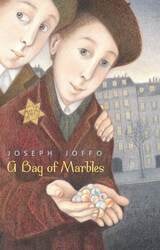
A Bag of Marbles
Joseph Joffo
University of Chicago Press, 2000
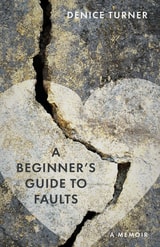
A Beginner's Guide to Faults
A MemoirDenice Turner
University of Nevada Press, 2026
A bighearted memoir of fidelity and forgiveness, A Beginner’s Guide to Faults draws on the language of geology to explore fault lines in a long marriage—deep fractures formed by unmet needs, quiet betrayals, and the human longing for connection and freedom.
After twenty-five years of marriage, Denice is blindsided when her husband reveals his romance with a Las Vegas stripper. This latest move in their tit-for-tat game of infidelity is too much for her. She files for divorce and heads to South Dakota, where she hopes to fulfill her wildest fantasies. Instead, plagued by guilt about her own faults, she wrecks each new relationship, convinced that she is unforgivable.
Through fleeting romances and soul-deep self-reflection, Denice rebuilds a life and a family on her own terms. A Beginner’s Guide to Faults is a memoir of transformation—one that shows how love can change without ever being lost.
A Beginner's Guide to Faults
A MemoirDenice Turner
University of Nevada Press, 2026
A bighearted memoir of fidelity and forgiveness, A Beginner’s Guide to Faults draws on the language of geology to explore fault lines in a long marriage—deep fractures formed by unmet needs, quiet betrayals, and the human longing for connection and freedom.
After twenty-five years of marriage, Denice is blindsided when her husband reveals his romance with a Las Vegas stripper. This latest move in their tit-for-tat game of infidelity is too much for her. She files for divorce and heads to South Dakota, where she hopes to fulfill her wildest fantasies. Instead, plagued by guilt about her own faults, she wrecks each new relationship, convinced that she is unforgivable.
Through fleeting romances and soul-deep self-reflection, Denice rebuilds a life and a family on her own terms. A Beginner’s Guide to Faults is a memoir of transformation—one that shows how love can change without ever being lost.
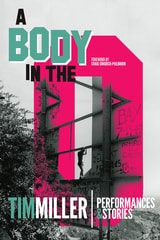
A Body in the O
Performances and StoriesTim Miller
University of Wisconsin Press, 2019
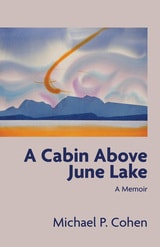
A Cabin Above June Lake
A MemoirMichael P. Cohen
University of Nevada Press, 2027
What does it mean to belong to a place that can never belong to you?
Set in the high country above June Lake on the eastern slope of the Sierra Nevada, this reflective narrative explores the enduring relationship between people and landscape. From their modest cabin near the headwaters of Reversed Creek, Michael and Valerie Cohen look across June Lake toward the vast expanse of the Great Basin. They are drawn to the region by its beauty and solitude, and the conviction that they are exactly where they ought to be.
Yet living in a place also means witnessing its transformation. Over nearly fifty years, the Cohens observe changes that reshape the Mono Basin and surrounding mountains: shifting economies, expanding development, record-breaking winters, wildfire threats, and the gradual erosion of community traditions.
Part memoir, part environmental reflection, part cultural history, this meditative narrative draws on writers and thinkers such as Ralph Waldo Emerson, Aldo Leopold, and Lew Welch. The Cohens’ efforts to maintain an aging cabin and a life together become a lens through which to examine stewardship, memory, resilience, and loss. This meditation on place returns to a question that has occupied generations of writers and naturalists: As the world continually reinvents itself, how must those who live within it respond?
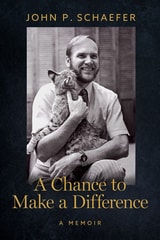
A Chance to Make a Difference
A MemoirJohn P. Schaefer
University of Arizona Press, 2025
Southwest Books of the Year Top Pick
John P. Schaefer was only thirty-six years old when he assumed the role of fifteenth president of the University of Arizona in 1971. The son of hardworking German immigrants, Schaefer grew up in Queens, New York, where childhood centered on sports, academics, and the great outdoors.
Earning a PhD in chemistry in 1958, Dr. Schaefer’s career skyrocketed through the ranks of academia, moving him from junior faculty to university president in a mere decade. As president, he led the University of Arizona through a transformational period of growth and is credited with securing the university’s status as a top-tier research institution.
A Chance to Make a Difference recounts poignant, eye-opening, and often humorous stories from childhood to presidency, revealing the characteristics of an inspiring university leader.
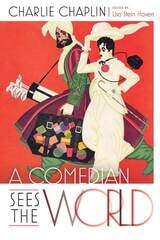
A Comedian Sees the World
Charlie Chaplin, Edited by Lisa Stein Haven
University of Missouri Press, 2014
Available only in the USA and Canada.
A Deaf Adult Speaks Out
Leo Jacobs
Gallaudet University Press, 1989
This new edition includes an update of services by and for deaf people, and an expanded chapter on legislation and social issues that have had an impact on the Deaf community in the last ten years.
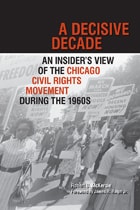
A Decisive Decade
An Insider's View of the Chicago Civil Rights Movement during the 1960sRobert B. McKersie, Foreword by James R. Ralph Jr.
Southern Illinois University Press, 2013
The deeply personal story of a historic time in Chicago, Robert B. McKersie’s A Decisive Decade follows the unfolding action of the Civil Rights Movement as it played out in the Windy City. McKersie’s participation as a white activist for black rights offers a unique, firsthand viewpoint on the debates, boycotts, marches, and negotiations that would forever change the face of race relations in Chicago and the United States at large.
Described within are McKersie’s intimate observations on events as they developed during his participation in such historic occasions as the impassioned marches for open housing in Chicago; the campaign to end school segregation under Chicago Schools Superintendent Benjamin Willis; Operation Breadbasket’s push to develop economic opportunities for black citizens; and dialogs with corporations to provide more jobs for blacks in Chicago. In addition, McKersie provides up close and personal descriptions of the iconic Civil Rights leaders who spearheaded some of the most formative battles of Chicago’s Civil Rights movement, including Dr. Martin Luther King, Jr., Reverend Jesse Jackson, Timuel Black Jr. and W. Alvin Pitcher. The author illumines the tensions experienced by two major institutions in responding to the demands of the civil rights movement: the university and the church. Packed with historical detail and personal anecdotes of these history-making years, A Decisive Decade offers a never-before-seen perspective on one of our nation’s most tumultuous eras.
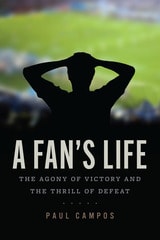
A Fan's Life
The Agony of Victory and the Thrill of DefeatPaul Campos
University of Chicago Press, 2022
The Pass. The Curse. The Double Doink. A sports fan’s life is not just defined by intense moments on a field, it’s scarred by them. For a real fan, winning isn’t everything—losing is. The true fans, it’s said, are those who have suffered the most, enduring lives defined by irrational obsession, fervid hopes, and equally gut-wrenching misery. And as Paul Campos shows, those deep feelings are windows not just onto an individual fan’s psychology but onto some of our shared concepts of community, identity, and belonging—not all of which are admirable. In A Fan’s Life, he seeks not to exalt a particular team but to explore fandom’s thorniest depths, excavating the deeper meanings of the fan’s inherently unhappy life.
A Fan’s Life dives deep into the experience of being an ardent fan in a world defined more and more by the rhetoric of “winners” and “losers.” In a series of tightly argued chapters that suture together memoir and social critique, Campos chronicles his lifelong passion for University of Michigan football while meditating on fandom in the wake of the unprecedented year of 2020—when, for a time, a global pandemic took away professional and collegiate sports entirely. Fandom isn’t just leisure, he shows; it’s part of who we are, and part of even our politics, which in the age of Donald Trump have become increasingly tribal and bloody. Campos points toward where we might be heading, as our various partisan affiliations—fandoms with a grimly national significance—become all the more intense and bitterly self-defining. As he shows, we’re all fans of something, and making sense of fandom itself might offer a way to wrap our heads around our increasingly divided reality, on and off the field.
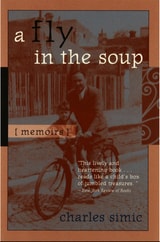
A Fly in the Soup
MemoirsCharles Simic
University of Michigan Press, 2003
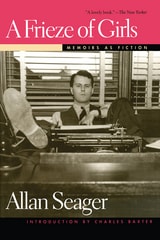
A Frieze of Girls
Memoirs as FictionAllan Seager
University of Michigan Press, 2004
A Frieze of Girls speaks with a fresh voice from an American era long past. This is more than Allan Seager's story of what happened; it is also about how "the feel of truth is very like the feel of fiction, especially when either is at all strange."
Seager gives us his coming-of-age story, from a high-school summer as a sometime cowboy in the Big Horn mountains to a first job at seventeen managing an antiquated factory in Memphis to a hard-drinking scholarship year in Oxford, cut short by tuberculosis. At once funny with an undercurrent of pain, the stories in A Frieze of Girls remind us of the realities we create to face the world and the past, and in turn of the realities of the world we must inevitably also confront. "Time makes fiction out of our memories," writes Seager. "We all have to have a self we can live with and the operation of memory is artistic---selecting, suppressing, bending, touching up, turning our actions inside out so that we can have not necessarily a likable, merely a plausible identity." A Frieze of Girls is Allan Seager at the top of his form, and a reminder that great writing always transcends mere fashion.
Allan Seager was Professor of English at the University of Michigan and author of many highly praised short stories and novels, including Amos Berry. He died in Tecumseh, Michigan, in 1968. Novelist Charles Baxter is the author of Saul and Patsy.
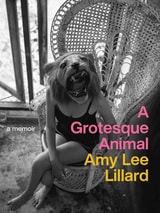
A Grotesque Animal
Amy Lee Lillard
University of Iowa Press, 2024
A Grotesque Animal explores the making, unmaking, and making again of a woman with an undiagnosed disorder. How did a working- class background and a deep-rooted Midwest culture of silence lead to hiding in plain sight for decades? How did sexuality and anger hide the roots of trauma among the women in her family? And what does it mean to be a queer, disabled, aging woman, a descendent of wild but tamed mothers and a survivor of the things patriarchy inflicts?
Through wide-ranging styles and a combination of personal storytelling and cultural analysis, Lillard dissects anger, sexuality, autistic masking, bodies, punk, and female annihilation to create a new picture of modern women.
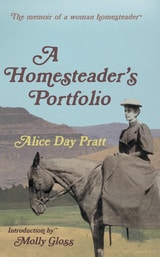
A Homesteader's Portfolio
Alice Day Pratt
Oregon State University Press, 1993
“So much is so skillfully crammed into this little book that the reader comes to admire Pratt’s zest while wondering how she could possibly have endured. . . . A splendid introduction by Molly Gloss, author of The Jump-Off Creek, enhances the book with a biography of the author and a study of her writings.” —Oregon Historical Quarterly
In 1911 Alice Day Pratt, single and nearing forty, boarded a train and left the east coast to file claim on 160 acres of land in the Central Oregon high desert. She was one among tens of thousands of people who took up homesteads in the arid West in the early twentieth century. Perhaps as many as 20 percent of these settlers were single women. Yet homesteading women are largely missing from the literature and histories of the West.
The commonly held image of frontier women as powerless and dependent helpmates stems in part from the scarcity of written accounts by homesteading women. Alice Day Pratt’s powerful memoir presents a rare, fascinating account of the life of a woman homesteader and chronicles her single-handed efforts to overcome the obstacles that faced all homesteaders—men and women—in the dryland West.
Pratt’s independent and adventurous spirit allowed her to hang on to her “homesteading dream” for more than a decade after most other homesteaders had packed their belongings and left the desert. By exploring the life she lived and the choices she made, Pratt offers an important glimpse into the social and cultural history of the American West.
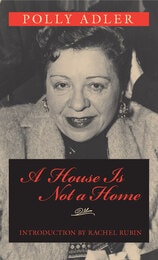
A House Is Not a Home
Polly Adler
University of Massachusetts Press, 2006
Polly Adler's “house”—the brothel that gave this best-selling 1953 autobiography its title—was a major site of New York City underworld activity from the 1920s through the 1940s. Adler's notorious Lexington Avenue house of prostitution functioned as a sort of social club for New York's gangsters and a variety of other celebrities, including Robert Benchley and his friend Dorothy Parker. According to one New York tabloid, it made Adler's name “synonymous with sin.”
This new edition of Adler's autobiography brings back into print a book that was a mass phenomenon, in both hardback and paperback, when it was first published. A self-consciously literary work, A House Is Not a Home provides an informal social history of immigrant mobility, prostitution, Jewish life in New York, police dishonesty, the “white slavery” scare of the early twentieth century, and political corruption.
Adler's story fills an important gap in the history of immigrant life, urban experience, and organized crime in New York City. While most other accounts of the New York underworld focus on the lives of men, from Herbert Asbury's Gangs of New York through more recent works on Jewish and Italian gangsters, this book brings women's lives and problems to the forefront.
A House Is Not a Home is compellingly readable and was popular enough to draw Hollywood's attention in the early 1960s—leading to a film starring Shelley Winters as Adler. The book has been largely forgotten in the ensuing decades, lost both to its initial audience of general readers and to scholars in women's studies, immigration history, and autobiography who are likely to find it a treasure trove. Now, with a new introduction by Rachel Rubin that contextualizes Adler's life and literary achievement, A House Is Not a Home is again available to the many readers who have come to understand such “marginal” life stories as a special refraction of the more typical American success narrative.

A House Is Not a Home
Polly Adler, with an Introduction by Rachel Rubin
University of Massachusetts Press, 2006
Polly Adler's “house”—the brothel that gave this best-selling 1953 autobiography its title—was a major site of New York City underworld activity from the 1920s through the 1940s. Adler's notorious Lexington Avenue house of prostitution functioned as a sort of social club for New York's gangsters and a variety of other celebrities, including Robert Benchley and his friend Dorothy Parker. According to one New York tabloid, it made Adler's name “synonymous with sin.”
This new edition of Adler's autobiography brings back into print a book that was a mass phenomenon, in both hardback and paperback, when it was first published. A self-consciously literary work, A House Is Not a Home provides an informal social history of immigrant mobility, prostitution, Jewish life in New York, police dishonesty, the “white slavery” scare of the early twentieth century, and political corruption.
Adler's story fills an important gap in the history of immigrant life, urban experience, and organized crime in New York City. While most other accounts of the New York underworld focus on the lives of men, from Herbert Asbury's Gangs of New York through more recent works on Jewish and Italian gangsters, this book brings women's lives and problems to the forefront.
A House Is Not a Home is compellingly readable and was popular enough to draw Hollywood's attention in the early 1960s—leading to a film starring Shelley Winters as Adler. The book has been largely forgotten in the ensuing decades, lost both to its initial audience of general readers and to scholars in women's studies, immigration history, and autobiography who are likely to find it a treasure trove. Now, with a new introduction by Rachel Rubin that contextualizes Adler's life and literary achievement, A House Is Not a Home is again available to the many readers who have come to understand such “marginal” life stories as a special refraction of the more typical American success narrative.
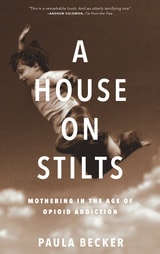
A House on Stilts
Mothering in the Age of Opioid AddictionPaula Becker
University of Iowa Press, 2019
More than 2.5 million Americans are addicted to opioids, some half-million of these to heroin. For many of them, their drug addiction leads to lives of demoralization, homelessness, and constant peril. For parents, a child’s addiction upends family life, catapulting them onto a path no longer prescribed by Dr. Spock, but by Dante’s Inferno. Within this ten-year crucible, Paula is transformed by an excruciating, inescapable truth: the difference between what she can do and what she cannot do.
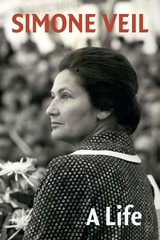
A Life
Simone Veil
Haus Publishing, 2009
Veil was one of France’s most beloved public figures, most admired for her personal and political courage. Her memoir, published here in English for the first time, is a sincere and candid account of an extraordinary life and career, reflecting both her humanity and her determination to improve social standards at home and maintain economic and political stability in Europe. In the wake of her passing in 2017, this translation of her memoir stands as a fitting tribute to an unparalleled life of survival, selflessness, and unwavering public service.

A Life in Music from the Soviet Union to Canada
Memoirs of a Madrigal Ensemble SingerAlexander Tumanov
University of North Texas Press, 2019
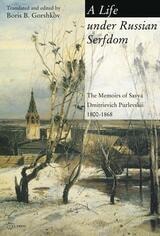
A Life under Russian Serfdom
The Memoirs of Savva Dmitrievich Purlevskii, 1800–68Boris B. Gorshkov
Central European University Press, 2005
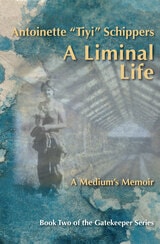
A Liminal Life
A Medium's MemoirAntoinette "Tiyi" Schippers
Parkhurst Brothers, Inc., 2023
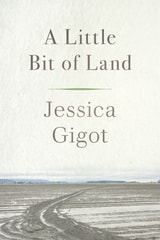
A Little Bit of Land
Jessica Gigot
Oregon State University Press, 2022
From midwifing new lambs to harvesting basil, Jessica Gigot invites the reader into her life on a small farm and the uncommon road that led her there. Fascinated by farming and the burgeoning local food movement, she spent her twenties wandering the Pacific Northwest, interning at small farms and doing graduate work in horticulture, always with an eye towards learning as much as she could about how and why people farm. Despite numerous setbacks and the many challenges of farming, she created a family and farm life defined by resilience and a genuine love of the land.
In A Little Bit of Land, Gigot explores the intricacies of small-scale agriculture in the Pacific Northwest and the changing role of women in this male-dominated industry. Gigot alternates between chapters describing joys, routines, and challenges of farm life and chapters reflecting on her formative experiences in agriculture, on farms and in classrooms from Ashland to the Skagit Valley. Throughout, she explores questions of sustainability, economics, health, and food systems.
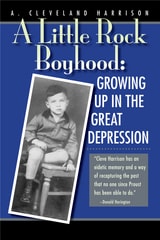
A Little Rock Boyhood
Growing Up in the Great DepressionA. Cleveland Harrison
Butler Center for Arkansas Studies, 2010
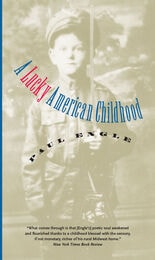
A Lucky American Childhood
Paul Engle
University of Iowa Press, 1996
A Lucky American Childhood will appeal to people with memories of the small-town America that Paul Engle describes with such affectionate realism and to all those interested in the roots of this renowned man of letters.
A Machine-Gunner in France
The Memoirs of Ward Schrantz, 35th Division, 1917-1919Ward Schrantz
University of North Texas Press, 2019
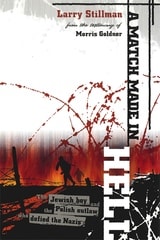
A Match Made in Hell
The Jewish Boy and the Polish Outlaw Who Defied the NazisLarry Stillman, from the testimony of Morris Goldner
University of Wisconsin Press, 2003
When Moniek (Morris) Goldner and his family were uprooted from their Polish farming village during a German action, the child-sized sixteen-year-old fled into the forests. He eventually met up with his father, who had also escaped, and together they managed to survive until a former friend betrayed the pair. Wounded and left for dead beneath his father’s murdered body, Goldner was rescued by the enigmatic outlaw Jan Kopec, who was also in hiding, looking for ways to profit from his criminal expertise.
For eighteen months Kopec hid the boy with him, moving from one area to another, often staying in hideouts he had fashioned years earlier. At first Kopec trained Goldner simply to serve as his accomplice in robberies and black market activities. But before long he pushed the training to a whole new level, making it possible for him to sell Goldner’s services to a shadowy resistance group which was becoming interested in the daring young saboteur.
And through it all, these two disparate personalities—the quiet, small-framed boy and the stocky, callous mercenary—forged an remarkable friendship and co-dependency born of need and desperation in a hellish time and place.

A Matter of Choices
Memoirs of a Female PhysicistFay Ajzenberg-Selove
Rutgers University Press, 1994
Ajzenberg-Selove came to America at the age of 15 after narrowly escaping the Nazi takeover of France. She had planned to become an engineer like her father, but switched to physics after she was told the only engineering jobs open to women were in drafting: Marie Curie's example proved to her that women could do physics. Her first attempt at graduate work at Columbia University was a disaster, but she was sturck with the intellectual beauty of the field. After taking a Ph.D. in physics at University of Wisconsin, she did post-doctoral work with Thomas Lauritsen at the California Institute of Technology, where she began writing the first of a series of major review papers on the nuclear spectroscopy of the light nuclei, a subject of fundamental importance to nuclear physics, astrophysics, and applied physics. She continued this work and experimental research for thirty-eight years while teaching at Boston University, Haverford College, and the University of Pennsylvania.
During her early career, Ajzenberg-Selove was shielded by her male mentors from experiencing much of the discrimination directed against women in science. Her simultaneous battles to become a tenured professor and to overcome breast cancer opened her eyes and confirmed her as a feminist.
The lay reader and the scientist alike will be fascinated by Ajzenberg-Selove's clear portrayal of her interlinked lives as physicist, teacher, wife of particle physicist, Walter Selove, and a woman who relishes both competition and friendship in a male-dominated field. An invaluable book for anyone contemplating a career in science.

A Memoir
John A. Hannah
Michigan State University Press, 1980
This is a very personal look at the growth and evolution of Michigan State University, as seen from the eyes of its dynamic president. As twelfth president of Michigan State University, John Alfred Hannah served from July 1, 1941, to April 1, 1969. His tenure was characterized by extensive growth of the University, in both size and enrollments. President Hannah's activities were not limited to the University, as he filled a variety of positions in both the federal government and private industry.
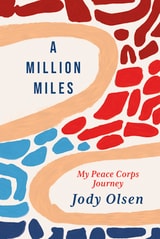
A Million Miles
My Peace Corps JourneyJody Olsen
University of Utah Press, 2024
Olsen’s captivating memoir, A Million Miles, reveals the personal and professional challenges she faced throughout her career, which spanned the Reagan era, 9/11, and the Trump administration. She writes candidly about her struggles as a woman in leadership, as well as personal hardships such as the
sudden death of her brother and her emotionally difficult divorce after her husband’s coming out. This memoir is a sharp, vulnerable portrait, a testament to the transformative power of leadership and self-discovery.
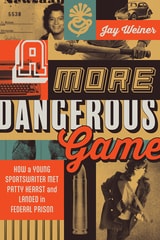
A More Dangerous Game
How a Young Sportswriter Met Patty Hearst and Landed in Federal PrisonJay Weiner
University of Minnesota Press, 2027
From precocious sportswriter to Federal Prisoner #01150-134: The intersection of sports and the revolutionary 1970s, with one ambitious young man caught in the middle
Jay Weiner was an aspiring teenage sportswriter when he met Jack Scott, the charismatic, activist journalist who would become his mentor, immersing him in the political and social issues roiling sports—and so much else—in the late 1960s and 1970s. Weiner became a zealous student of Scott, joining a new tradition of sports journalism that interrogated questions of race, power, and politics alongside the games themselves. But his blind devotion took a treacherous turn when Scott took Weiner, as a surprise for his twentieth birthday, to a secluded Pennsylvania farmhouse where heiress-turned-FBI-most-wanted Patty Hearst was hiding out with her Symbionese Liberation Army kidnappers-turned-comrades.
A More Dangerous Game is Weiner’s story of coming of age in a shocking fashion. A wild mosaic of sports, journalism, betrayal, justice, courage, and redemption, his memoir charts the meeting of sports and the radical left in the 1970s, with Weiner unwittingly caught in the middle and left behind by his mentor. In the engaged, edgy style of a seasoned sportswriter, Weiner describes the fallout after that fateful encounter with the country’s most wanted fugitives: three years of federal subpoenas, impossible decisions, and, ultimately, four months in prison for refusing to testify before a grand jury.
With exhaustive background reporting, Weiner fits together the seemingly disparate pieces of his unlikely journey from young sportswriter to frightened FBI target to emboldened Federal Prisoner #01150-134. From its examination of the life and work of Jack Scott to its surprising angle on the well-chronicled saga of Patty Hearst, A More Dangerous Game is the engrossing story of a time when examining sports as a mirror of society put a writer on the cutting edge of one of the most notorious stories of a generation.
Retail e-book files for this title are screen-reader friendly with images accompanied by short alt text and/or extended descriptions.
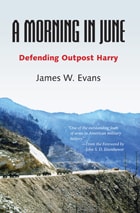
A Morning in June
Defending Outpost HarryJames W. Evans, with a foreword by John S. D. Eisenhower
University of Alabama Press, 2010
Exploring the strategic and human dimensions of the defense of Outpost Harry.
By June 1953 the Korean War, marked at the outset by extremely fluid advances and retreats up and down the peninsula, had settled into position warfare very near the original pre-war demarcation line between North and South Korea. At this point both sides were fighting to win a peace, to achieve incremental advantages that could be translated into gains at the peace negotiations in Panmunjom. The battle at Outpost Harry devolved into hand-to-hand combat during a period of constant, intense fighting that lasted two days. The author, although seriously wounded that night, refused evacuation and remained on the hill to successfully lead his company in defense of the outpost. It wasn’t romantic; it wasn’t chivalrous; and many died or were badly wounded. Some of the survivors never fully overcame the mental and physical damage they suffered during the nightmare.
With this book, one of those scarred by that experience recounts the events of the battle and his lifelong efforts to deal with the residual horrors. The Korean Conflict may be called "the forgotten war" by some, but not by those who were on the front lines.
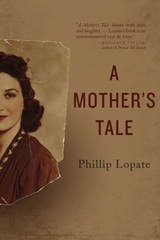
A Mother's Tale
Phillip Lopate
The Ohio State University Press, 2017
In 1984, Phillip Lopate sat down with his mother, Frances, to listen to her life story. A strong, resilient, indomitable woman who lived through the major events of the twentieth century, she was orphaned in childhood, ran away and married young, and then reinvented herself as a mother, war factory worker, candy store owner, community organizer, clerk, actress, and singer. But paired with exciting anecdotes are the criticisms of the husband who couldn’t satisfy her, the details of numerous affairs and sexual encounters, and, though she succeeded at many of her roles, accounts of how she always felt mistreated, taken advantage of. After the interviews, at a loss for what to do with the tapes, Lopate put them away. But thirty years later, after his mother had passed away, Lopate found himself drawn back to the recordings of this conversation. Thus begins a three-way conversation between a mother, his younger self, and the person he is today.
Trying to break open the family myths, rationalizations, and self-deceptions, A Mother’s Tale is about family members who love each other but who can’t seem to overcome their mutual mistrust. Though Phillip is sympathizing to a point, he cannot join her in her operatic displays of self-pity and how she blames his father for everything that went wrong. His detached, ironic character has been formed partly in response to her melodramatic one. The climax is an argument in which he tries to persuade her—using logic, of all things—that he really does love her, but is only partially successful, of course.
A Mother’s Tale is about something primal and universal: the relationship between a mother and her child, the parent disappointed with the payback, the child, now fully grown, judgmental. The humor is in the details.
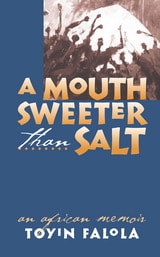
A Mouth Sweeter Than Salt
An African MemoirToyin Falola
University of Michigan Press, 2005
-Ama Ata Aidoo
"A splendid coming-of-age story so full of vivid color and emotion, the words seem to dance off the page. But this is not only Falola's memoir; it is an account of a new nation coming into being and the tensions and negotiations that invariably occur between city and country, tradition and modernity, men and women, rich and poor. A truly beautiful book."
-Robin D. G. Kelley
"More than a personal memoir, this book is a rich minihistory of contemporary Nigeria recorded in delicious detail by a perceptive eyewitness who grew up at the crossroads of many cultures."
-Bernth Lindfors
"The reader is irresistibly drawn into Falola's world. The prose is lucid. There is humor. This work is sweet. Period."
-Ngugi wa Thiongo'o
A Mouth Sweeter Than Salt gathers the stories and reflections of the early years of Toyin Falola, the grand historian of Africa and one of the greatest sons of Ibadan, the notable Yoruba city-state in Nigeria.
Redefining the autobiographical genre altogether, Falola miraculously weaves together personal, historical, and communal stories, along with political and cultural developments in the period immediately preceding and following Nigeria's independence, to give us a unique and enduring picture of the Yoruba in the mid-twentieth century. This is truly a literary memoir, told in language rich with proverbs, poetry, song, and humor.
Falola's memoir is far more than the story of one man's childhood experiences; rather, he presents us with the riches of an entire culture and community-its history, traditions, pleasures, mysteries, household arrangements, forms of power, struggles, and transformations.
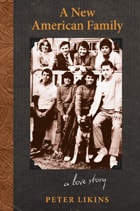
A New American Family
A Love StoryPeter Likins
University of Arizona Press, 2011
This poignant but ultimately empowering memoir tells the story of Peter Likins, his wife Patricia, and the six children they adopted in the 1960s, building a family beset by challenges that ultimately strengthened all bonds. With issues such as inter-racial adoption, mental illness, drug addiction, unwed pregnancy, and homosexuality entwined in their lives, the Likins’ tale isn’t just a family memoir—it’s a story of the American experience, a memoir with a message. With circumstances of race, age, and health making all of their children virtually unadoptable by 1960s standards, Pat and Pete never strayed from the belief that loyalty and love could build a strong family.
Both Pete and Pat have served as teachers. and Pete’s long academic career—holding positions as a professor, dean, provost, and then president—illuminates more than just his personal success. Pete’s professional attainments produce a context for his family story, wherein high achievements in educational, athletic, and financial terms coexist with the joys and sorrows of this exceptional family.
A frank, open account of the difficulties his family faced, this is a brave story, told with unflinching honesty and remarkable compassion. A New American Family is a wonderful narrative of the genesis of a family and a journey to the deepest parts of a father’s heart.
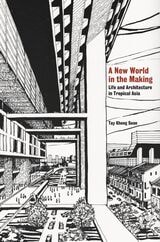
A New World in the Making
Life and Architecture in Tropical AsiaTay Kheng Soon
National University of Singapore Press, 2023
According to architect Tay Kheng Soon, the time has come to change and build a new world. The feeling has impelled him to write this book, bringing together memoir and writings on identity, landscape and belonging, and on architecture and urbanism. Born in British-ruled Singapore, Soon was deeply engaged in the debates about building a new world that attended the end of colonialism. His focus, but far from his only concern, was Singapore's built environment—and its spiritual one—since the early 1960s. A New World in the Making is a must-read reflection on tropical Asia, on architecture and urbanism, and on looking ahead to the always urgent task of building a new world.
A Nickel and a Prayer
Rhondda Robinson Thomas
University of Delaware Press, 0
Virtually unknown outside of her adopted hometown of Cleveland, Ohio, Jane Edna Hunter was one of the most influential African American social workers and progressive activists of the early to mid-twentieth century.
In her autobiography A Nickel and a Prayer, Hunter presents an enlightening two-part narrative that recollects her formative years in the post–Civil War South and her activist years in Cleveland. Published in 1940, Hunter’s autobiography recalls a childhood filled with the pleasures and pains of family life on the former plantation where her ancestors had toiled, adventures and achievements in schools for African American children, tests and trials during her brief marriage, and recognition and respect while completing nursing training and law school. When sharing the story of her life as an activist, Hunter describes the immense obstacles she overcame while developing an interracial coalition to support the establishment of the Working Girls Home Association (later, the Phillis Wheatley Association), a progressive institution intended to house and help unmarried African American women and girls, and nurture its growth from a rented home that provided accommodations for twenty-two women to a nine-story building that featured 135 rooms.
This new and annotated edition of A Nickel and a Prayer includes the final chapter, “Fireside Musings,” that Hunter added to the second, limited printing of her autobiography and an introduction that lauds her as a multifaceted social activist who not only engaged in racial uplift work, but impacted African American cultural production, increased higher education opportunities for women, and invigorated African American philanthropy. This important text restores Jane Edna Hunter to her rightful place among prominent African American leaders of the twentieth century.
A Part of the Heart Can't Be Eaten
A MemoirTristan Taormino
Duke University Press, 2023
Tristan’s world began to fall apart when her dad was diagnosed with AIDS. After a series of devastating events, she moved to the messy, glorious world of 1990s New York City. In the midst of grief and depression, she helped change queer sexual subculture with her zine Pucker Up, her infamous The Village Voice column, and her editorship of legendary lesbian porn magazine On Our Backs. After the publication of her first book, The Ultimate Guide to Anal Sex for Women, Tristan followed her own path that marked the beginning of her work as a trailblazing feminist pornographer.
After a lifetime of outrageous adventures, Tristan reflects on the bonds, loss, and mental-health struggles that shaped her. She weaves together history from her father’s unpublished memoir, exploring the surprising ways their personal patterns converge and diverge. Bracingly emotional and erotically charged, A Part of the Heart Can’t Be Eaten reveals the transformative power of queer pleasure and defiance.
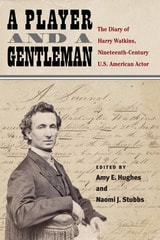
A Player and a Gentleman
The Diary of Harry Watkins, Nineteenth-Century U.S. American ActorEdited by Amy E. Hughes and Naomi J. Stubbs
University of Michigan Press, 2018
Hardworking actor, playwright, and stage manager Harry Watkins (1825–94) was also a prolific diarist. For fifteen years Watkins regularly recorded the plays he saw, the roles he performed, the books he read, and his impressions of current events. Performing across the U.S., Watkins collaborated with preeminent performers and producers, recording his successes and failures as well as his encounters with celebrities such as P. T. Barnum, Junius Brutus Booth, Edwin Forrest, Anna Cora Mowatt, and Lucy Stone. His is the only known diary of substantial length and scope written by a U.S. actor before the Civil War—making Watkins, essentially, the antebellum equivalent of Samuel Pepys. Theater historians Amy E. Hughes and Naomi J. Stubbs have selected, edited, and annotated excerpts from the diary in an edition that offers a vivid glimpse of how ordinary people like Watkins lived, loved, struggled, and triumphed during one of the most tumultuous periods in U.S. history. The selections in A Player and a Gentleman are drawn from a more expansive digital archive of the complete diary. The book, like its digital counterpart, will richly enhance our knowledge of antebellum theater culture and daily life in the U.S. during this period.
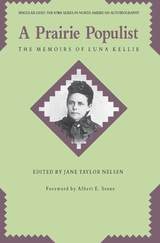
A Prairie Populist
The Memoirs of Luna KellieJane Taylor Nelsen
University of Iowa Press, 1992
Kellie actively sought to organize Nebraska into cooperatives and educate rural people about land, transportation, and money reform. Her compelling, often heartbreaking memoirs—written on the backs of ornate red-and-gold Farmers' Alliance certificates in 1925—give us her own description of how she became motivated to join the Alliance and participate in the Populist party. Kellie writes of her homesteading and political life from the age of eighteen to forty, of failed crops, mortgaged fields, intense hardships, and her devastation at the death of her children.
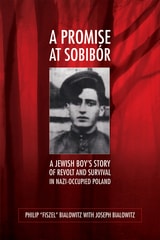
A Promise at Sobibór
A Jewish Boy’s Story of Revolt and Survival in Nazi-Occupied PolandPhilip “Fiszel” Bialowitz, with Joseph Bialowitz; Foreword by Wladyslaw Bartoszewski
University of Wisconsin Press, 2012
A Promise at Sobibór is the story of Fiszel Bialowitz, a teenaged Polish Jew who escaped the Nazi gas chambers. Between April 1942 and October 1943, about 250,000 Jews from European countries and the Soviet Union were sent to the Nazi death camp at Sobibór in occupied Poland. Sobibór was not a transit camp or work camp: its sole purpose was efficient mass murder. On October 14, 1943, approximately half of the 650 or so prisoners still alive at Sobibór undertook a daring and precisely planned revolt, killing SS officers and fleeing through minefields and machine-gun fire into the surrounding forests, farms, and towns. Only about forty-two of them, including Fiszel, are known to have survived to the end of the war.
Philip (Fiszel) Bialowitz, now an American citizen, tells his eyewitness story here in the real-time perspective of his own boyhood, from his childhood before the war and his internment in the brutal Izbica ghetto to his harrowing six months at Sobibór—including his involvement in the revolt and desperate mass escape—and his rescue by courageous Polish farmers. He also recounts the challenges of life following the war as a teenaged displaced person, and his eventual efforts as a witness to the truth of the Holocaust.
In 1943 the heroic leaders of the revolt at Sobibór, Sasha Perchersky and Leon Feldhendler, implored fellow prisoners to promise that anyone who survived would tell the story of Sobibór: not just of the horrific atrocities committed there, but of the courage and humanity of those who fought back. Bialowitz has kept that promise.
Best Books for General Audiences, selected by the American Association for School Libraries
Best Books for High Schools, selected by the American Association for School Libraries
Best Books for Special Interests, selected by the Public Library Association
A Road Course in Early American Literature
Travel and Teaching from Atzlán to AmherstThomas Hallock
University of Alabama Press, 2021
Essays that fuse literary scholarship and personal travelogue to explore American identity
A Road Course in Early American Literature: Travel and Teaching from Atzlán to Amherst explores a two-part question: what does travel teach us about literature, and how can reading guide us to a deeper understanding of place and identity? Thomas Hallock charts a teacher’s journey to answering these questions, framing personal experiences around the continued need for a survey course covering early American literature up to the mid-nineteenth century.
Hallock approaches literary study from the overlapping perspectives of pedagogue, scholar, unrepentant tourist, husband, father, friend, and son. Building on Ralph Waldo Emerson’s premise that there is “creative reading as well as creative writing,” Hallock turns to the vibrant and accessible tradition of American travel writing, employing the form of biblio-memoir to bridge the impasse between public and academic discourse and reintroduce the dynamic field of early American literature to wider audiences.
Hallock’s own road course begins and ends at the Low country of Georgia and South Carolina, following a circular structure of reflection. He weaves his journey through a wide swath of American literatures and authors: from Native American and African American oral traditions, to Wheatley and Equiano, through Emerson, Poe, and Dickinson, among others. A series of longer, place-oriented narratives explore familiar and lesser-known literary works from the sixteenth-century invasion of Florida through the Mexican War of 1846–1848 and the American Civil War. Shorter chapters bridge the book’s central themes—the mapping of cognitive and physical space, our personal stake in reading, the tensions that follow earlier acts of erasure, and the impossibility of ever fully shutting out the past.
Exploring complex cultural histories and contemporary landscapes filled with ghosts and new voices, this volume draws inspiration from a tradition of travel, place-oriented, and literature-based works ranging from William Carlos Williams’s In the American Grain and Jack Kerouac’s On the Road to Alice Walker’s In Search of Our Mother’s Gardens, Wendy Lesser’s Why I Read: The Serious Pleasure of Books, and Rebecca Mead’s My Life in Middlemarch.
An accompanying bibliographic essay is periodically updated and available at Hallock’s website: www.roadcourse.us.
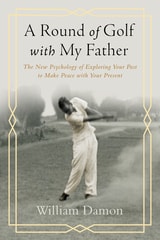
A Round of Golf with My Father
The New Psychology of Exploring Your Past to Make Peace with Your PresentDamon, William
Templeton Press, 2021
Viewing our past through the eyes of maturity can reveal insights that our younger selves could not see. Lessons that eluded us become apparent. Encounters that once felt like misfortunes now become understood as valued parts of who we are. We realize what we’ve learned and what we have to teach. And we’re encouraged to chart a future that is rich with purpose.
In A Round of Golf with My Father, William Damon introduces us to the “life review.” This is a process of looking with clarity and curiosity at the paths we’ve traveled, examining our pasts in a frank yet positive manner, and using what we’ve learned to write purposeful next chapters for our lives.
For Damon, that process began by uncovering the mysterious life of his father, whom he never met and never gave much thought to. What he discovered surprised him so greatly that he was moved to reassess the events of his own life, including the choices he made, the relationships he forged, and the career he pursued.
Early in his life, Damon was led to believe that his father had been killed in World War II. But the man survived and went on to live a second life abroad. He married a French ballerina, started a new family, and forged a significant Foreign Service career. He also was an excellent golfer, a bittersweet revelation for Damon, who wishes that his father had been around to teach him the game.
We follow Damon as he struggles to make sense of his father’s contradictions and how his father, even though living a world apart, influenced Damon’s own development in crucial ways. In his life review, Damon uses what he learned about his father to enhance his own newly emerging self-knowledge.
Readers of this book may come away inspired to conduct informal life reviews for themselves. By uncovering and assembling the often overlooked puzzle pieces of their pasts, readers can seek present-day contentment and look with growing optimism to the years ahead.
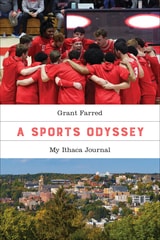
A Sports Odyssey
My Ithaca JournalGrant Farred
Temple University Press, 2025
As readers of his Long Distance Love know, Grant Farred has been a supporter of the English Premier League club, Liverpool Football Club, for decades. His fandom for that team launched an unexpected connection with a world beyond the limits of the apartheid state of his upbringing in South Africa. However, A Sports Odyssey shows that as Farred’s fervor for Liverpool ended, he developed a new set of sports attachments in Ithaca, New York: to his son’s youth basketball career, to the men’s basketball team at Cornell University and its coach, and even to professional teams like the New York Knicks. Farred’s bemusement at finding himself a sports parent, a New Yorker, and a company man, only underline the sincerity of his affections.
In A Sports Odyssey, Farred writes elegantly and eloquently about how sports and sports fandom create a sense of belonging, but also loss. This is a heartfelt examination of how we find “home” in who and what we love.
In the series Sporting
A Union Soldier in the Land of the Vanquished
TheDiary of Sergeant Mathew Woodruff, June-December, 1865Mathew Woodruff
University of Alabama Press, 1969
The heart of this volume is the verbatim diary of a union soldier stationed in the deep south immediately after the Civil War.
A Union Soldier in the Land of the Vanquished is a vivid and authentic diary that transports readers to the tense and uncertain months following the Civil War. Edited by historian F. N. Boney, this work presents the unvarnished words of Sergeant Mathew Woodruff, a seasoned veteran of the 21st Missouri Infantry. After fighting in the major campaigns of the western theater, Woodruff returned to duty in June 1865 for occupation service along the Gulf Coast of Mississippi and Alabama—a region still reeling from defeat.
Spanning June through December of 1865, Woodruff’s daily entries capture the raw texture of life as a Union soldier in a conquered land. His observations range from the mundane to the profound: enforcing discipline among restless troops, navigating the challenges of Reconstruction, and finding moments of respite in hunting, fishing, and social gatherings. Through his candid reflections—complete with misspellings and colloquial phrasing—readers gain insight into the frustrations, hopes, and humanity of men tasked with rebuilding a fractured nation.
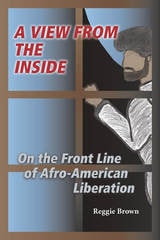
A View from the Inside
On the Front Line of Afro-American LiberationReggie Brown
Southern Illinois University Press, 2017
Brown joined the Black Panther Party and met with Fred Hampton, the Illinois chapter’s deputy chairman, engaging the man to speak at SIU just three weeks before his infamous assassination by Chicago police under orders from the FBI. Soon after, tensions would escalate into violence closer to home. Before his work in Carbondale was over, Brown would survive a terrible betrayal, an explosion that resulted in a month-long coma, the amputation of a leg, and a poisoning that was attempted as he lay in his hospital bed. After Brown’s injuries forced him to withdraw from Carbondale, his group would be falsely accused of shooting a local police officer, and their residence would be attacked with gunfire and tear gas. The narrative also reveals the challenges and struggles he faced in dealing with physical disabilities and the consequences of addiction.
A View from the Inside offers not only a fresh perspective on racial conflicts in southern Illinois during a pivotal era but also reflections on black identity, leadership, drug addiction, and more. In original poetry and rap as well as prose, Brown reveals a fascinating and significant moment in African American history.
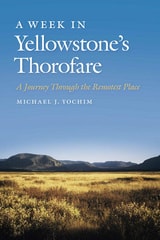
A Week in Yellowstone's Thorofare
A Journey Through the Remotest PlaceMichael J. Yochim
Oregon State University Press, 2016
Drawing upon the first-person accounts of rangers who have patrolled the area, archival documents, and Michael Yochim’s personal experiences over almost three decades, A Week in Yellowstone’s Thorofare distinguishes between the notions of wildness and wilderness. Through historic vignettes, descriptions of natural resources, and the author’s own experiences, it argues that wildness is the most precious, and easily lost, attribute of wilderness.
The Thorofare is remote not only from roads, but also largely unexplored in the vast body of wilderness literature. A Week in Yellowstone’s Thorofare aims to fill that void. Recognizing both the value and the fragility of wildness, the rangers who manage the area have struggled through many eras to preserve it. This book chronicles many of the struggles through which it has remained protected for visitors today.
Yochim offers poignant insight into the passions that motivate those who manage, defend, and journey through the Thorofare. His story demonstrates the importance of wild places for touching and understanding a fundamental part of the human experience. Part history, memoir, travelogue, natural history, and reflection, the book will appeal to readers interested in preservation, the wilderness movement, the history of National Parks, or the natural treasures of Yellowstone.
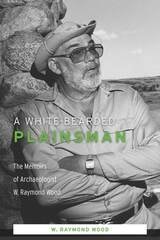
A White-Bearded Plainsman
The Memoirs of Archaeologist W. Raymond WoodW. Raymond Wood
University of Utah Press, 2011
W. Raymond Wood played a leading role in the early days of Great Plains archaeology. In A White-Bearded Plainsman, he tells how his own career emerged, as the discipline of Plains archaeology developed during the post-World War II era. Readers will learn of the childhood influences that lead Wood to pursue the path of archaeologist, and of the events and people that shaped his professional life. In addition to telling Wood’s personal story, the book provides an intellectual history of the discipline of mid-continental archaeology over the last half century. It will thus be valuable to students and scholars in the field, as it describes how the paradigms in Plains and midwestern prehistory have changed over time. To understand the discipline, one must understand the cultural and intellectual underpinnings that shaped it. Wood’s book helps map for a new generation of archaeologists from whence they’ve come, and his role in the developments along the way.
A Wild Path
Douglas Wood
University of Minnesota Press, 2024
A soul-satisfying journey through the wilderness that uncovers hope, healing, and the abiding grace of wild things
A Wild Path is author Douglas Wood’s highly anticipated followup to the critically acclaimed memoir Deep Woods, Wild Waters. He again leads readers along a meditative path through a wilderness of many dimensions—from the lakes and islands of his beloved Canoe Country to rugged ocean coasts to a mountain chasm, from camping on the Canadian Shield to listening to the soft strains of Beethoven in the pines, and from the pain of childhood wounds to appreciation for a life rich with nature. As on every good journey, there is plenty of laughter, warmth, and humor on the trail.
With the generosity and compassion of a good wilderness guide, Douglas Wood welcomes readers to accompany him as he navigates his life-path from struggling student and “worst reader in the class” to prolific writer and best-selling author. He offers courage and hope to those who feel different or left behind, and he shares how he found, through the counsel of rocks, trees, and waters, his own way toward joy and wonder and an unshakable sense of belonging.
Exploring the meanings of myriad outdoor experiences, Wood seeks to understand the importance and existence of beauty, the emotional poignancy of a wilderness sunset, and the realization of dreams, while also honoring his outdoor and literary mentors, including Sigurd Olson and Aldo Leopold. Traveling across continents, over oceans, and through the landscape of time, A Wild Path ranges from solitary shorelines of introspection to peaks of triumph, finding rest and tranquility in a simple cup of jasmine tea, sipped by a campfire under the stars.

A Witness to the Silent Church
Memoirs of Ukrainian Cardinal Josyf SlipyjJosef Slipyj
Catholic University of America Press, 2025
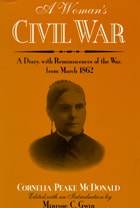
A Woman's Civil War
A Diary with Reminiscences of the War, from March 1862Cornelia Peake McDonald; Edited, with an Introduction by Minrose C. Gwin
University of Wisconsin Press, 1992
McDonald’s story of the Civil War records a personal and distinctly female battle of her own—a southern woman’s lonely struggle in the midst of chaos to provide safety and shelter for herself and her children. For McDonald, history is what happens “inside the house.” She relates the trauma that occurs when the safety of the home is disrupted and destroyed by the forces of war—when women and children are put out of their houses and have nowhere to go.
Whether she is describing a Union soldier’s theft of her Christmas cakes, the discovery of a human foot in her garden, or the death of her baby daughter, McDonald’s story of the Civil War at home is compelling and disturbing. Her tremendous determination and unyielding spirit in the face of the final collapse of her world is testimony to a woman’s will to preserve her family and her own sense of purpose as a “rebel” against all that she regarded as tyrannical and brutal in war itself.