Results by title
64 books match the query 'Mining' and 4 start with a
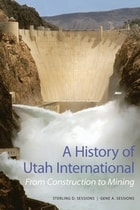
A History of Utah International
From Construction to MiningSterling D Sessions
University of Utah Press, 2005
The story of how the Utah Construction Company, founded in Ogden, Utah in 1900, became Utah International, a multinational corporation, is known to historians of the American West but perhaps not by the general public. The publication of this book remedies that omission.
During its first decades, the company built railroads and dams and was one of the Six Companies Consortium that built Hoover Dam. Utah Construction was also engaged in numerous war-contract activities during World War II. In the postwar period, the company expanded its activities into mining and land development and moved its headquarters to San Francisco. Changing its name to Utah Construction and Mining, and eventually to Utah International, the corporation became one of the most successful multinational mining companies in the world. In 1976, Utah International and General Electric negotiated the largest yet corporate merger in the United States.
Based on the Utah International archives housed in the Stewart Library at Weber State University, the story of Utah International describes more than projects: it is also the story of how two remarkable entrepreneurs, Marriner Stoddard Eccles and Edmund Wattis Littlefield, transformed the company incorporated in 1900 by the Wattis brothers into the largest and most profitable mining company in the United States.
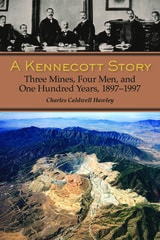
A Kennecott Story
Three Mines, Four Men, and One Hundred Years, 1887-1997Charles Caldwell Hawley
University of Utah Press, 2014
As it traces the story of the three mines, the narrative follows four mining engineers—Stephen Birch, Daniel Cowan Jackling, William Burford Braden, and E. Toppan Stannard—self-made men whose technological ingenuity was responsible for much of Kennecott’s success. While Jackling developed economies of scale for massive open-pit mining in Utah, Braden went underground in Chile for a caving operation of unprecedented scale for copper. Meanwhile, Birch and Stannard overcame the extreme challenges of mining rich ore in the difficult climate of Alaska and transporting it to market. The Guggenheims, who brought these three operations together provided the funding without which the infrastructure necessary for the mining operations might not have been built. The railroad required for the Alaska mine alone cost more than three times what the United States had paid to buy all of Alaska only forty-five years earlier.
As a geologist with first-hand knowledge of mining, author Charles Hawley aptly describes the technology behind the Kennecott story in a way that both specialists and the general reader will appreciate. Through engaging stories and pertinent details, he places Kennecott and the copper industry within their historical context and also allows the reader to consider the controversial aspects of mineral discovery and sustainability in a crowded world where resources are limited.
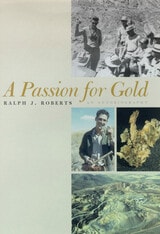
A Passion For Gold
An AutobiographyRalph J. Roberts
University of Nevada Press, 2002
Ralph J. Roberts is not a household name in Nevada, but it should be—it was he who discovered the Carlin Belt gold deposits that created a major mining boom in the state in the last four decades of the twentieth century. But this discovery was only one episode of his remarkably eventful life. This colorful and personal account of the author's search for his passion—gold—is a story as adventurous as that of any fictional character.
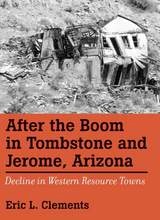
After The Boom In Tombstone And Jerome, Arizona
Decline In Western Resource TownsEric L. Clements
University of Nevada Press, 2014