Results by title
132 books match the query 'Myth' and 5 start with a

A Final Story
Science, Myth, and BeginningsNasser Zakariya
University of Chicago Press, 2017
In A Final Story, Nasser Zakariya delves into the origins and ambitions of these scientific epics, from the nineteenth century to the present, to see what they reveal about the relationship between storytelling, integrated scientific knowledge, and historical method. While seeking to transcend the perspectives of their own eras, the authors of the epics and the debates surrounding them are embedded in political and social struggles of their own times, struggles to which the epics in turn respond. In attempts to narrate an approach to a final, true account, these synthesizing efforts shape and orient scientific developments old and new. By looking closely at the composition of science epics and the related genres developed along with them, we are able to view the historical narrative of science as a form of knowledge itself, one that discloses much about the development of our understanding of and relationship to science over time.
Amythia
Crisis in the Natural History of Western CultureLoyal D. Rue
University of Alabama Press, 1989
Amythia results when cosmology and morality are not effectively integrated by a root metaphor, and the only possibility for the future is to transpose the old Christian God as Person to a root metaphor that is even older in origin, the concept of the Covenant tradition inherited from Israel but now understood in a nonsupernaturalist manner.
Rue asserts that amythia is a critical condition within the natural history of Western culture. The argument of the book begins with a theoretical perspective on the place of human culture within the scope of natural history and proceeds to establish the conceptual foundations for a natural history of culture.
Following an overview of the natural history of Western culture to expose the origins and depth of the contemporary intellectual and moral crisis, Rue moves on to specify and justify the limits of distinctiveness and plausibility appropriate for the task of transposing Covenant tradition. Finally, an appeal is made to the mythmakers of contemporary culture to take up the challenge of amythia.
Anthropology and Radical Humanism
Native and African American Narratives and the Myth of RaceJack Glazier
Michigan State University Press, 2020
Apples and Oranges
Explorations In, On, and With ComparisonBruce Lincoln
University of Chicago Press, 2018
Lincoln presents critiques of recent attempts at grand comparison, and enlists numerous theoretical examples of how a more modest, cautious, and discriminating form of comparison might work and what it can accomplish. He does this through studies of shamans, werewolves, human sacrifices, apocalyptic prophecies, sacred kings, and surveys of materials as diverse and wide-ranging as Beowulf, Herodotus’s account of the Scythians, the Native American Ghost Dance, and the Spanish Civil War.
Ultimately, Lincoln argues that concentrating one's focus on a relatively small number of items that the researcher can compare closely, offering equal attention to relations of similarity and difference, not only grants dignity to all parties considered, it yields more reliable and more interesting—if less grandiose—results. Giving equal attention to the social, historical, and political contexts and subtexts of religious and literary texts also allows scholars not just to assess their content, but also to understand the forces, problems, and circumstances that motivated and shaped them.
Avant-Garde Fascism
The Mobilization of Myth, Art, and Culture in France, 1909–1939Mark Antliff
Duke University Press, 2007
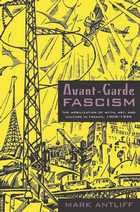
Antliff considers three French fascists: Georges Valois, Philippe Lamour, and Thierry Maulnier, demonstrating how they appropriated the avant-garde aesthetics of cubism, futurism, surrealism, and the so-called Retour à l’Ordre (“Return to Order”), and, in one instance, even defined the “dynamism” of fascist ideology in terms of Soviet filmmaker Sergei Eisenstein’s theory of montage. For these fascists, modern art was the mythic harbinger of a regenerative revolution that would overthrow existing governmental institutions, inaugurate an anticapitalist new order, and awaken the creative and artistic potential of the fascist “new man.”
In formulating the nexus of fascist ideology, aesthetics, and violence, Valois, Lamour, and Maulnier drew primarily on the writings of the French political theorist Georges Sorel, whose concept of revolutionary myth proved central to fascist theories of cultural and national regeneration in France. Antliff analyzes the impact of Sorel’s theory of myth on Valois, Lamour, and Maulnier. Valois created the first fascist movement in France; Lamour, a follower of Valois, established the short-lived Parti Fasciste Révolutionnaire in 1928 before founding two fascist-oriented journals; Maulnier forged a theory of fascism under the auspices of the journals Combat and Insurgé.