Results by title
208 books match the query 'Nation' and 24 start with a
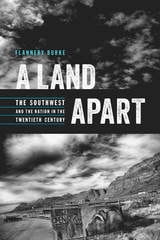
A Land Apart
The Southwest and the Nation in the Twentieth CenturyFlannery Burke
University of Arizona Press, 2017
Winner, Spur Award for Best Contemporary Nonfiction (Western Writers of America)
A Land Apart is not just a cultural history of the modern Southwest—it is a complete rethinking and recentering of the key players and primary events marking the Southwest in the twentieth century. Historian Flannery Burke emphasizes how indigenous, Hispanic, and other non-white people negotiated their rightful place in the Southwest. Readers visit the region’s top tourist attractions and find out how they got there, listen to the debates of Native people as they sought to establish independence for themselves in the modern United States, and ponder the significance of the U.S.-Mexico border in a place that used to be Mexico. Burke emphasizes policy over politicians, communities over individuals, and stories over simple narratives.
Burke argues that the Southwest’s reputation as a region on the margins of the nation has caused many of its problems in the twentieth century. She proposes that, as they consider the future, Americans should view New Mexico and Arizona as close neighbors rather than distant siblings, pay attention to the region’s history as Mexican and indigenous space, bear witness to the area’s inequalities, and listen to the Southwest’s stories. Burke explains that two core parts of southwestern history are the development of the nuclear bomb and subsequent uranium mining, and she maintains that these are not merely a critical facet in the history of World War II and the militarization of the American West but central to an understanding of the region’s energy future, its environmental health, and southwesterners’ conception of home.
Burke masterfully crafts an engaging and accessible history that will interest historians and lay readers alike. It is for anyone interested in using the past to understand the present and the future of not only the region but the nation as a whole.
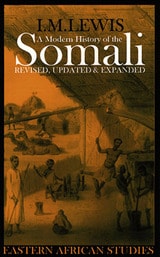
A Modern History of the Somali
Nation and State in the Horn of AfricaI. M. Lewis
Ohio University Press, 2002
This latest edition of A Modern History of the Somali brings I. M. Lewis’s definitive history up to date and shows the amazing continuity of Somali forms of social organization. Lewis’s history portrays the ingeniousness with which the Somali way of life has been adapted to all forms of modernity.

A Nation of Behavers
Martin E. Marty
University of Chicago Press, 1980
"This is a book for everyone, more than for the scholar of American religion. . . . Its value is in breadth of vision and new interpretation."—Dean R. Hoge, Theology Today
"As a means of making sense out of the potpourri of competing groups that compose religious America today, A Nation of Behavers is a first-rate tool."—Edward A. Fiske, New York Times
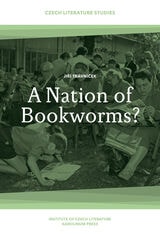
A Nation of Bookworms?
Czechs as ReadersJirí Trávnícek
Karolinum Press, 2021

A Nation of Family and Friends?
Sport and the Leisure Cultures of British Asian Girls and WomenAarti Ratna
Rutgers University Press, 2024
Ratna also examines two key cultural objects - the popular films "Bend it Like Beckham" and “Dhan Dhana Dhan Goal” - to examine in detail the gendered representation of South Asian soccer players’ engagement in amateur and elite levels of the sport. She critiques studies of women’s football fandom and sport that fail to acknowledge social differences relating to race, class, age, disability, and sexuality. By linking the social forces (across time and space) that differentially affect their sporting choices and leisure lifestyles, Ratna portrays the women of the South Asian diaspora as active agents in the shaping of their life courses and as skilled navigators of the complexities affecting their own identities. Ultimately Ratna examines the intersections of class, caste, age, generation, gender, and sexuality, to provide a rich and critical exploration of British Asian women's sport and leisure choices, pleasures, and lived realities.
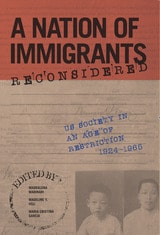
A Nation of Immigrants Reconsidered
US Society in an Age of Restriction, 1924-1965Maddalena Marinari, Madeline Hsu, Maria Garcia
University of Illinois Press, 2019
Contributors: Eiichiro Azuma, David Cook-Martín, David FitzGerald, Monique Laney, Heather Lee, Kathleen López, Laura Madokoro, Ronald L. Mize, Arissa H. Oh, Ana Elizabeth Rosas, Lorrin Thomas, Ruth Ellen Wasem, and Elliott Young
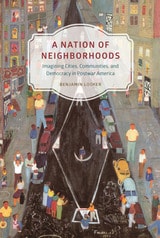
A Nation of Neighborhoods
Imagining Cities, Communities, and Democracy in Postwar AmericaBenjamin Looker
University of Chicago Press, 2015
Looker investigates the cultural, social, and political complexities of the idea of “neighborhood” in postwar America and how Americans grappled with vast changes in their urban spaces from World War II to the Reagan era. In the face of urban decline, competing visions of the city neighborhood’s significance and purpose became proxies for broader debates over the meaning and limits of American democracy. By studying the way these contests unfolded across a startling variety of genres—Broadway shows, radio plays, urban ethnographies, real estate documents, and even children’s programming—Looker shows that the neighborhood ideal has functioned as a central symbolic site for advancing and debating theories about American national identity and democratic practice.
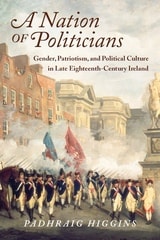
A Nation of Politicians
Gender, Patriotism, and Political Culture in Late Eighteenth-Century IrelandPadhraig Higgins
University of Wisconsin Press, 2009
In A Nation of Politicians, Padhraig Higgins argues that the development of Volunteer-initiated activities—associating, petitioning, subscribing, shopping, and attending celebrations—expanded the scope of political participation. Using a wide range of literary, archival, and visual sources, Higgins examines how ubiquitous forms of communication—sermons, songs and ballads, handbills, toasts, graffiti, theater, rumors, and gossip—encouraged ordinary Irish citizens to engage in the politics of a more inclusive society and consider the broader questions of civil liberties and the British Empire. A Nation of Politicians presents a fascinating tale of the beginnings of Ireland’s richly vocal political tradition at this important intersection of cultural, intellectual, social, and public history.
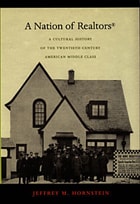
A Nation of Realtors®
A Cultural History of the Twentieth-Century American Middle ClassJeffrey M. Hornstein
Duke University Press, 2005
Hornstein draws on trade journals, government documents on housing policy, material from the archives of the National Association of Realtors and local real estate boards, demographic data, and fictional accounts of real estate agents. He chronicles the early efforts of real estate brokers to establish their profession by creating local and national boards, business practices, ethical codes, and educational programs and by working to influence laws from local zoning ordinances to national housing policy. A rich and original work of American history, A Nation of Realtors® illuminates class, gender, and business through a look at the development of a profession and its enormously successful effort to make the owner-occupied, single-family home a key element of twentieth-century American identity.
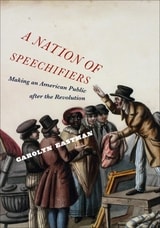
A Nation of Speechifiers
Making an American Public after the RevolutionCarolyn Eastman
University of Chicago Press, 2009
In the decades after the American Revolution, inhabitants of the United States began to shape a new national identity. Telling the story of this messy yet formative process, Carolyn Eastman argues that ordinary men and women gave meaning to American nationhood and national belonging by first learning to imagine themselves as members of a shared public.
She reveals that the creation of this American public—which only gradually developed nationalistic qualities—took place as men and women engaged with oratory and print media not only as readers and listeners but also as writers and speakers. Eastman paints vibrant portraits of the arenas where this engagement played out, from the schools that instructed children in elocution to the debating societies, newspapers, and presses through which different groups jostled to define themselves—sometimes against each other. Demonstrating the previously unrecognized extent to which nonelites participated in the formation of our ideas about politics, manners, and gender and race relations, A Nation of Speechifiers provides an unparalleled genealogy of early American identity.

A Nation of Takers
America’s Entitlement EpidemicNicholas Eberstadt
Templeton Press, 2012
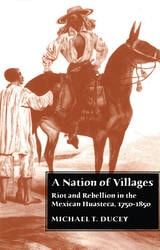
A Nation of Villages
Riot and Rebellion in the Mexican Huasteca, 1750-1850Michael T. Ducey
University of Arizona Press, 2004
He asks not just why villagers revolted but how their discontent fit into the political drama of early national Mexico. Ducey shows how the war offered opportunities for villagers to settle scores with members of the local elite as peasants discovered new ways of imagining the state. They were far from being the isolated traditionalists who occasionally rebelled against political or economic change described in older scholarship. At least until the 1848-1850 Caste War, political disputes were more important than land.
This region’s peasants were both remarkably diverse and politically astute. Villagers adapted colonial political culture and later republican ideas to fashion local institutions that fit their own needs. Over the course of a hundred years, peasant tactics and political discourse evolved in a constant dialogue with the changing political climate, shifting from rhetorical statements of loyalty to the king to proclamations of federalism and their rights as citizens. A Nation of Villages ably demonstrates that rural villagers were more aware of elite ideologies than urban rulers were of the villagers’ political ideas. This long-term analysis of one region illuminates how rural people helped shape the republican state.

A Nation of Widening Opportunities
The Civil Rights Act at 50Ellen D. Katz and Samuel R. Bagenstos, editors
Michigan Publishing Services, 2015
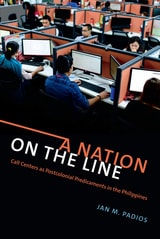
A Nation on the Line
Call Centers as Postcolonial Predicaments in the PhilippinesJan M. Padios
Duke University Press, 2018
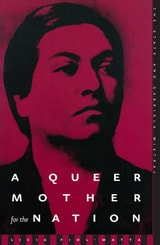
A Queer Mother For The Nation
The State And Gabriela MistralLicia Fiol-Matta
University of Minnesota Press, 2002
Chilean writer Gabriela Mistral (1889-1957), the first Latin American to win theNobel Prize for Literature, was a poetic idol for generations of Latin Americans who viewed her as Womanhood incarnate, the national schoolteacher-mother. How this distinctly masculine woman who never gave birth came to occupy this role, and what Mistral’s image, poetry, and life have to say about the relations-and realities-of race, gender, and sexual politics in her time, are the questions Licia Fiol-Matta pursues in this book, recreating the story of a woman whose misrepresentation is at least as intriguing, and as instructive, as her fame.
A Queer Mother for the Nation weaves a nuanced understanding of how Mistral cooperated with authority and fashioned herself as the figure of Motherhood in collaboration with the state. Drawing on Mistral’s little-known political and social essays, her correspondence and photographs, Fiol-Matta reconstructs Mistral’s relationship to state politics. Her work questions the notion of queer bodies as outlaws, and insists on the many ways in which queer subjects have participated in and sustained the normative discourses they seem to rebel against

Accessible Citizenships
Disability, Nation, and the Cultural Politics of Greater MexicoJulie Avril Minich
Temple University Press, 2013
A volume in the American Literatures Initiative

Adoption across Race and Nation
US Histories and LegaciesEdited by Silke Hackenesch
The Ohio State University Press, 2022
After Independence
Making and Protecting the Nation in Postcolonial and Postcommunist StatesLowell W. Barrington, Ed.
University of Michigan Press, 2006
"Where do nationalists go once they get what they want? We know rather little about how nationalist movements transform themselves into the governments of new states, or how they can become opponents of new regimes that, in their view, have not taken the self-determination drive far enough. This stellar collection contributes not only to comparative theorizing on nationalist movements, but also deepens our understanding of the contentious politics of nationalism's ultimate product--new countries."
--Charles King, Chair of the Faculty and Ion Ratiu Associate Professor, Georgetown University School of Foreign Service
"This well-integrated volume analyzes two important variants of nationalism-postcolonial and postcommunist-in a sober, lucid way and will benefit students and scholars alike."
--Zvi Gitelman, University of Michigan
Lowell W. Barrington is Associate Professor of Political Science, Marquette University.
After the Nation
Postnational Satire in the Works of Carlos Fuentes and Thomas PynchonPedro García-Caro Foreword by Jean Franco
Northwestern University Press, 2014
After the Nation proposes a series of groundbreaking new approaches to novels, essays, and short stories by Carlos Fuentes and Thomas Pynchon within the framework of a hemispheric American studies. García-Caro offers a pioneering comparativist approach to the contemporary American and Mexican literary canons and their underlying nationalist encodement through the study of a wide range of texts by Pynchon and Fuentes which question and historicize in different ways the processes of national definition and myth-making deployed in the drawing of literary borders. After the Nation looks at these literary narratives as postnational satires that aim to unravel and denounce the combined hegemonic processes of modernity and nationalism while they start to contemplate the ensuing postnational constellations. These are texts that playfully challenge the temporal and spatial designs of national themes while they point to and debase “holy” borders, international borders as well as the internal lines where narratives of nation are embodied and consecrated.

Alabama Justice
The Cases and Faces That Changed a NationSteven P. Brown
University of Alabama Press, 2020
WINNER OF THE ANNE B. & JAMES B. MCMILLAN PRIZE IN SOUTHERN HISTORY
Examines the legacies of eight momentous US Supreme Court decisions that have their origins in Alabama legal disputes.
Unknown to many, Alabama has played a remarkable role in a number of Supreme Court rulings that continue to touch the lives of every American. In Alabama Justice: The Cases and Faces That Changed a Nation, Steven P. Brown has identified eight landmark cases that deal with religion, voting rights, libel, gender discrimination, and other issues, all originating from legal disputes in Alabama.
Written in a concise and accessible manner, each case law chapter begins with the circumstances that created the dispute. Brown then provides historical and constitutional background for the issue followed by a review of the path of litigation. Excerpts from the Court’s ruling in the case are also presented, along with a brief account of the aftermath and significance of the decision. The First Amendment (New York Times v. Sullivan), racial redistricting (Gomillion v. Lightfoot), the Equal Protection Clause of the Fourteenth Amendment (Frontiero v. Richardson), and prayer in public schools (Wallace v. Jaffree) are among the pivotal issues stamped indelibly by disputes with their origins in Alabama legal, political, and cultural landscapes. By examining such landmark twentieth-century milestones and eras such as the Scottsboro Boys trial, the Civil Rights movement, and the fight for women’s rights through a legal lens, Brown sheds new and unexpected light on the ways that events in Alabama have shaped the nation.
In addition to his analysis of cases, Brown discusses the three associate Supreme Court justices from Alabama to the Supreme Court: John McKinley, John Archibald Campbell, and Hugo Black. Their cumulative influence on constitutional interpretation, the institution of the Court, and the day-to-day rights and liberties enjoyed by every American is impossible to measure. A closing chapter examines the careers and contributions of these three Alabamians.

Albert Murray and the Aesthetic Imagination of a Nation
Edited by Barbara A. Baker
University of Alabama Press, 2010
Reimagining America Through the Blues, Jazz, and the Cultural Vision of Albert Murray.
This collection consists of essays written by prominent African American literature, jazz, and Albert Murray scholars, reminiscences from Murray protégés and associates, and interviews with Murray himself. It illustrates Murray’s place as a central figure in African American arts and letters and as an American cultural pioneer.
Born in Nokomis, Alabama, and raised in Mobile, Albert Murray graduated from Tuskegee University, where he later taught, but he has long resided in New York City. He is the author of many critically acclaimed novels, memoirs, and essay collections, among them The Omni-Americans, South to a Very Old Place, Train Whistle Guitar, The Spyglass Tree, and The Seven League Boots. He is also a critic and visual artist, as well as a lifelong friend of and collaborator with artistic luminaries such as Ralph Ellison, Duke Ellington, and Romare Bearden. As such, his life and work are testaments to the centrality of southern and African American aesthetics in American art. Murray is widely viewed as a figure who, through his art and criticism, transforms the “fakelore” of white culture into a new folklore that illustrates the centrality of the blues and jazz idioms and reveals the black vernacular as what is most distinct about American art.
American Boundaries
The Nation, the States, the Rectangular SurveyBill Hubbard Jr.
University of Chicago Press, 2009

An Other Tongue
Nation and Ethnicity in the Linguistic BorderlandsAlfred Arteaga
Duke University Press, 1994
The Chicanos, the U.S./Mexico borderland polyglots whose sense of history, nationality, and race is as mixed as their language, are the book's prime example. But the authors recognize that border zones, like diasporas and post-colonial relations, occur globally, and their discussion of hybrid or mestizo identities ranges from the United States to the Caribbean to South Asia to Ireland. Drawing on personal experience, readings of poetry and fiction, and cultural theory, the authors detail the politics of being human through the mediation of language. What does "shadow" mean to the Native American Indian, or diaspora to the East Indian immigrant? How does British colonialism yet affect Irish and Indian nationalist literary production? Why is the split between Eastern and Western European language use necessarily schizophrenic? So much of our sense of difference today is constructed as we speak, and An Other Tongue speaks with eloquence to this phenomenon and will be of great interest to those concerned with the discourse of post-colonial studies, critical theory, and the remapping of world literature.
Contributors. Norma Alarcón, Alfred Arteaga, Juan Bruce-Novoa, Cordelia Chávez Candelaria, Michael G. Cooke, Edmundo Desnoes, Eugene C. Eoyang, David Lloyd, Lydie Moudileno, Jean-Luc Nancy, Tejaswini Niranjana, Ada Savin, Gayatri Chakravorty Spivak, Michael Smith, Tzvetan Todorov, Luis A. Torres, Gerald Vizenor

Argentina
Stories for a NationAmy K. Kaminsky
University of Minnesota Press, 2008
By the end of the twentieth century, Argentina’s complex identity-tango and chimichurri, Eva Perón and the Mothers of the Plaza de Mayo, the Falklands and the Dirty War, Jorge Luis Borges and Maradona, economic chaos and a memory of vast wealth-has become entrenched in the consciousness of the Western world.
In this wide-ranging and at times poetic new work, Amy K. Kaminsky explores Argentina’s unique national identity and the place it holds in the minds of those who live beyond its physical borders. To analyze the country’s meaning in the global imagination, Kaminsky probes Argentina’s presence in a broad range of literary texts from the United States, Poland, England, Western Europe, and Argentina itself, as well as internationally produced films, advertisements, and newspaper features.
Kaminsky’s examination reveals how Europe consumes an image of Argentina that acts as a pivot between the exotic and the familiar. Going beyond the idea of suffocating Eurocentrism as a theory of national identity, Kaminsky presents an original and vivid reading of national myths and realities that encapsulates the interplay among the many meanings of “Argentina” and its place in the world’s imagination.
Amy Kaminsky is professor of gender, women, and sexuality studies and global studies at the University of Minnesota and author of After Exile (Minnesota, 1999).