Results by title
166 books match the query 'Native American' and 15 start with a
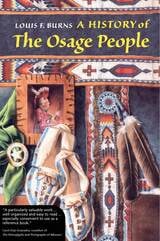
A History of the Osage People
Louis F. Burns
University of Alabama Press, 2004
Four centuries. One people. A legacy that shaped a nation.
Osage traditional lands are located in mid-continental America encompassed by the present-day states of Arkansas, Missouri, Kansas, and Oklahoma. Major waterways through these lands and the defensible terrain of the Ozark range provided the tribe a distinct advantage in prehistoric and early historic times. A warlike people, the Osage long encroached on neighboring tribal lands, especially those of the Caddo to the southwest. Yet good natural boundaries and centuries of success in warfare afforded the tribe little advantage in attempts to forestall Euro-American westward expansion. Three major routes to the West—the Missouri and Arkansas Rivers and the Continental Trail—crossed Osage land, so conflict with the newcomers was inevitable.
Louis Burns draws on ancestral oral traditions and research in a broad body of literature to tell the story of the Osage people. He writes clearly and concisely, from the Osage perspective. First published in 1989 and for many years out of print, this revised edition is augmented by a new preface and maps. Because of its masterful compilation and synthesis of the known data, A History of the Osage People continues to be the best reference for information on an important American Indian people.

A Long Fight for the Vote
Navajos, Utes, and the Path to Equal Voting RightsDaniel C. McCool
University of Arizona Press, 2027
In A Long Fight for the Vote, Daniel C. McCool offers a deeply researched and compelling account of the fight for equal voting rights in San Juan County, Utah—homeland to the Navajo and Ute peoples and a flashpoint of persistent Anglo–Native conflict.
Centering on landmark voting rights cases that culminated in the historic election of two Navajo county commissioners, McCool situates these legal battles within a broader history of discrimination, shifting federal Indian policy, and the gradual political empowerment of Native communities across the American West. Through meticulous analysis, the book reveals how local elections became a crucible for national debates over citizenship, sovereignty, and democracy.
Drawing on court records, expert testimony, and decades of engagement with voting rights litigation, McCool demonstrates that Native peoples have never been passive victims of disenfranchisement but active protagonists in a sustained struggle for political equality. Richly contextualized and powerfully argued, A Long Fight for the Vote speaks to scholars and students of law, politics, and Western history, as well as legal professionals and engaged readers seeking to understand how race, power, and the ballot box intersect in Indian Country—and why these struggles continue to shape American democracy today.
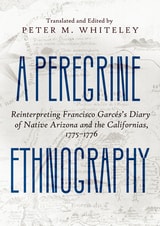
A Peregrine Ethnography
Reinterpreting Francisco Garcés’s Diary of Native Arizona and the Californias, 1775–1776Translated and Edited by Peter M. Whiteley
University of Arizona Press, 2026
In 1775–1776, Francisco Garcés, O.F.M., undertook a remarkable three-thousand-kilometer journey through modern Arizona and the Californias. As a participant in a side-branch of Juan Bautista de Anza’s colonizing expedition to San Francisco, Garcés recorded a diary that provides a fascinating glimpse of Native peoples, several who had minimal or no prior contact with the Spanish empire. Garcés described customs, detailed alliances and enmities, and offered recommendations, both missionary and military. When he reached Hopi from the west (the first European to do so), Garcés completed a route between Monterey and Santa Fe, in effect completing a road across North America a generation before Lewis and Clark. The Hopi leaders, who clearly understood the implications, expelled him, declaring their independence on July 4, 1776.
Garcés’s diary remains vital for the Indigenous history of western North America. Yet the standard translation is flawed, not least owing to the state of ethnographic knowledge when it was made (1900), resulting in more than a century of reiterated misinterpretations of Indigenous history by anthropologists and historians. Peter M. Whiteley identifies the ur-version of Garcés's diary—a previously unknown copy written up by Pedro Font—and offers a new translation focusing on ethnographic significance in geographic context. Presenting also the Spanish text, Whiteley engages directly with Garcés’s account and provides readers with new interpretation and context.
Garcés was a genuine ethnographer and his accounts of Hopi, River Yumans, Takic, Yokuts, Numic, and Pai peoples, contain unparalleled and foundational insights.
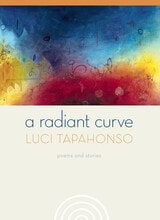
A Radiant Curve
Poems and StoriesLuci Tapahonso
University of Arizona Press, 2008
These engaging words draw us into a workaday world that, magically but never surprisingly, has room for the Diyin Dine’é (the Holy People), Old Salt Woman, and Dawn Boy. When she describes her grandson’s First Laugh Ceremony—explaining that it was originally performed for White Shell Girl, who grew up to be Changing Woman—her account enriches us and we long to hear more. Tapahonso weaves the Navajo language into her work like she weaves “the first four rows of black yarn” into a rug she is making “for my little grandson, who inherited my father’s name: Hastiin Tsétah Naaki Bísóí.”
As readers, we find that we too are surrounded by silent comfort, held lovingly in the confident hands of an accomplished writer who has a great deal to tell us about life.
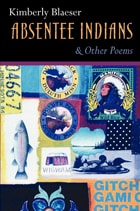
Absentee Indians and Other Poems
Kimberly Blaeser
Michigan State University Press, 2002
Absentee Indians and Other Poems evokes personal yet universal experiences of the places that Native Americans call home, their family and national histories, and the emotional forces that help forge Native American identities. These are poems of exile, loss, and the celebration of that which remains. Anchored in the physical landscape, Blaeser’s poetry finds the sacred in those ordinary actions that bind a community together. As Blaeser turns to the mysterious passage from sleeping to wakefulness, or from nature to spirit, she reveals not merely the movement from one age or place to another, but the movement from experience to vision.

After and Before the Lightning
Simon J. Ortiz
University of Arizona Press, 1994
Acoma Pueblo poet Ortiz spent a winter in South Dakota, teaching at Sinte Gleska College on the Rosebud Lakota Sioux Reservation. The bitter cold and driving snow of a prairie winter were a reality commanding his attention through its absolute challenge to survival and the meaning of survival.
Ortiz's way of dealing with the hard elements of winter was to write After and Before the Lightning, prose and verse poems that were his response to that long season between the thunderstorms of autumn and spring. "I needed a map of where I was and what I was doing in the cosmos," he writes. In these poems, which he regards as a book-length poetic work, he charts the vast spaces of prairie and time that often seem indistinguishable. As he faces the reality of winter on the South Dakota reservation, he also confronts the harsh political reality for its Native community and culture and for Indian people everywhere.
"Writing this poetry reconnected me to the wonder and awe of life," Ortiz states emphatically. Readers will feel the reality of that wonder and awe—and the cold of that South Dakota winter—through the gentle ferocity of his words.
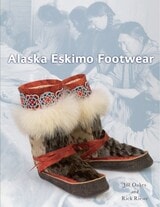
Alaska Eskimo Footwear
Jill Oakes and Rick Riewe
University of Alaska Press, 2006
For each major Alaska Eskimo group—Inupiaq, Yup’ik, Aleut, Alutiiq, St. Lawrence Islander—authors Oakes and Riewe discuss pattern, design, and techniques for skin preparation, construction, and decoration. They describe the reasons for design and decorative differences in boots used for ceremonies and dancing versus those for everyday wear and hunting, trapping, and fishing.
Developed with Eskimo seamstresses from each Alaskan region, this full-color volume features photographs from museum collections in the United States and Russia. Detailed drawings of patterns, construction techniques, and decorative details illustrate the complexity of this ancient art and provide readers with guidance in identifying regional styles. A tribute to an exquisite art and the women who practice it, Alaska Eskimo Footwear brings the beauty of the North to life.
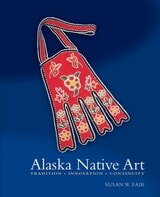
Alaska Native Art
Tradition, Innovation, ContinuitySusan W. Fair
University of Alaska Press, 2006
The rich artistic traditions of Alaska Natives are the subject of this landmark volume, which examines the work of the premier Alaska artists of the twentieth century. Ranging across the state from the islands of the Bering Sea to the interior forests, Alaska Native Art provides a living context for beadwork, ivory carving, basketry, and skin sewing. Examples of work from Tlingit, Aleutian Islanders, Pacific Eskimo, Athabaskan, Yupik, and Inupiaq artists make this volume the most comprehensive study of Alaskan art ever published.
Beautifully illustrated with full-color photographs of artists and their works, Alaska Native Art examines the concept of tradition in the modern world. Fair demonstrates that tradition is alive and well in Alaska through the words of Native artists and a multitude of examples, reproduced in color and accompanied by historic photographs.
Alaska Native Art is a volume to treasure, a tribute to the incredible vision of Alaska's artists and to the enduring traditions of all of Alaska's Native peoples.

Amulets, Effigies, Fetishes, and Charms
Native American Artifacts and Spirit Stones from the NortheastEdward J. Lenik
University of Alabama Press, 2016
Interpreting Sacred Objects: Indigenous Material Culture and Spiritual Meaning in the Northeast.
Decorated stone artifacts are a significant part of archaeological studies of Native Americans in the Northeast. The artifacts illuminated in Amulets, Effigies, Fetishes, and Charms: Native American Artifacts and Spirit Stones from the Northeast include pecked, sculpted, or incised figures, images, or symbols. These are rendered on pebbles, plaques, pendants, axes, pestles, and atlatl weights, and are of varying sizes, shapes, and designs. Lenik draws from Indian myths and legends and incorporates data from ethnohistoric and archaeological sources together with local environmental settings in an attempt to interpret the iconography of these fascinating relics. For the Algonquian and Iroquois peoples, they reflect identity, status, and social relationships with other Indians as well as beings in the spirit world.
Lenik begins with background on the Indian cultures of the Northeast and includes a discussion of the dating system developed by anthropologists to describe prehistory. The heart of the content comprises more than eighty examples of portable rock art, grouped by recurring design motifs. This organization allows for in-depth analysis of each motif. The motifs examined range from people, animals, fish, and insects to geometric and abstract designs. Information for each object is presented in succinct prose, with a description, illustration, possible interpretation, the story of its discovery, and the location where it is now housed. Lenik also offers insight into the culture and lifestyle of the Native American groups represented. An appendix listing places to see and learn more about the artifacts and a glossary are included.
The material in this book, used in conjunction with Lenik’s previous research, offers a reference for virtually every known example of northeastern rock art. Archaeologists, students, and connoisseurs of Indian artistic expression will find this an invaluable work.
An Eagle Nation
Carter Revard
University of Arizona Press, 1993
Carter Revard, Osage Indian poet, Rhodes scholar, and professor of medieval English literature, shares both this amazement and his amazing command of language in this first retrospective collection of 40 published and unpublished pieces written from 1970 to 1991.
Ancient Indigenous Cuisines
Archaeological Explorations of the MidcontinentEdited by Susan M. Kooiman, Jodie A. O'Gorman, and Autumn M. Painter
University of Alabama Press, 2025
New essays from foodways archaeology related to cuisine in social, cultural, and environmental contexts.
This collection of original essays is the first to cover recent trends in foodways archaeology in the Midwest using the concept of cuisine: the selection of food ingredients and methods of food preparation, cooking, and serving/consumption in relation to their social, cultural, and environmental contexts. This work span the Early Archaic (9000 BC) to Late Precontact (up to around AD 1500) in ecological zones of present-day Michigan, Indiana, Illinois, Wisconsin, Minnesota, North Dakota, and Manitoba. Chapters trace development from hunter-gathering to horticultural practices to the more robust farming/fishing/hunting model centered on maize, squash, and other domesticates.
As Susan M. Kooiman, Jodie A. O’Gorman, and Autumn M. Painter note, identification of past cooking habits and evolving methods for foodstuffs identification can help archaeologists to reconstruct foodways and connect food behaviors with identity and associated fundamental societal beliefs. Contributors to this collection use cutting-edge methods and perspectives and consider a range of questions and outcomes that demonstrate the versatility and strength of culinary studies. To move the field forward, contributors also note areas for further analysis and improvement.
This volume targets archaeologists and students, archaeobotanists and zooarchaeologists, and those curious about Indigenous food culture. Engaging content includes chapters on the construction of earth ovens, the use-alteration of pottery and residue, a discussion of cuisine combining plant and animal data with ceramic trends, and the various contexts of plates to understand cooking methods and the social role of cuisine. Others examine faunal remains, the plant remains of feasting, the introduction of maize, the use of limestone nixtamalization, and archaeobotanical assemblages that reveal shifts in cuisine. A conclusion addresses the question, Why cuisine?
CONTRIBUTORS
Rebecca K. Albert / Alleen Betzenhauser / Jennifer R. Haas / Mary M. King / Susan M. Kooiman / Mary E. Malainey / Terrance J. Martin / Fernanda Neubauer / Kelsey Nordine / Jodie A. O’Gorman / Autumn M. Painter / Jeffrey M. Painter / Kimberly Schaefer / Mary Simon
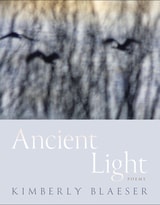
Ancient Light
PoemsKimberly Blaeser
University of Arizona Press, 2024
With vision and resilience, Kimberly Blaeser’s poetry layers together past, present, and futures. Against a backdrop of pandemic loss and injustice, MMIW (Missing and Murdered Indigenous Women), hidden graves at Native American boarding schools, and destructive environmental practices, Blaeser’s innovative poems trace pathways of kinship, healing, and renewal. They celebrate the solace of natural spaces through sense-laden geo-poetry and picto-poems. With an Anishinaabe sensibility, her words and images invoke an ancient belonging and voice the deep relatedness she experiences in her familiar watery regions of Minnesota.
The collection invites readers to see with a new intimacy the worlds they inhabit. Blaeser brings readers to the brink, immerses them in the darkest regions of the Anthropocene, in the dangerous fallacies of capitalism, and then seeds hope. Ultimately, as the poems enact survivance, they reclaim Indigenous stories and lifeways.

Anishinaabe Songs for a New Millennium
Marcie R. Rendon
University of Minnesota Press, 2024
Poem-songs summon the voices of Anishinaabe ancestors and sing to future generations
The ancestors that walk with us, sing us our song. When we get quiet enough, we can hear them sing and make them audible to people today. In Anishinaabe Songs for a New Millennium, Marcie R. Rendon, a member of the White Earth Nation, summons those ancestors’ songs, and so begins the dream singing for generations yet to come. “The Anishinaabe heard stories in their dream songs,” Ojibwe author Gerald Vizenor wrote, and like those stories once inscribed in pictographs on birch-bark scrolls, Rendon’s poem-songs evoke the world still unfolding around us, reflecting our place in time for future generations.
Through dream-songs and poem-songs responding to works of theater, choral music, and opera, Rendon brings memory to life, the senses to attention—to see the moonbeams blossoming on the windowsill, to feel the hold of the earth, to hear the echo of grandmother’s breath, to lie on the bones of ancestors and feel the rhythms of silence running deep. Her singing, breaking the boundaries that time would impose, carries the Anishinaabe way of life and way of seeing forward in the world.
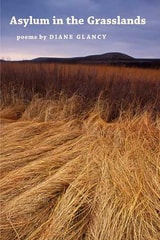
Asylum in the Grasslands
Diane Glancy
University of Arizona Press, 2007
In her new collection of poems, Glancy explores the history of loss that has marked the Cherokee community. In a voice that is as economical as it is eloquent and as sophisticated as it is exhilarating, she describes the loss of family, the loss of cultural heritage, and the loss of old worlds as new ones encroach. In one poem, a farm auction becomes an auction of culture, of heritage, of the past. In others, ancestors meet in a twenty-four-hour café, lunch is shared with a great-grandmother who has been traveling the universe, Christ appears as a cowboy in an apocalyptic vision, and Clytemnestra is discovered in a snakeskin. Some of the poems are as campy as a duck-decoy Custer in a shooting gallery. Some glitter with dime-store glue. Others speak with the reflection of sunlight off a stream. Sometimes the verse produces a shortstop language on the baseline of experience. In whatever form they take, Glancy’s poems stimulate and challenge the reader with their unfettered, unadorned, and unpretty purity. This collection is not only a spirited ride across the Great Plains, it is also an important addition to the literature of white–Native American cultural relationships.

Aurum
PoemsSantee Frazier
University of Arizona Press, 2019