Results by title
91 books match the query 'Nordic Countries' and 8 start with a
A Folk Divided
Homeland Swedes and Swedish Americans, 1840-1940H. Arnold Barton
Southern Illinois University Press, 1994
In this unique longitudinal study of how a divided people relate to one another, H. Arnold Barton outlines dilemmas created by the great migration of Swedes to the United States from 1840 through 1940 and the complex love-hate relationship that resulted between those who stayed and those who left. During that hundred-year period, one Swede out of five voluntarily immigrated to the United States, and four-fifths of those immigrants remained in their new country. This study seeks to explore the far-reaching implications of this mass migration for both Swedes and Swedish Americans.
The Swedes were a literate, historically aware people, and the 1.2 million Swedes who immigrated to the United States offer a particularly well-documented and illuminating case study. Barton has skillfully woven into the text translations of little known published and unpublished Swedish sources from both sides of the Atlantic, to embody—in haunting human terms—both what was gained and what was lost through emigration.
Past studies have traditionally shown ethnic mobilization to be a defensive reaction against the exclusive nativism of resident Americans. Barton convincingly demonstrates, however, that the creation of a distinctive Swedish-American identity was at least equally an expression of the immigrants’ need to justify leaving their homeland to their former compatriots and to themselves by asserting a rightful and unique place within the Swedish national community. He concludes that the relationship between Swedes and Swedish Americans was essentially similar to that experienced by other peoples divided by migration, and that the long debate over the United States and emigration at its deepest level reveals both hopes and fears most conspicuously symbolized by America and "Americanization" in an increasingly integrated world undergoing the relentless advance of modernization.
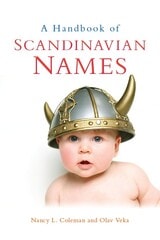
A Handbook of Scandinavian Names
Nancy L. Coleman
University of Wisconsin Press, 2010
Are you looking for
• A Scandinavian name for your baby?
• The names of Norse gods and heroes?
• The history and meaning of Scandinavian first names?
• Variations and alternate spellings for common Scandinavian names?
• Naming traditions and customs in Norway, Sweden, and Denmark?
A Handbook of Scandinavian Names includes a dictionary of more than fifteen hundred given names from Norway, Sweden, and Denmark, plus some from Iceland and Finland. Each entry provides a guide to pronunciation and the origin and meaning of the name. Many entries also include variations and usage in the Scandinavian countries and famous bearers of the name.
Adding engaging context to the dictionary section is an extensive comparative guide to naming practices. The authors discuss immigration to North America from Scandinavia and the ways given names and surnames were adapted in the New World. Also included in the book is a history of Scandinavian names, information on “Name Days,” and discussion of significant names from mythology and history, including naming traditions in royal families.
A History of the Old Icelandic Commonwealth
Islendinga SagaJon Johannesson
University of Manitoba Press, 2007
A History of the Swedish People
Volume II: From Renaissance to RevolutionVilhelm Moberg
University of Minnesota Press, 2005
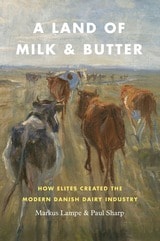
A Land of Milk and Butter
How Elites Created the Modern Danish Dairy IndustryMarkus Lampe and Paul Sharp
University of Chicago Press, 2018
This book presents a radical retelling of this story, placing (largely German-speaking) landed elites—rather than the Danish peasantry—at center stage. After acquiring estates in Denmark, these elites imported and adapted new practices from outside the kingdom, thus embarking on an ambitious program of agricultural reform and sparking a chain of events that eventually led to the emergence of Denmark’s famous peasant cooperatives in 1882. A Land of Milk and Butter presents a new interpretation of the origin of these cooperatives with striking implications for developing countries today.
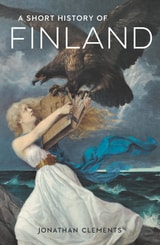
A Short History of Finland
Jonathan Clements
Haus Publishing, 2022
The modern nation of Finland is the heir to centuries of history, as a wilderness at the edge of early Europe, a borderland of the Swedish empire, and a Grand Duchy of tsarist Russia. And, as Jonathan Clements’s vivid, concise volume shows, it is a tale paved with oddities and excitements galore: from prehistoric reindeer herders to medieval barons, Christian martyrs to Viking queens, and, in the twentieth century, the war heroes who held off the Soviet Union against impossible odds.
Offering accounts of public artworks, literary giants, legends, folktales, and famous figures, Clements provides an indispensable portrait of this fascinating nation.
This updated edition includes expanded coverage on the Second World War, as well as new sections on Finns in America and Russia, the centenary of the republic, and Finland’s battle with COVID-19, right up to its historic application to join NATO.
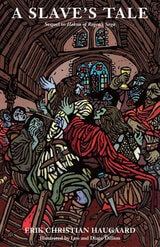
A Slave's Tale
Erik Christian Haugaard
University of Minnesota Press, 2013
A Slave’s Tale, the sequel to Hakon of Rogen’s Saga, is told from the point of view of a slave girl, Helga, who stows away on the longship when Hakon, the young Viking chieftain, sets sail for France on a voyage to return Rark, a freed slave, to his homeland. The voyagers’ journey is perilous—they narrowly escape capture by an invading fleet, and their ship is severely damaged by a storm. Upon reaching France—where the Vikings are now hated, not feared—only tragedy ensues.

An Armchair Traveller's History of Finland
Jonathan Clements
Haus Publishing, 2014
Clements travels the length of the country as he tells these stories, along the way offering accounts of Finland’s public artworks, literary giants, legends and folktales, and famous figures. The result is the perfect introduction to Finland for armchair and actual travelers alike.