Results by title
195 books match the query 'Pennsylvania' and 13 start with a
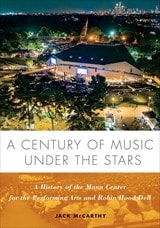
A Century of Music Under the Stars
A History of the Mann Center for the Performing Arts and Robin Hood DellMcCarthy, Jack, and The Mann Center for the Performing Arts
Temple University Press, 2025
The Dell, which opened in 1930, and the Mann, which opened in 1976, were initially built as summer homes for The Philadelphia Orchestra. As McCarthy fondly recounts, the Mann Center evolved to host the world’s top artists across many musical genres. Contemporary audiences have gathered on the Great Lawn for concerts by performers including James Taylor, The Roots, Phish, Diana Ross, John Legend, and others.
The venues, however, are more than just the music; they are about the beautiful natural setting, communal atmosphere, and spectacular view of the Philadelphia skyline. A Century of Music Under the Stars is a revealing and celebratory look back at beloved Philadelphia cultural icons. This informative and illuminating history will provide happy memories for generations of music lovers.
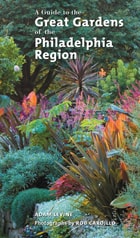
A Guide to the Great Gardens of the Philadelphia Region
Adam Levine
Temple University Press, 2007
As the horticultural epicenter of the United States, Philadelphia and the surrounding towns, suburbs, and countryside are blessed with more public gardens in a concentrated area than almost any other region in the world. Stretching from Trenton, New Jersey through Philadelphia and down to Newark, Delaware, this area (often called the Delaware Valley) offers more horticultural riches than a visitor can possibly see even in a coupl of weeks of hectic garden-hopping.
In A GUIDE TO THE GREAT GARDENS OF THE PHILADELPHIA REGION you will find:
Detailed coverage of almost 100 gardens
Maps to indicate where area gardens are in relation to each other to plan day trip itineraries
Key information about each major garden, including hours, fees, time needed for a tour, history, acreage, and special features
Over a dozen gardens that have never before been featured in any garden guidebook
Arranged by interest, to help guide readers to gardens that will most meet their needs
Notations about historical houses, cafes/restaurants, gift shops, and chidren's features at each major garden
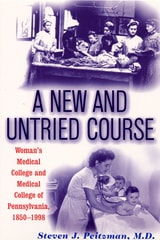
A New and Untried Course
Women's Medical College and Medical College of Pennysylvania, 1850-1998Peitzman, Steve J
Rutgers University Press, 2000
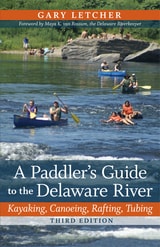
A Paddler's Guide to the Delaware River
Kayaking, Canoeing, Rafting, TubingLetcher, Gary
Rutgers University Press, 2012
When Henry Hudson explored the Delaware River in 1609, he dubbed it “one of the finest, best, and pleasantest rivers in the world.” Today, those same qualities make the Delaware one of the most popular rivers for recreational use in the United States. Although in places a near-wilderness, the Delaware is easily accessible to millions of residents. On any summer day there may be thousands of people rushing down its exciting rapids or lazing through its serene eddies.
A Paddler’s Guide to the Delaware River is an indispensable resource for anyone who wants to experience the Delaware River in a kayak, canoe, raft, or tube—or, for that matter, an automobile or an armchair. Reading the book is like travelling down the river with an experienced guide. It charts the non-tidal Delaware 200 miles from Hancock, New York, to Trenton, New Jersey, describing access points, rapids, natural features, villages, historical sites, campgrounds, outfitters, and restaurants. The Delaware comes alive as the author introduces some of the people, places, events, and controversies that have marked the river from earliest times to the present day.
Completely revised, the third edition offers:
- An overview of the river including watershed, history, place names, paddlecraft, safety, and fishing.
- The River Guide: ten sections that can each be paddled in one day (about 20 miles), with a mile-by-mile account of rapids, access, natural features, historic sites, and other features.
- All new maps, with names for virtually every rapid, eddy, and other river feature, plus detailed diagrams for routes through even the most severe rapids.
- Features in the River Guide highlight the people, events, natural history, and communities that define the river experience, such as Tom Quick, the infamous “avenger of the Delaware”; the mysterious migration of eels, the battle over Tocks Island Dam; and many others.
- Appendices of Important Contacts, Outfitters and Campgrounds, River Trip Checklists, and more.
Whether you are a novice out for an afternoon float, a seasoned adventurer on an overnight expedition, or a resident fascinated by the lore of the Delaware Valley, this book is an invaluable guide.
AFSCME's Philadelphia Story
Municipal Workers and Urban Power in the Twentieth CenturyFrancis Ryan
Temple University Press, 2011
AFSCME's Philadelphia Story provides the most comprehensive account of the early years of the American Federation of State, County and Municipal Employees, which is one of the nation’s largest and most politically powerful unions in the AFL-CIO. Author Francis Ryan details the emergence of the Quaker City's interracial union, charting its beginnings in the political patronage system of one of the nation's most notorious political machines to the first decade of the twenty-first century. Ryan provides new insight into the working class origins of African American political power in the late twentieth century as well as a thorough overview of the role the municipal state played in the urban economy of one of the nation's largest cities.
Ryan describes the work processes and how they changed, and uses workers' testimonies to ground the detailed accounts of issues and negotiations. Beginning in the 1920s and ending in the 2000s, Ryan's study offers a long-term analysis of the growth of a single union in a major American city.
Air Wars
Fight To Reclaim Public BroadcastingJerold Starr
Temple University Press, 2001
These citizens believed strongly in public television's unique mission to serve the diverse social and cultural needs of local communities. When their own station neglected this mission in the search for national prestige and bigger revenues, they felt profoundly betrayed.
Jerold Starr exposes the political and commercial pressures that made strange bedfellows of the top officials of public broadcasting, the Democratic Party establishment, Pat Robertson and the Christian Coalition, home-shopping and "infomall" king Lowell "Bud" Paxson, and billionaire right-wing publisher/philanthropist Richard Mellon Scaife.
What began as a bitterly contested local struggle that disturbed the serenity of Mister Rogers' Neighborhood later became front-page national news with revelations of presidential candidate John McCain's influence-peddling scandal on behalf of media mogul Paxson. This was followed by congressional resolutions attacking the FCC's authority to regulate noncommercial educational broadcast licenses. The "Pittsburgh case" promises to be in the news for some time to come.
Far beyond Pittsburgh, Starr looks at how the reform movement has spread to major cities like Chicago, Phoenix, Jacksonville, and San Francisco, where citizen activists have successfully challenged public stations to be more community responsive.
Finally, he outlines an innovative plan for restructuring the public broadcasting service as an independently funded public trust. Joining this vision with a practical strategy, Starr describes the formation of Citizens for Independent Public Broadcasting, a national membership organization with a grassroots approach to putting the public back into public broadcasting.
American School Reform
What Works, What Fails, and WhyJoseph P. McDonald and the Cities and Schools Research Group
University of Chicago Press, 2014
McDonald and his colleagues lay out several interrelated ideas in what they call a theory of action space. Frequently education policy gets so ambitious that implementing it becomes a near impossibility. Action space, however, is what takes shape when talented educators, leaders, and reformers guide the social capital of civic leaders and the financial capital of governments, foundations, corporations, and other backers toward true results. Exploring these extraordinary collaborations through their lifespans and their influences on future efforts, the authors provide political hope—that reform efforts can work, and that our schools can be made better.

An Alternative Path
The Making and Remaking of Hahnemann Medical College and HospitalNaomi Rogers
Rutgers University Press, 1998
Archaeology at the Site of the Museum of the American Revolution
A Tale of Two Taverns and the Growth of PhiladelphiaRebecca Yamin
Temple University Press, 2019
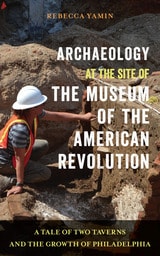
When the Museum of the American Revolution acquired the land at Third and Chestnut streets in Olde City, Philadelphia, it came with the condition that an archaeological investigation be conducted. The excavation that began in the summer of 2014 yielded treasures in the trash: unearthed privy pits provided remarkable finds from a mid-eighteenth-century tavern to relics from a button factory dating to the early twentieth century. These artifacts are described and analyzed by urban archaeologist Rebecca Yamin in Archaeology at the Site of the Museum of the American Revolution.
Yamin, lead archaeologist on the dig, catalogues items—including earthenware plates and jugs, wig curlers, clay pipes, and liquor bottles—to tell the stories of their owners and their roles in Philadelphia history. As she uncovers the history of the people as well as their houses, taverns, and buildings that were once on the site, she explains that by looking at these remains, we see the story of the growth of Philadelphia from its colonial beginnings to the Second World War.
Archaeology at the Site of the Museum of the American Revolution is a perfect keepsake for armchair archaeologists, introductory students, and history buffs.
Architecture after Richardson
Regionalism before Modernism--Longfellow, Alden, and Harlow in Boston and PittsburghMargaret Henderson Floyd
University of Chicago Press, 1994
Floyd critically' assesses the careers, works, and patronage of Alexander Wadsworth Longfellow, Frank Ellis Alden, and Alfred Branch Harlow. Longfellow and Alden were senior draftsmen in H. H. Richardson's office, and Harlow worked with McKim, Mead & White in New York, Newport, and Boston. After Richardson's death, the three set up their own practice with offices in Boston and Pittsburgh, and these offices eventually became two separate practices. Over the years, their commissions included scores of city and country residences for the elite of both regions as well as major institutional and business buildings such as those at Harvard and Radcliffe, the Cambridge City Hall, and Pittsburgh's Duquesne Club and Carnegie Institute.
Placing these architects in a broader context of American architectural and landscape history, Floyd uncovers a strong cultural affinity between turn-of-the-century Boston and Pittsburgh. She also reveals an unsuspected link between the path of modernism from Richardson to Wright and the evolution of anti-modern imagery manifested in regionalism. Floyd thus combines her analysis of the work of Longfellow, Alden, and Harlow with a critique of mid-twentieth-century historiography to expose connections between New England regionalism, the arts and crafts movement, and such innovators as Frank Lloyd Wright and Buckminster Fuller.
Are All Politics Nationalized?
Evidence from the 2020 Campaigns in PennsylvaniaEdited by Stephen K. Medvic, Matthew M. Schousen, and Berwood A. Yost
Temple University Press, 2023
Given the news media’s focus on national issues and debates, voters might be expected to make decisions about state and local candidates based on their views of the national parties and presidential candidates. However, nationalization as a concept, and the process by which politics becomes nationalized, are not fully understood. Are All Politics Nationalized? addresses this knowledge gap by looking at the behavior of candidates and the factors that influence voters’ electoral choices.
The editors and contributors examine the 2020 elections in six Pennsylvania districts to explore the level of nationalization in campaigns for Congress and state legislature. They also question if politicians are encouraging nationalized behavior and straight ticket voting—especially with down-ballot races.
Are All Politics Nationalized? concludes that issues specific to particular districts—such as fracking and local union politics—still matter, and candidates are eager to connect with voters by highlighting their ties to the local community. National politics do trickle down to local races, but races up and down the ballot are still heavily localized.
As Goes Bethlehem
Steelworkers and the Restructuring of an Industrial Working ClassJill A. Schennum
Vanderbilt University Press, 2023
Through the experiences and reflections of steelworkers, Jill A. Schennum demonstrates the significance of work, and particularly of industrial work, in giving meaning to people’s lives, identities, and sense of worth. She uses workers’ narratives and voices to show the importance of work space, time, and social relations, rejecting dominant interpretations of blue-collar workers as alienated from their work but well-paid and co-opted by a middle-class standard of living. Schennum covers thirty-five years of investment and disinvestment, managerial initiatives, transfer decisions, layoffs and downsizings, external transfers, the eventual bankruptcy of the Bethlehem Steel Corporation, and movement into retirement, unemployment, and new postindustrial jobs.
The very solidarities, rights of citizenship, and rule of law forged in the mill and built on by the union were constructed, in part, through exclusions based on race, ethnicity, gender, and region. These lines of fracture were mobilized to undermine working-class strength in the postindustrial period. Through the experiences of African American, Puerto Rican, coal country, and women workers in the steel mills, this book explores these issues of fracture and solidarity.

an other
a black feminist consideration of animal lifeSharon Patricia Holland
Duke University Press, 2023