Results by title
413 books match the query 'Pictorial works' and 36 start with a
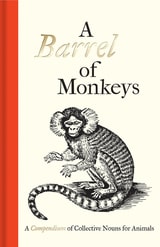
A Barrel of Monkeys
A Compendium of Collective Nouns for AnimalsCompiled by Samuel Fanous
Bodleian Library Publishing, 2015
A Barrel of Monkeys brings together more than one hundred collective nouns for animals, from a bloat of hippopotamuses to a caravan of camels, a tower of giraffes, and a leap of leopards. The rivalry between male rhinoceroses becomes especially apt when the rowdy ungulates are characterized as a crash of rhinos. An ambush of tigers is an apt characterization of the skillful hunters that silently stalk their prey. A blend of wordplay, puns, and alliteration, some of the terms collected here are now commonplace, like a pride of lions. Others aren’t heard much these days, but many—like a dazzle of zebras or a prickle of porcupines—richly deserve a comeback.
With charming illustrations by the eighteenth-century artist and naturalist Thomas Bewick, A Barrel of Monkeys is the perfect follow-up to A Conspiracy of Ravens, the Bodleian Library’s book of bird words. Not even a crash of rhinos can stop readers from smiling at this second collection.

A Bountiful Harvest
The Midwestern Farm Photographs of Pete Wettach, 1925-1965Leslie A. Loveless
University of Iowa Press, 2002
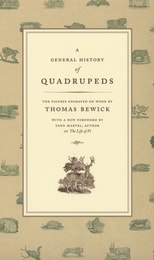
A General History of Quadrupeds
The Figures Engraved on WoodThomas Bewick
University of Chicago Press, 2009
In the late eighteenth century, the British took greater interest than ever before in observing and recording all aspects of the natural world. Travelers and colonists returning from far-flung lands provided dazzling accounts of such exotic creatures as elephants, baboons, and kangaroos. The engraver Thomas Bewick (1753–1828) harnessed this newfound interest by assembling the most comprehensive illustrated guide to nature of his day.
A General History of Quadrupeds, first published in 1790, showcases Bewick’s groundbreaking engraving techniques that allowed text and images to be published on the same page. From anteaters to zebras, armadillos to wolverines, this delightful volume features engravings of over four hundred animals alongside descriptions of their characteristics as scientifically understood at the time. Quadrupeds reaffirms Bewick’s place in history as an incomparable illustrator, one whose influence on natural history and book printing still endures today.
A History of Boston in 50 Artifacts
Joseph M. Bagley
University Press of New England, 2016
A History of Boston in 50 Artifacts
Joseph M. Bagley
Brandeis University Press, 2021
Joseph M. Bagley, the city archaeologist of Boston, uncovers a fascinating hodgepodge of history—from ancient fishing grounds to Jazz Age red-light districts—that will surprise and delight even longtime residents. Each artifact is shown in full color with a description of the item’s significance to its site location and Boston’s larger history. From cannonballs to drinking cups and from ancient spears to chinaware, A History of Boston in 50 Artifacts offers a unique and accessible introduction to Boston’s history and physical culture while revealing the ways objects can offer a tantalizing entrée into our past. Packed with vivid descriptions and art, this lively history of Boston will appeal to all manner of readers, locals, and visitors alike. This new edition showcases an important fact which has come to light since its first publication, that a chapter about a cat has now been shown to be a dog, thus demonstrating the perils of the archaeologist.
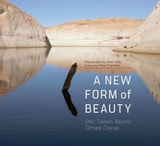
A New Form of Beauty
Glen Canyon Beyond Climate ChangePhotographs by Peter Goin, Essays by Peter Friederici
University of Arizona Press, 2016
In A New Form of Beauty photographer Peter Goin and writer Peter Friederici tackle science from the viewpoint of art, creating a lyrical exploration in words and photographs, setting Glen Canyon and Lake Powell as the quintessential example of the challenges of perceiving place in a new era of radical change. Through evocative photography and extensive reporting, the two document their visits to the canyon country over a span of many years. By motorboat and kayak, they have ventured into remote corners of the once-huge reservoir to pursue profound questions: What is this place? How do we see it? What will it become?
Goin’s full-color photographs are organized in three galleries—Flora and Fauna, Artifacts, and Low Water—interspersed with three essays by Friederici, and an epilogue gallery on Fire. The book includes two foldout photographs, which allow readers to fully see Lake Powell at high water and low water points
Contemplating humanity’s role in the world it is creating, Goin and Friederici ask if the uncertainties inherent in Glen Canyon herald an unpredictable new future for every place. They challenge us to question how we look at the world, how we live in it, and what the future will be.
A Photographer’s Guide to Ohio
Ian Adams
Ohio University Press, 2011
A Pictorial History of Arkansas's Old State House
Celebrating 175 YearsMary L. Kwas
University of Arkansas Press, 2011
A Pictorial History of the University of Iowa
An Expanded EditionJohn C. Gerber
University of Iowa Press, 1988
A Place Apart
A Pictorial History of Hot Springs, ArkansasRay Hanley
University of Arkansas Press, 2011
A Southern Illinois Album
Farm Security Administration Photographs, 1936-1943Herbert K. Russell. Foreword by F. Jack Hurley
Southern Illinois University Press, 1990
A Staggering Revolution
A Cultural History of Thirties PhotographyJohn Raeburn
University of Illinois Press, 2006
While other studies of thirties photography have concentrated on the documentary work of the Farm Security Administration (FSA), no previous book has considered it alongside so many of the decade's other important photographic projects. A Staggering Revolution includes individual chapters on Edward Steichen's celebrity portraiture; Berenice Abbott's Changing New York project; the Photo League's ethnography of Harlem; and Edward Weston's western landscapes, made under the auspices of the first Guggenheim Fellowship awarded to a photographer. It also examines Margaret Bourke-White's industrial and documentary pictures, the collective undertakings by California's Group f.64, and the fashion magazine specialists, as well as the activities of the FSA and the Photo League.
A Taste of the Hocking Hills
Matt Rapposelli
Ohio University Press, 2018
When chef Matt Rapposelli left the National Park Service to attend culinary school in New England, he was moving from one passion to another. What later brought those passions together was a job in the Hocking Hills, southeast Ohio’s stunning, wild landscape, where the restaurants he helmed—at Hocking Hills Lodge and Lake Hope Lodge—gained a resounding reputation for classic dishes that, driven by the regional vernacular and the natural seasonal abundance of Appalachia, were impeccably fresh and flavorful.
A Taste of the Hocking Hills intermingles delicious recipes with striking photographs of a region to which thousands trek each year. Rapposelli presents dishes by the season, noting the specialties that appear on his menus in a given time of year. Whether enjoying a winter evening or a summer morning, cooks will be able to bring a bit of the Hocking Hills home.
A View of Venice
Portrait of a Renaissance CityKristin Love Huffman, editor
Duke University Press, 2024
Contributors. Karen-edis Barzman, Andrea Bellieni, Patricia Fortini Brown, Valeria Cafà, Stanley Chojnacki, Tracy E. Cooper, Giada Damen, Julia A. DeLancey, Piero Falchetta, Ludovica Galeazzo, Maartje van Gelder, Jonathan Glixon, Richard Goy, Anna Christine Swartwood House, Kristin Love Huffman, Holly Hurlburt, Claire Judde de Larivière, Blake de Maria, Martina Massaro, Cosimo Monteleone, Monique O’Connell, Mary Pardo, Giorgio Tagliaferro, Saundra Weddle, Bronwen Wilson, Rangsook Yoon
A Year of Iowa Nature
Discovering Where We LiveCarl Kurtz
University of Iowa Press, 2014
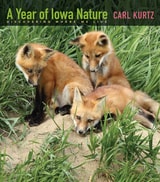
Concentrating on Iowa’s tallgrass prairie, Kurtz also points his viewfinder toward the great variety of natural habitats in the eastern United States. Arranged chronologically throughout the year, the fifty-five color photos and their accompanying narratives rotate through the seasons like a nature film. The winter months showcase a frost-covered white-tailed deer, cedar waxwings feeding on winter apples, a muskrat on the surface of an icy pond, and dune-like snowdrifts. Kurtz’s palette warms up in springtime with stunning photos of Virginia bluebells, fox cubs, juvenile chipmunks, and ruddy ducks. Summer brings a host of butterflies, frogs, and goldfinches as well as blooming prairie plants. The colors become more subdued in fall with the change in light, revealing the rich hues of Indian grass and big bluestem and the subtle plumage of migrating warblers.
Just as Kurtz’s Practical Guide to Prairie Reconstruction offers an indispensable manual for individuals and land managers working to create a diverse prairie community, so does A Year of Iowa Nature point the way toward a sincere, month-by-month appreciation of the natural world around us.
Abecedario de Juárez
An Illustrated LexiconJulián Cardona and Alice Leora Briggs, with translations by Alice L. Driver; illustrations by Alice Leora Briggs
University of Texas Press, 2022
Uses key words and striking images to explore violence and everyday life in Juárez, Mexico.
Juárez, Mexico, is known for violence. The femicides of the 1990s, and the cartel mayhem that followed, made it one of the world's most dangerous cities. Along with the violence came a new lexicon that traveled from person to person, across rivers and borders—wherever it was needed to explain the horrors taking place. From personal interviews, media accounts, and conversations on the street, Julián Cardona and Alice Leora Briggs have collected the words and slang that make up the brutal language of Juárez, creating a glossary that serves as a linguistic portrait of the city and its violence. Organized alphabetically, the entries consist of Spanish and Spanglish, accompanied by short English definitions. Some also feature a longer narrative drawn from interviews—stories that put the terms in context and provide a personal counterpoint to media reports of the same events. Letters, and many of the entries, are supplemented with Briggs’s evocative illustrations, which are reminiscent of Hans Holbein’s famous Alphabet of Death. Together, the words, drawings, and descriptions in ABCedario de Juárez both document and interpret the everyday violence of this vital border city.
Acanthaceae to Myricaceae
Water Willows to Wax MyrtlesRobert H. Mohlenbrock
Southern Illinois University Press, 2008
Veteran botanist, scientific author, and professor Robert H. Mohlenbrock brings the full depth of his expertise and scholarship to his latest book, Acanthaceae to Myricaceae: Water Willows to Wax Myrtles, the third of four volumes in the Aquatic and Standing Water Plants of the Central Midwest series. This easy-to-use illustrated reference guide covers aquatic and standing water plants for the states of Iowa, Illinois, Indiana, Ohio, Kansas, Missouri, Nebraska, and Kentucky (excluding the biologically distinct Cumberland Mountain region of eastern Kentucky), from spearmint to wintergreen, from aster to waterwort.
The volume identifies, describes, and organizes species in three groups, including truly aquatic plants, which spend their entire life with their vegetative parts either completely submerged or floating on the water’s surface; emergents, which are usually rooted under water with their vegetative parts standing above the water’s surface; and wetland plants, which live most or all of their lives out of water, but which can live at least three months in water.
Mohlenbrock lists the taxa alphabetically, and within each taxon, he describes the species with the scientific names he deems most appropriate (indicating if his opinion differs from that of the U.S. Fish and Wildlife Service), common names, identification criteria, line drawings, geographical distribution, habitat description, and official U.S. Fish and Wildlife Service wetlands designation as described by the National Wetland Inventory Section in 1988.
Acanthaceae to Myricaceae is an essential reference for state and federal employees who deal with environmental conservation and mitigation issues in aquatic and wetland plants. It is also a useful guide for students and instructors in college and university courses focusing on the identification of aquatic and wetland plants.
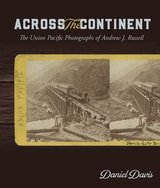
Across the Continent
The Union Pacific Photographs of Andrew Joseph RussellDaniel Davis
University of Utah Press, 2018
Copublished with the Utah State Historical Society. Affiliated with the Utah Division of State History, Utah Department of Heritage & Arts
Andrew J. Russell is primarily known as the man who photographed the famous “East and West Shaking Hands” image of the Golden Spike ceremony on May 10, 1869. He also took nearly one thousand other images that document almost every aspect of the construction of the Union Pacific Railroad. Across the Continent is the most detailed study to date of the life and work of an often-overlooked but prolific artist who contributed immensely not only to documentation of the railroad but also to the nation’s visualization of the American West and, earlier, the Civil War.
The central focus in the book is on the large body of work Russell produced primarily to satisfy the needs of the Union Pacific. Daniel Davis posits that this set of Russell’s photos is best understood not through one or a handful of individual images, but as a photographic archive. Taken as a whole, that archive shows that Russell intended for viewers never to forget who built the Union Pacific. His images celebrate working people—masons working on bridge foundations, freighters and their wagons, surveyors with their transits, engine crews posed on their engines, as well as tracklayers, laborers, cooks, machinists, carpenters, graders, teamsters, and clerks pushing paper.
Russell contributed to a golden age of Western photography that visually introduced the American West to the nation, changing its public image from that of a Great American Desert to a place of apparently unlimited economic potential.
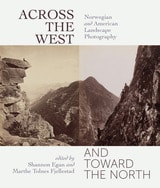
Across the West and Toward the North
Norwegian and American Landscape PhotographyEdited by Shannon Egan and Marthe Tolnes Fjellestad
University of Utah Press, 2021
In this edited volume, Norwegian and American scholars offer the first study of the striking parallels in the production, distribution, and reception of these modern expressions of landscape and nationhood. In recognizing how landscape photographs were made meaningful to international audiences—such as tourists, visitors to world’s fairs, scientists, politicians, and immigrants—the authors challenge notions of American exceptionalism and singularly nationalistic histories.
The book includes stunning photographs of mountainous landscapes, glaciers, and forests, punctuated by signs of human development and engineering, with more than one hundred rarely seen plates by photographers Knud Knudsen, Anders Beer Wilse, Timothy O’Sullivan, Charles R. Savage, and others.

Afterimages
Photography and U.S. Foreign PolicyLiam Kennedy
University of Chicago Press, 2016
Liam Kennedy here maps the evolving relations between the American way of war and photographic coverage of it. Organized in its first section around key US military actions over the last fifty years, the book then moves on to examine how photographers engaged with these conflicts on wider ethical and political grounds, and finally on to the genre of photojournalism itself. Illustrated throughout with examples of the photographs being considered, Afterimages argues that photographs are important means for critical reflection on war, violence, and human rights. It goes on to analyze the high ethical, sociopolitical, and legalistic value we place on the still image’s ability to bear witness and stimulate action.
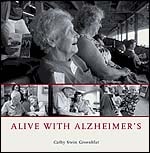
Alive with Alzheimer's
Cathy Stein Greenblat
University of Chicago Press, 2004
This small, tender volume of 85 photographs and accompanying discussion powerfully shows the limitations of this view. Cathy Stein Greenblat, an internationally respected sociologist and photographer, demonstrates in Alive with Alzheimer's that, while the ravages of the disease are real, Alzheimer's sufferers can do more than survive, they can thrive. Her images, interviews, and observations attest to the possibility of their being "alive" with Alzheimer's far beyond the expectations of the general public and even of many physicians with long experience with the disease.
Greenblat offers a new vision, taking us into a world of life-enhancing institutional care. Nursing homes and similar facilities don't have to be a last resort; as Greenblat shows, with a dedicated and experienced staff and an enriched environment (that includes respect, choices, pets, and music), extraordinary changes can be effected in Alzheimer's patients. Alive with Alzheimer's, the first photographic book on the disease, offers hope and inspiration. Moreover, its vivid, impressive evidence that ongoing stimulation in a good institutional setting can sustain Alzheimer's patients at a far higher level than is generally believed has significant implications for personal and policy decisions.
The new standard of care chronicled in Alive with Alzheimer's will provide hope and inspiration to those touched by the disease. As Dr. Enid Rockwell writes in her Afterword to Greenblat's moving book, "These photographs are extraordinary for practitioners, for family members, for everyone to see what's going on with these people. The stimulation pictured in this book is more powerful than any medication that we will have in our lifetime. . . . They so vividly show us that there are people inside these bodies, people with personalities, who experience emotion, and they show that there is life after Alzheimer's."
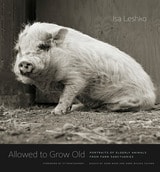
Allowed to Grow Old
Portraits of Elderly Animals from Farm SanctuariesIsa Leshko
University of Chicago Press, 2019
Isa Leshko shows us, brilliantly, with this collection of portraits. To create these portraits, she spent hours with her subjects, gaining their trust and putting them at ease. The resulting images reveal the unique personality of each animal. It’s impossible to look away from the animals in these images as they unforgettably meet our gaze, simultaneously calm and challenging. In these photographs we see the cumulative effects of the hardships of industrialized farm life, but also the healing that time can bring, and the dignity that can emerge when farm animals are allowed to age on their own terms.
Each portrait is accompanied by a brief biographical note about its subject, and the book is rounded out with essays that explore the history of animal photography, the place of beauty in activist art, and much more. Open this book to any page. Meet Teresa, a thirteen-year-old Yorkshire Pig, or Melvin, an eleven-year-old Angora Goat, or Tom, a seven-year-old Broad Breasted White Turkey. You’ll never forget them.

America's National Cemeteries
A Meditation on History, Memory, and PlaceTimothy B. Spears, Foreword by Roderick Gainer
University of Alabama Press, 2025
A poignant photographic tour of honor, sacrifice, and memory within America's national cemeteries
In America’s National Cemeteries, Timothy B. Spears takes the reader on a grand tour of these singular places of commemoration, the final resting place for more than four million American military personnel who died either in wartime, during their time of service, or after their honorable discharge. His absorbing account—part historical narrative and part travelogue—is enhanced by 180 of his remarkable photographs, which capture the spirit, beauty, and solemn remembrance to be found in each of the 156 national cemeteries across America.
Spears details the history of the cemeteries since their establishment during the American Civil War and explores their ongoing evolution and importance to American society and the commitment America has made to honoring its military dead. With headstones neatly arrayed in rows and each soldier typically buried in an identical fashion, the cemeteries symbolize an enduring connection between human mortality and national identity. They also reflect the nation’s persistent challenges with inequalities and injustice, violence and racism, lingering questions about “good” versus “bad” wars, and the vexed legacies of America’s military forays.
In this unique meditation on American history, memory, and place, Spears embraces the impact of the past on the present, offering an original perspective on the meaning of military service, mortality, and remembrance and how these national cemeteries have evolved into truly iconic and emblematic American spaces. The book also features a foreword by Roderick Gainer, Chief Curator of Arlington National Cemetery since 2013.
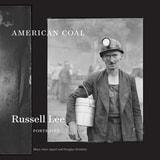
American Coal
Russell Lee PortraitsMary Jane Appel and Douglas Brinkley
University of Texas Press, 2024
More than 100 powerful images by noted photographer Russell Lee that document the working conditions and lives of coal mining communities in the postwar United States; publication coincides with an exhibition at the National Archives in Washington, DC.
In 1946 the Truman administration made a promise to striking coal miners: as part of a deal to resume work, the government would sponsor a nationwide survey of health and labor conditions in mining camps. One instrumental member of the survey team was photographer Russell Lee. Lee had made his name during the Depression, when, alongside Dorothea Lange and Walker Evans, he used his camera to document agrarian life for the Farm Security Administration (FSA). Now he trained his lens on miners and their families to show their difficult circumstances despite their essential contributions to the nation's first wave of postwar growth.
American Coal draws from the thousands of photographs that Lee made for the survey—also on view in the US National Archives and Records Administration’s exhibition Power & Light—and includes his original, detailed captions as well as an essay by biographer Mary Jane Appel and historian Douglas Brinkley. They place his work in context and illuminate how Lee helped win improved conditions for his subjects through vivid images that captured an array of miners and their communities at work and at play, at church and in school, in moments of joy and struggle, ultimately revealing to their fellow Americans the humanity and resilience of these underrecognized workers.
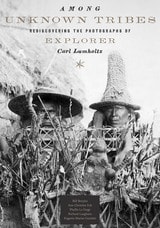
Among Unknown Tribes
Rediscovering the Photographs of Explorer Carl LumholtzBy Bill Broyles
University of Texas Press, 2014
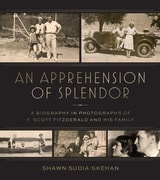
An Apprehension of Splendor
A Biography in Photographs of F. Scott Fitzgerald and His FamilyShawn Sudia-Skehan; Foreword by Jackson R. Bryer; Introduction by Eleanor Lanahan
University of Alabama Press, 2025
A unique collection of Fitzgerald family photographs, many never before published, hand selected by a curator of the Scott and Zelda Fitzgerald Museum.
Enter the Jazz Age glamour of F. Scott and Zelda Fitzgerald and their daughter, Scottie. An Apprehension of Splendor is a rich pictorial biography that illuminates the lives of this brilliant literary family in 344 rare photographs, 180 of which have never been published.
The Fitzgeralds are chiefly known from a small number of iconic, posed images, but the dashing couple and their daughter amassed hundreds of candid snapshots now housed in archives and university library collections throughout North America. These rare photos reveal the full, vivid lives behind the icons—a Buffalo boy cradling a velvety puppy, a jaunty southern gamine in the shade of a loblolly pine laughing at a secret, the stoic gloom of an enlistee in a scratchy woolen uniform, a plot taking shape in the mind of a fledgling writer with bed-tousled hair, an amorous young couple struggling to light a cigarette in the chiaroscuro of a Riviera beach, an unhappy baby tugged through the snow in a laundry basket lashed to a sled, and a myriad of other images that will rekindle fascination with the Fitzgeralds and their time.
With unparalleled access to the family’s personal papers and photographs, Shawn Sudia-Skehan, former director of acquisitions at the Scott and Zelda Fitzgerald Museum, handpicked and annotated this collection of images that brings readers closer to the Fitzgeralds than any other work. Readers of Tender Is the Night, The Beautiful and Damned, and many other works by F. Scott and Zelda will recognize some of the places and experiences that inspired their unforgettable fictions.
A captivating portrait of Jazz Age celebrity, young passion, and artistic ambition, An Apprehension of Splendor returns the perfume to the luminous flower of the Fitzgeralds.
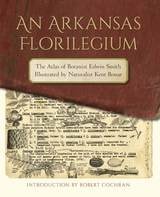
An Arkansas Florilegium
The Atlas of Botanist Edwin Smith Illustrated by Naturalist Kent BonarEdwin Smith
University of Arkansas Press, 2017
Thirty-five years later, with Smith retired and Bonar long gone from the park service but still drawing, Bonar’s weathered and battered copy of the atlas was seized by a diverse cadre of amateur admirers motivated by fears of its damage or loss. Their fears were certainly justified; after all, the pages were now jammed to the margins with some 3,500 drawings, and the volume had already survived one accidental dunking in an Ozark stream.
An Arkansas Florilegium brings Smith’s and Bonar’s knowledge and lifelong diligence to the world in this unique mix of art, science, and Arkansas saga.
An Ocean Garden
The Secret Life of SeaweedJosie Iselin
Oregon State University Press, 2023
And I Said No Lord
A Twenty-One-Year-Old in Mississippi in 1964Joel Katz
University of Alabama Press, 2014
Ann Arbor Observed
Selections from Then and NowGrace Shackman
University of Michigan Press, 2010
Packed with photographs from Ann Arbor of yesteryear and the present day, Ann Arbor Observed compiles the best of Shackman’s articles in one book divided into eight sections: public buildings and institutions, the University of Michigan, transportation, industry, downtown Ann Arbor, recreation and culture, social fabric and communities, and architecture.
For long-time residents, Ann Arbor expatriates, University of Michigan alumni, and visitors alike, Ann Arbor Observed provides a rare glimpse of the bygone days of a town with a rich and varied history.
Grace Shackman is a history columnist for the Ann Arbor Observer, the Community Observer, and the Old West Side News, as well as a writer for University of Michigan publications. She is the author of two previous books: Ann Arbor in the 19th Century and Ann Arbor in the 20th Century.
Architecture at the End of the Earth
Photographing the Russian NorthWilliam Craft Brumfield
Duke University Press, 2015
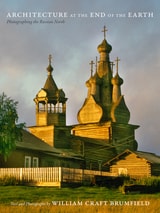
The architectural masterpieces Brumfield photographed are diverse: they range from humble chapels to grand cathedrals, buildings that are either dilapidated or well cared for, and structures repurposed during the Soviet era. Included are onion-domed wooden churches such as the Church of the Dormition, built in 1674 in Varzuga; the massive walled Transfiguration Monastery on Great Solovetsky Island, which dates to the mid-1550s; the Ferapontov-Nativity Monastery's frescoes, painted in 1502 by Dionisy, one of Russia's greatest medieval painters; nineteenth-century log houses, both rustic and ornate; and the Cathedral of St. Sophia in Vologda, which was commissioned by Ivan the Terrible in the 1560s. The text that introduces the photographs outlines the region's significance to Russian history and culture.
Brumfield is challenged by the immense difficulty of accessing the Russian North, and recounts traversing sketchy roads, crossing silt-clogged rivers on barges and ferries, improvising travel arrangements, being delayed by severe snowstorms, and seeing the region from the air aboard the small planes he needs to reach remote areas.
The buildings Brumfield photographed, some of which lie in near ruin, are at constant risk due to local indifference and vandalism, a lack of maintenance funds, clumsy restorations, or changes in local and national priorities. Brumfield is concerned with their futures and hopes that the region's beautiful and vulnerable achievements of master Russian carpenters will be preserved. Architecture at the End of the Earth is at once an art book, a travel guide, and a personal document about the discovery of this bleak but beautiful region of Russia that most readers will see here for the first time.
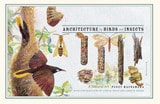
Architecture by Birds and Insects
A Natural ArtPaintings by Peggy Macnamara
University of Chicago Press, 2008
A visual celebration of these natural feats of engineering and ingenuity, Architecture by Birds and Insects allows readers a peek inside a wide range of nests, offering a rare opportunity to get a sense of the materials and methods used to build them. Here, we see the kinds of places where nests are built—for instance, the house wren has been known to occupy cow skulls, flower pots, tin cans, and the pockets of hanging laundry, while the uglynest caterpillar prefers rose bushes and cherry trees. Inspired by the vast nest collection at the Field Museum, which features specimens gathered throughout North and South America, Peggy Macnamara’s paintings are enhanced by text written by museum curators. This narrative provides a foundation in natural history for each painting, as well as fascinating anecdotes about the nests and their builders.
Like so many natural treasures, nests are easy to ignore. But Macnamara’s gorgeous paintings will undoubtedly change that. Architecture by Birds and Insects at last gives the tiniest engineers their rightful moment in the spotlight, and in so doing increases awareness and encourages the protection of birds, insects, and their habitats. Readers will never look at a Frank Gehry design, or a treetop nest, the same way again.
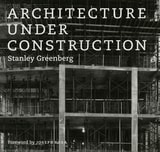
Architecture under Construction
Stanley Greenberg
University of Chicago Press, 2010
Mies van der Rohe once commented, “Only skyscrapers under construction reveal their bold constructive thoughts, and then the impression made by their soaring skeletal frames is overwhelming.” Never has this statement resonated more than in recent years, when architectural design has undergone a radical transformation, and when powerful computers allow architects and engineers to design and construct buildings that were impossible just a few years ago. At the same time, what lies underneath these surfaces is more mysterious than ever before.
In Architecture under Construction, photographer Stanley Greenberg explores the anatomy and engineering of some of our most unusual new buildings, helping us to understand our own fascination with what makes buildings stand up, and what makes them fall down. As designs for new constructions are revealed and the public watches closely as architects and engineers challenge each other with provocative new forms and equally audacious ideas, Greenberg captures penetrating images that reveal the complex mystery—and beauty—found in the transitory moments before the skin of a building covers up the structures that hold it together.
Framed by a historical and critical essay by Joseph Rosa and including an afterword by the author, the eighty captivating and thought-provoking images collected here—which focus on some of the most high-profile design projects of the past decade, including buildings designed by Norman Foster, Frank Gehry, Steven Holl, Daniel Libeskind, Thom Mayne, and Renzo Piano, among others —are not to be missed by anyone with an eye for the almost invisible mechanisms that continue to define our relationship with the built world.
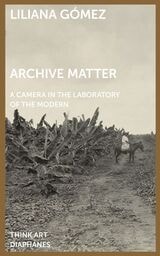
Archive Matter
A Camera in the Laboratory of the ModernLiliana Gómez
Diaphanes, 2023
A journey through the United Fruit Company’s photo archive and its documentation of corporate expansion into the Caribbean.
The establishment of the United Fruit Company as a global political agent with its banana plantations was met with considerable resistance. Now the company’s photographic records are the focal point of Archive Matter as it examines photography’s historical and political impact through the argument that this overlooked, but important, archive made capitalist expansion into the Caribbean possible.
Author Liliana Gómez examines the images from within their “optical unconscious” and via the archive’s silences and omissions. The implication of these silences, Gómez argues, is the attempt to conceal the violence embedded within the realities of the plantations’ daily operations and corporate efforts to “modernize” the Caribbean.
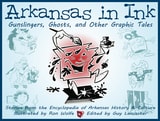
Arkansas in Ink
Gunslingers, Ghosts, and Other Graphic TalesGuy Lancaster
Butler Center for Arkansas Studies, 2014
Astoria
An Oregon HistoryKaren L. Leedom
Oregon State University Press, 2021
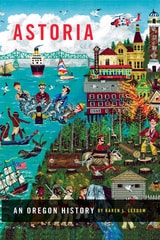
Before Seattle, before Portland, there was Astoria.
The rest of the country is just beginning to discover Astoria, Oregon, that historic gem of a town at the mouth of the Columbia River west of Portland, and the oldest European-American settlement west of the Rockies.
The author provides a chronological look dating back to the 1500s, including European exploration, Native American life, logging, fishing, Chinese laborers in the salmon industry, a giant cheese in the Civil War, Oregon’s first female surgeon, Victorian architecture, and valiant Coast Guard rescues.
Published by Rivertide Publishing and distributed by Oregon State University Press