292 books match the query 'Power resources' and 22 start with a

cover of A Handbook for EMC Testing and Measurement

A Handbook for EMC Testing and Measurement

David Morgan

The Institution of Engineering and Technology, 1994
During the 1980s the worldwide interest in electromagnetic compatibility (EMC) grew rapidly with the introduction of legislation to control the growing interference problems generated by the increased use of electronic equipment in industry and in the home. The European directive harmonising EMC measurements gave particular impetus to manufacturers and importers of electrical and electronic equipment in Europe to understand EMC design techniques and verification procedures. This book explains how equipment can be verified by testing. It discusses the nature of EMC standards world wide and describes in detail testing methods and their conduct and accuracy. In addition to standard EMC testing, topics including electrostatic discharge, nuclear electromagnetic pulse and lightning are also discussed.
[more]
cover of A Prosperous Way Down: Principles and Policies

A Prosperous Way Down

Principles and Policies

Howard T. Odum

University Press of Colorado, 2008

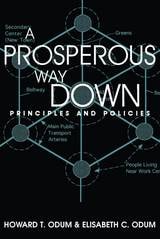
A Prosperous Way Down (2001), the last book by Howard T. and Elisabeth C. Odum, has shaped politics and planning as nations, states, and localities begin the search for ways to adapt to a future with vastly increased competition for energy.

A Prosperous Way Down considers ways in which a future with less fossil fuel could be peaceful and prosperous. Although history records the collapse of countless civilizations, some societies and ecosystems have managed to descend in orderly stages, reducing demands and selecting and saving what is most important.

The authors make recommendations for a more equitable and cooperative world society, with specific suggestions based on their evaluations of trends in global population, wealth distribution, energy sources, conservation, urban development, capitalism and international trade, information technology, and education.

Available for the first time in paperback, this thoughtful, provocative book forces us to confront assumptions about our world 's future and provides both a steadying hand and a call to action with its pragmatic analysis of a global transition.

[more]
cover of AC-DC Power System Analysis

AC-DC Power System Analysis

Jos Arrillaga

The Institution of Engineering and Technology, 1998

With the expansion of HV DC transmission throughout the world, and the increasing numbers of international interconnections, few power systems can continue to escape the effect of this technology in their planning and operation. The primary subject of this book is the incorporation of AC-DC converters and DC transmission in power system analysis. However, the concepts and methods described are also applicable to the FACTS (flexible AC transmission systems) technology.
[more]
cover of AI Explainability and Governance in Smart Energy Systems

AI Explainability and Governance in Smart Energy Systems

Pushpalatha Naveenkumar

The Institution of Engineering and Technology, 2026

Artificial intelligence may have the potential to deliver more efficient, reliable and sustainable energy systems, particularly by helping to manage the complexity of distributed generation and demand-side management. However, stakeholders expect interpretability and explainability, and AI tools must also be transparent, secure and trustworthy. Explainable AI (XAI) models are intended to make AI algorithms more transparent and understandable without reducing their performance and efficiency.
[more]
cover of AI and Digitalization in Energy Management

AI and Digitalization in Energy Management

Antonio Sanfilippo

The Institution of Engineering and Technology, 2025
Energy management involves the planning and operation of energy production, consumption, distribution and storage, with objectives including resource conservation, climate protection and cost savings. Growth in renewable energy - essential for the transition to a decarbonised energy system - adds the challenge of intermittency, making energy management all the more important.
[more]
cover of AI for Power Electronics and Renewable Energy Systems

AI for Power Electronics and Renewable Energy Systems

Weihao Hu

The Institution of Engineering and Technology, 2024

Rising shares of renewable energy are needed to stave off catastrophic climate change, but also bring about the challenge of intermittency, jeopardizing power quality. Instead of large central generation units, many distributed generators and loads need to be managed in order to integrate renewable energy with power systems.
[more]
cover of AI for Status Monitoring of Utility Scale Batteries

AI for Status Monitoring of Utility Scale Batteries

Shunli Wang

The Institution of Engineering and Technology, 2022

Batteries are a necessary part of a low-emission energy system, as they can store renewable electricity and assist the grid. Utility-scale batteries, with capacities of several to hundreds of MWh, are particularly important for condominiums, local grid nodes, and EV charging arrays. However, such batteries are expensive and need to be monitored and managed well to maintain capacity and reliability. Artificial intelligence offers a solution for effective monitoring and management of utility-scale batteries.
[more]
cover of AI for Wind Turbine Performance and Condition Monitoring

AI for Wind Turbine Performance and Condition Monitoring

Davide Astolfi

The Institution of Engineering and Technology, 2026
Wind power is unanimously recognized as one of the major drivers of the energy transition. Increasing renewable power generation introduces significant challenges for both the operation and planning of power systems, driven by the intrinsic uncertainty of stochastic renewable resources and by the growing spatial distribution of generation assets. Wind power presents a distinctive set of challenges in this context.
[more]
cover of AI-Based Forecasting of Solar Photovoltaics Power Generation

AI-Based Forecasting of Solar Photovoltaics Power Generation

Elham Shirazi

The Institution of Engineering and Technology, 2026

The widespread deployment of photovoltaics (PV) technology has emerged as a key element in the global shift toward a carbon-neutral and sustainable energy system. Driven by a combination of supportive regulatory frameworks, government incentive programs, technical developments, and increasing environmental awareness, the adoption of PV technologies has witnessed remarkable growth in recent years. However, the rapid integration of distributed PV systems into existing electricity grid infrastructure introduces new challenges, particularly concerning voltage regulation, reverse power flow, and congestion within the electricity grid. These issues are intensified when PV systems are integrated without proper strategy. In this context, solar PV power forecasting has become an essential tool for ensuring the reliable and efficient integration of solar PV systems into power systems. Artificial intelligence (AI) and machine learning (ML) offer means to forecast PV power and energy generation based on historical data of PV generation, meteorological data, and/or weather forecasts.
[more]
cover of Adaptive Sampling with Mobile WSN: Simultaneous robot localisation and mapping of paramagnetic spatio-temporal fields

Adaptive Sampling with Mobile WSN

Simultaneous robot localisation and mapping of paramagnetic spatio-temporal fields

Koushil Sreenath

The Institution of Engineering and Technology, 2011

Adaptive Sampling with Mobile WSN develops algorithms for optimal estimation of environmental parametric fields. With a single mobile sensor, several approaches are presented to solve the problem of where to sample next to maximally and simultaneously reduce uncertainty in the field estimate and uncertainty in the localisation of the mobile sensor while respecting the dynamics of the time-varying field and the mobile sensor. A case study of mapping a forest fire is presented. Multiple static and mobile sensors are considered next, and distributed algorithms for adaptive sampling are developed resulting in the Distributed Federated Kalman Filter. However, with multiple resources a possibility of deadlock arises and a matrix-based discrete-event controller is used to implement a deadlock avoidance policy. Deadlock prevention in the presence of shared and routing resources is also considered. Finally, a simultaneous and adaptive localisation strategy is developed to simultaneously localise static and mobile sensors in the WSN in an adaptive manner. Experimental validation of several of these algorithms is discussed throughout the book.
[more]
cover of Advanced Characterization of Thin Film Solar Cells

Advanced Characterization of Thin Film Solar Cells

Mowafak Al-Jassim

The Institution of Engineering and Technology, 2020

Polycrystalline thin-film solar cells have reached a levelized cost of energy that is competitive with all other sources of electricity. The technology has significantly improved in recent years, with laboratory cell efficiencies for cadmium telluride (CdTe), perovskites, and copper indium gallium diselenide (CIGS) each exceeding 22 percent. Both CdTe and CIGS solar panels are now produced at the gigawatt scale. However, there are ongoing challenges, including the continued need to improve performance and stability while reducing cost. Advancing polycrystalline solar cell technology demands an in-depth understanding of efficiency, scaling, and degradation mechanisms, which requires sophisticated characterization methods. These methods will enable researchers and manufacturers to improve future solar modules and systems.
[more]
cover of Advanced Dielectric Materials for Electrostatic Capacitors

Advanced Dielectric Materials for Electrostatic Capacitors

Qi Li

The Institution of Engineering and Technology, 2020

Capacitors are passive electrical components that store energy in an electric field. Applications include electric power conditioning, signal processing, motor starting, and energy storage. The maximum charge a capacitor can hold largely depends on the dielectric material inside. That material is the enabler for the performance. Ongoing development in fields such as high-power electronics, renewable energy, hybrid electric vehicles and electric aircraft, is posing an urgent need for more advanced electrostatic capacitor technology.
[more]
cover of Advances in High Voltage Engineering

Advances in High Voltage Engineering

A. Haddad

The Institution of Engineering and Technology, 2004

It is several years since any book has attempted to cover the range of issues in high voltage research and development. The area continues to be full of challenge and scope and this book focuses on developments in experimental methods, theory, modelling and HV technology through the past decade. The coverage includes advances in basic understanding and capability, for instance in earthing, numerical analysis, optical methods, the physics of air breakdown and partial discharge. It also addresses technological developments in key areas such as SF6 insulation systems, polymeric insulators and power cables, ZnO surge arrestors, and pulsed power. The unique blend of reputable contributors and comprehensive subject coverage makes this book an ideal reference source for engineers and researchers in the field for many years to come.
[more]
cover of Advances in Power System Modelling, Control and Stability Analysis

Advances in Power System Modelling, Control and Stability Analysis

Federico Milano

The Institution of Engineering and Technology, 2016

Advances in Power System Modelling, Control and Stability Analysis captures the variety of new methodologies and technologies that are changing the way modern electric power systems are modelled, simulated and operated.
[more]
cover of Advances in Power System Modelling, Control and Stability Analysis

Advances in Power System Modelling, Control and Stability Analysis

Federico Milano

The Institution of Engineering and Technology, 2022

Power systems are becoming increasingly complex as well as flexible, able to integrate distributed renewable generation, EV, and additional loads. This expanded and updated second edition covers the technologies needed to operate modern power grids.
[more]
cover of After Coal: Stories of Survival in Appalachia and Wales

After Coal

Stories of Survival in Appalachia and Wales

Tom Hansell

West Virginia University Press, 2018

What happens when fossil fuels run out? How do communities and cultures survive?

Central Appalachia and south Wales were built to extract coal, and faced with coal’s decline, both regions have experienced economic depression, labor unrest, and out-migration. After Coal focuses on coalfield residents who chose not to leave, but instead remained in their communities and worked to build a diverse and sustainable economy. It tells the story of four decades of exchange between two mining communities on opposite sides of the Atlantic, and profiles individuals and organizations that are undertaking the critical work of regeneration.

The stories in this book are told through interviews and photographs collected during the making of After Coal, a documentary film produced by the Center for Appalachian Studies at Appalachian State University and directed by Tom Hansell. Considering resonances between Appalachia and Wales in the realms of labor, environment, and movements for social justice, the book approaches the transition from coal as an opportunity for marginalized people around the world to work toward safer and more egalitarian futures.

[more]
cover of After Oil

After Oil

Imre Szeman

West Virginia University Press, 2016

After Oil explores the social, cultural and political changes needed to make possible a full-scale transition from fossil fuels to new forms of energy. Written collectively by participants in the first After Oil School, After Oil explains why the adoption of renewable, ecologically sustainable energy sources is only the first step of energy transition.
 
Energy plays a critical role in determining the shape, form and character of our daily existence, which is why a genuine shift in our energy usage demands a wholesale transformation of the petrocultures in which we live. After Oil provides readers with the resources to make this happen.

 
 
[more]
cover of Agrivoltaics: Technical, ecological, commercial and legal aspects

Agrivoltaics

Technical, ecological, commercial and legal aspects

Constantin Klyk

The Institution of Engineering and Technology, 2024
Agrivoltaics, also called agricultural-photovoltaics (Agri-PV or APV), integrates solar power generation into an agricultural activity on farmland.
[more]
cover of Alaska's Microgrid Innovators: How Communities Are Responding to Today's Energy Challenges

Alaska's Microgrid Innovators

How Communities Are Responding to Today's Energy Challenges

Peter Asmus

University of Alaska Press, 2026

As glaciers melt, treasured species such as salmon and crab decline, oil reserves wane, and consumer energy bills continue to rise, Alaska is reevaluating its energy future, and the state’s rural communities are leading the way. Alaska's Microgrid Innovators explores how climate change refocuses the story of the state’s energy development history, looking not at the well-told story of oil and natural gas but instead at wind, solar, hydro, and other low-carbon energy sources that have delivered immense economic savings and environmental benefits to both Alaska state residents and the world.

Renewable energy integration projects have sprung up in Alaska’s rural communities since the mid-1990s not due to regulatory fiat but rather to economic necessity. In Alaska’s Microgrid Innovators, pioneers across the stakeholder spectrum—including professionals, academics, Native peoples, policy makers, and other industry participants—describe how they have helped to develop more affordable and sustainable energy systems.

Along with chronicling technological innovation, Alaska’s Microgrid Innovators looks to the future, making the case for succession planning and new public policies as integral for Alaska to meet today’s energy challenges and those to come.
[more]
cover of Ammonia Combustion Applications for Energy Systems

Ammonia Combustion Applications for Energy Systems

Agustin Valera-Medina

The Institution of Engineering and Technology, 2025

Emerging low-emission energy systems will depend on a range of energy vectors or fuels, for electricity, heating, storage and transport. Each has advantages and shortcomings, qualifying it for certain roles and applications. Liquid ammonia offers a higher energy density than liquid hydrogen.
[more]
cover of Artificial Intelligence Techniques in Power Systems

Artificial Intelligence Techniques in Power Systems

Kevin Warwick

The Institution of Engineering and Technology, 1997

Research in artificial intelligence has developed many techniques and methodologies that can be either adapted or used directly to solve complex power system problems. A variety of such problems are covered in this book including reactive power control, alarm analysis, fault diagnosis, protection systems and load forecasting. Methods such as knowledge-based (expert) systems, fuzzy logic, neural networks and genetic algorithms are all first introduced and then investigated in terms of their applicability in the power systems field. The book, therefore, serves as both an introduction to the use of artificial intelligence techniques for those from a power systems background and as an overview of the power systems implementation area for those from an artificial intelligence computing or control background. It is structured so that it is suitable for various levels of reader, covering basic principles as well as applications and case studies. The most popular methods and the most fruitful application fields are considered in more detail. The book contains contributions from top international authors and will be an extremely useful text for all those with an interest in the field.
[more]
cover of Artificial Intelligence for Smarter Power Systems: Fuzzy logic and neural networks

Artificial Intelligence for Smarter Power Systems

Fuzzy logic and neural networks

Marcelo Godoy Simões

The Institution of Engineering and Technology, 2021

The urgent need to reduce carbon emissions is leading to growing use of renewable electricity, particularly from wind and photovoltaics. However, the intermittent nature of these power sources presents challenges to power systems, which need to ensure high and consistent power quality. Going forward, power systems also need to be able to respond to changes in loads, for example from EV charging. Neither production nor load changes can be predicted precisely, and so there is a degree of uncertainty or fuzziness. One way to meet these challenges is to use a kind of artificial intelligence - fuzzy logic.
[more]