56 books match the query 'Press' and 3 start with a
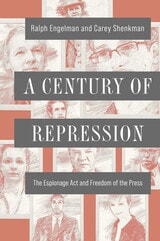
cover of A Century of Repression: The Espionage Act and Freedom of the Press

A Century of Repression

The Espionage Act and Freedom of the Press

Ralph Engelman and Carey Shenkman

University of Illinois Press, 2022
A Century of Repression offers an unprecedented and panoramic history of the use of the Espionage Act of 1917 as the most important yet least understood law threatening freedom of the press in modern American history. It details government use of the Act to control information about U.S. military and foreign policy during the two World Wars, the Cold War, and the War on Terror. The Act has provided cover for the settling of political scores, illegal break-ins, and prosecutorial misconduct.
[more]
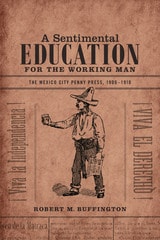
cover of A Sentimental Education for the Working Man: The Mexico City Penny Press, 1900-1910

A Sentimental Education for the Working Man

The Mexico City Penny Press, 1900-1910

Robert M. Buffington

Duke University Press, 2015
In A Sentimental Education for the Working Man Robert Buffington reconstructs the complex, shifting, and contradictory ideas about working-class masculinity in early twentieth-century Mexico City. He argues that from 1900 to 1910, the capital’s satirical penny press provided working-class readers with alternative masculine scripts that were more realistic about their lives, more responsive to their concerns, and more representative of their culture than anything proposed by elite social reformers and Porfirian officials. The penny press shared elite concerns about the destructive vices of working-class men, and urged them to be devoted husbands, responsible citizens, and diligent workers; but it also used biting satire to recast negative portrayals of working-class masculinity and to overturn established social hierarchies. In this challenge to the "macho" stereotype of working-class Mexican men, Buffington shows how the penny press contributed to the formation of working-class consciousness, facilitated the imagining of a Mexican national community, and validated working-class men as modern citizens.
[more]
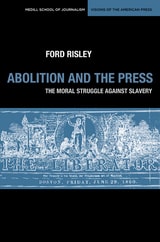
cover of Abolition and the Press: The Moral Struggle Against Slavery

Abolition and the Press

The Moral Struggle Against Slavery

Ford Risley

Northwestern University Press, 2008

This examination of nineteenth-century journalism explores the specific actions and practices of the publications that provided a true picture of slavery to the general public. From Boston's strident <i>Liberator</i> to Frederick Douglass' <i>North Star</i>, the decades before the Civil War saw more than forty newspapers founded with the specific aim of promoting emancipation. Not only did these sheets provide a platform for discourse, but they also gave slavery a face for a wider audience. The reach of the abolitionist press only grew as the fiery publications became objects of controversy and targets of violence in both South and North. These works kept the issue of slavery in the public eye even as mainstream publications took up the call for emancipation, as the nation went to war, up to the end of slavery. Their legacy has endured, as dedicated reform writers and editors continue to view the press as a vital tool in the fight for equality.

[more]