Results by title
262 books match the query 'Public health' and 16 start with a
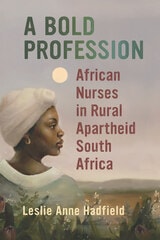
A Bold Profession
African Nurses in Rural Apartheid South AfricaLeslie Anne Hadfield
University of Wisconsin Press, 2023
Leslie Anne Hadfield compellingly demonstrates how these women were able to successfully carve out their own professional space and reshape notions of health and healing in the Eastern Cape. Bringing forth the stories of these nurses in their own voices, A Bold Profession is an homage to their dedication to the well-being of their communities. Hadfield sheds light on the struggles of balancing commitment to career and family lives during an oppressive apartheid. The volume fills an important gap for scholars studying the history of women, nursing, and health care in South Africa, illuminating the humanity of health care workers.

A COVID Charter, A Better World
Toby Miller
Rutgers University Press, 2021
A COVID Charter, A Better World outlines the steps needed to reform public policies and fix the structural vulnerabilities that the current pandemic has made so painfully clear. Leading scholar Toby Miller argues that we must resist neoliberalism’s tendency to view health in terms of individual choices and market-driven solutions, because that fails to preserve human rights. He addresses the imbalance of geopolitical power to explain how we arrived at this point and shows that the pandemic is more than just a virus—it’s a social disease. By examining how the U.S., Britain, Mexico, and Colombia have responded to the COVID-19 crisis, Miller investigates corporate, scientific, and governmental decision-making and the effects those decisions have had on disadvantaged local communities. Drawing from human rights charters ratified by various international organizations, he then proposes a COVID charter, calling for a new world that places human lives above corporate profits.

A Doctor in Galilee
The Life and Struggle of a Palestinian in IsraelHatim Kanaaneh
Pluto Press, 2008
Hatim Kanaaneh is a Palestinian doctor who has struggled for over 35 years to bring medical care to Palestinians in Galilee, against a culture of anti-Arab discrimination. This is the story of how he fought for the human rights of his patients and overcame the Israeli authorities' cruel indifference to their suffering.
Kanaaneh is a native of Galilee, born before the creation of Israel. He left to study medicine at Harvard, before returning to work as a public health physician with the intention of helping his own people. He discovered a shocking level of disease and malnutrition in his community and a shameful lack of support from the Israeli authorities. After doing all he could for his patients by working from inside the system, Kanaaneh set up The Galilee Society, an NGO working for equitable health, environmental and socio-economic conditions for Palestinian Arabs in Israel.
This is a brilliant memoir that shows how grass roots organisations can loosen the Zionist grip upon Palestinian lives.
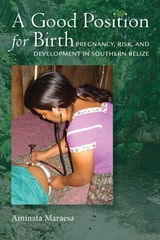
A Good Position for Birth
Pregnancy, Risk, and Development in Southern BelizeAminata Maraesa
Vanderbilt University Press, 2018
Fear and shame are prominent affective tropes that Maraesa uses to understand women's attitudes toward reproduction that are at times contrary to development discourse but that make sense in the lived experiences of the women of southern Belize.
A Heart for the Work
Journeys through an African Medical SchoolClaire L. Wendland
University of Chicago Press, 2010
Burnout is common among doctors in the West, so one might assume that a medical career in Malawi, one of the poorest countries in the world, would place far greater strain on the idealism that drives many doctors. But, as A Heart for the Work makes clear, Malawian medical students learn to confront poverty creatively, experiencing fatigue and frustration but also joy and commitment on their way to becoming physicians. The first ethnography of medical training in the global South, Claire L. Wendland’s book is a moving and perceptive look at medicine in a world where the transnational movement of people and ideas creates both devastation and possibility.
Wendland, a physician anthropologist, conducted extensive interviews and worked in wards, clinics, and operating theaters alongside the student doctors whose stories she relates. From the relative calm of Malawi’s College of Medicine to the turbulence of training at hospitals with gravely ill patients and dramatically inadequate supplies, staff, and technology, Wendland’s work reveals the way these young doctors engage the contradictions of their circumstances, shedding new light on debates about the effects of medical training, the impact of traditional healing, and the purposes of medicine.
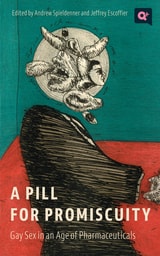
A Pill for Promiscuity
Gay Sex in an Age of PharmaceuticalsAndrew R. Spieldenner
Rutgers University Press, 2023
Finalist for Lambda Literary Award for Best LGBTQ+ Anthology
For a generation of gay men who came of age in the 1980s and 1990s, becoming sexually active meant confronting the dangers of catching and transmitting HIV. In the 21st century, however, the development of viral suppression treatments and preventative pills such as PrEP and nPEP has massively reduced the risk of acquiring HIV. Yet some of the stigma around gay male promiscuity and bareback sex has remained, inhibiting open dialogues about sexual desire, risk, and pleasure.
A Pill for Promiscuity brings together academics, artists, and activists—from different generations, countries, ethnic backgrounds, and HIV statuses—to reflect on how gay sex has changed in a post-PrEP era. Some offer personal perspectives on the value of promiscuity and the sexual communities it fosters, while others critique unequal access to PrEP and the increased role Big Pharma now plays in gay life. With a diverse group of contributors that includes novelist Andrew Holleran, trans scholar Lore/tta LeMaster, cartoonist Steve MacIsaac, and pornographic film director Mister Pam, this book asks provocative questions about how we might reimagine queer sex and sexuality in the 21st century.

A State of Health
New Jersey's Medical HeritageReeds, Karen
Rutgers University Press, 2002
Did you know that New Jersey spearheaded the discovery of antibiotics? Or that the Garden State had the first state hospital serving the mentally ill and the first community rescue squad? And did you know that close to a million people around the world can walk again, thanks to the New Jersey Knee?
New Jersey is a small state that has played a big role in the history of medicine. Adrenalin, streptomycin, pure milk, tranquilizers, malaria control, cortisone, vitamins, revelations of radium's dangers—New Jersey’s impressive contributions to American health have been on display in a major traveling exhibition, “A State of Health: New Jersey’s Medical Heritage.” By 2002, more than twelve sites throughout New Jersey and Philadelphia will have hosted this display.
This catalogue to the exhibition celebrates more than four centuries of New Jersey medicine through original essays and 150-plus striking illustrations of artifacts, manuscripts, books, photographs, works of art, and postcards. Taking subjects of perennial interest—epidemics, children’s health, public health, hospitals, and biomedical research—curator Karen Reeds explores the state’s rich medical heritage and its uniqueplace as the heart of the world’s pharmaceutical industry.
Engagingly written and handsomely produced, A State of Health: New Jersey’s
Medical Heritage is at once a lasting resource for students, teachers, and historians and the perfect gift to your favorite healthcare professional or local history buff.
Addicted to Rehab
Race, Gender, and Drugs in the Era of Mass IncarcerationMcKim, Allison
Rutgers University Press, 2017
Winner of the 2018 Book of the Year Award from the American Society of Criminology's Division on Women and Crime
After decades of the American “war on drugs” and relentless prison expansion, political officials are finally challenging mass incarceration. Many point to an apparently promising solution to reduce the prison population: addiction treatment.
In Addicted to Rehab, Bard College sociologist Allison McKim gives an in-depth and innovative ethnographic account of two such rehab programs for women, one located in the criminal justice system and one located in the private healthcare system—two very different ways of defining and treating addiction. McKim’s book shows how addiction rehab reflects the race, class, and gender politics of the punitive turn. As a result, addiction has become a racialized category that has reorganized the link between punishment and welfare provision. While reformers hope that treatment will offer an alternative to punishment and help women, McKim argues that the framework of addiction further stigmatizes criminalized women and undermines our capacity to challenge gendered subordination. Her study ultimately reveals a two-tiered system, bifurcated by race and class.
Aging in the Church
How Social Relationships Affect HealthNeal M. Krause
Templeton Press, 2008
A growing number of studies indicate that older people in the church form social ties that have a significant positive impact on their physical and mental health. In Aging in the Church, Neal Krause comprehensively assesses the various relationships that stem from church involvement.
Among the many types of relationships Krause explores are close companion friendships, social-support structures (such as assistance provided by fellow church members during difficult times), and interactions that arise from Bible study and prayer groups. Through his thorough investigation of the underlying links between these relationships and the ways they relate to attributes like forgiveness, hope, gratitude, and altruism, the author hopes to explain why older adults who are involved in religious activities tend to enjoy better physical and mental health than those who are not engaged in religious communities. Going beyond merely reviewing the existing research on this subject, Aging in the Church provides a blueprint for taking research on church-based social relationships and health to the next level by identifying conceptual and methodological issues that investigators will confront as they delve more deeply into these connections.
Though these are complex issues, readers will find plain language and literature drawn from a wide array of disciplines, including sociology, psychology, public health, medicine, psychiatry, nursing, social work, gerontology, and theology. Literature, poetry, philosophy, and ethical ideas supplement the insights from these diverse fields. As a result, Aging in the Church takes on a genuinely interdisciplinary focus that will appeal to various scholars, researchers, and students.
Ailing in Place
Environmental Inequities and Health Disparities in AppalachiaMichele Morrone
Ohio University Press, 2020
In Ailing in Place, Michele Morrone explores the relationship between environmental conditions in Appalachia and health outcomes that are too often ascribed to individual choices only. She applies quantitative data to observations from environmental health professionals to frame the ways in which the environment, as a social determinant of health, leads to health disparities in Appalachian communities. These examples—these stories of place—trace the impacts of water quality, waste disposal, and natural resource extraction on the health and quality of life of Appalachian people.
Public health is inextricably linked to place. Environmental conditions such as contaminated water, unsafe food, and polluted air are as important as culture, community, and landscape in characterizing a place and determining the health outcomes of the people who live there. In some places, the state of the environment is a consequence of historical activities related to natural resources and cultural practices. In others, political decisions to achieve short-term economic objectives are made with little consideration of long-term public health consequences.
Alternative Health Care
Michael S. Goldstein
Temple University Press, 1999
Michael S. Goldstein's Alternative Health Care is the first comprehensive account of the growing presence of alternative medicine in American society. Beginning with the basic premises of alternative medicine, Goldstein's book examines the clinical, economic, and political realities of the broad range of alternative care options and practices in the United States and explains why alternative medicine has become a viable choice for so many people who are ill or who seek to remain healthy.
Bringing history, policy, practice, personal experience, and in-depth sociological analysis together into one comprehensive volume, Goldstein -- one of the first recipients of funding from the National Institute of Health for research on alternative medicine -- also studies the complexities of the relationship between spirituality and alternative medicine and the changing role of alternative medicine in the larger context of American health care. Probing such issues as the corporatization of medicine, the role of alternative medicine in health care, and the dynamic relationship between conventional and alternative treatments, Goldstein's Alternative Health Care is more than the long-awaited introduction to the many forms of alternative medicine. It is also the measure of the implications of such care for practitioners, businesses, policymakers, and patients alike.
Alternative Health Care is the definitive guide for the millions of Americans interested in alternative medicine and treatment, American health care, the sociology of medicine, and American social issues.
Alternative Models of Sports Development in America
Solutions to a Crisis in Education and Public HealthB. David Ridpath
Ohio University Press, 2017
In the United States, the entanglement of sports and education has persisted for over a century. Multimillion-dollar high school football stadiums, college coaches whose salaries are many times those of their institutions’ presidents, psychological and educational tolls on student-athletes, and high-profile academic scandals are just symptoms of a system that has come under increasing fire. Institutions large and small face persistent quandaries: which do they value more, academic integrity or athletic success? Which takes precedence: prioritizing elite teams and athletes, or making it possible for all students to participate in sports? How do we create opportunities for academic—not just athletic—development for players?
In Alternative Models of Sports Development in America, B. David Ridpath—a leading sports development researcher who has studied both the US system and the European club model—offers clear steps toward creating a new status quo. He lays out four possible alternative models that draw various elements from academic, athletic, and European approaches. His proposals will help increase access of all young people to the benefits of sports and exercise, allow athletes to also thrive as students, and improve competitiveness. The result is a book that will resonate with sports development professionals, academic administrators, and parents.
American Catholic Hospitals
A Century of Changing Markets and MissionsWall, Barbra Mann
Rutgers University Press, 2016
In American Catholic Hospitals, Barbra Mann Wall chronicles changes in Catholic hospitals during the twentieth century, many of which are emblematic of trends in the American healthcare system.
Wall explores the Church's struggle to safeguard its religious values. As hospital leaders reacted to increased political, economic, and societal secularization, they extended their religious principles in the areas of universal health care and adherence to the Ethical and Religious Values in Catholic Hospitals, leading to tensions between the Church, government, and society. The book also examines the power of women--as administrators, Catholic sisters wielded significant authority--as well as the gender disparity in these institutions which came to be run, for the most part, by men. Wall also situates these critical transformations within the context of the changing Church policy during the 1960s. She undertakes unprecedented analyses of the gendered politics of post-Second Vatican Council Catholic hospitals, as well as the effect of social movements on the practice of medicine.
American Eldercide
How It Happened, How to Prevent ItMargaret Morganroth Gullette
University of Chicago Press, 2024
A bracing spotlight on the avoidable causes of the COVID-19 Eldercide in the United States.
Twenty percent of the Americans who have died of COVID since 2020 have been older and disabled adults residing in nursing homes—even though they make up fewer than 1 percent of the US population. Something about this catastrophic loss of life in government-monitored facilities has never added up.
Until now. In American Eldercide, activist and scholar Margaret Morganroth Gullette investigates this tragic public health crisis with a passionate voice and razor-sharp attention to detail, showing us that nothing about it was inevitable. By unpacking the decisions that led to discrimination against nursing home residents, revealing how governments, doctors, and media reinforced ageist or ableist biases, and collecting the previously little-heard voices of the residents who survived, Gullette helps us understand the workings of what she persuasively calls an eldercide.
Gullette argues that it was our collective indifference, fueled by the heightened ageism of the COVID-19 era, that prematurely killed this vulnerable population. Compounding that deadly indifference is our own panic about aging and a social bias in favor of youth-based decisions about lifesaving care. The compassion this country failed to muster for the residents of our nursing facilities motivated Gullette to pen an act of remembrance, issuing a call for pro-aging changes in policy and culture that would improve long-term care for everyone.
Arc of Interference
Medical Anthropology for Worlds on EdgeJoão Biehl and Vincanne Adams, editors
Duke University Press, 2023
Contributors. Vincanne Adams, João Biehl, Davíd Carrasco, Lawrence Cohen, Jean Comaroff, Robert Desjarlais, Paul Farmer, Marcia Inhorn, Janis H. Jenkins, David S. Jones, Salmaan Keshavjee, Arthur Kleinman, Margaret Lock, Adriana Petryna
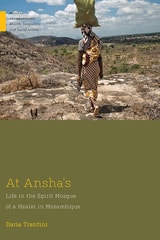
At Ansha's
Life in the Spirit Mosque of a Healer in MozambiqueDaria Trentini
Rutgers University Press, 2021