Results by title
61 books match the query 'Readers' and 8 start with a
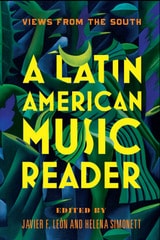
A Latin American Music Reader
Views from the SouthJavier F Leon
University of Illinois Press, 2016
Contributors include Marina Alonso Bolaños, Gonzalo Camacho Díaz, José Jorge de Carvalho, Claudio F. Díaz, Rodrigo Cantos Savelli Gomes, Juan Pablo González, Rubén López-Cano, Angela Lühning, Jorge Martínez Ulloa, Maria Ignêz Cruz Mello, Julio Mendívil, Carlos Miñana Blasco, Raúl R. Romero, Iñigo Sánchez Fuarros, Carlos Sandroni, Carolina Santamaría-Delgado, Rodrigo Torres Alvarado, and Alejandro Vera.
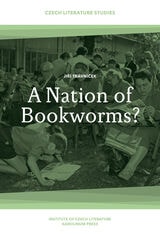
A Nation of Bookworms?
Czechs as ReadersJirí Trávnícek
Karolinum Press, 2021
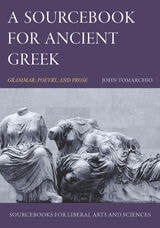
A Sourcebook for Ancient Greek
Grammar, Poetry, and ProseJohn Tomarchio
Catholic University of America Press, 2022
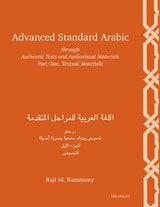
Advanced Standard Arabic through Authentic Texts and Audiovisual Materials
Part One, Textual MaterialsRaji M. Rammuny
University of Michigan Press, 1994
Advanced Standard Arabic through Authentic Texts and Audiovisual Materials
Part Two, Audiovisual MaterialsRaji M. Rammuny
University of Michigan Press, 1994
America the Middlebrow
Women's Novels, Progressivism, and Middlebrow Authorship between the WarsJaime Harker
University of Massachusetts Press, 2007
Between the two world wars, American publishing entered a “golden age” characterized by an explosion of new publishers, authors, audiences, distribution strategies, and marketing techniques. The period was distinguished by a diverse literary culture, ranging from modern cultural rebels to working-class laborers, political radicals, and progressive housewives. In America the Middlebrow, Jaime Harker focuses on one neglected mode of authorship in the interwar period—women's middlebrow authorship and its intersection with progressive politics.
With the rise of middlebrow institutions and readers came the need for the creation of the new category of authorship. Harker contends that these new writers appropriated and adapted a larger tradition of women's activism and literary activity to their own needs and practices. Like sentimental women writers and readers of the 1850s, these authors saw fiction as a means of reforming and transforming society. Like their Progressive Era forebears, they replaced religious icons with nationalistic images of progress and pragmatic ideology. In the interwar period, this mode of authorship was informed by Deweyan pragmatist aesthetics, which insisted that art provided vicarious experience that could help create humane, democratic societies.
Drawing on letters from publishers, editors, agents, and authors, America the Middlebrow traces four key moments in this distinctive culture of letters through the careers of Dorothy Canfield, Jessie Fauset, Pearl Buck, and Josephine Herbst. Both an exploration of a virtually invisible culture of letters and a challenge to monolithic paradigms of modernism, the book offers fresh insight into the ongoing tradition of political domestic fiction that flourished between the wars.
An Odyssey Reader
Selections from Homer's Odyssey, Books 1-12P. A. Draper
University of Michigan Press, 2012
Homer's Odyssey has captivated readers and influenced writers and artists for more than 2,000 years. Reading the poem in its original language provides an experience as challenging as it is rewarding. Most students encountering Homeric Greek for the first time need considerable help, especially with vocabulary and constructions that differ from the more familiar Attic forms. For anyone who has completed studies in elementary Greek, this edition provides the assistance necessary to read, understand, and appreciate the first book of the Odyssey in its original language.
Structured to maximize reading ease, P. A. Draper's volume stands out among introductions to the Greek Odyssey. Readers of this edition will appreciate the positioning of all notes facing the Greek text; the frequent vocabulary entries; the complete glossary; the appendix on basic Homeric forms and grammar; and the copious annotations on vocabulary, grammar, meter, historical and mythological allusions, and literary interpretation.
Primarily designed as a textbook, this volume will be an effective classroom tool and a useful acquisition for any library supporting a classics program. The book will find readers among high school and college Greek students, advanced students in Homer or epic poetry classes, graduate students working on reading-list requirements, and anyone interested in maintaining Greek reading skills.
Archives of Instruction
Nineteenth-Century Rhetorics, Readers, and Composition Books in the United StatesJean Ferguson Carr, Stephen L. Carr, and Lucille M. Schultz
Southern Illinois University Press, 2005
Both a historical recovery and a critical rethinking of the functions and practices of textbooks, Archives of Instruction: Nineteenth-Century Rhetorics, Readers, and Composition Books in the United States argues for an alternative understanding of our rhetorical traditions. The authors describe how the pervasive influence of nineteenth-century literacy textbooks demonstrate the early emergence of substantive instruction in reading and writing. Tracing the histories of widespread educational practices, the authors treat the textbooks as an important means of cultural formation that restores a sense of their distinguished and unique contributions.
At the beginning of the nineteenth century, few people in the United States had access to significant school education or to the materials of instruction. By century’s end, education was a mass—though not universal—experience, and literacy textbooks were ubiquitous artifacts, used both in home and in school by a growing number of learners from diverse backgrounds. Many of the books have been forgotten, their contributions slighted or dismissed, or they are remembered through a haze of nostalgia as tokens of an idyllic form of schooling. Archives of Instruction suggests strategies for re-reading the texts and details the watersheds in the genre, providing a new perspective on the material conditions of schooling, book publication, and emerging practices of literacy instruction. The volume includes a substantial bibliography of primary and secondary works related to literacy instruction at all levels of education in the United States during the nineteenth century.