144 books match the query 'Reading' and 5 start with a
cover of A A Political Space: Reading The Global Through Clayoquot Sound

A A Political Space

Reading The Global Through Clayoquot Sound

Warren Magnusson

University of Minnesota Press, 2002

An innovative look at the convergence of global trends and local struggles in this out-of-the-way place.

On the remote outer coast of Vancouver Island in British Columbia, Clayoquot Sound might seem to be situated at the periphery of contemporary power and authority. And yet, as the disputed land of native peoples and the contentious site of corporate logging in one of the world’s last remaining temperate rain forests, Clayoquot Sound is also squarely in the middle of global politics today. These authors develop a new way of making sense of the rapidly changing character of political life in our day, revealing the political problems and possibilities inherent in the convergence of the global and the local so dramatically enacted in Clayoquot Sound.

Contributors: Umeek of Ahousaht (E. Richard Atleo), Malaspina U College, British Columbia; William Chaloupka, U of Montana; Thom Kuehls, Weber State U; Timothy W. Luke, Virginia Polytechnic; R. Michael M’Gonigle, U of Victoria; Catriona Sandilands, York U, Toronto; Gary C. Shaw, California State U, Stanislaus; R. B. J. Walker, Keele U, UK; Sharon Zukin, Brooklyn College and CUNY.rights: CAN
[more]
cover of A History of Reading in the West

A History of Reading in the West

Guglielmo Cavallo

University of Massachusetts Press, 1999
Books and other texts have not always been read in the way that we read them today. The modern practice of reading—privately, silently, with the eyes alone—is only one way of reading, which for many centuries existed alongside other forms. In the ancient world, in the Middle Ages, and as late as the seventeenth century, many texts were written for the voice. They were addressed to the ear as much as the eye, and they used forms that were oriented toward the demands of oral performance. This is one of the themes explored in this landmark volume. Written by a distinguished group of international contributors, it analyzes the transformations of reading methods and materials over the ages, showing that revolutions of reading have generally preceded revolutions of the book. The authors examine not only the technical innovations that changed physical aspects of books and other texts, but also the evolving forms of reading and the growth and transformation of the reading public. The volume will be invaluable to students of cultural history and to all those who want a fresh perspective on the history of books and their uses.
[more]
cover of A Reading of Dante's Inferno

A Reading of Dante's Inferno

Wallace Fowlie

University of Chicago Press, 1981

This work is a guide to the reading of Dante's great poem, intended for the use of students and laymen, particularly those who are approaching the Inferno for the first time. While carefully pointing out the uniqueness, tone, and color of each of Dante's thirty-four cantos, Fowlie never loses sight of the continuity of the poet's discourse. Each canto is related thematically to others, and the rich web of symbols is displayed and disentangled as the poem's unity, patterns, and structures are revealed.
 
What particularly distinguishes Wallace Fowlie's reading of the Inferno is his emphasis on both the timelessness and the timeliness of Dante's masterpiece. By underlining the archetypal elements in the poem and drawing parallels to contemporary literature, Fowlie has brought Dante and his characters much closer to modern readers.

[more]
cover of A Reading of Mansfield Park: An Essay in Critical Synthesis

A Reading of Mansfield Park

An Essay in Critical Synthesis

Avrom Fleishman

University of Minnesota Press, 1967
A Reading of Mansfield Park was first published in 1967.Jane Austen’s novel Mansfield Park has been examined in a number of scholarly contexts and has been vigorously debated according to divergent ethical and political views. In this new study of the work, Professor Fleishman provides a full and unified reading of the novel by employing methods and synthesizing insights drawn from several fields of knowledge - history and sociology, psychology, and cultural anthropology. By combining several perspectives within a single study, he attempts to avoid the pitfalls of partial readings.After an introductory discussion of his method in relation to current trends in literary criticism, the author reviews past criticism of Mansfield Park. In the chapters which follow he discusses the novel’s historical background and its response to social, political, and economic issues of the day; the psychological structure of the characters and its bearing on an ethical evaluation of them; and the mythological parallels which, he finds, impart a sound framework and universal significance to the plot. In the final chapter he places the work within the tradition of English fiction, in an effort to estimate its enduring value.
[more]
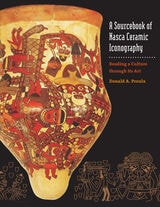
cover of A Sourcebook of Nasca Ceramic Iconography: Reading a Culture through Its Art

A Sourcebook of Nasca Ceramic Iconography

Reading a Culture through Its Art

Proulx, Donald A.

University of Iowa Press, 2006

For almost eight hundred years (100 BC–AD 650) Nasca artists modeled and painted the plants, animals, birds, and fish of their homeland on Peru’s south coast as well as numerous abstract anthropomorphic creatures whose form and meaning are sometimes incomprehensible today. In this first book-length treatment of Nasca ceramic iconography to appear in English, drawing upon an archive of more than eight thousand Nasca vessels from over 150 public and private collections, Donald Proulx systematically describes the major artistic motifs of this stunning polychrome pottery, interprets the major themes displayed on this pottery, and then uses these descriptions and his stimulating interpretations to analyze Nasca society. After beginning with an overview of Nasca culture and an explanation of the style and chronology of Nasca pottery, Proulx moves to the heart of his book: a detailed classification and description of the entire range of supernatural and secular themes in Nasca iconography along with a fresh and distinctive interpretation of these themes. Linking the pots and their iconography to the archaeologically known Nasca society, he ends with a thorough and accessible examination of this ancient culture viewed through the lens of ceramic iconography. Although these static images can never be fully understood, by animating their themes and meanings Proulx reconstructs the lifeways of this complex society.
[more]