Results by title
88 books match the query 'Religion and politics' and 4 start with a
A Second Look at First Things
A Case for Conservative Politics: The Hadley Arkes FestschriftFrancis J. Beckwith
St. Augustine's Press, 2013
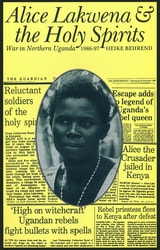
Alice Lakwena and the Holy Spirits
War in Northern Uganda, 1985–97Heike Behrend
Ohio University Press, 1999
In August 1986, Alice Auma, a young Acholi woman in northern Uganda, proclaiming herself under the orders of a Christian spirit named Lakwena, raised an army called the “Holy Spirit Mobile Forces.” With it she waged a war against perceived evil, not only an external enemy represented by the National Resistance Army of the government, but internal enemies in the form of “impure” soldiers, witches, and sorcerers. She came very close to her goal of overthrowing the government but was defeated and fled to Kenya.
This book provides a unique view of Alice’s movement, based on interviews with its members and including their own writings, examining their perceptions of the threat of external and internal evil. It concludes with an account of the successor movements into which Alice’s forces fragmented and which still are active in the civil wars of the Sudan and Uganda.
America's Spiritual Capital
Nicholas N. Capaldi
St. Augustine's Press, 2012
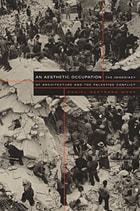
An Aesthetic Occupation
The Immediacy of Architecture and the Palestine ConflictDaniel Bertrand Monk
Duke University Press, 2002
In An Aesthetic Occupation Daniel Bertrand Monk unearths the history of the unquestioned political immediacy of “sacred” architecture in the conflict between Palestinians and Israelis. Monk combines groundbreaking archival research with theoretical insights to examine in particular the Mandate era—the period in the first half of the twentieth century when Britain held sovereignty over Palestine. While examining the relation between monuments and mass violence in this context, he documents Palestinian, Zionist, and British attempts to advance competing arguments concerning architecture’s utility to politics.
Succumbing neither to the view that monuments are autonomous figures onto which political meaning has been projected, nor to the obverse claim that in Jerusalem shrines are immediate manifestations of the political, Monk traces the reciprocal history of both these positions as well as describes how opponents in the conflict debated and theorized their own participation in its self-representation. Analyzing controversies over the authenticity of holy sites, the restorations of the Dome of the Rock, and the discourse of accusation following the Buraq, or Wailing Wall, riots of 1929, Monk discloses for the first time that, as combatants looked to architecture and invoked the transparency of their own historical situation, they simultaneously advanced—and normalized—the conflict’s inability to account for itself.
This balanced and unique study will appeal to anyone interested in Israel or Zionism, the Palestinians, the Middle East conflict, Jerusalem, or its monuments. Scholars of architecture, political theory, and religion, as well as cultural and critical studies will also be informed by its arguments.