Results by title
4127 books match the query 'Science' and 288 start with a
A Body Worth Defending
Immunity, Biopolitics, and the Apotheosis of the Modern BodyEd Cohen
Duke University Press, 2009
Inspired by Michel Foucault’s writings about biopolitics and biopower, Cohen traces the migration of immunity from politics and law into the domains of medicine and science. Offering a genealogy of the concept, he illuminates a complex of thinking about modern bodies that percolates through European political, legal, philosophical, economic, governmental, scientific, and medical discourses from the mid-seventeenth century through the twentieth. He shows that by the late nineteenth century, “the body” literally incarnates modern notions of personhood. In this lively cultural rumination, Cohen argues that by embracing the idea of immunity-as-defense so exclusively, biomedicine naturalizes the individual as the privileged focus for identifying and treating illness, thereby devaluing or obscuring approaches to healing situated within communities or collectives.
A Book of Noises
Notes on the AuraculousCaspar Henderson
University of Chicago Press, 2023
The crackling of a campfire. The scratch, hiss, and pop of a vinyl record. The first glug of wine as it is poured from a bottle. These are just a few of writer Caspar Henderson’s favorite sounds. In A Book of Noises, Henderson invites readers to use their ears a little better—to tune in to the world in all its surprising noisiness.
Describing sounds from around the natural and human world, the forty-eight essays that make up A Book of Noises are a celebration of all things “auraculous.” Henderson calls on his characteristic curiosity to explore sounds related to humans (anthropophony), other life (biophony), the planet (geophony), and space (cosmophony). Henderson finds the beauty in everyday sounds, like the ringing of a bell, the buzz of a bee, or the “earworm” songs that get stuck in our heads. A Book of Noises also explores the marvelous, miraculous sounds we may never get the chance to hear, like the deep boom of a volcano or the quiet, rustling sound of the Northern Lights.
A Book of Noises will teach readers to really listen to the sounds of the world around them, to broaden and deepen their appreciation of the humans, animals, rocks, and trees simultaneously broadcasting across the whole spectrum of sentience.
A Book of Waves
Stefan Helmreich
Duke University Press, 2023
A Brain for All Seasons
Human Evolution and Abrupt Climate ChangeWilliam H. Calvin
University of Chicago Press, 2002
Our ancestors lived through hundreds of such abrupt episodes since the more gradual Ice Ages began two and a half million years ago—but abrupt cooling produced a population bottleneck each time, one that eliminated most of their relatives. We are the improbable descendants of those who survived—and later thrived.
William H. Calvin's marvelous A Brain for All Seasons argues that such cycles of cool, crash, and burn powered the pump for the enormous increase in brain size and complexity in human beings. Driven by the imperative to adapt within a generation to "whiplash" climate changes where only grass did well for a while, our ancestors learned to cooperate and innovate in hunting large grazing animals.
Calvin's book is structured as a travelogue that takes us around the globe and back in time. Beginning at Darwin's home in England, Calvin sits under an oak tree and muses on what controls the speed of evolutionary "progress." The Kalahari desert and the Sterkfontein caves in South Africa serve as the backdrop for a discussion of our ancestors' changing diets. A drought-shrunken lake in Kenya shows how grassy mudflats become great magnets for grazing animals. And in Copenhagen, we learn what ice cores have told us about abrupt jumps in past climates.
Perhaps the most dramatic discovery of all, though, awaits us as we fly with Calvin over the Gulf Stream and Greenland: global warming caused by human-made pollution could paradoxically trigger another sudden episode of global cooling. Because of the accumulation of greenhouse gases in the atmosphere, the oceanic "conveyor belt" that sends warmer waters into the North Atlantic could abruptly shut down. If that happens again, much of the Earth could be plunged into a deep chill within a few years. Europe would become as cold and dry as Siberia. Agriculture could not adapt quickly enough to avoid worldwide famines and wars over the dwindling food supplies—a crash from which it would take us many centuries to recover.
With this warning, Calvin connects us directly to evolution and the surprises it holds. Highly illustrated, conversational, and learned, A Brain for All Seasons is a fascinating view of where we came from, and where we're going.
A Century of Nature
Twenty-One Discoveries that Changed Science and the WorldEdited by Laura Garwin and Tim Lincoln
University of Chicago Press, 2003
A Condensed Course of Quantum Mechanics
Pavel Cejnar
Karolinum Press, 2014
A Condensed Course of Quantum Mechanics
Pavel Cejnar
Karolinum Press, 2025
This book presents a concise summary of nonrelativistic quantum mechanics for physics students at the university level. The text covers essential topics, from general mathematical formalism to specific applications. The formulation of quantum theory is explained and supported with illustrations of the general concepts of elementary quantum systems. In addition to traditional topics of nonrelativistic quantum mechanics—including single-particle dynamics, symmetries, semiclassical and perturbative approximations, density-matrix formalism, scattering theory, and the theory of angular momentum—the book also covers modern issues, among them quantum entanglement, decoherence, measurement, nonlocality, and quantum information. The historical context and chronology of basic achievements are also outlined in explanatory notes.
Ideal as a supplement to classroom lectures, A Condensed Course of Quantum Mechanics will also serve as a compact and comprehensible refresher of elementary quantum theory for more advanced students.
A Constructional Approach to Resultatives
Hans C. Boas
CSLI, 2003
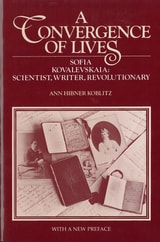
A Convergence of Lives
Sofia Kovalevskaia - Scientist, Writer, RevolutionaryKoblitz, Ann
Rutgers University Press, 1993
Sofia Kovalevskaia's interest in mathematics was roused at an early age--her attic nursery had been wallpapered with lecture notes for a course on calculus. She spent hours studying the mysterious walls, trying to figure out which page followed from the next. Kovalevskaia (1850-1891) became the only woman mathematician whose name all mathematicians recognize, thanks to her contributions to mathematical analysis. Indeed, she was the first professional woman scientist to win international eminence in any field: the first woman doctorate in mathematics, the first to hold a chair in mathematics, the first to sit on the editorial board of a major scientific journal.
She was also an accomplished writer, a proponent of women's rights and education, a wife and mother in an unconventional marriage, and a champion of radical political causes in Russia and Western Europe--a friend and correspondent of Dostoyevsky, Chekhov, George Eliot, Kropotkin, Helmholtz, and Darwin. This sympathetic portrait of a remarkable woman will appeal to any reader, non-mathematicians and mathematicians alike.
A Course on Perception
1964-1965Gilbert Simondon
University of Minnesota Press, 2027
The first English translation of Gilbert Simondon’s wide-ranging course on the philosophical and scientific histories of perception
Translated into English for the first time, Gilbert Simondon’s A Course on Perception: 1964–1965 engages in a wide-ranging inquiry into the structure, operation, and activity of perception. Investigating its history throughout the centuries, Simondon shows how perception continually shapes and is reshaped by various strands of philosophical and scientific thought.
Prior to the advent of the natural sciences, perception functioned as the foundation of philosophical reflection and the sole instrument for acquiring knowledge and truth. Tracing his subject from these roots in antiquity, Simondon’s course draws on the work of other prominent philosophers such as Spinoza, Berkeley, Hume, and Bergson to follow the evolving trajectory of perception in the wake of classical Cartesian rationalism. As the realms of biology, physiology, and positivism in the natural sciences emerged with the Modern epoch, perception became a necessary theoretical starting point for philosophical investigations of an organism’s relation to its particular milieu.
Emerging from a course delivered at the Sorbonne in Paris between 1964 and 1965, Simondon utilizes a transdisciplinary approach to better understand the sensitivities that various life forms use to orient themselves in the world, offering a nuanced examination of perception in all its philosophical complexity.
Retail e-book files for this title are screen-reader friendly with images accompanied by short alt text and/or extended descriptions.
A Cultural History of Heredity
Staffan Müller-Wille and Hans-Jörg Rheinberger
University of Chicago Press, 2012
It was only around 1800 that heredity began to enter debates among physicians, breeders, and naturalists. Soon thereafter it evolved into one of the most fundamental concepts of biology. Here Staffan Müller-Wille and Hans-Jörg Rheinberger offer a succinct cultural history of the scientific concept of heredity. They outline the dramatic changes the idea has undergone since the early modern period and describe the political and technological developments that brought about these changes.
Müller-Wille and Rheinberger begin with an account of premodern theories of generation, showing that these were concerned with the procreation of individuals rather than with hereditary transmission. The authors reveal that when hereditarian thinking first emerged, it did so in a variety of cultural domains, such as politics and law, medicine, natural history, breeding, and anthropology. Müller-Wille and Rheinberger then track theories of heredity from the late nineteenth century—when leading biologists considered it in light of growing societal concerns with race and eugenics—through the rise of classical and molecular genetics in the twentieth century, to today, as researchers apply sophisticated information technologies to understand heredity. What readers come to see from this exquisite history is why it took such a long time for heredity to become a prominent concept in the life sciences and why it gained such overwhelming importance in those sciences and the broader culture over the last two centuries.

A Deadly Wind
The 1962 Columbus Day StormJohn Dod
Oregon State University Press, 2018
The Columbus Day Storm of 1962 was a freak of nature, a weather outlier with deadly winds topping one hundred miles per hour. The storm killed dozens, injured hundreds, damaged more than fifty thousand homes, and leveled enough timber to build one million homes. To find an equally ferocious storm of its kind, fast-forward fifty years and cross the continent to Superstorm Sandy’s 2012 attack on the East Coast. While Superstorm Sandy was predicted days in advance, the Columbus Day Storm caught ill-equipped weather forecasters by surprise.
This unrivalled West Coast windstorm fueled the Asian log export market, helped give birth to the Oregon wine industry, and influenced the 1962 World Series. It remains a cautionary tale and the Pacific Northwest benchmark for severe windstorms in this era of climate change and weather uncertainty. From its genesis in the Marshall Islands to its final hours on Vancouver Island, British Columbia, the storm plowed an unparalleled path of destruction.
In A Deadly Wind, veteran journalist John Dodge tells a compelling story spiced with human drama, Cold War tension, and Pacific Northwest history. This is a must-read for the tens of thousands of storm survivors, for history buffs, and for anyone interested in the intersection of severe weather events and climate change.
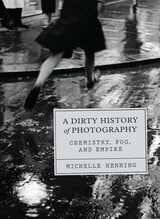
A Dirty History of Photography
Chemistry, Fog, and EmpireMichelle Henning
University of Chicago Press, 2025
Dependent on the extractive practices of fossil-fueled industrial capitalism, chemical photography’s emulsions and films were highly sensitive to polluted atmospheres, and photographic companies had to work hard to control this sensitivity. Drawing on histories of empire, coal, and chemistry and from the archives of British photographic manufacturer Ilford Limited, Michelle Henning exposes the ways photography shaped how we see and understand the atmosphere while leaving its toxic residues in the air, soil, and water.
Structured as thirty-six short chapters and with over seventy illustrations, this innovative book begins in interwar London, follows the supply of Ilford products to photographers on the West African coast, and considers photography as a military technology linked to the development of chemical warfare. Combining close readings of photographs with discussions of low-light, tropical, and aerial photography, Henning examines the extraction and development of photographic materials, their role in the current environmental crisis, and how they have shaped experiences of time and the environment.
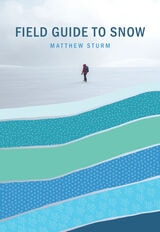
A Field Guide to Snow
Matthew Sturm
University of Alaska Press, 2020
In A Field Guide to Snow, veteran snow scientist Matthew Sturm answers those questions and more. Drawing on decades of study, he explains in clear and simple ways how and why snow works the way it does. The perfect companion a ski trip or a hike in the snowy woods, A Field Guide to Snow will give you a new appreciation for the science behind snow’s beauty.
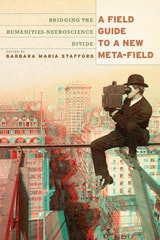
A Field Guide to a New Meta-field
Bridging the Humanities-Neurosciences DivideEdited by Barbara Maria Stafford
University of Chicago Press, 2011
Barbara Stafford is a pioneering art historian whose research has long helped to bridge the divide between the humanities and cognitive sciences. In A Field Guide to a New Meta-Field, she marshals a distinguished group of thinkers to forge a ground-breaking dialogue between the emerging brain sciences, the liberal arts, and social sciences.
Stafford’s book examines meaning and mental function from this dual experimental perspective. The wide-ranging essays included here—from Frank Echenhofer’s foray into shamanist hallucinogenic visions to David Bashwiner’s analysis of emotion and danceability—develop a common language for implementing programmatic and institutional change. Demonstrating how formerly divided fields are converging around shared issues, A Field Guide to a New Meta-Field maps a high-level, crossdisciplinary adventure from one of our leading figures in visual studies.
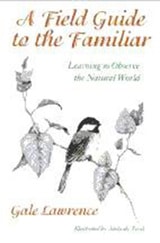
A Field Guide to the Familiar
Learning to Observe the Natural WorldGale Lawrence
Brandeis University Press, 1998
A Field on Fire
The Future of Environmental HistoryEdited by Mark D. Hersey and Ted Steinberg
University of Alabama Press, 2019
Inspired by the pioneering work of preeminent environmental historian Donald Worster, the contributors to A Field on Fire: The Future of Environmental History reflect on the past and future of this discipline. Featuring wide-ranging essays by leading environmental historians from the United States, Europe, and China, the collection challenges scholars to rethink some of their orthodoxies, inviting them to approach familiar stories from new angles, to integrate new methodologies, and to think creatively about the questions this field is well positioned to answer.
Worster’s groundbreaking research serves as the organizational framework for the collection. Editors Mark D. Hersey and Ted Steinberg have arranged the book into three sections corresponding to the primary concerns of Worster’s influential scholarship: the problem of natural limits, the transnational nature of environmental issues, and the question of method. Under the heading “Facing Limits,” five essays explore the inherent tensions between democracy, technology, capitalism, and the environment. The “Crossing Borders” section underscores the ways in which environmental history moves easily across national and disciplinary boundaries. Finally, “Doing Environmental History” invokes Worster’s work as an essayist by offering self-conscious reflections about the practice and purpose of environmental history.
The essays aim to provoke a discussion on the future of the field, pointing to untapped and underdeveloped avenues ripe for further exploration. A forward thinker like Worster presents bold challenges to a new generation of environmental historians on everything from capitalism and the Anthropocene to war and wilderness. This engaging volume includes a very special afterword by one of Worster’s oldest friends, the eminent intellectual historian Daniel Rodgers, who has known Worster for close to fifty years.

A Final Story
Science, Myth, and BeginningsNasser Zakariya
University of Chicago Press, 2017
In A Final Story, Nasser Zakariya delves into the origins and ambitions of these scientific epics, from the nineteenth century to the present, to see what they reveal about the relationship between storytelling, integrated scientific knowledge, and historical method. While seeking to transcend the perspectives of their own eras, the authors of the epics and the debates surrounding them are embedded in political and social struggles of their own times, struggles to which the epics in turn respond. In attempts to narrate an approach to a final, true account, these synthesizing efforts shape and orient scientific developments old and new. By looking closely at the composition of science epics and the related genres developed along with them, we are able to view the historical narrative of science as a form of knowledge itself, one that discloses much about the development of our understanding of and relationship to science over time.
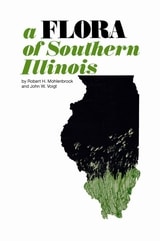
A Flora of Southern Illinois
Robert H. Mohlenbrock
Southern Illinois University Press, 1974
This book will be of particular interest to those interested in applied fields of biology, such as conservation, forestry, and wild life. The southern twelve counties of Illinois, a total of 4,355square miles, comprise the area covered in this book. It is an area in which both northern and southern flora specimens abound. A wide variety of plant species grow in this area, and nearly 200 new plants not formerly identified with this area have been included in the listings.
Especially valuable to amateur botanists, the book is an important manual in identifying the plants that make up the native scenery of this region. Seventy-seven illustrations aid in identifying and understanding the plant communities.
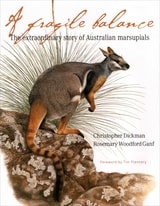
A Fragile Balance
The Extraordinary Story of Australian MarsupialsChristopher Dickman
University of Chicago Press, 2007
Marsupials are nearly synonymous with Australia. Although one of these enigmatic pouched mammals—the opossum—inhabits the United States and another 80 or so thrive in South America, some 220 species are confined to the Australasian region. In Australia, marsupials are the most diverse and dominant indigenous species, from the wallaby and the wombat to the kangaroo and koala.
The extraordinary story of these fascinating animals, A Fragile Balance provides the most up-to-date information on marsupials without losing sight of the unique set of circumstances that led them to prevalence Down Under. Covering all marsupial species in Australia, the book uses an evolutionary framework to interpret the marsupial’s biological traits. Each species account includes a basic biological description, a range map, and a measure of conservation status. The accounts are bounded by general chapters on biology, natural history, cultural history, and conservation. A Fragile Balance is the first book to emphasize interactions between and among marsupials, as well as between humans and marsupials.
Combining the expertise of renowned biologist Christopher Dickman with the artistic talents of illustrator Rosemary Woodford Ganf, A Fragile Balance will be a much celebrated reference for mammalogists worldwide, as well as for readers interested in Australian natural and cultural history.
A Future History of Water
Andrea Ballestero
Duke University Press, 2019
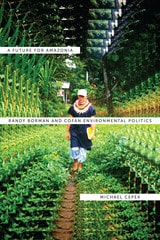
A Future for Amazonia
Randy Borman and Cofán Environmental PoliticsBy Michael Cepek
University of Texas Press, 2012
Blending ethnography with a fascinating personal story, A Future for Amazonia is an account of a political movement that arose in the early 1990s in response to decades of attacks on the lands and peoples of eastern Ecuador, one of the world’s most culturally and biologically diverse places. After generations of ruin at the hands of colonizing farmers, transnational oil companies, and Colombian armed factions, the indigenous Cofán people and their rain forest territory faced imminent jeopardy. In a surprising turn of events, the Cofán chose Randy Borman, a man of Euro-American descent, to lead their efforts to overcome the crisis that confronted them.
Drawing on three years of ethnographic research, A Future for Amazonia begins by tracing the contours of Cofán society and Borman’s place within it. Borman, a blue-eyed, white-skinned child of North American missionary-linguists, was raised in a Cofán community and gradually came to share the identity of his adoptive nation. He became a global media phenomenon and forged creative partnerships between Cofán communities, conservationist organizations, Western scientists, and the Ecuadorian state. The result was a collective mobilization that transformed the Cofán nation in unprecedented ways, providing them with political power, scientific expertise, and a new role as ambitious caretakers of more than one million acres of forest. Challenging simplistic notions of identity, indigeneity, and inevitable ecological destruction, A Future for Amazonia charts an inspiring course for environmental politics in the twenty-first century.
A Geography of New Jersey
The City in the GardenStansfield, Charles A.
Rutgers University Press, 1998
A Global Enlightenment
Western Progress and Chinese ScienceAlexander Statman
University of Chicago Press, 2023
The Enlightenment gave rise not only to new ideas of progress but consequential debates about them. Did distant times and places have anything to teach the here and now? Voltaire could believe that they did; Hegel was convinced that they did not. Early philosophes praised Chinese philosophy as an enduring model of reason. Later philosophes rejected it as stuck in the past. Seeking to vindicate ancient knowledge, a group of French statesmen and savants began a conversation with the last great scholar of the Jesuit mission to China. Together, they drew from Chinese learning to challenge the emerging concept of Western advancement.
A Global Enlightenment traces this overlooked exchange between China and the West to make compelling claims about the history of progress, notions of European exceptionalism, and European engagement with Chinese science. To tell this story, Alexander Statman focuses on a group of thinkers he terms “orphans of the Enlightenment,” intellectuals who embraced many of their contemporaries’ ideals but valued ancient wisdom. They studied astronomical records, gas balloons, electrical machines, yin-yang cosmology, animal magnetism, and Daoist medicine. And their inquiries helped establish a new approach to the global history of science.
Rich with new archival research and fascinating anecdotes, A Global Enlightenment deconstructs two common assumptions about the early to late modern period. Though historians have held that the idea of a mysterious and inscrutable East was inherent in Enlightenment progress theory, Statman argues that it was the orphans of the Enlightenment who put it there: by identifying China as a source of ancient wisdom, they turned it into a foil for scientific development. But while historical consensus supposes that non-Western ideas were banished from European thought over the course of the Enlightenment, Statman finds that Europeans became more interested in Chinese science—as a precursor, then as an antithesis, and finally as an alternative to modernity.
A Good That Transcends
How US Culture Undermines Environmental ReformEric T. Freyfogle
University of Chicago Press, 2017
A lawyer by training, with expertise in property rights, Freyfogle uses his legal knowledge to demonstrate that bad land use practices are rooted in the way in which we see the natural world, value it, and understand our place within it. While social and economic factors are important components of our current predicament, it is our culture, he shows, that is driving the reform crisis—and in the face of accelerating environmental change, a change in culture is vital. Drawing upon a diverse array of disciplines from history and philosophy to the life sciences, economics, and literature, Freyfogle seeks better ways for humans to live in nature, helping us to rethink our relationship with the land and craft a new conservation ethic. By confronting our ongoing resistance to reform as well as pointing the way toward a common good, A Good That Transcends enables us to see how we might rise above institutional and cultural challenges, look at environmental problems, appreciate their severity, and both support and participate in reform.

A Guide to the Spring Flowers of Minnesota
Carl Rosendahl
University of Minnesota Press, 1937
A Handbook of Biological Illustration
Frances W. Zweifel
University of Chicago Press, 1988
This book is designed to help biologists who must create their own illustrations and artists who are confronted with unfamiliar biological subjects. The author, an experienced biological illustrator, gives practical instructions and advice on the consideration of size and of printing processes, choice of materials, methods for saving time and labor, drawing techniques, lettering methods, and mounting and packing the finished illustrations. She explains how to produce clear and attractive charts, graphs, and maps, so essential to science publications. Though this primer does not cover photographic techniques, it does include advice on retouching, cropping, and mounting photographs and on using photographs of biological subjects as aids in drawing. This second edition is updated to reflect the many technological changes in art materials and printing processes that have occurred since the book's first publication, and it includes an entirely new chapter on planning, designing, and mounting the poster presentations that have become an essential part of conferences held by scientific societies. Also included are the requirements and conventions peculiar to biological illustration and a bibliography of useful reference works.
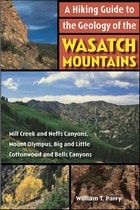
A Hiking Guide to the Geology of the Wasatch Mountains
Mill Creek and Neffs Canyons, Mount Olympus, Big and Little Cottonwood and Bells CanyonsWilliam T Parry
University of Utah Press, 2005
Northern Utah’s Wasatch Mountains are popular destinations for outdoor enthusiasts in every season. These mountains rise spectacularly from the relatively flat valley floor to thirteen peaks over 11,000 feet in elevation. An additional nineteen peaks rise more than 10,000 feet in elevation. Although many hiking guides exist for the Wasatch Mountains, there has been no guide book that focuses on the geologic features visible from the trails—until now.
Written by a recognized authority on the geology of the Wasatch Mountains, this guide is meant to enrich the experience of outdoor enthusiasts who want to understand the geological history and development of the Wasatch range. The first section of the book introduces the major geological time periods—the record of mountain building events from oldest to youngest, the effects of glaciation, and the development of the present topography. It then follows with a descriptive trail guide for each major trail system, including Mill Creek and Neffs Canyons, Mount Olympus, Little and Big Cottonwood Canyons, and Bells Canyon. Trail length, elevation gain, relative difficulty, and major geological features are outlined for each trail. Now you can hike these trails with the answers to all your geologic questions right at your fingertips.

A Historical Atlas of Tibet
Karl E. Ryavec
University of Chicago Press, 2015
Cradled among the world’s highest mountains—and sheltering one of its most devout religious communities—Tibet is, for many of us, an ultimate destination, a place that touches the heavens, a place only barely in our world, at its very end. In recent decades Western fascination with Tibet has soared, from the rise of Tibetan studies in academia to the rock concerts aimed at supporting its independence to the simple fact that most of us—far from any base camp—know exactly what a sherpa is. And yet any sustained look into Tibet as a place, any attempt to find one’s way around its high plateaus and through its deep history, will yield this surprising fact: we have barely mapped it. With this atlas, Karl E. Ryavec rights that wrong, sweeping aside the image of Tibet as Shangri-La and putting in its place a comprehensive vision of the region as it really is, a civilization in its own right. And the results are absolutely stunning.
The product of twelve years of research and eight more of mapmaking, A Historical Atlas of Tibet documents cultural and religious sites across the Tibetan Plateau and its bordering regions from the Paleolithic and Neolithic times all the way up to today. It ranges through the five main periods in Tibetan history, offering introductory maps of each followed by details of western, central, and eastern regions. It beautifully visualizes the history of Tibetan Buddhism, tracing its spread throughout Asia, with thousands of temples mapped, both within Tibet and across North China and Mongolia, all the way to Beijing. There are maps of major polities and their territorial administrations, as well as of the kingdoms of Guge and Purang in western Tibet, and of Derge and Nangchen in Kham. There are town plans of Lhasa and maps that focus on history and language, on population, natural resources, and contemporary politics.
Extraordinarily comprehensive and absolutely gorgeous, this overdue volume will be a cornerstone in cartography, Asian studies, Buddhist studies, and in the libraries or on the coffee tables of anyone who has ever felt the draw of the landscapes, people, and cultures of the highest place on Earth.
A History Of Geology
Gabriel Gohau
Rutgers University Press, 1991
This book is by far the best history of geology available. It begins with the Greeks and ends with continental drift and plate tectonics. Gabriel Gohau also looks at the early theories of the formation of the world and then moves to philosophical debates over mountains, fossils, the Flood, volcanoes, and cycles of earth history that preoccupied the geologists and biologists of the late eighteenth and nineteenth century. After discussing the late nineteenth-century consolidation of theories about the mechanisms of changes in the earth, he concludes with an account of twentieth century geology's scientific revolution.
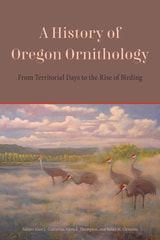
A History of Oregon Ornithology
From Territorial Days to the Rise of BirdingAlan L. Contreras
Oregon State University Press, 2022
Editors Alan Contreras, Vjera Thompson, and Nolan Clements have assembled chapters exploring the differences and interplay between the amateur and professional study of birds, along with discussions of early birding societies, notable observers, and ornithological studies. It includes significant chapters on Charles Bendire, William L. Finley, Ira Gabrielson, Stanley Jewett, and David B. Marshall. It also notes the sometimes-overlooked contributions of women to our expanding knowledge of western birds. Special attention is paid to the development of seabird observation, the impact of the Internet, and the rise of digital resources for bird observers.
Intended for readers interested in the history of Oregon, the history of scientific explorations in the west, and the origins of modern birding and field ornithology, A History of Oregon Ornithology offers a detailed and entertaining tour of how birds were first observed and studied by explorers in what is now Oregon.

A History of the Circle
Mathematical Reasoning and the Physical UniverseZebrowski, Ernest
Rutgers University Press, 2000
The concept of the circle is ubiquitous. It can be described mathematically, represented physically, and employed technologically. The circle is an elegant, abstract form that has been transformed by humans into tangible, practical forms to make our lives easier.
And yet no one has ever discovered a true mathematical circle. Rainbows are fuzzy; car tires are flat on the bottom, and even the most precise roller bearings have measurable irregularities. Ernest Zebrowski, Jr., discusses why investigations of the circle have contributed enormously to our current knowledge of the physical universe. Beginning with the ancient mathematicians and culminating in twentieth-century theories of space and time, the mathematics of the circle has pointed many investigators in fruitful directions in their quests to unravel nature’s secrets. Johannes Kepler, for example, triggered a scientific revolution in 1609 when he challenged the conception of the earth’s circular motion around the sun. Arab and European builders instigated the golden age of mosque and cathedral building when they questioned the Roman structural arches that were limited to geometrical semicircles.
Throughout his book, Zebrowski emphasizes the concepts underlying these mathematicians’ calculations, and how these concepts are linked to real-life examples. Substantiated by easy-to-follow mathematical reasoning and clear illustrations, this accessible book presents a novel and interesting discussion of the circle in technology, culture, history, and science.
A History of the Modern Fact
Problems of Knowledge in the Sciences of Wealth and SocietyMary Poovey
University of Chicago Press, 1998
Mary Poovey explores these questions in A History of the Modern Fact, ranging across an astonishing array of texts and ideas from the publication of the first British manual on double-entry bookkeeping in 1588 to the institutionalization of statistics in the 1830s. She shows how the production of systematic knowledge from descriptions of observed particulars influenced government, how numerical representation became the privileged vehicle for generating useful facts, and how belief—whether figured as credit, credibility, or credulity—remained essential to the production of knowledge.
Illuminating the epistemological conditions that have made modern social and economic knowledge possible, A History of the Modern Fact provides important contributions to the history of political thought, economics, science, and philosophy, as well as to literary and cultural criticism.
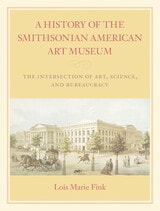
A History of the Smithsonian American Art Museum
The Intersection of Art, Science, and BureaucracyLois Marie Fink
University of Massachusetts Press, 2007
Dedicated to the art of the United States, the Smithsonian American Art Museum contains works by more than 7,000 artists and is widely regarded as an invaluable resource for the study and preservation of the nation's cultural heritage. But as Lois Marie Fink shows in this probing narrative, the history of the museum is hardly one of steady progress. Instead, it reads like a nineteenth-century melodrama, replete with villains and heroes, destruction by fire, dashed hopes, and periods of subsistence survival—all leading eventually to a happy ending.
Originating as the art gallery stipulated in the 1846 founding legislation of the Smithsonian, the museum developed within an institution that was essentially controlled by scientists. In its early years, the museum's holdings included a diverse selection of art and artifacts, mostly donated from private collections. Government support varied in response to shifting attitudes of officials and the public toward American art, ranging from avid admiration at the turn of the twentieth century to a tepid response and an almost total withdrawal of funding a generation later in favor of European masterworks. For decades the museum followed scientific organizational principles in exhibitions and collection strategies. Far into the twentieth century, accessions remained tied to nineteenth-century figurative art, reflecting the strength and influence of anthropology and biological sciences at the Smithsonian. A key breakthrough for modern art came in 1964 with the appointment of Smithsonian secretary Dillon Ripley, a scientist who strongly promoted the art side of the institution. With renewed support for expanding the collection and programs, the museum moved in 1968 to its present location in the Patent Office Building.
In recounting the history of the museum from 1846 to 1980, Fink unravels the various levels of institutional authority, power, governance, and bureaucracy and shows how people at each level influenced the fortunes of the collection. She also places changing concepts of art and museum practice in the context of national ideals and Washington realities.
A Jumble of Needs
Women’s Activism and Neoliberalism in the Colonias of the SouthwestRebecca Dolhinow
University of Minnesota Press, 2010
A Key to Pacific Grasses
W. D. Clayton and Neil Snow
Royal Botanic Gardens, Kew, 2010
A Key to Whitehead's Process and Reality
Donald W. Sherburne
University of Chicago Press, 1981
"The Key renders Process and Reality pedagogically accessible for the first time."—Journal of Religion
A Laboratory of Her Own
Women and Science in Spanish CultureVictoria L. Ketz
Vanderbilt University Press, 2021
While women's historic exclusion from STEM fields has been receiving increased scrutiny worldwide, women within the Spanish context have been perhaps even more peripheral given the complex sociocultural structures emanating from gender norms and political ideologies dominant in nineteenth- and twentieth-century Spain. Nonetheless, Spanish female cultural producers have long been engaged with science and technology, as expressed in literature, art, film, and other genres. Spanish arts and letters offer diverse representations of the relationships between women, gender, sexuality, race, and STEM fields.
A Laboratory of Her Own studies representations of a diverse range of Spanish women and scientific cultural products from the late nineteenth through the twenty-first centuries. STEM topics include the environment, biodiversity, temporal and spatial theories, medicine and reproductive rights, neuroscience, robotics, artificial intelligence, and quantum physics. These scientific themes and other issues are analyzed in narratives, paintings, poetry, photographs, science fiction, medical literature, translation, newswriting, film, and other forms.
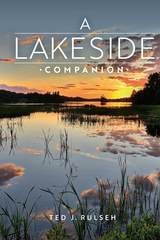
A Lakeside Companion
Ted J. Rulseh
University of Wisconsin Press, 2018
You'll discover the interconnected worlds of a lake: the water; the sand, gravel, rocks, and muck of the bottom; the surface of the lake; the air above; and the shoreline, a belt of land incredibly rich in flora and fauna. Explained, too, are the physical, biological, and chemical processes that determine how many and what kinds of fish live in the lake, which plants grow there, the color and clarity of the water, how ice forms in winter and melts in spring, and much more. Useful advice will help you look out for your lake and advocate for its protection.
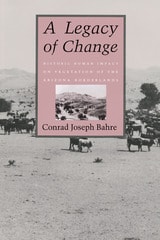
A Legacy of Change
Historic Human Impact on Vegetation in the Arizona BorderlandsConrad Joseph Bahre
University of Arizona Press, 1991
Geographer Conrad Bahre now challenges the view that these vegetation changes are due to climatic change. Correlating his own field research with archival records and photographs, Bahre demonstrates that most of the changes follow some type of human disturbance, such as cattle grazing, fuelwood cutting, wildfire suppression, agriculture, and road construction. Indeed, all available evidence suggests that Anglo settlement brought unprecedented changes to the land.
Vegetation change in the American West has long been an issue of concern. This careful scrutiny of one corner of that region—one of the most ecologically diverse areas of the United States—shows how poorly understood is the relationship between human activities and vegetation. More important, it introduces new techniques for differentiating between natural and anthropogenic factors effecting vegetation change that can be used to help ecologists understand vegetation dynamics worldwide.
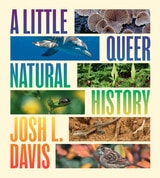
A Little Queer Natural History
Josh L. Davis
University of Chicago Press, 2024
From a pair of male swans raising young to splitgill mushrooms with over 23,000 mating types, sex in the natural world is wonderfully diverse. Josh L. Davis considers how, for many different organisms—animals, plants, and fungi included—sexual reproduction and sex determination rely on a surprisingly complex interaction among genes, hormones, environment, and chance. As Davis introduces us to fascinating biological concepts like parthenogenesis (virgin birth), monoecious plants (individuals with separate male and female flowers), and sex-reversed genitals, we see turtle hatchlings whose sex is determined by egg temperature; butterflies that embody male and female biological tissue in the same organism; and a tomato that can reproduce three different ways at the same time. Davis also reveals animal and plant behaviors in nature that researchers have historically covered up or explained away, like queer sex among Adélie penguins or bottlenose dolphins, and presents animal behaviors that challenge us to rethink our assumptions and prejudices. Featuring fabulous sex-fluid fishes and ant, wasp, and bee queens who can choose both how they want to have sex and the sex of their offspring, A Little Queer Natural History offers a larger lesson: that the diversity we see in our own species needs no justification and represents just a fraction of what exists in the natural world.
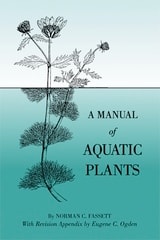
A Manual of Aquatic Plants
Norman C. Fassett; Revised Appendix by Eugene C. Ogden
University of Wisconsin Press, 2006
A Manual of Aquatic Plants can be said to be a classic; it made the identification of aquatic plants in sterile as well as in flowering or fruiting condition as simple as possible, and covers a region from Minnesota to Missouri and eastward to the Gulf of St. Lawrence and Virgina.
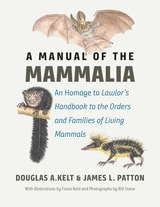
A Manual of the Mammalia
An Homage to Lawlor’s “Handbook to the Orders and Families of Living Mammals”Douglas A. Kelt and James L. Patton
University of Chicago Press, 2020
The taxonomy of recent mammals has lately undergone tremendous revision, but it has been decades since the last update to Timothy E. Lawlor’s acclaimed identification guide the Handbook to the Orders and Families of Living Mammals. Integrating the latest advances in research, Douglas A. Kelt and James L. Patton provide this long-overdue update in their new, wholly original work, A Manual of the Mammalia.
Complemented by global range maps, high-resolution photographs of skulls and mandibles by Bill Stone, and the outstanding artwork of Fiona Reid, this book provides an overview of biological attributes of each higher taxon while highlighting key and diagnostic characters needed to identify skulls and skins of all recent mammalian orders and most families. Kelt and Patton also place taxa in their currently understood supra-familial clades, and discuss current challenges in higher mammal taxonomy. Including a comprehensive review of mammalian anatomy to provide a foundation for understanding all characters employed throughout, A Manual of the Mammalia is both a user-friendly handbook for students learning to identify higher mammal taxa and a uniquely comprehensive, up-to-date reference for mammalogists and mammal-lovers from across the globe.
A Martian Stranded on Earth
Alexander Bogdanov, Blood Transfusions, and Proletarian ScienceNikolai Krementsov
University of Chicago Press, 2011
Much like Vladimir Lenin, his onetime rival for the leadership of the Bolshevik party during its formative years, Alexander Bogdanov (1873–1928) was a visionary. In two science fiction novels set on Mars, Bogdanov imagined a future in which the workers of the world, liberated from capitalist exploitation, create a “physiological collective” that rejuvenates and unites its members through regular blood exchanges. But Bogdanov was not merely a dreamer. He worked tirelessly to popularize and realize his vision, founding the first research institute devoted to the science of blood transfusion.
In A Martian Stranded on Earth, the first broad-based book on Bogdanov in English, Nikolai Krementsov examines Bogdanov’s roles as revolutionary, novelist, and scientist, presenting his protagonist as a coherent thinker who pursued his ideas in a wide range of venues. Through the lens of Bogdanov’s involvement with blood studies on one hand, and of his fictional and philosophical writings on the other, Krementsov offers a nuanced analysis of the interactions between scientific ideas and societal values.

A Matter of Choices
Memoirs of a Female PhysicistFay Ajzenberg-Selove
Rutgers University Press, 1994
Ajzenberg-Selove came to America at the age of 15 after narrowly escaping the Nazi takeover of France. She had planned to become an engineer like her father, but switched to physics after she was told the only engineering jobs open to women were in drafting: Marie Curie's example proved to her that women could do physics. Her first attempt at graduate work at Columbia University was a disaster, but she was sturck with the intellectual beauty of the field. After taking a Ph.D. in physics at University of Wisconsin, she did post-doctoral work with Thomas Lauritsen at the California Institute of Technology, where she began writing the first of a series of major review papers on the nuclear spectroscopy of the light nuclei, a subject of fundamental importance to nuclear physics, astrophysics, and applied physics. She continued this work and experimental research for thirty-eight years while teaching at Boston University, Haverford College, and the University of Pennsylvania.
During her early career, Ajzenberg-Selove was shielded by her male mentors from experiencing much of the discrimination directed against women in science. Her simultaneous battles to become a tenured professor and to overcome breast cancer opened her eyes and confirmed her as a feminist.
The lay reader and the scientist alike will be fascinated by Ajzenberg-Selove's clear portrayal of her interlinked lives as physicist, teacher, wife of particle physicist, Walter Selove, and a woman who relishes both competition and friendship in a male-dominated field. An invaluable book for anyone contemplating a career in science.

A Matter of Life and Death
Hunting in Contemporary VermontMarc Boglioli
University of Massachusetts Press, 2009
In A Matter of Life and Death, anthropologist Marc Boglioli puts a human face on a group widely regarded as morally suspect, one that currently stands in the crossfire of America's so-called culture wars. Drawing on extensive ethnographic fieldwork in Addison County, Vermont, which took him from hunting camps and sporting goods stores to local bars and kitchen tables, Boglioli focuses on how contemporary hunters, women as well as men, understand their relationship to their prey. He shows how hunters' attitudes toward animals flow directly from the rural lifeways they have continued to maintain in the face of encroaching urban sensibilities. The result is a rare glimpse into a culture that experiences wild animals in a way that is at once violent, consumptive, and respectful, and that regards hunting as an enduring link to a vanishing past. It is a book that will challenge readers—hunters, non-hunters, and anti-hunters alike—to reconsider what constitutes a morally appropriate relationship with the non-human residents of this planet.
A Monograph on the Genus Heuchera
Carl Rosendahl
University of Minnesota Press, 1936
A Nation of Neighborhoods
Imagining Cities, Communities, and Democracy in Postwar AmericaBenjamin Looker
University of Chicago Press, 2015
Looker investigates the cultural, social, and political complexities of the idea of “neighborhood” in postwar America and how Americans grappled with vast changes in their urban spaces from World War II to the Reagan era. In the face of urban decline, competing visions of the city neighborhood’s significance and purpose became proxies for broader debates over the meaning and limits of American democracy. By studying the way these contests unfolded across a startling variety of genres—Broadway shows, radio plays, urban ethnographies, real estate documents, and even children’s programming—Looker shows that the neighborhood ideal has functioned as a central symbolic site for advancing and debating theories about American national identity and democratic practice.
A Natural History of Time
Pascal Richet
University of Chicago Press, 2007
The quest to pinpoint the age of the Earth is nearly as old as humanity itself. For most of history, people trusted mythology or religion to provide the answer, even though nature abounds with clues to the past of the Earth and the stars. In A Natural History of Time, geophysicist Pascal Richet tells the fascinating story of how scientists and philosophers examined those clues and from them built a chronological scale that has made it possible to reconstruct the history of nature itself.
Richet begins his story with mythological traditions, which were heavily influenced by the seasons and almost uniformly viewed time cyclically. The linear history promulgated by Judaism, with its story of creation, was an exception, and it was that tradition that drove early Christian attempts to date the Earth. For instance, in 169 CE, the bishop of Antioch, for instance declared that the world had been in existence for “5,698 years and the odd months and days.”
Until the mid-eighteenth century, such natural timescales derived from biblical chronologies prevailed, but, Richet demonstrates, with the Scientific Revolution geological and astronomical evidence for much longer timescales began to accumulate. Fossils and the developing science of geology provided compelling evidence for periods of millions and millions of years—a scale that even scientists had difficulty grasping. By the end of the twentieth century, new tools such as radiometric dating had demonstrated that the solar system is four and a half billion years old, and the universe itself about twice that, though controversial questions remain.
The quest for time is a story of ingenuity and determination, and like a geologist, Pascal Richet carefully peels back the strata of that history, giving us a chance to marvel at each layer and truly appreciate how far our knowledge—and our planet—have come.
A Natural History of the New World
The Ecology and Evolution of Plants in the AmericasAlan Graham
University of Chicago Press, 2010
The paleoecological history of the Americas is as complex as the region is broad: stretching from the Arctic Circle to Tierra del Fuego, the New World features some of the most extraordinary vegetation on the planet. But until now it has lacked a complete natural history. Alan Graham remedies that with A Natural History of the New World. With plants as his scientific muse, Graham traces the evolution of ecosystems, beginning in the Late Cretaceous period (about 100 million years ago) and ending in the present, charting their responses to changes in geology and climate.
By highlighting plant communities’ roles in the environmental history of the Americas, Graham offers an overdue balance to natural histories that focus exclusively on animals. Plants are important in evolution’s splendid drama. Not only are they conspicuous and conveniently stationary components of the Earth’s ecosystems, but their extensive fossil record allows for a thorough reconstruction of the planet’s paleoenvironments. What’s more, plants provide oxygen, function as food and fuel, and provide habitat and shelter; in short, theirs is a history that can speak to many other areas of evolution.
A Natural History of the New World is an ambitious and unprecedented synthesis written by one of the world’s leading scholars of botany and geology.