Results by title
65 books match the query 'Ships & Boats' and 4 start with a
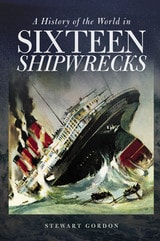
A History of the World in Sixteen Shipwrecks
Stewart Gordon
University Press of New England, 2017
Stories of disasters at sea, whether about Roman triremes, the treasure fleet of the Spanish Main, or great transatlantic ocean liners, fire the imagination as little else can. From the historical sinkings of the Titanic and the Lusitania to the recent capsizing of a Mediterranean cruise ship, the study of shipwrecks also makes for a new and very different understanding of world history. A History of the World in Sixteen Shipwrecks explores the age-old, immensely hazardous, persistently romantic, and ongoing process of moving people and goods across the seven seas. In recounting the stories of ships and the people who made and sailed them, from the earliest craft plying the ancient Nile to the Exxon Valdez, Stewart Gordon argues that the gradual integration of mainly local and separate maritime domains into fewer, larger, and more interdependent regions offers a unique perspective on world history. Gordon draws a number of provocative conclusions from his study, among them that the European “Age of Exploration” as a singular event is simply a myth: over the millennia, many cultures, east and west, have explored far-flung maritime worlds, and technologies of shipbuilding and navigation have been among the main drivers of science and exploration throughout history. In a series of compelling narratives, A History of the World in Sixteen Shipwrecks shows that the development of institutions and technologies that made the terrifying oceans familiar and turned unknown seas into well-traveled sea-lanes matters profoundly in our modern world.
[more]
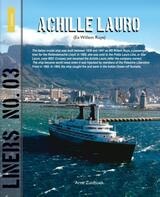
Achille Lauro
Arne Zuidhoek
Amsterdam University Press, 2024
The Italian cruise ship Willem Ruys was built between 1939 and 1947. When it was sold to the Italian Lauro Organization in 1966, it was renamed after the company owner Achille Lauro. After being hijacked by Palestinian warriors (PLO), in October 1985, the blue liner and cruiser made international headlines. Swept by a catastrophic fire Achille Lauro sank December 2, 1994, off the Somalian coast.
[more]
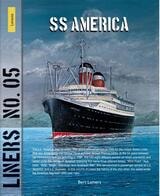
America
Bert Lamers
Amsterdam University Press, 2024
The s.s. 'America' was an ocean liner which entered service in 1940 for the United States Lines. She was designed by the famous naval architect William Francis Gibbs. In the 54 years between her introduction and her wrecking in 1994, she had eight different owners (of which one twice) and sailed under the names of 'America' (carrying this name three different times), 'West Point', 'Australis', 'Italis', 'Noga', 'Alferdoss' and 'American Star'. She served most in passenger service as s.s. 'America' and s.s. 'Australis'. In this number of Liners the story of this remarkable ship.
[more]
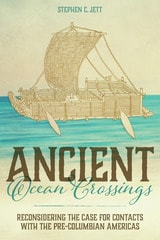
Ancient Ocean Crossings
Reconsidering the Case for Contacts with the Pre-Columbian AmericasStephen C. Jett
University of Alabama Press, 2017
Paints a compelling picture of impressive pre-Columbian cultures and Old World civilizations that, contrary to many prevailing notions, were not isolated from one another
In Ancient Ocean Crossings: Reconsidering the Case for Contacts with the Pre-Columbian Americas, Stephen Jett encourages readers to reevaluate the common belief that there was no significant interchange between the chiefdoms and civilizations of Eurasia and Africa and peoples who occupied the alleged terra incognita beyond the great oceans.
More than a hundred centuries separate the time that Ice Age hunters are conventionally thought to have crossed a land bridge from Asia into North America and the arrival of Columbus in the Bahamas in 1492. Traditional belief has long held that earth’s two hemispheres were essentially cut off from one another as a result of the post-Pleistocene meltwater-fed rising oceans that covered that bridge. The oceans, along with arctic climates and daunting terrestrial distances, formed impermeable barriers to interhemispheric communication. This viewpoint implies that the cultures of the Old World and those of the Americas developed independently.
Drawing on abundant and concrete evidence to support his theory for significant pre-Columbian contacts, Jett suggests that many ancient peoples had both the seafaring capabilities and the motives to cross the oceans and, in fact, did so repeatedly and with great impact. His deep and broad work synthesizes information and ideas from archaeology, geography, linguistics, climatology, oceanography, ethnobotany, genetics, medicine, and the history of navigation and seafaring, making an innovative and persuasive multidisciplinary case for a new understanding of human societies and their diffuse but interconnected development.
[more]