Results by title
279 books match the query 'Slavery' and 23 start with a

A Beautiful Fight
The Racial Politics of Capoeira in Backland BahiaEsther Viola Kurtz
University of Michigan Press, 2025
2026 Dance Studies Association de la Torre Bueno First Book Award Shortlist Finalist
A Beautiful Fight examines the potentials and limits of capoeira Angola to cohere a multiracial community committed to antiracist struggle. Capoeira, a musical fight-game that originated among enslaved Africans in Brazil, holds special significance for Black Brazilian activists as a spiritual and political practice that affirms the value of Black lives, thus countering anti-Black violence sanctioned by the Brazilian state. However, many capoeira groups count more white practitioners than Black, especially groups of the politicized, Afrocentric style capoeira Angola, raising debates about appropriation of Black culture that resonate across the Americas. A Beautiful Fight addresses these tensions. Drawing on ethnographic research with a multiracial capoeira Angola group in Brazil’s Bahian sertão or backlands, Esther Viola Kurtz explores diverse group members’ understandings of capoeira’s spiritual and political meanings and considers how white participation impacts capoeira’s antiracist politics. A Beautiful Fight argues that white practitioners occupying space in capoeira divert attention from Black members’ concerns and reproduce racist and colonialist ideologies, albeit unintentionally. In this way, the book complicates claims that shared music and dance bridge differences and facilitate cross-racial unity, yet Kurtz proposes that capoeira still transmits knowledge and tools that, when used with intention, commitment, and care, can be wielded to collaboratively contest racism and imagine a more just world.
A Fire Bell in the Past
The Missouri Crisis at 200, Volume I, Western Slavery, National ImpasseJeffrey L. Pasley
University of Missouri Press, 2021
Drawing on the participants in two landmark conferences held at the University of Missouri and the City University of New York, this first of two volumes finds myriad new perspectives on the Missouri Crisis. Celebrating Missouri’s bicentennial the scholarly way, with fresh research and unsparing analysis, this eloquent collection of essays from distinguished historians gives the epochal struggle over Missouri statehood its due as a major turning point in American history.
Contributors include the editors, Christa Dierksheide, David N. Gellman, Sarah L. H. Gronningsater, Robert Lee, Donald Ratcliffe, Andrew Shankman, Anne Twitty, John R. Van Atta, and David Waldstreicher.
A Fire Bell in the Past
The Missouri Crisis at 200, Volume II: “The Missouri Question” and Its AnswersJeffrey L. Pasley
University of Missouri Press, 2021
Drawn from the of participants in two landmark conferences held at the University of Missouri and the City University of New York, those who contributed original essays to this second of two volumes—a group that includes young scholars and foremost authorities in the field—answer the Missouri “Question,” in bold fashion, challenging assumptions both old and new in the long historiography by approaching the event on its own terms, rather than as the inevitable sequel of the flawed founding of the republic or a prequel to its near destruction.
This second volume of A Fire Bell in the Past features a foreword by Daive Dunkley. Contributors include Dianne Mutti Burke, Christopher Childers, Edward P. Green, Zachary Dowdle, David J. Gary, Peter Kastor, Miriam Liebman, Matthew Mason, Kate Masur, Mike McManus, Richard Newman, and Nicholas Wood.
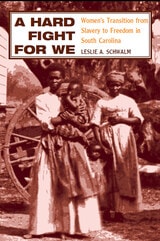
A Hard Fight for We
Women's Transition from Slavery to Freedom in South CarolinaLeslie A. Schwalm
University of Illinois Press, 1997
African-American women fought for their freedom with courage and vigor during and after the Civil War. Leslie Schwalm explores the vital roles of enslaved and formerly enslaved women on the rice plantations of lowcountry South Carolina, both in antebellum plantation life and in the wartime collapse of slavery. From there, she chronicles their efforts as freedwomen to recover from the impact of the war while redefining their lives and labor.
Freedwomen asserted their own ideas of what freedom meant and insisted on important changes in the work they performed both for white employers and in their own homes. As Schwalm shows, these women rejected the most unpleasant or demeaning tasks, guarded the prerogatives they gained under the South's slave economy, and defended their hard-won freedoms against unwanted intervention by Northern whites and the efforts of former owners to restore slavery's social and economic relations during Reconstruction. A bold challenge to entrenched notions, A Hard Fight for We places African American women at the center of the South's transition from a slave society.
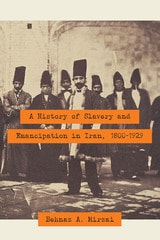
A History of Slavery and Emancipation in Iran, 1800-1929
By Behnaz A. Mirzai
University of Texas Press, 2017
Shortlisted for the 2018 Wallace K. Ferguson Prize, Canadian Historical Association
The leading authority on slavery and the African diaspora in modern Iran presents the first history of slavery in this key Middle Eastern country and shows how slavery helped to shape the nation’s unique character.
Slavery in the Middle East is a growing field of study, but the history of slavery in a key country, Iran, has never before been written. This history extends to Africa in the west and India in the east, to Russia and Turkmenistan in the north, and to the Arab states in the south. As the slave trade between Iran and these regions shifted over time, it transformed the nation and helped forge its unique culture and identity. Thus, a history of Iranian slavery is crucial to understanding the character of the modern nation.
Drawing on extensive archival research in Iran, Tanzania, England, and France, as well as fieldwork and interviews in Iran, Behnaz A. Mirzai offers the first history of slavery in modern Iran from the early nineteenth century to emancipation in the mid-twentieth century. She investigates how foreign military incursion, frontier insecurity, political instability, and economic crisis altered the patterns of enslavement, as well as the ethnicity of the slaves themselves. Mirzai’s interdisciplinary analysis illuminates the complex issues surrounding the history of the slave trade and the process of emancipation in Iran, while also giving voice to social groups that have never been studied—enslaved Africans and Iranians. Her research builds a clear case that the trade in slaves was inexorably linked to the authority of the state. During periods of greater decentralization, slave trading increased, while periods of greater governmental autonomy saw more freedom and peace.
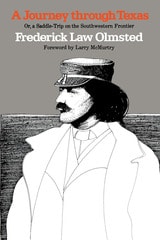
A Journey through Texas; or, a Saddle-Trip on the Southwestern Frontier
By Frederick Law Olmsted
University of Texas Press, 1978
Early in the year 1854 Frederick Law Olmsted, a young New England journalist, crossed the Louisiana border and set off on horseback into the teeth of the Texas winter. In A Journey through Texas he recounts his travels along the Old San Antonio Road through East Texas' piney woods, the dry prairies further west, the chaparral of South Texas, the coastal prairies, and the rich bottomlands around Houston and Galveston.
Olmsted does not romanticize the discomforts of his trip—the monotonous food, crude housing, wet and dry northers, rough companions—yet his book reflects a sense of limitless possibility for this new and open country. The cultured Easterner remembers in relentless detail the squalor and brutality met with in parts of East Texas, but he writes fondly of the civility and cleanliness of the German settlements around New Braunfels.
In his introductory "A Letter to a Southern Friend," omitted in earlier reprints, Olmsted sets forth his views opposing the extension of slavery into the West and promoting free-soil agriculture for frontier states.
The remarkably versatile Olmsted is best known as the founder of landscape architecture in America and for works including Central Park and Stanford University.
In his Foreword, Larry McMurtry calls A Journey through Texas an "intelligent, lively, readable book, packed with keen observation and lightened by a delicate strain of humor."
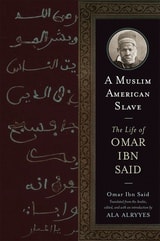
A Muslim American Slave
The Life of Omar Ibn SaidOmar Ibn Said; translated from the Arabic, edited, and with an introduction by Ala Alryyes
University of Wisconsin Press, 2011
Born to a wealthy family in West Africa around 1770, Omar Ibn Said was abducted and sold into slavery in the United States, where he came to the attention of a prominent North Carolina family after filling “the walls of his room with piteous petitions to be released, all written in the Arabic language,” as one local newspaper reported. Ibn Said soon became a local celebrity, and in 1831 he was asked to write his life story, producing the only known surviving American slave narrative written in Arabic.
In A Muslim American Slave, scholar and translator Ala Alryyes offers both a definitive translation and an authoritative edition of this singularly important work, lending new insights into the early history of Islam in America and exploring the multiple, shifting interpretations of Ibn Said’s narrative by the nineteenth-century missionaries, ethnographers, and intellectuals who championed it.
This edition presents the English translation on pages facing facsimile pages of Ibn Said’s Arabic narrative, augmented by Alryyes’s comprehensive introduction, contextual essays and historical commentary by leading literary critics and scholars of Islam and the African diaspora, photographs, maps, and other writings by Omar Ibn Said. The result is an invaluable addition to our understanding of writings by enslaved Americans and a timely reminder that “Islam” and “America” are not mutually exclusive terms.
This edition presents the English translation on pages facing facsimile pages of Ibn Said’s Arabic narrative, augmented by Alryyes’s comprehensive introduction and by photographs, maps, and other writings by Omar Ibn Said. The volume also includes contextual essays and historical commentary by literary critics and scholars of Islam and the African diaspora: Michael A. Gomez, Allan D. Austin, Robert J. Allison, Sylviane A. Diouf, Ghada Osman, and Camille F. Forbes. The result is an invaluable addition to our understanding of writings by enslaved Americans and a timely reminder that “Islam” and “America” are not mutually exclusive terms.
Best Books for General Audiences, selected by the American Association of School Librarians
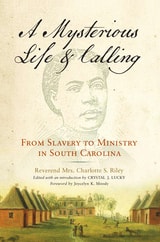
A Mysterious Life and Calling
From Slavery to Ministry in South CarolinaReverend Mrs. Charlotte S. Riley, Edited with an introduction by Crystal J. Lucky, Foreword by Joycelyn K. Moody
University of Wisconsin Press, 2016
Born in 1839 in Charleston, South Carolina, Riley was taught to read, write, and sew despite laws forbidding black literacy. Raised a Presbyterian, she writes of her conversion at age fourteen to the African Methodist Episcopal (AME) church, embracing its ecstatic worship and led by her own spiritual visions. Her memoir is revelatory on many counts, including life in urban Charleston before and after emancipation, her work as a preacher at multiracial revivals, the rise of African American civil servants in the Reconstruction era, and her education and development as a licensed female minister in a patriarchal church.
Crystal J. Lucky, who discovered Riley’s forgotten book in the library archives at Wilberforce University in Ohio, provides an introduction and notes on events, society, and religious practice in the antebellum era and during the Civil War and Reconstruction, and places A Mysterious Life and Calling in the context of other spiritual autobiographies and slave narratives.

A Received Grace
Slavery, Heirlooms, and the Feminine Labor of ForgettingMacushla Robinson
Duke University Press, 2027
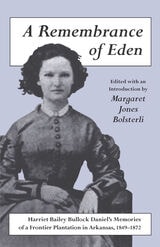
A Remembrance of Eden
Harriet Bailey Bullock Daniel's Memories of a Frontier Plantation in Arkansas, 1849–1872Margaret Jones Bolsterli
University of Arkansas Press, 1993
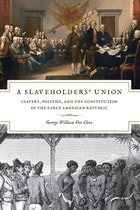
A Slaveholders' Union
Slavery, Politics, and the Constitution in the Early American RepublicGeorge William Van Cleve
University of Chicago Press, 2010
After its early introduction into the English colonies in North America, slavery in the United States lasted as a legal institution until the passage of the Thirteenth Amendment to the Constitution in 1865. But increasingly during the contested politics of the early republic, abolitionists cried out that the Constitution itself was a slaveowners’ document, produced to protect and further their rights. A Slaveholders’ Union furthers this unsettling claim by demonstrating once and for all that slavery was indeed an essential part of the foundation of the nascent republic.
In this powerful book, George William Van Cleve demonstrates that the Constitution was pro-slavery in its politics, its economics, and its law. He convincingly shows that the Constitutional provisions protecting slavery were much more than mere “political” compromises—they were integral to the principles of the new nation. By the late 1780s, a majority of Americans wanted to create a strong federal republic that would be capable of expanding into a continental empire. In order for America to become an empire on such a scale, Van Cleve argues, the Southern states had to be willing partners in the endeavor, and the cost of their allegiance was the deliberate long-term protection of slavery by America’s leaders through the nation’s early expansion. Reconsidering the role played by the gradual abolition of slavery in the North, Van Cleve also shows that abolition there was much less progressive in its origins—and had much less influence on slavery’s expansion—than previously thought.
Deftly interweaving historical and political analyses, A Slaveholders’ Union will likely become the definitive explanation of slavery’s persistence and growth—and of its influence on American constitutional development—from the Revolutionary War through the Missouri Compromise of 1821.
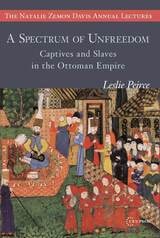
A Spectrum of Unfreedom
Captives and Slaves in the Ottoman EmpireLeslie Peirce
Central European University Press, 2021
Without the labor of the captives and slaves, the Ottoman empire could not have attained and maintained its strength in early modern times. With Anatolia as the geographic focus, Leslie Peirce searches for the voices of the unfree, drawing on archives, histories written at the time, and legal texts.
Unfree persons comprised two general populations: slaves and captives. Mostly household workers, slaves lived in a variety of circumstances, from squalor to luxury. Their duties varied with the status of their owner. Slave status might not last a lifetime, as Islamic law and Ottoman practice endorsed freeing one’s slave.
Captives were typically seized in raids, generally to disappear, their fates unknown. Victims rarely returned home, despite efforts of their families and neighbors to recover them. The reader learns what it was about the Ottoman environment of the sixteenth and seventeenth centuries that offered some captives the opportunity to improve the conditions of their bondage. The book describes imperial efforts to fight against the menace of captive-taking despite the widespread corruption among the state’s own officials, who had their own interest in captive labor.
From the fortunes of captives and slaves the book moves to their representation in legend, historical literature, and law, where, fortunately, both captors and their prey are present.
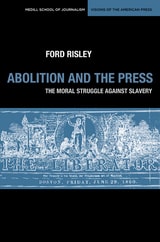
Abolition and the Press
The Moral Struggle Against SlaveryFord Risley
Northwestern University Press, 2008
This examination of nineteenth-century journalism explores the specific actions and practices of the publications that provided a true picture of slavery to the general public. From Boston's strident <i>Liberator</i> to Frederick Douglass' <i>North Star</i>, the decades before the Civil War saw more than forty newspapers founded with the specific aim of promoting emancipation. Not only did these sheets provide a platform for discourse, but they also gave slavery a face for a wider audience. The reach of the abolitionist press only grew as the fiery publications became objects of controversy and targets of violence in both South and North. These works kept the issue of slavery in the public eye even as mainstream publications took up the call for emancipation, as the nation went to war, up to the end of slavery. Their legacy has endured, as dedicated reform writers and editors continue to view the press as a vital tool in the fight for equality.
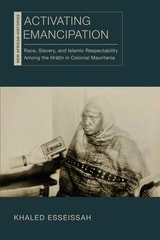
Activating Emancipation
Race, Slavery, and Islamic Respectability Among the Hratin in Colonial MauritaniaKhaled Esseissah
Ohio University Press, 0
Activating Emancipation boldly interrogates our knowledge of the history of slavery, emancipation, race, and Islam in Mauritania, where slavery was abolished only in 1981 and criminalized in 2007. It centers on the voices and stories of Ḥrāṭīn peoples, a complex and ambiguous social category encompassing people with mixed free and servile ancestral backgrounds. The stigma of enslavement, along with their racialized status as Black, has placed them at the bottom of a social hierarchy dominated by Arab and Amazigh elites, racialized as “White.”
In this groundbreaking study, Ḥrāṭīn historian Khaled Esseissah mobilizes oral and written sources to confront a long tradition in which Ḥrāṭīn are rendered invisible or shown as passive victims of oppression and narrates a new history of Ḥrāṭīn contributions to the building of modern Mauritania. Despite being emancipated or born free, Ḥrāṭīn men and women continued to face “White” threats to reenslave them or subject them to economic, religious, and sexual exploitation. Esseissah demonstrates that only by “activating their emancipation” have the Ḥrāṭīn challenged Arab dominance. He unravels complex and varied Ḥrāṭīn strategies, including engaging with French colonizers through collaboration and revolt, appealing to the Qur’an and Ḥadith, acquiring wealth, building political power, engaging in nationalist struggle, and exercising communal agency to support others, garner respectability, and assert their autonomy during the colonial period. He also illuminates Ḥrāṭīn adwaba, or villages of emancipation, as critical sites of slave liberation and freedom. In so doing, Activating Emancipation reframes the story of abolition in colonial Mauritania that is often either ignored or told from the French colonial perspective, which sees abolition merely as a legal event. The Ḥrāṭīn experience of emancipation is long and complex, challenging simple binaries between bondage and free labor, between colonial and anticolonial.
Activating Emancipation reorients academic studies and international media coverage of Ḥrāṭīn communities, demonstrating the broad range of Ḥrāṭīn historical experiences that are not understood, or even visible, to many in Mauritania, Africa, and beyond. It provides a grounded historical analysis that moves us beyond both the orientalist and apologetic Muslim discourses that have long characterized journalistic, popular, and even scholarly debates about slavery, Islam, and Ḥrāṭīn experience in Mauritania.
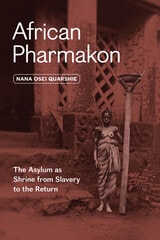
African Pharmakon
The Asylum as Shrine from Slavery to the ReturnNana Osei Quarshie
University of Chicago Press, 2025
For centuries, mental distress in West Africa has been subject to a mix of healing, harming, ritual, and regulation. In African Pharmakon, Nana Osei Quarshie questions conventional narratives about colonial psychiatry. Instead of displacing African therapeutic traditions, he argues, European psychiatric institutions in fact built upon them, adapting long-standing techniques of social control and healing.
With a focus on Ghana, Quarshie explores the shifting landscape of West African mental health practices, tracking their transformation from shrine-based rituals to colonial asylums and modern psychiatric institutions. Combining extensive archival research and ethnographic fieldwork, including the first scholarly examination of patient records from the Accra Psychiatric Hospital, Quarshie identifies five enduring techniques that have shaped the treatment of mental distress: spiritual pawning, logging, manhunting, mass expulsion, and pharmacotherapy.
Rejecting the simplistic opposition of Indigenous healing versus colonial oppression, African Pharmakon provides a nuanced account of how psychiatric care in Ghana became a tool of empowerment as well as exclusion. This pioneering study reframes our understanding of psychiatry and mental health governance in West Africa, past and present.
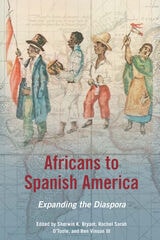
Africans to Spanish America
Expanding the DiasporaEdited by Sherwin K. Bryant, Rachel Sarah O’Toole, & Ben Vinson III
University of Illinois Press, 2014
Contributors are Joan C. Bristol, Nancy E. van Deusen, Leo J. Garofalo, Herbert S. Klein, Charles Beatty-Medina, Karen Y. Morrison, Rachel Sarah O'Toole, Frank "Trey" Proctor III, and Michele Reid-Vazquez.
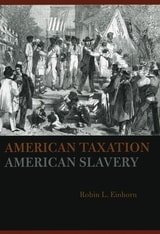
American Taxation, American Slavery
Robin L. Einhorn
University of Chicago Press, 2006
For all the recent attention to the slaveholding of the founding fathers, we still know remarkably little about the influence of slavery on American politics. American Taxation, American Slavery tackles this problem in a new way. Rather than parsing the ideological pronouncements of charismatic slaveholders, it examines the concrete policy decisions that slaveholders and non-slaveholders made in the critical realm of taxation. The result is surprising—that the enduring power of antigovernment rhetoric in the United States stems from the nation’s history of slavery rather than its history of liberty.
We are all familiar with the states’ rights arguments of proslavery politicians who wanted to keep the federal government weak and decentralized. But here Robin Einhorn shows the deep, broad, and continuous influence of slavery on this idea in American politics. From the earliest colonial times right up to the Civil War, slaveholding elites feared strong democratic government as a threat to the institution of slavery. American Taxation, American Slavery shows how their heated battles over taxation, the power to tax, and the distribution of tax burdens were rooted not in debates over personal liberty but rather in the rights of slaveholders to hold human beings as property. Along the way, Einhorn exposes the antidemocratic origins of the popular Jeffersonian rhetoric about weak government by showing that governments were actually more democratic—and stronger—where most people were free.
A strikingly original look at the role of slavery in the making of the United States, American Taxation, American Slavery will prove essential to anyone interested in the history of American government and politics.
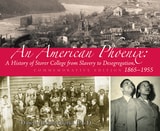
An American Phoenix
A History of Storer College from Slavery to Desegregation 1865-1955, Commemorative EditionDawne Raines Burke
West Virginia University Press, 2015
In the first book-length study of Storer College, Dawne Raines Burke tells the story of the historically black institution from its Reconstruction origins to its demise in 1955. Established by Northern Baptists in the abolitionist flashpoint of Harpers Ferry, Storer was the first college open to African Americans in West Virginia, and it played a central role in regional and national history. In addition to educating generations of students of all races, genders, and creeds, Storer served as the second meeting place (and the first on U.S. soil) for the Niagara Movement, a precursor to the NAACP.
An American Phoenix provides a comprehensive and extensively illustrated history of this historically black college, bringing to life not just the institution but many of the individuals who taught or were educated there. It fills a significant gap in our knowledge of African American history and the struggle for rights in West Virginia and the wider world.
An Appeal in Favor of That Class of Americans Called Africans
Lydia Maria Child
University of Massachusetts Press, 1996
Child's treatise anticipated twentieth-century inquiries into the African origins of European and American culture as well as current arguments against school and job discrimination based on race.
This new edition--the first oriented toward the classroom--is enhanced by Carolyn L. Karcher's illuminating introduction. Included is a chronology of Child's life and a list of books for further reading.
An Appeal in Favor of That Class of Americans Called Africans
Revised and Updated EditionLydia Maria Child, Edited with an introduction by Carolyn L. Karcher
University of Massachusetts Press, 2023
Published in Boston in 1833, Lydia Maria Child’s An Appeal in Favor of That Class of Americans Called Africans provided the abolitionist movement with its first full-scale analysis of race and enslavement. Controversial in its own time, the Appeal surveyed the institution of slavery from historical, political, economic, legal, racial, and moral perspectives and advocated for the immediate emancipation of the enslaved without compensation to their enslavers. By placing American slavery in historical context and demonstrating how slavery impacted—and implicated—Americans of all regions and races, the Appeal became a central text for the abolitionist movement that continues to resonate in the present day.
This revised and updated edition is enhanced by Carolyn L. Karcher’s illuminating introduction, a chronology of Child’s life, and a list of books for further reading.
An Old Creed for the New South
Proslavery Ideology and Historiography, 1865-1918John David Smith, With a New Preface by the Author
Southern Illinois University Press, 1985
An Old Creed for the New South:Proslavery Ideology and Historiography, 1865–1918 details the slavery debate from the Civil War through World War I. Award-winning historian John David Smith argues that African American slavery remained a salient metaphor for how Americans interpreted contemporary race relations decades after the Civil War.
Smith draws extensively on postwar articles, books, diaries, manuscripts, newspapers, and speeches to counter the belief that debates over slavery ended with emancipation. After the Civil War, Americans in both the North and the South continued to debate slavery’s merits as a labor, legal, and educational system and as a mode of racial control. The study details how white Southerners continued to tout slavery as beneficial for both races long after Confederate defeat. During Reconstruction and after Redemption, Southerners continued to refine proslavery ideas while subjecting blacks to new legal, extralegal, and social controls.
An Old Creed for the New South links pre– and post–Civil War racial thought, showing historical continuity, and treats the Black Codes and the Jim Crow laws in new ways, connecting these important racial and legal themes to intellectual and social history. Although many blacks and some whites denounced slavery as the source of the contemporary “Negro problem,” most whites, including late nineteenth-century historians, championed a “new” proslavery argument. The study also traces how historian Ulrich B. Phillips and Progressive Era scholars looked at slavery as a golden age of American race relations and shows how a broad range of African Americans, including Booker T. Washington and W. E. B. Du Bois, responded to the proslavery argument. Such ideas, Smith posits, provided a powerful racial creed for the New South.
This examination of black slavery in the American public mind—which includes the arguments of former slaves, slaveholders, Freedmen's Bureau agents, novelists, and essayists—demonstrates that proslavery ideology dominated racial thought among white southerners, and most white northerners, in the five decades following the Civil War.

Apocalypse 1692
Empire, Slavery, and the Great Port Royal EarthquakeBen Hughes
Westholme Publishing, 2017
A haven for pirates and the center of the New World’s frenzied trade in slaves and sugar, Port Royal, Jamaica, was a notorious cutthroat settlement where enormous fortunes were gained for the fledgling English empire. But on June 7, 1692, it all came to a catastrophic end. Drawing on research carried out in Europe, the Caribbean, and the United States, Apocalypse 1692: Empire, Slavery, and the Great Port Royal Earthquake by Ben Hughes opens in a post–Glorious Revolution London where two Jamaica-bound voyages are due to depart. A seventy-strong fleet will escort the Earl of Inchiquin, the newly appointed governor, to his residence at Port Royal, while the Hannah, a slaver belonging to the Royal African Company, will sail south to pick up human cargo in West Africa before setting out across the Atlantic on the infamous Middle Passage. Utilizing little-known first-hand accounts and other primary sources, Apocalypse 1692 intertwines several related themes: the slave rebellion that led to the establishment of the first permanent free black communities in the New World; the raids launched between English Jamaica and Spanish Santo Domingo; and the bloody repulse of a full-blown French invasion of the island in an attempt to drive the English from the Caribbean. The book also features the most comprehensive account yet written of the massive earthquake and tsunami which struck Jamaica in 1692, resulting in the deaths of thousands, and sank a third of the city beneath the sea. From the misery of everyday life in the sugar plantations, to the ostentation and double-dealings of the plantocracy; from the adventures of former-pirates-turned-treasure-hunters to the debauchery of Port Royal, Apocalypse 1692 exposes the lives of the individuals who made late seventeenth-century Jamaica the most financially successful, brutal, and scandalously corrupt of all of England’s nascent American colonies.
Arbitrary Rule
Slavery, Tyranny, and the Power of Life and DeathMary Nyquist
University of Chicago Press, 2013
Throughout, Nyquist demonstrates how principles relating to political slavery and tyranny are bound up with a Roman jurisprudential doctrine that sanctions the power of life and death held by the slaveholder over slaves and, by extension, the state, its representatives, or its laws over its citizenry.