54 books match the query 'Tanzania' and 6 start with a
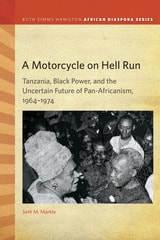
cover of A Motorcycle on Hell Run: Tanzania, Black Power, and the Uncertain Future of Pan-Africanism, 1964–1974

A Motorcycle on Hell Run

Tanzania, Black Power, and the Uncertain Future of Pan-Africanism, 1964–1974

Seth M. Markle

Michigan State University Press, 2017
Between 1964 and 1974 Tanzania came to be regarded as a model nation and a leading frontline state in the struggle for African liberation on the continent and beyond. During this time, a number of African American and Caribbean nationalists, leftists, and pan-Africanists traveled to and settled in Tanzania to join the country that many believed to be leading Africa’s liberation struggle. This historical study examines the political landscape of that crucial moment when African American, Caribbean, and Tanzanian histories overlapped, shedding light on the challenges of creating a new nation and the nature of African American and Caribbean participation in Tanzania’s nationalist project. In examining the pragmatic partnerships and exchanges between socialist Tanzania and activists and organizations associated with the Black Power movements in the United States and the Caribbean, this study argues that the Tanzanian one-party government actively engaged with the diaspora and sought to utilize its political, cultural, labor, and intellectual capital to further its national building agenda, but on its own terms, creating tension within the pan-Africanism movement. An excellent resource for academics and nonacademics alike, this work is the first of its kind, revealing the significance of the radical political and social movements of Tanzania and what it means for us today.
[more]
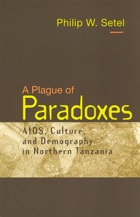
cover of A Plague of Paradoxes: AIDS, Culture, and Demography in Northern Tanzania

A Plague of Paradoxes

AIDS, Culture, and Demography in Northern Tanzania

Philip W. Setel

University of Chicago Press, 1999

Since recording its first AIDS cases in 1983, Tanzania has reported nearly 90,000 more to the World Health Organization—more than any other country in Africa. As AIDS spread, the devastating syndrome came to be known simply as ugonjwa huo: "that disease."

The AIDS epidemic has forced Africans to reflect upon the meaning of traditional ideas and practices related to sexuality and fertility, and upon modernity and biomedicine. In A Plague of Paradoxes, anthropologist Philip Setel observes Tanzania's Chagga people and their attempts to cope with and understand AIDS—the latest in a series of crises over which they feel they have little, if any, control.

Timely and well-researched, A Plague of Paradoxes is an extended case study of the most serious epidemic of the twentieth century and the cultural circumstances out of which it emerged. It is a unique book that brings together anthropology, demography, and epidemiology to explain how a particular community in Africa experiences AIDS.
[more]
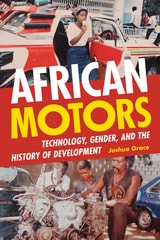
cover of African Motors: Technology, Gender, and the History of Development

African Motors

Technology, Gender, and the History of Development

Joshua Grace

Duke University Press, 2021
In African Motors, Joshua Grace examines how Tanzanian drivers, mechanics, and passengers reconstituted the automobile into a uniquely African form between the late 1800s and the early 2000s. Drawing on hundreds of oral histories, extensive archival research, and his ethnographic fieldwork as an apprentice in Dar es Salaam's network of garages, Grace counters the pervasive narratives that Africa is incompatible with technology and that the African use of cars is merely an appropriation of technology created elsewhere. Although automobiles were invented in Europe and introduced as part of colonial rule, Grace shows how Tanzanians transformed them, increasingly associating their own car use with maendeleo, the Kiswahili word for progress or development. Focusing on the formation of masculinities based in automotive cultures, Grace also outlines the process through which African men remade themselves and their communities by adapting technological objects and systems for local purposes. Ultimately, African Motors is an African-centered story of development featuring everyday examples of Africans forging both individual and collective cultures of social and technological wellbeing through movement, making, and repair.
[more]
cover of African Underclass: Urbanization, Crime & Colonial Order in Dar es Salaam 1919-61

African Underclass

Urbanization, Crime & Colonial Order in Dar es Salaam 1919-61

Andrew Burton

Ohio University Press, 2005

African Underclass examines the social, political, and administrative repercussions of rapid urbanization in colonial Dar es Salaam, and the evolution of official policy that viewed urbanization as inextricably linked with social disorder. This policy marginalized numbers of young Africans entering the town---and thus, paradoxically, the policy itself subverted the colonial order. "Well researched and sharply written---one of the best and most stimulating accounts of urbanization in Eastern Africa to have been produced in recent years."---John McCracken, emeritus professor of history, University of StirlingAndrew Burton is assistant director of the British Institute in Eastern Africa.
[more]
cover of Al Qaeda Declares War: The African Embassy Bombings and America’s Search for Justice

Al Qaeda Declares War

The African Embassy Bombings and America’s Search for Justice

Tod Hoffman

University Press of New England, 2014

Three years before the events of 9/11, Osama bin Laden sent al Qaeda suicide bombers on a coordinated attack to destroy the U.S. embassies in Nairobi, Kenya, and Dar es Salaam, Tanzania. That day, August 7, 1998, more than two hundred people were killed and thousands were wounded. Responding immediately, the FBI launched the largest international investigation in its history. Within months, suspects were arrested in six countries. The U.S. Attorney for the Southern District of New York indicted twenty-two individuals, including the elusive bin Laden. In February 2001 a landmark trial of four of the accused was held in Manhattan in the shadow of the World Trade Center. Al Qaeda Declares War: The African Embassy Bombings and America’s Search for Justice explores the step-by-step procedures the United States employed in analyzing these attacks, identifying the suspects, tracking down and apprehending them, building a case, and prosecuting them. It is this case that established the legal basis for hunting down bin Laden, and the trial makes for a gripping courtroom drama, in which the robust principles of American justice confront the fanaticism of true believers. Tod Hoffman argues forcefully that the process after the 1998 incident stands in marked contrast to the illegal detention, torture, and abrogation of rights that followed 9/11. Indeed, reverberations from the African embassy bombings continue in the ongoing hunt for perpetrators still at large, and in targeted killings by drones. Al Qaeda Declares War dramatically recounts the terror and bloodshed of that day in Africa and shows that America’s search for justice afterward offers important lessons for today.
[more]
cover of Another Magic Mountain: Kibong'oto Hospital and African Tuberculosis, 1920–2000

Another Magic Mountain

Kibong'oto Hospital and African Tuberculosis, 1920–2000

Christoph Gradmann

Ohio University Press, 2025

Kibong’oto Hospital, opened in 1926, is an East African tuberculosis treatment center located on the slopes of Mount Kilimanjaro. Its history is crucial to understanding tuberculosis in Tanzania and, more broadly, in Africa. With the hospital as a point of departure, Christoph Gradmann presents a history of this disease that engages with local and regional contexts rather than with international elite science and health policies.

The book addresses key questions about the African experience with tuberculosis:

  • What did it mean to do clinical science on tuberculosis in colonial and postcolonial contexts?
  • Along which trajectories did medical practice and research evolve in a place where international advances in medical science were sometimes heard of only faintly and where resources could be scarce?
  • How did a large hospital with several hundred beds dedicated to the treatment of just one condition figure in the development of national and regional health systems?
  • How did Kibong’oto Hospital, a pride of colonial health governance, transition after Tanzania gained independence?
  • How did treating and researching tuberculosis change throughout the twentieth century in an African hospital dedicated to that condition?
  • How did research at the hospital contribute to tuberculosis-control strategies on national and international levels?

The book is based on the hospital’s unique archive: its surviving library of thousands of case summaries. Since 1926, this library has documented an enormous number of patient lives, staff careers, diagnoses, treatments, clinical trials, and much more. For today’s readers, the library provides insight into a history of clinical medicine in Africa, for which very few comparable archives exist. Gradmann supplements this site-specific research with material from national and international archives, as well as interviews with former staff involved in that history. The book’s four chapters offer perspectives on colonial epidemiological research in the interwar years; on late colonial healthcare development plans and the arrival of modern drug therapies; on the role of a national tuberculosis hospital in a newly independent country; and on the history of tuberculosis control in an age of economic crisis, HIV, and emergent global health-treatment programs. Finally, Gradmann discusses what the history of a large hospital can add to today’s tuberculosis research, control policy, and historiography.

[more]