Results by title
303 books match the query 'Time' and 23 start with a

A Dance to the Music of Time
First MovementAnthony Powell
University of Chicago Press, 1995
A Dance to the Music of Time is a landmark work of fiction, praised by readers and critics and other novelists throughout the 75 years since the first volume was published. Equal parts funny and heartbreaking, clever and moving, Anthony Powell's universally acclaimed epic encompasses a four-volume panorama of twentieth century London.
Hailed by Time as "brilliant literary comedy as well as a brilliant sketch of the times," A Dance to the Music of Time opens just after World War I and carries through the 1950s, with all the changes of society, characters, and relationships that those shifting eras bring.
Four very different young men on the threshold of manhood dominate this opening volume of A Dance to the Music of Time. The narrator, Jenkins—a budding writer—shares a room with Templer, already a passionate womanizer, and Stringham, aristocratic and reckless. Widmerpool, as hopelessly awkward as he is intensely ambitious, lurks on the periphery of their world. Amid the fever of the 1920s and the first chill of the 1930s, these four gain their initiations into sex, society, business, and art. A masterpiece of modern fiction, Powell's epic creates a rich portrait of life in England between the wars.
"Reading Powell," says the New York Times, "is like living someone else's life, inextricably entangled with your own." Give this first volume a try, and you'll find characters and scenes and insights that will stay with you for the rest of your life.
Includes these novels:
A Question of Upbringing
A Buyer's Market
The Acceptance World
A Dance to the Music of Time
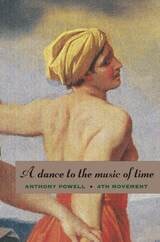
Fourth MovementAnthony Powell
University of Chicago Press, 1995
A Dance to the Music of Time is a landmark work of fiction, praised by readers and critics and other novelists throughout the 75 years since the first volume was published. Equal parts funny and heartbreaking, clever and moving, Anthony Powell's universally acclaimed epic encompasses a four-volume panorama of twentieth century London. Hailed by Time as "brilliant literary comedy as well as a brilliant sketch of the times," A Dance to the Music of Time opens just after World War I and carries through the 1950s, with all the changes to society, character, and relationships those shifting eras bring.
In this final volume of A Dance to the Music of Time, Nick Jenkins describes a world of ambition, intrigue, and dissolution. England has won the war, but its costs, physical and moral, were vast. Widmerpool's wife sets a snare for the young writer X. Trapnel, while her husband suffers private agony and public humiliation. Set against a background of politics, business, high society, and the counterculture in England and Europe, this magnificent work of art sounds an unforgettable requiem for an age.
"Reading Powell," says the New York Times, "is like living someone else's life, inextricably entangled with your own." Give this first volume a try, and you'll find characters and scenes and insights that will stay with you for the rest of your life.
Includes these novels:
Books Do Furnish a Room
Temporary Kings
Hearing Secret Harmonies
A Dance to the Music of Time
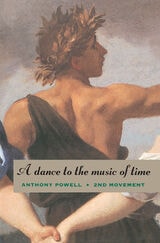
Second MovementAnthony Powell
University of Chicago Press, 1995
A Dance to the Music of Time is a landmark work of fiction, praised by readers and critics and other novelists throughout the 75 years since the first volume was published. Equal parts funny and heartbreaking, clever and moving, Anthony Powell's universally acclaimed epic encompasses a four-volume panorama of twentieth century London. Hailed by Time as "brilliant literary comedy as well as a brilliant sketch of the times," A Dance to the Music of Time opens just after World War I and continues through the 1950s.
In the background of this second volume of A Dance to the Music of Time, the rumble of distant events in Germany and Spain presages the storm of World War II. In England, even as the whirl of marriages and adulteries, fashions and frivolities, personal triumphs and failures gathers speed, men and women find themselves on the brink of fateful choices.
"Reading Powell," says the New York Times, "is like living someone else's life, inextricably entangled with your own." Give this first volume a try, and you'll find characters and scenes and insights that will stay with you for the rest of your life
Includes these novels:
At Lady Molly's
Casanova's Chinese Restaurant
The Kindly Ones
A Dance to the Music of Time
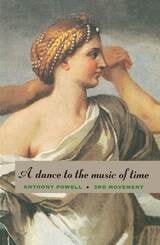
Third MovementAnthony Powell
University of Chicago Press, 1995
A Dance to the Music of Time is a landmark work of fiction, praised by readers and critics and other novelists throughout the 75 years since the first volume was published. Equal parts funny and heartbreaking, clever and moving, Anthony Powell's universally acclaimed epic encompasses a four-volume panorama of twentieth century London. Hailed by Time as "brilliant literary comedy as well as a brilliant sketch of the times," A Dance to the Music of Time opens just after World War I and continues through the 1950s and all the changes to life, society, and relationships those shifting eras bring.
In this third volume of A Dance to the Music of Time, we again meet Widmerpool, doggedly rising in rank; Jenkins, shifted from one dismal army post to another; Stringham, heroically emerging from alcoholism; Templer, still on his eternal sexual quest. Here, too, we are introduced to Pamela Flitton, one of the most beautiful and dangerous women in modern fiction. Wickedly barbed in its wit, uncanny in its seismographic recording of human emotions and social currents, this saga stands as an unsurpassed rendering of England's finest yet most costly hour.
"Reading Powell," says the New York Times, "is like living someone else's life, inextricably entangled with your own." Give Dance a try, and you'll find characters and scenes and insights that will stay with you for the rest of your life.
Includes these novels:
The Valley of Bones
The Soldier's Art
The Military Philosophers
A Florentine Chansonnier from the Time of Lorenzo the Magnificent
Edited by Howard M. Brown
University of Chicago Press, 1983
A Matter of Time
Alex Capus
Haus Publishing, 2009
A Monastery in Time
The Making of Mongolian BuddhismCaroline Humphrey and Hurelbaatar Ujeed
University of Chicago Press, 2013

A Natural History of Time
Pascal Richet
University of Chicago Press, 2007
The quest to pinpoint the age of the Earth is nearly as old as humanity itself. For most of history, people trusted mythology or religion to provide the answer, even though nature abounds with clues to the past of the Earth and the stars. In A Natural History of Time, geophysicist Pascal Richet tells the fascinating story of how scientists and philosophers examined those clues and from them built a chronological scale that has made it possible to reconstruct the history of nature itself.
Richet begins his story with mythological traditions, which were heavily influenced by the seasons and almost uniformly viewed time cyclically. The linear history promulgated by Judaism, with its story of creation, was an exception, and it was that tradition that drove early Christian attempts to date the Earth. For instance, in 169 CE, the bishop of Antioch, for instance declared that the world had been in existence for “5,698 years and the odd months and days.”
Until the mid-eighteenth century, such natural timescales derived from biblical chronologies prevailed, but, Richet demonstrates, with the Scientific Revolution geological and astronomical evidence for much longer timescales began to accumulate. Fossils and the developing science of geology provided compelling evidence for periods of millions and millions of years—a scale that even scientists had difficulty grasping. By the end of the twentieth century, new tools such as radiometric dating had demonstrated that the solar system is four and a half billion years old, and the universe itself about twice that, though controversial questions remain.
The quest for time is a story of ingenuity and determination, and like a geologist, Pascal Richet carefully peels back the strata of that history, giving us a chance to marvel at each layer and truly appreciate how far our knowledge—and our planet—have come.
A Professor at the End of Time
The Work and Future of the ProfessoriateBest, John
Rutgers University Press, 2017
A Scrap of Time and Other Stories
Ida Fink
Northwestern University Press, 1995
Winner of the PEN/Book-of-the-Month Club Translation Prize
Winner of the Anne Frank Prize
These shattering stories describe the lives of ordinary people as they are compelled to do the unimaginable: a couple who must decide what to do with their five-year-old daughter as the Gestapo come to march them out of town; a wife whose safety depends on her acquiescence in her husband's love affair; a girl who must pay a grim price for an Aryan identity card.
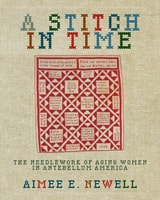
A Stitch in Time
The Needlework of Aging Women in Antebellum AmericaAimee E. Newell
Ohio University Press, 2014
Drawing from 167 examples of decorative needlework—primarily samplers and quilts from 114 collections across the United States—made by individual women aged forty years and over between 1820 and 1860, this exquisitely illustrated book explores how women experienced social and cultural change in antebellum America.
The book is filled with individual examples, stories, and over eighty fine color photographs that illuminate the role that samplers and needlework played in the culture of the time. For example, in October 1852, Amy Fiske (1785–1859) of Sturbridge, Massachusetts, stitched a sampler. But she was not a schoolgirl making a sampler to learn her letters. Instead, as she explained, “The above is what I have taken from my sampler that I wrought when I was nine years old. It was w[rough]t on fine cloth [and] it tattered to pieces. My age at this time is 66 years.”
Situated at the intersection of women’s history, material culture study, and the history of aging, this book brings together objects, diaries, letters, portraits, and prescriptive literature to consider how middle-class American women experienced the aging process. Chapters explore the physical and mental effects of “old age” on antebellum women and their needlework, technological developments related to needlework during the antebellum period and the tensions that arose from the increased mechanization of textile production, and how gift needlework functioned among friends and family members. Far from being solely decorative ornaments or functional household textiles, these samplers and quilts served their own ends. They offered aging women a means of coping, of sharing and of expressing themselves. These “threads of time” provide a valuable and revealing source for the lives of mature antebellum women.
Publication of this book was made possible in part through generous funding from the Coby Foundation, Ltd and from the Quilters Guild of Dallas, Helena Hibbs Endowment Fund.

A Tenth of a Second
A HistoryJimena Canales
University of Chicago Press, 2009
In the late fifteenth century, clocks acquired minute hands. A century later, second hands appeared. But it wasn’t until the 1850s that instruments could recognize a tenth of a second, and, once they did, the impact on modern science and society was profound. Revealing the history behind this infinitesimal interval, A Tenth of a Second sheds new light on modernity and illuminates the work of important thinkers of the last two centuries.
Tracing debates about the nature of time, causality, and free will, as well as the introduction of modern technologies—telegraphy, photography, cinematography—Jimena Canales locates the reverberations of this “perceptual moment” throughout culture. Once scientists associated the tenth of a second with the speed of thought, they developed reaction time experiments with lasting implications for experimental psychology, physiology, and optics. Astronomers and physicists struggled to control the profound consequences of results that were a tenth of a second off. And references to the interval were part of a general inquiry into time, consciousness, and sensory experience that involved rethinking the contributions of Descartes and Kant.
Considering its impact on much longer time periods and featuring appearances by Henri Bergson, Walter Benjamin, and Albert Einstein, among others, A Tenth of a Second is ultimately an important contribution to history and a novel perspective on modernity.
A Thousand Screenplays
The French Imagination in a Time of CrisisSabine Chalvon-Demersay
University of Chicago Press, 1999
The time of crisis presented by the amateur writers was not one of war, famine, or disease—it was the millennial dilemma of representation. In a world plagued by alienation, individualization, and a lack of mobility, how can members of a society combat their declining senses of self?
Although the contestants wrote about life in France, their concerns and struggles have a distinctly universal ring. A lucid, witty writer, Chalvon-Demersay offers a clear, if still developing, photograph of the contemporary imagination.
A Time of One's Own
Histories of Feminism in Contemporary ArtCatherine Grant
Duke University Press, 2022

A Time of Youth
San Francisco, 1966–1967William Gedney
Duke University Press, 2021

A Time to Gather Stones
Vladimir Soloukhin, Translated from the Russian and with an Introduction by Valerie Z. Nollan
Northwestern University Press, 1993

A Time to Speak
The Story of a Young American Lawyer's Struggle for His City—and HimselfCharles Morgan Jr., With a New Foreword by Senator Doug Jones
University of Alabama Press, 2022
Brings back into print a classic account of courage and calamity in the long march toward racial justice in the South, and the nation
On September 15, 1963, a bomb exploded at the Sixteenth Street Baptist Church in Birmingham, Alabama, killing four young Black girls. The very next day, a prominent white lawyer named Charles Morgan Jr. was scheduled to speak at a luncheon held by the Young Men’s Business Club of Birmingham. A well-regarded figure in the city’s legal and business establishment, Morgan had been mentioned frequently as a candidate for political office. To the shock of his longtime friends and associates, Morgan deviated from his planned remarks, instead using his platform to place the blame for the murder of the four young girls squarely on the shoulders of the city’s white middle-class establishment, those seated before him.
As much as his stand was admired nationally, in Birmingham the results were destructive for him personally. Threats against his life and the lives of his family poured in daily by phone and mail, his political career was finished, and he was faced with financial ruin. Within weeks, he moved his family out of the state, and thenceforward committed himself to legal action in the name of racial justice. In 1964, he established the regional office of the ACLU in Atlanta. In the 1964 Supreme Court case Reynolds v. Sims, Morgan successfully argued that districts in state legislatures needed to be of nearly equal size, establishing the principle of “one man, one vote” to effectively end the use of gerrymandering.
A Time to Speak was originally published in 1964, a mere year after Morgan and his family fled Birmingham. The memoir recounts not only his speech, but his entire upbringing and the political, cultural, and social milieus in which he was raised and which gave rise to the cowardice, institutional silence, fear, and hate that those conditions nursed. This new edition features a foreword from US Senator Doug Jones.
Abiding Grace
Time, Modernity, DeathMark C. Taylor
University of Chicago Press, 2018
Abiding Grace navigates the competing Hegelian and Kierkegaardian trajectories born out of the Reformation and finds Taylor arguing from spaces in between, showing how both narratives have shaped recent philosophy and culture. For Hegel, Luther’s internalization of faith anticipated the modern principle of autonomy, which reached its fullest expression in speculative philosophy. The closure of the Hegelian system still endures in the twenty-first century in consumer society, financial capitalism, and virtual culture. For Kierkegaard, by contrast, Luther’s God remains radically transcendent, while finite human beings and their world remain fully dependent. From this insight, Heidegger and Derrida developed an alternative view of time in which a radically open future breaks into the present to transform the past, demonstrating that, far from autonomous, life is a gift from an Other that can never be known.
Offering an alternative genealogy of deconstruction that traces its pedigree back to readings of Paul by way of Luther, Abiding Grace presents a thoroughgoing critique of modernity and postmodernity’s will to power and mastery. In this new philosophical and theological vision, history is not over and the future remains endlessly open.
An Anchor in the Sea of Time
EssaysStephen Harrigan
University of Texas Press, 2025
A new collection of essays grappling with identity and memory, from a master of the form.
The author of the New York Times bestselling novel The Gates of the Alamo, the sweeping Texas history Big Wonderful Thing, and decades of incisive journalism, Stephen Harrigan is an adept writer skilled in crafting memorable characters. From this singular voice now comes a collection of essays tackling the most personal, and yet most expansive, themes of all: identity, memory, and time itself.
An Anchor in the Sea of Time unfolds individual stories but also a larger narrative about the development and distortions of history. In one essay, a painting on his grandparents’ wall is seared in Harrigan’s young mind. In another, a group trip to Vietnam stirs up a sobering confrontation with class privilege among Americans who fought there and others, like Harrigan, who did their best not to. The award-winning essay “Off Course” reflects on the father Harrigan never met. And Harrigan’s reporting about the Karankawas, an Indigenous group from the Texas coast once thought to be extinct, takes readers deep into the recesses of collective forgetting and offers glimpses of the possibility of recovery. A vivid encounter with lost selves, vanished worlds, and futures yet unrealized, An Anchor in the Sea of Time is perhaps the most personal book yet from this beloved writer.

And a Time to Die
How American Hospitals Shape the End of LifeSharon R. Kaufman
University of Chicago Press, 2006
“An act of courage and a public service.”—San Francisco Chronicle
“This beautifully synthesized and disquieting account of how hospital patients die melds disciplined description with acute analysis, incorporating the voices of doctors, nurses, social workers, and patients in a provocative analysis of the modern American quest for a ‘good death.’”—Publishers Weekly
“Kaufman exposes the bureaucratic and ethical quandaries that hover over the modern deathbed.”—Psychology Today
“Kaufman’s analysis illuminates the complexity of the care of critically ill and dying patients [and] the ambiguity of slogans such as ‘death with dignity,’ ‘quality of life,’ and ‘stopping life support.’ . . . Thought-provoking reading for everyone contemplating the fate of us all.”—New England Journal of Medicine
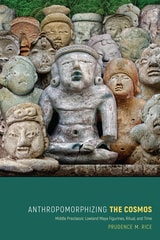
Anthropomorphizing the Cosmos
Middle Preclassic Lowland Maya Figurines, Ritual, and TimePrudence M. Rice
University Press of Colorado, 2019
Presenting original data, Anthropomorphizing the Cosmos offers insight into the synchronous appearance of fired-clay figurines with the emergence of societal complexity in and beyond Mesoamerica. Rice situates these Preclassic Maya figurines in the broader context of Mesoamerican human figural representation, identifies possible connections between anthropomorphic figurine heads and the origins of calendrics and other writing in Mesoamerica, and examines the role of anthropomorphic figurines and zoomorphic musical instruments in Preclassic Maya ritual. The volume shows how community rituals involving the figurines helped to mitigate the uncertainties of societal transitions, including the beginnings of settled agricultural life, the emergence of social differentiation and inequalities, and the centralization of political power and decision-making in the Petén lowlands.
Literature on Maya ritual, cosmology, and specialized artifacts has traditionally focused on the Classic period, with little research centering on the very beginnings of Maya sociopolitical organization and ideological beliefs in the Middle Preclassic. Anthropomorphizing the Cosmos is a welcome contribution to the understanding of the earliest Maya and will be significant to Mayanists and Mesoamericanists as well as nonspecialists with interest in these early figurines
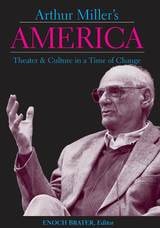
Arthur Miller's America
Theater and Culture in a Time of ChangeEnoch Brater, Editor
University of Michigan Press, 2005
Arthur Miller's America collects new writing by leading international critics and scholars that considers the dramatic world of icon, activist, and playwright Arthur Miller's theater as it reflects the changing moral equations of his time. Written on the occasion of Miller's 85th year, the original essays and interviews in Arthur Miller's America treat the breadth of Miller's work, including his early political writings for the campus newspaper at the University of Michigan, his famous work with John Huston, Clark Gable and Marilyn Monroe on The Misfits, and his signature plays like Death of a Salesman and All My Sons.
At No Time
Scenes and DialoguesIlse Aichinger
Seagull Books, 2023
A member of the Gruppe 47 writers’ group which sought to renew German-language literature after World War II, Ilse Aichinger (1921–2016) achieved great acclaim as a writer of fiction, poetry, prose, and radio drama. The vignettes in At No Time each begin in recognizable situations, often set in Vienna or other Austrian cities, but immediately swerve into bizarre encounters, supernatural or fantastical situations. Precisely drawn yet disturbingly skewed, they are both naturalistic and disjointed, like the finest surrealist paintings. Created to be experienced on the page or on the radio rather than the stage, they echo the magic realism of her short stories. Even though they frequently take a dark turn, they remain full of humor, agility, and poetic freedom.