124 books match the query 'Twenty - First Century' and 13 start with a
cover of A Civil Economy: Transforming the Marketplace in the Twenty-First Century

A Civil Economy

Transforming the Marketplace in the Twenty-First Century

Severyn T. Bruyn

University of Michigan Press, 2000
A civil society is one in which a democratic government and a market economy operate together. The idea of the civil economy--encompassing a democratic government and a market economy--presumes that people can solve social problems within the market itself. This book explores the relationship between the two, examining the civil underpinnings of capitalism and investigating the way a civil economy evolves in history and is developed for the future by careful planning.
Severyn T. Bruyn describes how people in three sectors--government, business, and the Third Sector (nonprofits and civil groups)--can develop an accountable, self-regulating, profitable, humane, and competitive system of markets that could be described as a civil economy. He examines how government officials can organize markets to reduce government costs; how local leaders deal with global corporations that would unfairly exploit their community resources; and how employees can become coparticipants in the development of human values in markets.
A Civil Economy is oriented to interdiciplinary studies of the economy, assisting scholars in diverse fields, such as business management, sociology, political science, and economics, in developing a common language to examine civic problems in the marketplace.
As an undergraduate text, it evokes a mode of thought about the development of a self-accountable system of markets. Students learn to understand how the market economy becomes socially accountable and self-reliant, while remaining productive, competitive, and profitable.
Sveryn T. Bruyn is Professor of Sociology, Boston College.
[more]
cover of A Poetics of Plot for the Twenty-First Century: Theorizing Unruly Narratives

A Poetics of Plot for the Twenty-First Century

Theorizing Unruly Narratives

Brian Richardson

The Ohio State University Press, 2019

Returns to fundamental questions of narrative to expose how authors play with and clarify the boundaries of narrative theory, thus transforming and expanding the study of story and plot.

Story, in the largest sense of the term, is arguably the single most important aspect of narrative. But with the proliferation of antimimetic writing, traditional narrative theory has been inadequate for conceptualizing and theorizing a vast body of innovative narratives. In A Poetics of Plot for the Twenty-First Century: Theorizing Unruly Narratives, Brian Richardson proposes a new model for evaluating literature—returning to the basis of narrative theory to illuminate how authors play with and help clarify the boundaries of narrative theory. While he focuses on late modernist, postmodern, and contemporary narratives, the study also includes many earlier works, spanning from Aristophanes and Shakespeare through James Joyce and Virginia Woolf to Salman Rushdie and Angela Carter.

By exploring fundamental questions about narrative, Richardson provides a detailed, nuanced, and comprehensive theory that includes neglected categories of storytelling and significantly enhances our treatment of traditional areas of analysis. Ultimately, this book promises to transform and expand the study of story and plot.

[more]
cover of Abandoned Families: Social Isolation in the Twenty-First Century

Abandoned Families

Social Isolation in the Twenty-First Century

Kristin S. Seefeldt

Russell Sage Foundation, 2016

Choosing whom to marry involves more than emotion, as racial politics, cultural mores, and local demographics all shape romantic choices. In Marriage Vows and Racial Choices, sociologist Jessica Vasquez-Tokos explores the decisions of Latinos who marry either within or outside of their racial and ethnic groups. Drawing from in-depth interviews with nearly 50 couples, she examines their marital choices and how these unions influence their identities as Americans.
 
Vasquez-Tokos finds that their experiences in childhood, adolescence, and young adulthood shape their perceptions of race, which in turn influence their romantic expectations. Most Latinos marry other Latinos, but those who intermarry tend to marry whites. She finds that some Latina women who had domineering fathers assumed that most Latino men shared this trait and gravitated toward white men who differed from their fathers. Other Latina respondents who married white men fused ideas of race and class and perceived whites as higher status and considered themselves to be “marrying up.” Latinos who married non-Latino minorities—African Americans, Asian Americans, and Native Americans—often sought out non-white partners because they shared similar experiences of racial marginalization. Latinos who married Latinos of a different national origin expressed a desire for shared cultural commonalities with their partners, but—like those who married whites—often associated their own national-origin groups with oppressive gender roles.
 
Vasquez-Tokos also investigates how racial and cultural identities are maintained or altered for the respondents’ children. Within Latino-white marriages, biculturalism—in contrast with Latinos adopting a white “American” identity—is likely to emerge. For instance, white women who married Latino men often embraced aspects of Latino culture and passed it along to their children. Yet, for these children, upholding Latino cultural ties depended on their proximity to other Latinos, particularly extended family members. Both location and family relationships shape how parents and children from interracial families understand themselves culturally.
 
As interracial marriages become more common, Marriage Vows and Racial Choices shows how race, gender, and class influence our marital choices and personal lives.
 
 
[more]
cover of African Feminisms: Cartographies for the Twenty-First Century

African Feminisms

Cartographies for the Twenty-First Century

Alicia C. Decker and Gabeba Baderoon, special issue editors

Duke University Press, 0

This special issue, edited by the co-directors of the African Feminist Initiative (AFI) at Pennsylvania State University, is a partnership between Meridians and the AFI. The issue builds on the AFI's work to promote the study of African feminist thought and activism within the U.S. academy and to create equitable partnerships between scholars and practitioners of African feminism. Through the multiplicity of feminisms theorized in this issue, contributors challenge patriarchal ideologies and structures on myriad fronts, both on the African continent and beyond. The issue includes poetry, memoirs, essays, interviews, reflections, and testimonials on African feminisms, addressing such topics as hip hop, ethnography, secessionist movements, “saving” Nigerian girls, and women's writing.

Contributors. Gabeba Baderoon, Abena P. A. Busia, Ginetta E. B. Candelario, Msia Kibona Clark, Alicia C. Decker, Chipo Dendere, Abosede George, Tsitsi Jaji, Selina Makana, Patricia McFadden, Anne Moraa, Jacqueline-Bethel Tchouta Mougoué, Neo Sinoxolo Musangi, Wambui Mwangi, Aziza Ouguir, Charmaine Pereira, Fatima Sadiqi, Toni Stuart, Makhosazana Xaba, Ntokozo Yingwana
[more]
cover of After Parsons: A Theory of Social Action for the Twenty-First Century

After Parsons

A Theory of Social Action for the Twenty-First Century

Renee C. Fox

Russell Sage Foundation, 2005
Esteemed twentieth-century sociologist Talcott Parsons sought to develop a comprehensive and coherent scheme for sociology that could be applied to every society and historical epoch, and address every aspect of human social organization and culture. His theory of social action has exerted enormous influence across a wide range of social science disciplines. After Parsons, edited by Renée Fox, Victor Lidz, and Harold Bershady, provides a critical reexamination of Parsons' theory in light of historical changes in the world and advances in sociological thought since his death. After Parsons is a fresh examination of Parsons' theoretical undertaking, its significance for social scientific thought, and its implications for present-day empirical research. The book is divided into four parts: Social Institutions and Social Processes; Societal Community and Modernization; Sociology and Culture; and the Human Condition. The chapters deal with Parsons' notions of societal community, societal evolution, and modernization and modernity. After Parsons addresses major themes of enduring relevance, including social differentiation and cultural diversity, social solidarity, universalism and particularism, and trust and affect in social life. The contributors explore these topics in a wide range of social institutions—family and kinship, economy, polity, the law, medicine, art, and religion—and within the context of contemporary developments such as globalization, the power of the United States as an "empireless empire," the emergence of forms of fundamentalism, the upsurge of racial, tribal, and ethnic conflicts, and the increasing occurence of deterministic and positivistic thought. Rather than simply celebrating Parsons and his accomplishments, the contributors to After Parsons rethink and reformulate his ideas to place them on more solid foundations, extend their scope, and strengthen their empirical insights. After Parsons constitutes the work of a distinguished roster of American and European sociologists who find Parsons' theory of action a valuable resource for addressing contemporary issues in sociological theory. All of the essays in this volume take elements of Parsons' theory and critique, adapt, refine, or extend them to gain fresh purchase on problems that confront sociologists today.
[more]
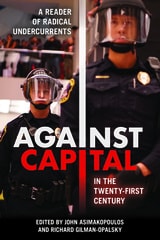
cover of Against Capital in the Twenty-First Century: A Reader of Radical Undercurrents

Against Capital in the Twenty-First Century

A Reader of Radical Undercurrents

John Asimakopoulos

Temple University Press, 2018

The problems of capitalism have been studied from Karl Marx to Thomas Piketty. The latter has recently confirmed that the system of capital is deeply bound up in ever-growing inequality without challenging the continuance of that system. Against Capital in the Twenty-First Century presents a diversity of analyses and visions opposed to the idea that capital should have yet another century to govern human and non-human resources in the interest of profit and accumulation. The editors and contributors to this timely volume present alternatives to the whole liberal litany of administered economies, tax policy recommendations, and half-measures. They undermine and reject the logic of capital, and the foregone conclusion that the twenty-first century should be given over to capital just as the previous two centuries were.

Providing a deep critique of capitalism, based on assessment from a wide range of cultural, social, political, and ecological thinking, Against Capital in the Twenty-First Century insists that transformative, revolutionary, and abolitionist responses to capital are even more necessary in the twenty-first century than they ever were.
[more]
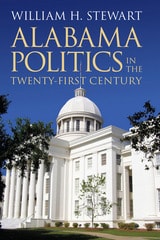
cover of Alabama Politics in the Twenty-First Century

Alabama Politics in the Twenty-First Century

William H. Stewart

University of Alabama Press, 2016

An essential guide to understanding politics, power, and governance in modern Alabama.

Why does Alabama rank so low on many of the indicators of quality of life? Why did some of the most dramatic developments in the civil rights revolution of the 1960s take place in Alabama? Why is it that a few interest groups seem to have the most political power in Alabama? William H. Stewart’s Alabama Politics in the Twenty-First Century explores these questions and more, illuminating many of the often misunderstood details of contemporary Alabama politics in this cohesive and comprehensive publication.

The Alabama state government, especially as a specimen of Deep South politics, is a topic of frequent discussion by its general public—second only to college football. However, there remains a surprising lack of literature focusing on the workings of the state’s bureaucracy in an extensive and systematic way. Bearing in mind the Yellowhammer State’s long and rich political history, Stewart concentrates on Alabama’s statecraft from the first decade of the twenty-first century through the November 2010 elections and considers what the widespread Republican victories mean for their constituents. He also studies several different themes prominent during the 2010 elections, including the growing number and influence of special interest groups, the respective polarization of whites and blacks into the Republican and Democratic parties, and the increasingly unwieldy state constitution.

This fascinating and revealing text provides a wealth of information about an extremely complex state government. Featuring detailed descriptions of important concepts and events presented in a thorough and intelligible manner, Alabama Politics in the Twenty-First Century is perfect for scholars, students, everyday Alabamians, or anyone who wants the inside scoop on the subtle inner workings of the Cotton State’s politics.
[more]
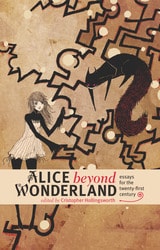
cover of Alice beyond Wonderland: Essays for the Twenty-first Century

Alice beyond Wonderland

Essays for the Twenty-first Century

Cristopher Hollingsworth

University of Iowa Press, 2008

Alice beyond Wonderland explores the ubiquitous power of Lewis Carroll’s imagined world. Including work by some of the most prominent contemporary scholars in the field of Lewis Carroll studies, all introduced by Karoline Leach’s edgy foreword, Alice beyond Wonderland considers the literary, imaginative, and cultural influences of Carroll’s 19th-century story on the high-tech, postindustrial cultural space of the twenty-first century.

The scholars in this volume attempt to move beyond the sexually charged permutations of the "Carroll myth," the image of an introverted man fumbling into literary immortality through his love for a prepubescent Alice. Contributions include an essay comparing Dantean and Carrollian underworlds, one investigating child characters as double agents in untamed lands, one placing Wonderland within the geometrical and algebraic “fourth dimension,” one investigating the visual and verbal interplay of hand imagery, and one exploring the influence of Japanese translations of Alice on the Gothic-Lolita subculture of neo-Victorian enthusiasts. This is a bold, capacious, and challenging work.
[more]
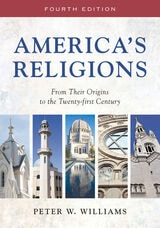
cover of America's Religions: From Their Origins to the Twenty-first Century

America's Religions

From Their Origins to the Twenty-first Century

Peter W. Williams

University of Illinois Press, 2015
A classroom perennial and comprehensive guide, America's Religions lays out the background, beliefs, practices, and leaders of the nation's religious movements and denominations. The fourth edition, thoroughly revised and updated by Peter W. Williams, draws on the latest scholarship. In addition to reconsidering the history of America's mainline faiths, it delves into contemporary issues like religion's impact on politics and commerce; the increasingly high profile of Buddhism, Hinduism, and Islam; Mormonism's entry into the mainstream; and battles over gay marriage and ordination.
[more]
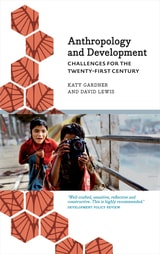
cover of Anthropology and Development: Challenges for the Twenty-First Century

Anthropology and Development

Challenges for the Twenty-First Century

Katy Gardner and David Lewis

Pluto Press, 2015
Western aid is in decline. New forms of aid, from within the developing countries themselves and elsewhere, are in the ascent, and a new set of global economic and political processes are shaping development in the twenty-first century. Katy Gardner and David Lewis have completely rewritten and updated their earlier, influential work, bringing it up to the present day. They engage with nearly two decades of continuity and change in the development industry, arguing in particular that while international development has expanded since the 1990s, it has become more rigidly technocratic. Anthropology & Development will serve as a reformulation of the field and as an excellent textbook for both graduate and undergraduates alike.
[more]
cover of Appalachian Englishes in the Twenty-First Century

Appalachian Englishes in the Twenty-First Century

Kirk Hazen

West Virginia University Press, 2020

Appalachian Englishes in the Twenty-First Century provides a complete exploration of English in Appalachia for a broad audience of scholars and educators. Starting from the premise that just as there is no single Appalachia, there is no single Appalachian dialect, this essay collection brings together wide-ranging perspectives on language variation in the region. Contributors from the fields of linguistics, education, and folklore debunk myths about the dialect’s ancient origins, examine subregional and ethnic differences, and consider the relationships between language and identity—individual and collective—in a variety of settings, including schools. They are attentive to the full range of linguistic expression, from everyday spoken grammar to subversive Dale Earnhardt memes.

A portal to the language scholarship of the last thirty years, Appalachian Englishes in the Twenty-First Century translates state-of-the-art research for a nonspecialist audience, while setting the agenda for further study of language in one of America’s most recognized regions.
[more]
cover of Archaeological Structuration: A Critical Engagement for the Twenty-First Century

Archaeological Structuration

A Critical Engagement for the Twenty-First Century

Michael T. Searcy

University of Arizona Press, 2025

Archaeological Structuration is a critical analysis of the theory of structuration and its utility in the study of societal development over deep time. Structuration theory was originally developed by Anthony Giddens in sociology and adopted piecemeal into archaeology. This book takes a closer look at its contributions to new materialism and develops novel ways to operationalize the theory in archaeological research in the twenty-first century.

To illustrate the usefulness of structuration theory, archaeologist Michael T. Searcy deploys it to uncover new understandings of ancient societies, particularly focusing on the Casas Grandes civilization in precolonial northern Mexico. Spanning more than seven hundred years, this society exemplifies the rise of social complexity in the Western Hemisphere. Searcy reexamines previous hypotheses about major structural shifts during the twelfth and thirteenth centuries CE, providing fresh insights and updated perspectives.

This book not only revisits the foundational influence of structuration theory but also introduces new methodologies to study the longue durée, the long-term historical trajectories of ancient societies. Searcy deftly bridges the gap between theoretical frameworks and practical archaeological applications, providing a thorough analysis of how structuration can address real-world problems through the lens of ancient societal transformations. 
[more]
cover of Are You Entertained?: Black Popular Culture in the Twenty-First Century

Are You Entertained?

Black Popular Culture in the Twenty-First Century

Simone C. Drake and Dwan Henderson Simmons, editors

Duke University Press, 2020

The advent of the internet and the availability of social media and digital downloads have expanded the creation, distribution, and consumption of Black cultural production as never before. At the same time, a new generation of Black public intellectuals who speak to the relationship between race, politics, and popular culture has come into national prominence. The contributors to Are You Entertained? address these trends to consider what culture and blackness mean in the twenty-first century's digital consumer economy. In this collection of essays, interviews, visual art, and an artist statement the contributors examine a range of topics and issues, from music, white consumerism, cartoons, and the rise of Black Twitter to the NBA's dress code, dance, and Moonlight. Analyzing the myriad ways in which people perform, avow, politicize, own, and love blackness, this volume charts the shifting debates in Black popular culture scholarship over the past quarter century while offering new avenues for future scholarship.

Contributors. Takiyah Nur Amin, Patricia Hill Collins, Kelly Jo Fulkerson-Dikuua, Simone C. Drake, Dwan K. Henderson, Imani Kai Johnson, Ralina L. Joseph, David J. Leonard, Emily J. Lordi, Nina Angela Mercer, Mark Anthony Neal, H. Ike Okafor-Newsum, Kinohi Nishikawa, Eric Darnell Pritchard, Richard Schur, Tracy Sharpley-Whiting, Vincent Stephens, Lisa B. Thompson, Sheneese Thompson
[more]