Results by title
195 books match the query 'Utah' and 13 start with a
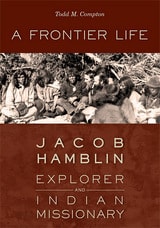
A Frontier Life
Jacob Hamblin, Explorer and Indian MissionaryTodd M. Compton
University of Utah Press, 2013
Winner of the Evans Biography Award, the John Whitmer Historical Society Best Biography Award, and the Francis Armstrong Madsen Best Book Award
Frontiersman, colonizer, missionary to the Indians, and explorer of the American West, Jacob Hamblin has long been one of the most enigmatic figures in Mormon history. In this defining biography, Todd Compton examines and disentangles many of the myths and controversies surrounding Hamblin. His Grand Canyon adventures and explorations as a guide alongside John Wesley Powell are well documented, as are his roles as a missionary, cultural liaison, and negotiator to the Indian tribes of southern Utah and Arizona. Hamblin struggled in this latter role, sometimes unable to bridge the gulf between Mormonism and Indian culture. He disavowed violent conflict and ceaselessly sought peaceful resolutions where others resorted to punitive action. He strove above all for mutual understanding in the absence of conversion.
A Frontier Life provides a rich narrative that fleshes out a picture of a sometimes vilified figure, particularly in regard to his connection to the infamous Mountain Meadows Massacre, where Compton provides nuanced discussion clarifying Hamblin’s post-massacre role—he was not present at the massacre, but reported on it to both Brigham Young and military investigators. Compton’s engagement with Mormon historiography and previous Hamblin portrayals will make this work of particular interest to both scholars and students. The casual reader will take pleasure in learning of a true pioneer who lived life at the geographical, cultural, and spiritual boundaries of his era. This dramatic, entertaining biography is a truly significant contribution to Mormon history.
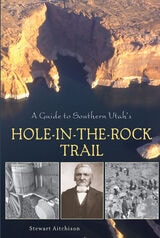
A Guide to Southern Utah's Hole-in-the-Rock Trail
Stewart Aitchison
University of Utah Press, 2005
Though the trail that these devoted pioneers broke across raw frontier was used for several years afterward, no highway was built over most of the route because it was deemed too rugged for modern vehicles. In addition to the historical value of the story of these pioneers, this guide includes road logs, maps, and hiking trails along the historic trail. It also points out fascinating natural history along the way, making A Guide to Southern Utah’s Hole-in-the-Rock Trail a significant reference for a variety of readers.
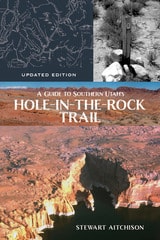
A Guide to Southern Utah's Hole-in-the-Rock Trail
Updated EditionStewart Aitchison
University of Utah Press, 2026
Updated Edition
In 1879, more than 230 settlers in southwestern Utah heeded the call from leaders of the Church of Jesus Christ of Latter-day Saints to pull up stakes and move to the distant San Juan country of southeastern Utah. Their year-long journey became one of the most extraordinary wagon trips ever undertaken in North America, and their trail became one of peril, difficulty, and spectacular vistas. Beginning in Cedar City, Utah, this trail crosses today’s Dixie National Forest, skirts Bryce Canyon National Park, bisects Grand Staircase-Escalante National Monument, crosses Glen Canyon National Recreation Area, and cuts through Bears Ears National Monument on its way to Bluff, Utah.
Though the trail that these devoted pioneers broke across the raw frontier was used for several years afterward, no highway was built over most of the route because it was deemed too rugged for modern vehicles. This updated edition features pioneer family histories and updated natural history, road logs, maps, and hiking trails along the historic route, making A Guide to Southern Utah’s Hole-in-the-Rock Trail a significant reference for a variety of readers.
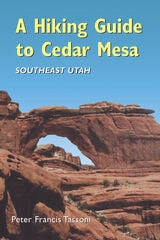
A Hiking Guide To Cedar Mesa
Peter Francis Tassoni
University of Utah Press, 2001
A Hiking Guide to Cedar Mesa describes sixty-three routes, ranging from quarter-mile walks to fifteen-mile day hikes, loops, and multi-day backpack trips. There is essential information on permits, weather, gear, road, trailhead access, geology, human history in the region, and leave-no-trace camping.
Care is given to name only those well-known archaeological sites that are visible or immediately accessible from roads. Throughout, the author emphasizes proper visitation protocol for fragile archaeological sites. He states, "I have been touched by this landscape and would prefer to keep its teachings and secrets to myself, but I cannot. The experience of the desert should be available to everyone with the motivation to encounter it."
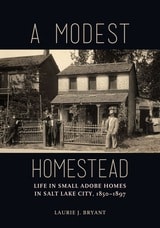
A Modest Homestead
Life in Small Adobe Homes in Salt Lake City, 1850-1897Laurie J. Bryant
University of Utah Press, 2016
Copublished with the Utah State Historical Society. Affiliated with the Utah Division of State History, Utah Department of Heritage & Arts.
Stories of the ordinary people who helped build Salt Lake City emerge from a study of their often humble adobe houses. Rather than focusing on men and women in positions of power and influence, the emphasis here is on the lives of people who built their sturdy, simple homes from mud.
A Modest Homestead provides architectural descriptions of ninety-four extant adobe houses. These homes are for the most part unremarkable, except for their perhaps unexpected construction material. They are as basic as the people who built them—small tradesmen and farmers, laborers and domestics. Author Laurie Bryant discusses the neighborhoods in Salt Lake City where adobe houses have survived, often much renovated and disguised, and she showcases the houses not just as they appear today but as they were originally built. Almost all the houses now have additions and improvements, and without some dissection, they are not always recognizable. They now appear both comfortable and pleasant, which was not always the case in the nineteenth century. What emerges through closer examination and Bryant’s research is a fuller picture of the roughhewn life of many early Utahns.
Finalist for the Utah State Historical Society Best Book Award.

Alma Richards
OlympianLarry R. Gerlach
University of Utah Press, 2016
The book traces Richards from his boyhood in rural Parowan, Utah, to Cornell and through his service as an officer in World War I and his teaching career in Los Angeles. His story is that of a remarkable athlete, but also that of a man struggling for personal fulfillment while endeavoring to retain his Mormon heritage amid his changing religious circumstances and participation. More than a century has passed since Alma Richards won an Olympic gold medal, yet this story about man and sport—the drive to excel, victory as validation of hard work, the quest for public recognition and, ultimately, the achievement of self-identity and self-satisfaction—still resonates today.
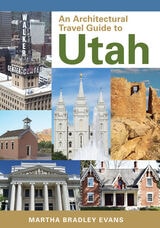
An Architectural Travel Guide to Utah
Martha Bradley Evans
University of Utah Press, 2020

An Unarmed Woman
John Bennion
Signature Books, 2019
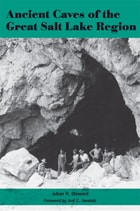
Ancient Caves of the Great Salt Lake Region
Julian H Steward
University of Utah Press, 2009
First published in 1937 by the Bureau of American Ethnology, this edition of Ancient Caves of the Great Salt Lake Region features a new foreword by Joel Janetski.
Archaeological Observations North of the Rio Colorado
Neil M Judd
University of Utah Press, 2010
Archeological Observations North of the Rio Colorado was originally published in 1926 as part of the Smithsonian Institution’s Bureau of American Ethnology (Bulletin 82). It contains the report of six seasons of fieldwork undertaken by Neil M. Judd for the Bureau between 1915 and 1920 in western Utah and northwestern Arizona. The original investigation set out to examine alleged prehistoric sites near Beaver, Utah—specifically sites related to the “Pueblo ruins” found elsewhere in the Southwest. This in turn led to a much larger project, as there were more sites than expected recognized as having a cultural affinity with other prehistoric Puebloan sites. During these six years, Judd’s team covered a region from the Grand Canyon to the northern shore of the Great Salt Lake, east to the Green River and west into the deserts of Nevada.
This book is part of the University of Utah Press’s ongoing effort to reprint selected out-of-print volumes that apply directly to Utah archaeology, in an attempt to allow current students easier access and use of historic information. Owing to continued development, increased artifact collection, and on-going degradation, Utah archaeology is far different today than it was a century ago. The scientific works of these early archaeologists provide a glimpse of the variability that existed within sites and geographic areas in the early 1900s and gives a picture of Utah archaeology in an earlier era.
Archeological Excavations in Beef Basin, Utah
UUAP 20Jack R. Rudy
University of Utah Press, 1955
Archeological Survey of the La Sal Mountain Area, Utah
UUAP 14Alice Hunt
University of Utah Press, 1953
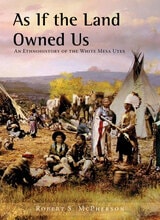
As If the Land Owned Us
An Ethnohistory of the White Mesa UtesRobert S. McPherson
University of Utah Press, 2011
The Ute people of White Mesa have a long, colorful, but neglected history in the Four Corners region. Although they ranged into the Great Basin, Southwest, and parts of the Rocky Mountains as hunters, gatherers, and warriors, southeastern Utah was home. There they adapted culturally and physically to the austere environment while participating in many of the well-known events of their times.
In As If the Land Owned Us, Robert McPherson has gathered the wisdom of White Mesa elders as they imparted knowledge about their land—place names, uses, teachings, and historic events tied to specific sites—providing a fresh insight into the lives of these little-known people. While there have been few published studies about the Southern Utes, this ethnohistory is the first to mix cultural and historic events. The book illustrates the life and times of the White Mesa Utes as they faced multiple changes to their lifeways. It is time for their history to be told in their terms.