Results by title
57 books match the query 'Victorian Era (1837-1901)' and 4 start with a
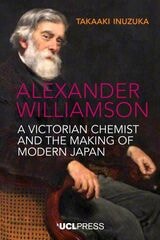
Alexander Williamson
A Victorian Chemist and the Making of Modern JapanTakaaki Inuzuka
University College London, 2021
Alexander Williamson was a leading scientist and professor of chemistry at University College London in the late nineteenth century. He taught and cared for visiting Japanese students, assisting them with their goal of modernizing Japan. This short, accessible biography explores his contribution to nineteenth-century science, as well as his lasting impact on Japanese society. In 1863 five students from the Chōshū clan, with a desperate desire to learn from the West, made their way to England. They were put in the care of Williamson and his wife. Their mission was to learn about cutting-edge Western technology, science, economics, and politics. When they returned home, they rapidly became leading figures in Japanese life. The remarkable story of the part Williamson and University College London played in the modernization of Japan is little known today. This biography will promote a deeper understanding of Williamson’s scientific innovations and his legacy for Anglo-Japanese relations.
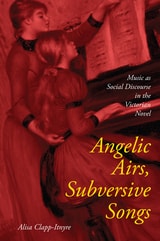
Angelic Airs, Subversive Songs
Music as Social Discourse in the Victorian NovelAlisa Clapp-Itnyre
Ohio University Press, 2027
Music was at once one of the most idealized and one of the most contested art forms of the Victorian period. Yet this vitally important nineteenth-century cultural form has been studied by literary critics mainly as a system of thematic motifs. Angelic Airs, Subversive Songs positions music as a charged site of cultural struggle, promoted concurrently as a transcendent corrective to social ills and as a subversive cause of those ills. Alisa Clapp-Itnyre examines Victorian constructions of music to advance patriotism, Christianity, culture, and domestic harmony, and suggests that often these goals were undermined by political tensions in song texts or “immoral sensuality” in the “spectacle” of live music-making. Clapp-Itnyre turns her focus to the novels of Elizabeth Gaskell, George Eliot, and Thomas Hardy, who present complex engagements with those musical genres most privileged by Victorian society: folk songs, religious hymns, and concert music. Angelic Airs, Subversive Songs recovers the pervasive ambiguities of the Victorian musical period, ambiguities typically overlooked by both literary scholars and musicologists. To the literary critic and cultural historian, Clapp-Itnyre demonstrates the necessity of further exploring the complete aesthetic climate behind some of the Victorian period’s most powerful literary works. And to the feminist scholar and the musicologist, Clapp-Itnyre reveals the complexities of music as both an oppressive cultural force and an expressive, creative outlet for women.
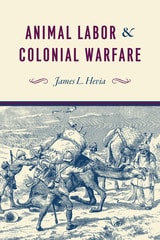
Animal Labor and Colonial Warfare
James L. Hevia
University of Chicago Press, 2018
In Animal Labor and Colonial Warfare, James Hevia examines the use of camels, mules, and donkeys in colonial campaigns of conquest and pacification, starting with the Second Afghan War—during which an astonishing 50,000 to 60,000 camels perished—and ending in the early twentieth century. Hevia explains how during the nineteenth and twentieth centuries a new set of human-animal relations were created as European powers and the United States expanded their colonial possessions and attempted to put both local economies and ecologies in the service of resource extraction. The results were devastating to animals and human communities alike, disrupting centuries-old ecological and economic relationships. And those effects were lasting: Hevia shows how a number of the key issues faced by the postcolonial nation-state of Pakistan—such as shortages of clean water for agriculture, humans, and animals, and limited resources for dealing with infectious diseases—can be directly traced to decisions made in the colonial past. An innovative study of an underexplored historical moment, Animal Labor and Colonial Warfare opens up the animal studies to non-Western contexts and provides an empirically rich contribution to the emerging field of multispecies historical ecology.

Atlantic Isles
Travel and Identity in the British and Irish West, 1880–1940Gareth Roddy
University of London Press, 2025
The west has long gripped the imagination. In Atlantic Isles, Gareth Roddy examines the cultural and political prominence of the "westward gaze," which flourished in late-nineteenth century Britain and Ireland. From Cornish cliffs and Welsh mountains to Hebridean islands and the Connemara highlands, the west was an imagined geography that transcended the national territories of these isles. In the west, geologists uncovered ancient layers of rock, ethnologists described older racial "types," philologists looked for the survival of Celtic languages, and antiquarians and archaeologists marveled at megalithic monuments at the Atlantic coastline.
This book draws on wide-ranging contemporary sources, including works of geology, philology, ethnology, history, geography, archaeology, folklore, literature, sociology, and an extensive collection of travel writing that popularized western landscapes among readers and tourists who explored the increasingly accessible west by road, rail, and steamer. Atlantic Isles reveals that western landscapes were especially powerful spaces of modern enchantment, where stories of sunken lands and mythical islands produced a sense of mystery and wonder in a supposedly disenchanted world. The significance of western landscapes for national identities is well known, but this book demonstrates that the west was also central to debates about Britishness and to the bold attempt to construct a narrative of multinational union that claimed deep historical roots at a time when the subject of Home Rule periodically dominated political debate.