Results by title
22279 books match the query 'Social Science' and 1819 start with a

Abandoned Families
Social Isolation in the Twenty-First CenturyKristin S. Seefeldt
Russell Sage Foundation, 2016
Vasquez-Tokos finds that their experiences in childhood, adolescence, and young adulthood shape their perceptions of race, which in turn influence their romantic expectations. Most Latinos marry other Latinos, but those who intermarry tend to marry whites. She finds that some Latina women who had domineering fathers assumed that most Latino men shared this trait and gravitated toward white men who differed from their fathers. Other Latina respondents who married white men fused ideas of race and class and perceived whites as higher status and considered themselves to be “marrying up.” Latinos who married non-Latino minorities—African Americans, Asian Americans, and Native Americans—often sought out non-white partners because they shared similar experiences of racial marginalization. Latinos who married Latinos of a different national origin expressed a desire for shared cultural commonalities with their partners, but—like those who married whites—often associated their own national-origin groups with oppressive gender roles.
Vasquez-Tokos also investigates how racial and cultural identities are maintained or altered for the respondents’ children. Within Latino-white marriages, biculturalism—in contrast with Latinos adopting a white “American” identity—is likely to emerge. For instance, white women who married Latino men often embraced aspects of Latino culture and passed it along to their children. Yet, for these children, upholding Latino cultural ties depended on their proximity to other Latinos, particularly extended family members. Both location and family relationships shape how parents and children from interracial families understand themselves culturally.
As interracial marriages become more common, Marriage Vows and Racial Choices shows how race, gender, and class influence our marital choices and personal lives.
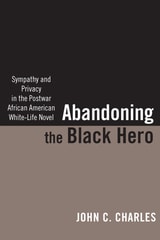
Abandoning the Black Hero
Sympathy and Privacy in the Postwar African American White-Life NovelCharles, John C
Rutgers University Press, 2012
Abandoning the Black Hero is the first book to examine the postwar African American white-life novel—novels with white protagonists written by African Americans. These fascinating works have been understudied despite having been written by such defining figures in the tradition as Richard Wright, Zora Neale Hurston, James Baldwin, Ann Petry, and Chester Himes, as well as lesser known but formerly best-selling authors Willard Motley and Frank Yerby.
John C. Charles argues that these fictions have been overlooked because they deviate from two critical suppositions: that black literature is always about black life and that when it represents whiteness, it must attack white supremacy. The authors are, however, quite sympathetic in the treatment of their white protagonists, which Charles contends should be read not as a failure of racial pride but instead as a strategy for claiming creative freedom, expansive moral authority, and critical agency.
In an era when “Negro writers” were expected to protest, their sympathetic treatment of white suffering grants these authors a degree of racial privacy previously unavailable to them. White writers, after all, have the privilege of racial privacy because they are never pressured to write only about white life. Charles reveals that the freedom to abandon the “Negro problem” encouraged these authors to explore a range of new genres and themes, generating a strikingly diverse body of novels that significantly revise our understanding of mid-twentieth-century black writing.

Abbie Hoffman
American RebelJezer, Marty
Rutgers University Press, 1993
"... Abbie, more than any other radical, showed potheads how to demonstrate and radicals how to dance." -- Chicago Tribune
"... deeply sympathetic and scrupulously detached-a triumph of judicious empathy." -- MARTIN DUBERMAN, Distinguished Professor of History, Lehman/The Graduate School, C.U.N.Y.
"... details Hoffman's humor, manic energy, depressive spells, political skills, and above all, his Incurable and still contagious optimism." -- Entertainment Weekly
"Here's the Abbie I knew and loved! Marty Jezer has captured him in all his complexity, dedication, humor, and heart." -- ANITA HOFFMAN
Abductive Analysis
Theorizing Qualitative ResearchIddo Tavory and Stefan Timmermans
University of Chicago Press, 2014
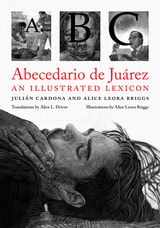
Abecedario de Juárez
An Illustrated LexiconJulián Cardona and Alice Leora Briggs, with translations by Alice L. Driver; illustrations by Alice Leora Briggs
University of Texas Press, 2022
Uses key words and striking images to explore violence and everyday life in Juárez, Mexico.
Juárez, Mexico, is known for violence. The femicides of the 1990s, and the cartel mayhem that followed, made it one of the world's most dangerous cities. Along with the violence came a new lexicon that traveled from person to person, across rivers and borders—wherever it was needed to explain the horrors taking place. From personal interviews, media accounts, and conversations on the street, Julián Cardona and Alice Leora Briggs have collected the words and slang that make up the brutal language of Juárez, creating a glossary that serves as a linguistic portrait of the city and its violence. Organized alphabetically, the entries consist of Spanish and Spanglish, accompanied by short English definitions. Some also feature a longer narrative drawn from interviews—stories that put the terms in context and provide a personal counterpoint to media reports of the same events. Letters, and many of the entries, are supplemented with Briggs’s evocative illustrations, which are reminiscent of Hans Holbein’s famous Alphabet of Death. Together, the words, drawings, and descriptions in ABCedario de Juárez both document and interpret the everyday violence of this vital border city.
Aberrations In Black
Toward a Queer of Color CritiqueRoderick A. Ferguson
University of Minnesota Press, 2003
A hard-hitting look at the regulation of sexual difference and its role in circumscribing African American culture
The sociology of race relations in America typically describes an intersection of poverty, race, and economic discrimination. But what is missing from the picture—sexual difference—can be as instructive as what is present. In this ambitious work, Roderick A. Ferguson reveals how the discourses of sexuality are used to articulate theories of racial difference in the field of sociology. He shows how canonical sociology—Gunnar Myrdal, Ernest Burgess, Robert Park, Daniel Patrick Moynihan, and William Julius Wilson—has measured African Americans’s unsuitability for a liberal capitalist order in terms of their adherence to the norms of a heterosexual and patriarchal nuclear family model. In short, to the extent that African Americans’s culture and behavior deviated from those norms, they would not achieve economic and racial equality.
Aberrations in Black tells the story of canonical sociology’s regulation of sexual difference as part of its general regulation of African American culture. Ferguson places this story within other stories—the narrative of capital’s emergence and development, the histories of Marxism and revolutionary nationalism, and the novels that depict the gendered and sexual idiosyncrasies of African American culture—works by Richard Wright, Ralph Ellison, James Baldwin, Audre Lorde, and Toni Morrison. In turn, this book tries to present another story—one in which people who presumably manifest the dysfunctions of capitalism are reconsidered as indictments of the norms of state, capital, and social science. Ferguson includes the first-ever discussion of a new archival discovery—a never-published chapter of Invisible Man that deals with a gay character in a way that complicates and illuminates Ellison’s project.
Unique in the way it situates critiques of race, gender, and sexuality within analyses of cultural, economic, and epistemological formations, Ferguson’s work introduces a new mode of discourse—which Ferguson calls queer of color analysis—that helps to lay bare the mutual distortions of racial, economic, and sexual portrayals within sociology.
Aberrations of Mourning
Laurence A. Rickels
University of Minnesota Press, 2011
Rickels studies mourning and melancholia within and around psychoanalysis, analyzing the writings of such thinkers as Freud, Nietzsche, Lessing, Heinse, Artaud, Keller, Stifter, Kafka, and Kraus. Rickels maintains that we must shift the way we read literature, philosophy, and psychoanalysis to go beyond traditional Oedipal structures.
Aberrations of Mourning argues that the idea of the crypt has had a surprisingly potent influence on psychoanalysis, and Rickels shows how society’s disturbed relationship with death and dying, our inability to let go of loved ones, has resulted in technology to form more and more crypts for the dead by preserving them—both physically and psychologically—in new ways.
Abiding by Sri Lanka
On Peace, Place, and PostcolonialityQadri Ismail
University of Minnesota Press, 2005
Abiding by Sri Lanka examines how the disciplines of anthropology, history, and literature treat the Sri Lankan ethnic conflict. Anthropology, Ismail contends, approaches Sri Lanka as an object from an “outside” and western point of view. History, addressing the conflict from the “inside,” abides by the place and so promotes change that is nationalist and exclusive. Neither of these fields imagines an inclusive community. Literature, Ismail argues, can.
With close readings of texts that “abide” by Sri Lanka, texts that have a commitment to it, Ismail demonstrates that the problems in Sri Lanka raise fundamental concerns for us all regarding the relationship between democracies and minorities. Recognizing the structural as well as political tendencies of representative democracies to suppress minorities, Ismail rethinks democracy by redefining the concept of the minority perspective, not as a subject-position of numerical insignificance, but as a conceptual space that opens up the possibility for distinction without domination and, ultimately, peace.
Qadri Ismail is associate professor of English at the University of Minnesota. He has also been a journalist in Sri Lanka.

Abject Animals
Discomfort in Human–Animal CompanionshipJulien Dugnoille
Michigan State University Press, 2027
Abject Animals: Discomfort in Human–Animal Companionship explores the emotional contradictions and ethical tensions at the heart of human–animal relationships through a cross-cultural, multispecies ethnography of cats and dogs in the UK, France, and South Korea. Framing cats and dogs as “abject animals,” Julien Dugnoille examines how the treatment of animals can generate discomfort—emotional, moral, and bodily—through their commodification in cafés, markets, shelters, and homes. Drawing on Kristeva’s theory of abjection alongside the ideas of Bataille, Blanchot, and Weil, the book interrogates the commodified intimacy of contemporary human–animal companionship, revealing how labor, cuteness, and care mask underlying hierarchies and exploitation. Through richly detailed fieldwork and autoethnographic reflection, it critiques normative ideas of “healthy” companionship, arguing instead for forms of interspecies attunement that embrace discomfort and resist instrumentalization. Abject Animals is both a theoretical intervention and a call for more ethical, ego-disrupting relationships with the nonhuman.

Abject Performances
Aesthetic Strategies in Latino Cultural ProductionLeticia Alvarado
Duke University Press, 2018

Abject Relations
Everyday Worlds of AnorexiaWarin, Megan
Rutgers University Press, 2009
Unraveling anorexia's complex relationships and contradictions, Warin provides a new theoretical perspective rooted in a socio-cultural context of bodies and gender. Abject Relations departs from conventional psychotherapy approaches and offers a different "logic," one that involves the shifting forces of power, disgust, and desire and provides new ways of thinking that may have implications for future treatment regimes.
Abjection Incorporated
Mediating the Politics of Pleasure and ViolenceMargaret Hennefeld and Nicholas Sammond, editors
Duke University Press, 2019
Contributors. Meredith Bak, Eugenie Brinkema, James Leo Cahill, Michelle Cho, Maggie Hennefeld, Rob King, Thomas Lamarre, Sylvère Lotringer, Rijuta Mehta, Mark Mulroney, Nicholas Sammond, Yiman Wang, Rebecca Wanzo
Ableism in Academia
Theorising Experiences of Disabilities and Chronic Illnesses in Higher EducationEdited by Nicole Brown and Jennifer Leigh
University College London, 2020
The volume brings together a range of perspectives, including feminism, post-structuralism, Derridean and Foucauldian theory, crip theory, and disability theory, and draws on a number of related disciplines. Contributors use various schools of theory to raise awareness and increase understanding of the marginalized. These theories are placed in the context of neoliberal academia, and used to interrogate aspects of identity and how disability is performed, and to argue that ableism is not just a disability issue. This timely collection will be of interest to researchers in disability studies, higher education studies, and sociology, as well as to those working across the social sciences.
Abolition Archives, Feminist Futures
Kathi Weeks
Duke University Press, 2026
Abolition Of White Democracy
Joel Olson
University of Minnesota Press, 2004
Offers a new way of understanding the tortured relationship between race and democracy in the United States
Racial discrimination embodies inequality, exclusion, and injustice and as such has no place in a democratic society. And yet racial matters pervade nearly every aspect of American life, influencing where we live, what schools we attend, the friends we make, the votes we cast, the opportunities we enjoy, and even the television shows we watch.
Joel Olson contends that, given the history of slavery and segregation in the United States, American citizenship is a form of racial privilege in which whites are equal to each other but superior to everyone else. In Olson’s analysis we see how the tension in this equation produces a passive form of democracy that discourages extensive participation in politics because it treats citizenship as an identity to possess rather than as a source of empowerment. Olson traces this tension and its disenfranchising effects from the colonial era to our own, demonstrating how, after the civil rights movement, whiteness has become less a form of standing and more a norm that cements white advantages in the ordinary operations of modern society. To break this pattern, Olson suggests an “abolitionist-democratic” political theory that makes the fight against racial discrimination a prerequisite for expanding democratic participation.
Abolition Time
Grammars of Law, Poetics of JusticeJess A. Goldberg
University of Minnesota Press, 2024
How Black Atlantic literature can challenge conventions and redefine literary scholarship
Abolition Time is an invitation to reenvision abolitionist justice through literary studies. Placing critical race theory, queer theory, critical prison studies, and antiprison activism in conversation with an archive of Black Atlantic literatures of slavery, Jess A. Goldberg reveals how literary studies can help undo carceral epistemologies embedded in language and poetics.
Goldberg examines poetry, drama, and novels from the nineteenth century through the twenty-first—such as William Wells Brown’s The Escape, Angelina Weld Grimké’s Rachel, Toni Morrison’s A Mercy, and Claudia Rankine’s Citizen—to consider literature and literary scholarship’s roles in shaping societal paradigms. Focusing on how Black Atlantic literature disrupts the grammar of law and order, they show how these texts propose nonlinear theories of time that imagine a queer relationality characterized by care rather than inheritance, property, or biology.
Abolition Time offers a framework for thinking critically about what is meant by the term justice in the broadest and deepest sense, using close reading to inform the question of abolishing prisons or the police and to think seriously about the most fundamental questions at the heart of the abolitionist movement.
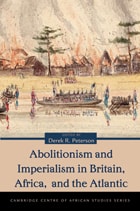
Abolitionism and Imperialism in Britain, Africa, and the Atlantic
Derek R. Peterson
Ohio University Press, 2010
The abolition of the slave trade is normally understood to be the singular achievement of eighteenth-century British liberalism. Abolitionism and Imperialism in Britain, Africa, and the Atlantic expands both the temporal and the geographic framework in which the history of abolitionism is conceived. Abolitionism was a theater in which a variety of actors—slaves, African rulers, Caribbean planters, working-class radicals, British evangelicals, African political entrepreneurs—played a part. The Atlantic was an echo chamber, in which abolitionist symbols, ideas, and evidence were generated from a variety of vantage points. These essays highlight the range of political and moral projects in which the advocates of abolitionism were engaged, and in so doing it joins together geographies that are normally studied in isolation.
Where empires are often understood to involve the government of one people over another, Abolitionism and Imperialism shows that British values were formed, debated, and remade in the space of empire. Africans were not simply objects of British liberals’ benevolence. They played an active role in shaping, and extending, the values that Britain now regards as part of its national character. This book is therefore a contribution to the larger scholarship about the nature of modern empires.
Contributors: Christopher Leslie Brown, Seymour Drescher, Jonathon Glassman, Boyd Hilton, Robin Law, Phillip D. Morgan, Derek R. Peterson, John K. Thornton
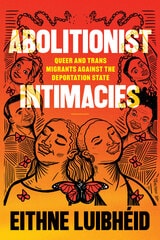
Abolitionist Intimacies
Queer and Trans Migrants against the Deportation StateEithne Luibheid
Duke University Press, 2025
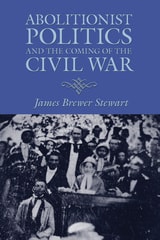
Abolitionist Politics and the Coming of the Civil War
James Brewer Stewart
University of Massachusetts Press, 2008
Before the Civil War, slaveholders made themselves into the most powerful, most deeply rooted, and best organized private interest group within the United States. Not only did slavery represent the national economy's second largest capital investment, exceeded only by investment in real estate, but guarantees of its perpetuation were studded throughout the U.S. Constitution. The vast majority of white Americans, in North and South, accepted the institution, and pro-slavery presidents and congressmen consistently promoted its interests.
In Abolitionist Politics and the Coming of the Civil War, James Brewer Stewart explains how a small group of radical activists, the abolitionist movement, played a pivotal role in turning American politics against this formidable system. He examines what influence the movement had in creating the political crises that led to civil war and evaluates the extent to which a small number of zealous reformers made a truly significant political difference when demanding that their nation face up to its most excruciating moral problem. In making these assessments, Stewart addresses a series of more specific questions: What were the abolitionists actually up against when seeking the overthrow of slavery and white supremacy? What motivated and sustained them during their long and difficult struggles? What larger historical contexts (religious, social, economic, cultural, and political) influenced their choices and determined their behavior? What roles did extraordinary leaders play in shaping the movement, and what were the contributions of abolitionism's unheralded “foot soldiers”? What factors ultimately determined, for better or worse, the abolitionists' impact on American politics and the realization of their equalitarian goals?
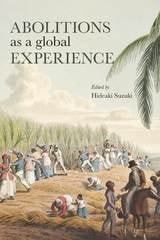
Abolitions as a Global Experience
Edited by Hideaki Suzuki
National University of Singapore Press, 2015
This book complicates the conventional story that global abilition was essentially a British moralizing effort, “among the three or four perfectly virtuous pages comprised in the history of nations”. Using comparison and connection, this book tells a story of dynamic encounters between local and global contexts, of which the local efforts of British abolition campaigns were a part.
Looking at abolitions as a globally shared experience provides an important perspective, not only to the field of slavery and abolition studies, but also the field of global or world history.
Aboriginal Adolescence
Burbank, Victoria Katherine
Rutgers University Press, 1999
Aboriginal Relationships between Culture and Plant Life in the Upper Great Lakes Region
Richard Asa Yarnell
University of Michigan Press, 1964

Aboriginal Resource Use in Canada
Historical and Legal AspectsKerry Abel
University of Manitoba Press, 1991
Abortion Care as Moral Work
Ethical Considerations of Maternal and Fetal BodiesJohanna Schoen
Rutgers University Press, 2022
Abortion Pills, Test Tube Babies, and Sex Toys
Emerging Sexual and Reproductive Technologies in the Middle East and North AfricaL. L. Wynn
Vanderbilt University Press, 2017

Abortion Pills
US History and PoliticsCarrie Baker
Amherst College Press, 2024
This is the first book to offer a comprehensive history of abortion pills in the United States. Public intellectual and lawyer Carrie N. Baker shows how courageous activists waged a decades-long campaign to establish, expand, and maintain access to abortion pills. Weaving their voices throughout her book, Baker recounts both dramatic and everyday acts of their resistance. These activists battled anti-abortion forces, overly cautious policymakers, medical gatekeepers, and fearful allies in their four-decade-long fight to free abortion pills. In post-Roe America, abortion pills are currently playing a critically important role in providing safe abortion access to tens of thousands of people living in states that now ban and restrict abortion. Understanding this struggle will help to ensure continued access into the future.

Abortion at Work
Ideology and Practice in a Feminist ClinicSimonds, Wendy
Rutgers University Press, 1996
These are the questions that drive Wendy Simonds' Abortion at Work. Simonds documents the ways in which workers at a feminist clinic construct compelling feminist visions, and also watch their ideals fall short in practice. Simonds interprets these women's narratives to get at how abortion works on feminism, and to show what feminism can gain by rethinking abortion utilizing these activists' terms. In thoroughly engaging prose, Simonds frames her analysis with a moving account of her own personal understanding of the issues.

Abortion in the American Imagination
Before Life and Choice, 1880-1940Weingarten, Karen
Rutgers University Press, 2014
Abortion in the American Imagination returns to the moment when American writers first dared to broach the controversial subject of abortion. What was once a topic avoided by polite society, only discussed in vague euphemisms behind closed doors, suddenly became open to vigorous public debate as it was represented everywhere from sensationalistic melodramas to treatises on social reform. Literary scholar and cultural historian Karen Weingarten shows how these discussions were remarkably fluid and far-ranging, touching upon issues of eugenics, economics, race, and gender roles.
Weingarten traces the discourses on abortion across a wide array of media, putting fiction by canonical writers like William Faulkner, Edith Wharton, and Langston Hughes into conversation with the era’s films, newspaper articles, and activist rhetoric. By doing so, she exposes not only the ways that public perceptions of abortion changed over the course of the twentieth century, but also the ways in which these abortion debates shaped our very sense of what it means to be an American.
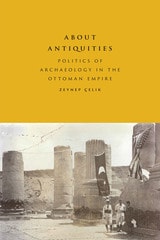
About Antiquities
Politics of Archaeology in the Ottoman EmpireBy Zeynep Çelik
University of Texas Press, 2016
Antiquities have been pawns in empire-building and global rivalries; power struggles; assertions of national and cultural identities; and cross-cultural exchanges, cooperation, abuses, and misunderstandings—all with the underlying element of financial gain. Indeed, “who owns antiquity?” is a contentious question in many of today’s international conflicts.
About Antiquities offers an interdisciplinary study of the relationship between archaeology and empire-building around the turn of the twentieth century. Starting at Istanbul and focusing on antiquities from the Ottoman territories, Zeynep Çelik examines the popular discourse surrounding claims to the past in London, Paris, Berlin, and New York. She compares and contrasts the experiences of two museums—Istanbul’s Imperial Museum and the Metropolitan Museum of Art—that aspired to emulate European collections and gain the prestige and power of owning the material fragments of ancient history. Going beyond institutions, Çelik also unravels the complicated interactions among individuals—Westerners, Ottoman decision makers and officials, and local laborers—and their competing stakes in antiquities from such legendary sites as Ephesus, Pergamon, and Babylon.
Recovering perspectives that have been lost in histories of archaeology, particularly those of the excavation laborers whose voices have never been heard, About Antiquities provides important historical context for current controversies surrounding nation-building and the ownership of the past.
About the Beginning of the Hermeneutics of the Self
Lectures at Dartmouth College, 1980Michel Foucault
University of Chicago Press, 2015
Foucault analyzes the practices of self-examination and confession in Greco-Roman antiquity and in the first centuries of Christianity in order to highlight a radical transformation from the ancient Delphic principle of “know thyself” to the monastic precept of “confess all of your thoughts to your spiritual guide.” His aim in doing so is to retrace the genealogy of the modern subject, which is inextricably tied to the emergence of the “hermeneutics of the self”—the necessity to explore one’s own thoughts and feelings and to confess them to a spiritual director—in early Christianity. According to Foucault, since some features of this Christian hermeneutics of the subject still determine our contemporary “gnoseologic” self, then the genealogy of the modern subject is both an ethical and a political enterprise, aiming to show that the “self” is nothing but the historical correlate of a series of technologies built into our history. Thus, from Foucault’s perspective, our main problem today is not to discover what “the self” is, but to try to analyze and change these technologies in order to change its form.
Above the Fray
The Red Cross and the Making of the Humanitarian NGO SectorShai M. Dromi
University of Chicago Press, 2020
Drawing on archival research, Dromi traces the genesis of the Red Cross to a Calvinist movement working in mid-nineteenth-century Geneva. He shows how global humanitarian policies emerged from the Red Cross founding members’ faith that an international volunteer program not beholden to the state was the only ethical way to provide relief to victims of armed conflict. By illustrating how Calvinism shaped the humanitarian field, Dromi argues for the key role belief systems play in establishing social fields and institutions. Ultimately, Dromi shows the immeasurable social good that NGOs have achieved, but also points to their limitations and suggests that alternative models of humanitarian relief need to be considered.
Above the Well
An Antiracist Literacy Argument from a Boy of ColorAsao B. Inoue
University Press of Colorado, 2021
Abraham Lincoln in the Post-Heroic Era
History and Memory in Late Twentieth-Century AmericaBarry Schwartz
University of Chicago Press, 2008
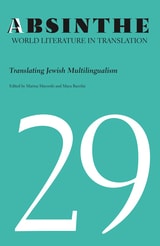
Absinthe
World Literature in Translation: Volume 29: Translating Jewish MultilingualismMarina Mayorski
Michigan Publishing Services, 2023
Absinthe 29: Translating Jewish Multilingualism showcases the variety of languages and genres in which modern Jewish writers have expressed themselves. Spanning short stories, essays, poetry, and selections from novels, the selection of literary works featured in this issue of Absinthe cuts across distinctions between European and non-European literary traditions and addresses diverse themes, including social class, gender, immigration, religious traditions, love and marriage, and the act of writing itself.
Rather than consider disparate Jewish languages and histories in isolation, we bring them into conversation within an open-ended framework that explores Jewish multilingualism in the modern world. The multilingual narrative of Jewish modernity told through them, in seven languages, spans from the 1880s to the 2020s.
Its wide geographical distribution ranges from Tel Aviv to São Paulo through Buenos Aires, Istanbul, Thessaloniki, Livorno, Warsaw, Prague, and Chicago. Each text and context exhibits different aspects of the Jewish encounter with the conditions of modern society, exemplifying the ways in which Jewish writing engages and negotiates different cultures and traditions.
The new volume of Absinthe foregrounds the multilingual legacy of Jewish migration and diasporic life that has become ubiquitous in modern Jewish writing, and it is evident in the enriching and disruptive presence of multiple languages and literary traditions in each of these texts. The title of this volume, Translating Jewish Multilingualism, refers both to the English translations of these texts and to the processes of translation, mediation, and hybridization encapsulated in the works themselves.
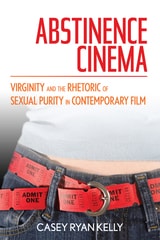
Abstinence Cinema
Virginity and the Rhetoric of Sexual Purity in Contemporary FilmCasey Ryan Kelly
Rutgers University Press, 2016
From the perspective of cultural conservatives, Hollywood movies are cesspools of vice, exposing impressionable viewers to pernicious sexually-permissive messages. Offering a groundbreaking study of Hollywood films produced since 2000, Abstinence Cinema comes to a very different conclusion, finding echoes of the evangelical movement’s abstinence-only rhetoric in everything from Easy A to Taken.

Abstract Barrios
The Crises of Latinx Visibility in CitiesJohana Londoño
Duke University Press, 2020
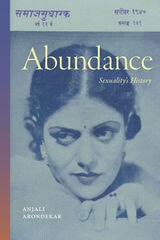
Abundance
Sexuality’s HistoryAnjali Arondekar
Duke University Press, 2023
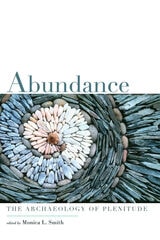
Abundance
The Archaeology of PlenitudeMonica L. Smith
University Press of Colorado, 2020
Using case studies from around the globe—including Mesoamerica, North and South America, Africa, China, and the Greco-Roman world—and across multiple time periods, the authors in this volume make the case that abundance provides an essential explanatory perspective on ancient peoples’ choices and activities. Economists frequently focus on scarcity as a driving principle in the development of social and economic hierarchies, yet focusing on plenitude enables the understanding of a range of cohesive behaviors that were equally important for the development of social complexity.
Our earliest human ancestors were highly mobile hunter-gatherers who sought out places that provided ample food, water, and raw materials. Over time, humans accumulated and displayed an increasing quantity and variety of goods. In households, shrines, tombs, caches, and dumps, archaeologists have discovered large masses of materials that were deliberately gathered, curated, distributed, and discarded by ancient peoples. The volume’s authors draw upon new economic theories to consider the social, ideological, and political implications of human engagement with abundant quantities of resources and physical objects and consider how individual and household engagements with material culture were conditioned by the quest for abundance.
Abundance shows that the human propensity for mass consumption is not just the result of modern production capacities but fulfills a longstanding focus on plenitude as both the assurance of well-being and a buffer against uncertainty. This book will be of great interest to scholars and students in economics, anthropology, and cultural studies.
Contributors: Traci Ardren, Amy Bogaard, Elizabeth Klarich, Abigail Levine, Christopher R. Moore, Tito E. Naranjo, Stacey Pierson, James M. Potter, François G. Richard, Christopher W. Schmidt, Carol Schultze, Payson Sheets, Monica L. Smith, Katheryn C. Twiss, Mark D. Varien, Justin St. P. Walsh, María Nieves Zedeño
Abusing Religion
Literary Persecution, Sex Scandals, and American Minority ReligionsMegan Goodwin
Rutgers University Press, 2020

Aby Warburg and America
The Art Historian as EthnographerHorst Bredekamp
Bard Graduate Center, 2021
Academic Ableism
Disability and Higher EducationJay Timothy Dolmage
University of Michigan Press, 2017
Academic Ableism
Disability and Higher EducationJay Timothy Dolmage
University of Michigan Press, 2017
Academic Freedom Imperiled
The Mccarthy Era At The University Of NevadaJ. Dee Kille
University of Nevada Press, 2004
Academic Motherhood
How Faculty Manage Work and FamilyWard, Kelly
Rutgers University Press, 2012
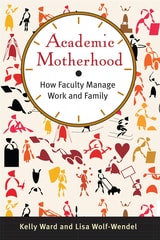
Academic Motherhood tells the story of over one hundred women who are both professors and mothers and examines how they navigated their professional lives at different career stages. Kelly Ward and Lisa Wolf-Wendel base their findings on a longitudinal study that asks how women faculty on the tenure track manage work and family in their early careers (pre-tenure) when their children are young (under the age of five), and then again in mid-career (post-tenure) when their children are older. The women studied work in a range of institutional settings—research universities, comprehensive universities, liberal arts colleges, and community colleges—and in a variety of disciplines, including the sciences, the humanities, and the social sciences.
Much of the existing literature on balancing work and family presents a pessimistic view and offers cautionary tales of what to avoid and how to avoid it. In contrast, the goal of Academic Motherhood is to help tenure track faculty and the institutions at which they are employed “make it work.” Writing for administrators, prospective and current faculty as well as scholars, Ward and Wolf-Wendel bring an element of hope and optimism to the topic of work and family in academe. They provide insight and policy recommendations that support faculty with children and offer mechanisms for problem-solving at personal, departmental, institutional, and national levels.
Academic Profiling
Latinos, Asian Americans, and the Achievement GapGilda L. Ochoa
University of Minnesota Press, 2013
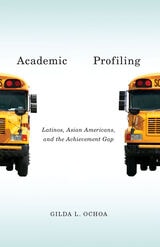
Today the achievement gap is hotly debated among pundits, politicians, and educators. In particular this conversation often focuses on the two fastest-growing demographic groups in the United States: Asian Americans and Latinos. In Academic Profiling, Gilda L. Ochoa addresses this so-called gap by going directly to the source. At one California public high school where the controversy is lived every day, Ochoa turns to the students, teachers, and parents to learn about the very real disparities—in opportunity, status, treatment, and assumptions—that lead to more than just gaps in achievement.
In candid and at times heart-wrenching detail, the students tell stories of encouragement and neglect on their paths to graduation. Separated by unequal middle schools and curriculum tracking, they are divided by race, class, and gender. While those channeled into an International Baccalaureate Program boast about Socratic classes and stress-release sessions, students left out of such programs commonly describe uninspired teaching and inaccessible counseling. Students unequally labeled encounter differential policing and assumptions based on their abilities—disparities compounded by the growth in the private tutoring industry that favors the already economically privileged.
Despite the entrenched inequality in today’s schools, Academic Profiling finds hope in the many ways students and teachers are affirming identities, creating alternative spaces, and fostering critical consciousness. When Ochoa shares the results of her research with the high school, we see the new possibilities—and limits—of change.
Academic Skills for Interdisciplinary Studies
Ger Post, Vincent Visser, and Joris Buis
Amsterdam University Press, 2016
Academic Skills for Interdisciplinary Studies
Revised EditionKoen van der Gaast
Amsterdam University Press, 2019
As an interdisciplinary student, you delve into theories and research methods from a whole range of disciplines. Academic skills are the tools that you can use to take in, develop, integrate and question knowledge. This guide provides specific instructions, tips and examples to help students develop these skills, both during and after their studies.
As academic education focuses on research, the empirical cycle forms a key theme of the book, including when discussing the following skills:
- Searching for, critically reading and analysing scholarly texts
- Formulating research questions
- Making concepts measurable, qualitatively and quantitatively
- Organizing literature and data
- Analysing and formulating an argument
- Academic writing
- Collaborating
- Reflecting
- Presenting
Academic and Entrepreneurial Research
Consequences of Diversity in Federal Evaluation StudiesIlene Nagel Bernstein
Russell Sage Foundation, 1975
Accent On Privilege
English Identities & Anglophilia In The U.S.Katharine Jones
Temple University Press, 2001
The political and cultural ties between England and the US act as a backdrop for the identity negotiations of these English people, many of whom do not even consider themselves to be immigrants. This unique exploration of the workings of white privilege offers an important new understanding of the paradoxes of how class, gender, and race are formed in the US and, by implication, in the UK.
Access to Origins
Affines, Ancestors, and AristocratsBy Mary W. Helms
University of Texas Press, 1998
In many non-industrial, non-Western societies, power and prestige are closely linked to the extent of an individual's or group's perceived connection to the supernatural realm, which also explains and validates tangible activities such as economic success, victories in war, or control over lucrative trade. Affines (in-laws), ancestors, and aristocrats, in particular, are connected to the realm of creative cosmological origins (i.e., to Genesis), which accords them distinctive, supernatural powers and gives them a natural and legitimate right to worldly authority.
This is the hypothesis that Mary W. Helms pursues in this broadly cross-cultural study of aristocracy in chiefly societies. She begins with basic ideas about the dead, ancestors, affines, and concepts of cosmological origins. This leads her to a discussion of cosmologically defined hierarchies, the qualities that characterize aristocracy, and the political and ideological roles of aristocrats as wife-givers and wife-takers (that is, as in-laws). She concludes by considering various models that explain how societies may develop or define aristocracies.