Results by title
8642 books match the query '20th Century' and 836 start with a
Anglo-American Feminist Challenges to the Rhetorical Traditions
Virginia Woolf, Mary Daly, Adrienne RichKrista Ratcliffe
Southern Illinois University Press, 1996
Although women and men have different relationships to language and to each other, traditional theories of rhetoric do not foreground such gender differences. Krista Ratcliffe argues that because feminists generally have not conceptualized their language theories from the perspective of rhetoric and composition studies, rhetoric and composition scholars must construct feminist theories of rhetoric by employing a variety of interwoven strategies: recovering lost or marginalized texts; rereading traditional rhetoric texts; extrapolating rhetorical theories from such nonrhetoric texts as letters, diaries, essays, cookbooks, and other sources; and constructing their own theories of rhetoric.
Focusing on the third option, Ratcliffe explores ways in which the rhetorical theories of Virginia Woolf, Mary Daly, and Adrienne Rich may be extrapolated from their Anglo-American feminist texts through examination of the interrelationship between what these authors write and how they write. In other words, she extrapolates feminist theories of rhetoric from interwoven claims and textual strategies. By inviting Woolf, Daly, and Rich into the rhetorical traditions and by modeling the extrapolation strategy/methodology on their writings, Ratcliffe shows how feminist texts about women, language, and culture may be reread from the vantage point of rhetoric to construct feminist theories of rhetoric. She also outlines the pedagogical implications of these three feminist theories of rhetoric, thus contributing to ongoing discussions of feminist pedagogies.
Traditional rhetorical theories are gender-blind, ignoring the reality that women and men occupy different cultural spaces and that these spaces are further complicated by race and class, Ratcliffe explains. Arguing that issues such as who can talk, where one can talk, and how one can talk emerge in daily life but are often disregarded in rhetorical theories, Ratcliffe rereads Roland Barthes’ "The Old Rhetoric" to show the limitations of classical rhetorical theories for women and feminists. Discovering spaces for feminist theories of rhetoric in the rhetorical traditions, Ratcliffe invites readers not only to question how women have been located as a part of— and apart from—these traditions but also to explore the implications for rhetorical history, theory, and pedagogy.
Anglos and Mexicans in the Making of Texas, 1836-1986
By David Montejano
University of Texas Press, 1987
Winner, Frederick Jackson Turner Award, Organization Of American Historians, 1988
American Historical Association, Pacific Branch Book Award, 1989
Texas Institute of Letters Friends Of The Dallas Public Library Award, 1987
Texas Historical Commission T. R. Fehrenbach Award, Best Ethnic, Minority, And Women's History Publication, 1987

Angry Planet
Decolonial Fiction and the American Third WorldAnne Stewart
University of Minnesota Press, 2022
Before the idea of the Anthropocene, there was the angry planet
How might we understand an earthquake as a complaint, or erosion as a form of protest—in short, the Earth as an angry planet? Many novels from the end of the millennium did just that, centering around an Earth that acts, moves, shapes human affairs, and creates dramatic, nonanthropogenic change.
In Angry Planet, Anne Stewart uses this literature to develop a theoretical framework for reading with and through planetary motion. Typified by authors like Colson Whitehead, Octavia Butler, and Leslie Marmon Silko, whose work anticipates contemporary critical concepts of entanglement, withdrawal, delinking, and resurgence, angry planet fiction coalesced in the 1990s and delineated the contours of a decolonial ontology. Stewart shows how this fiction brought Black and Indigenous thought into conversation, offering a fresh account of globalization in the 1990s from the perspective of the American Third World, construing it as the era that first made connections among environmental crises and antiracist and decolonial struggles.
By synthesizing these major intersections of thought production in the final decades of the twentieth century, Stewart offers a recent history of dissent to the young movements of the twenty-first century. As she reveals, this knowledge is crucial to incipient struggles of our contemporary era, as our political imaginaries grapple with the major challenges of white nationalism and climate change denial.
Angry Voices
An Anthology of the Off-Beat New Egyptian PoetsMohamed Enani
University of Arkansas Press, 2003
Animal Labor and Colonial Warfare
James L. Hevia
University of Chicago Press, 2018
In Animal Labor and Colonial Warfare, James Hevia examines the use of camels, mules, and donkeys in colonial campaigns of conquest and pacification, starting with the Second Afghan War—during which an astonishing 50,000 to 60,000 camels perished—and ending in the early twentieth century. Hevia explains how during the nineteenth and twentieth centuries a new set of human-animal relations were created as European powers and the United States expanded their colonial possessions and attempted to put both local economies and ecologies in the service of resource extraction. The results were devastating to animals and human communities alike, disrupting centuries-old ecological and economic relationships. And those effects were lasting: Hevia shows how a number of the key issues faced by the postcolonial nation-state of Pakistan—such as shortages of clean water for agriculture, humans, and animals, and limited resources for dealing with infectious diseases—can be directly traced to decisions made in the colonial past. An innovative study of an underexplored historical moment, Animal Labor and Colonial Warfare opens up the animal studies to non-Western contexts and provides an empirically rich contribution to the emerging field of multispecies historical ecology.

Animal Stories
Narrating across Species LinesSusan McHugh
University of Minnesota Press, 2010
McHugh’s investigations into fictions of people relying on animals in civic and professional life—most obviously those of service animal users and female professional horse riders—showcase distinctly modern and human–animal forms of intersubjectivity. But increasingly graphic violence directed at these figures indicates their ambivalent significance to changing configurations of species.
Reading these developments with narrative adaptations of traditional companion species relations during this period— queer pet memoirs and farm animal fictions—McHugh clarifies the intercorporeal intimacies—the perforations of species boundaries now proliferating in genetic and genomic science—and embeds the representation of animals within biopolitical frameworks.
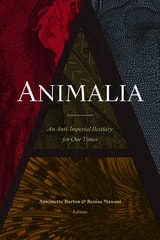
Animalia
An Anti-Imperial Bestiary for Our TimesAntoinette Burton and Renisa Mawani, editors
Duke University Press, 2020
Contributors. Neel Ahuja, Tony Ballantyne, Antoinette Burton, Utathya Chattopadhyaya, Jonathan Goldberg-Hiller, Peter Hansen, Isabel Hofmeyr, Anna Jacobs, Daniel Heath Justice, Dane Kennedy, Jagjeet Lally, Krista Maglen, Amy E. Martin, Renisa Mawani, Heidi J. Nast, Michael A. Osborne, Harriet Ritvo, George Robb, Jonathan Saha, Sandra Swart, Angela Thompsell
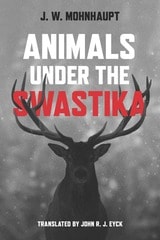
Animals under the Swastika
J. W. Mohnhaupt, translated by John R. J. Eyck
University of Wisconsin Press, 2022
Drawing from diaries, journals, school textbooks, and printed propaganda, J.W. Mohnhaupt tells these animals’ stories vividly and with an eye for everyday detail, focusing each chapter on a different facet of Nazism by way of a specific animal species: red deer, horses, cats, and more. Animals under the Swastika illustrates the complicated, thought-provoking relationship between Nazis and animals.
Animation
Curtis, Scott
Rutgers University Press, 2019
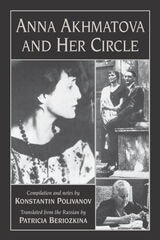
Anna Akhmatova and Her Circle
Konstantin Polivanov
University of Arkansas Press, 2016
Anna's Shtetl
Lawrence A. Coben
University of Alabama Press, 2007

Anne Sexton
Telling the TaleSteven E. Colburn, Editor
University of Michigan Press, 1988

Anne Tyler as Novelist
Dale Salwak
University of Iowa Press, 1994

Anorexia and Mimetic Desire
René Girard
Michigan State University Press, 2008
Another Magic Mountain
Kibong'oto Hospital and African Tuberculosis, 1920–2000Christoph Gradmann
Ohio University Press, 2025
Kibong’oto Hospital, opened in 1926, is an East African tuberculosis treatment center located on the slopes of Mount Kilimanjaro. Its history is crucial to understanding tuberculosis in Tanzania and, more broadly, in Africa. With the hospital as a point of departure, Christoph Gradmann presents a history of this disease that engages with local and regional contexts rather than with international elite science and health policies.
The book addresses key questions about the African experience with tuberculosis:
- What did it mean to do clinical science on tuberculosis in colonial and postcolonial contexts?
- Along which trajectories did medical practice and research evolve in a place where international advances in medical science were sometimes heard of only faintly and where resources could be scarce?
- How did a large hospital with several hundred beds dedicated to the treatment of just one condition figure in the development of national and regional health systems?
- How did Kibong’oto Hospital, a pride of colonial health governance, transition after Tanzania gained independence?
- How did treating and researching tuberculosis change throughout the twentieth century in an African hospital dedicated to that condition?
- How did research at the hospital contribute to tuberculosis-control strategies on national and international levels?
The book is based on the hospital’s unique archive: its surviving library of thousands of case summaries. Since 1926, this library has documented an enormous number of patient lives, staff careers, diagnoses, treatments, clinical trials, and much more. For today’s readers, the library provides insight into a history of clinical medicine in Africa, for which very few comparable archives exist. Gradmann supplements this site-specific research with material from national and international archives, as well as interviews with former staff involved in that history. The book’s four chapters offer perspectives on colonial epidemiological research in the interwar years; on late colonial healthcare development plans and the arrival of modern drug therapies; on the role of a national tuberculosis hospital in a newly independent country; and on the history of tuberculosis control in an age of economic crisis, HIV, and emergent global health-treatment programs. Finally, Gradmann discusses what the history of a large hospital can add to today’s tuberculosis research, control policy, and historiography.
Another Part of a Long Story
Literary Traces of Eugene O'Neill and Agnes BoultonWilliam Davies King
University of Michigan Press, 2010
---Stephen Wilmer, Trinity College, Dublin
Biographers of American playwright Eugene O'Neill have been quick to label his marriage to actress Carlotta Monterey as the defining relationship of his illustrious career. But in doing so, they overlook the woman whom Monterey replaced---Agnes Boulton, O'Neill's wife of over a decade and mother to two of his children. O'Neill and Boulton were wed in 1918---a time when she was a successful pulp novelist and he was still a little-known writer of one-act plays. During the decade of their marriage, he gained fame as a Broadway dramatist who rejected commercial compromise, while she mapped that contentious territory known as the literary marriage. His writing reflected her, and hers reflected him, as they tried to realize progressive ideas about what a marriage should be. But after O'Neill left the marriage, he and new love Carlotta Monterey worked diligently to put Boulton out of sight and mind---and most O'Neill biographers have been quick to follow suit.
William Davies King has brought Agnes Boulton to light again, providing new perspectives on America's foremost dramatist, the dynamics of a literary marriage, and the story of a woman struggling to define herself in the early twentieth century. King shows how the configuration of O'Neill and Boulton's marriage helps unlock many of O'Neill's plays. Drawing on more than sixty of Boulton's published and unpublished writings, including her 1958 memoir, Part of a Long Story, and an extensive correspondence, King rescues Boulton from literary oblivion while offering the most radical revisionary reading of the work of Eugene O'Neill in a generation.
William Davies King is Professor of Theater at the University of California, Santa Barbara, and author of several books, most recently Collections of Nothing, chosen by Amazon.com as one of the Best Books of 2008.
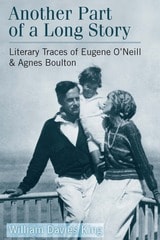
Illustration: Eugene O'Neill, Shane O'Neill, and Agnes Boulton ca. 1923. Eugene O'Neill Collection, Beinecke Rare Book and Manuscript Library, Yale University.

Another Road to Justice
Antonio Orendain and the Texas Farmworkers’ RevoltTimothy Paul Bowman
University of Texas Press, 0
A new perspective on the farmworker movement that recenters Texas and activist Antonio Orendain.
Another Road to Justice chronicles an important yet overlooked chapter in US labor history: the farmworker movement in Texas. Eclipsed by the activities of the United Farm Workers in California during the 1960s through ‘80s, Texas organizers were, nonetheless, diligent radicals, deeply engaged in consciousness raising, social reform, and labor action.
In this engrossing account, Timothy Paul Bowman explores the lives and impact of Texas activists, above all Antonio Orendain—a key figure in the struggle of Mexican and Mexican American workers along the international border in the Lower Rio Grande Valley. A formerly undocumented immigrant who became the leading organizer in the region, Orendain went from Cesar Chavez’s righthand man in the UFW to one of his biggest rivals by the middle of the 1970s. Through efforts like the Starr County Strike of 1966–1967 and the 1975 melon strike, Orendain and other workers achieved significant gains. At the same time, tensions between organizers splintered the UFW, leading Orendain to form the Texas Farm Workers Union. Bowman shines light on this history and the often-overlooked activists who earnestly fought to overcome oppression, often at great personal cost.
Anthropological Intelligence
The Deployment and Neglect of American Anthropology in the Second World WarDavid H. Price
Duke University Press, 2008
Anthropological Intelligence is based on interviews with anthropologists as well as extensive archival research involving many Freedom of Information Act requests. Price looks at the role played by the two primary U.S. anthropological organizations, the American Anthropological Association and the Society for Applied Anthropology (which was formed in 1941), in facilitating the application of anthropological methods to the problems of war. He chronicles specific projects undertaken on behalf of government agencies, including an analysis of the social effects of postwar migration, the design and implementation of OSS counterinsurgency campaigns, and the study of Japanese social structures to help tailor American propaganda efforts. Price discusses anthropologists’ work in internment camps, their collection of intelligence in Central and South America for the FBI’s Special Intelligence Service, and their help forming foreign language programs to assist soldiers and intelligence agents. Evaluating the ethical implications of anthropological contributions to World War II, Price suggests that by the time the Cold War began, the profession had set a dangerous precedent regarding what it would be willing to do on behalf of the U.S. government.

Anthropology At the Dawn of the Cold War
The Influence of Foundations, Mccarthyism and the CIAEdited by Dustin M. Wax
Pluto Press, 2008
This book breaks new ground in the history of anthropology, opening up an explicit examination of anthropology in the Cold War era. With historical distance, Cold War anthropology has begun to emerge as a distinct field within the discipline. This book brings a number of different approaches to bear on the questions raised by anthropology's Cold War history.
The contributors show how anthropologists became both tools and victims of the Cold War state during the rise of the United States in the post-War period. Examining the intersection between science and power, this book is a compelling read for anthropologists, historians, sociologists, and anyone interested in the way in which colonial and neo-colonial knowledge is produced and constructed.
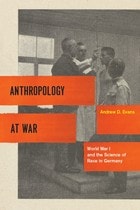
Anthropology at War
World War I and the Science of Race in GermanyAndrew D. Evans
University of Chicago Press, 2010
Between 1914 and 1918, German anthropologists conducted their work in the midst of full-scale war. The discipline was relatively new in German academia when World War I broke out, and, as Andrew D. Evans reveals in this illuminating book, its development was profoundly altered by the conflict. As the war shaped the institutional, ideological, and physical environment for anthropological work, the discipline turned its back on its liberal roots and became a nationalist endeavor primarily concerned with scientific studies of race.
Combining intellectual and cultural history with the history of science, Anthropology at War examines both the origins and consequences of this shift. Evans locates its roots in the decision to allow scientists access to prisoner-of-war camps, which prompted them to focus their research on racial studies of the captives. Caught up in wartime nationalism, a new generation of anthropologists began to portray the country’s political enemies as racially different. After the war ended, the importance placed on racial conceptions and categories persisted, paving the way for the politicization of scientific inquiry in the years of the ascendancy of National Socialism.

Anti-Apocalypse
Exercises in Genealogical CriticismLee Quinby
University of Minnesota Press, 1994
Anti-Apocalypse was first published in 1994. Minnesota Archive Editions uses digital technology to make long-unavailable books once again accessible, and are published unaltered from the original University of Minnesota Press editions.
As the year 2000 looms, heralding a new millennium, apocalyptic thought abounds-and not merely among religious radicals. In politics, science, philosophy, popular culture, and feminist discourse, apprehensions of the End appear in images of cultural decline and urban chaos, forecasts of the end of history and ecological devastation, and visions of a new age of triumphant technology or a gender-free utopia. There is, Lee Quinby contends, a threatening "regime of truth" prevailing in the United States-and this regime, with its enforcement of absolute truth and morality, imperils democracy. In Anti-Apocalypse, Quinby offers a powerful critique of the millenarian rhetoric that pervades American culture. In doing so, she develops strategies for resisting its tyrannies.
Drawing on feminist and Foucauldian theory, Quinby explores the complex relationship between power, truth, ethics, and apocalypse. She exposes the ramifications of this relationship in areas as diverse as jeanswear magazine advertising, the Human Genome project, contemporary feminism and philosophy, texts by Henry Adams and Zora Neale Hurston, and radical democratic activism. By bringing together such a wide range of topics, Quinby shows how apocalypse weaves its way through a vast network of seemingly unrelated discourses and practices. Tracing the deployment of power through systems of alliance, sexuality, and technology, Quinby reveals how these power relationships produce conflicting modes of subjectivity that create possibilities for resistance. She promotes a variety of critical stances—genealogical feminism, an ethics of the flesh, and "pissed criticism"—as challenges to apocalyptic claims for absolute truth and universal morality. Far-reaching in its implications for social and cultural theory as well as for political activism, Anti-Apocalypse will engage readers across the cultural spectrum and challenge them to confront one of the most subtle and insidious orthodoxies of our day.Lee Quinby is associate professor of English and American studies at Hobart and William Smith Colleges. She is the author of Freedom, Foucault, and the Subject of America (1991) and coeditor (with Irene Diamond) of Feminism and Foucault: Reflections on Resistance (1988).
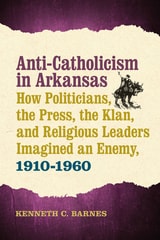
Anti-Catholicism in Arkansas
How Politicians, the Press, the Klan, and Religious Leaders Imagined an Enemy, 1910–1960Kenneth C. Barnes
University of Arkansas Press, 2016
Winner, 2017 Ragsdale Award
A timely study that puts current issues—religious intolerance, immigration, the separation of church and state, race relations, and politics—in historical context.
The masthead of the Liberator, an anti-Catholic newspaper published in Magnolia, Arkansas, displayed from 1912 to 1915 an image of the Whore of Babylon. She was an immoral woman sitting on a seven-headed beast, holding a golden cup “full of her abominations,” and intended to represent the Catholic Church.
Propaganda of this type was common during a nationwide surge in antipathy to Catholicism in the early twentieth century. This hostility was especially intense in largely Protestant Arkansas, where for example a 1915 law required the inspection of convents to ensure that priests could not keep nuns as sexual slaves.
Later in the decade, anti-Catholic prejudice attached itself to the campaign against liquor, and when the United States went to war in 1917, suspicion arose against German speakers—most of whom, in Arkansas, were Roman Catholics.
In the 1920s the Ku Klux Klan portrayed Catholics as “inauthentic” Americans and claimed that the Roman church was trying to take over the country’s public schools, institutions, and the government itself. In 1928 a Methodist senator from Arkansas, Joe T. Robinson, was chosen as the running mate to balance the ticket in the presidential campaign of Al Smith, a Catholic, which brought further attention.
Although public expressions of anti-Catholicism eventually lessened, prejudice was once again visible with the 1960 presidential campaign, won by John F. Kennedy.
Anti-Catholicism in Arkansas illustrates how the dominant Protestant majority portrayed Catholics as a feared or despised “other,” a phenomenon that was particularly strong in Arkansas.
Anti-Communism in Britain During the Early Cold War
A Very British Witch-HuntMatthew Gerth
University of London Press, 2022
The Cold War produced in many countries a form of political repression and societal paranoia which often infected governmental and civic institutions. In the West, the driving catalyst for the phenomenon was anti-communism. While much has been written on the post-war American red scare commonly known as McCarthyism, the domestic British response to the “red menace” during the early Cold War has until now received little attention. Anti-communism in Britain During the Early Cold War is the first book to examine how British Cold War anti-communism transpired and manifested as McCarthyism raged across the Atlantic.
Drawing from a wealth of archival material, this book demonstrates that while policymakers and politicians in Britain sought to differentiate their anti-communist initiatives from the “witch hunt hysteria” occurring in the United States, they were often keen to conduct—albeit less publicly—their own hunts as well. Through analyzing how domestic anti-communism exhibited itself in state policies, political rhetoric, party politics, and the trade union movement, Matthew Gerth argues that an overreaction to the communist threat occurred. In striking detail, this book describes a nation at war with a specific political ideology and its willingness to use a variety of measures to either disrupt or eradicate its influence.
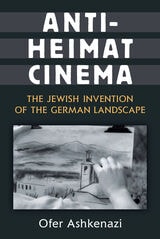
Anti-Heimat Cinema
The Jewish Invention of the German LandscapeOfer Ashkenazi
University of Michigan Press, 2020
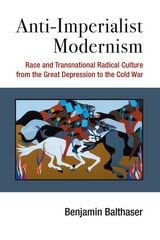
Anti-Imperialist Modernism
Race and Transnational Radical Culture from the Great Depression to the Cold WarBenjamin Balthaser
University of Michigan Press, 2015
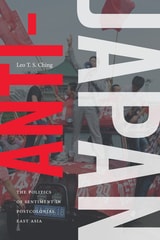
Anti-Japan
The Politics of Sentiment in Postcolonial East AsiaLeo T. S. Ching
Duke University Press, 2019

Anti-Nazi Modernism
The Challenges of Resistance in 1930s FictionMia Spiro
Northwestern University Press, 2013

Anti-fascism in European History
From the 1920s to TodayJože Pirjevec
Central European University Press, 2023
The increasing radicalization of political life in most countries in Europe lends special relevance to studies of the antifascist legacies on the continent. This insightful collection of essays is an in-depth review of antifascism in Slovenia, setting it in the context of related movements elsewhere in Europe. The period treated by the 19 essays comprises the interwar period, World War Two, and the post-war decades. The comparative and transnational perspectives advanced by the volume change our understanding of antifascism.
The essays deal with the right-wing but also left-wing instrumentalization of antifascism, with a particular focus on the communist and post-communist periods. The authors point out that antifascism comes in various strains, whether inspired by liberalism, social democracy, communism, monarchism, anarchism, or even Christian conservatism. The contributors bring to light several overlooked antifascist actors, campaigns, and organisations, mostly in Slovenia and the Adriatic area.
Anti-modernism
Radical Revisions of Collective IdentityAhmet Ersoy
Central European University Press, 2014
Antidiets of the Avant-Garde
From Futurist Cooking to Eat ArtCecilia Novero
University of Minnesota Press, 2009
Discussing an aspect of the European avant-garde that has often been neglected-its relationship to the embodied experience of food, its sensation, and its consumption-Cecilia Novero exposes the surprisingly key roles that food plays in the theoretical foundations and material aesthetics of a broad stratum of works ranging from the Italian Futurist Cookbook to the magazine Dada, Walter Benjamin's writings on eating and cooking, Daniel Spoerri's Eat Art, and the French New Realists.
Starting from the premise that avant-garde art involves the questioning of bourgeois aesthetics, Novero demonstrates that avant-garde artists, writers, and performers have produced an oppositional aesthetics of indigestible art. Through the rhetoric of incorporation and consumption and the use of material ingredients in their work, she shows, avant-garde artists active in the 1920s and 1930s as well as the neo-avant-garde movements engaged critically with consumer culture, memory, and history.
Attention to food in avant-garde aesthetics, Novero asserts, reveals how these works are rooted in a complex temporality that associates memory and consumption with dynamics of change.
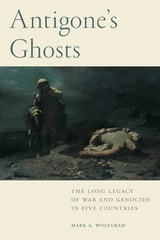
Antigone's Ghosts
The Long Legacy of War and Genocide in Five CountriesWolfgram, Mark A
Bucknell University Press, 2019
Published by Bucknell University Press. Distributed worldwide by Rutgers University Press.
Antisemitism and the Politics of History
Edited by Scott Ury and Guy Miron
Brandeis University Press, 2023
The book begins with a revised and updated version of David Engel’s seminal essay “Away from a Definition of Antisemitism.” Subsequent contributions by renowned specialists in ancient, medieval, and modern history, religious studies, and other fields explore the various and changing definitions and uses of the term “antisemitism” in a range of contexts, including ancient Rome and Greece, the Byzantine Empire, medieval Europe, early modern and modern Europe, North America, and the United Kingdom. The volume also includes a section that focuses on the Second World War, including the Holocaust and its memory. Engel offers a contemporary response to conclude the book.
First published in Hebrew in 2020 as a special issue of the journal Zion: A Quarterly for Research in Jewish History in cooperation with the Zalman Shazar Center in Jerusalem, this compelling collection has already had an impact on the study of antisemitism in Israel. It is certain to become a critical resource for scholars, policymakers, and journalists researching antisemitism, Holocaust studies, and related fields.

AntoloGaia
Queering the Seventies, A Radical Trans MemoirPorpora Marcasciano
Rutgers University Press, 2024
In this stirring memoir by a member of the first generation of LGBTQ+ activists in Italy, Porpora Marcasciano tells her story and shares the struggles and accomplishments of her fellow activists who achieved so much in the 1970s yet suffered devastating losses during the AIDS epidemic of the 1980s. AntoloGaia offers an insider’s look at the beginnings of the gay liberation movement in Italy and reveals how it was intimately intertwined with other forms of left-wing activism. At the same time, it powerfully conveys the queer joy of a young person from a small village first encountering the vibrant sexual minority communities of Naples, Bologna, and Rome. As Marcasciano starts to embrace her trans identity, she meets the famous anthropologist Pino Simonelli, who introduces her to Naples’s unique femminielli subculture and gives her the name Porporino, which she later shortens to Porpora. In keeping with this story of gender, sexual, and political discovery, AntoloGaia is the first piece of Italian life-writing to use gender-neutral and mixed-gender language.
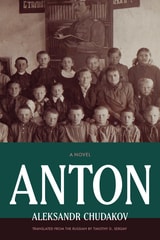
Anton
A NovelAleksandr Chudakov, Timothy D. Sergay
Northwestern University Press, 2027
A landmark work of contemporary Russian literature, now in English for the first time
Set in a fictitious town in North Kazakhstan settled by political and ethnic exiles, this panoramic narrative follows the relationship between the titular character Anton, a Moscow historian of the vital “1960s generation,” and his grandfather, Leonid, a titan of physical and intellectual rigor who is now on the verge of death. As Anton contemplates the fading away of that once-powerful vitality, he lets his thoughts plunge deep into the past, presented in a series of fine-grained sketches, scattered reminiscences, and subtly interconnected episodes, back and forth from childhood to present day. The resulting novel is a “Soviet family Robinson”: the history of rugged and free-thinking intellectuals eking out a tolerable, even enviable homestead existence despite the difficulties of the Stalin years. One of the most vibrant works of literary fiction created since the fall of the Soviet Union, Aleksandr Chudakov’s Anton is a testament to humanity's tenacity and tenderness.
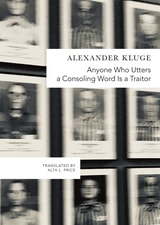
Anyone Who Utters a Consoling Word Is a Traitor
48 Stories for Fritz BauerAlexander Kluge
Seagull Books, 2020
Alexander Kluge’s work has long grappled with the Third Reich and its aftermath, and the extermination of the Jews forms its gravitational center. Kluge is forever reminding us to keep our present catastrophes in perspective—“calibrated”—against this historical monstrosity. Kluge’s newest work is a book about bitter fates, both already known and yet to unfold. Above all, it is about the many kinds of organized machinery built to destroy people. These forty-eight stories of justice and injustice are dedicated to the memory of Fritz Bauer, a determined fighter for justice and district attorney of Hesse during the Auschwitz Trials. “The moment they come into existence, monstrous crimes have a unique ability,” Bauer once said, “to ensure their own repetition.” Kluge takes heed, and in these pages reminds us of the importance of keeping our powers of observation and memory razor sharp.

Anything but Novel
Pushing the Margins in Latin American Post-Utopian Historical NarrativeJennie Irene Daniels
University of Alabama Press, 2024
The first in-depth study in English to analyze post-utopian historical novels written during and in the wake of brutal Latin American dictatorships and authoritarian regimes
During neoliberal reforms in the 1980s and 1990s, murder, repression, and exile had reduced the number of intellectuals and Leftists, and many succumbed to or were coopted by market forces and ideologies. The opposition to the economic violence of neoliberal projects lacked a united front, and feasible alternatives to the contemporary order no longer seemed to exist. In this context, some Latin American literary intellectuals penned post-utopian historical novels as a means to reconstruct memory of significant moments in national history. Through the distortion and superimposition of distinct genres within the narratives, authors of post-utopian historical novels incorporated literary, cultural, and political traditions to expose contemporary challenges that were rooted in unresolved past conflicts.
In Anything but Novel, Jennie Irene Daniels closely examines four post-utopian novels—César Aira’s Ema, la cautiva, Rubem Fonseca’s O Selvagem da Ópera, José Miguel Varas’s El correo de Bagdad, and Santiago Páez’s Crónicas del Breve Reino—to make their contributions more accessible and to synthesize and highlight the literary and social interventions they make. Although the countries the novels focus on (Argentina, Brazil, Chile, and Ecuador) differ widely in politics, regime changes, historical precedents, geography, and demographics, the development of a shared subgenre among the literary elite suggests a common experience and interpretation of contemporary events across Latin America. These novels complement one another, extending shared themes and critiques.
Daniels argues the novels demonstrate that alternatives exist to neoliberalism even in times when it appears there are none. Another contribution of these novels is their repositioning of the Latin American literary intellectuals who have advocated for the marginalized in their societies. Their work has opened new avenues and developed previous lines of research in feminist, queer, and ethnic studies and for nonwhite, nonmale writers.
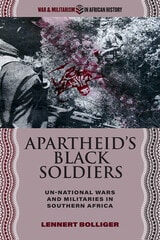
Apartheid’s Black Soldiers
Un-national Wars and Militaries in Southern AfricaLennart Bolliger
Ohio University Press, 2021
New oral histories from Black Namibian and Angolan troops who fought in apartheid South Africa’s security forces reveal their involvement, and its impact on their lives, to be far more complicated than most historical scholarship has acknowledged.
In anticolonial struggles across the African continent, tens of thousands of African soldiers served in the militaries of colonial and settler states. In southern Africa, they often made up the bulk of these militaries and, in some contexts, far outnumbered those who fought in the liberation movements’ armed wings. Despite these soldiers' significant impact on the region’s military and political history, this dimension of southern Africa’s anticolonial struggles has been almost entirely ignored in previous scholarship.
Black troops from Namibia and Angola spearheaded apartheid South Africa’s military intervention in their countries’ respective anticolonial war and postindependence civil war. Drawing from oral history interviews and archival sources, Lennart Bolliger challenges the common framing of these wars as struggles of national liberation fought by and for Africans against White colonial and settler-state armies.
Focusing on three case studies of predominantly Black units commanded by White officers, Bolliger investigates how and why these soldiers participated in South Africa’s security forces and considers the legacies of that involvement. In tackling these questions, he rejects the common tendency to categorize the soldiers as “collaborators” and “traitors” and reveals the un-national facets of anticolonial struggles.
Finally, the book’s unique analysis of apartheid military culture shows how South Africa’s military units were far from monolithic and instead developed distinctive institutional practices, mythologies, and concepts of militarized masculinity.
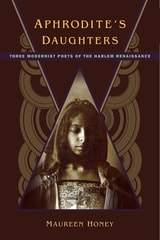
Aphrodite's Daughters
Three Modernist Poets of the Harlem RenaissanceHoney, Maureen
Rutgers University Press, 2016
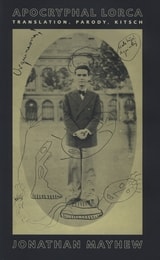
Apocryphal Lorca
Translation, Parody, KitschJonathan Mayhew
University of Chicago Press, 2009
Federico García Lorca (1898–1936) had enormous impact on the generation of American poets who came of age during the cold war, from Robert Duncan and Allen Ginsberg to Robert Creeley and Jerome Rothenberg. In large numbers, these poets have not only translated his works, but written imitations, parodies, and pastiches—along with essays and critical reviews. Jonathan Mayhew’s Apocryphal Lorca is an exploration of the afterlife of this legendary Spanish writer in the poetic culture of the United States.
The book examines how Lorca in English translation has become a specifically American poet, adapted to American cultural and ideological desiderata—one that bears little resemblance to the original corpus, or even to Lorca’s Spanish legacy. As Mayhew assesses Lorca’s considerable influence on the American literary scene of the latter half of the twentieth century, he uncovers fundamental truths about contemporary poetry, the uses and abuses of translation, and Lorca himself.
Apostate Englishman
Grey Owl the Writer and the MythsAlbert Braz
University of Manitoba Press, 2015
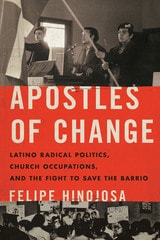
Apostles of Change
Latino Radical Politics, Church Occupations, and the Fight to Save the BarrioBy Felipe Hinojosa
University of Texas Press, 2021
2021 Finalist Raul Yzaguirre Best Political/Current Affairs Book, International Latino Book Awards
Winner of the Texas Association of Chicanos in Higher Education Inaugural Book Award
Unraveling the intertwined histories of Latino radicalism and religion in urban America, this book examines how Latino activists transformed churches into staging grounds for protest against urban renewal and displacement.
In the late 1960s, the American city found itself in steep decline. An urban crisis fueled by federal policy wreaked destruction and displacement on poor and working-class families. The urban drama included religious institutions, themselves undergoing fundamental change, that debated whether to stay in the city or move to the suburbs. Against the backdrop of the Black and Brown Power movements, which challenged economic inequality and white supremacy, young Latino radicals began occupying churches and disrupting services to compel church communities to join their protests against urban renewal, poverty, police brutality, and racism.
Apostles of Change tells the story of these occupations and establishes their context within the urban crisis; relates the tensions they created; and articulates the activists' bold, new vision for the church and the world. Through case studies from Chicago, Los Angeles, New York City, and Houston, Felipe Hinojosa reveals how Latino freedom movements frequently crossed boundaries between faith and politics and argues that understanding the history of these radical politics is essential to understanding the dynamic changes in Latino religious groups from the late 1960s to the early 1980s.
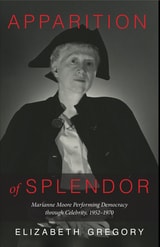
Apparition of Splendor
Marianne Moore Performing Democracy through Celebrity, 1952–1970Elizabeth Gregory
University of Delaware Press, 2021
While the later work of the great Modernist poet Marianne Moore was hugely popular during her final two decades, since her death critics have condemned it as trivial. This book challenges that assessment: with fresh readings of many of the late poems and of the iconic, cross-dressing public persona Moore developed to deliver them, Apparition of Splendor demonstrates that Moore used her late-life celebrity in daring and innovative ways to activate egalitarian principles that had long animated her poetry. Dressed as George Washington in cape and tricorn and writing about accessible topics like sports, TV shows, holidays, love, activism, mortality and celebrity itself, she reached a wide cross-section of Americans, encouraging them to consider what democracy means in their daily lives, particularly around issues of gender, sexuality, racial integration, class, age, and immigration. Moore actively sought out publication in popular venues (like Vogue, The New Yorker, and the Saturday Evening Post, etc.) and wrote on material chosen to directly appeal to the audiences there, influencing younger contemporaries, including poets like Ashbery, O’Hara, and Bishop, and artists like Warhol, Yoko Ono, and Ray Johnson.
Published by the University of Delaware Press. Distributed worldwide by Rutgers University Press.
Appetite and Its Discontents
Science, Medicine, and the Urge to Eat, 1750-1950Elizabeth A. Williams
University of Chicago Press, 2020
Williams charts the history of inquiry into appetite between 1750 and 1950, as scientific and medical concepts of appetite shifted alongside developments in physiology, natural history, psychology, and ethology. She shows how, in the eighteenth century, trust in appetite was undermined when researchers who investigated ingestion and digestion began claiming that science alone could say which ways of eating were healthy and which were not. She goes on to trace nineteenth- and twentieth-century conflicts over the nature of appetite between mechanists and vitalists, experimentalists and bedside physicians, and localists and holists, illuminating struggles that have never been resolved. By exploring the core disciplines in investigations in appetite and eating, Williams reframes the way we think about food, nutrition, and the nature of health itself..
Apple Betty and Sloppy Joe
Stirring Up the Past with Family Recipes and StoriesSusan Sanvidge
Wisconsin Historical Society Press, 2007
Compiled by four sisters and based on their recollections of their childhood in Oshkosh, Wisconsin, Apple Betty & Sloppy Joe captures the glow of memories formed while growing up in a midwestern kitchen. From Lemon Meringue Pie to Tomato Soup Cake, from Mom's Chicken Pie to Grandma Noffke's Sliced Cucumber Pickles, this charming book features hundreds of recipes (some classic, some quirky), plus dozens of food and cooking-related anecdotes, memories, humorous asides, and period photos that transport readers back to Mom's or Grandma's kitchen, circa 1950.
The Sanvidges share a legacy of beloved dishes and food memories that resonate not just for their family, but for readers everywhere who grew up in a small midwestern town - or wish they had. Nostalgic, funny, and warmhearted, Apple Betty & Sloppy Joe celebrates the ways food and food memories link us to our past, and to each other. A delightful gift for food lovers of any generation.
Appointment of Judges
The Johnson PresidencyBy Neil D. McFeeley
University of Texas Press, 1987
The selection of federal judges constitutes one of the more significant legacies of any president; the choices of Lyndon Baines Johnson affected important social policies for decades. This book explores the process of making judicial appointments, examining how judges were selected during Johnson's administration and the president's own participation in the process. Appointment of Judges: The Johnson Presidency is the first in-depth study of the judicial selection process in the Johnson years and is one of the few books that has analyzed any individual president's process.
Based on sources in the archives of the Lyndon Baines Johnson Library and correspondence from senators, party officials, Justice Department officers, the American Bar Association, Supreme Court justices, and the candidates themselves, the book is an important exploration of a significant aspect of presidential power. The author shows that Johnson recognized the great impact for social and economic policy the judiciary could have in America and sought out judges who shared his vision of the Great Society. More than any previous president since William Howard Taft, Johnson took an active personal role in setting up the criteria for choosing judges and in many cases participated in decisions on individual nominees. The president utilized the resources of the White House, the Department of Justice, other agencies, and private individuals to identify judicial candidates who met criteria of compatible policy perspective, excellent legal qualifications, political or judicial experience, youth, and ethnic diversity. The book notes how the criteria and judicial selection process evolved over time and how it operated during the transitions between Kennedy and Johnson and between Johnson and Nixon.

Apprehending the Criminal
The Production of Deviance in Nineteenth Century DiscourseMarie-Christine Leps
Duke University Press, 1992
Leps focuses on three discursive practices: the emergence of criminology, the development of a mass-produced press, and the proliferation of crime fiction, in both England and France. Beginning where Foucault's work Discipline and Punish ends, Leps analyzes intertextual modes of knowledge production and shows how the elaboration of hegemonic truths about the criminal is related to the exercise of power.
The scope of her investigation includes scientific treatises such as Criminal Man by Cesare Lombroso and The English Convict by Charles Goring, reports on the Jack the Ripper murders in The Times and Le Petit Parisien, the Sherlock Holmes stories, Stevenson's Strange Case of Dr. Jekyll and Mr. Hyde, and novels by Zola and Bourget.
Approaching the Millennium
Essays on Angels in AmericaDeborah R. Geis and Steven F. Kruger, Editors
University of Michigan Press, 1997
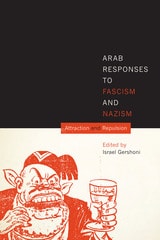
Arab Responses to Fascism and Nazism
Attraction and RepulsionBy Israel Gershoni
University of Texas Press, 2014
The first book to present an analysis of Arab response to fascism and Nazism from the perspectives of both individual countries and the Arab world at large, this collection problematizes and ultimately deconstructs the established narratives that assume most Arabs supported fascism and Nazism leading up to and during World War II. Using new source materials taken largely from Arab memoirs, archives, and print media, the articles reexamine Egyptian, Syrian, Lebanese, Palestinian, and Iraqi responses in the 1930s and throughout the war.
While acknowledging the individuals, forces, and organizations that did support and collaborate with Nazi Germany and fascist Italy, Arab Responses to Fascism and Nazism focuses on the many other Arab voices that identified with Britain and France and with the Allied cause during the war. The authors argue that many groups within Arab societies—elites and non-elites, governing forces, and civilians—rejected Nazism and fascism as totalitarian, racist, and, most important, as new, more oppressive forms of European imperialism. The essays in this volume argue that, in contrast to prevailing beliefs that Arabs were de facto supporters of Italy and Germany—since “the enemy of my enemy is my friend”—mainstream Arab forces and currents opposed the Axis powers and supported the Allies during the war. They played a significant role in the battles for control over the Middle East.

Aram's Notebook
Maria Àngels Anglada
Swan Isle Press, 2024
Like any other fifteen-year-old boy, Aram might never have written the events of his still young life, except that he found himself suddenly plunged into exile, fleeing certain death. In 1915, the Ottoman authorities undertook the wholesale extermination of the Armenian people; hundreds of thousands of men, women, and children like Aram suffered one of the twentieth century’s most savage persecutions. Inspired by the plight of the murdered modernist poet Daniel Varoujan (1884–1915), this novel follows Aram and his widowed mother on their flight toward a new life on—and under—the sea. From recollections of his father’s meditations on Homer to a life-changing apprenticeship as a coral fisherman off the coasts of Cataluña and Marseille, Aram’s tale dives into a future that might help redeem a harrowing past. Aram's Notebook examines the Armenian Genocide through a narrative in which poets and poetry loom large. Aram’s tale evokes a struggle not simply for physical survival, but for saving memory from the clutches of destruction. Evocatively translated from the original Catalan by Ara Merjian.
Archaeological Anthropology
Perspectives on Method and TheoryEdited by James M. Skibo, Michael W. Graves, and Miriam T. Stark
University of Arizona Press, 2014
In this collection of twelve new chapters, four generations of Longacre protégés show how they are building upon and developing but also modifying the theoretical paradigm that remains at the core of Americanist archaeology. The contributions focus on six themes prominent in Longacre’s career: the intellectual history of the field in the late twentieth century, archaeological methodology, analogical inference, ethnoarchaeology, cultural evolution, and reconstructing ancient society.
More than a comprehensive overview of the ideas developed by one of the most influential scholars in the field, however, Archaeological Anthropology makes stimulating contributions to contemporary research. The contributors do not unequivocally endorse Longacre’s ideas; they challenge them and expand beyond them, making this volume a fitting tribute to a man whose robust research and teaching career continues to resonate.