Results by title
8642 books match the query '20th century' and 836 start with a
Archaeologies of Modernity
Avant-Garde BildungRainer Rumold
Northwestern University Press, 2015
Archaeologies of Modernity explores the shift from the powerful tradition of literary forms of Bildung—the education of the individual as the self—to the visual forms of “Bildung” (from Bild) that characterize German modernism and the European avant-garde. Interrelated chapters examine the work of Franz Kafka, Jean/Hans Arp, Walter Benjamin, and Carl Einstein, and of artists such as Oskar Kokoschka or Kurt Schwitters, in the light of the surge of an autoformation (Bildung) of verbal and visual images at the core of expressionist and surrealist aesthetics and the art that followed. In this first scholarly focus on modernist avant-garde Bildung in its entwinement of conceptual modernity with forms of the archaic, Rumold resituates the significance of the poet and art theorist Einstein and his work on the language of primitivism and the visual imagination. Archaeologies of Modernity is a major reconsideration of the conception of the modernist project and will be of interest to scholars across the disciplines.
Architects of Memory
Information and Rhetoric in a Networked Archival AgeNathan R. Johnson
University of Alabama Press, 2020
Understanding the systems that shape what societies remember, archive, and forget.
We are now living in the richest age of public memory. From museums and memorials to the vast digital infrastructure of the internet, access to the past is only a click away. Even so, the methods and technologies created by scientists, espionage agencies, and information management coders and programmers have drastically delimited the ways that communities across the globe remember and forget our wealth of retrievable knowledge.
In Architects of Memory: Information and Rhetoric in a Networked Archival Age, Nathan R. Johnson charts turning points where concepts of memory became durable in new computational technologies and modern memory infrastructures took hold. He works through both familiar and esoteric memory technologies—from the card catalog to the book cart to Zatocoding and keyword indexing—as he delineates histories of librarianship and information science and provides a working vocabulary for understanding rhetoric’s role in contemporary memory practices.
This volume draws upon the twin concepts of memory infrastructure and mnemonic technê to illuminate the seemingly opaque wall of mundane algorithmic techniques that determine what is worth remembering and what should be forgotten. Each chapter highlights a conflict in the development of twentieth-century librarianship and its rapidly evolving competitor, the discipline of information science. As these two disciplines progressed, they contributed practical techniques and technologies for making sense of explosive scientific advancement in the wake of World War II. Taming postwar science became part and parcel of practices and information technologies that undergird uncountable modern communication systems, including search engines, algorithms, and databases for nearly every national clearinghouse of the twenty-first century.
Architecture and Development
Israeli Construction in Sub-Saharan Africa and the Settler Colonial Imagination, 1958-1973Ayala Levin
Duke University Press, 2022

Architecture and Modern Literature
David Spurr
University of Michigan Press, 2012
Architecture and Modern Literature explores the representation and interpretation of architectural space in modern literature from the early nineteenth century to the present, with the aim of showing how literary production and architectural construction are related as cultural forms in the historical context of modernity. In addressing this subject, it also examines the larger questions of the relation between literature and architecture and the extent to which these two arts define one another in the social and philosophical contexts of modernity. Architecture and Modern Literature will serve as a foundational introduction to the emerging interdisciplinary study of architecture and literature. David Spurr addresses a broad range of material, including literary, critical, and philosophical works in English, French, and German, and proposes a new historical and theoretical overview of this area, in which modern forms of "meaning" in architecture and literature are related to the discourses of being, dwelling, and homelessness.
Architecture and Planning of Graham, Anderson, Probst and White, 1912-1936
Transforming TraditionSally A. Kitt Chappell
University of Chicago Press, 1992
Interpreting buildings as cultural artifacts as well as architectural monuments, Chappell illuminates broader aspects of American history, such as the role of public-private collaboration in city making, the image of women reflected in the specially created feminine world of the department store, the emergence of the idea of an urban group in the heyday of soaringly individual skyscrapers, and the new importance of electricity in the social order. It is Chappell's contention that what people cherish and preserve says more about them than what they discard in favor of the new. Working from this premise, she considers the values conserved by architects under the pressures of ever changing demands. Her work enlarges the scope of inquiry to include ordinary buildings as well as major monuments, thus offering a view of American architecture of the period at once more intimate and more substantial than any seen until now.
Richly illustrated with photographs and plans, this volume also includes handsome details of such first-rate works as the Thirtieth Street Station in Philadelphia, the Cleveland Terminal Group, and the Wrigley Building in Chicago.

Architecture in Texas
1895-1945By Jay C. Henry
University of Texas Press, 1993
Texas architecture of the twentieth century encompasses a wide range of building styles, from an internationally inspired modernism to the Spanish Colonial Revival that recalls Texas' earliest European heritage. This book is the first comprehensive survey of Texas architecture of the first half of the twentieth century.
More than just a catalog of buildings and styles, the book is a social history of Texas architecture. Jay C. Henry discusses and illustrates buildings from around the state, drawing a majority of his examples from the ten to twelve largest cities and from the work of major architects and firms, including C. H. Page and Brother, Trost and Trost, Lang and Witchell, Sanguinet and Staats, Atlee B. and Robert M. Ayres, David Williams, and O'Neil Ford. The majority of buildings he considers are public ones, but a separate chapter traces the evolution of private housing from late-Victorian styles through the regional and international modernism of the 1930s. Nearly 400 black-and-white photographs complement the text.
Written to be accessible to general readers interested in architecture, as well as to architectural professionals, this work shows how Texas both participated in and differed from prevailing American architectural traditions.
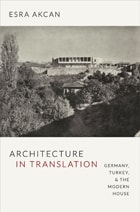
Architecture in Translation
Germany, Turkey, and the Modern HouseEsra Akcan
Duke University Press, 2012
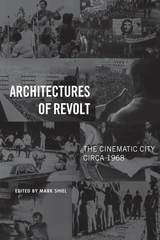
Architectures of Revolt
The Cinematic City circa 1968Mark Shiel
Temple University Press, 2018
Coinciding with the fiftieth anniversary of the worldwide mass protest movements of 1968—against war, imperialism, racism, poverty, misogyny, and homophobia—the exciting anthology Architectures of Revolt explores the degree to which the real events of political revolt in the urban landscape in 1968 drove change in the attitudes and practices of filmmakers and architects alike.
In and around 1968, as activists and filmmakers took to the streets, commandeering public space, buildings, and media attention, they sought to re-make the urban landscape as an expression of utopian longing or as a dystopian critique of the established order. In Architectures of Revolt, the editor and contributors chronicle city-specific case studies from Paris, Berlin, Milan, and Chicago to New York, Los Angeles, Mexico City, and Tokyo. The films discussed range from avant-garde and agitprop shorts to mainstream narrative feature films. All of them share a focus on the city and, often, particular streets and buildings as places of political contestation and sometimes violence, which the medium of cinema was uniquely equipped to capture.
Contributors include: Stephen Barber, Stanley Corkin, Jesse Lerner, Jon Lewis, Gaetana Marrone, Jennifer Stob, Andrew Webber, and the editor.

Archival Afterlives
Cixous, Derrida, and the Matter of FriendshipLaura Hughes
Northwestern University Press, 2024
A capacious analysis of a legendary intellectual friendship and the material legacies it left behind
Over the course of their decades-long friendship, Hélène Cixous and Jacques Derrida assembled overlapping archives of written experiments and exchanges that document a shared interest in their literary afterlives. In this incisive account, Laura Hughes shows how pushing against the limits of writing and of life itself means not only imagining but manifesting a community of future readers.
Archival Afterlives: Cixous, Derrida, and the Matter of Friendship examines the embodied nature of literary creation, taking letters, fragments, notes, and other ephemera as objects of critical analysis and care. Combining close readings of key texts and previously unexamined archival materials, Hughes traces critical connections between Cixous and Derrida, between the theoretical and the autobiographical, and between life writing and its limits. In putting deconstruction into dialogue with new material analyses and archive studies, Archival Afterlives positions this historical and intellectual relationship as a lens through which to reexamine the legacy of critical theory itself.
Archives of the Anthropocene
Visual Grammars of Deep TimeYuriko Furuhata
Duke University Press, 2026
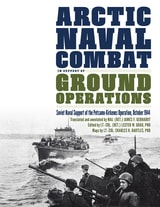
Arctic Naval Combat in Support of Ground Operations
Soviet Naval Support of the Petsamo-Kirkenes Operation, October 1944James F Gebhardt
University of Alaska Press, 2025
The largest Arctic battle on record, involving 133,500 Soviets and 45,000 Germans and Quisling Norwegians, the Petsamo-Kirkenes Operation sought to liberate the northernmost part of Norway from German occupation during World War II. The Soviet navy played a previously unrecognized crucial role in the operation by providing fire support and transportation, as well as conducting raids and combat landings on the enemy-held coast. The harsh Arctic environment, including extreme cold, ice, and limited daylight, posed significant challenges to the Soviet and German forces. Despite these hardships, the Soviet forces achieved their objectives, defeated the German Army, and successfully liberated the area.
Arctic Naval Combat in Support of Ground Operations is a powerful companion to Gebhardt’s previous translation, The Petsamo-Kirkenes Operation: Soviet Breakthrough and Pursuit in the Arctic, October 1944, which details this operation’s ground offensive. Providing a starting point for the study and understanding of combined arms and services combat in the Arctic, an increasingly important and accessible part of the planet where military concerns are rapidly expanding, this work is a valuable addition to the literature of World War II military history and a significant additional perspective on the Soviet military.

Are Girls Necessary?
Lesbian Writing and Modern HistoriesJulie Abraham
University of Minnesota Press, 2008
Are You Experienced? Baby Boom Poets At Midlife
Pamela Gemin
University of Iowa Press, 2003
In this timely and reflective anthology, the generation that sought to stay forever young reveals that midlife should mean more than jokes about thinning hair, creaking joints, and thickening waistlines. Midlife's insights—whether they be physical, spiritual, or emotional—are indeed startling, and who better than poets to deliver them?

Area and Administration
James W. Fesler
University of Alabama Press, 2008
A foundational classic on the organization and coordination of modern government.
This fresh publication of James W. Fesler’s classic, Area and Administration is a powerful work of intellectual history. Richly illustrating how the Great Depression and World War II shaped the thinking of scholars who helped build modern American government.
It is also an authoritative work of powerful insight. The challenges of linking the center with the front lines, or securing vertical and horizonal coordination, and of connecting area and function, have only become more important in twenty-first century government. Fesler’s path-breaking book provides an extraordinarily useful foundation for grappling with issues that have become even more important for governance.
Arendt and America
Richard H. King
University of Chicago Press, 2015
Situating Arendt within the context of U.S. intellectual, political, and social history, King reveals how Arendt developed a fascination with the political thought of the Founding Fathers. King also re-creates her intellectual exchanges with American friends and colleagues, such as Dwight Macdonald and Mary McCarthy, and shows how her lively correspondence with sociologist David Riesman helped her understand modern American culture and society. In the last section of Arendt and America, King sets out the context in which the Eichmann controversy took place and follows the debate about “the banality of evil” that has continued ever since. As King shows, Arendt’s work, regardless of focus, was shaped by postwar American thought, culture, and politics, including the Civil Rights Movement and the Cold War.
For Arendt, the United States was much more than a refuge from Nazi Germany; it was a stimulus to rethink the political, ethical, and historical traditions of human culture. This authoritative combination of intellectual history and biography offers a unique approach for thinking about the influence of America on Arendt’s ideas and also the effect of her ideas on American thought.
Argentina's "Dirty War"
An Intellectual BiographyBy Donald C. Hodges
University of Texas Press, 1991
Argentines ask how their ultracivilized country, reputedly the most European in Latin America, could have relapsed into near-barbarism in the 1970s. This enlightening study seeks to answer that question by reviewing the underlying political events and intellectual foundations of the "dirty war" (1975–1978) and overlapping Military Process (1976–1982). It examines the ideologies and actions of the main protagonists—the armed forces, guerrillas, and organized labor—over time and traces them to their roots.
In the most comprehensive treatment of the subject to date, Hodges examines primary materials never seen by other researchers, including clandestinely published guerrilla documents, and interviews important actors in Argentina's political drama. His wide-ranging scholarship traces the origins of the national security and national salvation doctrines to the Spanish Inquisition, sixteenth-century witch hunts, and nineteenth-century reactions to the modernizing ideologies of liberalism, democracy, socialism, and communism.
Hodges posits that the "dirty war," Military Process, and revolutionary war to which they responded represented the culmination of social tensions that arose in 1930 with the launching of the Military Era by Argentina's first successful twentieth-century coup. He offers the disquieting hypothesis that as long as the "Argentine Question" remains unsettled the military may intervene again, the resistance movement will remain strong, and violence may continue even under a democratic government.

Argentina, the United States, and the Anti-Communist Crusade in Central America, 1977–1984
Mis Lam#26Ariel Armony
Ohio University Press, 1997
Ariel Armony focuses, in this study, on the role played by Argentina in the anti–Communist crusade in Central America. This systematic examination of Argentina’s involvement in the Central American drama of the late 1970s and early 1980s fine–tunes our knowledge of a major episode of the Cold War era.
Basing his study on exhaustive research in the United States, Argentina, and Nicaragua, Armony adroitly demolishes several key assumptions that have shaped the work of scholars in U.S. foreign policy, Argentine military politics, and Central American affairs.
Arguing Sainthood
Modernity, Psychoanalysis, and IslamKatherine Pratt Ewing
Duke University Press, 1997
Ewing critiques Eurocentric cultural theorists and Orientalist discourse while also taking issue with expatriate postcolonial thinkers Homi Bhabha and Gayatri Spivak. She challenges the notion of a monolithic Islamic modernity in order to explore the lived realities of individuals, particularly those of Pakistani saints and their followers. By examining the continuities between current Sufi practices and earlier popular practices in the Muslim world, Ewing identifies in the Sufi tradition a reflexive, critical consciousness that has usually been associated with the modern subject. Drawing on her training in clinical and theoretical psychoanalysis as well as her anthropological fieldwork in Lahore, Pakistan, Ewing argues for the value of Lacan in anthropology as she provides the basis for retheorizing postcolonial studies.

Aristocrats of Color
The Black Elite, 1880–1920Willard B. Gatewood
University of Arkansas Press, 2000
Every American city had a small, self-aware, and active black elite, who felt it was their duty to set the standard for the less fortunate members of their race and to lead their communities by example. Rank within this black upper class rested on such issues as the status of one’s forebears as either house servants or field hands, the darkness of one’s skin, and the level of one’s manners and education.
Professor Gatewood’s study examines this class of African Americans by looking at the genealogies and occupations of specific families and individuals throughout the United States and their roles in their various communities. The resulting narrative is a full and illuminating account of a most influential segment of the African-American population. It explores fully the distinctive background, prestige, attitudes, behavior, power, and culture of this class. The Black Community Studies series from the University of Arkansas Press, edited by Professor Gatewood, continues to examine many of the same themes first explored in this important study.
Arizona's War Town
Flagstaff, Navajo Ordnance Depot, and World War IIJohn S. Westerlund
University of Arizona Press, 2003
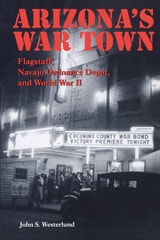
A clearing in the ponderosa pine forest called Volunteer Prairie met the military's criteria for a munitions depot—open terrain, a cool climate, plentiful water, and proximity to a railroad—and it was also sufficiently inland to be safe from the threat of coastal invasion. Constructing a depot of 800 ammunition bunkers, each the size of a 2,000-square-foot home, called for a force of 8,000 laborers, and Flagstaff became a boom town overnight as construction workers and their families poured in from nearby Indian reservations and as far away as the Midwest and South. More than 2,000 were retained as permanent employees—a larger workforce than Flagstaff's total pre-war employment roster.
As Westerlund's portrait of wartime Flagstaff shows, prosperity brought unanticipated consequences: racism simmered beneath the surface of the town as ethnic groups were thrown together for the first time; merchants called a city-wide strike to protest emerging union activity; juvenile delinquency rose dramatically; Flagstaff women entered the workforce in unprecedented numbers, altering local mores along with their own plans for the future; meanwhile, hundreds of sailors and marines arrived at Arizona State Teachers College to participate in the Navy's "V-12" program. Whether recounting the difficulty of 3,500 Navajo and Hopi employees adjusting to life off the reservation or the complaints of townspeople that Austrian POWs-transferred to the depot to ease the labor shortage-were treated too well, Westerlund shows that the construction and maintenance of the facility was far more than a military matter.
Navajo Ordnance Depot remained operational to support wars in Korea, Vietnam, and the Persian Gulf, and today Camp Navajo provides storage for thousands of deactivated ICBM motors. But in recounting its early days, Westerlund has skillfully blended social and military history to vividly portray not only a city's transitional years but also the impact of military expansion on economic and community development in the American West.
Arizona’s Quest for Reform
Socialists, Unionists, and Progressives, 1900–1920David R. Berman
University of Arizona Press, 2026
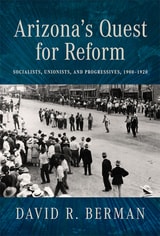
In Arizona’s Quest for Reform, David R. Berman traces the rise and fall of a dynamic coalition of socialists, labor activists, and progressive Democrats led by the influential Governor George Hunt as they pursued sweeping reforms in a rapidly changing state. From the fight for workers’ rights and women’s suffrage to the use of the initiative process and the role of radical newspapers, Berman brings to life the people and movements that shaped Arizona’s early political identity.
Drawing on extensive primary sources and organized in a clear chronological structure, Berman’s study reveals the tensions, alliances, and dramatic events that defined Arizona’s reform efforts between 1900 and 1920. The book explores the impact of powerful mining interests, railroad companies, and labor unions, while also examining the racialization of Mexican miners and their evolving role in the labor movement. Through vivid storytelling and rigorous scholarship, Berman uncovers the complexities of political change in a state straddling the transition from territory to statehood.
This landmark work will appeal to scholars of western history, labor studies, and political science, as well as general readers interested in Arizona’s unique place in the national Progressive movement. Arizona’s Quest for Reform not only deepens our understanding of the past but also offers timely insights into the enduring challenges of coalition building, grassroots activism, and political reform. It is a vital contribution to the study of Arizona and the American West.

Arkansas Made, Volume 1
A Survey of the Decorative, Mechanical, and Fine Arts Produced in Arkansas through 1950Swannee Bennett
University of Arkansas Press, 2020
Arkansas Made is the culmination of Historic Arkansas Museum’s exhaustive investigations into the history of the state’s material culture. Decades of meticulous research have resulted in this exciting two-volume survey of cabinetmakers, silversmiths, potters, fine artists, quilters, and other artisans working in communities all over the state.
The work of the artisans documented here has been the driving force of Historic Arkansas Museum’s mission to collect and preserve Arkansas’s creative legacy and rich artistic traditions. Artisans from across Arkansas’s rich cultural landscape come to life among the colorful quilts, playful temperance jugs, and inventive effigies included in Volume I. Readers will delight not only in the striking full-color images but also in the stories that weave them together across time and region to create a lively picture of art and artisanship in a state too little celebrated for its creative output.
Quilts and Textiles • Ceramics • Silver •Weaponry • Furniture • Vernacular Architecture • Native American Art
Arkansas Made, Volume 2
A Survey of the Decorative, Mechanical, and Fine Arts Produced in Arkansas through 1950Swannee Bennett
University of Arkansas Press, 2020
Arkansas Made is the culmination of Historic Arkansas Museum’s exhaustive investigations into the history of the state’s material culture. Decades of meticulous research have resulted in this exciting two-volume survey of cabinetmakers, silversmiths, potters, fine artists, quilters, and other artisans working in communities all over the state.
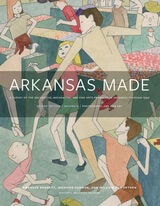
The work of the artisans documented here has been the driving force of Historic Arkansas Museum’s mission to collect and preserve Arkansas’s creative legacy and rich artistic traditions. The photographs and fine artworks that enliven the pages of Volume II represent not only a delightfully broad scope of talent in genres ranging from landscapes to cubist portraits to political cartoons, but also a longstanding tradition of advocacy and support for the arts in Arkansas.
Volume 2Photography • Fine Art
Arkansas in Modern America since 1930
Ben F. Johnson III
University of Arkansas Press, 2019
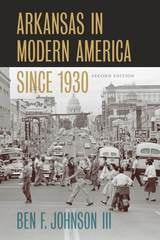
Particularly impressive for the breadth of its scope, Arkansas in Modern America since 1930 offers an overview of the factors that moved Arkansas from a primarily rural society to one more in step with the modern economy and perspectives of the nation as a whole. The narrative covers the roles of Daisy Bates, Sam Walton, Don Tyson, Bill Clinton, and other influential figures in the state’s history to reveal a state shaped by global as much as by local forces. The second edition of this important book will continue to set the standard for analysis and interpretation of Arkansas’s place in the contemporary world.
Armenians and the Allies in Cilicia, 1914-1923
Yucel Guclu
University of Utah Press, 2010
Güçlü bases his claim largely on evidence from state and military archives in Turkey, Britain, France, and the United States that look specifically into the Ottoman version of history, placing the whole question of forced population displacements in a wider and more nuanced perspective than that in which it is usually depicted. According to the author, revolutionary Armenian forces were threatening the Ottoman Empire from within as it was simultaneously threatened by external forces. Armenians were also actively involved with Allied forces throughout World War I. In response, the Ottoman government ordered the movement of the Armenian population away from protected and sensitive war zones. The actions taken by the Ottoman Empire to control the Armenian population were those of relocation, not extermination.
Working to explain why the Armenian conflict emerged and how it was eventually resolved, this book discusses the Armenian revolutionary and separatist movements, Turkish measures of self defense, and Allied schemes regarding the region during the period. It places special emphasis on the influence of Allied forces on the actions of Armenians in Cilicia.
Armies of the Young
Child Soldiers in War and TerrorismRosen, David M
Rutgers University Press, 2005
Children have served as soldiers throughout history. They fought in the American Revolution, the Civil War, and in both world wars. They served as uniformed soldiers, camouflaged insurgents, and even suicide bombers. Indeed, the first U.S. soldier to be killed by hostile fire in the Afghanistan war was shot in ambush by a fourteen-year-old boy.
Does this mean that child soldiers are aggressors? Or are they victims? It is a difficult question with no obvious answer, yet in recent years the acceptable answer among humanitarian organizations and contemporary scholars has been resoundingly the latter. These children are most often seen as especially hideous examples of adult criminal exploitation.
In this provocative book, David M. Rosen argues that this response vastly oversimplifies the child soldier problem. Drawing on three dramatic examples-from Sierra Leone, Palestine, and Eastern Europe during the Holocaust-Rosen vividly illustrates this controversial view. In each case, he shows that children are not always passive victims, but often make the rational decision that not fighting is worse than fighting.
With a critical eye to international law, Armies of the Young urges readers to reconsider the situation of child combatants in light of circumstance and history before adopting uninformed child protectionist views. In the process, Rosen paints a memorable and unsettling picture of the role of children in international conflicts.
Army of Hope, Army of Alienation
Culture and Contradiction in the American Army Communities of Cold War GermanyJohn P. Hawkins
University of Alabama Press, 2004
An inside look at the promises, pressures, and paradoxes of American military life in Cold War Germany.
Army life has always been known as a life of sacrifice, challenge, and frustration, yet one filled also with deep satisfactions. This is so for the soldiers’ families as much as for the soldiers themselves. Over the years, military and civilian leaders of the US Army have tried to reduce the hardships of military life by creating an array of community services designed to provide social support for soldiers and families and help them live satisfying lives in military communities.
Unfortunately, this effort has not been particularly successful, and frustration, dissatisfaction, and alienation persist among soldiers and family member in the US Army communities in Germany. Discontent continues because the underlying sources of alienation in the Army and among its families are highly complex, poorly understood, and therefore hardly addressed by the Army’s quality-of-life programs that are intended to make soldier and family life more bearable.
In Army of Hope, Army of Alienation: Culture and Contradiction in the American Army Communities of Cold War Germany, the author seeks to penetrate the logic, social structure, and daily practice of life in the American military communities that lay scattered along the frontier between East and West Germany during the final years of the Cold War. In coming to understand the life and thought of these American soldiers and families, ordinary American citizens can learn much about their military forces and about their own society and culture. In addition, a greater understanding about how people work and live around an institution that is at once so important and yet tasked with a mission so different from that of ordinary pursuits can stimulate social scientists and concerned citizens to think differently about culture, society, and behavior in general.
Around Quitting Time
Work and Middle-Class Fantasy in American FictionRobert Seguin
Duke University Press, 2001
Tracing connections between the reconstruction of the labor process and the aesthetic dilemmas of modernism, between the emergence of the modern state and the structure of narrative, Seguin analyzes the work of Nathanael West, Ernest Hemingway, Willa Cather, John Barth, and others. These fictional narratives serve to demonstrate for Seguin the pattern of social sites and cultural phenomenon that have emerged where work and leisure, production and consumption, and activity and passivity coincide. He reveals how, by creating pathways between these seemingly opposed domains, the middle-class imaginary at once captures and suspends the dynamics of social class and opens out onto a political and cultural terrain where class is both omnipresent and invisible.
Around Quitting Time will interest critics and historians of modern U.S. culture, literary scholars, and those who explore the interaction between economic and cultural forms.
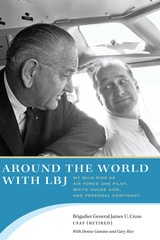
Around the World with LBJ
My Wild Ride as Air Force One Pilot, White House Aide, and Personal ConfidantBy Brigadier General James U. Cross, USAF (retired), with Denise Gamino and Gary Rice
University of Texas Press, 2008
When Lyndon Baines Johnson wanted to go somewhere, there was no stopping him. This dynamic president called for Air Force One as others summon a taxi—at a moment's notice, whatever the hour or the weather. And the man who made sure that LBJ got his ride was General James U. Cross, the president's hand-picked pilot, top military assistant, and personal confidante. One of the few Air Force One pilots to have a position, simultaneously, in the White House, General Cross is also the only member of LBJ's inner circle who has not publicly offered his recollections of the president. In this book, he goes on the record, creating a fascinating, behind-the-scenes portrait of America's complex, often contradictory, always larger-than-life thirty-sixth president.
General Cross tells an engrossing story. In addition to piloting Air Force One around the globe, he served President Johnson in multiple capacities, including directing the Military Office in the White House; managing a secret two-million-dollar presidential emergency fund; supervising the presidential retreat at Camp David, the president's entire transportation fleet, and the presidential bomb shelters; running the White House Mess; hiring White House social aides, including the president's future son-in-law, Charles Robb; and writing condolence letters to the families of soldiers killed in Vietnam. This wide-ranging, around-the-clock access to President Johnson allowed Cross to witness events and share moments that add color and depth to our understanding of America's arguably most demanding and unpredictable president.
Arrows in the Dark (Volumes 1 and 2)
David Ben-Gurion, the Yishuv Leadership, and Rescue Attempts during the HolocaustTuvia Friling; Translated by Ora Cummings
University of Wisconsin Press, 2005
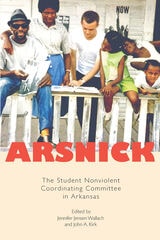
Arsnick
The Student Nonviolent Coordinating Committee in ArkansasJennifer Jensen Wallach
University of Arkansas Press, 2011

Art & Outrage
Provocation, Controversy and the Visual ArtsJohn A. Walker
Pluto Press, 1998
When art hits the headlines, it is usually because it has caused offence or is perceived by the media to have shock-value. Over the last fifty years many artists have been censored, vilified, accused of blasphemy and obscenity, threatened with violence, prosecuted and even imprisoned. Their work has been trashed by the media and physically attacked by the public.
In Art & Outrage, John A. Walker covers the period from the late 1940s to the 1990s to provide the first detailed survey of the most prominent cases of art that has scandalised. The work of some of Britain’s leading, and less well known, painters and sculptors of the postwar period is considered, such as Richard Hamilton, Bryan Organ, Rachel Whiteread, Reg Butler, Damien Hirst, Jamie Wagg, Barry Flanagan and Antony Gormley. Included are works made famous by the media, such as Carl Andre’s Tate Gallery installation of 120 bricks, Rick Gibson’s foetus earrings, Anthony-Noel Kelly’s cast body-parts sculptures and Marcus Harvey’s portrait of Myra Hindley. Walker describes how each incident emerged, considers the arguments for and against, and examines how each was concluded. While broadly sympathetic to radical contemporary art, Walker has some residual sympathy for the layperson’s bafflement and antagonism. This is a scholarly yet accessible study of the interface between art, society and mass media which offers an alternative history of postwar British art and attitudes.
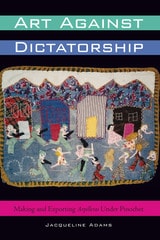
Art Against Dictatorship
Making and Exporting Arpilleras Under PinochetBy Jacqueline Adams
University of Texas Press, 2013
Art can be a powerful avenue of resistance to oppressive governments. During the dictatorship of Augusto Pinochet in Chile, some of the country’s least powerful citizens—impoverished women living in Santiago’s shantytowns—spotlighted the government’s failings and use of violence by creating and selling arpilleras, appliquéd pictures in cloth that portrayed the unemployment, poverty, and repression that they endured, their work to make ends meet, and their varied forms of protest. Smuggled out of Chile by human rights organizations, the arpilleras raised international awareness of the Pinochet regime’s abuses while providing income for the arpillera makers and creating a network of solidarity between the people of Chile and sympathizers throughout the world.
Using the Chilean arpilleras as a case study, this book explores how dissident art can be produced under dictatorship, when freedom of expression is absent and repression rife, and the consequences of its production for the resistance and for the artists. Taking a sociological approach based on interviews, participant observation, archival research, and analysis of a visual database, Jacqueline Adams examines the emergence of the arpilleras and then traces their journey from the workshops and homes in which they were made, to the human rights organizations that exported them, and on to sellers and buyers abroad, as well as in Chile. She then presents the perspectives of the arpillera makers and human rights organization staff, who discuss how the arpilleras strengthened the resistance and empowered the women who made them.
Art History after Modernism
Hans Belting
University of Chicago Press, 2003
So begins Hans Belting's brilliant, iconoclastic reconsideration of art and art history at the end of the millennium, which builds upon his earlier and highly successful volume, The End of the History of Art?. "Known for his striking and original theories about the nature of art," according to the Economist, Belting here examines how art is made, viewed, and interpreted today. Arguing that contemporary art has burst out of the frame that art history had built for it, Belting calls for an entirely new approach to thinking and writing about art. He moves effortlessly between contemporary issues—the rise of global and minority art and its consequences for Western art history, installation and video art, and the troubled institution of the art museum—and questions central to art history's definition of itself, such as the distinction between high and low culture, art criticism versus art history, and the invention of modernism in art history. Forty-eight black and white images illustrate the text, perfectly reflecting the state of contemporary art.
With Art History after Modernism, Belting retains his place as one of the most original thinkers working in the visual arts today.
Art Music Activism
Aesthetics and Politics in 1930s New York CityMaria Cristina Fava
University of Illinois Press, 2024
Maria Cristina Fava explores the rich creative milieu shaped by artists dedicated to using music and theater to advance the promotion, circulation, and acceptance of leftist ideas in 1930s New York City. Despite tensions between aesthetic and pragmatic goals, the people and groups produced works at the center of the decade’s sociopolitical and cultural life. Fava looks at the Composers’ Collective of New York and its work on proletarian music and workers’ songs before turning to the blend of experimentation and vernacular idioms that shaped the political use of music within the American Worker’s Theater Movement. Fava then reveals how composers and theater practitioners from these two groups achieved prominence within endeavors promoted by the Works Project Administration.
Fava’s history teases out fascinating details from performances and offstage activity attached to works by composers such as Marc Blitzstein, Charles Seeger, Ruth Crawford Seeger, Elie Siegmeister, and Harold Rome. Endeavors encouraged avant-garde experimentation while nurturing innovations friendly to modernist approaches and an interest in non-western music. Blitzstein’s The Cradle Will Rock offered a memorable example that found popular success, but while the piece achieved its goals, it became so wrapped up in myths surrounding workers’ theater that critics overlooked Blitzstein’s musical ingenuity.
Provocative and original, Art Music Activism considers how innovative classical composers of the 1930s balanced creative aims with experimentation, accessible content, and a sociopolitical message to create socially meaningful works.

Art Systems
Brazil and the 1970sBy Elena Shtromberg
University of Texas Press, 2016
From currency and maps to heavily censored newspapers and television programming, Art Systems explores visual forms of critique and subversion during the height of Brazilian dictatorship, drawing sometimes surprising connections between artistic production and broader processes of social exchange during a period of authoritarian modernization. Positioning the works beyond the prism of politics, Elena Shtromberg reveals subtle forms of subversion and critique that reinvented the artists’ political terrain.
Analyzing key examples from Cildo Meireles, Antonio Manuel, Artur Barrio, Anna Bella Geiger, Sonia Andrade, Geraldo Mello, and others, the book offers a new framework for theorizing artistic practice. By focusing on the core economic, media, technological, and geographic conditions that circumscribed artistic production during this pivotal era, Shtromberg excavates an array of art systems that played a role in the everyday lives of Brazilians. An examination of the specific historical details of the social systems that were integrated into artistic production, this unique study showcases works that were accessed by audiences far outside the confines of artistic institutions. Proliferating during one of Brazil’s most socially and politically fraught decades, the works—spanning cartography to video art—do not conform to an easily identifiable style, form, material use, or medium. As a result of this breadth, Art Systems gives voice to the multifaceted forces at play in a unique chapter of Latin American cultural history.
Art and Activism
Jazz Artists and Writers in the Civil Rights VanguardJack Marchbanks
Ohio University Press, 2026
Explore how jazz legends and literary icons united art and activism, shaping the civil rights movement and transforming American culture during the pivotal period between 1955 and 1965.
Art and Activism explores the powerful, symbiotic relationships among artists such as Nina Simone, Abbey Lincoln, and Lena Horne and their literary counterparts—Lorraine Hansberry, Maya Angelou, and Langston Hughes. These creative figures positioned themselves as cultural thought leaders within the evolving civil rights movement. While the Jim Crow South was the movement’s operational front, Jack Marchbanks argues that New York City’s intellectual, cultural, and fundraising communities functioned as its strategic command center.
Readers who admire jazz legends like Duke Ellington, Dave Brubeck, Miles Davis, and Charles Mingus—and those fascinated by prominent African American writers like James Baldwin and Ralph Ellison—will discover how these artists intertwined their work with the civil rights struggle. The book examines their involvement in pivotal confrontations and their connections with key leaders such as the Reverend Dr. Martin Luther King Jr., Daisy Bates, Ella Baker, and Malcolm X.
By illuminating the intersection of art and activism, this study offers a fresh perspective on the pivotal decade from 1955 to 1965. It is an essential resource for undergraduate courses and an engaging read for anyone seeking to understand the civil rights era through a cultural lens.
Art and Objecthood
Essays and ReviewsMichael Fried
University of Chicago Press, 1998
Ranging from brief reviews to extended essays, and including major critiques of Jackson Pollock, Morris Louis, Kenneth Noland, Jules Olitski, Frank Stella, and Anthony Caro, these writings establish a set of basic terms for understanding key issues in high modernism: the viability of Clement Greenberg’s account of the infralogic of modernism, the status of figuration after Pollock, the centrality of the problem of shape, the nature of pictorial and sculptural abstraction, and the relationship between work and beholder. In a number of essays Fried contrasts the modernist enterprise with minimalist or literalist art, and, taking a position that remains provocative to this day, he argues that minimalism is essentially a genre of theater, hence artistically self-defeating.
For this volume Fried has also provided an extensive introductory essay in which he discusses how he became an art critic, clarifies his intentions in his art criticism, and draws crucial distinctions between his art criticism and the art history he went on to write. The result is a book that is simply indispensable for anyone concerned with modernist painting and sculpture and the task of art criticism in our time.
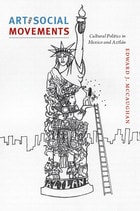
Art and Social Movements
Cultural Politics in Mexico and AztlánEdward J. McCaughan
Duke University Press, 2012
McCaughan argues that the social power of activist artists emanates from their ability to provoke people to see, think, and act in innovative ways. Artists, he claims, help to create visual languages and spaces through which activists can imagine and perform new collective identities and forms of meaningful citizenship. The artists' work that he discusses remains vital today—in movements demanding fuller democratic rights and social justice for working people, women, ethnic communities, immigrants, and sexual minorities throughout Mexico and the United States. Integrating insights from scholarship on the cultural politics of representation with structural analyses of specific historical contexts, McCaughan expands our understanding of social movements.
Art as Information Ecology
Artworks, Artworlds, and Complex Systems AestheticsJason Hoelscher
Duke University Press, 2021
Art beyond Borders
Artistic Exchange in Communist Europe (1945-1989)Jérôme Bazin
Central European University Press, 2016
Art for People's Sake
Artists and Community in Black Chicago, 1965-1975Rebecca Zorach
Duke University Press, 2019
Art for a Modern India, 1947-1980
Rebecca M. Brown
Duke University Press, 2009
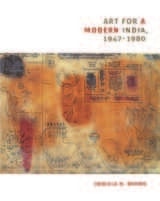
Through close analyses of specific objects of art and design, Brown describes how Indian artists engaged with questions of authenticity, iconicity, narrative, urbanization, and science and technology. She explains how the filmmaker Satyajit Ray presented the rural Indian village as a socially complex space rather than as the idealized site of “authentic India” in his acclaimed Apu Trilogy, how the painter Bhupen Khakhar reworked Indian folk idioms and borrowed iconic images from calendar prints in his paintings of urban dwellers, and how Indian architects developed a revivalist style of bold architectural gestures anchored in India’s past as they planned the Ashok Hotel and the Vigyan Bhavan Conference Center, both in New Delhi. Discussing these and other works of art and design, Brown chronicles the mid-twentieth-century trajectory of India’s modern visual culture.
Art for a New Understanding
Native Voices, 1950s to NowMindy N. Besaw
University of Arkansas Press, 2018
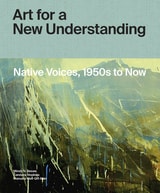
This fully illustrated volume includes essays by art historians and historians and reflections by the artists included in the collection. Also included are key contemporary writings—from the 1950s onward—by artists, scholars, and critics, investigating the themes of transculturalism and pan-Indian identity, traditional practices conducted in radically new ways, displacement, forced migration, shadow histories, the role of personal mythologies as a means to reimagine the future, and much more.
As both a survey of the development of Indigenous art from the 1950s to the present and a consideration of Native artists within contemporary art more broadly, Art for a New Understanding expands the definition of American art and sets the tone for future considerations of the subject. It is an essential publication for any institution or individual with an interest in contemporary Native American art, and an invaluable resource in ongoing scholarly considerations of the American contemporary art landscape at large.
Art for an Undivided Earth
The American Indian Movement GenerationJessica L. Horton
Duke University Press, 2017
Art in Doubt
Tolstoy, Nabokov, and the Problem of Other MindsTatyana Gershkovich
Northwestern University Press, 2021
Leo Tolstoy’s and Vladimir Nabokov’s radically opposed aesthetic worldviews emanate from a shared intuition—that approaching a text skeptically is easy, but trusting it is hard
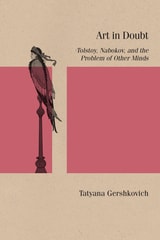
Two figures central to the Russian literary tradition—Tolstoy, the moralist, and Nabokov, the aesthete—seem to have sharply conflicting ideas about the purpose of literature. Tatyana Gershkovich undermines this familiar opposition by identifying a shared fear at the root of their seemingly antithetical aesthetics: that one’s experience of the world might be entirely one’s own, private and impossible to share through art.
Art in Doubt: Tolstoy, Nabokov, and the Problem of Other Minds reconceives the pair’s celebrated fiction and contentious theorizing as coherent, lifelong efforts to reckon with the problem of other people’s minds. Gershkovich demonstrates how the authors’ shared yearning for an impossibly intimate knowledge of others formed and deformed their fiction and brought them through parallel logic to their rival late styles: Tolstoy’s rustic simplicity and Nabokov’s baroque complexity. Unlike those authors for whom the skeptical predicament ends in absurdity or despair, Tolstoy and Nabokov both hold out hope that skepticism can be overcome, not by force of will but with the right kind of text, one designed to withstand our impulse to doubt it. Through close readings of key canonical works—Anna Karenina, The Kreutzer Sonata, Hadji Murat, The Gift, Pale Fire—this book brings the twin titans of Russian fiction to bear on contemporary debates about how we read now, and how we ought to.
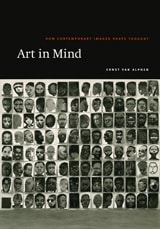
Art in Mind
How Contemporary Images Shape ThoughtErnst van Alphen
University of Chicago Press, 2005
Examining a broad range of works, van Alphen—a renowned art historian and cultural theorist—demonstrates how art serves a socially constructive function by actually experimenting with the parameters of thought. Employing work from artists as diverse as Picasso, Watteau, Francis Bacon, Marlene Dumas, and Matthew Barney, he shows how art confronts its viewers with the "pain points" of cultural experience-genocide, sexuality, diaspora, and transcultural identity-and thereby transforms the ways in which human existence is conceived. Van Alphen analyzes how art visually "thinks" about these difficult cultural issues, tapping into an understudied interpretation of art as the realm where ideas and values are actively created, given form, and mobilized. In this way, van Alphen's book is a work of art in itself as it educates us in a new mode of thought that will forge equally new approaches and responses to the world.
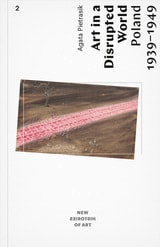
Art in a Disrupted World
Poland 1939–1949Agata Pietrasik
Museum of Modern Art in Warsaw, 2020
Employing an accessible, essayistic style, Pietrasik offers a new look at life in the ten years following the outbreak of World War II and features artists—including Marian Bogusz, Jadwiga Simon-Pietkiewicz, and Józef Szajna—whose work has not yet found substantial audiences in the English-speaking world. Her reading of the art and artists of this period strives to capture their autonomous artistic language and poses critical questions about the ability of traditional art history writing to properly accommodate artworks created in direct response to traumatic experiences.
Art in the Lives of Immigrant Communities in the United States
DiMaggio, Paul
Rutgers University Press, 2010

Art of the Baltics
The Struggle for Freedom of Artistic Expression under the Soviets, 1945-1991Edited by Alla Rosenfeld
Rutgers University Press, 2001
Art of the Baltics is the first major survey of the development of modernist art in Estonia, Lithuania, and Latvia during the post-World War II Soviet period. The contributors discuss and reappraise the art of Baltic artists working in modernist styles. They argue that Estonian, Lithuanian, and Latvian art did not develop in similar ways. Estonia, for example, had closer contact with Scandinavian countries, while Lithuania clearly was part of Central Europe, and was more influenced by Poland.
This book contains nearly three hundred illustrations—many in color—that serve to visually compare the art of the three Baltic countries. It also has three useful historical timelines that contextualize the art presented. In addition to historical overviews of each country, Art of theBaltics contains essays on the art of the region, written by both Baltic and American scholars. The articles extensively cover the Baltic art of the 1960s through the 1980s, which reflect the Zimmerli Art Museum’s holdings of the Norton and Nancy Dodge Collection of Nonconformist Art from the Soviet Union. To round out the scope of this work, contributors also discuss the pre-Soviet art of the region, as well as the recent creative developments that resulted from these small countries gaining independence in 1991.