Results by title
664 books match the query 'Ancient & Classical' and 92 start with a
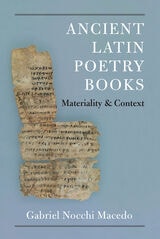
Ancient Latin Poetry Books
Materiality and ContextGabriel Nocchi Macedo
University of Michigan Press, 2021
Before the invention of printing, all forms of writing were done by hand. For a literary text to circulate among readers, and to be transmitted from one period in time to another, it had to be copied by scribes. As a result, two copies of an ancient book were different from one another, and each individual book or manuscript has its own history. The oldest of these books, those that are the closest to the time in which the texts were composed, are few, usually damaged, and have been often neglected in the scholarship. Ancient Latin Poetry Books presents a detailed study of the oldest manuscripts still extant that contain texts by Latin poets, such as Virgil, Terence, and Ovid. Analyzing their physical characteristics, their script, and the historical contexts in which they were produced and used, this volume shows how manuscripts can help us gain a better understanding of the history of texts, as well as of reading habits over the centuries. Since the manuscripts originated in various places of the Latin-speaking world, Ancient Latin Poetry Books investigates the readership and reception of Latin poetry in many different contexts, such schools in the Egyptian desert, aristocratic circles in southern Italy, and the Christian élite in late antique Rome. The research also contributes to our knowledge about the use of writing and the importance of the written text in antiquity. This is an innovative approach to the study of ancient literature, one that takes the materiality of texts into consideration.
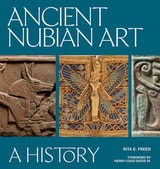
Ancient Nubian Art
A HistoryGates
J. Paul Getty Trust, The, 0
Lushly illustrated with stunning artifacts, this volume is the first comprehensive and accessible publication to explore the art, architecture, and material culture of ancient Nubia.
Kings and queens of Nubia reigned over one of the largest empires in the ancient world and had contacts extending north to Greece and Rome, south to sub-Saharan Africa, east to the Red Sea, and west across much of the Sahel. Even a quick look at Nubia’s artifacts reveals the incredible creativity of its artists, architects, craftspeople, and thinkers. Despite their significance, the achievements of ancient Nubia are little known to the public and are often viewed as a subculture, a derivative offshoot of Egypt, Nubia’s northern neighbor. Nothing could be further from the truth. During its over eight-thousand-year lifespan (beginning around 8000 BCE), Nubia indelibly shaped the art and architecture of the ancient world, an influence still felt today.
Ancient Nubian Art is the first comprehensive and accessible treatment of Nubian artistic culture and showcases its vast range—from ceramics, sculptures, and jewelry to tombs, temples, and palaces. Rita E. Freed, curator emerita at the Museum of Fine Arts, Boston, which has the largest collection of Nubian artifacts outside the Nile Valley, contextualizes the development of Nubian art against a vivid backdrop of kingship, power, worship, identity, gender, technology, and internationalism. Her text is accompanied by a foreword by Henry Louis Gates Jr. and sidebars by expert voices from the field.
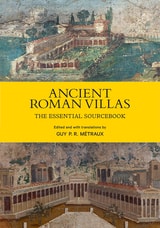
Ancient Roman Villas
The Essential SourcebookGuy P. R. Métraux
J. Paul Getty Trust, The, 2024
While the term villa is generic today, its meaning extended across the entirety of ancient Roman life: villas supplied food, oil, and wine to towns and cities and produced raw materials for craft industries and building construction. Villas were also venues for pleasure, relaxation, and the cultivation of friendships and the mind. Many were known for their spectacular sites, architecture, decoration, and furnishings. They came to be ubiquitous throughout ancient Rome's European and Mediterranean rural hegemony.
This volume compiles a wealth of newly translated Latin and ancient Greek sources—treatises, letters, poems, histories, biographies, and other works of literary art—to vividly convey the architectural, economic, social, political, and cultural significance of ancient Roman villas, from their Greek antecedents through the early Christian period. Thematic chapters reveal ancient Roman attitudes on villa architecture, agricultural operations, and the practices of buying, building, and decorating villas as well as entertaining and pursuing leisure there. References to family, gender relations, and the lives of enslaved persons aim to situate, if only indirectly, a broad range of experiences within villas. Supplemented by generous commentaries, copious annotation, a comprehensive bibliography, and a glossary, this definitive sourcebook equips scholars and students alike for further research and makes for fascinating reading.
Ancient Sex
New EssaysEdited by Ruby Blondell and Kirk Ormand, epilogue by David M. Halperin
The Ohio State University Press, 2015
Rather than reopening old debates, Ancient Sex takes up Foucault’s call for discursive analysis and elucidates some of the ways that ancient Greek and Roman texts and visual arts articulate a culturally specific discourse about sexual matters. Each contributor presupposes that sexual and gendered identities are discursively produced, and teases out some of the ways that the Greeks and Romans spoke and thought about these issues. Comprising essays by emerging and established scholars, this volume emphasizes in particular: sexual discourses about women; the interaction between sexual identities and class status; gender as an unstable discursive category (even in antiquity); and the relationships between ancient and modern sexual categories.
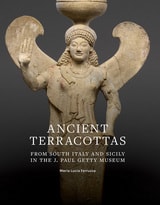
Ancient Terracottas from South Italy and Sicily in the J. Paul Getty Museum
Maria Lucia Ferruzza
J. Paul Getty Trust, The, 2016
Reflecting the Getty's commitment to open content, Ancient Terracottas from South Italy and Sicily in the J. Paul Getty Museum is available online at www.getty.edu/publications/terracottas and may be downloaded for free.
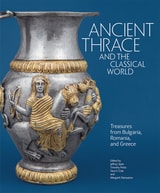
Ancient Thrace and the Classical World
Treasures from Bulgaria, Romania, and GreeceJeffrey Spier
J. Paul Getty Trust, The, 2024
The Thracians—a collection of tribal peoples who inhabited territories north of ancient Greece, an area that comprises present-day Bulgaria, much of Romania, and parts of Greece and Turkey—were renowned for their skill as warriors and horsemen, as well as for their wealth in precious metals. Thracians left few written records, and knowledge of their history and customs has long been dependent on brief accounts from ancient Greek authors. They appeared in Greek myth as formidable adversaries in the Trojan War, cruel kings, and followers of the ecstatic god Dionysos. Spectacular archaeological discoveries made in Thracian lands during modern times, however, have provided firsthand evidence of this remarkable culture, illuminating Thrace’s interactions with Greece, Persia, and Rome.
Ancient Thrace and the Classical World reproduces more than two hundred glorious objects dating from the end of the Bronze Age, around 1200 BC, to the end of the first century AD, when Thrace became part of the Roman Empire. Experts explore topics such as Thracian royal tombs, the Greek colonization of the Black Sea coast, Thracian religion, and more, placing Thracian culture in a broader historical context that highlights its complex relationships with the surrounding region.
This volume is published to accompany an exhibition on view at the J. Paul Getty Museum at the Getty Villa from November 6, 2024, to March 3, 2025.
Ancient Weeds
Contours of Popular and Trash Literature in Ancient and Medieval TimesEdited by Sylva Fischerová and Jirí Starý
Karolinum Press, 2023
The common story in literary studies is that the emergence of popular and junk literature is related to the emergence of modern society due to the rise of literacy and the shortening of workdays. Ancient Weeds upends this misconception by demonstrating that antiquity had its fair share of literary pieces that fit the definition of popular, trivial, and junk literature. The authors analyze artifacts such as the ancient Egyptian Turin Papyrus, ancient love novels, Christian hagiographies and passion plays, lives of Jesus and Marian hymns, Old Norse tales and lying sagas, and Spanish blind romances. Through numerous excerpts, it becomes clear that the line between junk and high literature is thinner than it seems. They reveal how seemingly low themes such as sex and violence often overlap with the themes of high literature. In many cases, low literature is more imaginative and subversive than canonical texts, and bizarreness and non-conformity do not necessarily equate to the ephemerality of a work. As Ancient Weeds shows, thousands of years after it was written, low literature can still be a great source of entertainment today.
Ancients and Moderns
John K. Ryan
Catholic University of America Press, 2018
Anger, Mercy, Revenge
Lucius Annaeus Seneca
University of Chicago Press, 2010
Lucius Annaeus Seneca (4 BCE–65 CE) was a Roman Stoic philosopher, dramatist, statesman, and adviser to the emperor Nero, all during the Silver Age of Latin literature. The Complete Works of Lucius Annaeus Seneca is a fresh and compelling series of new English-language translations of his works in seven accessible volumes. Edited by world-renowned classicists Elizabeth Asmis, Shadi Bartsch, and Martha C. Nussbaum, this engaging collection restores Seneca—whose works have been highly praised by modern authors from Desiderius Erasmus to Ralph Waldo Emerson—to his rightful place among the classical writers most widely studied in the humanities.
Anger, Mercy, Revenge comprises three key writings: the moral essays On Anger and On Clemency—which were penned as advice for the then young emperor, Nero—and the Apocolocyntosis, a brilliant satire lampooning the end of the reign of Claudius. Friend and tutor, as well as philosopher, Seneca welcomed the age of Nero in tones alternately serious, poetic, and comic—making Anger, Mercy, Revenge a work just as complicated, astute, and ambitious as its author.
Antigone
Sophocles; A verse translation by David Mulroy, with introduction and notes
University of Wisconsin Press, 2013
David Mulroy’s translation of Antigone faithfully reproduces the literal meaning of Sophocles’ words while also reflecting his verbal pyrotechnics. Using fluid iambic pentameters for the spoken passages and rhyming stanzas for the songs, it is true to the letter and the spirit of the great Greek original.
Antigone
Sophocles
University of Chicago Press, 2013
Drawn from the authoritative third edition of the University of Chicago Press’s Complete Greek Tragedies series, this stand-alone edition of Elizabeth Wyckoff’s elegant rendition of Antigone reminds readers why it endures as one of the most widely read and admired of Sophocles’s plays. Though the story unfolds in the aftermath of Oedipus the King, Antigone was the first of the Theban Plays written by Sophocles.
Mark Griffith and Glenn W. Most’s introduction to the story of one woman’s brave resistance in the face of unfathomable loss provides essential information about the play’s first production, plot, and reception in antiquity.
Antiphon and Andocides
Translated by Michael Gagarin and Douglas M. MacDowell
University of Texas Press, 1998
Classical oratory is an invaluable resource for the study of ancient Greek life and culture. The speeches offer evidence on Greek moral views, social and economic conditions, political and social ideology, and other aspects of Athenian culture that have been largely ignored: women and family life, slavery, and religion, to name just a few.
This volume contains the works of the two earliest surviving orators, Antiphon and Andocides. Antiphon (ca. 480-411) was a leading Athenian intellectual and creator of the profession of logography ("speech writing"), whose special interest was law and justice. His six surviving works all concern homicide cases. Andocides (ca. 440-390) was involved in two religious scandals—the mutilation of the Herms (busts of Hermes) and the revelation of the Eleusinian Mysteries—on the eve of the fateful Athenian expedition to Sicily in 415. His speeches are a defense against charges relating to those events.
Antiquarian Voices
The Roman Academy and the Commentary Tradition on Ovid's FastiAngela Fritsen
The Ohio State University Press, 2015
Angela Fritsen’s Antiquarian Voices:The Roman Academy and the Commentary Tradition on Ovid’s Fasti offers the first study of the Renaissance exegesis and imitation of Ovid as antiquarian. Fritsen analyzes the Fasti commentaries by Paolo Marsi (1440–1484) and Antonio Costanzi (1436–1490) as well as the connections between the two works. It situates Ovidian Fasti studies in the Roman Academy under the mentorship of Pomponio Leto. Nowhere could the investigation of the Fasti be carried out better than in Rome. The humanists had a guide to the City in Ovid. They also regarded the Fasti as well suited to the ideology of the ancient Roman imperium’s renewal in modern papal Rome.
Antiquarian Voices illustrates how in reviving the Fasti, the humanists returned Rome to its original splendor. The book demonstrates that the humanists were eager to relate the Fasti to their antiquarian pursuits—as well as to their rising personal fame.
Antisthenes of Athens
Texts, Translations, and CommentarySusan H. Prince
University of Michigan Press, 2015
Approaches to Homer
Edited by Carl A. Rubino and Cynthia W. Shelmerdine
University of Texas Press, 1983
Modern Homeric scholarship is distinguished by a dazzling diversity of approaches. That diversity is brilliantly displayed in this volume, in which nine well-known classicists approach the Homeric poems from the various perspectives of archaeology, economic history, philosophy, literary criticism, linguistics, and Byzantine history.
Several essays are primarily concerned with what the Homeric poems teach us about the past. Richard Hope Simpson, for example, reviews the controversy sparked by his and John F. Lazenby's 1970 argument that the Catalogue of Ships in the Iliad accurately reflects the geography of Mycenean Greece. Using archaeology as just one of his starting points, Gregory Nagy reflects upon the death and funeral of Sarpedon as described in the Iliad. Our understanding of the word áté is enhanced by E. D. Francis, who closely examines its prehistory.
Norman Austin's elegant and original discussion of tone in the Odyssey's Cyclops tale is animated by both psychoanalytic theory and his work with two practitioners of optometric visual training. Writing of Odysseus, James M. Redfield dubs that hero "the economic man" and links certain tensions in the Odyssey to the actual economic concerns of Greece in the late eighth century BC. Both Ann L. T. Bergren and Mabel L. Lang concern themselves with problems of narrative in the Homeric epics.
Like Hope Simpson, C. J. Rowe updates a controversy—in this instance, the many objections raised to Arthur Adkins' influential 1960 study of moral values in Homer. Gareth Morgan provides a fascinating glimpse of the Homeric scholarship of another day by focusing on the work of the astonishing John Tzetzes in twelfth-century Byzantium.
Aquinas and the Platonist Tradition
Fran O'Rourke
Catholic University of America Press, 2026
Aramaic Literature from Egypt and the Levant
Tawny L. Holm
SBL Press, 2026
Archaic Greek Poetry
An AnthologySelected and translated by Barbara Hughes Fowler
University of Wisconsin Press, 1992
In addition to its breadth, Archaic Greek Poetry stands alone as the only volume of its kind translated by a contemporary published poet. Perhaps the most elegant translator of ancient Greek poetry into modern English, Barbara Hughes Fowler offers translations true to the original Greek while providing modern readers with superb examples of the beauty of lyric poetry. Students and scholars of classical and comparative literature, ancient history, and art history, as well as lovers of lyric poetry, will enthusiastically welcome this volume.
Architectural Networks in the North Aegean
Thasos, Samothrace, and the Formation of Hellenistic DesignEdited by William Aylward, Jacques des Courtils, and Bonna D. Wescoat
University of Wisconsin Press, 2025
Employing the idea of networks to effectively describe the interconnectedness of design, materials, technology, religion, and politics, the contributors to this volume establish the need to understand this important region holistically and on its own terms. Taking a close look at major buildings and monuments—while considering technique, design, and decoration as elements of a vigorous web—this volume offers important insights about the area’s significance in the history of Hellenistic architecture, including lasting innovations in architectural illusion, Ionic entablature, and groundbreaking uses of marble and plaster. From the North Aegean, such principles and tactics were transmitted to the rest of the Hellenistic world, influencing Roman architecture and, from there, Western architectural history.
Architecture of Minoan Crete
Constructing Identity in the Aegean Bronze AgeBy John C. McEnroe
University of Texas Press, 2010
Ever since Sir Arthur Evans first excavated at the site of the Palace at Knossos in the early twentieth century, scholars and visitors have been drawn to the architecture of Bronze Age Crete. Much of the attraction comes from the geographical and historical uniqueness of the island. Equidistant from Europe, the Middle East, and Africa, Minoan Crete is on the shifting conceptual border between East and West, and chronologically suspended between history and prehistory. In this culturally dynamic context, architecture provided more than physical shelter; it embodied meaning. Architecture was a medium through which Minoans constructed their notions of social, ethnic, and historical identity: the buildings tell us about how the Minoans saw themselves, and how they wanted to be seen by others.
Architecture of Minoan Crete is the first comprehensive study of the entire range of Minoan architecture—including houses, palaces, tombs, and cities—from 7000 BC to 1100 BC. John C. McEnroe synthesizes the vast literature on Minoan Crete, with particular emphasis on the important discoveries of the past twenty years, to provide an up-to-date account of Minoan architecture. His accessible writing style, skillful architectural drawings of houses and palaces, site maps, and color photographs make this book inviting for general readers and visitors to Crete, as well as scholars.
Archive Feelings
A Theory of Greek TragedyMario Telò
The Ohio State University Press, 2020
With bold readings of thirteen plays by Aeschylus, Sophocles, and Euripides, including the Oedipus cycle, the Oresteia,Medea, and Bacchae; an eclectic synthesis of Freud, Lacan, Derrida, Žižek, Deleuze, and other critical theorists; and an engagement with art, architecture, and film, Mario Telò’s Archive Feelings: A Theory of Greek Tragedy locates Greek tragedy’s aesthetic allure beyond catharsis in a vertiginous sense of giddy suspension, in a spiral of life and death that resists equilibrium, stabilization, and all forms of normativity. In so doing, Telò forges a new model of tragic aesthetics.
Argonautika
The Voyage of Jason and the ArgonautsMary Zimmerman
Northwestern University Press, 2013
As in her Tony Award–winning Metamorphoses, Mary Zimmerman transforms Greek mythology—here the story of Jason and the Argonauts—into a mesmerizing piece of theater. Encountering an array of daunting challenges in their “first voyage of the world,” Jason and his crew illustrate the essence of all such journeys to follow—their unpredictability, their inspiring and overwhelming breadth of emotion, their lessons in the inevitability of failure and loss. Bursts of humor and fantastical creatures enrich a story whose characters reveal remarkable complexity. Medea is profoundly sympathetic even as the seeds are sown for the monstrous life ahead of her, and the brute strength of Hercules leaves him no less vulnerable to the vicissitudes of love. Zimmerman brings to Argonautika her trademark ability to encompass the full range of human experience in a work as entertaining as it is enlightening.
Arguments with Silence
Writing the History of Roman WomenAmy Richlin
University of Michigan Press, 2014
Women in ancient Rome challenge the historian. Widely represented in literature and art, they rarely speak for themselves. Amy Richlin, among the foremost pioneers in ancient studies, gives voice to these women through scholarship that scours sources from high art to gutter invective.
In Arguments with Silence, Richlin presents a linked selection of her essays on Roman women’s history, originally published between 1981 and 2001 as the field of “women in antiquity” took shape, and here substantially rewritten and updated. The new introduction to the volume lays out the historical methodologies these essays developed, places this process in its own historical setting, and reviews work on Roman women since 2001, along with persistent silences. Individual chapter introductions locate each piece in the social context of Second Wave feminism in Classics and the academy, explaining why each mattered as an intervention then and still does now.
Inhabiting these pages are the women whose lives were shaped by great art, dirty jokes, slavery, and the definition of adultery as a wife’s crime; Julia, Augustus’ daughter, who died, as her daughter would, exiled to a desert island; women wearing makeup, safeguarding babies with amulets, practicing their religion at home and in public ceremonies; the satirist Sulpicia, flaunting her sexuality; and the praefica, leading the lament for the dead.
Amy Richlin is one of a small handful of modern thinkers in a position to consider these questions, and this guided journey with her brings surprise, delight, and entertainment, as well as a fresh look at important questions.
Aristaenetus, Erotic Letters
Peter Bing
SBL Press, 2014
The first complete English translation of Aristaenetus in nearly three centuries
Through allusion and adaption of earlier authors, Aristaenetus recounts tales that are the stuff of comedy, erotic poetry, and ancient novel. Here we read of lovers who use every trope of erotic literature to praise their beloveds in over-the-top speeches. Aristaenetus amazes us with tales of paramours hatching complicated schemes to achieve their desires, while wily go-betweens help smooth their way. He presents us with accounts of unfaithful spouses who barely avoid capture in the midst of hair-raising and amusing infidelities. This sixth century collection is perfect for anyone interested in classical and postclassical literature.
Features:
- English translation and Greek text on facing pages
- Introduction with history of the text
- Discussion of intertextual connections with Greco-Roman authors
Aristophanes and the Cloak of Comedy
Affect, Aesthetics, and the CanonMario Telò
University of Chicago Press, 2016
Telò boldly traces Aristophanes’s rise, ironically, to the defeat of his play Clouds at the Great Dionysia of 423 BCE. Close readings of his revised Clouds and other works, such as Wasps, uncover references to the earlier Clouds, presented by Aristophanes as his failed attempt to heal the audience, who are reflected in the plays as a kind of dysfunctional father. In this proto-canonical narrative of failure, grounded in the distinctive feelings of different comic modes, Aristophanic comedy becomes cast as a prestigious object, a soft, protective cloak meant to shield viewers from the debilitating effects of competitors’ comedies and restore a sense of paternal responsibility and authority. Associations between afflicted fathers and healing sons, between audience and poet, are shown to be at the center of the discourse that has shaped Aristophanes’s canonical dominance ever since.
Aristotle On Poetics
Seth Benardete
St. Augustine's Press, 2002
Aristotle’s much-translated On Poetics is the earliest and arguably the best treatment that we possess of tragedy as a literary form. The late Seth Benardete and Michael Davis have translated it anew with a view to rendering Aristotle’s text into English as precisely as possible. A literal translation has long been needed, for in order to excavate the argument of On Poetics one has to attend not simply to what is said on the surface but also to the various puzzles, questions, and peculiarities that emerge only on the level of how Aristotle says what he says and thereby leads one to revise and deepen one’s initial understanding of the intent of the argument. As On Poetics is about how tragedy ought to be composed, it should not be surprising that it turns out to be a rather artful piece of literature in its own right.
Benardete and Davis supplement their edition of On Poetics with extensive notes and appendices. They explain nuances of the original that elude translation, and they provide translations of passages found elsewhere in Aristotle’s works as well as in those of other ancient authors that prove useful in thinking through the argument of On Poetics both in terms of its treatment of tragedy and in terms of its broader concerns. By following the connections Aristotle plots between On Poetics and his other works, readers will be in a position to appreciate the centrality of this little book for his thought on the whole.
In an introduction that sketches the overall interpretation of On Poetics, Davis argues that, while On Poetics is certainly about tragedy, it has a further concern extending beyond poetry to the very structure of the human soul in its relation to what is, and that Aristotle reveals in the form of his argument the true character of human action.
Aristotle in Late Antiquity
Lawrence P. Schrenk
Catholic University of America Press, 2018
Aristotle on Memory
Second EditionRichard Sorabji
University of Chicago Press, 2006
“Sorabji has produced a first-class book on an important topic. All Aristotelians, and anyone with an interest in any aspect of memory, will be in his debt.”—Jonathan Barnes, Isis
“Anyone concerned with Aristotle’s psychology, theory of mind, or rhetoric, anyone interested in mnemonic systems, and anyone trying to work out for himself a theory of memory, should read Aristotle’s treatise On Memory, with the comments by Richard Sorabji.”—International Studies in Philosophy
“Sorabji’s book is a sample of care, intelligence, and subtlety that the Anglo-Saxon philosophers do not hesitate to invest in such enterprises. . . . The notes seem to leave no detail, no textual difficulty unilluminated.”—Revue de Métaphysique et de Morale
Aristotle's "Art of Rhetoric"
Aristotle
University of Chicago Press, 2019
Here Robert C. Bartlett offers a literal, yet easily readable, new translation of Aristotle’s “Art of Rhetoric,” one that takes into account important alternatives in the manuscript and is fully annotated to explain historical, literary, and other allusions. Bartlett’s translation is also accompanied by an outline of the argument of each book; copious indexes, including subjects, proper names, and literary citations; a glossary of key terms; and a substantial interpretive essay.
Aristotle's "Politics"
Second EditionAristotle
University of Chicago Press, 2013
Aristotle's Dialogue with Socrates
On the "Nicomachean Ethics"Ronna Burger
University of Chicago Press, 2008
What is the good life for a human being? Aristotle’s exploration of this question in the Nicomachean Ethics has established it as a founding work of Western philosophy, though its teachings have long puzzled readers and provoked spirited discussion. Adopting a radically new point of view, Ronna Burger deciphers some of the most perplexing conundrums of this influential treatise by approaching it as Aristotle’s dialogue with the Platonic Socrates.
Tracing the argument of the Ethics as it emerges through that approach, Burger’s careful reading shows how Aristotle represents ethical virtue from the perspective of those devoted to it while standing back to examine its assumptions and implications.
“This is the best book I have read on Aristotle’s Nicomachean Ethics. It is so well crafted that reading it is like reading the Ethics itself, in that it provides an education in ethical matters that does justice to all sides of the issues.”—Mary P. Nichols, Baylor University
Aristotle's Ontology of Change
Mark Sentesy
Northwestern University Press, 2020
Aristotle may be the only thinker to propose a noncircular definition of change. With his landmark argument that change did, in fact, exist, Aristotle challenged established assumptions about what it is and developed a set of conceptual frameworks that continue to provide insight into the nature of reality. This groundbreaking work on change, however, has long been interpreted through a Platonist view of change as unreal. By offering a comprehensive reexamination of Aristotle’s pivotal arguments, and establishing his positive ontological conception of change, Sentesy makes a significant contribution to scholarship on Aristotle, ancient philosophy, the history and philosophy of science, and metaphysics.
Aristotle's Physics
A Guided StudyAritotle
Rutgers University Press, 1995
This is a new translation, with introduction, commentary, and an explanatory glossary.
"Sachs's translation and commentary rescue Aristotle's text from the rigid, pedantic, and misleading versions that have until now obscured his thought. Thanks to Sachs's superb guidance, the Physics comes alive as a profound dialectical inquiry whose insights into the enduring questions about nature, cause, change, time, and the 'infinite' are still pertinent today. Using such guided studies in class has been exhilarating both for myself and my students." ––Leon R. Kass, The Committee on Social Thought, University of Chicago
Aristotle’s Physics is the only complete and coherent book we have from the ancient world in which a thinker of the first rank seeks to say something about nature as a whole. For centuries, Aristotle’s inquiry into the causes and conditions of motion and rest dominated science and philosophy. To understand the intellectual assumptions of a powerful world view—and the roots of the Scientific Revolution—reading Aristotle is critical. Yet existing translations of Aristotle’s Physics have made it difficult to understand either Aristotle’s originality or the lasting value of his work.
In this volume in the Masterworks of Discovery series, Joe Sachs provides a new plain-spoken English translation of all of Aristotle’s classic treatise and accompanies it with a long interpretive introduction, a running explication of the text, and a helpful glossary. He succeeds brilliantly in fulfilling the aim of this innovative series: to give the general reader the tools to read and understand a masterwork of scientific discovery.
Aristotle's Poetics
Stephen Halliwell
University of Chicago Press, 1998
The core of the book is a fresh appraisal of Aristotle's view of tragic drama, in which Halliwell contends that at the heart of the Poetics lies a philosophical urge to instill a secularized understanding of Greek tragedy.
"Essential reading not only for all serious students of the Poetics . . . but also for those—the great majority—who have prudently fought shy of it altogether."—B. R. Rees, Classical Review
"A splendid work of scholarship and analysis . . . a brilliant interpretation."—Alexander Nehamas, Times Literary Supplement
Aristotle's Politics
Living Well and Living TogetherEugene Garver
University of Chicago Press, 2011
Close examination of Aristotle’s treatise, Garver finds, reveals a significant, practical role for philosophy to play in politics. Philosophers present arguments about issues—such as the right and the good, justice and modes of governance, the relation between the good person and the good citizen, and the character of a good life—that politicians must then make appealing to their fellow citizens. Completing Garver’s trilogy on Aristotle’s unique vision, Aristotle’s Politics yields new ways of thinking about ethics and politics, ancient and modern.
Aristotle's Teaching in the "Politics"
Thomas L. Pangle
University of Chicago Press, 2013
Aristotle
Democracy and Political ScienceDelba Winthrop
University of Chicago Press, 2018
Today, democracy is seen as the best or even the only legitimate form of government. With this book, Delba Winthrop punctures this complacency and takes up the challenge of justifying democracy through Aristotle’s political science. In Aristotle’s time and in ours, democrats want inclusiveness; they want above all to include everyone as a part of a whole. But what makes a whole? This is a question for both politics and philosophy, and Winthrop shows that Aristotle pursues the answer in the Politics. She uncovers in his political science the insights philosophy brings to politics and, especially, the insights politics brings to philosophy. Through her appreciation of this dual purpose and her skilled execution of her argument, Winthrop makes profound discoveries. Central to politics, she maintains, is the quality of assertiveness—the kind of speech that demands to be heard. Aristotle, she shows for the first time, carries assertive speech into philosophy, where human reason claims its due as a contribution to the universe. Political science has the high role of teaching ordinary folk about democracy and what sustains it.
This posthumous publication is more than an honor to Delba Winthrop’s memory. It is a gift to partisans of democracy, advocates of justice, and students of Aristotle.
Artifact and Artifice
Classical Archaeology and the Ancient HistorianJonathan M. Hall
University of Chicago Press, 2013
Artistry in Bronze
The Greeks and Their Legacy XIXth International Congress on Ancient BronzesJens M Daehner
J. Paul Getty Trust, The, 2017
www.getty.edu/publications/artistryinbronze
Asinaria
The One about the AssesPlautus; Translated and with commentary by John Henderson
University of Wisconsin Press, 2006
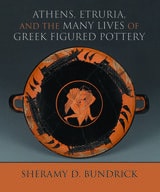
Athens, Etruria, and the Many Lives of Greek Figured Pottery
Sheramy D. Bundrick
University of Wisconsin Press, 2021
Thousands of Greek painted vases have emerged from excavations of tombs, sanctuaries, and settlements throughout Etruria, from southern coastal centers to northern communities in the Po Valley. Using documented archaeological assemblages, especially from tombs in southern Etruria, Bundrick challenges the widely held assumption that Etruscans were hellenized through Greek imports. She marshals evidence to show that Etruscan consumers purposefully selected figured pottery that harmonized with their own local needs and customs, so much so that the vases are better described as etruscanized. Athenian ceramic workers, she contends, learned from traders which shapes and imagery sold best to the Etruscans and employed a variety of strategies to maximize artistry, output, and profit.
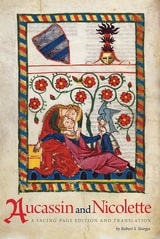
Aucassin and Nicolette
A Facing-Page Edition and TranslationRobert S. Sturges
Michigan State University Press, 2015