Results by title
1677 books match the query 'Archaeology' and 222 start with a
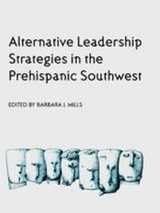
Alternative Leadership Strategies in the Prehispanic Southwest
Edited by Barbara J. Mills
University of Arizona Press, 2000
In considerations of societal change, the application of classic evolutionary schemes to prehistoric southwestern peoples has always been problematic for scholars. Because recent theoretical developments point toward more variation in the scale, hierarchy, and degree of centralization of complex societies, this book takes a fresh look at southwestern prehistory with these new ideas in mind.
This is the first book-length work to apply new theories of social organization and leadership strategies to the prehispanic Southwest. It examines leadership strategies in a number of archaeological contexts—from Chaco Canyon to Casas Grandes, from Hohokam to Zuni—to show striking differences in the way that leadership was constructed across the region.
These case studies provide ample evidence for alternative models of leadership in middle-range societies. By illustrating complementary approaches in the study of political organization, they offer new insight into power and inequality. They also provide important models of how today's archaeologists are linking data to theory, providing a basis for comparative analysis with other regions.
CONTENTSAlternative Models, Alternative Strategies: Leadership in the Prehispanic Southwest / Barbara J. Mills
Political Leadership and the Construction of Chacoan Great Houses, A.D. 1020-1140 / W. H. Wills
Leadership, Long-Distance Exchange, and Feasting in the Protohistoric Rio Grande / William M. Graves and Katherine A. Spielmann
Ritual as a Power Resource in the American Southwest / James M. Potter and Elizabeth M. Perry
Ceramic Decoration as Power: Late Prehistoric Design Change in East-Central Arizona / Scott Van Keuren
Leadership Strategies in Protohistoric Zuni Towns / Keith W. Kintigh
Organizational Variability in Platform Mound-Building Groups of the American Southwest / Mark D. Elson and David R. Abbott
Leadership Strategies among the Classic Period Hohokam: A Case Study / Karen G. Harry and James M. Bayman
The Institutional Contexts of Hohokam Complexity and Inequality / Suzanne K. Fish and Paul R. Fish
Leadership at Casas Grandes, Chihuahua, Mexico / Michael E. Whalen and Paul E. Minnis
Reciprocity and Its Limits: Considerations for a Study of the Prehispanic Pueblo World / Timothy A. Kohler, Matthew W. Van Pelt, and Lorene Y. L. Yap
Dual-Processual Theory and Social Formations in the Southwest / Gary M. Feinman
Alternative Pathways to Complexity
A Collection of Essays on Architecture, Economics, Power, and Cross-Cultural AnalysisLane F. Fargher
University Press of Colorado, 2016
A group of highly distinguished scholars takes up important issues, theories, and methods stemming from the nascent body of research on comparative archaeology to showcase and apply important theories of households, power, and how the development of complex societies can be extended and refined. Drawing on the archaeological, ethnohistorical, and ethnographic records, the chapters in this volume contain critical investigations on the role of collective action, economics, and corporate cognitive codes in structuring complex societies.
Alternative Pathways to Complexity is an important addition to theoretical development and empirical research on Mesoamerica, the Old World, and cross-cultural studies. The theoretical implications addressed in the chapters will have broad appeal for scholars grappling with alternative pathways to complexity in other regions as well as those addressing diverse cross-cultural research.
Contributors: Sarah B. Barber, Cynthia L. Bedell, Christopher S. Beekman, Frances F. Berdan, Tim Earle, Carol R. Ember, Gary M. Feinman, Arthur A. Joyce, Stephen A. Kowalewski, Lisa J. LeCount, Linda M. Nicholas, Peter N. Peregrine, Peter Robertshaw, Barbara L. Stark, T. L. Thurston, Deborah Winslow, Rita Wright
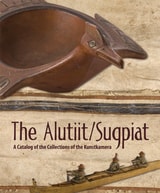
Alutiit/Sugpiat
A Catalog of the Collections of the KunstkameraEdited by Yuri E. Berezkin
University of Alaska Press, 2012
This beautifully photographed book catalogs the collection of nearly five hundred Alutiiq cultural items held by the Peter the Great Museum of Anthropology and Ethnography, or the Kunstkamera, in St. Petersburg, Russia. Gathered between 1780 and 1867, many of the artifacts are composed of fur, feathers, gut, hair, and other delicate materials, which prevent their transport for display or study.
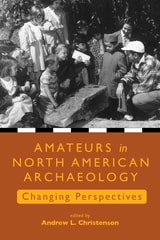
Amateurs in North American Archaeology
Changing PerspectivesEdited by Andrew L. Christenson
University of Utah Press, 2025
Until the mid-twentieth century, professional archaeologists readily worked alongside amateur or avocational archaeologists—those who did not have an academic, professional, or governmental affiliation. However, the gulf between professionals and amateurs has grown in recent decades, and amateurs are now often viewed more warily and are even conflated with looters. Amateurs in North American Archaeology traces the trajectory of this change, noting its implications for archaeological studies across the continent.
The volume’s contributors discuss time periods, noteworthy individuals, archaeological societies, and geographical regions, offering a wide-ranging perspective on a topic that is frequently overlooked. Though the book evaluates the past, it also makes crucial claims for the future of effective, inclusive archaeological study, emphasizing the importance of diverse perspectives and alternate interpretations.

American Beginnings
The Prehistory and Palaeoecology of BeringiaEdited by Frederick Hadleigh West
University of Chicago Press, 1996
"An invaluable resource. . . . It will no doubt remain the key reference book for Beringia for many years to come."—Steven Mithen, Journal of Human Evolution
"Extraordinary. The fifty-six contributors . . . represent the most prominent American and Russian researchers in the region."—Choice
"Publication of this well-illustrated compendium is a great service to early American and especially Siberian Upper Paleolithic archaeology."—Nicholas Saunders, New Scientist
"This is a great book . . . perhaps the greatest contribution to the archaeology of Beringia that has yet been published. . . . This is the kind of book to which archaeology should aspire."—Herbert D.G. Maschner, Antiquity
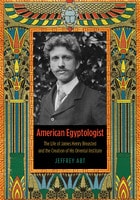
American Egyptologist
The Life of James Henry Breasted and the Creation of His Oriental InstituteJeffrey Abt
University of Chicago Press, 2011
James Henry Breasted (1865–1935) had a career that epitomizes our popular image of the archaeologist. Daring, handsome, and charismatic, he traveled on expeditions to remote and politically unstable corners of the Middle East, helped identify the tomb of King Tut, and was on the cover of Time magazine. But Breasted was more than an Indiana Jones—he was an accomplished scholar, academic entrepreneur, and talented author who brought ancient history to life not just for students but for such notables as Teddy Roosevelt and Sigmund Freud.
American Indians and the Market Economy, 1775-1850
Edited by Lance Greene and Mark R. Plane,with a foreword by Timothy K. Perttula
University of Alabama Press, 2011
The last quarter of the 18th century was a period of extensive political, economic, and social change in North America, as the continent-wide struggle between European superpowers waned. Native groups found themselves enmeshed in the market economy and new state forms of control, among other new threats to their cultural survival. Native populations throughout North America actively engaged the expanding marketplace in a variety of economic and social forms. These actions, often driven by and expressed through changes in material culture, were supported by a desire to maintain distinctive ethnic identities.
Illustrating the diversity of Native adaptations in an increasingly hostile and marginalized world, this volume is continental in scope—ranging from Connecticut to the Carolinas, and westward through Texas and Colorado. Calling on various theoretical perspectives, the authors provide nuanced perspectives on material culture use as a manipulation of the market economy. A thorough examination of artifacts used by Native Americans, whether of Euro-American or Native origin, this volume provides a clear view of the realities of the economic and social interactions between Native groups and the expanding Euro-American population and the engagement of these Native groups in determining their own fate.
American Journal of Archaeology, volume 126 number 1 (January 2022)
The University of Chicago Press
University of Chicago Press Journals, 2022
American Journal of Archaeology, volume 126 number 2 (April 2022)
The University of Chicago Press
University of Chicago Press Journals, 2022
American Journal of Archaeology, volume 126 number 3 (July 2022)
The University of Chicago Press
University of Chicago Press Journals, 2022
American Journal of Archaeology, volume 126 number 4 (October 2022)
The University of Chicago Press
University of Chicago Press Journals, 2022
American Journal of Archaeology, volume 127 number 1 (January 2023)
The University of Chicago Press
University of Chicago Press Journals, 2023
American Journal of Archaeology, volume 127 number 2 (April 2023)
The University of Chicago Press
University of Chicago Press Journals, 2023
American Journal of Archaeology, volume 127 number 3 (July 2023)
The University of Chicago Press
University of Chicago Press Journals, 2023
American Journal of Archaeology, volume 127 number 4 (October 2023)
The University of Chicago Press
University of Chicago Press Journals, 2023
American Journal of Archaeology, volume 128 number 1 (January 2024)
The University of Chicago Press
University of Chicago Press Journals, 2024
American Journal of Archaeology, volume 128 number 2 (April 2024)
The University of Chicago Press
University of Chicago Press Journals, 2024
American Journal of Archaeology, volume 128 number 3 (July 2024)
The University of Chicago Press
University of Chicago Press Journals, 2024
American Journal of Archaeology, volume 128 number 4 (October 2024)
The University of Chicago Press
University of Chicago Press Journals, 2024
American Journal of Archaeology, volume 129 number 1 (January 2025)
The University of Chicago Press
University of Chicago Press Journals, 2025
American Journal of Archaeology, volume 129 number 2 (April 2025)
The University of Chicago Press
University of Chicago Press Journals, 2025
American Journal of Archaeology, volume 129 number 3 (July 2025)
The University of Chicago Press
University of Chicago Press Journals, 2025
American Journal of Archaeology, volume 129 number 4 (October 2025)
The University of Chicago Press
University of Chicago Press Journals, 2025
American Journal of Archaeology, volume 130 number 1 (January 2026)
The University of Chicago Press
University of Chicago Press Journals, 2026
American Journal of Archaeology, volume 130 number 2 (April 2026)
The University of Chicago Press
University of Chicago Press Journals, 2026
American Journal of Archaeology, volume 130 number 3 (July 2026)
The University of Chicago Press
University of Chicago Press Journals, 2026
American Journal of Archaeology, volume 130 number 4 (October 2026)
The University of Chicago Press
University of Chicago Press Journals, 2026
Amulets, Effigies, Fetishes, and Charms
Native American Artifacts and Spirit Stones from the NortheastEdward J. Lenik
University of Alabama Press, 2016
Interpreting Sacred Objects: Indigenous Material Culture and Spiritual Meaning in the Northeast.
Decorated stone artifacts are a significant part of archaeological studies of Native Americans in the Northeast. The artifacts illuminated in Amulets, Effigies, Fetishes, and Charms: Native American Artifacts and Spirit Stones from the Northeast include pecked, sculpted, or incised figures, images, or symbols. These are rendered on pebbles, plaques, pendants, axes, pestles, and atlatl weights, and are of varying sizes, shapes, and designs. Lenik draws from Indian myths and legends and incorporates data from ethnohistoric and archaeological sources together with local environmental settings in an attempt to interpret the iconography of these fascinating relics. For the Algonquian and Iroquois peoples, they reflect identity, status, and social relationships with other Indians as well as beings in the spirit world.
Lenik begins with background on the Indian cultures of the Northeast and includes a discussion of the dating system developed by anthropologists to describe prehistory. The heart of the content comprises more than eighty examples of portable rock art, grouped by recurring design motifs. This organization allows for in-depth analysis of each motif. The motifs examined range from people, animals, fish, and insects to geometric and abstract designs. Information for each object is presented in succinct prose, with a description, illustration, possible interpretation, the story of its discovery, and the location where it is now housed. Lenik also offers insight into the culture and lifestyle of the Native American groups represented. An appendix listing places to see and learn more about the artifacts and a glossary are included.
The material in this book, used in conjunction with Lenik’s previous research, offers a reference for virtually every known example of northeastern rock art. Archaeologists, students, and connoisseurs of Indian artistic expression will find this an invaluable work.
An Analysis of Effigy Mound Complexes in Wisconsin
William M. Hurley
University of Michigan Press, 1975
An Appraisal of Tree-Ring Dated Pottery in the Southwest
David A. Breternitz
University of Arizona Press, 1966
An Archaeological Investigation on the Loboi Plain, Baringo District, Kenya
William R. Farrand
University of Michigan Press, 1976
An Archaeological Survey of the Keban Reservoir Area of East-Central Turkey
Robert Whallon
University of Michigan Press, 1979
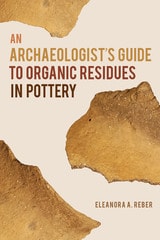
An Archaeologist's Guide to Organic Residues in Pottery
Eleanora A. Reber
University of Alabama Press, 2022
Unlock the chemical secrets of ancient pottery in this guide for mastering organic residue pottery analysis.
Pottery analysis is a crucial component of excavating an archaeological site. Organic residues in pottery are made up of chemicals that absorb into pots over their lifetime. These residues can reveal what people ate, whether different types of vessels were used for different cooking or foodstuffs preparation, and whether “elite” vessels were in use.
Organic residue analysis is a technical specialty that blends an unusual type of instrumental organic chemistry and archaeology. Because it is considered an obscure technique, archaeologists of all degrees of experience tend to struggle with how to apply the technology to archaeological questions and how to sample effectively in the field to answer these questions.
Eleanora A. Reber’s An Archaeologist’s Guide to Organic Residues in Pottery is a user-friendly resource for all archaeologists. Composed of case studies gleaned from Reber’s more than twenty years of archaeological research, this guide covers the range of residues encountered in the field and explains the methods and application of organic residue analysis.
Reber illustrates the useful aspects of residue analysis, such as compound-specific isotope analysis for the identification of traces of maize and marine resources, conifer resins, and the psychoactive alkaloid biomarkers caffeine and nicotine. Special attention is paid to sampling and construction of meaning as well as research questions to help field archaeologists integrate residue analysis seamlessly into their projects

An Archaeology of Sympathy
The Sentimental Mode in Literature and CinemaJames Chandler
University of Chicago Press, 2013

An Archaeology of the Soul
NORTH AMERICAN INDIAN BELIEF AND RITUALRobert L. Hall
University of Illinois Press, 1997
noted, but it has never been examined so thoroughly, nor with such an
eye for the amazing interconnectedness of Indian tribal ceremonies and
practices, as in An Archaeology of the Soul. In this monumental
work, destined to become a classic in its field, Robert Hall traces the
genetic and historical relationships of the tribes of the Midwest and
Plains--including roots that extend back as far as 3,000 years.
Looking beyond regional barriers, An Archaeology of the Soul offers new depths of insight into American Indian ethnography. Hall uncovers the lineage and kinship shared by Native North Americans through the perspectives of history, archaeology, archaeoastronomy, biological anthropology, linguistics, and mythology. The wholeness and panoramic complexity of American Indian belief has never been so fully explored--or more deeply understood.
An Archeological Survey of the Fremont Area
UUAP 28James Gunnerson
University of Utah Press, 1957
An Early Town on the Deh Luran Plain
Excavations at Tepe FarukhabadEdited by Henry T. Wright
University of Michigan Press, 1981
An Early Woodland Community at the Schultz Site 20SA2 in the Saginaw Valley and the Nature of the Early Woodland Adaptation in the Great Lakes Region
Doreen Ozker
University of Michigan Press, 1982
An Introduction to Greek Epigraphy of the Hellenistic and Roman Periods from Alexander the Great down to the Reign of Constantine
B. H. McLean
University of Michigan Press, 2011
“In short, this is a reference work of the best kind. For the beginner, it is indispensable. And for those who already know something about its subject matter, the book is in many ways useful, informative, and interesting. We all owe a debt to [the author] for undertaking this significant project, and for completing it so well.”
—Michael Peachin, Classical World
“. . . provides invaluable road maps for non-epigraphers faced with passages of inscribed Greek.”
—Graham Shipley, Bryn Mawr Classical Review
Greek inscriptions form a valuable resource for the study of all aspects of the Greco-Roman world. They are primary witnesses to society's laws and institutions, religious habits, and language. This volume provides students with the tools to take advantage of the historical value of these treasures. It examines letter forms, ancient names, and ancient calendars, knowledge of which is essential in reading inscriptions of all kinds.
B. H. McLean discusses the classification of inscriptions into their various categories and analyzes particular types of inscriptions, including decrees, honorary inscriptions, dedications, funerary inscriptions, and manumissions. Finally, McLean includes special topics that bear upon the interpretation of specific features of inscriptions, such as Greek and Roman administrative titles and functions.
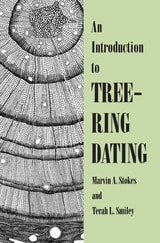
An Introduction to Tree-Ring Dating
Marvin A. Stokes
University of Arizona Press, 1996
Authors Stokes and Smiley first explain the basic principles of tree-ring dating, then describe details of the process, step by step, from the time a sample is collected until it is incorporated into a master chronology.
The book focuses on coniferous evergreens of the Southwest, particularly piñons, because they have wide geographic distribution, constitute a large population, and show excellent growth response to certain controlling factors. The book is specifically concerned with the task of establishing a calendar date for a wood or charcoal specimen.
This concise but thorough explication of an important discipline will make dendrochonology more meaningful to students and professionals in archaeology, forestry, hydrology, and global change.
An Investigation of Ethnographic and Archaeological Specimens of Mescalbeans (Sophora secundiflora) in American Museums
William L. Merrill
University of Michigan Press, 1977
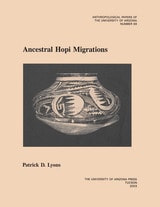
Ancestral Hopi Migrations
Patrick D. Lyons
University of Arizona Press, 2003
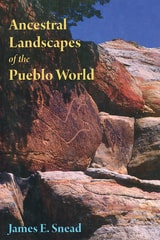
Ancestral Landscapes of the Pueblo World
James E. Snead
University of Arizona Press, 2008
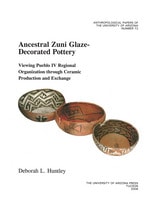
Ancestral Zuni Glaze-Decorated Pottery
Viewing Pueblo IV Regional Organization through Ceramic Production and ExchangeDeborah L. Huntley
University of Arizona Press, 2008
Ancient Andean Political Economy
By Charles Stanish
University of Texas Press, 1992
For more than two millennia prior to the Spanish conquest, the southern region of the central Andes was home to dozens of societies, ranging from modest chiefdoms to imperial states. Attempts to understand the political and economic dynamics of this complex region have included at least two major theories in Andean anthropology. In this pathfinding study, Charles Stanish shows that they are not exclusive and competing models, but rather can be understood as variations within a larger theoretical framework.
Stanish builds his arguments around a case study from the Moquequa region of Peru, augmented with data from Puno. He uses the "archaeological household" as his basic unit of analysis. This approach allows him to reconcile the now-classic model of zonal complementarity proposed by John Murra with the model of craft specialization and exchange offered by Maria Rostworowski de Diez Canseco. These models of political economy are analyzed with the concepts of economic anthropology in the tradition of Karl Polanyi.
For students of archaeology, Andean studies, anthropology, and economic history, Ancient Andean Political Economy will be important reading.
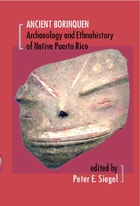
Ancient Borinquen
Archaeology and Ethnohistory of Native Puerto RicoEdited by Peter E. Siegel
University of Alabama Press, 2008
Ancient Borinquen is a re-examination of the archaeology of Puerto Rico, drawing data from beyond the boundaries of the island itself because in prehistoric times the waters between islands would not have been viewed as a boundary in the contemporary sense of the term. The last few decades have witnessed a growth of intense archaeological research on the island, from material culture in the form of lithics, ceramics, and rock art; to nutritional, architecture, and environmental studies; to rituals and social patterns; to the aftermath of Conquest.
It is unlikely that prehistoric occupants recognized the same boundaries and responded to the same political forces that operated in the formation of current nations, states, or cities. Yet, archaeologists traditionally have produced such volumes and they generally represent anchors for ongoing research in a specific region, in this case the island of Puerto Rico, its immediate neighbors, and the wider Caribbean basin.
Ancient Borinquen provides a comprehensive overview of recent thinking, new data, syntheses, and insights into current Puerto Rican archaeology, and it reflects and illuminates similar concerns elsewhere in the West Indies, lowland South America, and Central America.
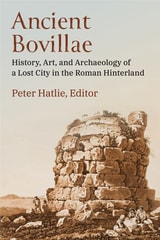
Ancient Bovillae
History, Art, and Archaeology of a Lost City in the Roman HinterlandEdited by Peter Hatlie
University of Michigan Press, 2025
Ancient Bovillae goes well beyond the work of any previous publication by gathering together all known evidence about the city from the ancient, medieval, and modern ages, with contributors analyzing the significance of Bovillae in art, architecture, religion, and history. Written by a distinguished team of scholars and featuring nearly one hundred images of artifacts, monuments, and technical drawings associated with Bovillae, this book boldly pieces together evidence about the history, art, and archaeology of Bovillae. It draws attention to Bovillae’s significance within the Roman world as well as its transformation and decline in the post-Roman era.
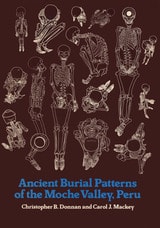
Ancient Burial Patterns of the Moche Valley, Peru
By Christopher B. Donnan and Carol J. Mackey
University of Texas Press, 1978
Archaeologists working in the Moche Valley of Peru have uncovered a number of tombs representing various cultures that flourished there prior to European contact. This book provides a full description of 103 such burials, spanning a period of more than 3,500 years. Each burial is documented with an accurate illustration of every artifact found, as well as details on the location, matrix, and construction of the graves, the individuals in the graves, and the placement of all the associated goods. This information constitutes an important resource for solving problems of ceramic chronology and style change. Age and sex data given for the burials will also enable scholars to establish status differences that existed in the pre-Columbian past. Finally, the authors have compared their sample with all the north coast burials previously reported, showing how their findings may be used to ascertain similarities and differences throughout the highland Andean region.
Ancient Burial Patterns of the Moche Valley, Peru is the first diachronic study of burial practices for any Andean region. It not only demonstrates changes in funerary practices in the area but also provides insight into the nature of local cultural development. It will be useful to specialists in Andean and New World archaeology as well as to collectors of pre-Columbian art.
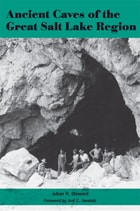
Ancient Caves of the Great Salt Lake Region
Julian H Steward
University of Utah Press, 2009
First published in 1937 by the Bureau of American Ethnology, this edition of Ancient Caves of the Great Salt Lake Region features a new foreword by Joel Janetski.
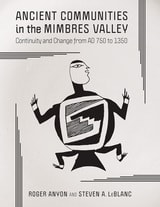
Ancient Communities in the Mimbres Valley
Continuity and Change from AD 750 to 1350Roger Anyon and Steven A. LeBlanc
University of Arizona Press, 2024
Expanding beyond studies that focus on a single pueblo, this volume represents the final report on the excavations of the Mimbres Foundation. It brings together data from a range of pithouse and pueblo sites of different sizes and histories in diverse locations—to refine the current understandings of Mimbres region archaeology in the context of the Greater Southwest.
From the end of the Late Pithouse period through the Black Mountain phase, the book provides excellent documentation of the artifacts and data recovered from the sites, addresses models of Mimbres community, and tracks change and continuity in the valley over centuries. In addition, the authors consider the nature of the relationship between the Classic Mimbres period population of the valley and the people of the succeeding Black Mountain phase, as well as relationships among the Black Mountain phase people and those of neighboring parts of the region, including the Casas Grandes world and the Jornada Mogollon area.
In Ancient Communities in the Mimbres Valley two leading archaeologists bring together a trove of unpublished investigations, expanding understandings and setting a course for the future.