Results by title
475 books match the query 'Catholic' and 55 start with a
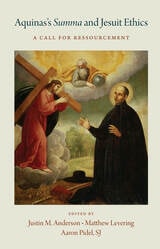
Aquinas's <i>Summa</i> and Jesuit Ethics
A Call for RessourcementJustin M. Anderson
Catholic University of America Press, 2026
This book explores how the great sixteenth- and early-seventeenth-century Jesuits read the secunda pars of the Summa theologiae. Their interpretation of Aquinas’s moral theology is shaped in part by their historical context, including the impact of the Protestant Reformation and the European discovery of the "New World," as well as new trade routes with Asia. The essays in this volume explore a wide variety of topics, including the natural desire to see God, infused moral virtues, freedom of conscience, faith and justification, doctrinal development, just war, slavery, the virtue of religion, Eucharistic sacrifice, sexual ethics, the theology of vocation, and natural law. The essays engage the thought of Francisco Suárez, Gabriel Vázquez, Luis de Molina, Francisco de Toledo, and various others. The underlying argument of the book is that this erudite, deeply Catholic and broadly Thomistic approach to ethics should be retrieved, given its Christian seriousness. Guided by divine revelation as taught in Scripture and Tradition, moral theologians in the Jesuit tradition ground themselves in Aquinas and in a rich understanding of natural law, universal moral norms, and the virtues, as well as in appreciation for spiritual interiority, conscience, and discernment.
[more]

Aquinas, Wittgenstein, and the Riddle of Spiritual Pedagogy
Matthew Dunch
Catholic University of America Press, 2027
How can Paul, or you and I for that matter, speak with authority about mystery? Using the language of sacred riddles, Aquinas, Wittgenstein, and the Riddle of Spiritual Pedagogy argues that spiritual authority arises within the creative tension between the mystery of God’s will and our concrete human circumstances.
Since at least the Enlightenment and increasingly in times of scandal, spiritual authority is suspect. Speaking authoritatively about mystery seems like a contradiction. Critics accuse such authorities of being at best vapid or at worst manipulative.
Using a philosophical approach, Matt Dunch, SJ, defends the tradition of Christian spiritual teaching from St. Paul, through St. John Cassian and St. Ignatius Loyola, to contemporaries such as Dorothy Day. He supplements St. Thomas Aquinas’s account of prudence and counsel with Ludwig Wittgenstein’s sensitivity to the context and limits of sensible speech. Taken together, they all give us their accounts of how spiritual teaching can emerge from sacred riddles.
Spiritual authority is unlike other forms of authority because the mystery or riddle of God is outside human understanding. At the same time, spiritual authority must address our concrete needs. Dunch considers how such riddles might be lived with and through, though not solved.
This book will be of interest to readers who love the nature and practice of religious language, including philosophers of religion, systematic theologians, and spiritual directors. It will speak to anyone contemplating sacred mysteries.
[more]
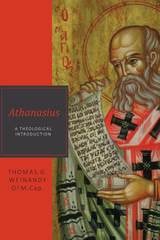
Athansius
A Theological IntroductionThomas G. Weinandy, OFM, Cap.
Catholic University of America Press, 2018
Thomas Weinandy has done an excellent job in this book in introducing Athanasius' theology. A well-known Catholic scholar in historical theology, Weinandy has provided students of theology with a profound historiography of Athanasius' major theological writing. - Calvin Theological Journal
"A reliable, concise introduction to the theology of Athanasius." - International Journal of Systematic Theology
"A sustained and intelligent introduction to Athanasius and his literature, and will rightly appear on all undergraduate patristic bibliographies." - The Journal of Theological Studies
"A very fine theological (as its subtitle emphasizes) introduction to the Alexandrian bishop…[an] accessible, intelligent, and worthy volume, which offers the reader an overview of Athanasius's thought within the context of his full, if at times harried, ecclesiastical life." - Nova et Vetera
"Weinandy offers a summary of Athanasius' central works and a balanced assessment of his theology's merits and contemporary significance…No student of Athanasius should overlook this reliable guidebook to the little Alexandrian's great life and works." - Religious Studies Review
"Weinandy's introduction to Athanasius is an important work, familiarizing the reader with Athanasius' life, writings, and fundamental concerns. Throughout, the centrality of soteriology clearly emerges, whether the topic is the doctrine of the Trinity or the life of Antony. Hopefully this book will serve to bring Athanasius' soteriology more prominently into contemporary discussions alongside the other great masterpieces on this doctrine." - Themelios
[more]
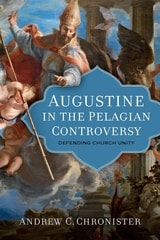
Augustine in the Pelagian Controversy
Defending Church UnityAndrew Chronister
Catholic University of America Press, 2024
This book examines St. Augustine of Hippo’s involvement in the Pelagian controversy and argues that this involvement was prompted not simply by his opposition to Pelagian doctrinal views but, to a significant degree, by his desire to defend Church unity. To prove this thesis, Andrew Chronister analyzes the historical context of the controversy as well as Augustine’s argumentation in his anti-Pelagian works.
Attending to the historical context reveals the fact that at various moments in the controversy, Augustine was faced with what he believed to be significant threats to Church unity. For example, the beginnings of the controversy coincided with a key attempt in June 411 to end the Donatist schism that had split the African Church for a century: at the very moment when one schism was being healed, another threat to unity appeared in Caelestius and Pelagius.
At the same time, internal evidence in Augustine’s anti-Pelagian works reveals his desire not only to refute Pelagian doctrinal views but also to undermine the Pelagians’ claims that they were simply teaching what the Church had always and everywhere taught. This can be seen in a particular way in Augustine’s frequent appeals to liturgical and sacramental praxis as well as in his rather novel practice of citing renowned Christian authors as evidence for the antiquity and universality of his views.
Augustine in the Pelagian Controversy has two main contributions: (1) it offers a new perspective on Augustine’s involvement in the controversy that makes his prolonged and polemical engagement with the Pelagians more intelligible and (2) it provides a detailed history of the controversy itself.
[more]
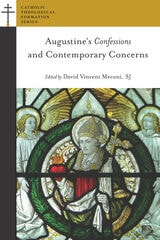
Augustine's Confessions and Contemporary Concerns
David Vincent Meconi, SJ
Saint Paul Seminary Press, 2022
[more]