Results by title
3745 books match the query 'Europe' and 292 start with a
A History of Italian Fascist Culture, 1922–1943
Alessandra Tarquini, Translated by Marissa Gemma
University of Wisconsin Press, 2022
Tarquini sketches the universe of Italian fascism in three broad directions: the regime’s cultural policies, the condition of various art forms and scholarly disciplines, and the ideology underpinning the totalitarian state. She details the choices the ruling class made between 1922 and 1943, revealing how cultural policies shaped the country and how intellectuals and artists contributed to those decisions. The result is a view of fascist ideology as a system of visions, ideals, and, above all, myths capable of orienting political action and promoting a precise worldview.
Building on George L. Mosse’s foundational research, Tarquini provides the best single-volume work available to fully understand a complex and challenging subject. It reveals how the fascists used culture—art, cinema, music, theater, and literature—to build a conservative revolution that purported to protect the traditional social fabric while presenting itself as maximally oriented toward the future.
A History of the Crusades, Volume I
The First Hundred YearsSeries Edited by Kenneth M. Setton; Volume Edited by Marshall W. Baldwin
University of Wisconsin Press, 1969
A History of the Crusades, Volume II
The Later Crusades, 1189-1311Series Edited by Kenneth M. Setton; Volume Edited by Wolff and Hazard
University of Wisconsin Press, 1969
A History of the Crusades, Volume III
The Fourteenth and Fifteenth CenturiesSeries Edited by Kenneth M. Setton; Volume Edited by Harry W. Hazard
University of Wisconsin Press, 1975
A History of the Crusades, Volume V
The Impact of the Crusades on the Near EastSeries Edited by Kenneth M. Setton, Volume Edited by Zacour and Hazard
University of Wisconsin Press, 1985
A History of the Crusades, Volume VI
The Impact of the Crusades on EuropeSeries Edited by Kenneth M. Setton, Volume Edited by Hazard and Zacour
University of Wisconsin Press, 1990
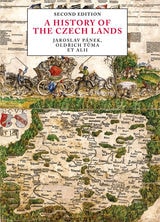
A History of the Czech Lands
Second EditionEdited by Jaroslav Pánek, Oldrich Tuma, et al
Karolinum Press, 2016
The second edition includes sixty new photographs and a new chapter detailing the transformation of this post-communist country into a member of the European Union. The only study in English of this scope and ambition, A History of the Czech Lands is essential for scholars of Slavic, Central, and East European studies and a must-read for those who trace their ancestry to these lands.
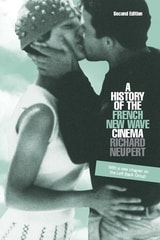
A History of the French New Wave Cinema
Richard Neupert
University of Wisconsin Press, 2007
The French New Wave cinema is arguably the most fascinating of all film movements, famous for its exuberance, daring, and avant-garde techniques. A History of the French New Wave Cinema offers a fresh look at the social, economic, and aesthetic mechanisms that shaped French film in the 1950s, as well as detailed studies of the most important New Wave movies of the late 1950s and early 1960s.
Richard Neupert first tracks the precursors to New Wave cinema, showing how they provided blueprints for those who would follow. He then demonstrates that it was a core group of critics-turned-directors from the magazine Cahiers du Cinéma—especially François Truffaut, Claude Chabrol, and Jean-Luc Godard—who really revealed that filmmaking was changing forever. Later, their cohorts Eric Rohmer, Jacques Rivette, Jacques Doniol-Valcroze, and Pierre Kast continued in their own unique ways to expand the range and depth of the New Wave.
In an exciting new chapter, Neupert explores the subgroup of French film practice known as the Left Bank Group, which included directors such as Alain Resnais and Agnès Varda. With the addition of this new material and an updated conclusion, Neupert presents a comprehensive review of the stunning variety of movies to come out of this important era in filmmaking.
A History of the Old Icelandic Commonwealth
Islendinga SagaJon Johannesson
University of Manitoba Press, 2007
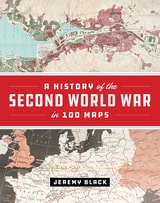
A History of the Second World War in 100 Maps
Jeremy Black
University of Chicago Press, 2020
The First World War was marked by an exceptional expansion in the use and production of military cartography. But World War II took things even further, employing maps, charts, reconnaissance, and the systematic recording and processing of geographical and topographical information on an unprecedented scale. As Jeremy Black—one of the world’s leading military and cartographic historians—convincingly shows in this lavish full-color book, it is impossible to understand the events and outcomes of the Second World War without deep reference to mapping at all levels. In World War II, maps themselves became the weapons.
A History of the Second World War in 100 Maps traces how military cartography developed from simply recording and reflecting history to having a decisive impact on events of a global scale. Drawing on one hundred key maps from the unparalleled collections of the British Library and other sources—many of which have never been published in book form before--Jeremy Black takes us from the prewar mapping programs undertaken by both Germany and the United Kingdom in the mid-1930s through the conflict’s end a decade later. Black shows how the development of maps led directly to the planning of the complex and fluid maneuvers that defined the European theater in World War II: for example, aerial reconnaissance photography allowed for the charting of beach gradients and ocean depths in the runup to the D-Day landings, and the subsequent troop movements at Normandy would have been impossible without the help of situation maps and photos. In the course of the conflict, both in Europe and the Pacific, the realities of climate, terrain, and logistics—recorded on maps—overcame the Axis powers. Maps also became propaganda tools as the pages of Time outlined the directions of the campaigns and the Allies dropped maps from their aircraft.
In this thrilling and unique book, Jeremy Black blends his singular cartographic and military expertise into a captivating overview of World War II from the air, sea, and sky, making clear how fundamental maps were to every aspect of this unforgettable global conflict.
A History of the Swedish People
Volume II: From Renaissance to RevolutionVilhelm Moberg
University of Minnesota Press, 2005
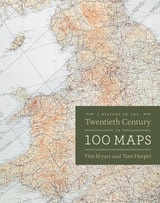
A History of the Twentieth Century in 100 Maps
Tim Bryars and Tom Harper
University of Chicago Press, 2014
As Bryars and Harper reveal, maps make ideal narrators, and the maps in this book tell the story of the 1900s—which saw two world wars, the Great Depression, the Swinging Sixties, the Cold War, feminism, leisure, and the Internet. Several of the maps have already gained recognition for their historical significance—for example, Harry Beck’s iconic London Underground map—but the majority of maps on these pages have rarely, if ever, been seen in print since they first appeared. There are maps that were printed on handkerchiefs and on the endpapers of books; maps that were used in advertising or propaganda; maps that were strictly official and those that were entirely commercial; maps that were printed by the thousand, and highly specialist maps issued in editions of just a few dozen; maps that were envisaged as permanent keepsakes of major events, and maps that were relevant for a matter of hours or days.
As much a pleasure to view as it is to read, A History of the Twentieth Century in 100 Maps celebrates the visual variety of twentieth century maps and the hilarious, shocking, or poignant narratives of the individuals and institutions caught up in their production and use.
A History of the Vandals
Torsten Cumberland Jacobsen
Westholme Publishing, 2012
The First General History in English of the Germanic People Who Sacked Rome in the Fifth Century AD and Established a Kingdom in North Africa
The fifth century AD was a time of great changes in the Mediterranean world. In the early 400s, the Roman Empire ranged from the lowlands of Scotland to the Upper Nile and from Portugal to the Caucasus. It was almost at its widest extent, and although ruled by two emperors—one in the West and one in the East—it was still a single empire. One hundred years later, Roman control of Western Europe and Western North Africa had been lost. In its place, a number of Germanic kingdoms had been established in these regions, with hundreds of thousands of Germanic and other peoples settling permanently inside the former borders of the Western Roman Empire.
One of the most fascinating of these tribes of late antiquity were the Vandals, who over a period of six hundred years had migrated from the woodland regions of Scandinavia across Europe and ended in the deserts of North Africa. In A History of the Vandals, the first general account in English covering the entire story of the Vandals from their emergence to the end of their kingdom, historian Torsten Cumberland Jacobsen pieces together what we know about the Vandals, sifting fact from fiction. In the middle of the fifth century the Vandals, who professed Arianism, a form of Christianity considered heretical by the Roman emperor, created the first permanent Germanic successor state in the West and were one of the deciding factors in the downfall of the Western Roman Empire. Later Christian historians described their sack of Rome in 455 and their vehement persecution of Catholics in their kingdom, accounts that were sensationalized and gave birth to the term “vandalism.”
In the mid-sixth century, the Vandals and their North African kingdom were the first target of Byzantine Emperor Justinian’s ambitious plan to reconquer the lost territories of the fallen Western Empire. In less than four months, what had been considered one of the strongest Germanic kingdoms had been defeated by a small Roman army led by the general Belisarius. Despite later rebellions, this was the end of the Germanic presence in North Africa, and in many ways the end of the Arian heresy of Christianity. For the Romans it was the incredibly successful start of the reconquest of the lost lands of the Western Empire.
A Holocaust Controversy
The Treblinka Affair in Postwar FranceSamuel Moyn
Brandeis University Press, 2005
A House Divided
Orthodoxy and Schism in Nineteenth-Century Central European JewryJacob Katz
University Press of New England, 2005

A Jewish Orchestra in Nazi Germany
Musical Politics and the Berlin Jewish Culture LeagueLily E. Hirsch
University of Michigan Press, 2011
"Offers a clear introduction to a fascinating, yet little known, phenomenon in Nazi Germany, whose very existence will be a surprise to the general public and to historians. Easily blending general history with musicology, the book provides provocative yet compelling analysis of complex issues."
---Michael Meyer, author of The Politics of Music in the Third Reich
"Hirsch poses complex questions about Jewish identity and Jewish music, and she situates these against a political background vexed by the impossibility of truly viable responses to such questions. Her thorough archival research is complemented by her extensive use of interviews, which gives voice to those swept up in the Holocaust. A Jewish Orchestra in Nazi Germany is a book filled with the stories of real lives, a collective biography in modern music history that must no longer remain in silence."
---Philip V. Bohlman, author of Jewish Music and Modernity
"An engaging and downright gripping history. The project is original, the research is outstanding, and the presentation lucid."
---Karen Painter, author of Symphonic Aspirations: German Music and Politics, 1900-1945
The Jewish Culture League was created in Berlin in June 1933, the only organization in Nazi Germany in which Jews were not only allowed but encouraged to participate in music, both as performers and as audience members. Lily E. Hirsch's A Jewish Orchestra in Nazi Germany is the first book to seriously investigate and parse the complicated questions the existence of this unique organization raised, such as why the Nazis would promote Jewish music when, in the rest of Germany, it was banned. The government's insistence that the League perform only Jewish music also presented the organization's leaders and membership with perplexing conundrums: what exactly is Jewish music? Who qualifies as a Jewish composer? And, if it is true that the Nazis conceived of the League as a propaganda tool, did Jewish participation in its activities amount to collaboration?
Lily E. Hirsch is Assistant Professor of Music at Cleveland State University.

A Laboratory of Her Own
Women and Science in Spanish CultureVictoria L. Ketz
Vanderbilt University Press, 2021
While women's historic exclusion from STEM fields has been receiving increased scrutiny worldwide, women within the Spanish context have been perhaps even more peripheral given the complex sociocultural structures emanating from gender norms and political ideologies dominant in nineteenth- and twentieth-century Spain. Nonetheless, Spanish female cultural producers have long been engaged with science and technology, as expressed in literature, art, film, and other genres. Spanish arts and letters offer diverse representations of the relationships between women, gender, sexuality, race, and STEM fields.
A Laboratory of Her Own studies representations of a diverse range of Spanish women and scientific cultural products from the late nineteenth through the twenty-first centuries. STEM topics include the environment, biodiversity, temporal and spatial theories, medicine and reproductive rights, neuroscience, robotics, artificial intelligence, and quantum physics. These scientific themes and other issues are analyzed in narratives, paintings, poetry, photographs, science fiction, medical literature, translation, newswriting, film, and other forms.
A Laboratory of Transnational History
Ukraine and Recent Ukrainian HistoriographyGeorgiy Kasianov
Central European University Press, 2009
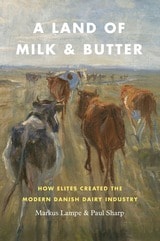
A Land of Milk and Butter
How Elites Created the Modern Danish Dairy IndustryMarkus Lampe and Paul Sharp
University of Chicago Press, 2018
This book presents a radical retelling of this story, placing (largely German-speaking) landed elites—rather than the Danish peasantry—at center stage. After acquiring estates in Denmark, these elites imported and adapted new practices from outside the kingdom, thus embarking on an ambitious program of agricultural reform and sparking a chain of events that eventually led to the emergence of Denmark’s famous peasant cooperatives in 1882. A Land of Milk and Butter presents a new interpretation of the origin of these cooperatives with striking implications for developing countries today.

A Life for Belarus
The Fall and Postmortal Rise of the USSRStanislau Shushkevich
Central European University Press, 2025
This memoir of the first president of an independent Belarus (1991-1994) tells about the revival of independent Belarus, the difficulties in establishing a democracy and a market economy, a hardened Soviet mentality, and the political immaturity of the intelligentsia and obduracy of the old nomenklatura.
Stanislau Shushkevich, born in 1934, narrates his path from a son of an “enemy of the people” to a doctorate in physics, and then to be the first head of independent Belarus. A series of entertaining essays discuss some major events as well as some minor ones that are barely known. The book describes Shushkevich’s role in hosting the Belavezha Accords, which brought about the end of the Soviet Union, and explores the motivation behind the decision for the de jure dissolution of the empire at a time when the major world leaders were categorically against the division of the USSR into independent states. The author draws particular attention to the role of the Baltic States in the late perestroika period. He also addresses the political passivity of the Soviet intelligentsia and the reasons for the revival of the Soviet Union in Russia and Belarus.
Shushkevich, who lives in Minsk, also provides valuable insights into contemporary Belarus, including an assessment of Lukashenka’s controversial role in recent events.

A Life under Russian Serfdom
The Memoirs of Savva Dmitrievich Purlevskii, 1800–68Boris B. Gorshkov
Central European University Press, 2005

A Literary Guide to Provence
Daniel Vitaglione
Ohio University Press, 2001
Provence through the eyes of its writers—those who wrote of it in Provençal or French and also those visitors who were moved by its beauty—that is the inspiration behind A Literary Guide to Provence. In this compact travel guide, Marseilles native Daniel Vitaglione presents a literary panorama of the region of southern France from the Avignon of Mistral to Colette’s St. Tropez.
Including such sites as the birthplace of Nostradamus and the ruins of the Marquis de Sade’s castle, A Literary Guide to Provence presents a thousand years of history entwined with maps and photos that provide readers on tour with a sense of the historical import of this most beautiful of regions even as they experience it firsthand.
Both authors of Provençal ancestry and those who came to love and live in Provence are featured in this comprehensive and enchanting picture of the garden place of France. The Riviera enticed Virginia Woolf. Toulon inspired two novels by Georges Sand. Robert Louis Stevenson resided in Hyères, as did Edith Wharton. Le Lavandou was Willa Cather’s favorite place. F. Scott Fitzgerald lived in St. Raphael and Juan-les-Pins, where he wrote Tender is the Night.
This illustrated guide follows in these writers’ footsteps, and the practical information on hotels and restaurants (phones, web sites, email, etc.) make it the ideal traveling companion for armchair tourists and those who cannot resist seeing Provence for themselves.
A Love Affair with Europe
The Case for a European FutureGiles Radice
Haus Publishing, 2018
A Memorandum for the President of the Royal Audiencia and Chancery Court of the City and Kingdom of Granada
Francisco Núñez Muley
University of Chicago Press, 2007
Now available in its first English translation, Núñez Muley’s account is an invaluable example of how Spain’s former Muslims made active use of the written word to challenge and openly resist the progressively intolerant policies of the Spanish Crown. Timely and resonant—given current debates concerning Islam, minorities, and cultural and linguistic assimilation—this edition provides scholars in a range of fields with a vivid and early example of resistance in the face of oppression.
A Month at the Front
The Diary of an Unknown SoldierEdited by the Bodleian Library
Bodleian Library Publishing, 2006
A Month at the Front chronicles one month in the life of a soldier from the 12th East Surrey regiment, and the economical yet powerful narrative vividly brings to life the sights, sounds, and horrors of war. “The first night passed uneventfully, except that we were shelled”—so begins the young man in spare prose, and the quiet drama unfolds from there. Constant bombings and the sobering landscape of war—“It was nothing unusual to come across . . . a dead comrade lying waiting for burial”—are occasionally relieved by humorous events such as the discovery that a troop of advancing Germans was “nothing more than few short willow shrubs waving about in the breeze.” The young soldier describes how his comrades gradually fall one by one, until he and three remaining fellow soldiers are captured by the enemy, an event that abruptly ends the narrative.
A Month at the Front is not penned by a famous author, nor does it claim to offer any broad perspective. Rather, it is the lone voice of an unknown young man thrust into fatal circumstances.
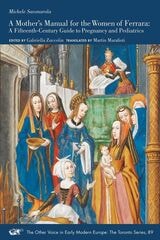
A Mother’s Manual for the Women of Ferrara
A Fifteenth-Century Guide to Pregnancy and PediatricsMichele Savonarola
Iter Press, 2022
Around 1460, Michele Savonarola produced the extraordinary Mother’s Manual for the Women of Ferrara, a gynecological, obstetrical, and pediatric treatise composed in the vernacular so that it could be read not only by the learned but also by pregnant and nursing mothers and the midwives and wet nurses who presided over childbirth. Savonarola’s work is not merely a trivial set of instructions, but the work of a learned scholar who drew on, among others, the ancient Greek physicians Hippocrates and Galen, and Avicenna’s Canon of Medicine. The first of its kind, Savonarola’s Mother’s Manual helps readers understand both the development of late-medieval and early-modern obstetrics and gynecology, as well as the experiences of women who turn to advice books for help with reproductive issues. This book also provides a key to understanding why and how a new genre of book—the midwifery manual or advice book for pregnant women—arose in sixteenth-century Italy and eventually became a popular genre all over Europe from the early modern period to the present day.
A Mythology of Forms
Selected Writings on ArtCarl Einstein
University of Chicago Press, 2019
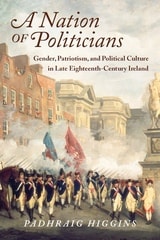
A Nation of Politicians
Gender, Patriotism, and Political Culture in Late Eighteenth-Century IrelandPadhraig Higgins
University of Wisconsin Press, 2009
In A Nation of Politicians, Padhraig Higgins argues that the development of Volunteer-initiated activities—associating, petitioning, subscribing, shopping, and attending celebrations—expanded the scope of political participation. Using a wide range of literary, archival, and visual sources, Higgins examines how ubiquitous forms of communication—sermons, songs and ballads, handbills, toasts, graffiti, theater, rumors, and gossip—encouraged ordinary Irish citizens to engage in the politics of a more inclusive society and consider the broader questions of civil liberties and the British Empire. A Nation of Politicians presents a fascinating tale of the beginnings of Ireland’s richly vocal political tradition at this important intersection of cultural, intellectual, social, and public history.

A National Acoustics
Music and Mass Publicity in Weimar and Nazi GermanyBrian Currid
University of Minnesota Press, 2006
Offering a nuanced analysis of how publicity was constructed through radio programming, print media, popular song, and film, Currid examines how German citizens developed an emotional investment in the nation and other forms of collectivity that were tied to the sonic experience. Reading in detail popular genres of music—the Schlager (or “hit”), so-called gypsy music, and jazz—he offers a complex view of how they played a part in the creation of German culture.
A National Acoustics contributes to a new understanding of what constitutes the public sphere. In doing so, it illustrates the contradictions between Germany’s social and cultural histories and how the technologies of recording not only were vital to the emergence of a national imaginary but also exposed the fault lines in the contested terrain of mass communication.
Brian Currid is an independent scholar who lives in Berlin.
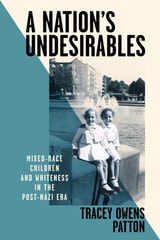
A Nation’s Undesirables
Mixed-Race Children and Whiteness in the Post-Nazi EraTracey Owens Patton
The Ohio State University Press, 2024
An innovative investigation of the entangled histories of race, transnational adoption, and post-Nazi Germany.
In a moving blend of family history and cutting-edge scholarship, Tracey Owens Patton’s A Nation’s Undesirables synthesizes work in rhetorical postmemory studies, critical adoption studies, Afrofuturism, and more to tell the story of her mother and aunt, Lore and Lilli. Two of thousands of children born to white German women and Black American men after World War II, the twins moved to the United States at age seven, where their mother renounced her parental rights and put them into the adoption system. They did not see her again for fifty-two years.Patton takes up the twins’ story and their reckoning with their mixed-race, Black German identity to disrupt standard narratives around World War II, Black experiences in Germany, and race and adoption. Combining family interviews, historical artifacts, and autoethnographic reflection, Patton composes a new narrative of women and Black German children in the postwar era. In examining the systemic racism of Germany’s efforts to move children like Lore and Lilli out of the country—and the suppression of German women’s bodily autonomy—Patton amplifies the once unacknowledged identities of these Black German children to broaden our understanding of citizenship, racism, and sexism after World War II.
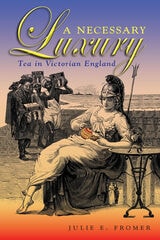
A Necessary Luxury
Tea in Victorian EnglandJulie E. Fromer
Ohio University Press, 2008
In A Necessary Luxury: Tea in Victorian England, Julie E. Fromer analyzes tea histories, advertisements, and nine Victorian novels, including Alice’s Adventures in Wonderland, Wuthering Heights, and Portrait of a Lady. Fromer demonstrates how tea functions within the literature as an arbiter of taste and middle-class respectability, aiding in the determination of class status and moral position. She reveals the way in which social identity and character are inextricably connected in Victorian ideology as seen through the ritual of tea.
Drawing from the fields of literary studies, cultural studies, history, and anthropology, A Necessary Luxury offers in-depth analysis of both visual and textual representations of the commodity and the ritual that was tea in nineteenth-century England.
A Network of Converso Families in Early Modern Toledo
Assimilating a MinorityLinda Martz
University of Michigan Press, 2003
Linda M. Martz focuses on families that were immersed in the worlds of business and finance. They formed the backbone of the trade industry and, during the economic expansion of the sixteenth century, enjoyed a high degree of affluence. The seventeenth century, however, brought harder times. How these families rose to positions of commercial eminence and then adapted to this economic downturn is one of the questions addressed in this insightful book.
A Network of Converso Families in Early Modern Toledo relies heavily on archival evidence--notarial, parish, and city records--that offers new insights into the families' histories. Business endeavors, marriage alliances, involvement in local politics, and the pursuit of improved social status are all subjected to Martz's keen analysis.
These families appear to have been well integrated into their contemporary society; aside from their business and financial activities, many were members of the city's governing council. But how well did they integrate with the lower classes? Assimilating minorities in the majority culture is a task that confronts most modern societies, so the experience of Spain and this particular minority may serve as an example of how earlier societies viewed and confronted this challenge.
This book will appeal to historians of medieval and Renaissance Spain and those interested in the Inquisition's effect on Renaissance Spain. It will also prove to be indispensable for those interested in the history of the Jewish race, as well as for those pursuing the question of marginalization.
Linda M. Martz is an independent historian as well as a freelance editor and writer.
A New Orient
From German Scholarship to Middle Eastern Studies in IsraelAmit Levy
Brandeis University Press, 2024
This study examines the history of Zionist academic Orientalism—referred to throughout as Oriental studies, the term contemporary English speakers would have used—in light of its German-Jewish background, as a history of knowledge transfer stretching along an axis from Germany to Palestine. The transfer, which took place primarily during the 1920s and 1930s, involved questions about the re-establishment, far from Germany, of a field of knowledge with deep German roots. Like other German-Jewish scholars arriving in Palestine at the time, some of the Orientalist agents of transfer did so out of Zionist conviction as olim (immigrants making aliyah, or literally “ascending” to the homeland), while others joined them later as refugees from Nazi Germany; both groups were integrated into the institutional apparatus of the Hebrew University. Unlike other fields of knowledge or professions, however, the transfer of Orientalist knowledge was unique in that the axis involved an essential change in the nature of its encounter with the Orient: from a textual-scientific encounter at German universities, largely disconnected from contemporary issues to a living, substantive, and unmediated encounter with an essentially Arab region—and the escalating Jewish-Arab conflict in the background. Within the new context, German-Jewish Orientalist expertise was charged with political and cultural significance it had not previously faced, fundamentally influencing the course of the discipline’s development in Palestine and Israel.
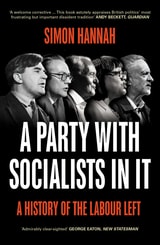
A Party with Socialists in It
A History of the Labour LeftSimon
Pluto Press, 2022
A smart and succinct history of the Labour left
*A Guardian Book of the Day*
The defeat of socialist firebrand Jeremy Corbyn as Labour Leader in 2019 confirmed Tony Benn's famous retort 'the Labour party has never been a socialist party, although there have always been socialists in it.'
For over a hundred years, the British Labour Party has been a bastion for working-class organization and struggle. However, has it ever truly been on the side of the workers? Where do its interests really lie? And can we rely on it to provide a barrier against right-wing forces?
Simon Hannah's smart and succinct history of the Labour left guides us through the twists and turns of the party, from the Bevanite movement and the celebrated government of Clement Attlee, through the emergence of a New Left in the 1970s and the Blairism of the 1990s, to Corbyn's defeat and his replacement by Keir Starmer.
This new edition is updated throughout, with a new final chapter and conclusion bringing the story up to date.
A People's History of Catalonia
Michael Eaude
Pluto Press, 2022
The fight of an oppressed nation for its sovereignty has often dovetailed with that of a militant working class for social justice.
At every home game of FC Barcelona, at 17 minutes and 14 seconds of play, the 100,000-capacity Camp Nou stadium is filled by the roar of “IN-DE-PEN-DÈN-CI-A!” Time stops for a second. History lives in the present...
Catalonia's national consciousness has deep roots. There are countries twice the size with histories half as interesting. A People's History of Catalonia tells that history, from below, in all its richness and complexity. The region's struggle for independence has, for centuries, been violently resisted, the Catalan language suppressed and its leaders jailed.
From the peasant revolts of the 15th century and the siege of Barcelona in 1714, to defeat in the Spanish Civil War, and the slow re-emergence of the workers' movement and anti-Francoist resistance in the years that followed, Michael Eaude tells a compelling story whose ending has yet to be written.
A People's History of Europe
From World War I to TodayRaquel Varela
Pluto Press, 2020
From the Russian Revolution, through May '68 and the Prague Spring, to the present day, we hear from feminists, trade unionists, conscientious objectors and activists and learn of immigration struggles, anti-colonial conflicts and labour movements. Cutting against the grain of mainstream histories, this is a history of Europe told from below.
Containing new and fascinating insights, Raquel Varela paints a different picture of the European story; one where ordinary Europeans are active agents of their own history.
A People's History of Modern Europe
William A. Pelz
Pluto Press, 2016
Along the way, William A. Pelz examines the German peasant wars of Thomas Müntzer, the bourgeoisie revolutions of the eighteenth century, the rise of the industrial worker in England, the turbulent journey of the Russian Soviets, the role of the European working class throughout the Cold War, and the revolutionary students in 1968. He then brings his story to the present day, where we continue to fight to forge an alternative to a heartless and often barbaric economic system.
As Germany and Greece argue over who owes what, with the very idea of Europe crumbling around them, Pelz’s accessible, provocative history could not be timelier. Sure to resonate with fans of books like Howard Zinn’s A People’s History of the United States, this people’s history sweeps away the tired platitudes of the privileged and provides an opportunity to understand the story of Europe from the ground up.
A People's History of the European Court of Human Rights
A People's History of the European Court of Human Rights, First Paperback EditionGoldhaber, Michael
Rutgers University Press, 2007
The exceptionality of America’s Supreme Court has long been conventional wisdom. But the United States Supreme Court is no longer the only one changing the landscape of public rights and values. Over the past thirty years, the European Court of Human Rights has developed an ambitious, American-style body of law. Unheralded by the mass press, this obscure tribunal in Strasbourg, France has become, in many ways, the Supreme Court of Europe.
Michael Goldhaber introduces American audiences to the judicial arm of the Council of Europe—a group distinct from the European Union, and much larger—whose mission is centered on interpreting the European Convention on Human Rights. The Council routinely confronts nations over their most culturally-sensitive, hot-button issues. It has stared down France on the issue of Muslim immigration; Ireland on abortion; Greece on Greek Orthodoxy; Turkey on Kurdish separatism; Austria on Nazism; and Britain on gay rights and corporal punishment. And what is most extraordinary is that nations commonly comply.
In the battle for the world’s conscience, Goldhaber shows how the court in Strasbourg may be pulling ahead.
A People's History of the German Revolution
William A. Pelz
Pluto Press, 2018
A People's History of the Portuguese Revolution
Raquel Cardeira Varela
Pluto Press, 2018
This became the Carnation Revolution - an international coalition of working class and social movements, which also incited struggles for independence in Portugal’s African colonies, the rebellion of the young military captains in the national armed forces and the uprising of Portugal’s long-oppressed working classes. It was through the organising power of these diverse movements that a popular-front government was instituted and Portugal withdrew from its overseas colonies.
Cutting against the grain of mainstream accounts, Raquel Cardeira Varela explores the role of trade unions, artists and women in the revolution, providing a rich account of the challenges faced and the victories gained through revolutionary means.
A People's History of the Russian Revolution
Neil Faulkner
Pluto Press, 2017
Faulkner rejects caricatures of Lenin and the Bolsheviks as authoritarian conspirators or the progenitors of Stalinist dictatorship, and forcefully argues that the Russian Revolution was an explosion of democracy and creativity—and that it was crushed by bloody counter-revolution and replaced with a form of bureaucratic state-capitalism.
Grounded by powerful first-hand testimony, this history marks the centenary of the Revolution by restoring the democratic essence of the revolution, offering a perfect primer for the modern reader.
A Pernicious Sort of Woman
Quasi-Religious Women and Canon Lawyers in the Later Middle Ages (Studies in Medieval and Early Modern Canon Law, Volume 6)Elizabeth Makowski
Catholic University of America Press, 2005
A Philosopher's Economist
Hume and the Rise of CapitalismMargaret Schabas and Carl Wennerlind
University of Chicago Press, 2020
Although David Hume’s contributions to philosophy are firmly established, his economics has been largely overlooked. A Philosopher’s Economist offers the definitive account of Hume’s “worldly philosophy” and argues that economics was a central preoccupation of his life and work. Margaret Schabas and Carl Wennerlind show that Hume made important contributions to the science of economics, notably on money, trade, and public finance. Hume’s astute understanding of human behavior provided an important foundation for his economics and proved essential to his analysis of the ethical and political dimensions of capitalism. Hume also linked his economic theory with policy recommendations and sought to influence people in power. While in favor of the modern commercial world, believing that it had and would continue to raise standards of living, promote peaceful relations, and foster moral refinement, Hume was not an unqualified enthusiast. He recognized many of the underlying injustices of capitalism, its tendencies to promote avarice and inequality, as well as its potential for political instability and absolutism.
Hume’s imprint on modern economics is profound and far-reaching, whether through his close friend Adam Smith or later admirers such as John Maynard Keynes and Friedrich Hayek. Schabas and Wennerlind’s book compels us to reconsider the centrality and legacy of Hume’s economic thought—for both his time and ours—and thus serves as an important springboard for reflections on the philosophical underpinnings of economics.
A Poetry Precise and Free
Selected Madrigals of GuariniNicholas R. Jones
University of Michigan Press, 2018
This volume is organized into ten sections, grouping the madrigals around themes such as the anguish of passion, the asymmetry of desire, the incursions of jealousy, and the possibility of mutual bliss. Nicholas R. Jones renders Guarini’s poetry into accessible contemporary English verse that nevertheless stays true to the substance and form of the original texts, reflecting their roots in the Petrarchan poetic tradition and displaying the emotion and musicality that made these lyrics so popular from the start. A substantive introduction provides cultural context for the madrigals and their musical settings; brief commentaries follow each translation to illuminate aspects of poetic and rhetorical craft. An extensive appendix lists the madrigal compositions that set these lyrics for vocal performance.
The book fills a major gap in the scholarship on Guarini’s literary legacy. It will appeal to scholars of literature, Renaissance studies, and musicology, early-music performers, and general readers interested in poetry and classical music.
A Power to Do Justice
Jurisdiction, English Literature, and the Rise of Common LawBradin Cormack
University of Chicago Press, 2008
A Power to Do Justice shows how Renaissance writers engaged the practical and conceptual dynamics of jurisdiction, both as a subject for critical investigation and as a frame for articulating literature’s sense of itself. Reassessing the relation between English literature and law from More to Shakespeare, Cormack argues that where literary texts attend to jurisdiction, they dramatize how boundaries and limits are the very precondition of law’s power, even as they clarify the forms of intensification that make literary space a reality.
Tracking cultural responses to Renaissance jurisdictional thinking and legal centralization, A Power to Do Justice makes theoretical, literary-historical, and methodological contributions that set a new standard for law and the humanities and for the cultural history of early modern law and literature.
A Pragmatic Alliance
Jewish-Lithuanian political cooperation at the beginning of the 20th centuryVladas Sirutavicius
Central European University Press, 2011

A Professor in the Wilderness
Peter Damian Before the Gregorian ReforJohn Howe
Catholic University of America Press, 2027
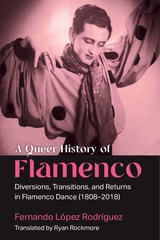
A Queer History of Flamenco
Diversions, Transitions, and Returns in Flamenco Dance (1808–2018)Fernando López Rodríguez, translation by Ryan Rockmore
University of Michigan Press, 2024
Tracing flamenco’s development from its birth up to the contemporary era, the book places flamenco within significant historical periods such as the Spanish Civil War, Franco’s dictatorship, the transition to democracy, and the economic crisis of 2008, up to contemporary performances of the late 2010s. In taking a queer approach to History, the author abandons antiquated debates about purities and impurities; anecdotes about the lives of artists that are completely detached from their processes of creation; and myths about geniuses who seem to make art alone and completely detached from their collaborators and the historical, social, economic and artistic moment in which they lived. A Queer History of Flamenco is not only about the present and the queerness of people living, performing, or creating in it, but also about flamenco’s past in which so many queer artists and practices and their lives have remained unearthed and unaddressed.

A Rhetoric of Bourgeois Revolution
The Abbe Sieyes and What is the Third Estate?William H. Jr. Sewell
Duke University Press, 1994
This book studies the powerful rhetoric of the great pamphlet and the brilliant but enigmatic thought of its author. William H. Sewell’s insightful analysis reveals the fundamental role played by the new discourse of political economy in Sieyes’s thought and uncovers the strategies by which this gifted rhetorician gained the assent of his intended readers—educated and prosperous bourgeois who felt excluded by the nobility in the hierarchical social order of the old regime. He also probes the contradictions and incoherencies of the pamphlet’s highly polished text to reveal fissures that reach to the core of Sieyes’s thought—and to the core of the revolutionary project itself.
Combining techniques of intellectual history and literary analysis with a deep understanding of French social and political history, Sewell not only fashions an illuminating portrait of a crucial political document, but outlines a fresh perspective on the history of revolutionary political culture.
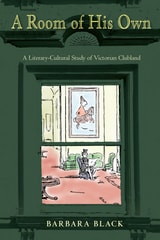
A Room of His Own
A Literary-Cultural Study of Victorian ClublandBarbara Black
Ohio University Press, 2012
In nineteenth-century London, a clubbable man was a fortunate man, indeed. The Reform, the Athenaeum, the Travellers, the Carlton, the United Service are just a few of the gentlemen’s clubs that formed the exclusive preserve known as “clubland” in Victorian London—the City of Clubs that arose during the Golden Age of Clubs. Why were these associations for men only such a powerful emergent institution in nineteenth-century London? Distinctly British, how did these single-sex clubs help fashion men, foster a culture of manliness, and assist in the project of nation building? What can elite male affiliative culture tell us about nineteenth-century Britishness?
A Room of His Own sheds light on the mysterious ways of male associational culture as it examines such topics as fraternity, sophistication, nostalgia, social capital, celebrity, gossip, and male professionalism. The story of clubland (and the literature it generated) begins with Britain’s military heroes home from the Napoleonic campaign and quickly turns to Dickens’s and Thackeray’s acrimonious Garrick Club Affair. It takes us to Richard Burton’s curious Cannibal Club and Winston Churchill’s The Other Club; it goes underground to consider Uranian desire and Oscar Wilde’s clubbing and resurfaces to examine the problematics of belonging in Trollope’s novels. The trespass of French socialist Flora Tristan, who cross-dressed her way into the clubs of Pall Mall, provides a brief interlude. London’s clubland—this all-important room of his own—comes to life as Barbara Black explores the literary representations of clubland and the important social and cultural work that this urban site enacts. Our present-day culture of connectivity owes much to nineteenth-century sociability and Victorian networks; clubland reveals to us our own enduring desire to belong, to construct imagined communities, and to affiliate with like-minded comrades.