715 books match the query 'Higher' and 66 start with a
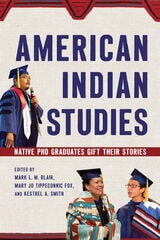
cover of American Indian Studies: Native PhD Graduates Gift Their Stories

American Indian Studies

Native PhD Graduates Gift Their Stories

Edited by Mark L. M. Blair, Mary Jo Tippeconnic Fox, and Kestrel A. Smith

University of Arizona Press, 2022

In American Indian Studies, Native PhD graduates share their personal stories about their educational experiences and how doctoral education has shaped their identities, lives, relationships, and careers.

This collection of personal narratives from Native graduates of the University of Arizona’s American Indian Studies (AIS) doctoral program, the first such program of its kind, gifts stories of endurance and resiliency, hardship and struggle, and accomplishment and success. It provides insight into the diverse and dynamic experiences of Native graduate students. The narratives address family and kinship, mentorship, and service and giving back. Essayists share the benefits of having an AIS program at a mainstream academic institution—not just for the students enrolled but also for their communities.

This book offers Native students aspiring to a PhD a realistic picture of what it takes. While each student has their own path to walk, these stories provide the gift of encouragement and serve to empower Native students to reach their educational goals, whether it be in an AIS program or other fields of study.
[more]
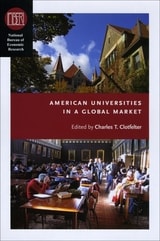
cover of American Universities in a Global Market

American Universities in a Global Market

Edited by Charles T. Clotfelter

University of Chicago Press, 2010

In higher education, the United States is the preeminent global leader, dominating the list of the world’s top research universities. But there are signs that America’s position of global leadership will face challenges in the future, as it has in other realms of international competition. American Universities in a Global Market addresses the variety of issues crucial to understanding this preeminence and this challenge. The book examines the various factors that contributed to America’s success in higher education, including openness to people and ideas, generous governmental support, and a tradition of decentralized friendly competition. It also explores the advantages of holding a dominant position in this marketplace and examines the current state of American higher education in a comparative context, placing particular emphasis on how market forces affect universities. By discussing the differences in quality among students and institutions around the world, this volume sheds light on the singular aspects of American higher education.

[more]
cover of Amherst in the World

Amherst in the World

Martha Saxton

Amherst College Press, 2020

In celebration of the 200th anniversary of Amherst College, a group of scholars and alumni explore the school’s substantial past in this volume. Amherst in the World tells the story of how an institution that was founded to train Protestant ministers began educating new generations of industrialists, bankers, and political leaders with the decline in missionary ambitions after the Civil War. The contributors trace how what was a largely white school throughout the interwar years begins diversifying its student demographics after World War II and the War in Vietnam. The histories told here illuminate how Amherst has contended with slavery, wars, religion, coeducation, science, curriculum, town and gown relations, governance, and funding during its two centuries of existence. Through Amherst’s engagement with educational improvement in light of these historical undulations, it continually affirms both the vitality and the utility of a liberal arts education.

Contributions by Martha Saxton, Gary J. Kornblith, David W. Wills, Frederick E. Hoxie, Trent Maxey, Nicholas L. Syrett,  Wendy H. Bergoffen, Rick López, Matthew Alexander Randolph, Daniel Levinson Wilk, K. Ian Shin, David S. Reynolds, Jane F. Thrailkill, Julie Dobrow, Richard F. Teichgraeber III, Debby Applegate, Michael E. Jirik, Bruce Laurie, Molly Michelmore, and Christian G. Appy.
[more]
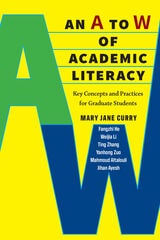
cover of An A to W of Academic Literacy: Key Concepts and Practices for Graduate Students

An A to W of Academic Literacy

Key Concepts and Practices for Graduate Students

Mary Jane Curry, Fangzhi He, Weijia Li, Ting Zhang, Yanhong Zuo, Mahmoud Altalouli, and Jihan Ayesh

University of Michigan Press, 2021

An A to W of Academic Literacy is designed for graduate students of all language backgrounds and at any level of study. It is created as a comprehensive reference for graduate students. As a glossary of terms, it can also be used as a supplemental textbook for graduate workshops and seminars and by writing consultants and instructors across the disciplines.
 
The guide includes 65 common academic literacy terms and explores how they relate to genres, writing conventions, and language use. Each entry briefly defines the term, identifies variations and tensions about its use across disciplines, provides examples, and includes reflection questions. An appendix lists further readings for each entry.
 
Unique to this volume are comments featuring the experiences of the graduate students who wrote the entries, comments that bring each entry to life and build a bridge to graduate student readers. 
 
[more]
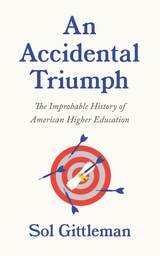
cover of An Accidental Triumph: The Improbable History of American Higher Education

An Accidental Triumph

The Improbable History of American Higher Education

Sol Gittleman

Vesto Books, 2023

"Hardly a day passes without reference to some scandal, fraud, intellectual or moral failure, or other ill associated with American academic institutions,” writes Sol Gittleman in his bracing new book, An Accidental Triumph. “If American higher education is such a failure, why are students and scholars from all over the world still so eager to secure a place in one of these institutions? Is American higher education a disaster or the envy of the world?”

Gittleman confronts this contradiction in this dynamic mix of history, analysis, and personal reflection. An Accidental Triumph tells the engaging story of how American higher education evolved from a patchwork of seminaries in the early nineteenth century into the world’s leader in research by the middle of the twentieth. Gittleman links this fascinating story to his own fifty-year academic career, which coincided with an explosive rise in enrollment, spurred by the GI Bill, and an unparalleled postwar boom in faculty hiring, prompted by massive new federal support for academic research from organizations such as the National Science Foundation.

Writing with authority, frankness, and unfailing wry good humor, Gittleman surveys the triumphs, tragedies, and tensions of the history of American higher education. Despite the relentless criticism, Gittleman finds good reason to remain optimistic about the future of teaching and research at the college and university level in the United States. 

[more]
cover of An Athletic Director’s Story and the Future of College Sports in America

An Athletic Director’s Story and the Future of College Sports in America

Robert E. Mulcahy

Rutgers University Press, 2020

Robert Mulcahy’s chronicle of his decade leading Rutgers University athletics is an intriguing story about fulfilling a vision.  The goal was to expand pride in intercollegiate athletics.  Redirecting a program with clearer direction and strategic purpose brought encouraging results.  Advocating for finer coaching and improved facilities, he and Rutgers achieved national honors in Division I sports.  Unprecedented alumni interest and support for athletics swelled across the Rutgers community.
His words and actions were prominent during a nationally-reported incident involving student athletes.  When the Rutgers Women’s Basketball team players were slandered by racist remarks from a popular radio talk show host, Mulcahy met it head on.  With the coach and players, he set an inspiring example for defending character and values.
Though Mr. Mulcahy left Rutgers in 2009, his memoir reflects continued devotion to intercollegiate athletics and student athletes.  His insights for addressing several leading issues confronting Division I sports today offer guidelines for present and future athletic directors to follow.
 
[more]
cover of An Illini Place: Building the University of Illinois Campus

An Illini Place

Building the University of Illinois Campus

Incoronata Inserra

University of Illinois Press, 2017
Why does the University of Illinois campus at Urbana-Champaign look as it does today? Drawing on a wealth of research and featuring more than one hundred color photographs, An Illini Place provides an engrossing and beautiful answer to that question. Lex Tate and John Franch trace the story of the university's evolution through its buildings. Oral histories, official reports, dedication programs, and developmental plans both practical and quixotic inform the story. The authors also provide special chapters on campus icons and on the buildings, arenas and other spaces made possible by donors and friends of the university. Adding to the experience is a web companion that includes profiles of the planners, architects, and presidents instrumental in the campus's growth, plus an illustrated inventory of current and former campus plans and buildings.
[more]
cover of An Illinois Sampler: Teaching and Research on the Prairie

An Illinois Sampler

Teaching and Research on the Prairie

Edited by Mary-Ann Winkelmes and Antoinette Burton with Kyle Mays

University of Illinois Press, 2014

An Illinois Sampler presents personal accounts from faculty members at the University of Illinois at Urbana-Champaign and other contributors about their research and how it enriches and energizes their teaching. Contributors from the humanities, engineering, social and natural sciences, and other disciplines explore how ideas, methods, and materials merge to lead their students down life-changing paths to creativity, discovery, and solutions. Faculty introduce their classes to work conducted from the Illinois prairie to Caribbean coral reefs to African farms, and from densely populated cities to dense computer coding. In so doing they generate an atmosphere where research, teaching, and learning thrive inside a feedback loop of education across disciplines.

Aimed at alumni and prospective students interested in the university's ongoing mission, as well as current faculty and students wishing to stay up to date on the work being done around them, An Illinois Sampler showcases the best, the most ambitious, and the most effective teaching practices developed and nurtured at one of the world's premier research universities.

Contributors are Nancy Abelmann, Flavia C. D. Andrade, Jayadev Athreya, Betty Jo Barrett, Thomas J. Bassett, Hugh Bishop, Antoinette Burton, Lauren A. Denofrio-Corrales, Lizanne DeStefano, Karen Flynn, Bruce W. Fouke, Rebecca Ginsburg, Julie Jordan Gunn, Geoffrey Herman, Laurie Johnson, Kyle T. Mays, Rebecca Nettl-Fiol, Audrey Petty, Anke Pinkert, Raymond Price, Luisa-Maria Rosu, D. Fairchild Ruggles, Carol Spindel, Mark D. Steinberg, William Sullivan, Richard I. Tapping, Bradley Tober, Agniezska Tuszynska, Bryan Wilcox, Kate Williams, Mary-Ann Winkelmes, and Yi Lu.
[more]
cover of Anthropologists Wanted: Why Organizations Need Anthropology

Anthropologists Wanted

Why Organizations Need Anthropology

Laurens Bakker

Amsterdam University Press, 2021

In Anthropologists Wanted. Why Organizations Need Anthropology the authors present a broad and inspiring survey of anthropologists in the job market. What in fact is anthropology? What skills do anthropologists have? Where do they work? How do they add value in the workplace, according to the people who hire them? And how can anthropologists showcase their qualities to employers? The book contains unique insights for anyone who plans to study, is studying, or has studied anthropology. And for employers interested in why anthropological knowledge is important.

Anthropologists Wanted includes portraits of anthropologists and their diverse occupations, interviews with employers and academic counsellors' answers to frequently asked questions about degree programmes, anthropological skills, and tips to help you land that job.

[more]
cover of Anxious Intellects: Academic Professionals, Public Intellectuals, and Enlightenment Values

Anxious Intellects

Academic Professionals, Public Intellectuals, and Enlightenment Values

John Michael

Duke University Press, 2000

Intellectuals occupy a paradoxical position in contemporary American culture as they struggle both to maintain their critical independence and to connect to the larger society. In Anxious Intellects John Michael discusses how critics from the right and the left have conceived of the intellectual’s role in a pluralized society, weighing intellectual authority against public democracy, universal against particularistic standards, and criticism against the respect of popular movements. Michael asserts that these Enlightenment-born issues, although not “resolvable,” are the very grounds from which real intellectual work must proceed.
As part of his investigation of intellectuals’ self-conceptions and their roles in society, Michael concentrates on several well-known contemporary African American intellectuals, including Henry Louis Gates Jr. and Cornel West. To illuminate public debates over pedagogy and the role of university, he turns to the work of Todd Gitlin, Michael Bérubé, and Allan Bloom. Stanley Fish’s pragmatic tome, Doing What Comes Naturally, along with a juxtaposition of Fredric Jameson and Samuel Huntington’s work, proves fertile ground for Michael’s argument that democratic politics without intellectuals is not possible. In the second half of Anxious Intellects, Michael relies on three popular conceptions of the intellectual—as critic, scientist, and professional—to discuss the work of scholars Constance Penley, Henry Jenkins, the celebrated physicist Stephen Hawking, and others, insisting that ambivalence, anxiety, projection, identification, hybridity, and various forms of psychosocial complexity constitute the real meaning of Enlightenment intellectuality. As a new and refreshing contribution to the recently emergent culture and science wars, Michael’s take on contemporary intellectuals and their place in society will enliven and redirect these ongoing debates.
[more]
cover of Aquamarine Blue 5: Personal Stories of College Students with Autism

Aquamarine Blue 5

Personal Stories of College Students with Autism

Dawn Prince-Hughes

Ohio University Press, 2002

Rated Outstanding by the American Association of School Libraries

This is the first book to be written by autistic college students about the challenges they face. Aquamarine Blue 5 details the struggle of these highly sensitive students and shows that there are gifts specific to autistic students that enrich the university system, scholarship, and the world as a whole.

Dawn Prince-Hughes presents an array of writings by students who have been diagnosed with Asperger’s Syndrome or High-Functioning Autism, showing their unique ways of looking at and solving problems. In their own words, they portray how their divergent thinking skills could be put to great use if they were given an opportunity. Many such students never get the chance because the same sensitivity that gives them these insights makes the flicker of fluorescent lights and the sound of chalk on the board unbearable For simple—and easily remedied—reasons, we lose these students, who are as gifted as they are challenged.

Aquamarine Blue 5 is a showcase of the strength and resilient character of individuals with Asperger’s Syndrome. It will be an invaluable resource for those touched by this syndrome, their friends and families, and school administrators.
[more]
cover of Arguments for Learning: An Intellectual History of the College of Education at the University of Illinois

Arguments for Learning

An Intellectual History of the College of Education at the University of Illinois

Bill Cope and Walter Feinberg

University of Illinois Press, 2025

Almost every educational idea worth a thought has been considered at the University of Illinois, and anything worth trying has been tested. In this history of ideas, Bill Cope and Walter Feinberg chronicle the intellectual lives of education thinkers at the university while tracking the development of educational ideas and practices in general.

Cope and Feinberg draw on conversations, narratives, and archival research that reveal how different generations explored their role in defining and carrying out the College’s multifaceted mission. Their account raises critical questions about the character of learning, the aims of teaching, and the nature of teaching as a profession. At the same time, the authors address issues that range from the role of schools in fostering individual and collective identity to the introduction of computer-mediated and online learning. Cope and Feinberg examine changes in self-understanding about fundamental ideas and chart how the College evolved from its original narrow mission of training children’s schoolteachers to embracing global perspectives.

A wide-ranging portrait of an institution, Arguments for Learning uses the School of Education to tell the stories of thinkers dedicated to the idea that education can change the world for the better.

[more]
cover of Aristocratic Inclusion: Hiring the Academic Elite

Aristocratic Inclusion

Hiring the Academic Elite

prabhdeep singh kehal

Duke University Press, 2027

Despite innumerable, and now infamous, initiatives to improve diversity, equity, and inclusion in the academy, elite institutions continue to hire disproportionately from a small number of top institutions, keeping the US professoriate dominated by straight, white, cisgender men with prestigious degrees. In Aristocratic Inclusion, prabhdeep singh kehal reveals how elites committed to equitable inclusion justify hiring from their own. kehal investigates academic hiring as a process of identifying, verifying, and including fellow scholarly aristocrats. Professors maintain the academic aristocracy by devising and deploying notions of hirability that, though purportedly based on merit, rely on deliberately exclusionary, racist, and sexist standards. These standards privilege candidates who display elite-affiliated academic accomplishments and willingness to maintain elite domination through their academic labor. Through these hirability standards, professors control the pace of change and manicure elite diversity, enabling these aristocrats to justify safeguarding their own status. Turning the conversation from who academia excludes to how academia excludes, kehal shows how professors and prestigious organizations employ cultural norms to create an exclusive social group that perpetuates their own domination.
[more]
cover of Artistic Research in the Future Academy

Artistic Research in the Future Academy

Danny Butt

Intellect Books, 2017
The rapid growth of doctoral-level art education challenges traditional ways of thinking about academic knowledge and, yet, as Danny Butt argues in this book, the creative arts may also represent a positive blueprint for the future of the university. Synthesizing institutional history with aesthetic theory, Artistic Research in the Future Academy reconceptualizes the contemporary crisis in university education toward a valuable renewal of creative research.
 
[more]
cover of Aspiring Adults Adrift: Tentative Transitions of College Graduates

Aspiring Adults Adrift

Tentative Transitions of College Graduates

Richard Arum and Josipa Roksa

University of Chicago Press, 2014
Few books have ever made their presence felt on college campuses—and newspaper opinion pages—as quickly and thoroughly as Richard Arum and Josipa Roksa’s 2011 landmark study of undergraduates’ learning, socialization, and study habits, Academically Adrift: Limited Learning on College Campuses. From the moment it was published, one thing was clear: no university could afford to ignore its well-documented and disturbing findings about the failings of undergraduate education.
 
Now Arum and Roksa are back, and their new book follows the same cohort of undergraduates through the rest of their college careers and out into the working world. Built on interviews and detailed surveys of almost a thousand recent college graduates from a diverse range of colleges and universities, Aspiring Adults Adrift reveals a generation facing a difficult transition to adulthood. Recent graduates report trouble finding decent jobs and developing stable romantic relationships, as well as assuming civic and financial responsibility—yet at the same time, they remain surprisingly hopeful and upbeat about their prospects.
 
Analyzing these findings in light of students’ performance on standardized tests of general collegiate skills, selectivity of institutions attended, and choice of major, Arum and Roksa not only map out the current state of a generation too often adrift, but enable us to examine the relationship between college experiences and tentative transitions to adulthood. Sure to be widely discussed, Aspiring Adults Adrift will compel us once again to re-examine the aims, approaches, and achievements of higher education.
 
[more]
cover of Aspiring to Greatness: West Virginia University Since World War II

Aspiring to Greatness

West Virginia University Since World War II

RONALD L. LEWIS

West Virginia University Press, 2013

 Aspiring to Greatness: West Virginia University since World War II chronicles the emergence of WVU as a major land-grant institution. As a continuation of the work of Doherty and Summers in West Virginia University: Symbol of Unity in a Sectionalized State, this book focuses on the modern historical developments that elevated WVU from a small regional institution to one of national prominence.
 
West Virginia University’s growth mirrors the developmental eras that have shaped American higher education since World War II. The University’s history as an innovative, pioneering force within higher education is explored through its major postwar stages of expansion, diversification, and commercialization.
 
Institutions of higher education nationwide experienced a dramatic increase in enrollments between 1945 and 1975 as millions of returning World War II and Korean War veterans took advantage of the GI Bill of Rights. Their children, the “baby boom” generation, continued to supply the growth in college enrollment and the corresponding increase in institutional complexity until the mid-1970s. During this period WVU followed the national trend by growing from a few thousand students to nearly fifteen thousand.
 
From 1975 to the early 1990s, expansion gave way to diversification. The traditional student population stopped growing by 1975, and  “boomers” were replaced by students from nontraditional backgrounds. An unprecedented gender, racial, and ethnic diversification took place on college campuses, a trend encouraged by federal civil rights legislation. To a lesser degree WVU was no exception, although its location in a rural state with a small minority population forced the University to work harder to attract minorities than institutions in proximity to urban areas.
 
The commercialization of higher education became a full-fledged movement by the 1990s. Major changes, such as globalization, demographic shifts, a weak economy, and the triumph of the “market society,” all accelerated the penetration of business values and practices into university life.  Like other public universities, WVU was called upon to generate more of its own revenues. The University’s strategic responses to these pressures reconstructed the state’s leading land grant into the large complex institution of today.
 
As the only modern history of West Virginia University, this text reaches into the archives of the President’s Office and makes exhaustive use of press accounts and interviews with key individuals to produce a detailed resource for alumni, friends, and supporters of WVU, as well as administrators and specialists in higher education. 
[more]