Results by title
683 books match the query 'Middle East' and 76 start with a
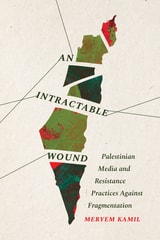
An Intractable Wound
Palestinian Media and Resistance Practices Against FragmentationMeryem Kamil
Rutgers University Press, 2027
An Intractable Wound explores Palestinian resistance to colonial fragmentation that originated as territorial fracture, as proposed through the United Nations partition plan that split the land between the state of Israel and Arab territories. The resulting fragmentation of geography, sovereignty, and populations spurred multiple other schisms that manifest culturally, politically, and developmentally across the West Bank, Gaza, refugee camps, exiled and diasporic Palestinians, and Arab citizens of Israel.
An Intractable Wound considers the various tactics Palestinians deploy to combat these multiple, intersecting iterations of fracture. In particular, this text considers Palestinian media technologies and practices that manage, subvert, and overcome fragmentation. Each chapter centers projects that elaborate on these fractures and combat them, including virtual reality representations, online archives, digital mapping platforms, and video games that imagine and construct an intact Palestinian community. Together, these case studies provide a capacious reading of the Palestinian condition as structured by fragmentation, and Palestinian resistance as struggling in opposition to that geographic, sociopolitical, and cultural disillusion.

An Introduction to Ancient Iranian Religion
Readings from the Avesta and the Achaemenid InscriptionsWilliam W. Malandra, EditorTranslated by William W. Malandra
University of Minnesota Press, 1983
An Introduction to Ancient Iranian Religion was first published in 1983. Minnesota Archive Editions uses digital technology to make long-unavailable books once again accessible, and are published unaltered from the original University of Minnesota Press editions.
When Persia fell to Islam in the mid-seventh century, the ancient Iranian religion of Zoroastrianism all but disappeared (although it is still practiced by small groups in India and Iran). As one of the dominant religions of antiquity, it influenced the Judeo- Christian tradition as well as some forms of gnosticism. Despite its age and venerable place in the history of world religions, Zoroastrianism remains little known outside of a few philologists and historians of religion. Because of the difficulty of translation, there is little primary textual material available for nonspecialists; the few translations that do exist are quite old.
In An Introduction to Ancient Iranian Religion, William Malandra provides not only modern English translations of the sacred texts but also a comprehensive introduction to the subject of Zoroastrianism itself. In an introductory essay Malandra outlines the main features of Zoroastrianism in its historical, cultural, and spiritual setting. His new translations of readings from the Avesta, the sacred book of Zoroastrianism, and selections from the Achaemenid inscriptions of the great kings Darius and Xerxes are accompanied by interpretive notes that allow students to make their way through this difficult material. This book is, therefore, not just a collection of texts but a selfcontained introduction to Zoroastrianism that can be used by the nonspecialist without recourse to additional interpretive works.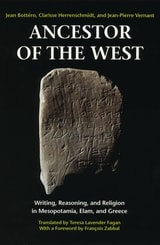
Ancestor of the West
Writing, Reasoning, and Religion in Mesopotamia, Elam, and GreeceJean Bottéro, Clarisse Herrenschmidt, and Jean-Pierre Vernant
University of Chicago Press, 2000
"Full of matter for anyone interested in language, religion, and politics in the ancient world."—R. T. Ridley, Journal of Religious History
"In this accessible introduction to the ancient world, three leading French scholars explore the emergence of rationality and writing in the West, tracing its development and its survival in our own traditions. . . . Jean Bottero focuses on writing and religion in ancient Mesopotamia, Clarisse Herrenschmidt considers a broader history of ancient writing, and Jean-Pierre Vernant examines classical Greek civilization in the context of Near Eastern history."—Translation Review

Ancient Records of Egypt
VOL. 2: THE EIGHTEENTH DYNASTYTranslated and Edited by James Henry Breasted
University of Illinois Press, 2001
The Eighteenth Dynasty saw the consolidation of the cult of Amun and the expansion of the temple of Amun-Re at Karnak, as well as a religious revolution under King Akhenaten that involved abandoning Thebes as a religious capital and royal residence and founding a new city devoted to the service of the new solar god, Aten. Breasted presents records of the biography and coronation of Queen Hatshepsut, including reliefs that depict the queen's expedition to the land of Punt. Also in this volume are the annals of Thutmose III, providing the most complete account of the military achievements of any Egyptian king; scenes representing the supernatural birth and coronation by the gods of his son, Amenhotep II; and inscriptions from the tomb of Rekhmire, prime minister or vizier under Thutmose III, that include a listing of taxes paid to the temple and foreign tribute proceeding from the king's two decades of military activity in Asia.
A herculean assemblage of primary documents, many of which have deteriorated to illegibility since its original publication, Ancient Records of Egypt illuminates both the incredible complexity of Egyptian society and the almost insuperable difficulties of reconstructing a lost civilization.
Ancient Records of Egypt
Vol. 3: The Nineteenth DynastyTranslated and Edited by James Henry Breasted
University of Illinois Press, 2001
In the context of a long history of mutilating and altering reliefs for political purposes, Breasted discusses the insertion into a relief of the figure of Ramesses II in order to reinforce his claim to the throne. This volume also includes the treaty of alliance that sealed peace with the Hittites under Ramesses II; a series of documents that record the invasion of Libyans and Mediterranean Sea people during the reign of Merneptah; and the Great Temple of Abu Simbel, the most remarkable of the rock-cut temples of Egypt.
This first complete paperback edition of Breasted's five-volume Ancient Records of Egypt makes available to a new audience a milestone in Egyptology and in the compilation of documentary histories. Clearly annotated for the lay reader, the documents provide copious evidence of trade relations, construction activities, diplomatic envoys, foreign expeditions, and other aspects of a vigorous, highly organized, and centrally controlled society. Breasted's commentary is both rigorously documented and accessible, suffused with a contagious fascination for the events, the personalities, the cultural practices, and the sophistication these records indicate
Ancient Records of Egypt
Vol. 5: Supplementary Bibliographies and IndicesTranslated and Edited by James Henry Breasted: Supplementary Bibliographies by Peter A. Piccione
University of Illinois Press, 2001
An indispensable companion to any of the other volumes of Ancient Records of Egypt, the Supplementary Bibliographies and Indices facilitates direct access to specific information on the people, places, and inscriptions catalogued by James Henry Breasted. Exhaustively compiled and intelligently arranged, these indices include the kings and queens, temples and geographical locations, divine names, and titles and ranks encompassed by three thousand years of Egyptian history. Also provided are indices of all Egyptian, Hebrew, and Arabic terms mentioned in the texts, as well as a complete listing of the records with their location in Lepsius's Denkmäler.
This first paperback edition of Ancient Records of Egypt features the important addition of bibliographies by Peter A. Piccione, together with an introduction that puts Breasted's historical commentaries into modern perspective. These bibliographies offer valuable guidance on new translations and modern treatments of the inscriptions included in Ancient Records of Egypt. Professor Piccione points the reader toward recent studies of Egyptian chronology and modern scholarship on Egyptian and Nubian history. He also provides information on anthologies of Egyptian texts in translation and topographical bibliographies that suggest further reading on specific ancient Egyptian monuments, texts, and reliefs.
Ancient Records of Egypt
vol. 1: The First through the Seventeenth DynastiesTranslated and Edited by James Henry Breasted: Introduction by Peter A. Piccione
University of Illinois Press, 2001
Breasted's monumental work, originally published from 1906 to 1907, encompasses twenty-six dynasties spanning more than three millennia: from ca. 3050 B.C. to 525 B.C. For each document, Breasted provides information on location, condition, historical significance, and content. Beginning with the earliest known official annals of Egypt, the Palermo Stone, Breasted catalogs the realm's official activities, including royal succession, temple construction, property distribution, and foreign conquest. He tracks the careers of scores of kings, queens, government officials, military leaders, powerful statesmen, and influential courtiers, reproducing their autobiographies, letters of favor, paeans, mortuary gifts, and tomb inscriptions. Clearly annotated for the lay reader, the documents provide copious evidence of trade relations, construction activities, diplomatic envoys, foreign expeditions, and other aspects of a vigorous, highly organized, and centrally controlled society.
Breasted's commentary is both rigorously documented and accessible, suffused with a contagious fascination for the events, the personalities, the cultural practices, and the sophistication these records indicate. A herculean assemblage of primary documents, many of which have deteriorated to illegibility in the intervening century, Ancient Records of Egypt illuminates both the incredible complexity of Egyptian society and the almost insuperable difficulties of reconstructing a lost civilization.
This first paperback edition of Ancient Records of Egypt features a new introduction and supplementary bibliographies by Peter A. Piccione. Setting Breasted's work in the context of the development of American Egyptology, Piccione discusses Breasted's establishment of the Oriental Institute of the University of Chicago, with corporate support by John D. Rockefeller and other benefactors, and surveys the ambitious body of publications with which Breasted laid the foundation for future Egyptian studies.
Ancient Records of Egypt
vol. 4: The Twentieth through the Twenty-sixth DynastiesTranslated and Edited by James Henry Breasted
University of Illinois Press, 2001
Volume 4 includes intriguing records of the harem conspiracy and legal documents that indicate the extent of robberies of royal tombs. Records of the Nile levels at Karnak provide important chronological landmarks, while the Stela of Piye (Piankhi), which documents the Nubian kingdom already in existence as a full-fledged power, provides information on the internal political climate of Egypt during a time when no aggressive monarch controlled the whole country. Breasted also notes where these ancient Egyptian records intersect with accounts of the same events from other sources, such as the mutiny of Psamtik I's troops as inscribed on the alabaster statue of Nesuhor and as narrated by Herodotus.
In effect, Ancient Records of Egypt offers a valuable dual record. On the one hand, Breasted presents the events and personages of ancient Egypt as recorded in the documents. On the other hand, he presents a history of the documents themselves. Fragmentary or partially destroyed, carved on temple and tomb walls or written on fragile scrolls of leather or papyrus, even inscribed on the coffins and temple linens of the royal and priestly mummy wrappings, these records offer an irreplaceable primary source on a fascinating civilization.
Antinomies of Modernity
Essays on Race, Orient, NationVasant Kaiwar and Sucheta Mazumdar, eds.
Duke University Press, 2003
Drawing on archival sources and fieldwork, the contributors explore aspects of modernity within societies of South Asia, the Middle East, and Africa. Whether considering how European ideas of Orientalism became foundational myths of Indian nationalism; how racial caste systems between blacks, South Asians, and whites operate in post-apartheid South Africa; or how Indian immigrants to the United States negotiate their identities, these essays demonstrate that the contours of cultural and identity politics did not simply originate in metropolitan centers and get adopted wholesale in the colonies. Colonial and postcolonial modernisms have emerged via the active appropriation of, or resistance to, far-reaching European ideas. Over time, Orientalism and nationalist and racialized knowledges become indigenized and acquire, for all practical purposes, a completely "Third World" patina. Antinomies of Modernity shows that people do make history, constrained in part by political-economic realities and in part by the categories they marshal in doing so.
Contributors. Neville Alexander, Andrew Barnes, Vasant Kaiwar, Sucheta Mazumdar, Minoo Moallem, Mohamad Tavakoli-Targhi, A. R. Venkatachalapathy, Michael O. West
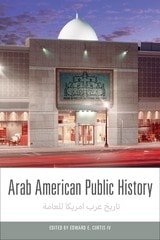
Arab American Public History
Edited by Edward E. Curtis IV
Temple University Press, 2026
Arab American Public History is an invitation to engage more deeply with Arab American communities. Chapters examine Arab Americans’ origins, ethnic identities, and efforts to belong in America through case studies of the community’s food cultures, genealogy research, cultural production, and neighborhood enclaves.
The first formal study of Arab American public history, this exciting volume charts various ways Arab Americans have interpreted their past as a source of defiant humanity, cultural enfranchisement, social solidarity, and political power.
Contributors: Reem Awad-Rashmawi, Chloe Bordewich, Richard M. Breaux, Maria F. Curtis, Lydia Harrington, Randa A. Kayyali, Matthew Jaber Stiffler, Rebecca K. Shrum, and the editor
In the series History and the Public
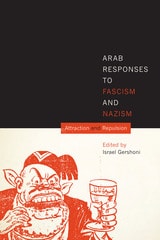
Arab Responses to Fascism and Nazism
Attraction and RepulsionBy Israel Gershoni
University of Texas Press, 2014
The first book to present an analysis of Arab response to fascism and Nazism from the perspectives of both individual countries and the Arab world at large, this collection problematizes and ultimately deconstructs the established narratives that assume most Arabs supported fascism and Nazism leading up to and during World War II. Using new source materials taken largely from Arab memoirs, archives, and print media, the articles reexamine Egyptian, Syrian, Lebanese, Palestinian, and Iraqi responses in the 1930s and throughout the war.
While acknowledging the individuals, forces, and organizations that did support and collaborate with Nazi Germany and fascist Italy, Arab Responses to Fascism and Nazism focuses on the many other Arab voices that identified with Britain and France and with the Allied cause during the war. The authors argue that many groups within Arab societies—elites and non-elites, governing forces, and civilians—rejected Nazism and fascism as totalitarian, racist, and, most important, as new, more oppressive forms of European imperialism. The essays in this volume argue that, in contrast to prevailing beliefs that Arabs were de facto supporters of Italy and Germany—since “the enemy of my enemy is my friend”—mainstream Arab forces and currents opposed the Axis powers and supported the Allies during the war. They played a significant role in the battles for control over the Middle East.
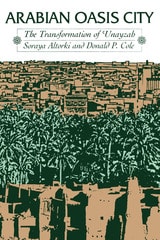
Arabian Oasis City
The Transformation of 'UnayzahBy Soraya Altorki and Donald P. Cole
University of Texas Press, 1989
Vast social change has occurred in the Middle East since the oil boom of the mid-1970s. As the first anthropological study of an urban community in Saudi Arabia since that oil boom, Arabian Oasis City is also the first to document those changes.
Based on extensive interviews and participant observation with both men and women, the authors record and analyze the transformation that has occurred in this ancient oasis city throughout the twentieth century: the creation of the present Saudi Arabian state and of a new national economy based on the export of oil and the economic boom brought about by the dramatic increases in the price of oil following the October 1973 Arab-Israeli War. In addition, the authors reveal the changes brought about by the fall in the price of oil beginning in 1982 and analyze the problems confronting ‘Unayzah in its aftermath.
By demonstrating that the area was not exclusively dominated by tribalism and Bedouin nomads, this empirical case study destroys stereotypical views about Saudi Arabia. Indeed, it proves the existence—prior to the coming of the modern Saudi Arabian state— of surplus agricultural and craft production and the full development of local, regional, and long-distance trade networks. It shows that women, although veiled, played active roles in work outside the household. The social impact of change over the years is, however, profound—especially the gradual replacement of the extended family by the nuclear family, changing patterns of husband-wife relationships, the impact of self-earned income on the status of women, and the emergence of a new middle class of employees and entrepreneurs. Because of the high degree of gender segregation in this area of research, Altorki and Cole give us a fortunate collaboration between a Saudi Arabian female scholar and an American male scholar experienced in research in the Middle East.
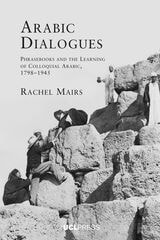
Arabic Dialogues
Phrasebooks and the Learning of Colloquial Arabic, 1798–1945Rachel Mairs
University College London, 2024
During the nineteenth century and into the early twentieth century, more Europeans visited the Middle East than ever before, as tourists, archaeologists, pilgrims, settler-colonists, and soldiers. These visitors engaged with the Arabic language to differing degrees. While some were serious scholars of Classical Arabic, in the Orientalist mold, many did not learn the language at all. Between these two extremes lies a neglected group of language learners who wanted to learn enough everyday colloquial Arabic to get by. The needs of these learners were met by popular language books, which boasted that they could provide an easy route to fluency in a difficult language.
Arabic Dialogues explores the motivations of Arabic learners and the effectiveness of instructional materials, principally in Egypt and Palestine, by analyzing a corpus of Arabic phrasebooks published in nine languages (English, French, German, Spanish, Portuguese, Italian, Yiddish, Hebrew, Russian) and in the territories of twenty-five modern countries. Beginning with Napoleon’s Expédition d’Égypte, the book moves through the periods of mass tourism and European colonialism in the Middle East, concluding with the Second World War. The book also considers how Arab intellectuals understood the project of teaching Arabic to foreigners, the remarkable history of Arabic learning among Yiddish- and Hebrew-speaking immigrants in Palestine, and the networks of language learners, teachers, and plagiarists who produced these phrasebooks.
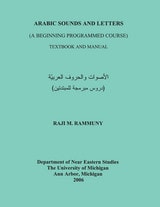
Arabic Sounds and Letters
A Beginning Programmed Course. Textbook and ManualRaji M. Rammuny
University of Michigan Press, 2006
The textbook includes twenty lessons aimed at introducing Arabic sounds and writing system in a programmed method of instruction, supported by images and audio tapes*. The Manual consists of two parts. Part One includes a suggested methodology to guide teachers and students and Part Two contains basic communication needs in both Arabic script and transliteration to create a climate of enjoyable learning while students are acquiring the sounds and letters.
Raji M. Rammuny is Professor of Arabic Studies, Department of Near Eastern Studies, University of Michigan. He is the author of numerous books, including Advanced Standard Arabic through Authentic Texts and Audiovisual Materials, Parts 1 and 2, also published by the University of Michigan Press.
*The CD accompanying Arabic Sounds and Letters can be obtained from the UM Language Resource Center. Contact them by email at flacs@umich.edu or by phone at 734-764-3521.
Archaeological Landscapes of the Near East
T. J. Wilkinson
University of Arizona Press, 2003
Many fundamental studies of the origins of states have built upon landscape data, but an overall study of the Near Eastern landscape itself has never been attempted. Spanning thousands of years of history, the ancient Near East presents a bewildering range of landscapes, the understanding of which can greatly enhance our ability to infer past political and social systems.
Tony Wilkinson now shows that throughout the Holocene humans altered the Near Eastern environment so thoroughly that the land has become a human artifact, albeit one that retains the power to shape human societies. In this trailblazing book—the first to describe and explain the development of the Near Eastern landscape using archaeological data—Wilkinson identifies specific landscape signatures for various regions and periods, from the early stages of complex societies in the fifth to sixth millennium B.C. to the close of the Early Islamic period around the tenth century A.D.
From Bronze Age city-states to colonized steppes, these signature landscapes of irrigation systems, tells, and other features changed through time along with changes in social, economic, political, and environmental conditions. By weaving together the record of the human landscape with evidence of settlement, the environment, and social and economic conditions, Wilkinson provides a holistic view of the ancient Near East that complements archaeological excavations, cuneiform texts, and other conventional sources.
Through this overview, culled from thirty years' research, Wilkinson establishes a new framework for understanding the economic and physical infrastructure of the region. By describing the basic attributes of the ancient cultural landscape and placing their development within the context of a dynamic environment, he breaks new ground in landscape archaeology and offers a new context for understanding the ancient Near East.
Archaeological Perspectives on the Transmission and Transformation of Culture in the Eastern Mediterranean
J. Clarke
Council for British Research in the Levant, 2005
Archaeology and Desertification
The Wadi Faynan Landscape Survey, Southern JordanG. Barker
Council for British Research in the Levant, 2007
Archaeology, History, and Formation of Identity in Ancient Israel
Filip Capek
Karolinum Press, 2023
When did Israel begin? The origins of ancient Israel are shrouded in mystery, and those hoping to explore the issue must utilize resources from three different fields—archaeology, epigraphy, and biblical texts—and then examine their interrelations while keeping in mind that the name Israel was not used to describe just one state but referred to numerous entities at different times.
Archaeology, History, and Formation of Identity in Ancient Israel provides a critical reading of Israel’s history. It is neither a harmonizing reading, which takes the picture painted by texts as a given fact, nor a reading supporting biblical texts with archaeological and epigraphic data; instead, it offers the reader multiple options to understand biblical narratives on a historical and theological level. In addition to presenting the main currents in the field, the book draws upon the latest discoveries from Czech-Israeli excavations to offer new hypotheses and reconstructions based on the interdisciplinary dialogue between biblical studies, archaeology, and history.
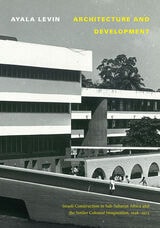
Architecture and Development
Israeli Construction in Sub-Saharan Africa and the Settler Colonial Imagination, 1958-1973Ayala Levin
Duke University Press, 2022
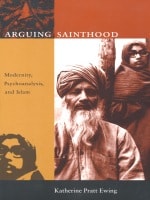
Arguing Sainthood
Modernity, Psychoanalysis, and IslamKatherine Pratt Ewing
Duke University Press, 1997
Ewing critiques Eurocentric cultural theorists and Orientalist discourse while also taking issue with expatriate postcolonial thinkers Homi Bhabha and Gayatri Spivak. She challenges the notion of a monolithic Islamic modernity in order to explore the lived realities of individuals, particularly those of Pakistani saints and their followers. By examining the continuities between current Sufi practices and earlier popular practices in the Muslim world, Ewing identifies in the Sufi tradition a reflexive, critical consciousness that has usually been associated with the modern subject. Drawing on her training in clinical and theoretical psychoanalysis as well as her anthropological fieldwork in Lahore, Pakistan, Ewing argues for the value of Lacan in anthropology as she provides the basis for retheorizing postcolonial studies.
Armenians and the Allies in Cilicia, 1914-1923
Yucel Guclu
University of Utah Press, 2010
Güçlü bases his claim largely on evidence from state and military archives in Turkey, Britain, France, and the United States that look specifically into the Ottoman version of history, placing the whole question of forced population displacements in a wider and more nuanced perspective than that in which it is usually depicted. According to the author, revolutionary Armenian forces were threatening the Ottoman Empire from within as it was simultaneously threatened by external forces. Armenians were also actively involved with Allied forces throughout World War I. In response, the Ottoman government ordered the movement of the Armenian population away from protected and sensitive war zones. The actions taken by the Ottoman Empire to control the Armenian population were those of relocation, not extermination.
Working to explain why the Armenian conflict emerged and how it was eventually resolved, this book discusses the Armenian revolutionary and separatist movements, Turkish measures of self defense, and Allied schemes regarding the region during the period. It places special emphasis on the influence of Allied forces on the actions of Armenians in Cilicia.

Art, Intellect and the State
Cultural Histories of Late Pahlavi IranEdited by Bianca Devos and Robert Steele
Gingko, 2026
A cross-disciplinary volume on the intersections of—and tensions between—culture and government in Iran's late Pahlavi period.
In recent years, scholarly interest in Iran's late Pahlavi period (1941–1979) has grown significantly and historians are increasingly approaching the era not merely as a prelude to the Iranian Revolution, but as a period worthy of study in its own right. New generations of scholars have uncovered fresh sources and offered original perspectives on the cultural and social life of this era. Yet opportunities for cross-disciplinary engagement among scholars from different fields who are exploring similar questions remain limited. This volume, the product of two international workshops at the Austrian Academy of Sciences in Vienna and the University of Marburg, respectively, is a collection of the work of scholars at various stages of their careers from various disciplines investigating the cultural history of late Pahlavi Iran from a multiplicity of perspectives, including: archaeology, architecture, scholarship, media, art, film, literature, politics, religion, museums, music, philosophy, education, and theater.
Chapters explore the interactions between state ideology and the sociocultural sphere, exploring ideas such as: the influence of the press and literature on social discourses; the culturally strategic and identity-forming role of the performing arts; the relationship between state education policy and culture; the employment of foreign artists, architects, scholars, and musicians in the context of Iran’s cultural diplomacy; and the dynamics of (state) religion, spirituality, nationalism, and psychology in modern media or through their dissemination in the media. The volume explores not only the Pahlavi state’s direct participation in facilitating cultural activity or scholarly endeavors, but also how artists, writers, historians, and other cultural actors flourished independent of (sometimes in spite of) the state apparatus.
The volume does not seek to provide an encyclopaedic collection detailing every aspect of culture in the Pahlavi period, but the case studies explored demonstrate the breadth and complexities of this field in the historiography. Moreover, by shedding light on the various features of culture in the late Pahlavi era and encouraging multidisciplinary discussions, the volume aims to contribute to a greater understanding of the vibrant cultural life in Iran during this period.

Arthur Carhart
Wilderness ProphetTom Wolf
University Press of Colorado, 2025
Arthur Carhart (1892-1978), America's first champion of wilderness, the first Forest Service landscape architect, and the most popular conservation writer of mid-century America, never won the titan status of his contemporary, Aldo Leopold. A political maverick, he refused to side with any major advocacy group and none has made him its saint. Carhart was a grassroots thinker in a top-down era.
Arthur Carhart, the first biography of this Republican environmentalist and major American thinker, writer, and activist, reveals the currency of his ideas. Tom Wolf elucidates Carhart 's vision of conservation as "a job for all of us," with citizens, municipal authorities, and national leaders all responsible for the environmental effects of their decisions. Carhart loved the local and decried interest groups—from stockmens' associations to wilderness lobbies—as cliques attempting blanket control. He pressured land management agencies to base decisions on local ecology and local partnerships. A lifelong wilderness advocate who proposed the first wilderness preserve at Trappers Lake, Colorado, in 1919, Carhart chose to oppose the Wilderness Act, heartsick at its compromises with lobbies.
Because he shifted his stance and changed his views in response to new information, Carhart is not an easy subject for a biography. Wolf traces Carhart's twists and turns to show a man whose voice was distinctive and contrary and who spoke from a passionate concern for the land and couldn't be counted on for anything else. Readers of American history and outdoor writing will enjoy this portrait of a historic era in conservation politics and the man who so often eschewed politics in favor of the land and people he loved.
Aspects of Islamic Civilization
As Depicted in the Original TextsA. J. Arberry
University of Michigan Press, 1967
Islamic literature is rich, varied, and abundant, as befits the literature of a civilization which once controlled an empire as great as that of the Romans. In Aspects of Islamic Civilization, A. J. Arberry has chosen and translated passages from the most highly regarded works of Islamic literature in order to illustrate the development of Islamic civilization from its origins in the sixth century to the present.
This anthology is made up of selections from Arabic and Persian writers who have given world renown to Islamic literature—such as Hafiz, Sa'di, Jalal al-Din Rumi, Omar Khayyam, Ibn al-Farid, Avicenna, Ibn Hazm—and from such works as the Koran, the Masnavi, and the Moorish Anthology. It is an invaluable collection of sources for anyone interested in the Moslem world and a fascinating volume to browse in.
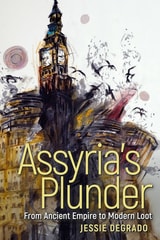
Assyria’s Plunder
From Ancient Empire to Modern LootJessie DeGrado
University Press of Colorado, 2026
Assyria’s Plunder offers a new history of ancient Assyria and its interactions with its client states of Israel and Judah. Considering the entanglement of modern imperialism with the historiography of ancient empire, Jessie DeGrado reassesses the conventional understanding of the Neo-Assyrian Empire using textual analysis, art history, and archaeology.
Engaging texts from Israel and Judah, DeGrado refuses the usual framings of Biblical resistance to Assyrian despotism and asks instead why subject populations may have capitulated to Assyrian rule. Paired chapters consider specific Assyrian imperial practices and biblical texts that engage them. As the study moves from the awe-filled spectacle of Assyrian throne rooms to the Assyrian policy of deporting divine statues, Assyria’s Plunder centers the embodied experiences of those subjected to Assyrian hegemony. DeGrado also explores how the empire’s violence still holds sway in the popular imagination while Euro-American imperialism goes largely unacknowledged.
Drawing on decolonial studies alongside epigraphic and textual analysis, Assyria’s Plunder shows how critical historiography and theory can enrich historical analysis and provide a fuller portrait of Assyrian interaction with its client states.
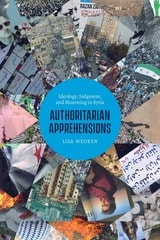
Authoritarian Apprehensions
Ideology, Judgment, and Mourning in SyriaLisa Wedeen
University of Chicago Press, 2019
Drawing on extensive fieldwork and a variety of Syrian artistic practices, Wedeen lays bare the ideological investments that sustain ambivalent attachments to established organizations of power and contribute to the ongoing challenge of pursuing political change. This masterful book is a testament to Wedeen’s deep engagement with some of the most troubling concerns of our political present and future.