Results by title
857 books match the query 'Schools' and 71 start with a
America, Compromised
Lawrence Lessig
University of Chicago Press, 2018
So begins Lawrence Lessig's sweeping indictment of contemporary American institutions and the corruption that besets them. We can all see it—from the selling of Congress to special interests to the corporate capture of the academy. Something is wrong. It’s getting worse.
And it’s our fault. What Lessig shows, brilliantly and persuasively, is that we can’t blame the problems of contemporary American life on bad people, as our discourse all too often tends to do. Rather, he explains, “We have allowed core institutions of America’s economic, social, and political life to become corrupted. Not by evil souls, but by good souls. Not through crime, but through compromise.” Every one of us, every day, making the modest compromises that seem necessary to keep moving along, is contributing to the rot at the core of American civic life. Through case studies of Congress, finance, the academy, the media, and the law, Lessig shows how institutions are drawn away from higher purposes and toward money, power, quick rewards—the first steps to corruption.
Lessig knows that a charge so broad should not be levied lightly, and that our instinct will be to resist it. So he brings copious, damning detail gleaned from years of research, building a case that is all but incontrovertible: America is on the wrong path. If we don’t acknowledge our own part in that, and act now to change it, we will hand our children a less perfect union than we were given. It will be a long struggle. This book represents the first steps.
American Academic Cultures
A History of Higher EducationPaul H. Mattingly
University of Chicago Press, 2017
Mattingly sketches out seven broad generational cultures: evangelical, Jeffersonian, republican/nondenominational, industrially driven, progressively pragmatic, internationally minded, and the current corporate model. What we see through his close analysis of each of these cultures in their historical moments is that the politics of higher education, both inside and outside institutions, are ultimately driven by the dominant culture of the time. By looking at the history of higher education in this new way, Mattingly opens our eyes to our own moment, and the part its culture plays in generating its politics and promise.
American Idyll
Academic Antielitism as Cultural CritiqueCatherine Liu
University of Iowa Press, 2011
A trenchant critique of failure and opportunism across the political spectrum, American Idyll argues that social mobility, once a revered hallmark of American society, has ebbed, as higher education has become a mechanistic process for efficient sorting that has more to do with class formation than anything else. Academic freedom and aesthetic education are reserved for high-scoring, privileged students and vocational education is the only option for economically marginal ones.
Throughout most of American history, antielitist sentiment was reserved for attacks against an entrenched aristocracy or rapacious plutocracy, but it has now become a revolt against meritocracy itself, directed against what insurgents see as a ruling class of credentialed elites with degrees from exclusive academic institutions. Catherine Liu reveals that, within the academy and stemming from the relatively new discipline of cultural studies, animosity against expertise has animated much of the Left’s cultural criticism.
By unpacking the disciplinary formation and academic ambitions of American cultural studies, Liu uncovers the genealogy of the current antielitism, placing the populism that dominates headlines within a broad historical context. In the process, she emphasizes the relevance of the historical origins of populist revolt against finance capital and its political influence. American Idyll reveals the unlikely alliance between American pragmatism and proponents of the Frankfurt School and argues for the importance of broad frames of historical thinking in encouraging robust academic debate within democratic institutions. In a bold thought experiment that revives and defends Richard Hofstadter’s theories of anti-intellectualism in American life, Liu asks, What if cultural populism had been the consensus politics of the past three decades?
American Idyll shows that recent antielitism does nothing to redress the source of its discontent—namely, growing economic inequality and diminishing social mobility. Instead, pseudopopulist rage, in conservative and countercultural forms alike, has been transformed into resentment, content merely to take down allegedly elitist cultural forms without questioning the real political and economic consolidation of powers that has taken place in America during the past thirty years.
American Indian Studies
Native PhD Graduates Gift Their StoriesEdited by Mark L. M. Blair, Mary Jo Tippeconnic Fox, and Kestrel A. Smith
University of Arizona Press, 2022
In American Indian Studies, Native PhD graduates share their personal stories about their educational experiences and how doctoral education has shaped their identities, lives, relationships, and careers.
This collection of personal narratives from Native graduates of the University of Arizona’s American Indian Studies (AIS) doctoral program, the first such program of its kind, gifts stories of endurance and resiliency, hardship and struggle, and accomplishment and success. It provides insight into the diverse and dynamic experiences of Native graduate students. The narratives address family and kinship, mentorship, and service and giving back. Essayists share the benefits of having an AIS program at a mainstream academic institution—not just for the students enrolled but also for their communities.
This book offers Native students aspiring to a PhD a realistic picture of what it takes. While each student has their own path to walk, these stories provide the gift of encouragement and serve to empower Native students to reach their educational goals, whether it be in an AIS program or other fields of study.
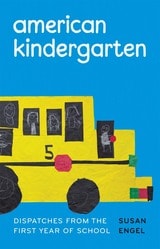
American Kindergarten
Dispatches from the First Year of SchoolSusan Engel
University of Chicago Press, 2026
When we think of kindergarten, many might imagine joyous free play, and a tangle of trucks, dress-up clothes, and blocks, as five-year-olds explore their vivid imaginations and budding social skills. Others might envision a quiet group sitting cross-legged in a circle during story time. Neither of these scenes would be an inaccurate representation of the pivotal year of entry into traditional education in this country. However, neither offers a complete picture of what children do every day in those seemingly transparent, yet actually mysterious, classrooms. What can or should we expect during the first year of school? How are children learning and growing during those hours spent away from their homes?
Susan Engel embarked on finding these answers in American Kindergarten: Dispatches from the First Year of School. Engel toured twenty-nine classrooms across fourteen states, observing each closely, with a special eye toward the ways each classroom’s goals reflect its community. As she made her way across the country, Engel found that on the surface, kindergarten students are similar: good-natured, eager to learn, and deeply affectionate. Their classrooms, too, feature many of the same expectations, routines, and activities. But the differences between the classrooms were striking and often surprising. Over the two years of her classroom visits, Engel identified five promises that teachers and their classrooms make to their students: reading, order, thinking, identity, and love. Engel found that schools differ in how they prioritize and keep the promises they make; some make all five promises, while others emphasize only one or two. The five promises capture a set of values, aspirations, and goals that drive everything that happens in a classroom.
Engaging and incisive, American Kindergarten is the story of the promises our country’s schools make to five-year-old children, and how those promises are kept and sometimes broken.

American Kindergarten
Dispatches from the First Year of SchoolSusan Engel
University of Chicago Press, 2026
An unexpected portrait of the first year of school for America’s youngest learners.
When we think of kindergarten, many might imagine joyous free play, and a tangle of trucks, dress-up clothes, and blocks, as five-year-olds explore their vivid imaginations and budding social skills. Others might envision a quiet group sitting cross-legged in a circle during story time. Neither of these scenes would be an inaccurate representation of the pivotal year of entry into traditional education in this country. However, neither offers a complete picture of what children do every day in those seemingly transparent, yet actually mysterious, classrooms. What can or should we expect during the first year of school? How are children learning and growing during those hours spent away from their homes?
Susan Engel embarked on finding these answers in American Kindergarten: Dispatches from the First Year of School. Engel toured twenty-nine classrooms across fourteen states, observing each closely, with a special eye toward the ways each classroom’s goals reflect its community. As she made her way across the country, Engel found that on the surface, kindergarten students are similar: good-natured, eager to learn, and deeply affectionate. Their classrooms, too, feature many of the same expectations, routines, and activities. But the differences between the classrooms were striking and often surprising. Over the two years of her classroom visits, Engel identified five promises that teachers and their classrooms make to their students: reading, order, thinking, identity, and love. Engel found that schools differ in how they prioritize and keep the promises they make; some make all five promises, while others emphasize only one or two. The five promises capture a set of values, aspirations, and goals that drive everything that happens in a classroom.
Engaging and incisive, American Kindergarten is the story of the promises our country’s schools make to five-year-old children, and how those promises are kept and sometimes broken.
American School Reform
What Works, What Fails, and WhyJoseph P. McDonald and the Cities and Schools Research Group
University of Chicago Press, 2014
McDonald and his colleagues lay out several interrelated ideas in what they call a theory of action space. Frequently education policy gets so ambitious that implementing it becomes a near impossibility. Action space, however, is what takes shape when talented educators, leaders, and reformers guide the social capital of civic leaders and the financial capital of governments, foundations, corporations, and other backers toward true results. Exploring these extraordinary collaborations through their lifespans and their influences on future efforts, the authors provide political hope—that reform efforts can work, and that our schools can be made better.
American Universities in a Global Market
Edited by Charles T. Clotfelter
University of Chicago Press, 2010

Amherst in the World
Martha Saxton
Amherst College Press, 2020
Contributions by Martha Saxton, Gary J. Kornblith, David W. Wills, Frederick E. Hoxie, Trent Maxey, Nicholas L. Syrett, Wendy H. Bergoffen, Rick López, Matthew Alexander Randolph, Daniel Levinson Wilk, K. Ian Shin, David S. Reynolds, Jane F. Thrailkill, Julie Dobrow, Richard F. Teichgraeber III, Debby Applegate, Michael E. Jirik, Bruce Laurie, Molly Michelmore, and Christian G. Appy.
An A to W of Academic Literacy
Key Concepts and Practices for Graduate StudentsMary Jane Curry, Fangzhi He, Weijia Li, Ting Zhang, Yanhong Zuo, Mahmoud Altalouli, and Jihan Ayesh
University of Michigan Press, 2021
The guide includes 65 common academic literacy terms and explores how they relate to genres, writing conventions, and language use. Each entry briefly defines the term, identifies variations and tensions about its use across disciplines, provides examples, and includes reflection questions. An appendix lists further readings for each entry.
Unique to this volume are comments featuring the experiences of the graduate students who wrote the entries, comments that bring each entry to life and build a bridge to graduate student readers.
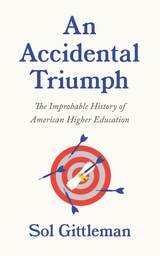
An Accidental Triumph
The Improbable History of American Higher EducationSol Gittleman
Vesto Books, 2023
"Hardly a day passes without reference to some scandal, fraud, intellectual or moral failure, or other ill associated with American academic institutions,” writes Sol Gittleman in his bracing new book, An Accidental Triumph. “If American higher education is such a failure, why are students and scholars from all over the world still so eager to secure a place in one of these institutions? Is American higher education a disaster or the envy of the world?”
Gittleman confronts this contradiction in this dynamic mix of history, analysis, and personal reflection. An Accidental Triumph tells the engaging story of how American higher education evolved from a patchwork of seminaries in the early nineteenth century into the world’s leader in research by the middle of the twentieth. Gittleman links this fascinating story to his own fifty-year academic career, which coincided with an explosive rise in enrollment, spurred by the GI Bill, and an unparalleled postwar boom in faculty hiring, prompted by massive new federal support for academic research from organizations such as the National Science Foundation.
Writing with authority, frankness, and unfailing wry good humor, Gittleman surveys the triumphs, tragedies, and tensions of the history of American higher education. Despite the relentless criticism, Gittleman finds good reason to remain optimistic about the future of teaching and research at the college and university level in the United States.
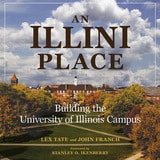
An Illini Place
Building the University of Illinois CampusIncoronata Inserra
University of Illinois Press, 2017
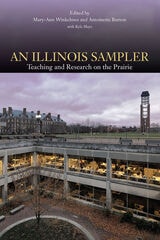
An Illinois Sampler
Teaching and Research on the PrairieEdited by Mary-Ann Winkelmes and Antoinette Burton with Kyle Mays
University of Illinois Press, 2014
Aimed at alumni and prospective students interested in the university's ongoing mission, as well as current faculty and students wishing to stay up to date on the work being done around them, An Illinois Sampler showcases the best, the most ambitious, and the most effective teaching practices developed and nurtured at one of the world's premier research universities.
Contributors are Nancy Abelmann, Flavia C. D. Andrade, Jayadev Athreya, Betty Jo Barrett, Thomas J. Bassett, Hugh Bishop, Antoinette Burton, Lauren A. Denofrio-Corrales, Lizanne DeStefano, Karen Flynn, Bruce W. Fouke, Rebecca Ginsburg, Julie Jordan Gunn, Geoffrey Herman, Laurie Johnson, Kyle T. Mays, Rebecca Nettl-Fiol, Audrey Petty, Anke Pinkert, Raymond Price, Luisa-Maria Rosu, D. Fairchild Ruggles, Carol Spindel, Mark D. Steinberg, William Sullivan, Richard I. Tapping, Bradley Tober, Agniezska Tuszynska, Bryan Wilcox, Kate Williams, Mary-Ann Winkelmes, and Yi Lu.
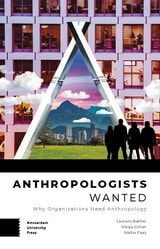
Anthropologists Wanted
Why Organizations Need AnthropologyLaurens Bakker
Amsterdam University Press, 2021
Anthropologists Wanted includes portraits of anthropologists and their diverse occupations, interviews with employers and academic counsellors' answers to frequently asked questions about degree programmes, anthropological skills, and tips to help you land that job.
Anxious Intellects
Academic Professionals, Public Intellectuals, and Enlightenment ValuesJohn Michael
Duke University Press, 2000
As part of his investigation of intellectuals’ self-conceptions and their roles in society, Michael concentrates on several well-known contemporary African American intellectuals, including Henry Louis Gates Jr. and Cornel West. To illuminate public debates over pedagogy and the role of university, he turns to the work of Todd Gitlin, Michael Bérubé, and Allan Bloom. Stanley Fish’s pragmatic tome, Doing What Comes Naturally, along with a juxtaposition of Fredric Jameson and Samuel Huntington’s work, proves fertile ground for Michael’s argument that democratic politics without intellectuals is not possible. In the second half of Anxious Intellects, Michael relies on three popular conceptions of the intellectual—as critic, scientist, and professional—to discuss the work of scholars Constance Penley, Henry Jenkins, the celebrated physicist Stephen Hawking, and others, insisting that ambivalence, anxiety, projection, identification, hybridity, and various forms of psychosocial complexity constitute the real meaning of Enlightenment intellectuality. As a new and refreshing contribution to the recently emergent culture and science wars, Michael’s take on contemporary intellectuals and their place in society will enliven and redirect these ongoing debates.
Aquamarine Blue 5
Personal Stories of College Students with AutismDawn Prince-Hughes
Ohio University Press, 2002
Rated Outstanding by the American Association of School Libraries
This is the first book to be written by autistic college students about the challenges they face. Aquamarine Blue 5 details the struggle of these highly sensitive students and shows that there are gifts specific to autistic students that enrich the university system, scholarship, and the world as a whole.
Dawn Prince-Hughes presents an array of writings by students who have been diagnosed with Asperger’s Syndrome or High-Functioning Autism, showing their unique ways of looking at and solving problems. In their own words, they portray how their divergent thinking skills could be put to great use if they were given an opportunity. Many such students never get the chance because the same sensitivity that gives them these insights makes the flicker of fluorescent lights and the sound of chalk on the board unbearable For simple—and easily remedied—reasons, we lose these students, who are as gifted as they are challenged.
Aquamarine Blue 5 is a showcase of the strength and resilient character of individuals with Asperger’s Syndrome. It will be an invaluable resource for those touched by this syndrome, their friends and families, and school administrators.
Arguments for Learning
An Intellectual History of the College of Education at the University of IllinoisBill Cope and Walter Feinberg
University of Illinois Press, 2025
Cope and Feinberg draw on conversations, narratives, and archival research that reveal how different generations explored their role in defining and carrying out the College’s multifaceted mission. Their account raises critical questions about the character of learning, the aims of teaching, and the nature of teaching as a profession. At the same time, the authors address issues that range from the role of schools in fostering individual and collective identity to the introduction of computer-mediated and online learning. Cope and Feinberg examine changes in self-understanding about fundamental ideas and chart how the College evolved from its original narrow mission of training children’s schoolteachers to embracing global perspectives.
A wide-ranging portrait of an institution, Arguments for Learning uses the School of Education to tell the stories of thinkers dedicated to the idea that education can change the world for the better.

Aristocratic Inclusion
Hiring the Academic Eliteprabhdeep singh kehal
Duke University Press, 2027

Artistic Research in the Future Academy
Danny Butt
Intellect Books, 2017
Aspiring Adults Adrift
Tentative Transitions of College GraduatesRichard Arum and Josipa Roksa
University of Chicago Press, 2014
Aspiring to Greatness
West Virginia University Since World War IIRONALD L. LEWIS
West Virginia University Press, 2013