Results by title
1927 books match the query 'Technology & Engineering' and 176 start with a
Adaptive Sampling with Mobile WSN
Simultaneous robot localisation and mapping of paramagnetic spatio-temporal fieldsKoushil Sreenath
The Institution of Engineering and Technology, 2011
Adjoint Sensitivity Analysis of High Frequency Structures with MATLAB®
Mohamed H. Bakr
The Institution of Engineering and Technology, 2017
Advanced Characterization of Thin Film Solar Cells
Mowafak Al-Jassim
The Institution of Engineering and Technology, 2020

Advanced Control for Constrained Processes and Systems
Fabricio Garelli
The Institution of Engineering and Technology, 2011
Advanced Dielectric Materials for Electrostatic Capacitors
Qi Li
The Institution of Engineering and Technology, 2020

Advanced Electromagnetic Analysis of Passive and Active Planar Structures
Tullio Rozzi
The Institution of Engineering and Technology, 1999

Advanced Metaverse Wireless Communication Systems
Agbotiname Lucky Imoize
The Institution of Engineering and Technology, 2025
Advanced Numerical Methods for Time-Dependent Electromagnetic Applications
Nikolaos V. Kantartzis
The Institution of Engineering and Technology, 2027
Advanced Radar Techniques and Systems
Gaspare Galati
The Institution of Engineering and Technology, 1993

Advanced Relay Technologies in Next Generation Wireless Communications
Ioannis Krikidis
The Institution of Engineering and Technology, 2016
Advanced Robotics and Intelligent Machines
J.O. Gray
The Institution of Engineering and Technology, 1996
Advanced Signal Processing
D.J. Creasey
The Institution of Engineering and Technology, 1985
Advanced Sparsity-Driven Models and Methods for Radar Applications
Gang Li
The Institution of Engineering and Technology, 2021
Advanced Technologies for Next Generation Integrated Circuits
Ashok Srivastava
The Institution of Engineering and Technology, 2020

Advanced Time Domain Modeling for Electrical Engineering
Rodolfo Araneo
The Institution of Engineering and Technology, 2022
Advances and Future Capabilities in RFID Technology
Alice Buffi
The Institution of Engineering and Technology, 2026
Advances in Bistatic Radar
Nicholas J. Willis
The Institution of Engineering and Technology, 2007
Advances in Body-Centric Wireless Communication
Applications and state-of-the-artQammer H. Abbasi
The Institution of Engineering and Technology, 2016

Advances in Cognitive Systems
Samia Nefti
The Institution of Engineering and Technology, 2010
Advances in Command, Control and Communication Systems
C.J. Harris
The Institution of Engineering and Technology, 1987
Advances in Communications Satellite Systems
Proceedings of The 36th International Communications Satellite Systems Conference (ICSSC-2018)Ifiok Otung
The Institution of Engineering and Technology, 2020
Advances in Communications Satellite Systems
Proceedings of The 37th International Communications Satellite Systems Conference (ICSSC-2019)Ifiok Otung
The Institution of Engineering and Technology, 2021
Advances in High Voltage Engineering
A. Haddad
The Institution of Engineering and Technology, 2004
Advances in High-Power Fiber and Diode Laser Engineering
Ivan Divliansky
The Institution of Engineering and Technology, 2020

Advances in Mathematical Methods for Electromagnetics
Kazuya Kobayashi
The Institution of Engineering and Technology, 2021

Advances in Planar Filters Design
Jiasheng Hong
The Institution of Engineering and Technology, 2019
Advances in Power System Modelling, Control and Stability Analysis
Federico Milano
The Institution of Engineering and Technology, 2016
Advances in Power System Modelling, Control and Stability Analysis
Federico Milano
The Institution of Engineering and Technology, 2022

Advances in Telemedicine for Health Monitoring
Technologies, design and applicationsTarik A. Rashid
The Institution of Engineering and Technology, 2020

Advances in Underwater Communication and Networking
Syed Ali Hassan
The Institution of Engineering and Technology, 2025
Advances in Unmanned Marine Vehicles
G.N. Roberts
The Institution of Engineering and Technology, 2006
Advances in Weather Radar
Emerging applications, Volume 3V.N. Bringi
The Institution of Engineering and Technology, 2024
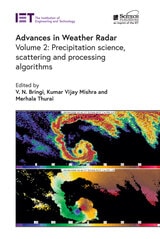
Advances in Weather Radar
Precipitation science, scattering and processing algorithms, Volume 2V.N. Bringi
The Institution of Engineering and Technology, 2024
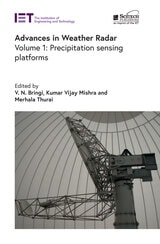
Advances in Weather Radar
Precipitation sensing platforms, Volume 1V.N. Bringi
The Institution of Engineering and Technology, 2024
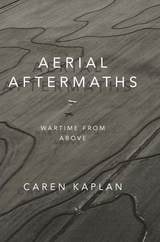
Aerial Aftermaths
Wartime from AboveCaren Kaplan
Duke University Press, 2018
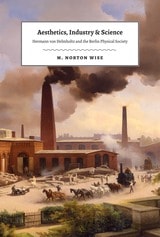
Aesthetics, Industry, and Science
Hermann von Helmholtz and the Berlin Physical SocietyM. Norton Wise
University of Chicago Press, 2018
In Aesthetics, Industry, and Science M. Norton Wise answers these questions not simply from a technical perspective of theories and practices but with a broader cultural view of what was happening in Berlin at the time. He emphasizes in particular how rapid industrial development, military modernization, and the neoclassical aesthetics of contemporary art informed the ways in which these young men thought. Wise argues that aesthetic sensibility and material aspiration in this period were intimately linked, and he uses these two themes for a final reappraisal of Helmholtz’s early work. Anyone interested in modern German cultural history, or the history of nineteenth-century German science, will be drawn to this landmark book.
Affective Computing Applications using Artificial Intelligence in Healthcare
Methods, approaches and challenges in system designM. Murugappan
The Institution of Engineering and Technology, 2024

After Coal
Stories of Survival in Appalachia and WalesTom Hansell
West Virginia University Press, 2018
What happens when fossil fuels run out? How do communities and cultures survive?
Central Appalachia and south Wales were built to extract coal, and faced with coal’s decline, both regions have experienced economic depression, labor unrest, and out-migration. After Coal focuses on coalfield residents who chose not to leave, but instead remained in their communities and worked to build a diverse and sustainable economy. It tells the story of four decades of exchange between two mining communities on opposite sides of the Atlantic, and profiles individuals and organizations that are undertaking the critical work of regeneration.
The stories in this book are told through interviews and photographs collected during the making of After Coal, a documentary film produced by the Center for Appalachian Studies at Appalachian State University and directed by Tom Hansell. Considering resonances between Appalachia and Wales in the realms of labor, environment, and movements for social justice, the book approaches the transition from coal as an opportunity for marginalized people around the world to work toward safer and more egalitarian futures.
After Oil
Imre Szeman
West Virginia University Press, 2016
Energy plays a critical role in determining the shape, form and character of our daily existence, which is why a genuine shift in our energy usage demands a wholesale transformation of the petrocultures in which we live. After Oil provides readers with the resources to make this happen.
After The Boom In Tombstone And Jerome, Arizona
Decline In Western Resource TownsEric L. Clements
University of Nevada Press, 2014
After the Map
Cartography, Navigation, and the Transformation of Territory in the Twentieth CenturyWilliam Rankin
University of Chicago Press, 2016
In After the Map, William Rankin argues that although this shift did not render traditional maps obsolete, it did radically change our experience of geographic knowledge, from the God’s-eye view of the map to the embedded subjectivity of GPS. Likewise, older concerns with geographic truth and objectivity have been upstaged by a new emphasis on simplicity, reliability, and convenience. After the Map shows how this change in geographic perspective is ultimately a transformation of the nature of territory, both social and political.

Age Factors in Biometric Processing
Michael Fairhurst
The Institution of Engineering and Technology, 2013
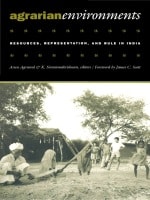
Agrarian Environments
Resources, Representations, and Rule in IndiaArun Agrawal, ed.
Duke University Press, 2000
Editors Arun Agrawal and K. Sivaramakrishnan claim that rural social change in India cannot be understood without exploring how environmental changes articulate major aspects of agrarian transformations—technological, cultural, and political—in the last two centuries. In order to examine these issues, they have reached beyond the confines of single disciplinary allegiances or methodological loyalties to bring together anthropologists, historians, political scientists, geographers, and environmental scientists who are significantly informed by interdisciplinary research. Drawing on extensive field and archival research, the contributors demonstrate the powerful political implications of blurring the boundaries between dichotomous cultural representations, combine conceptual analyses with specific case studies, and look at why competing powers chose to emphasize particular representations of land use or social relations. By providing a more textured analysis of how categories emerge and change, this work offers the possibility of creating crucial alliances across populations that have historically been assumed to lack mutual goals.
Agrarian Environments will be valuable to those in political science, Asian studies, and environmental studies.
Contributors. Arun Agrawal, Mark Baker, Molly Chattopadhyaya, Vinay Gidwani, Sumit Guha, Shubhra Gururani, Cecile Jackson, David Ludden, Haripriya Rangan, Paul Robbins, Vasant Saberwal, James C. Scott, K. Sivaramakrishnan, Ajay Skaria, Jennifer Springer, Darren Zook

Agricultural Cooperation
Selected ReadingsMartin A. Abrahamsen and Claud L. Scroggs, Editors
University of Minnesota Press, 1957
Agricultural Cooperation was first published in 1957. Minnesota Archive Editions uses digital technology to make long-unavailable books once again accessible, and are published unaltered from the original University of Minnesota Press editions.
Much has been written and published on the general subject of agricultural cooperation, but the material has been scattered and hard to find until now. The volume makes available in convenient form a selection of the most significant articles and excerpts from books, magazines, pamphlets, and other publications. It provides a comprehensive view of the development of farmers' cooperatives in the United States and an evaluation of their relation to the present economy.
The 54 articles are by 49 different contributors from various branches of cooperative activity. Among them are professors of agricultural economies, government research experts in agricultural cooperation, officers and members of cooperative organizations, as well as government officials including former Secretary of Agriculture Clinton P. Anderson and Senators Paul H. Douglas and George D. Aiken. J. K. Stern, president of the American Institute of Cooperation, contributes a foreword.
The articles deal significantly with such broad subjects as the economic and social forces that have shaped the development of cooperatives, the place of cooperative organizations in helping to meet the present-day needs of agriculture, and the role of these farmer-owned businesses in the nation's economy.
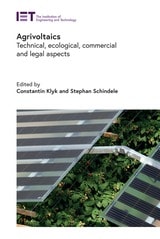
Agrivoltaics
Technical, ecological, commercial and legal aspectsConstantin Klyk
The Institution of Engineering and Technology, 2024
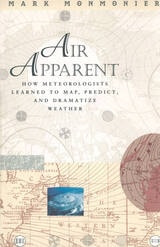
Air Apparent
How Meteorologists Learned to Map, Predict, and Dramatize WeatherMark Monmonier
University of Chicago Press, 1999
"Clever title, rewarding book. Monmonier . . . offers here a basic course in meteorology, which he presents gracefully by means of a history of weather maps." —Scientific American
"Mark Monmonier is onto a winner with Air Apparent. . . . It is good, accessible science and excellent history. . . . Read it." —Fred Pearce, New Scientist
"[Air Apparent] is a superb first reading for any backyard novice of weather . . . but even the veteran forecaster or researcher will find it engaging and, in some cases, enlightening." —Joe Venuti, Bulletin of the American Meteorological Society
"Monmonier is solid enough in his discussion of geographic and meteorological information to satisfy the experienced weather watcher. But even if this information were not presented in such a lively and engaging manner, it would still hook most any reader who checks the weather map every morning or who sits happily entranced through a full cycle of forecasts on the Weather Channel."—Michael Kennedy, Boston Globe
Air Power and Armies
Sir John Cotesworth Slessor, and foreword by Phillip Meilinger
University of Alabama Press, 2009
An account of Sir John Cotesworth Slessor (1897–1979), one of Great Britain's most influential airmen.
Sir John Slessor played a significant role in building the World War II Anglo-American air power partnership as an air planner on the Royal Air Force Staff, the British Chiefs of Staff, and the Combined Chiefs of Staff. He coordinated allied strategy in 1940–41, helped create an Anglo-American bomber alliance in 1942, and drafted the compromise at the Casablanca Conference that broke a deadlock in Anglo-American strategic debate.
Slessor was instrumental in defeating the U-boat menace as RAF Coastal Commander, and later shared responsibility for directing Allied air operations in the Mediterranean. Few aspects of the allied air effort escaped his influence: pilot training, aircraft procurement, and dissemination of operational intelligence and information all depended to a degree on Slessor. His influence on Anglo-American operational planning paved the way for a level of cooperation and combined action never before undertaken by the military forces of two great nations.
Airborne Early Warning System Concepts
Maurice W. Long
The Institution of Engineering and Technology, 2004
Aircraft Stories
Decentering the Object in TechnoscienceJohn Law
Duke University Press, 2002
Law works to upset the binary between the modernist concept of knowledge, subjects, and objects as having centered and concrete essences and the postmodernist notion that all is fragmented and centerless. The structure and content of Aircraft Stories reflect Law’s contention that knowledge, subjects, and—particularly— objects are “fractionally coherent”: that is, they are drawn together without necessarily being centered. In studying the process of this particular aircraft’s design, construction, and eventual cancellation, Law develops a range of metaphors to describe both its fractional character and the ways its various aspects interact with each other. Offering numerous insights into the way we theorize the working of systems, he explores the overlaps between singularity and multiplicity and reveals rich new meaning in such concepts as oscillation, interference, fractionality, and rhizomatic networks.
The methodology and insights of Aircraft Stories will be invaluable to students in science and technology studies and will engage others who are interested in the ways that contemporary paradigms have limited our ability to see objects in their true complexity.
Alaska's Microgrid Innovators
How Communities Are Responding to Today's Energy ChallengesPeter Asmus
University of Alaska Press, 2026
As glaciers melt, treasured species such as salmon and crab decline, oil reserves wane, and consumer energy bills continue to rise, Alaska is reevaluating its energy future, and the state’s rural communities are leading the way. Alaska's Microgrid Innovators explores how climate change refocuses the story of the state’s energy development history, looking not at the well-told story of oil and natural gas but instead at wind, solar, hydro, and other low-carbon energy sources that have delivered immense economic savings and environmental benefits to both Alaska state residents and the world.
Renewable energy integration projects have sprung up in Alaska’s rural communities since the mid-1990s not due to regulatory fiat but rather to economic necessity. In Alaska’s Microgrid Innovators, pioneers across the stakeholder spectrum—including professionals, academics, Native peoples, policy makers, and other industry participants—describe how they have helped to develop more affordable and sustainable energy systems.
Along with chronicling technological innovation, Alaska’s Microgrid Innovators looks to the future, making the case for succession planning and new public policies as integral for Alaska to meet today’s energy challenges and those to come.