Results by title
8642 books match the query '20th century' and 836 start with a
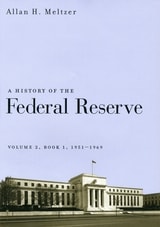
A History of the Federal Reserve, Volume 2, Book 1, 1951-1969
Allan H. Meltzer
University of Chicago Press, 2009
Allan H. Meltzer’s critically acclaimed history of the Federal Reserve is the most ambitious, most intensive, and most revealing investigation of the subject ever conducted. Its first volume, published to widespread critical acclaim in 2003, spanned the period from the institution’s founding in 1913 to the restoration of its independence in 1951. This two-part second volume of the history chronicles the evolution and development of this institution from the Treasury–Federal Reserve accord in 1951 to the mid-1980s, when the great inflation ended. It reveals the inner workings of the Fed during a period of rapid and extensive change. An epilogue discusses the role of the Fed in resolving our current economic crisis and the needed reforms of the financial system.
In rich detail, drawing on the Federal Reserve’s own documents, Meltzer traces the relation between its decisions and economic and monetary theory, its experience as an institution independent of politics, and its role in tempering inflation. He explains, for example, how the Federal Reserve’s independence was often compromised by the active policy-making roles of Congress, the Treasury Department, different presidents, and even White House staff, who often pressured the bank to take a short-term view of its responsibilities. With an eye on the present, Meltzer also offers solutions for improving the Federal Reserve, arguing that as a regulator of financial firms and lender of last resort, it should focus more attention on incentives for reform, medium-term consequences, and rule-like behavior for mitigating financial crises. Less attention should be paid, he contends, to command and control of the markets and the noise of quarterly data.
At a time when the United States finds itself in an unprecedented financial crisis, Meltzer’s fascinating history will be the source of record for scholars and policy makers navigating an uncertain economic future.
A History of the Federal Reserve, Volume 2, Book 2, 1970-1986
Allan H. Meltzer
University of Chicago Press, 2009
Allan H. Meltzer’s critically acclaimed history of the Federal Reserve is the most ambitious, most intensive, and most revealing investigation of the subject ever conducted. Its first volume, published to widespread critical acclaim in 2003, spanned the period from the institution’s founding in 1913 to the restoration of its independence in 1951. This two-part second volume of the history chronicles the evolution and development of this institution from the Treasury–Federal Reserve accord in 1951 to the mid-1980s, when the great inflation ended. It reveals the inner workings of the Fed during a period of rapid and extensive change. An epilogue discusses the role of the Fed in resolving our current economic crisis and the needed reforms of the financial system.
In rich detail, drawing on the Federal Reserve’s own documents, Meltzer traces the relation between its decisions and economic and monetary theory, its experience as an institution independent of politics, and its role in tempering inflation. He explains, for example, how the Federal Reserve’s independence was often compromised by the active policy-making roles of Congress, the Treasury Department, different presidents, and even White House staff, who often pressured the bank to take a short-term view of its responsibilities. With an eye on the present, Meltzer also offers solutions for improving the Federal Reserve, arguing that as a regulator of financial firms and lender of last resort, it should focus more attention on incentives for reform, medium-term consequences, and rule-like behavior for mitigating financial crises. Less attention should be paid, he contends, to command and control of the markets and the noise of quarterly data.
At a time when the United States finds itself in an unprecedented financial crisis, Meltzer’s fascinating history will be the source of record for scholars and policy makers navigating an uncertain economic future.
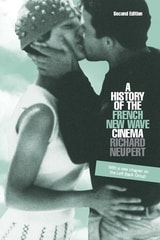
A History of the French New Wave Cinema
Richard Neupert
University of Wisconsin Press, 2007
The French New Wave cinema is arguably the most fascinating of all film movements, famous for its exuberance, daring, and avant-garde techniques. A History of the French New Wave Cinema offers a fresh look at the social, economic, and aesthetic mechanisms that shaped French film in the 1950s, as well as detailed studies of the most important New Wave movies of the late 1950s and early 1960s.
Richard Neupert first tracks the precursors to New Wave cinema, showing how they provided blueprints for those who would follow. He then demonstrates that it was a core group of critics-turned-directors from the magazine Cahiers du Cinéma—especially François Truffaut, Claude Chabrol, and Jean-Luc Godard—who really revealed that filmmaking was changing forever. Later, their cohorts Eric Rohmer, Jacques Rivette, Jacques Doniol-Valcroze, and Pierre Kast continued in their own unique ways to expand the range and depth of the New Wave.
In an exciting new chapter, Neupert explores the subgroup of French film practice known as the Left Bank Group, which included directors such as Alain Resnais and Agnès Varda. With the addition of this new material and an updated conclusion, Neupert presents a comprehensive review of the stunning variety of movies to come out of this important era in filmmaking.
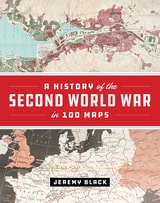
A History of the Second World War in 100 Maps
Jeremy Black
University of Chicago Press, 2020
The First World War was marked by an exceptional expansion in the use and production of military cartography. But World War II took things even further, employing maps, charts, reconnaissance, and the systematic recording and processing of geographical and topographical information on an unprecedented scale. As Jeremy Black—one of the world’s leading military and cartographic historians—convincingly shows in this lavish full-color book, it is impossible to understand the events and outcomes of the Second World War without deep reference to mapping at all levels. In World War II, maps themselves became the weapons.
A History of the Second World War in 100 Maps traces how military cartography developed from simply recording and reflecting history to having a decisive impact on events of a global scale. Drawing on one hundred key maps from the unparalleled collections of the British Library and other sources—many of which have never been published in book form before--Jeremy Black takes us from the prewar mapping programs undertaken by both Germany and the United Kingdom in the mid-1930s through the conflict’s end a decade later. Black shows how the development of maps led directly to the planning of the complex and fluid maneuvers that defined the European theater in World War II: for example, aerial reconnaissance photography allowed for the charting of beach gradients and ocean depths in the runup to the D-Day landings, and the subsequent troop movements at Normandy would have been impossible without the help of situation maps and photos. In the course of the conflict, both in Europe and the Pacific, the realities of climate, terrain, and logistics—recorded on maps—overcame the Axis powers. Maps also became propaganda tools as the pages of Time outlined the directions of the campaigns and the Allies dropped maps from their aircraft.
In this thrilling and unique book, Jeremy Black blends his singular cartographic and military expertise into a captivating overview of World War II from the air, sea, and sky, making clear how fundamental maps were to every aspect of this unforgettable global conflict.
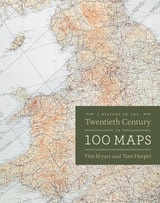
A History of the Twentieth Century in 100 Maps
Tim Bryars and Tom Harper
University of Chicago Press, 2014
As Bryars and Harper reveal, maps make ideal narrators, and the maps in this book tell the story of the 1900s—which saw two world wars, the Great Depression, the Swinging Sixties, the Cold War, feminism, leisure, and the Internet. Several of the maps have already gained recognition for their historical significance—for example, Harry Beck’s iconic London Underground map—but the majority of maps on these pages have rarely, if ever, been seen in print since they first appeared. There are maps that were printed on handkerchiefs and on the endpapers of books; maps that were used in advertising or propaganda; maps that were strictly official and those that were entirely commercial; maps that were printed by the thousand, and highly specialist maps issued in editions of just a few dozen; maps that were envisaged as permanent keepsakes of major events, and maps that were relevant for a matter of hours or days.
As much a pleasure to view as it is to read, A History of the Twentieth Century in 100 Maps celebrates the visual variety of twentieth century maps and the hilarious, shocking, or poignant narratives of the individuals and institutions caught up in their production and use.
A Hitler Youth in Poland
The Nazi Children's Evacuation Program During World War IIJost Hermand
Northwestern University Press, 1997
During the Nazi era, millions of German children between the ages of seven and sixteen were taken from their homes and sent to Hitler Youth paramilitary camps to be toughened up and taught how to be "German." Separated from their families and sent to the far-flung corners of Europe, these children often endured incredible abuse by the adults in charge. In this memoir, Jost Hermand, a cultural critic and historian who spent much of his youth in five different camps, writes about his experiences as a small, unathletic boy thrown into a "wolf pack" governed by brutalization, dreary routine, and sadism.
Intelligent and persuasive, A Hitler Youth in Poland should be read by anyone interested in psychology or the history of everyday life in Hitler's Germany and the mental scars of adults born during the Nazi regime.
A Hole in the Ground with a Liar at the Top
Fraud and Deceit in the Golden Age of American MiningDan Plazak
University of Utah Press, 2006
A Holocaust Controversy
The Treblinka Affair in Postwar FranceSamuel Moyn
Brandeis University Press, 2005
A House for the Struggle
The Black Press and the Built Environment in ChicagoE. James West
University of Illinois Press, 2022
- Winner of the 2023 Michael Nelson Prize of International Association for Media and History (IAMHIST)
- Recipient of the 2022 Jane Jacobs Urban Communication Book Award
- Winner of the 2023 American Journalism Historians Association Book of the Year
- Winner of the 2023 ULCC’s (Union League Club of Chicago) Outstanding Book on the History of Chicago Award
- Recipient of a 2023 Best of Illinois History Superior Achievement award from the Illinois State Historical Society
- Winner of the 2023 BAAS Book Prize (British Association for American Studies)
- Winner of a 2023 The Brinck Book Award and Lecture series (University of New Mexico School of Architecture + Planning)
- Honorable Mention for the 2021-22 RSAP Book Prize (Research Society for American Periodicals)
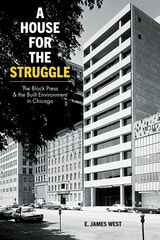
Buildings once symbolized Chicago's place as the business capital of Black America and a thriving hub for Black media. In this groundbreaking work, E. James West examines the city's Black press through its relationship with the built environment. As a house for the struggle, the buildings of publications like Ebony and the Chicago Defender embodied narratives of racial uplift and community resistance. As political hubs, gallery spaces, and public squares, they served as key sites in the ongoing Black quest for self-respect, independence, and civic identity. At the same time, factors ranging from discriminatory business practices to editorial and corporate ideology prescribed their location, use, and appearance, positioning Black press buildings as sites of both Black possibility and racial constraint.
Engaging and innovative, A House for the Struggle reconsiders the Black press's place at the crossroads where aspiration collided with life in one of America's most segregated cities.
A Jew in the New Germany
Henryk Broder
University of Illinois Press, 2003
This volume collects eighteen of Broder's essays, translated for the first time into English. The first was written in 1979 and the most recent deals with the post-9/11 realities of the war on terrorism, and its effects on the countries of Europe. Other essays address the debate over the construction of a Holocaust memorial in Berlin, the German response to the 1991 Gulf War, the politics of German reunification, and the rise of the new German nationalism.
Broder charts the recent evolution of German Jewish relations, using his own outsider status to hold up a mirror to the German people and point out that things have not changed for German Jews as much as non-Jews might think.
A Jewish Family in Germany Today
An Intimate PortraitY. Michal Bodemann
Duke University Press, 2005
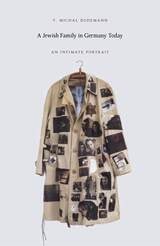
Among the Kalman cousins are an art gallery owner, a body builder, a radio personality, a former chief financial officer of a prominent U.S. bank, and a sculptor. They discuss Zionism, anti-Semitism, what it means to root for the German soccer team, Schindler’s List, money, success, marriage and intermarriage, and family history. They reveal their different levels of engagement with Judaism and involvement with local Jewish communities. Kalman is a pseudonym, and their anonymity allows the family members to talk with passion and candor about their relationships and their lives as Jews.
A Jewish Feminine Mystique?
Jewish Women in Postwar AmericaEdited by Hasia R. Diner, Shira Kohn, and Rachel Kranson
Rutgers University Press, 2010
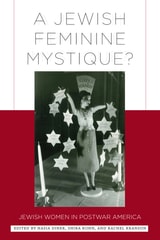
As workers with or without pay, social justice activists, community builders, entertainers, and businesswomen, most Jewish women championed responsibilities outside their homes. Jewishness played a role in shaping their choices, shattering Friedan's assumptions about how middle-class women lived in the postwar years. Focusing on ordinary Jewish women as well as prominent figures such as Judy Holliday, Jennie Grossinger, and Herman Wouk's fictional Marjorie Morningstar, leading scholars explore the wide canvas upon which American Jewish women made their mark after the Second World War.
A Jewish Kapo in Auschwitz
History, Memory, and the Politics of SurvivalTuvia Friling
Brandeis University Press, 2014

A Jewish Orchestra in Nazi Germany
Musical Politics and the Berlin Jewish Culture LeagueLily E. Hirsch
University of Michigan Press, 2011
"Offers a clear introduction to a fascinating, yet little known, phenomenon in Nazi Germany, whose very existence will be a surprise to the general public and to historians. Easily blending general history with musicology, the book provides provocative yet compelling analysis of complex issues."
---Michael Meyer, author of The Politics of Music in the Third Reich
"Hirsch poses complex questions about Jewish identity and Jewish music, and she situates these against a political background vexed by the impossibility of truly viable responses to such questions. Her thorough archival research is complemented by her extensive use of interviews, which gives voice to those swept up in the Holocaust. A Jewish Orchestra in Nazi Germany is a book filled with the stories of real lives, a collective biography in modern music history that must no longer remain in silence."
---Philip V. Bohlman, author of Jewish Music and Modernity
"An engaging and downright gripping history. The project is original, the research is outstanding, and the presentation lucid."
---Karen Painter, author of Symphonic Aspirations: German Music and Politics, 1900-1945
The Jewish Culture League was created in Berlin in June 1933, the only organization in Nazi Germany in which Jews were not only allowed but encouraged to participate in music, both as performers and as audience members. Lily E. Hirsch's A Jewish Orchestra in Nazi Germany is the first book to seriously investigate and parse the complicated questions the existence of this unique organization raised, such as why the Nazis would promote Jewish music when, in the rest of Germany, it was banned. The government's insistence that the League perform only Jewish music also presented the organization's leaders and membership with perplexing conundrums: what exactly is Jewish music? Who qualifies as a Jewish composer? And, if it is true that the Nazis conceived of the League as a propaganda tool, did Jewish participation in its activities amount to collaboration?
Lily E. Hirsch is Assistant Professor of Music at Cleveland State University.
A Jewish Word or Two
Charles Reznikoff's ModernismJoel Bettridge
University of Iowa Press, 2026
The son of Jewish immigrants from Russia to New York, Charles Reznikoff found himself at the intersection of modernist innovation, ethnic otherness, and economic hardship. He both appreciated the modernists’ formal radicalism and critiqued their political failings—a task he accomplished by writing short lyric poems depicting the hardship and charm of urban life, as well as long poems presenting histories of horrific violence, from factory accidents to the Holocaust. But despite his contributions to American poetry, Reznikoff has remained a somewhat secondary figure, in part because his work—at times—is painful to read.
A Jewish Word or Two recasts Reznikoff ’s poetry as pleasurable and masterful even when disturbing. In their humor, their encounters with Jewish history, holiness, and identity, as well as their use of drama, horror, joy, and beauty, Reznikoff ’s poems help us celebrate what is simultaneously strange, surprising, lovely, and uncanny in our everyday lives.
A Joint Enterprise
Indian Elites and the Making of British BombayPreeti Chopra
University of Minnesota Press, 2010
Chopra shows how the European and Indian engineers, architects, and artists worked with each other to design a city—its infrastructure, architecture, public sculpture—that was literally constructed by Indian laborers and craftsmen. Beyond the built environment, Indian philanthropists entered into partnerships with the colonial regime to found and finance institutions for the general public. Too often thought to be the product of the singular vision of a founding colonial regime, British Bombay is revealed by Chopra as an expression of native traditions meshing in complex ways with European ideas of urban planning and progress.
The result, she argues, was the creation of a new shared landscape for Bombay’s citizens that ensured that neither the colonial government nor the native elite could entirely control the city’s future.
A Kind of Alaska
Women in the Plays of O'Neill, Pinter, and ShepardAnn C. Hall
Southern Illinois University Press, 1993
In an effort to define what constitutes a feminist reading of literary works, Ann C. Hall offers an analytic technique that is both a feminist and a psychoanalytic approach, applying this technique to her study of women characters in the modern dramatic texts of Eugene O’Neill, Harold Pinter, and Sam Shepard.
This is the first study to treat these three writers in tandem, and while Hall uses the work of Jacques Lacan, Luce Irigaray, and other psychoanalytic feminist critics in her close readings of specific dramatic texts, she also brings in commentaries by critics, directors, performers, and historians. Her technique thereby provides us with a new and significant method for addressing female characters as written by male playwrights, a task that she argues is not only a valid and necessary part of feminist dramatic criticism but a part of theatrical production as well.
From Pinter’s play A Kind of Alaska, Hall extracts a metaphor for the patriarchal oppression of women, contextualizing such oppression through an examination of O’Neill’s madonnas, Pinter’s whores, and Shepard’s female saviors as they are represented in O’Neill’s Iceman Cometh, Long Day’s Journey into Night, and A Moon for theMisbegotten; Pinter’s Homecoming, No Man’s Land, Betrayal, and A Kind of Alaska; and Shepard’s Buried Child, True West, and A LieoftheMind.
Since the works of O’Neill, Pinter, and Shepard continue to be performed to popular acclaim, Hall hopes that a better understanding of the female characters in these plays will influence the performances themselves.
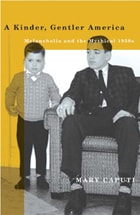
A Kinder, Gentler America
Melancholia and the Mythical 1950sMary Caputi
University of Minnesota Press, 2005
Analyzing these competing uses of the past, A Kinder, Gentler America reveals how longing for the era of “the greatest generation” actually exposes a disillusionment with the present. Caputi draws on the theoretical frameworks of Julia Kristeva and Walter Benjamin to look at how the decade has been portrayed in movies such as Pleasantville and Far from Heaven and delves further to investigate our disenchantment’s lost origins in early modernity through a reading of the poetry of Baudelaire. What emerges is a stark contrast between the depictions of a melancholic present and a cheerful, shiny past. In the right’s invocation of the mythical 1950s and the left’s criticism of the same, Caputi recognizes a common unfulfilled desire, and proposes that by understanding this loss both sides can begin to accept that American identity, despite chaos and confusion, lies in the here and now.
Mary Caputi is professor of political science at California State University, Long Beach, and is author of Voluptuous Yearnings: A Feminist Theory of the Obscene.

A Kiss across the Ocean
Transatlantic Intimacies of British Post-Punk and US LatinidadRichard T. Rodríguez
Duke University Press, 2022
A Knock on the Door
The Essential History of Residential Schools from the Truth and Reconciliation Commission of CanadaUniversity of Manitoba Press, 2015
A Laboratory of Transnational History
Ukraine and Recent Ukrainian HistoriographyGeorgiy Kasianov
Central European University Press, 2009
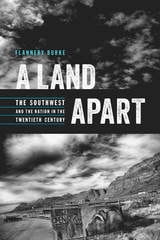
A Land Apart
The Southwest and the Nation in the Twentieth CenturyFlannery Burke
University of Arizona Press, 2017
Winner, Spur Award for Best Contemporary Nonfiction (Western Writers of America)
A Land Apart is not just a cultural history of the modern Southwest—it is a complete rethinking and recentering of the key players and primary events marking the Southwest in the twentieth century. Historian Flannery Burke emphasizes how indigenous, Hispanic, and other non-white people negotiated their rightful place in the Southwest. Readers visit the region’s top tourist attractions and find out how they got there, listen to the debates of Native people as they sought to establish independence for themselves in the modern United States, and ponder the significance of the U.S.-Mexico border in a place that used to be Mexico. Burke emphasizes policy over politicians, communities over individuals, and stories over simple narratives.
Burke argues that the Southwest’s reputation as a region on the margins of the nation has caused many of its problems in the twentieth century. She proposes that, as they consider the future, Americans should view New Mexico and Arizona as close neighbors rather than distant siblings, pay attention to the region’s history as Mexican and indigenous space, bear witness to the area’s inequalities, and listen to the Southwest’s stories. Burke explains that two core parts of southwestern history are the development of the nuclear bomb and subsequent uranium mining, and she maintains that these are not merely a critical facet in the history of World War II and the militarization of the American West but central to an understanding of the region’s energy future, its environmental health, and southwesterners’ conception of home.
Burke masterfully crafts an engaging and accessible history that will interest historians and lay readers alike. It is for anyone interested in using the past to understand the present and the future of not only the region but the nation as a whole.
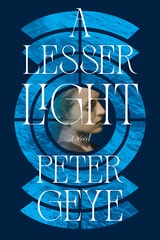
A Lesser Light
A NovelPeter Geye
University of Minnesota Press, 2025
On the rocky shores of Lake Superior, a piercing story of selfhood and determinism develops: is the future what we’re handed or what we make of it?
It’s 1910, and Theodulf Sauer has finally achieved a position befitting his ego: master lighthouse keeper at a newly commissioned station towering above Lake Superior. When his new wife, Willa, arrives on the first spring ferry, it’s clear her life has taken the opposite turn: after being summoned home from college to Duluth when her father dies, she and her scheming mother find themselves destitute, and Willa is rushed into this ill-suited arranged marriage before she can comprehend her fate.
As the lighthouse station establishes, the new relationship teeters between tense and hostile, with little mutual understanding or tenderness. Willa takes solace in her learned fascination with the cosmos, especially (despite her husband’s suspicion of the event) in viewing the imminent Halley’s Comet. Under ominous night skies, Theodulf stands sentry over the lake, clinging to long-ago and faraway memories of happiness that fill him with longing and shame.
Into this impasse, a clairvoyant girl and her resolute uncle emerge from across the cove. They see through the Sauers’ thin façade and, by turns and in different ways, convey promise, sympathy, and insight that counter Willa’s despair. Armed with renewed self-determination, Willa forges a path to happiness. But before she can grasp it, tragedy comes to their remote beacon, and her future plunges toward a dark unknown.
Set against a brooding and beautiful landscape, A Lesser Light is a story about industry and calamity, science versus superstition, inner desire countered with societal expectations—and the consequences when these forces collide in the wilderness of rapid social change.
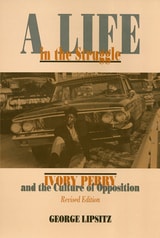
A Life In The Struggle
Ivory Perry and the Culture of OppositionGeorge Lipsitz
Temple University Press, 1995
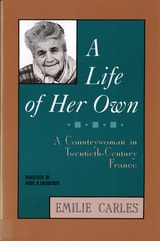
A Life of Her Own
A Countrywoman in Twentieth-Century FranceCarles, Émilie
Rutgers University Press, 1991
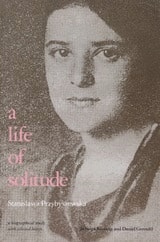
A Life of Solitude
Stanislawa Przybyszewska, a Biographical Study with Selected LettersJadwiga Kosicka
Northwestern University Press, 1986
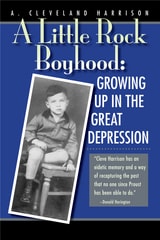
A Little Rock Boyhood
Growing Up in the Great DepressionA. Cleveland Harrison
Butler Center for Arkansas Studies, 2010
A Long Essay on the Long Poem
Modern and Contemporary Poetics and PracticesRachel Blau DuPlessis
University of Alabama Press, 2023
A masterful meditation on our most mercurial and abiding of poetic forms—the long poem
For decades, Rachel Blau DuPlessis has shown readers how genres, forms, and the literal acts of writing and reception can be understood as sites of struggle. In her own words, “writing is . . . a praxis . . . in which the author disappears into a process, into a community, into discontinuities, and into a desire for discovery.” It is cause for celebration, then, that we have another work of warm, incisive, exploratory writing from DuPlessis in A Long Essay on the Long Poem.
Long poems, DuPlessis notes, are elusive, particularly in the slippery forms that have emerged in the postmodern mode. She cites both Nathaniel Mackey and Anne Waldman in thinking of the poem as a “box,” both in the sense of a vessel that contains and as a machine that processes, an instrument on which language is played. This study’s central attention is on the long poem as a sociocultural Book, distinctively envisioned by a range of authors.
To reckon with these shifting and evolving forms, DuPlessis works in a polyvalent mode, a hybrid of critical analysis and speculative essay. She divides the long poem and the long poets into three genres: epics, quests, and a composite she terms “assemblages.” The poets she surveys include T. S. Eliot, Ezra Pound, H.D., Louis Zukofsky, Gwendolyn Brooks, Charles Olson, Alice Notley, Nathaniel Mackey, Ron Silliman, Robert Duncan, Kamau Brathwaite, and, finally, Mallarmé and Dante. Instead of a traditional lineage, she deliberately seeks intersecting patterns of connection between poems and projects, a nexus rather than a family tree. In doing so she navigates both some challenges of long poems and her own attempt to “essay” them. The result is a fascinating and generous work that defies categorization as anything other than essential.
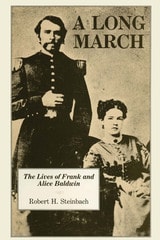
A Long March
The Lives of Frank and Alice BaldwinBy Robert H. Steinbach
University of Texas Press, 1990
During a distinguished military career, in which he rose to the rank of brigadier general and twice won the Medal of Honor, Frank Baldwin saw service in the Civil War, the Indian wars on the Great Plains, and the Spanish-American War. His wife, Alice Blackwood Baldwin, shared the "long march" with him, from his Plains service onward. In this first biography of the Baldwins, Robert Steinbach combines military and personal history to vividly portray a marriage that survived both the harshness of frontier army life and the restrictive Victorian concept of "separate spheres" for husband and wife.
Drawing on a wealth of diaries, letters, and other family papers, Steinbach re-creates the Baldwins' life on the Plains. Moving from post to post in Kansas, New Mexico, Montana, North Dakota, and Texas, they faced danger, excitement, separations, poverty, and many other hardships. Frequently they clashed over Alice's desire to be something more than "an ornament to society"—a wish eventually granted as Frank's long absences and chronic ill health required Allie to take responsibility for herself and their daughter.
With insights into military campaigns on the Great Plains in the years 1865–1890 and a revealing look at the human side of those campaigns, A Long March will appeal to a wide audience.
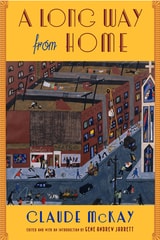
A Long Way From Home
Jarrett, Gene A
Rutgers University Press, 2007
Claude McKay (1889–1948) was one of the most prolific and sophisticated African American writers of the early twentieth century. A Jamaican-born author of poetry, short stories, novels, and nonfiction, McKay has often been associated with the “New Negro” or Harlem Renaissance, a movement of African American art, culture, and intellectualism between World War I and the Great Depression. But his relationship to the movement was complex. Literally absent from Harlem during that period, he devoted most of his time to traveling through Europe, Russia, and Africa during the 1920s and 1930s. His active participation in Communist groups and the radical Left also encouraged certain opinions on race and class that strained his relationship to the Harlem Renaissance and its black intelligentsia. In his 1937 autobiography, A Long Way from Home, McKay explains what it means to be a black “rebel sojourner” and presents one of the first unflattering, yet informative, exposés of the Harlem Renaissance. Reprinted here with a critical introduction by Gene Andrew Jarrett, this book will challenge readers to rethink McKay’s articulation of identity, art, race, and politics and situate these topics in terms of his oeuvre and his literary contemporaries between the world wars.

A Love Letter to Texas Women
By Sarah Bird
University of Texas Press, 2016
"Sarah Bird is a true eccentric, but one with a straightforward gift for explaining the human heart. . . . A Lone Star girl-legend." —Boston Globe
What is it that distinguishes Texas women—the famous Yellow Rose and her descendants? Is it that combination of graciousness and grit that we revere in First Ladies Laura Bush and Lady Bird Johnson? The rapier-sharp wit that Ann Richards and Molly Ivins used to skewer the good ole boy establishment? The moral righteousness with which Barbara Jordan defended the US constitution? An unnatural fondness for Dr Pepper and queso?
In her inimitable style, Sarah Bird pays tribute to the Texas Woman in all her glory and all her contradictions. She humorously recalls her own early bewildered attempts to understand Lone Star gals, from the big-haired, perfectly made-up ladies at the Hyde Park Beauty Salon to her intellectual, quinoa-eating roommates at Seneca House Co-op for Graduate Women. After decades of observing Texas women, Bird knows the species as few others do. A Love Letter to Texas Women is a must-have guide for newcomers to the state and the ideal gift to tell any Yellow Rose how special she is.
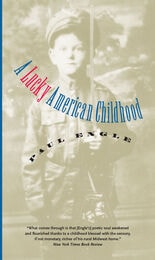
A Lucky American Childhood
Paul Engle
University of Iowa Press, 1996
A Lucky American Childhood will appeal to people with memories of the small-town America that Paul Engle describes with such affectionate realism and to all those interested in the roots of this renowned man of letters.

A Machine-Gunner in France
The Memoirs of Ward Schrantz, 35th Division, 1917-1919Ward Schrantz
University of North Texas Press, 2019
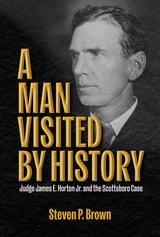
A Man Visited by History
Judge James E. Horton Jr. and the Scottsboro CaseSteven P. Brown
University of Alabama Press, 2026
A revealing portrait of Judge James E. Horton Jr., whose quiet moral courage reshaped one of the most explosive legal battles in American history
A Man Visited by History illuminates what author Steven P. Brown calls the “last major Scottsboro trials–related subject to have eluded careful study”: the life of Judge James E. Horton Jr., the white Alabama Eighth Circuit judge who set aside an all-white jury’s guilty verdict and death sentence in the second trial of African American defendant Haywood Patterson. Of the three trial judges and more than one hundred jurors who considered the cases of the Scottsboro defendants, Horton was the only one to find that the evidence against them was virtually nonexistent. Horton was then removed from further involvement with the cases and, despite being on the fast track to political prominence before the 1933 retrial of the Scottsboro defendants, was defeated for reelection as circuit judge in 1934. His ruling in the Patterson case impacted the Scottsboro defendants’ lives and continues to affect their legacies today.
Brown researched largely untapped resources that, for the first time, illuminate who Horton was before the Scottsboro trials, what he faced presiding over Patterson’s case, the factors that led him to overturn the jury’s verdict, and his later life raising award-winning cattle. What emerges is a remarkably consistent picture of a man who, Brown argues, for more than ninety years, sought nothing more than to do what he thought was right. Historians of the South, the early twentieth century, the law, and race relations as well as general readers will find this intimate account of the judge in the infamous trials to be riveting and instructive.
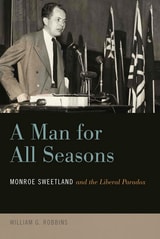
A Man for All Seasons
Monroe Sweetland and the Liberal ParadoxWilliam Robbins
Oregon State University Press, 2015
Historian William G. Robbins illuminates the wrenching transformation of American political culture in A Man for All Seasons: Monroe Sweetland and the Liberal Paradox. Racial and economic inequalities motivated much of Sweetland’s civic life, including his lifelong memberships in the American Civil Liberties Committee, the National Association for the Advancement of Colored People, the Urban League, the Japanese American Citizens League, and the Red Cross, where Sweetland worked repatriating American prisoners of war after Japan’s surrender.
Robbins’ portrait is holistic, exploring Sweetland’s socialist beginnings, inconsistencies in his politics—especially during the Cold War—and his regional legacy. He was the most important person in the resurgence of the modern, liberal Oregon Democratic Party from the late 1940s to the 1960s. He joined the National Education Association in 1964 and became the driving force behind the Bilingual Education Act of 1968 and the fight for the age-18 vote, achieved in the ratification of the 26th amendment in 1971. Monroe Sweetland was a nationally prominent figure, whose fights bequeathed to modern America important legislation that shaped its political landscape.
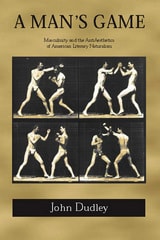
A Man's Game
Masculinity and the Anti-Aesthetics of American Literary NaturalismJohn Dudley
University of Alabama Press, 2004
Demonstrates how concepts of masculinity shaped the aesthetic foundations of literary naturalism
A Man’s Game explores the development of American literary naturalism as it relates to definitions of manhood in many of the movement’s key texts and the aesthetic goals of writers such as Stephen Crane, Jack London, Frank Norris, Edith Wharton, Charles Chestnutt, and James Weldon Johnson. John Dudley argues that in the climate of the late 19th century, when these authors were penning their major works, literary endeavors were widely viewed as frivolous, the work of ladies for ladies, who comprised the vast majority of the dependable reading public. Male writers such as Crane and Norris defined themselves and their work in contrast to this perception of literature. Women like Wharton, on the other hand, wrote out of a skeptical or hostile reaction to the expectations of them as woman writers.
Dudley explores a number of social, historical, and cultural developments that catalyzed the masculine impulse underlying literary naturalism: the rise of spectator sports and masculine athleticism; the professional role of the journalist, adopted by many male writers, allowing them to camouflage their primary role as artist; and post-Darwinian interest in the sexual component of natural selection. A Man’s Game also explores the surprising adoption of a masculine literary naturalism by African American writers at the beginning of the 20th century, a strategy, despite naturalism's emphasis on heredity and genetic determinism, that helped define the black struggle for racial equality
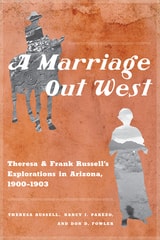
A Marriage Out West
Theresa and Frank Russell’s Explorations in Arizona, 1900–1903Theresa Russell, Nancy J. Parezo, and Don D. Fowler
University of Arizona Press, 2020
During their brief marriage, the Russells surveyed almost all of Arizona Territory, traveling by horse over rugged terrain and camping in the back of a Conestoga wagon in harsh environmental conditions. Nancy J. Parezo and Don D. Fowler detail the grit and determination of the Russells’ unique collaboration over the course of three field seasons. Delivering the first biographical account of Frank Russell’s life, this book brings detail to his life and work from childhood until his death in 1903. Parezo and Fowler analyze the important contributions Theresa and Frank made to the bourgeoning field of archaeology and Akimel O’odham (Pima) ethnography. They also offer never-before-published information on Theresa’s life after Frank’s death and her subsequent career as a professor of English literature and philosophy at Stanford University.
In 1906 Theresa Russell published In Pursuit of a Graveyard: Being the Trail of an Archaeological Wedding Journey, a twelve-part serial in Out West magazine. Theresa’s articles constituted an experiential narrative based on field journals and remembrances of life in the northern Southwest. The work offers both a biography and a seasonal field narrative that emphasized personal experiences rather than traditional scientific field notes. Included in A Marriage Out West, Theresa’s writing provides an invaluable participant’s perspective of early 1900s American archaeology and ethnography and life out West.
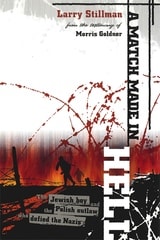
A Match Made in Hell
The Jewish Boy and the Polish Outlaw Who Defied the NazisLarry Stillman, from the testimony of Morris Goldner
University of Wisconsin Press, 2003
When Moniek (Morris) Goldner and his family were uprooted from their Polish farming village during a German action, the child-sized sixteen-year-old fled into the forests. He eventually met up with his father, who had also escaped, and together they managed to survive until a former friend betrayed the pair. Wounded and left for dead beneath his father’s murdered body, Goldner was rescued by the enigmatic outlaw Jan Kopec, who was also in hiding, looking for ways to profit from his criminal expertise.
For eighteen months Kopec hid the boy with him, moving from one area to another, often staying in hideouts he had fashioned years earlier. At first Kopec trained Goldner simply to serve as his accomplice in robberies and black market activities. But before long he pushed the training to a whole new level, making it possible for him to sell Goldner’s services to a shadowy resistance group which was becoming interested in the daring young saboteur.
And through it all, these two disparate personalities—the quiet, small-framed boy and the stocky, callous mercenary—forged an remarkable friendship and co-dependency born of need and desperation in a hellish time and place.
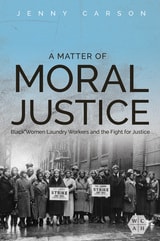
A Matter of Moral Justice
Black Women Laundry Workers and the Fight for JusticeJenny Carson
University of Illinois Press, 2021
Like thousands of African American women, Charlotte Adelmond and Dollie Robinson worked in New York’s power laundry industry in the 1930s. Jenny Carson tells the story of how substandard working conditions, racial and gender discrimination, and poor pay drove them to help unionize the city’s laundry workers. Laundry work opened a door for African American women to enter industry, and their numbers allowed women like Adelmond and Robinson to join the vanguard of a successful unionization effort. But an affiliation with the powerful Congress of Industrial Organizations (CIO) transformed the union from a radical, community-based institution into a bureaucratic organization led by men. It also launched a difficult battle to secure economic and social justice for the mostly women and people of color in the plants. As Carson shows, this local struggle highlighted how race and gender shaped worker conditions, labor organizing, and union politics across the country in the twentieth century.
Meticulous and engaging, A Matter of Moral Justice examines the role of African American and radical women activists and their collisions with labor organizing and union politics.
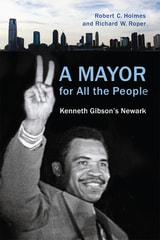
A Mayor for All the People
Kenneth Gibson's NewarkRobert C. Holmes
Rutgers University Press, 2020
In 1970, Kenneth Gibson was elected as Newark, New Jersey’s first African-American mayor, a position he held for an impressive sixteen years. Yet even as Gibson served as a trailblazer for black politicians, he presided over a troubled time in the city’s history, as Newark’s industries declined and its crime and unemployment rates soared.
This book offers a balanced assessment of Gibson’s leadership and his legacy, from the perspectives of the people most deeply immersed in 1970s and 1980s Newark politics: city employees, politicians, activists, journalists, educators, and even fellow big-city mayors like David Dinkins. The contributors include many of Gibson’s harshest critics, as well as some of his closest supporters, friends, and family members—culminating in an exclusive interview with Gibson himself, reflecting on his time in office.
Together, these accounts provide readers with a compelling inside look at a city in crisis, a city that had been rocked by riots three years before Gibson took office and one that Harper’s magazine named “America’s worst city” at the start of his second term. At its heart, it raises a question that is still relevant today: how should we evaluate a leader who faced major structural and economic challenges, but never delivered all the hope and change he promised voters?
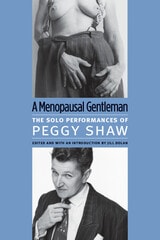
A Menopausal Gentleman
The Solo Performances of Peggy ShawPeggy Shaw
University of Michigan Press, 2011
"With classic butch finesse---that handsome combination of vulnerability and toughness---Peggy Shaw pieces together the challenges of growing up butch in the 1950s. Shaw is an engaging performer and inspired writer."
---Gay Community News
Obie-award-winning performer and writer Peggy Shaw has been playing her gender-bending performances on Off Broadway, regional, and international stages for three decades. Co-founder of the renowned troupe Split Britches, Shaw has gone on to create memorable solo performances that mix achingly honest introspection with campy humor, reflecting on everything from her Irish-American working-class roots to her aging butch body.
This collection of Shaw's solo performance scripts evokes a 54-year-old grandmother who looks like a 35-year-old man (in her classic Menopausal Gentleman); a mother's ambivalent ministrations to a daughter she treated like a son (in the raw You're Just Like My Father); Shaw's love for her biracial grandson, for whom she models masculinity (in the musically punctuated To My Chagrin); and a mapping of her body's long, bittersweet history (in the lyrical Must: The Inside Story, a collaboration with the UK's Clod Ensemble). The book also includes a selection of Shaw's other classic monologues and an extensive introduction by Jill Dolan, Professor of English and Theater and Dance at Princeton University and the blogger behind The Feminist Spectator website.
A volume in the series Triangulations: Lesbian/Gay/Queer Theater/Drama/Performance
Cover photos by Eva Weiss (top) and Robin Holland/robinholland.com (bottom).
A Menorah for Athena
Charles Reznikoff and the Jewish Dilemmas of Objectivist PoetryStephen Fredman
University of Chicago Press, 2001
Stephen Fredman illuminates the relationship of Jewish intellectuals to modernity through a close look at Reznikoff's life and writing. He shows that when we regard the Objectivists as modern Jewish poets, we can see more clearly their distinctiveness as modernists and the reasons for their profound impact upon later poets, such as Allen Ginsberg and Charles Bernstein. Fredman also argues that to understand Reznikoff's work more completely, we must see it in the context of early, nonsectarian attempts to make the study of Jewish culture a force in the construction of a more pluralistic society. According to Fredman, then, the indelible images in Reznikoff's poetry open a window onto the vexed but ultimately successful entry of Jewish immigrants and their children into the mainstream of American intellectual life.
A Monetary and Fiscal History of Latin America, 1960–2017
Timothy J. Kehoe
University of Minnesota Press, 2021
A major, new, and comprehensive look at six decades of macroeconomic policies across the region
What went wrong with the economic development of Latin America over the past half-century? Along with periods of poor economic performance, the region’s countries have been plagued by a wide variety of economic crises. This major new work brings together dozens of leading economists to explore the economic performance of the ten largest countries in South America and of Mexico. Together they advance the fundamental hypothesis that, despite different manifestations, these crises all have been the result of poorly designed or poorly implemented fiscal and monetary policies.
Each country is treated in its own section of the book, with a lead chapter presenting a comprehensive database of the country’s fiscal, monetary, and economic data from 1960 to 2017. The chapters are drawn from one-day academic conferences—hosted in all but one case, in the focus country—with participants including noted economists and former leading policy makers. Cowritten with Nobel Prize winner Thomas J. Sargent, the editors’ introduction provides a conceptual framework for analyzing fiscal and monetary policy in countries around the world, particularly those less developed. A final chapter draws conclusions and suggests directions for further research.
A vital resource for advanced undergraduate and graduate students of economics and for economic researchers and policy makers, A Monetary and Fiscal History of Latin America, 1960–2017 goes further than any book in stressing both the singularities and the similarities of the economic histories of Latin America’s largest countries.
Contributors: Mark Aguiar, Princeton U; Fernando Alvarez, U of Chicago; Manuel Amador, U of Minnesota; Joao Ayres, Inter-American Development Bank; Saki Bigio, UCLA; Luigi Bocola, Stanford U; Francisco J. Buera, Washington U, St. Louis; Guillermo Calvo, Columbia U; Rodrigo Caputo, U of Santiago; Roberto Chang, Rutgers U; Carlos Javier Charotti, Central Bank of Paraguay; Simón Cueva, TNK Economics; Julián P. Díaz, Loyola U Chicago; Sebastian Edwards, UCLA; Carlos Esquivel, Rutgers U; Eduardo Fernández Arias, Peking U; Carlos Fernández Valdovinos (former Central Bank of Paraguay); Arturo José Galindo, Banco de la República, Colombia; Márcio Garcia, PUC-Rio; Felipe González Soley, U of Southampton; Diogo Guillen, PUC-Rio; Lars Peter Hansen, U of Chicago; Patrick Kehoe, Stanford U; Carlos Gustavo Machicado Salas, Bolivian Catholic U; Joaquín Marandino, U Torcuato Di Tella; Alberto Martin, U Pompeu Fabra; Cesar Martinelli, George Mason U; Felipe Meza, Instituto Tecnológico Autónomo de México; Pablo Andrés Neumeyer, U Torcuato Di Tella; Gabriel Oddone, U de la República; Daniel Osorio, Banco de la República; José Peres Cajías, U of Barcelona; David Perez-Reyna, U de los Andes; Fabrizio Perri, Minneapolis Fed; Andrew Powell, Inter-American Development Bank; Diego Restuccia, U of Toronto; Diego Saravia, U de los Andes; Thomas J. Sargent, New York U; José A. Scheinkman, Columbia U; Teresa Ter-Minassian (formerly IMF); Marco Vega, Pontificia U Católica del Perú; Carlos Végh, Johns Hopkins U; François R. Velde, Chicago Fed; Alejandro Werner, IMF.
A Monument to Deceit
Sam Adams and the Vietnam Intelligence WarsC. Michael Hiam
University Press of New England, 2014
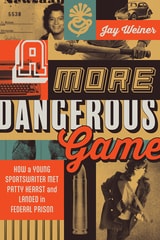
A More Dangerous Game
How a Young Sportswriter Met Patty Hearst and Landed in Federal PrisonJay Weiner
University of Minnesota Press, 2027
From precocious sportswriter to Federal Prisoner #01150-134: The intersection of sports and the revolutionary 1970s, with one ambitious young man caught in the middle
Jay Weiner was an aspiring teenage sportswriter when he met Jack Scott, the charismatic, activist journalist who would become his mentor, immersing him in the political and social issues roiling sports—and so much else—in the late 1960s and 1970s. Weiner became a zealous student of Scott, joining a new tradition of sports journalism that interrogated questions of race, power, and politics alongside the games themselves. But his blind devotion took a treacherous turn when Scott took Weiner, as a surprise for his twentieth birthday, to a secluded Pennsylvania farmhouse where heiress-turned-FBI-most-wanted Patty Hearst was hiding out with her Symbionese Liberation Army kidnappers-turned-comrades.
A More Dangerous Game is Weiner’s story of coming of age in a shocking fashion. A wild mosaic of sports, journalism, betrayal, justice, courage, and redemption, his memoir charts the meeting of sports and the radical left in the 1970s, with Weiner unwittingly caught in the middle and left behind by his mentor. In the engaged, edgy style of a seasoned sportswriter, Weiner describes the fallout after that fateful encounter with the country’s most wanted fugitives: three years of federal subpoenas, impossible decisions, and, ultimately, four months in prison for refusing to testify before a grand jury.
With exhaustive background reporting, Weiner fits together the seemingly disparate pieces of his unlikely journey from young sportswriter to frightened FBI target to emboldened Federal Prisoner #01150-134. From its examination of the life and work of Jack Scott to its surprising angle on the well-chronicled saga of Patty Hearst, A More Dangerous Game is the engrossing story of a time when examining sports as a mirror of society put a writer on the cutting edge of one of the most notorious stories of a generation.
Retail e-book files for this title are screen-reader friendly with images accompanied by short alt text and/or extended descriptions.
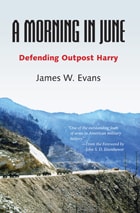
A Morning in June
Defending Outpost HarryJames W. Evans, with a foreword by John S. D. Eisenhower
University of Alabama Press, 2010
Exploring the strategic and human dimensions of the defense of Outpost Harry.
By June 1953 the Korean War, marked at the outset by extremely fluid advances and retreats up and down the peninsula, had settled into position warfare very near the original pre-war demarcation line between North and South Korea. At this point both sides were fighting to win a peace, to achieve incremental advantages that could be translated into gains at the peace negotiations in Panmunjom. The battle at Outpost Harry devolved into hand-to-hand combat during a period of constant, intense fighting that lasted two days. The author, although seriously wounded that night, refused evacuation and remained on the hill to successfully lead his company in defense of the outpost. It wasn’t romantic; it wasn’t chivalrous; and many died or were badly wounded. Some of the survivors never fully overcame the mental and physical damage they suffered during the nightmare.
With this book, one of those scarred by that experience recounts the events of the battle and his lifelong efforts to deal with the residual horrors. The Korean Conflict may be called "the forgotten war" by some, but not by those who were on the front lines.
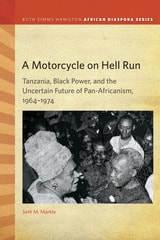
A Motorcycle on Hell Run
Tanzania, Black Power, and the Uncertain Future of Pan-Africanism, 1964–1974Seth M. Markle
Michigan State University Press, 2017
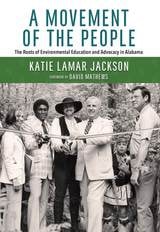
A Movement of the People
The Roots of Environmental Education and Advocacy in AlabamaKatie Lamar Jackson, Foreword by David Mathews
University of Alabama Press, 2017
A Movement of the People: The Roots of Environmental Education and Advocacy in Alabama is a detailed history of the Alabama Environmental Quality Association (AEQA). The AEQA helped to establish groundbreaking environmental protection and natural resource preservation policies for the state and the region and grew into one of the nation’s most progressive environmental education efforts.
The AEQA began in 1966 with the relatively simple political action agenda of cleaning up unsightly and unsanitary roadside trash. These inspired citizens collaborated with civic leaders to identify and remove illegal rural dumps and create more regulated landfills statewide. Eventually they became involved in the “Keep America Beautiful” campaign and with the US Public Health Service in its attempt to rid the state of the yellow-fever mosquito vector, Aedes aegypti, which breeds in standing, fetid water. The acme of these early efforts was the passage of Alabama’s Solid Waste Disposal Law of 1969, one of the nation’s first such bills.
The AEQA’s dedicated staff and supporters spearheaded other environmental projects, many of which remain active today, such as recycling programs with industry giants throughout the Southeast and the founding of the Bartram Trail Conference, a multistate initiative to identify and preserve the path that Quaker botanist William Bartram took through the territory before its formation into states.
Using recorded interviews with Martha McInnis, executive vice president of the AEQA, and full access to a meticulously preserved archive of the organization’s papers and artifacts, Katie Lamar Jackson relates this previously untold story of remarkable “citizen activism.” A Movementof the People is a valuable account of the organization’s growth and advancement, both economically and societally, which serves as a blueprint for successful civic activism and grassroots organizing.
A Mythology of Forms
Selected Writings on ArtCarl Einstein
University of Chicago Press, 2019
A Nation Fragmented
The Public Agenda in the Information AgeJill Edy
Temple University Press, 2019
The transformation from an undifferentiated public to a surfeit of interest groups has become yet another distinguishing feature of the increasing polarization of American politics. Jill Edy and Patrick Meirick contend that the media has played a key role in this splintering. A Nation Fragmented reveals how the content and character of the public agenda has transformed as the media environment evolved from network television and daily newspapers in the late 1960s to today’s saturated social media world with 200 cable channels.
The authors seek to understand what happened as the public’s sense of shared priorities deteriorated. They consider to what extent our public agenda has “fallen apart” as attention to news has declined, and to what extent we have been “driven apart” by changes in the issue agendas of news. Edy and Meirick also show how public attention is limited and spread too thin except in cases where a highly consistent news agenda can provoke a more focused public agenda.
A Nation Fragmented explores the media’s influence and political power and, ultimately, how contemporary democracy works.