Results by title
3258 books match the query 'Art' and 405 start with a
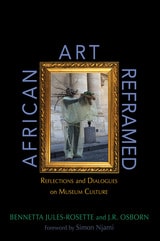
African Art Reframed
Reflections and Dialogues on Museum CultureBennetta Jules-Rosette and J. R. Osborn; Foreword by Simon Njami
University of Illinois Press, 2020
The authors take a three-pronged approach. Part One ranges from curiosity cabinets to virtual websites to offer a history of ethnographic and art museums and look at their organization and methods of reaching out to the public. In the second part, the authors examine museums as ecosystems and communities within communities, and they use semiotic methods to analyze images, signs, and symbols drawn from the experiences of curators and artists. The third part introduces innovative strategies for displaying, disseminating, and reclaiming African art. The authors also propose how to reinterpret the art inside and outside the museum and show ways of remixing the results.
Drawing on extensive conversations with curators, collectors, and artists, African Art Reframed is an essential guide to building new exchanges and connections in the dynamic worlds of African and global art.
African Art and Leadership
Edited by Douglas Fraser and Herbert M. Cole
University of Wisconsin Press, 1972
African Filmmaking
Five FormationsKenneth W. Harrow
Michigan State University Press, 2017

African Luxury
Aesthetics and PoliticsEdited by Mehita Iqani and Simidele Dosekun
Intellect Books, 2019
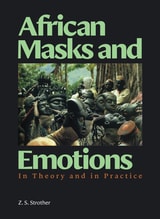
African Masks and Emotions
In Theory and in PracticeZ. S. Strother
J. Paul Getty Trust, The, 0
In this groundbreaking book, Z. S. Strother, inspired by dialogues with African masquerade patrons and performers, disputes assumptions that masks universally hide, reveal, or transform.
In Western European languages, the word mask exerts a powerful presence as a figure of speech. To masquerade is to pretend to be someone or something one is not. By extension, unmasking is a heroic metaphor for exposing a hidden truth. In this volume, art historian Z. S. Strother counters that narrative, using African case studies to offer an alternative vision of masquerading. She explores the aesthetic emotions aroused by masks, or more precisely, by “dances of masks”: joy, wonder, awe, fear, and the release of laughing out loud. She also investigates the uncanny—a sensation of “delicious shiveriness” triggered when familiar spaces and individuals become strange and changeable. Inspired by Strother’s studies in DR Congo, African Masks and Emotions takes a comparative perspective and moves emotion from the periphery to the center of analysis.
Reflecting Getty's commitment to open content, African Masks and Emotions is available for free download in ePub and PDF formats at: https://www.getty.edu/publications-reports/item/2F27A4. This paperback edition is available for sale for readers who wish to have a bound reference copy.
African Renaissance
New Forms, Old Images in Yoruba ArtM Okediji
University Press of Colorado, 2002
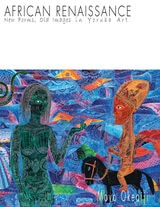
African Renaissance: New Forms, Old Images in Yoruba Art describes, analyzes, and interprets the historical and cultural contexts of an African art renaissance using the twentieth- and twenty-first-century transformation of ancient Yoruba artistic heritage. Juxtaposing ancient and contemporary Yoruba art, Moyo Okediji defines this art history through the lens of colonialism, an experience that served to both destroy ancient art traditions and revive Yoruba art in the twentieth century.
With vivid reproductions of paintings, prints, and drawings, Okediji describes how Yoruba art has replenished and redefined itself. Okediji groups the text into several broadly overlapping periods that intricately detail the journey of Yoruba art and artists: first through oppression by European colonialism, then the attainment of Nigeria’s independence and the new nation’s subsequent military coup, and ending with present-day native Yoruban artists fleeing their homeland.

African Royal Court Art
Michèle Coquet
University of Chicago Press, 1998
More than ornamentation, royal objects embodied the strength and status of African rulers. The gold-plated stools of the Ashanti, the delicately carved ivory bracelets of the Edo-these objects were meant not simply to adorn but to affirm and enhance the power and prestige of the wearer. Unlike the abstract style frequently seen in African ritual art, realism became manifest in courtly arts. Realism directly linked the symbolic value of the object-a portrait or relief-with the physical person of the king. The contours of the monarch's face, his political and military exploits rendered on palace walls, became visual histories, the work of art in essence corroborating the ruler's sovereign might.
Richly illustrated and wonderfully detailed, Coquet's influential volume offers both a splendid visual presentation and an authoritative analysis of African royal arts.
"[This] beautiful and exciting book emphasizes the skillful court art of the Benin, Dahomey, and the Kongo. A very interesting and unusual approach to the art of the continent that has been too easily situated 'outside of history.'"—Le Figaro
African Video Movies and Global Desires
A Ghanaian HistoryCarmela Garritano
Ohio University Press, 2013
African Vodun
Art, Psychology, and PowerSuzanne Preston Blier
University of Chicago Press, 1994
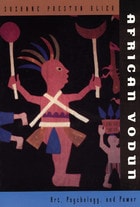
In this first major study of its kind, Suzanne Preston Blier examines the artworks of the contemporary vodun cultures of southern Benin and Togo in West Africa as well as the related voudou traditions of Haiti, New Orleans, and historic Salem, Massachusetts. Blier employs a variety of theoretically sophisticated psychological, anthropological, and art historical approaches to explore the contrasts inherent in the vodun arts—commoners versus royalty, popular versus elite, "low" art versus "high." She examines the relation between art and the slave trade, the psychological dynamics of artistic expression, the significance of the body in sculptural expression, and indigenous perceptions of the psyche.
Throughout, Blier pushes African art history to a new height of cultural awareness that recognizes the complexity of traditional African societies as it acknowledges the role of social power in shaping aesthetics and meaning generally. This book will be of critical importance not only to those concerned with African, African American, and Caribbean art, but also to anthropologists, African diaspora scholars, students of comparative religion and comparative psychology, and anyone fascinated by the traditions of voudou and vodun.
"An extraordinary tour de force."—Choice
"Extraordinarily detailed....Blier's examination of the entire, often mysterious history of vodun is...in a word, definitive."—Booklist
"A serious study that concentrates on the hidden power of objects and the meaning behind that potency is long overdue. Welcome Susan Blier's African Vodun....Certainly a must for...those concerned with the psychology of art."—Janet L. Stanley, Art Documentation
"[Blier] is usually sensitive to the need to resist imposing Western artistic values and academic methodologies inappropriately upon such art. But she offers the reader a gift even more precious; she offers rare insights into how various art forms—sculpture and home architecture in particular—yield meanings for the African users of such art.—Norman Weinstein, Boston Book Review
Africanfuturism
African Imaginings of Other Times, Spaces, and WorldsKimberly Cleveland
Ohio University Press, 2024
Afrofuturisms
Ecology, Humanity, and Francophone Cultural ExpressionsIsaac Vincent Joslin
Ohio University Press, 2023

Afromodernism
Six Turning PointsKobena Mercer
Duke University Press, 2027
After Authority
Global Art Cinema and Political TransitionKalling Heck
Rutgers University Press, 2020
After Caliban
Caribbean Art in a Global ImaginaryErica Moiah James
Duke University Press, 2025
After Disruption
A Future for Cultural MemoryTrevor Owens
University of Michigan Press, 2024
After Disruption posits that we are no longer planning for a digital future, but instead living in a digital present. In this context, Owens asks how we plan for and develop a more just, sustainable, and healthy future for cultural memory. The first half of the book draws on critical scholarship on the history of technology and business to document and expose the sources of tech startup ideologies and their pernicious results, revealing that we need powerful and compelling counter frameworks and values to replace these ideologies. The second half of the book makes the case for the centrality of maintenance, care, and repair as interrelated frameworks to build a better future in which libraries, archives, and museums can thrive as sites of belonging and connection through collections.
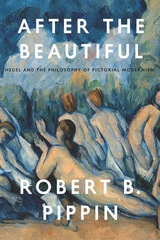
After the Beautiful
Hegel and the Philosophy of Pictorial ModernismRobert B. Pippin
University of Chicago Press, 2013
While Hegel could never engage modernist painting, he did have an understanding of modernity, and in it, art—he famously asserted—was “a thing of the past,” no longer an important vehicle of self-understanding and no longer an indispensable expression of human meaning. Pippin offers a sophisticated exploration of Hegel’s position and its implications. He also shows that had Hegel known how the social institutions of his day would ultimately fail to achieve his own version of genuine equality, a mutuality of recognition, he would have had to explore a different, new role for art in modernity. After laying this groundwork, Pippin goes on to illuminate the dimensions of Hegel’s aesthetic approach in the path-breaking works of Manet, the “grandfather of modernism,” drawing on art historians T. J. Clark and Michael Fried to do so. He concludes with a look at Cézanne, the “father of modernism,” this time as his works illuminate the relationship between Hegel and the philosopher who would challenge Hegel’s account of both modernity and art—Martin Heidegger.
Elegantly inter-weaving philosophy and art history, After the Beautiful is a stunning reassessment of the modernist project. It gets at the core of the significance of modernism itself and what it means in general for art to have a history. Ultimately, it is a testament, via Hegel, to the distinctive philosophical achievements of modernist art in the unsettled, tumultuous era we have inherited.
After the Crisis
Contemporary States of PhotographyEdited by Donatien Grau and Christoph Wiesner
Diaphanes, 2019
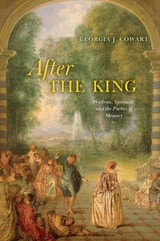
After the King
Watteau, Spectacle, and the Poetics of MemoryGeorgia J. Cowart
University of Chicago Press, 2026
Musicologist Georgia J. Cowart explores how Antoine Watteau’s late paintings reimagine the symbolic order of absolutism in the wake of Louis XIV’s death.
Antoine Watteau has long been known for the theatricality of his paintings, but what that theatricality signifies has remained elusive. In After the King, Georgia Cowart contends that this mode of painting takes shape in response to the spectacle of Louis XIV’s absolutism, which the painter’s late works transform into a new aesthetic language.
The king’s death marked a turning point in Watteau’s art. In the six years that followed, his paintings turned more decisively toward the musical stage. Evoking theatrical plots, frontispieces, and costume types, they conjured a world in which the legacy of absolutist culture lingered as stylized memory—its rituals, emblems, and pleasures recast through theatrical illusion and ironic distance.
Rather than treating Watteau as a painter of nostalgic reverie or Rococo charm, Cowart situates his art within the immersive performance culture of Versailles and the vibrant Parisian stage, at a time when the opéra-ballet, popular opera, and the commedia dell’arte were charting new theatrical landscapes. Drawing on art history, musicology, theater studies, and Pierre Nora’s theory of lieux de mémoire, she proposes a new framework that understands Watteau’s paintings as acts of theatrical memory and cultural recomposition.
Elegantly written and conceptually ambitious, After the King reveals how Watteau recoded the symbols of monarchy to stage a post-absolutist cultural imagination shaped by irony, sensuality, and poetic transformation.

After the Pre-Raphaelites
Art and Aestheticism in Victorian EnglandElizabeth Prettejohn
Rutgers University Press, 1999
Victorian Aestheticism has often been traded as a frivolous elevation of art above the concerns of political and social life. This book reinterprets Aestheticism as a significant exploration of what it might mean to produce works of art in the modern world. The chapters address not only "art for art's sake" but also linkages with the realms of science and morality. A major concern is the relationship between art and sexuality, from the experiments of the Rossetti circle in the 1860s to the male nude in late-Victorian sculpture. Both homosexual and heterosexual eroticism emerge as key issues in the artistic debates of the late-Victorian period.
As a complement to the existing literature on Pre-Raphaelitism, this collection is essential reading for all students of nineteenth-century art, literature, and culture.
Contributors are: Caroline Arscott, Robyn Asleson, Colin Cruise, Whitney Davis, Kate Flint, Alastair Grieve, Michael Hatt, Anne Koval, Alison Smith, and Robin Spencer
Afterall
A Journal of Art, Context and Enquiry, volume 51 number 1 (Spring 2021)The University of Chicago Press
University of Chicago Press Journals, 2021
Afterall
A Journal of Art, Context and Enquiry, volume 52 number 1 (Autumn/Winter 2021)The University of Chicago Press
University of Chicago Press Journals, 2021
Afterall
A Journal of Art, Context and Enquiry, volume 53 number 1 (Spring 2022)The University of Chicago Press
University of Chicago Press Journals, 2022
Afterall
A Journal of Art, Context and Enquiry, volume 54 number 1 (Autumn/Winter 2022)The University of Chicago Press
University of Chicago Press Journals, 2022
Afterall
A Journal of Art, Context and Enquiry, volume 55-56 number 1 (Spring 2023)The University of Chicago Press
University of Chicago Press Journals, 2023
Afterall
A Journal of Art, Context and Enquiry, volume 57 number 1 (Spring 2024)The University of Chicago Press
University of Chicago Press Journals, 2024
Afterall
A Journal of Art, Context and Enquiry, volume 58 number 1 (Autumn/Winter 2024)The University of Chicago Press
University of Chicago Press Journals, 2024
Against Aesthetic Exceptionalism
Arne De Boever
University of Minnesota Press, 2019
Reconsiders exceptionalism between aesthetics and politics
Here, Arne De Boever proposes the notion of aesthetic exceptionalism to describe the widespread belief that art and artists are exceptional. Against Aesthetic Exceptionalism challenges that belief by focusing on the sovereign artist as genius, as well as the original artwork as the foundation of the art market. Engaging with sculpture, conceptual artwork, and painting by emerging and established artists, De Boever proposes a worldly, democratic notion of unexceptional art as an antidote to the problems of aesthetic exceptionalism.
Forerunners: Ideas First
Short books of thought-in-process scholarship, where intense analysis, questioning, and speculation take the lead
Against Immediacy
Video Art and Media PopulismWilliam Kaizen
Dartmouth College Press, 2016
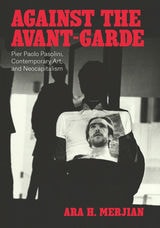
Against the Avant-Garde
Pier Paolo Pasolini, Contemporary Art, and NeocapitalismAra H. Merjian
University of Chicago Press, 2020
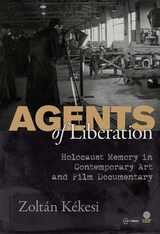
Agents of Liberations
Holocaust Memory in Contemporary Art and Documentary FilmZoltán Kékesi
Central European University Press, 2015
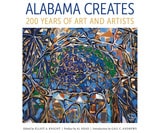
Alabama Creates
200 Years of Art and ArtistsEdited by Elliot A. Knight
University of Alabama Press, 2019
A visually rich survey of two hundred years of Alabama fine arts and artists
Alabama artists have been an integral part of the story of the state, reflecting a wide-ranging and multihued sense of place through images of the land and its people. Quilts, pottery, visionary paintings, sculpture, photography, folk art, and abstract art have all contributed to diverse visions of Alabama’s culture and environment. The works of art included in this volume have all emerged from a distinctive milieu that has nourished the creation of powerful visual expressions, statements that are both universal and indigenous.
Published to coincide with the state’s bicentennial, Alabama Creates: 200 Years of Art and Artists features ninety-four of Alabama’s most accomplished, noteworthy, and influential practitioners of the fine arts from 1819 to the present. The book highlights a broad spectrum of artists who worked in the state, from its early days to its current and contemporary scene, exhibiting the full scope and breadth of Alabama art.
This retrospective volume features biographical sketches and representative examples of each artist’s most masterful works. Alabamians like Gay Burke, William Christenberry, Roger Brown, Thornton Dial, Frank Fleming, the Gee’s Bend Quilters, Lonnie Holley, Dale Kennington, Charlie Lucas, Kerry James Marshall, David Parrish, and Bill Traylor are compared and considered with other nationally significant artists.
Alabama Creates is divided into four historical periods, each spanning roughly fifty years and introduced by editor Elliot A. Knight. Knight contextualizes each era with information about the development of Alabama art museums and institutions and the evolution of college and university art departments. The book also contains an overview of the state’s artistic heritage by Gail C. Andrews, director emerita of the Birmingham Museum of Art. Alabama Creates conveys in a sweeping and captivating way the depth of talent, the range of creativity, and the lasting contributions these artists have made to Alabama’s extraordinarily rich visual and artistic heritage.

Alarms & Epitaphs
The Art of Eric AmblerPeter Wolfe
University of Wisconsin Press, 1993

Alaska Eskimo Footwear
Jill Oakes and Rick Riewe
University of Alaska Press, 2006
For each major Alaska Eskimo group—Inupiaq, Yup’ik, Aleut, Alutiiq, St. Lawrence Islander—authors Oakes and Riewe discuss pattern, design, and techniques for skin preparation, construction, and decoration. They describe the reasons for design and decorative differences in boots used for ceremonies and dancing versus those for everyday wear and hunting, trapping, and fishing.
Developed with Eskimo seamstresses from each Alaskan region, this full-color volume features photographs from museum collections in the United States and Russia. Detailed drawings of patterns, construction techniques, and decorative details illustrate the complexity of this ancient art and provide readers with guidance in identifying regional styles. A tribute to an exquisite art and the women who practice it, Alaska Eskimo Footwear brings the beauty of the North to life.
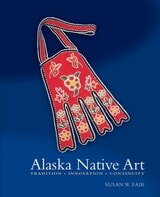
Alaska Native Art
Tradition, Innovation, ContinuitySusan W. Fair
University of Alaska Press, 2006
The rich artistic traditions of Alaska Natives are the subject of this landmark volume, which examines the work of the premier Alaska artists of the twentieth century. Ranging across the state from the islands of the Bering Sea to the interior forests, Alaska Native Art provides a living context for beadwork, ivory carving, basketry, and skin sewing. Examples of work from Tlingit, Aleutian Islanders, Pacific Eskimo, Athabaskan, Yupik, and Inupiaq artists make this volume the most comprehensive study of Alaskan art ever published.
Beautifully illustrated with full-color photographs of artists and their works, Alaska Native Art examines the concept of tradition in the modern world. Fair demonstrates that tradition is alive and well in Alaska through the words of Native artists and a multitude of examples, reproduced in color and accompanied by historic photographs.
Alaska Native Art is a volume to treasure, a tribute to the incredible vision of Alaska's artists and to the enduring traditions of all of Alaska's Native peoples.
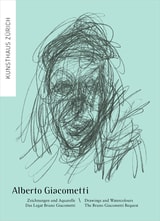
Alberto Giacometti
Drawings and Watercolours. The Bruno Giacometti BequestMonique Meyer
Scheidegger and Spiess, 2014
Comprising about one hundred of Giacometti’s works on paper, this well-guarded family treasure represents the artist’s entire life, from his youth in Stampa, Switzerland to his later years in Paris. This collection includes very early copies of works by old masters as well as studies of ancient Egyptian and Roman sculptures from the 1920s. It also shows how closely Giacometti looked at the art of Henri Matisse, Paul Cézanne, and Auguste Rodin, which then led to highly individual interpretations of their work. In addition, it contains important drawings of some of Giacometti’s relatives along with self-portraits, alpine landscapes from his native Val Bregaglia, and masterful figure studies from the 1950s and 60s.
Featuring 144 color images, this concise book features the first selection of these works the world has seen alongside an essay on their history and significance and an illustrated catalogue of the entire collection.
Albrecht Altdorfer and the Origins of Landscape
Christopher S. Wood
University of Chicago Press, 1993
Albrecht Durer's Renaissance
Humanism, Reformation, and the Art of FaithDavid Hotchkiss Price
University of Michigan Press, 2003
David Price is Associate Professor of History and of Church History, Southern Methodist University.
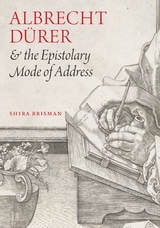
Albrecht Dürer and the Epistolary Mode of Address
Shira Brisman
University of Chicago Press, 2016
In the early modern period, before the establishment of a reliable postal system, letters faced risks of interception and delay. During the Reformation, the printing press threatened to expose intimate exchanges and blur the line between public and private life. Exploring the complex travel patterns of sixteenth-century missives, Brisman explains how these issues of sending and receiving informed Dürer’s artistic practices. His success, she contends, was due in large part to his development of pictorial strategies—an epistolary mode of address—marked by a direct, intimate appeal to the viewer, an appeal that also acknowledged the distance and delay that defers the message before it can reach its recipient. As images, often in the form of prints, coursed through an open market, and artists lost direct control over the sale and reception of their work, Germany’s chief printmaker navigated the new terrain by creating in his images a balance between legibility and concealment, intimacy and public address.
Alchemies of Theater
Plays, Scores, WritingsDick Higgins
University of Michigan Press, 2024
Alchemies of Theater brings together a broad selection of Higgins’s writings and theater-related work, much of it unpublished or long out of print, including plays and performance scores, drawings, and writings on theater and performance. As this book demonstrates, Higgins deconstructed the drama long before it became a project of theater; undercut the traditional roles of author and director; created what is now considered “devised” theater; pioneered the use of media in theater, writing the first electronic opera; and was a precursor in deconstruction and “postdramatic” avant-garde traditions. His Intermedia manifesto offered a sweeping view of interdisciplinarity—in effect, a new arts ecology.
Aleksandr Askoldov
The CommissarMarat Grinberg
Intellect Books, 2016
This book is the first companion to the film in any language. It recounts the film’s plot and turbulent production history, and it also offers a close analysis of the artistic vision of its director, Aleksandr Askoldov, and the ways that viewers can trace in the film not only his complex aesthetics, but also the personal crises he endured in the years leading up to the film. The result is an indispensable companion to an unforgettable film.
Aleksandr Sokurov
Russian ArkBirgit Beumers
Intellect Books, 2016
This companion to Russian Ark addresses all key aspects of the film, beginning with a comprehensive synopsis, an in-depth analysis, and an account of the production history. Birgit Beumers goes on from there to discuss the work that went into the now-legendary Steadicam shot—which required two thousand actors and three orchestras—and she also offers an account of the film’s critical and public reception, showing how it helped to establish director Aleksandr Sokurov as perhaps the leading filmmaker in Russia today.
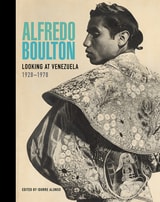
Alfredo Boulton
Looking at Venezuela, 1928–1978Idurre Alonso
J. Paul Getty Trust, The, 0
Alfredo Boulton (1908–1995) is considered one of the most important champions of modern art in Venezuela and a key intellectual of twentieth-century modernism. He was a pioneer of modern photography, an art critic, a researcher and historian of Venezuelan art, a friend to many of the great artists and architects of the twentieth century, and an expert on the imagery of the heroes of his country’s independence.
Yet, Boulton is shockingly underrecognized outside of his native land. The few exhibitions related to his work have focused exclusively on his photographic production; never has there been a project that looks at the full range of Boulton’s efforts, foregrounding his influence on the shaping of Venezuelan art. This volume addresses these lacunae by analyzing Boulton’s groundbreaking photographic practice, his central role in the construction of a modern national artistic canon, and his influence in formalizing and developing art history and criticism in Venezuela. Based on the extensive materials held in Boulton’s archive at the Getty Research Institute, Alfredo Boulton brings together essays by leading scholars in the field to offer a commanding, original perspective on his contributions to the formation of a distinctive modernity at home and beyond.
This volume is published to accompany an exhibition on view at the Getty Research Institute at the Getty Center from August 29, 2023, to January 21, 2024.
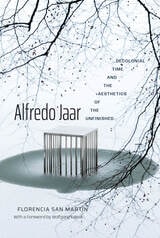
Alfredo Jaar
Decolonial Time and the Aesthetics of the UnfinishedFlorencia San Martin. With a Foreword by Wolfgang Kaleck.
Duke University Press, 2026
In Alfredo Jaar, Florencia San Martín analyzes the work of the prominent Chilean-born artist Alfredo Jaar, whose work challenges the linear and triumphalist temporality of Western modernity that obscures the violence of colonization and globalization. San Martín argues that Jaar’s work represents decolonial time, exposing the limits of the violent systems we inhabit. His art, she maintains, is informed by and responds to two interconnected historical events relevant to his own life: the US-backed military coup that established Pinochet’s dictatorship in Chile and the implementation around the world of the corollary neoliberal economic system. San Martín explores the key themes in Jaar’s artistic practice—mourning, accountability, and failure—which situates the victims of the Chilean regime in a global context, directly confronts the architects of atrocity, and questions how ideas of diversity and inclusion have been co-opted by modern neoliberal discourses. Alfredo Jaar enables us to reimagine art history, offering a fresh paradigm with which to think about global contemporary art.
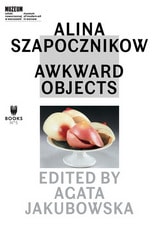
Alina Szapocznikow
Awkward ObjectsEdited by Agata Jakubowska
Museum of Modern Art in Warsaw, 2011
Drawing on the work of prominent art historians, curators, critics, and collectors, this exhibition catalogue presents the most current research on the work of Alina Szapocznikow.
Born in Kalisz, Poland, in 1926, Szapocznikow studied in Prague and Paris, spent the last decade of her life in France, and created an impressive number of sculptures and drawings that are now defined as post-surrealist and proto-feminist. Recent exhibitions of the artist’s work in Germany and France, along with acquisitions by prominent collections worldwide, have bolstered Szapocznikow’s international reputation and ignited discussion of her significance to twentieth-century art.
All Great Art is Praise
Aidan Nichols
Catholic University of America Press, 2016
All Thoughts Are Equal
Laruelle and Nonhuman PhilosophyJohn Ó Maoilearca
University of Minnesota Press, 2015
All Thoughts Are Equal is both an introduction to the work of French philosopher François Laruelle and an exercise in nonhuman thinking. For Laruelle, standard forms of philosophy continue to dominate our models of what counts as exemplary thought and knowledge. By contrast, what Laruelle calls his “non-standard” approach attempts to bring democracy into thought, because all forms of thinking—including the nonhuman—are equal.
John Ó Maoilearca examines how philosophy might appear when viewed with non-philosophical and nonhuman eyes. He does so by refusing to explain Laruelle through orthodox philosophy, opting instead to follow the structure of a film (Lars von Trier’s documentary The Five Obstructions) as an example of the non-standard method. Von Trier’s film is a meditation on the creative limits set by film, both technologically and aesthetically, and how these limits can push our experience of film—and of ourselves—beyond what is normally deemed “the perfect human.”
All Thoughts Are Equal adopts film’s constraints in its own experiment by showing how Laruelle’s radically new style of philosophy is best presented through our most nonhuman form of thought—that found in cinema.
Always More Than One
Individuation's DanceErin Manning
Duke University Press, 2012
Ambient Media
Japanese Atmospheres of SelfPaul Roquet
University of Minnesota Press, 2016
Ambient Media examines music, video art, film, and literature as tools of atmospheric design in contemporary Japan, and what it means to use media as a resource for personal mood regulation. Paul Roquet traces the emergence of ambient styles from the environmental music and Erik Satie boom of the 1960s and 1970s to the more recent therapeutic emphasis on healing and relaxation.
Focusing on how an atmosphere works to reshape those dwelling within it, Roquet shows how ambient aesthetics can provide affordances for reflective drift, rhythmic attunement, embodied security, and urban coexistence. Musicians, video artists, filmmakers, and novelists in Japan have expanded on Brian Eno’s notion of the ambient as a style generating “calm, and a space to think,” exploring what it means to cultivate an ambivalent tranquility set against the uncertain horizons of an ever-shifting social landscape. Offering a new way of understanding the emphasis on “reading the air” in Japanese culture, Ambient Media documents both the adaptive and the alarming sides of the increasing deployment of mediated moods.
Arguing against critiques of mood regulation that see it primarily as a form of social pacification, Roquet makes a case for understanding ambient media as a neoliberal response to older modes of collective attunement—one that enables the indirect shaping of social behavior while also allowing individuals to feel like they are the ones ultimately in control.
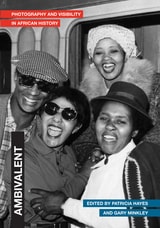
Ambivalent
Photography and Visibility in African HistoryPatricia Hayes
Ohio University Press, 2019
Going beyond photography as an isolated medium to engage larger questions and interlocking forms of expression and historical analysis, Ambivalent gathers a new generation of scholars based on the continent to offer an expansive frame for thinking about questions of photography and visibility in Africa. The volume presents African relationships with photography—and with visibility more generally—in ways that engage and disrupt the easy categories and genres that have characterized the field to date. Contributors pose new questions concerning the instability of the identity photograph in South Africa; ethnographic photographs as potential history; humanitarian discourse from the perspective of photographic survivors of atrocity photojournalism; the nuanced passage from studio to screen in postcolonial digital portraiture; and the burgeoning visual activism in West Africa.
As the contributors show, photography is itself a historical subject: it involves arrangement, financing, posture, positioning, and other kinds of work that are otherwise invisible. By moving us outside the frame of the photograph itself, by refusing to accept the photograph as the last word, this book makes photography an engaging and important subject of historical investigation. Ambivalent‘s contributors bring photography into conversation with orality, travel writing, ritual, psychoanalysis, and politics, with new approaches to questions of race, time, and postcolonial and decolonial histories.
Contributors: George Emeka Agbo, Isabelle de Rezende, Jung Ran Forte, Ingrid Masondo, Phindi Mnyaka, Okechukwu Nwafor, Vilho Shigwedha, Napandulwe Shiweda, Drew Thompson
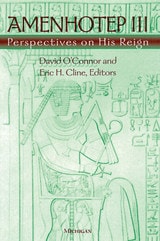
Amenhotep III
Perspectives on His ReignDavid O'Connor and Eric H. Cline, Editors
University of Michigan Press, 2001
Amenhotep III: Perspectives on His Reign, edited by David O'Connor and Eric H. Cline consists of a series of essays on this complex individual and his reign. In addition to offering several provocative and ground-breaking essays, this volume serves as a compendium and sourcebook for hard-to-obtain details about the reign of Amenhotep III.
The volume begins with an overview of the pharaoh by Larry Berman: his life, his family, and the history of his reign. Betsy Bryan describes the historical antecedents of Amenhotep's reign. Ray Johnson deals first with the building activities of Amen-hotep III and then presents a study of his carved relief decoration, with particular emphasis on the tendencies towards "Atenism." Arielle Kozloff discusses a variety of small objects including cosmetic spoons, glass vessels, jewelry, and funerary equipment. David O'Connor discusses city planning, building functions, and aspects of religion in light of the contemporary Egyptian worldview. Bill Murnane's chapter on government is a fascinating glimpse of the system of government in place at the time. Extensive documentation is provided on the activities of Amenhotep in the Aegean and Anatolia, Mesopotamia, Nubia, and Syro-Palestine. The volume concludes with John Baines's chapter on the Amarna Age.
Amenhotep III: Perspectives on His Reign is a valuable contribution to pharaonic studies. It will be of interest to a wide range of scholars interested in Mediterranean literatures and cultures. It draws on literary, archaeological, and historical material to form an interdisciplinary study of a complex figure in pharaonic Egypt.
David O'Connor is Lila Acheson Wallace Professor of Ancient Egyptian Art, Institute of Fine Arts, New York University. Eric H. Cline is Assistant Professor of History, Xavier University.