Results by title
3745 books match the query 'Europe' and 292 start with a

A Room of His Own
A Literary-Cultural Study of Victorian ClublandBarbara Black
Ohio University Press, 0
A Room of His Own sheds light on the mysterious ways of male associational culture as it examines such topics as fraternity, sophistication, nostalgia, social capital, celebrity, gossip, and male professionalism. The story of clubland (and the literature it generated) begins with Britain’s military heroes home from the Napoleonic campaign and quickly turns to Dickens’s and Thackeray’s acrimonious Garrick Club Affair. It takes us to Richard Burton’s curious Cannibal Club and Winston Churchill’s The Other Club; it goes underground to consider Uranian desire and Oscar Wilde’s clubbing and resurfaces to examine the problematics of belonging in Trollope’s novels. The trespass of French socialist Flora Tristan, who cross-dressed her way into the clubs of Pall Mall, provides a brief interlude. London’s clubland—this all-important room of his own—comes to life as Barbara Black explores the literary representations of clubland and the important social and cultural work that this urban site enacts. Our present-day culture of connectivity owes much to nineteenth-century sociability and Victorian networks; clubland reveals to us our own enduring desire to belong, to construct imagined communities, and to affiliate with like-minded comrades.
A Sacred Kingdom
Bishops and the Rise of Frankish Kingship, 300-850Michael Edward Moore
Catholic University of America Press, 2011

A Saltire in the German Lands
Scottish Benedictine Monasteries in Germany 1575-1862Thomas McInally
Aberdeen University Press, 2017

A Short History of Bath
Richard Tames
Haus Publishing, 2027
This highly readable guide to Bath details the entire history of the historic city, from the Roman period to the present day, as well as its historic architecture, thermal springs, and other attractions.
Any time spent in Bath is a pleasure. The historic city buzzes with vitality and its designation as one of UNESCO's World Heritage Sites is confirmed by the annual arrival of some four million visitors from Britain and all over the world. Whereas most accounts of Bath's history focus on the Roman and Georgian periods, skipping over much of the rest, this short history offers a chronological survey of the entire span of Bath's existence, supplemented by lively accounts of its food, its fashions, its theatrical and artistic heritage, its music, and its memorials. Almost two-thirds of the city center is a conservation area, the largest in Britain. One in six of the city's houses was built before 1850, almost half before the twentieth century. The city's highlights include not only the Roman baths, the elegant Pump Room, the majestic abbey, and half a dozen museums, but also one of only four bridges in the world with shops on both sides and Britain's last remaining Georgian pleasure gardens. With the opening of the striking new Thermae Spa complex, Bath entered the twenty-first century by reasserting its original identity as a uniquely therapeutic location.

A Short History of Cambridge
Richard Tames
Haus Publishing, 2025
A Short History of Cambridge provides a narrative of the city and university, from the Middle Ages to the present day. Going beyond the world-renowned research attractions of Cambridge University, this revised paperback edition explores the vast cultural output of the town, from art and literature to theater and comedy. Richard Tames sheds light on the very origins of academia in the area, the intricate lives of the students and scholars who studied there, and how this community interacted with the townsfolk over the past eight hundred years.
Cambridge offers the splendor of King's College Chapel and the beauty of “the Backs” as well as outstanding collections of fans and fritillaries, sculpture and stained glass, and medieval coins and oriental manuscripts. Attractions include the world-class Fitzwilliam Museum and Botanic Gardens, quirky Kettle’s Yard, and museums devoted to archaeology, anthropology, zoology, earth sciences, polar research, and the history of science, plus Britain's oldest bookshop. Enter the world of “Bumps and Bedders” and learn why May Week is in June. This joyful history of the town to which more than eight million visitors flock every year will delight both readers familiar with the cobbles of Cambridge and those who have seen no further than the stained-glass windows of King’s College Chapel.

A Short History of Cambridge
Richard Tames
Haus Publishing, 2025
A Short History of Finland
Jonathan Clements
Haus Publishing, 2022
The modern nation of Finland is the heir to centuries of history, as a wilderness at the edge of early Europe, a borderland of the Swedish empire, and a Grand Duchy of tsarist Russia. And, as Jonathan Clements’s vivid, concise volume shows, it is a tale paved with oddities and excitements galore: from prehistoric reindeer herders to medieval barons, Christian martyrs to Viking queens, and, in the twentieth century, the war heroes who held off the Soviet Union against impossible odds.
Offering accounts of public artworks, literary giants, legends, folktales, and famous figures, Clements provides an indispensable portrait of this fascinating nation.
This updated edition includes expanded coverage on the Second World War, as well as new sections on Finns in America and Russia, the centenary of the republic, and Finland’s battle with COVID-19, right up to its historic application to join NATO.

A Short History of Parliament
1295-1642Faith Thompson
University of Minnesota Press, 1953
A Short History of Parliament was first published in 1953. Minnesota Archive Editions uses digital technology to make long-unavailable books once again accessible, and are published unaltered from the original University of Minnesota Press editions.
A Slave's Tale
Erik Christian Haugaard
University of Minnesota Press, 2013
A Slave’s Tale, the sequel to Hakon of Rogen’s Saga, is told from the point of view of a slave girl, Helga, who stows away on the longship when Hakon, the young Viking chieftain, sets sail for France on a voyage to return Rark, a freed slave, to his homeland. The voyagers’ journey is perilous—they narrowly escape capture by an invading fleet, and their ship is severely damaged by a storm. Upon reaching France—where the Vikings are now hated, not feared—only tragedy ensues.
A Social History of Modern Art, Volume 2
Art in an Age of Bonapartism, 1800-1815Albert Boime
University of Chicago Press, 1990
Heavily illustrated, this volume is an invaluable social history of modern art during the Napoleonic era.
Stimulating and informative, this volume will become a valuable resource for faculty and undergraduates.—R. W. Liscombe, Choice
A Socialist History of the French Revolution
Jean Jaurés
Pluto Press, 2021
Jean Jaurès was the celebrated French Socialist Party leader, assassinated in 1914 for trying to use diplomacy and industrial action to prevent the outbreak of war. Published just a few years before his death, his magisterial A Socialist History of the French Revolution has endured for over a century.
Written in the midst of his activities as leader of the Socialist Party and editor of its newspaper, L'Humanite, Jaurès intended the book to serve as both a guide and an inspiration to political activity; even now it can serve to do just that.
Jaurès's verve, originality, and willingness to criticize all players in this epic drama make this a truly moving addition to the shelf of great books on the French Revolution. Mitchell Abidor's abridged translation of Jaurès's original six volumes makes this exceptional work truly accessible to an Anglophone audience.
A Stricken Field
A NovelMartha Gellhorn
University of Chicago Press, 2011
Martha Gellhorn was one of the first—and most widely read—female war correspondents of the twentieth century. She is best known for her fearless reporting in Europe before and during WWII and for her brief marriage to Ernest Hemingway, but she was also an acclaimed novelist.
A Suburb of Europe
Nineteenth-Century Polish Approaches to Western CivilizationJerzy Jedlicki
Central European University Press, 2000
In this lively and original book, the distinguished Polish historian Jerzy Jedlicki tells the story of a century-long Polish dispute over the merits and demerits of the Western model of liberal progress and industrial civilization.
As in several countries of Europe, also in Poland, intellectuals--conservatives, liberals, and (later) socialists--quarrelled about whether such a model would suit and benefit their nation, or whether it would spell the ruin of its distinctive cultural features.
This heated debate revolved around several pairs of opposing ideas: native cultures v. cosmopolitan civilization; natural v. artificial ways of economic development; Christian morals v. capitalist laissez-faire; traditional customs v. mobile society; romanticism v. scientism, and so on. It is these various aspects of the main issue which the author analyzes and links together here. He describes how difficult and painful the process of modernization was in a nation deprived of its political independence and cultural autonomy.

A Suitable Enemy
Racism, Migration and Islamophobia in EuropeLiz Fekete
Pluto Press, 2009
Liz Fekete is a leading authority on issues of racism, Islamophobia and national security legislation. A Suitable Enemy draws on sixteen years of research to present a comprehensive overview of EU immigration, asylum, race and security policies.
Fekete argues that at the same time as the EU introduces selective migration policies, it closes its borders against asylum seekers who were the first victims of the growth of the security state which now embraces Muslims. She explores the way in which anti-terrorist legislation has been used to evict undesirable migrants, how deportation policies commodify and de-humanise the most vulnerable and how these go hand in hand with evolving forms of racism, particularly Islamophobia.
At the heart of the book is an examination of xeno-racism -- a non-colour coded form of institutionalised racism -- where migrants who do not assimilate, or who are believed to be incapable of assimilation, are excluded.
A Surgical Temptation
The Demonization of the Foreskin and the Rise of Circumcision in BritainRobert Darby
University of Chicago Press, 2005
Why Britain adopted a practice it had traditionally abhorred and then abandoned it after only two generations is the subject of A Surgical Temptation. Robert Darby reveals that circumcision has always been related to the question of how to control male sexuality. This study explores the process by which the male genitals, and the foreskin especially, were pathologized, while offering glimpses into the lives of such figures as James Boswell, John Maynard Keynes, and W. H. Auden. Examining the development of knowledge about genital anatomy, concepts of health, sexual morality, the rise of the medical profession, and the nature of disease, Darby shows how these factors transformed attitudes toward the male body and its management and played a vital role in the emergence of modern medicine.
A Tale of Two Capitalisms
Sacred Economics in Nineteenth-Century BritainSupritha Rajan
University of Michigan Press, 2015
A Tale of Two Murders
Passion and Power in Seventeenth-Century FranceJames R. Farr
Duke University Press, 2005
James R. Farr reveals the Giroux affair not only as a riveting murder mystery but also as an illuminating point of entry into the dynamics of power, justice, and law in seventeenth-century France. Drawing on the voluminous trial records, Farr uses Giroux’s experience in the court system to trace the mechanisms of power—both the formal power vested by law in judicial officials and the informal power exerted by the nobility through patron-client relationships. He does not take a position on Giroux’s guilt or innocence. Instead, he allows readers to draw their own conclusions about who did what to whom on that ill-fated evening in 1638.

A Tale of Two Villages
Coerced Modernization in the East European CountrysideAlina Mungiu-Pippidi
Central European University Press, 2010
A Taste for Provence
Helen Lefkowitz Horowitz
University of Chicago Press, 2016
In A Taste for Provence, historian Helen Lefkowitz Horowitz digs into this question and spins a wonderfully appealing tale of how Provence became Provence. The region had previously been regarded as a backwater and known only for its Roman ruins, but in the postwar era authors, chefs, food writers, visual artists, purveyors of goods, and travel magazines crafted a new, alluring image for Provence. Soon, the travel industry learned that there were many ways to roam—and some even involved sitting still. The promise of longer stays where one cooked fresh food from storied outdoor markets became desirable as American travelers sought new tastes and unadulterated ingredients.
Even as she revels in its atmospheric, cultural, and culinary attractions, Horowitz demystifies Provence and the perpetuation of its image today. Guiding readers through books, magazines, and cookbooks, she takes us on a tour of Provence pitched as a new Eden, and she dives into the records of a wide range of visual media—paintings, photographs, television, and film—demonstrating what fueled American enthusiasm for the region. Beginning in the 1970s, Provence—for a summer, a month, or even just a week or two—became a dream for many Americans. Even today as a road well traveled, Provence continues to enchant travelers, armchair and actual alike.

A Twentieth Century Prophet
Oscar Jaszi, 1875-1957György Litván
Central European University Press, 2006
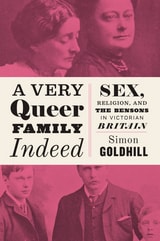
A Very Queer Family Indeed
Sex, Religion, and the Bensons in Victorian BritainSimon Goldhill
University of Chicago Press, 2016
So begins A Very Queer Family Indeed, which introduces us to the extraordinary Benson family. Edward White Benson became Archbishop of Canterbury at the height of Queen Victoria’s reign, while his wife, Mary, was renowned for her wit and charm—the prime minister once wondered whether she was “the cleverest woman in England or in Europe.” The couple’s six precocious children included E. F. Benson, celebrated creator of the Mapp and Lucia novels, and Margaret Benson, the first published female Egyptologist.
What interests Simon Goldhill most, however, is what went on behind the scenes, which was even more unusual than anyone could imagine. Inveterate writers, the Benson family spun out novels, essays, and thousands of letters that open stunning new perspectives—including what it might mean for an adult to kiss and propose marriage to a twelve-year-old girl, how religion in a family could support or destroy relationships, or how the death of a child could be celebrated. No other family has left such detailed records about their most intimate moments, and in these remarkable accounts, we see how family life and a family’s understanding of itself took shape during a time when psychoanalysis, scientific and historical challenges to religion, and new ways of thinking about society were developing. This is the story of the Bensons, but it is also more than that—it is the story of how society transitioned from the high Victorian period into modernity.
A View of Venice
Portrait of a Renaissance CityKristin Love Huffman, editor
Duke University Press, 2024
Contributors. Karen-edis Barzman, Andrea Bellieni, Patricia Fortini Brown, Valeria Cafà, Stanley Chojnacki, Tracy E. Cooper, Giada Damen, Julia A. DeLancey, Piero Falchetta, Ludovica Galeazzo, Maartje van Gelder, Jonathan Glixon, Richard Goy, Anna Christine Swartwood House, Kristin Love Huffman, Holly Hurlburt, Claire Judde de Larivière, Blake de Maria, Martina Massaro, Cosimo Monteleone, Monique O’Connell, Mary Pardo, Giorgio Tagliaferro, Saundra Weddle, Bronwen Wilson, Rangsook Yoon
A Violent Peace
Media, Truth, and Power at the League of NationsCarolyn N. Biltoft
University of Chicago Press, 2021
An exploration of instability in information systems, the allure of fascism, and the contradictions at the heart of a global modernity, A Violent Peace paints a rich portrait of the emergence of the age of information—and all its attendant problems.
A Vital Frontier
Water Insurgencies in EuropeAndrea Muehlebach
Duke University Press, 2023

A Voice in Their Own Destiny
Reagan, Thatcher, and Public Diplomacy in the Nuclear 1980sAnthony M. Eames
University of Massachusetts Press, 2023
On June 8, 1982, Ronald Reagan delivered a historic address to the British Parliament, promising that the United States would give people around the world “a voice in their own destiny” in the struggle against Soviet totalitarianism. While British Prime Minister Margaret Thatcher celebrated Reagan’s visit and thanked him for putting “freedom on the offensive,” over 100,000 Britons marched from Hyde Park to Trafalgar Square to protest his arrival and call for nuclear disarmament. Reagan’s homecoming was equally eventful, with 1,000,000 protesters marking his return with a rally for nuclear disarmament in Central Park—the largest protest in American history up to that point.
Employing a wide range of previously unexamined primary sources, Anthony M. Eames demonstrates how the Reagan and Thatcher administrations used innovations in public diplomacy to build back support for their foreign policy agendas at a moment of widespread popular dissent. A Voice in Their Own Destiny traces how competition between the governments of Reagan and Thatcher, the Anglo-American antinuclear movement, and the Soviet peace offensive sparked a revolution in public diplomacy.
A Weak Woman in a Strong Battle
Women and Public Execution in Early Modern EnglandJennifer Lillian Lodine-Chaffey
University of Alabama Press, 2022
A scholarly study of how women’s executions were staged, interpreted, and recorded in Renaissance England
A Weak Woman in a Strong Battle: Women and Public Execution in Early Modern England provides critical insights on representations of women on the scaffold, focusing on how female victims and those writing about them constructed meaning from the ritual. Jennifer Lodine-Chaffey draws on a wide range of genres, from accounts of martyrdom to dramatic works, to explore not only the words of women executed in Tudor and Stuart England, but also the ways that writers represented female bodies as markers of penitence or deviance.
A significant part of the execution spectacle—one used to assess the victim’s proper acceptance of death and godly repentance—was the final speech offered at the foot of the gallows or before the pyre. To ensure their final words held value for audiences, women adopted conventionally gendered language and positioned themselves as subservient and modest. The reception of women’s speeches, Lodine-Chaffey argues, depended on their performances of accepted female behaviors and language as well as physical signs of interior regeneration. Indeed, when women presented themselves or were represented as behaving in stereotypically feminine and virtuous ways, they were able to offer limited critiques of their fraught positions in society.
Just as important as their words, though, were the depictions of women’s bodies. The executed woman’s body, Lodine-Chaffey contends, functioned as a text, scrutinized by witnesses and readers for markers of innocence or guilt. The intense focus on the words and bodies of women facing execution during this period, Lodine-Chaffey argues, became a catalyst for a more thorough interest in and understanding of women’s roles not just as criminals but as subjects
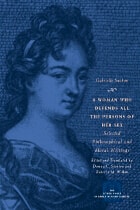
A Woman Who Defends All the Persons of Her Sex
Selected Philosophical and Moral WritingsGabrielle Suchon
University of Chicago Press, 2010
During the oppressive reign of Louis XIV, Gabrielle Suchon (1632–1703) was the most forceful female voice in France, advocating women’s freedom and self-determination, access to knowledge, and assertion of authority. This volume collects Suchon’s writing from two works—Treatise on Ethics and Politics (1693) and On the Celibate Life Freely Chosen; or, Life without Commitments (1700)—and demonstrates her to be an original philosophical and moral thinker and writer.
Suchon argues that both women and men have inherently similar intellectual, corporeal, and spiritual capacities, which entitle them equally to essentially human prerogatives, and she displays her breadth of knowledge as she harnesses evidence from biblical, classical, patristic, and contemporary secular sources to bolster her claim. Forgotten over the centuries, these writings have been gaining increasing attention from feminist historians, students of philosophy, and scholars of seventeenth-century French literature and culture. This translation, from Domna C. Stanton and Rebecca M. Wilkin, marks the first time these works will appear in English.
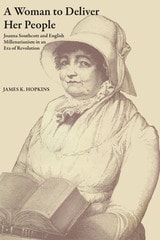
A Woman to Deliver Her People
Joanna Southcott and English Millenarianism in an Era of RevolutionBy James K. Hopkins
University of Texas Press, 1982
The Second Coming of Christ has been prophesied many times through the centuries but seldom by a figure so fascinating as Joanna Southcott (1750–1814), the domestic servant who at the age of forty-two declared that God had chosen her to announce His return. A Woman to Deliver Her People is the most comprehensive study of this remarkable woman and her movement yet written.
Dramatic social and political changes of the late eighteenth century—among them the revolutions in America and France—had a profound effect on the attitudes of English men and women at all levels of society. With events so far outside the range of ordinary experience, both the educated and the uneducated turned to the prophetic books of the Bible, seeking solace and explanation. A number of prophets and prophetesses appeared, claiming to have a special understanding of the biblical texts and offering startling new revelations which had been disclosed to them by God. The greatest and most influential of these was Joanna Southcott, who attracted tens of thousands of followers from the West Country, London, the Midlands, and the industrial North. Her "spiritual communications" filled some sixty-five books and pamphlets from 1801 until her death.
Most contemporary observers dismissed Southcott as a fanatic, and she was frequently the subject of caricature and ridicule. James Hopkins attempts to remedy this distortion by examining Southcott's life and the millenarian movement she led within the context of the social, political, and economic crises of the period. By tracing the psychological and popular roots of Southcott's piety, and casting her appeal against the backdrop of a revolutionary age, Hopkins not only vividly portrays the life of this fascinating woman but also offers a new perspective on the mentality of ordinary English men and women during the years of their transformation into a working class.

A World in Flames
A Concise Military History of World War IIMartha Byrd
University of Alabama Press, 2008
An essential, accessible guide to the greatest conflict in human history.
A World in Flames by Martha Byrd offers a clear, compelling, and comprehensive chronicle of World War II, guiding readers through the defining battles, strategies, and turning points that reshaped the modern world. Emphasizing the military history of the conflict, Byrd structures the narrative as a battle‑by‑battle survey, covering major campaigns including Stalingrad, Omaha Beach, and the Battle of the Atlantic, each presented with clarity and precision.
Beginning with the prelude to war and the rising tensions across Europe and Asia, the book traces Germany’s swift subjugation of Holland, Belgium, and France before shifting to Britain’s determined resistance. As the conflict expands, Byrd explores Japan’s entry into the war, the rapid advances across the Pacific, and the United States’ pivotal role in reversing Axis momentum.
Byrd’s accessible style makes complex military operations understandable without sacrificing depth, offering readers both a broad overview and meaningful detail. Maps, campaign analyses, and vivid summaries of naval, air, and ground operations provide context for the global scale of the conflict. From the brutal Eastern Front to the island‑hopping campaigns of the Pacific, the book highlights the strategic decisions and human costs that defined the war’s progression.
Concluding with the collapse of Axis power and the war’s final climactic battles in Europe and the Pacific, A World in Flames stands as an excellent introduction for readers seeking a concise but thorough account of World War II—one praised for its balance of readability, accuracy, and narrative drive.

A history of the French in London
liberty, equality, opportunityVolume editor Debra Kelly and Martyn Cornick
University of London Press, 2013

AIDS in Industrialized Democracies
Passions, Politics, and PoliciesBayer, Ronald
Rutgers University Press, 1992
In the ten years since the first cases of AIDS were reported, the disease has spread around the world. Every country has had to come up with policies suited to its own conditions, economy, culture, and institutions. The differences among their approaches are striking. This volume, the first international comprehensive comparison of responses to AIDS, is a unique guide to the world's most urgent public health crisis.
Sixteen leading experts in public health, social science, government, and public policy from USA, Canada, Germany, Australia, Spain, Britain, France, the Netherlands, Denmark, Sweden, and Japan candidly recount and analyze the responses of their own nations and comment on the lessons that can be drawn from each country's experience. For each country, they look critically at the tragic statistics of AIDS incidence; the circumstances of AIDS's first appearance; public health traditions of mandatory screening, contact tracing, and quarantine; attitudes toward drug abuse, homosexuality, sex education; publicity about AIDS; legal and customary protections of civil rights, minority groups, medical confidentiality; access to health care and insurance; and the interplay of formal and informal interest groups in shaping policy. The spectrum of AIDS policy ranges from severe "contain-and-control" programs to much more liberal plans based on education, cooperation, and inclusion.
No matter what policy a nation has constructed to deal with AIDS, the coming decade will test how well that policy conforms to democratic ideals. By scrutinizing the responses to AIDS so far, this book aims to give countries around the world a chance to learn from each others' mistakes and triumphs. It will be essential reading for all students and professionals in public health and public policy.

Abandoned Women
Rewriting the Classics in Dante, Boccaccio, and ChaucerSuzanne Hagedorn
University of Michigan Press, 2003
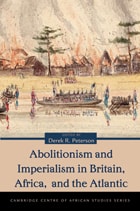
Abolitionism and Imperialism in Britain, Africa, and the Atlantic
Derek R. Peterson
Ohio University Press, 2010
The abolition of the slave trade is normally understood to be the singular achievement of eighteenth-century British liberalism. Abolitionism and Imperialism in Britain, Africa, and the Atlantic expands both the temporal and the geographic framework in which the history of abolitionism is conceived. Abolitionism was a theater in which a variety of actors—slaves, African rulers, Caribbean planters, working-class radicals, British evangelicals, African political entrepreneurs—played a part. The Atlantic was an echo chamber, in which abolitionist symbols, ideas, and evidence were generated from a variety of vantage points. These essays highlight the range of political and moral projects in which the advocates of abolitionism were engaged, and in so doing it joins together geographies that are normally studied in isolation.
Where empires are often understood to involve the government of one people over another, Abolitionism and Imperialism shows that British values were formed, debated, and remade in the space of empire. Africans were not simply objects of British liberals’ benevolence. They played an active role in shaping, and extending, the values that Britain now regards as part of its national character. This book is therefore a contribution to the larger scholarship about the nature of modern empires.
Contributors: Christopher Leslie Brown, Seymour Drescher, Jonathon Glassman, Boyd Hilton, Robin Law, Phillip D. Morgan, Derek R. Peterson, John K. Thornton
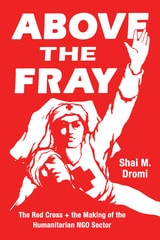
Above the Fray
The Red Cross and the Making of the Humanitarian NGO SectorShai M. Dromi
University of Chicago Press, 2020
Drawing on archival research, Dromi traces the genesis of the Red Cross to a Calvinist movement working in mid-nineteenth-century Geneva. He shows how global humanitarian policies emerged from the Red Cross founding members’ faith that an international volunteer program not beholden to the state was the only ethical way to provide relief to victims of armed conflict. By illustrating how Calvinism shaped the humanitarian field, Dromi argues for the key role belief systems play in establishing social fields and institutions. Ultimately, Dromi shows the immeasurable social good that NGOs have achieved, but also points to their limitations and suggests that alternative models of humanitarian relief need to be considered.

Abraham Lincoln and Robert Burns
Connected Lives and LegendsFerenc Morton Szasz
Southern Illinois University Press, 2008
Today the images of Robert Burns and Abraham Lincoln are recognized worldwide, yet few are aware of the connection between the two. In Abraham Lincoln and Robert Burns: Connected Lives and Legends, author Ferenc Morton Szasz reveals how famed Scots poet Robert Burns—and Scotland in general—influenced the life and thought of one of the most beloved and important U.S. presidents and how the legends of the two men became intertwined after their deaths. This is the first extensive work to link the influence, philosophy, and artistry of these two larger-than-life figures.
Lacking a major national poet of their own in the early nineteenth century, Americans in the fledgling frontier country ardently adopted the poignant verses and songs of Scotland’s Robert Burns. Lincoln, too, was fascinated by Scotland’s favorite son and enthusiastically quoted the Scottish bard from his teenage years to the end of his life. Szasz explores the ways in which Burns’s portrayal of the foibles of human nature, his scorn for religious hypocrisy, his plea for nonjudgmental tolerance, and his commitment to social equality helped shape Lincoln’s own philosophy of life. The volume also traces how Burns’s lyrics helped Lincoln develop his own powerful sense of oratorical rhythm, from his casual anecdotal stories to his major state addresses.
Abraham Lincoln and Robert Burns connects the poor-farm-boy upbringings, the quasi-deistic religious views, the shared senses of destiny, the extraordinary gifts for words, and the quests for social equality of two respected and beloved world figures. This book is enhanced by twelve illustrations and two appendixes, which include Burns poems Lincoln particularly admired and Lincoln writings especially admired in Scotland.
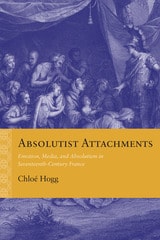
Absolutist Attachments
Emotion, Media, and Absolutism in Seventeenth-Century FranceChloé Hogg
Northwestern University Press, 2019
In Absolutist Attachments, Chloé Hogg uncovers the affective and media connections that shaped Louis XIV’s absolutism. Studying literature, painting, engravings, correspondence, and the emerging periodic press, Hogg diagnoses the emotions that created absolutism’s feeling subjects and publics.
Louis XIV’s subjects explored new kinds of affective relations with their sovereign, joining with the king in acts of aesthetic judgment, tender feeling, or the “newsiness” of emerging print news culture. Such alternative modes of adhesion countered the hegemonic model of kingship upheld by divine right, reason of state, or corporate fidelities and privileges with subject-driven attachments and practices. Absolutist Attachments discovers absolutism’s alternative political and cultural legacy—not the spectacle of an unbound king but the binding connections of his subjects.
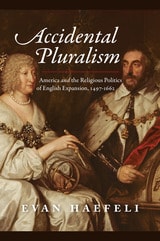
Accidental Pluralism
America and the Religious Politics of English Expansion, 1497-1662Evan Haefeli
University of Chicago Press, 2021
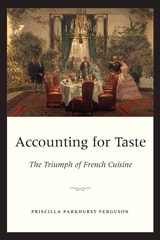
Accounting for Taste
The Triumph of French CuisinePriscilla Parkhurst Ferguson
University of Chicago Press, 2004
This momentous culinary journey begins with Ancien Régime cookbooks and ends with twenty-first-century cooking programs. It takes us from Carême, the "inventor" of modern French cuisine in the early nineteenth century, to top chefs today, such as Daniel Boulud and Jacques Pépin. Not a history of French cuisine, Accounting for Taste focuses on the people, places, and institutions that have made this cuisine what it is today: a privileged vehicle for national identity, a model of cultural ascendancy, and a pivotal site where practice and performance intersect. With sources as various as the novels of Balzac and Proust, interviews with contemporary chefs such as David Bouley and Charlie Trotter, and the film Babette's Feast, Ferguson maps the cultural field that structures culinary affairs in France and then exports its crucial ingredients. What's more, well beyond food, the intricate connections between cuisine and country, between local practice and national identity, illuminate the concept of culture itself.
To Brillat-Savarin's famous dictum—"Animals fill themselves, people eat, intelligent people alone know how to eat"—Priscilla Ferguson adds, and Accounting for Taste shows, how the truly intelligent also know why they eat the way they do.
“Parkhurst Ferguson has her nose in the right place, and an infectious lust for her subject that makes this trawl through the history and cultural significance of French food—from French Revolution to Babette’s Feast via Balzac’s suppers and Proust’s madeleines—a satisfying meal of varied courses.”—Ian Kelly, Times (UK)

Accusatory Practices
Denunciation in Modern European History, 1789-1989Edited by Sheila Fitzpatrick and Robert Gellately
University of Chicago Press, 1997
"This is a fascinating and highly original exploration of a familiar, though poorly understood, phenomenon of modern societies in general and totalitarian systems in particular. From the French Revolution to the NKVD, Gestapo, and Stasi, denunciation is analyzed both as a function of political surveillance and as deeply rooted in the social practices of community and the workplace. The book represents a refreshing amalgam of deeply archival research and theoretical rigor."—Norman M. Naimark, Stanford University
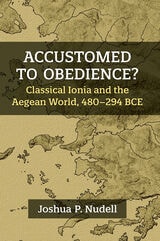
Accustomed to Obedience?
Classical Ionia and the Aegean World, 480–294 BCEJoshua P. Nudell
University of Michigan Press, 2023
This book offers a clear and accessible narrative of the period between the Persian Wars and the wars of the early Hellenistic period, two nominal liberations of the region. The volume complements existing histories of Classical Greece. Close inspection reveals that the Ionians were active partners in the imperial endeavor, even as imperial competition constrained local decision-making and exacerbated local and regional tensions. At the same time, the book offers interventions on critical issues related to Ionia such as the Athenian conquest of Samos, rhetoric about the freedom of the Greeks, the relationship between Ionian temple construction and economic activity, the status of the Panionion, Ionian poleis and their relationship with local communities beyond the circle of the dodecapolis, and the importance of historical memory to our understanding of ancient Greece. The result is a picture of an Aegean world that is more complex and less beholden narratives that give primacy to the imperial actors at the expense of local developments.

Acolytes of Nature
Defining Natural Science in Germany, 1770-1850Denise Phillips
University of Chicago Press, 2012
Although many of the practical and intellectual traditions that make up modern science date back centuries, the category of “science” itself is a relative novelty. In the early eighteenth century, the modern German word that would later mean “science,” naturwissenschaft, was not even included in dictionaries. By 1850, however, the term was in use everywhere. Acolytes of Nature follows the emergence of this important new category within German-speaking Europe, tracing its rise from an insignificant eighteenth-century neologism to a defining rallying cry of modern German culture.
Today’s notion of a unified natural science has been deemed an invention of the mid-nineteenth century. Yet what Denise Phillips reveals here is that the idea of naturwissenschaft acquired a prominent place in German public life several decades earlier. Phillips uncovers the evolving outlines of the category of natural science and examines why Germans of varied social station and intellectual commitments came to find this label useful. An expanding education system, an increasingly vibrant consumer culture and urban social life, the early stages of industrialization, and the emergence of a liberal political movement all fundamentally altered the world in which educated Germans lived, and also reshaped the way they classified knowledge.

Adam Ferguson
David Allan
Aberdeen University Press, 2007
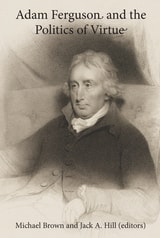
Adam Ferguson and the Politics of Virtue
Jack A. Hill and Michael Brown
Aberdeen University Press, 2023

Administrative Law in Central and Eastern Europe
Denis J. Galligan
Central European University Press, 1998
Adoption and Multiculturalism
Europe, the Americas, and the PacificJenny Heijun Wills, Tobias Hübinette, and Indigo Willing, Editors
University of Michigan Press, 2020
The contributors represent a wide range of disciplines, cultures, and connections in relation to the adoption constellation, bringing perspectives from Europe (including Scandinavia), Canada, the United States, and Australia. The book brings together the various methodologies of literary criticism, history, anthropology, sociology, and cultural theory to demonstrate the multifarious and robust ways that adoption and multiculturalism might be studied and considered. Edited by three transnational and transracial adoptees, Adoption and Multiculturalism: Europe, the Americas, and the Pacific offers bold new scholarship that revises popular notions of transracial and transnational adoption as practice and phenomenon.
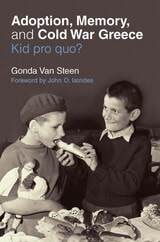
Adoption, Memory, and Cold War Greece
Kid pro quo?Gonda Van Steen
University of Michigan Press, 2019
This book presents a committed quest to unravel and document the postwar adoption networks that placed more than 3,000 Greek children in the United States, in a movement accelerated by the aftermath of the Greek Civil War and by the new conditions of the global Cold War. Greek-to-American adoptions and, regrettably, also their transactions and transgressions, provided the blueprint for the first large-scale international adoptions, well before these became a mass phenomenon typically associated with Asian children. The story of these Greek postwar and Cold War adoptions, whose procedures ranged from legal to highly irregular, has never been told or analyzed before. Adoption, Memory, and Cold War Greece answers the important questions: How did these adoptions from Greece happen? Was there any money involved? Humanitarian rescue or kid pro quo? Or both? With sympathy and perseverance, Gonda Van Steen has filled a decades-long gap in our understanding, and provided essential information to the hundreds of adoptees and their descendants whose lives are still affected today.
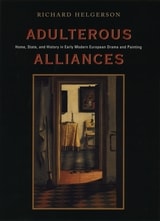
Adulterous Alliances
Home, State, and History in Early Modern European Drama and PaintingRichard Helgerson
University of Chicago Press, 2000
Adventures in the Archaic
Primitivism, Degrowth, and the French Social Sciences, 1945–1975Ryan L. Allen
University of Chicago Press, 2026
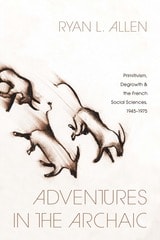
We tend to associate primitivism with the nostalgic idealization of origins, often aimed at parts of the world that are viewed as closer to that idealized past than modern post-industrial society. Primitivist impulses still exist in popular culture, whether in paleo diets or returns to foraging, and they can also be seen in intellectual and political circles in debates around the possibility of degrowth. In this book, historian Ryan L. Allen examines primitivism anew through four fascinating figures: Georges Bataille, Henri Lefebvre, Georges Devereux, and Mircea Eliade.
In the postwar period, Allen shows, the French social sciences reappraised the primitive and archaic from anthropological, sociological, psychiatric, and religious angles. These four thinkers sought past alternatives to midcentury hypermodernization and capitalist excess. They put forth trenchant critiques of contemporary society and sought in the archaic past a way to imagine a more sustainable future. Adventures in the Archaic rehabilitates these thinkers, showing how their critique of growth and consumerism was nourished by an engagement with primitive cultures as potential sources of cultural and ecological wisdom. As we confront planetary crisis, Allen suggests, there is still much we can learn from these iconoclastic approaches.

Advertising and Identity in Europe
The I of the BeholderRobin Warner
Intellect Books, 2013
Aesthetic Citizenship
Immigration and Theater in Twenty-First-Century ParisEmine Fisek
Northwestern University Press, 2017
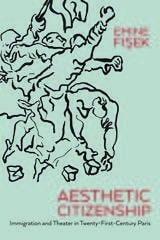
From neighborhood associations and humanitarian alliances to arts organizations both large and small, Fisek traces how theater has emerged as a practice with the perceived capacity to address questions regarding immigrant rights, integration, and experience. In Aesthetic Citizenship, she explores how the stage, one of France’s most evocative cultural spaces, has come to play a role in contemporary questions about immigration, citizenship and national identity. Yet Fişek’s insightful research also illuminates Paris’s broader historical, political, and cultural through-lines that continue to shape the relationship between theater and migration in France.
By focusing on how French public discourses on immigration are not only rendered meaningful but also inhabited and modified in the context of activist and arts practice, Aesthetic Citizenship seeks to answer the fundamental question: is theater a representational act or can it also be a transformative one?