Results by title
1106 books match the query 'Memoirs' and 108 start with a

Appalachia North
A MemoirMatthew Ferrence
West Virginia University Press, 2018
Appalachia North is the first book-length treatment of the cultural position of northern Appalachia—roughly the portion of the official Appalachian Regional Commission zone that lies above the Mason-Dixon line. For Matthew Ferrence this region fits into a tight space of not-quite: not quite “regular” America and yet not quite Appalachia.
Ferrence’s sense of geographic ambiguity is compounded when he learns that his birthplace in western Pennsylvania is technically not a mountain but, instead, a dissected plateau shaped by the slow, deep cuts of erosion. That discovery is followed by the diagnosis of a brain tumor, setting Ferrence on a journey that is part memoir, part exploration of geology and place. Appalachia North is an investigation of how the labels of Appalachia have been drawn and written, and also a reckoning with how a body always in recovery can, like a region viewed always as a site of extraction, find new territories of growth.
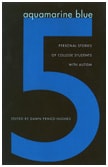
Aquamarine Blue 5
Personal Stories of College Students with AutismDawn Prince-Hughes
Ohio University Press, 2002
Rated Outstanding by the American Association of School Libraries
This is the first book to be written by autistic college students about the challenges they face. Aquamarine Blue 5 details the struggle of these highly sensitive students and shows that there are gifts specific to autistic students that enrich the university system, scholarship, and the world as a whole.
Dawn Prince-Hughes presents an array of writings by students who have been diagnosed with Asperger’s Syndrome or High-Functioning Autism, showing their unique ways of looking at and solving problems. In their own words, they portray how their divergent thinking skills could be put to great use if they were given an opportunity. Many such students never get the chance because the same sensitivity that gives them these insights makes the flicker of fluorescent lights and the sound of chalk on the board unbearable For simple—and easily remedied—reasons, we lose these students, who are as gifted as they are challenged.
Aquamarine Blue 5 is a showcase of the strength and resilient character of individuals with Asperger’s Syndrome. It will be an invaluable resource for those touched by this syndrome, their friends and families, and school administrators.

Archipelagoes of My South
Episodes in the Shaping of a Region, 1830–1965J. Mills Thornton III
University of Alabama Press, 2016
A collection of essays representing forty-five years of reflection on the central problems of southern history bound together by a common concern with defining the crucial interaction of race and class in the formation of southern politics and life
“The tourist archipelagoes of my South / are prisons, too, corruptible” writes the poet Derek Walcott. While Walcott refers to the islands of the Caribbean, the analogous idea of a land made into solitary islands by an imprisoned and inherited corruption is historian J. Mills Thornton III’s American South. The captivating essays in Archipelagoes of My South: Episodes in the Shaping of a Region, 1830–1965 address this overarching and underlying narrative of Alabama politics and the history of the South.
Highlighting events as significant as the role of social and economic conflict in the southern secession movement, various aspects of Reconstruction, and the role of the Ku Klux Klan in the politics of the 1920s, Thornton draws from various points in the southern past in an effort to identify and understand the sources of the region’s power. Moreover, each essay investigates its subject matter and peels back layers with an aim to clarify why the enormous diversity of the southern experience makes that power so great, all the while allowing the reader to see connections that would not otherwise be apparent.
Archipelagoes of My South gathers previously uncollected essays into a single volume covering the entire length and breadth of Thornton’s career. The author’s principal concerns have always been the arc of regional evolution and the significance of the local. Thus, the mechanisms of political and social change and the interrelationships across eras and generations are recurring themes in many of these essays.
Even those who have spent their entire lives in the South may be unaware of the fractured layers of history that lie beneath the landscape they inhabit. For those southern residents who seek to comprehend more of their own past, this landmark compilation of essays on Alabama and southern history endeavors to provide illumination and enlightenment.
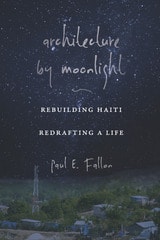
Architecture by Moonlight
Rebuilding Haiti, Redrafting a LifePaul E. Fallon
University of Missouri Press, 2015

Art for the Ladylike
An Autobiography through Other LivesWhitney Otto
The Ohio State University Press, 2021
In Art for the Ladylike, Whitney Otto limns the lives of eight pioneering women photographers—Sally Mann, Imogen Cunningham, Judy Dater, Ruth Orkin, Tina Modotti, Lee Miller, Madame Yvonne, and Grete Stern—to in turn excavate her own writer’s life. The result is an affecting exploration of what it means to be a woman, what it means to be an artist, and the perils and rewards of being both at once. In considering how feminism, career, and motherhood were entangled throughout her subjects’ lives as they tirelessly sought to render their visions and paved the way for others creating within the bounds of domesticity, Otto assesses her own struggles with balancing writing and the pulls of home life. Ultimately, she ponders the persistent question that artistic women face in a world that devalues women’s ambition: If what we love is what we are, how do those of us with multiple loves forge lives with room for everything?

Australian Adventure
Letters from an Ambassador's WifeBy Anne Clark
University of Texas Press, 1969
From August 1965 to February 1968, during his period of service in Australia, Ambassador Edward Clark traveled in that country as no other American and probably few Australians ever have. His wife, Anne Clark, traveled with him, then wrote her observations and impressions to friends and family in the United States.
Her letters, published for the first time in this volume, reveal the isolations and involvements as well as the opportunities and the pleasures of embassy life. The etiquette of official functions at times posed problems, as in the Clarks' first black-tie dinner with the Acting Governor General, where Mrs. Clark was supposed to curtsy. "Some Ambassadors feel strongly that the representative of the President of the United States should never bend his knee (or rather his wife's) to any man. Mrs. Battle, wife of our predecessor ... put the question directly to President Kennedy. His answer to her was, 'Curtsy you must, but keep a stiff upper knee.'"
Soon, Anne Clark realized that the routine of appearances and entertainments was constant: "I do not know when I will make peace with the schedule. I am a slave to the little black book that is my calendar."
In addition to the intricacies of embassy life, the Clarks encountered much that was unfamiliar—new people, almost a new language, new flowers, new animals—even a sky with its new moon upside down. But their warm hospitality and genuine interest in things Australian attracted friends throughout the continent. Figures from the government, the church, the diplomatic circle, and everyday life, plus well-known guests from home, all become known to the reader in this perceptive account of official life from the inside.

Autobiography of My Hungers
Rigoberto González
University of Wisconsin Press, 2019
Bill Whitehead Award for Lifetime Literary Achievement, Publishing Triangle
“Told in a series of revealing vignettes and poems, González’s Autobiography of my Hungers turns moments of need and want into revelations of truth and self-awareness, creating the portrait of an artist that is complex if not entirely complete.”—El Paso Times
“Through his provocative vignettes, González communicates a lifetime of struggle for affirmation and self-acceptance.”—Make/Shift

Autumn Equinox
Jabbour Douaihy
University of Arkansas Press, 2001
The diary begins with a view of an Israeli bombing in South Lebanon and ends with a description of refugee families fleeing to the mountain villages. Otherwise, except for allusions to what is going on in the capital, the Lebanese Civil War is far from the story, although its violence has never been far from this village. America, personified by a Lara who does not answer his letters, is a faraway land of nostalgia. The village is here, at the center of the young man’s narration, peopled by comic characters who seem to insist on their own unchanging selfhoods and to resist his attempts to be different.
The Civil War and the Occupation, the author seems to be saying, are not the only sources of turmoil. Violence and revenge have been part of the people’s consciousness, and people might indeed need to redefine themselves while at the same time adjusting to the environment.