Results by title
18316 books match the query 'United states' and 1658 start with a
Avenues of Faith
Shaping the Urban Religious Culture of Richmond, Virginia, 1900–1929Samuel C. Shepherd Jr
University of Alabama Press, 2001
Avenues of Faith documents how religion flourished in southern cities after the turn of the century and how a cadre of clergy and laity created a notably progressive religious culture in Richmond, Virginia. Famous as the former capital of the Confederacy, in Avenues of Faith Richmond emerges as a dynamic and growing industrial city invigorated by the social activism of its Protestants.
By examining six mainline white denominations—Episcopalians, Methodists, Presbyterians, Baptists, Disciples of Christ, and Lutherans—Samuel C. Shepherd Jr. emphasizes the extent to which the city fostered religious diversity, even as “blind spots” remained regarding Catholics, African Americans, Mormons, and Jews. Shepherd explores such topics as evangelism, interdenominational cooperation, the temperance campaign, the Sunday school movement, the international peace initiatives, and the expanding role of lay people of both sexes. He also notes the community’s widespread rejection of fundamentalism, a religious phenomenon almost automatically associated with the South, and shows how it nurtured social reform to combat a host of urban problems associated with public health, education, housing, women’s suffrage, prohibition, children, and prisons.
In lucid prose and with excellent use of primary sources, Shepherd delivers a fresh portrait of Richmond Protestants who embraced change and transformed their community, making it an active, progressive religious center of the New South.
[more]
Avenues of Transformation
Illinois's Path from Territory to StateJames A. Edstrom
Southern Illinois University Press, 2022
WINNER, 2023 Illinois State Historical Society Russell P. Strange Book of the Year Award!
A territory split by slavery, a state forged for union
Avenues of Transformation traces the surprising path, marked by shame, ambition, and will that led to Illinois’s admission to the Union in 1818. Historian James A. Edstrom guides the reader through this story by associating each stage of the narrative—the original statehood campaign, the passage of Illinois’s statehood-enabling act by Congress, and Illinois’s first constitutional convention—with the primary leaders in each of those episodes. The lives of these men—Daniel Pope Cook, Nathaniel Pope, and Elias Kent Kane—reflect the momentous tangle of politics, slavery, and geography. This history maps the drive for statehood in the conflict between nation and state, in the perpetuation of slavery, and in the sweep of water and commerce. It underscores the ways in which the Prairie State is uniquely intertwined—economically, socially, and politically—with every region of the Union: North, South, East, and West—and captures the compelling moment when Illinois statehood stood ready to more perfectly unify the nation.
This volume is the first full-length book in over a century to describe and analyze Illinois’s admission to the Union. It marks the first time that a historian has analyzed in detail the roll-call votes of the first state constitutional convention, seated evenly by pro- and antislavery delegates. Edstrom’s wit and prose weave a lively narrative of political ambition and human failure. Patiently crafted, Avenues of Transformation will be the first source for readers to turn to for gaining a better understanding of Illinois statehood.
[more]

Aviation's Golden Age
Portraits From 1920S And 1930SWilliam M. Leary
University of Iowa Press, 1989
[more]
Awakening to Race
Individualism and Social Consciousness in AmericaJack Turner
University of Chicago Press, 2012
The election of America’s first black president has led many to believe that race is no longer a real obstacle to success and that remaining racial inequality stems largely from the failure of minority groups to take personal responsibility for seeking out opportunities. Often this argument is made in the name of the long tradition of self-reliance and American individualism. In Awakening to Race, Jack Turner upends this view, arguing that it expresses not a deep commitment to the values of individualism, but a narrow understanding of them.
Drawing on the works of Ralph Waldo Emerson, Henry David Thoreau, Frederick Douglass, Ralph Ellison, and James Baldwin, Turner offers an original reconstruction of democratic individualism in American thought. All these thinkers, he shows, held that personal responsibility entails a refusal to be complicit in injustice and a duty to combat the conditions and structures that support it. At a time when individualism is invoked as a reason for inaction, Turner makes the individualist tradition the basis of a bold and impassioned case for race consciousness—consciousness of the ways that race continues to constrain opportunity in America. Turner’s “new individualism” becomes the grounds for concerted public action against racial injustice.
[more]

Awkward Rituals
Sensations of Governance in Protestant AmericaDana W. Logan
University of Chicago Press, 2022
A fresh account of early American religious history that argues for a new understanding of ritual.
In the years between the American Revolution and the Civil War, there was an awkward persistence of sovereign rituals, vestiges of a monarchical past that were not easy to shed. In Awkward Rituals, Dana Logan focuses our attention on these performances, revealing the ways in which governance in the early republic was characterized by white Protestants reenacting the hierarchical authority of a seemingly rejected king. With her unique focus on embodied action, rather than the more common focus on discourse or law, Logan makes an original contribution to debates about the relative completeness of America’s Revolution.
Awkward Rituals theorizes an under-examined form of action: rituals that do not feel natural even if they sometimes feel good. This account challenges common notions of ritual as a force that binds society and synthesizes the self. Ranging from Freemason initiations to evangelical societies to missionaries posing as sailors, Logan shows how white Protestants promoted a class-based society while simultaneously trumpeting egalitarianism. She thus redescribes ritual as a box to check, a chore to complete, an embarrassing display of theatrical verve. In Awkward Rituals, Logan emphasizes how ritual distinctively captures what does not change through revolution.
[more]
Axiomatics
Mathematical Thought and High ModernismAlma Steingart
University of Chicago Press, 2023
The first history of postwar mathematics, offering a new interpretation of the rise of abstraction and axiomatics in the twentieth century.
Why did abstraction dominate American art, social science, and natural science in the mid-twentieth century? Why, despite opposition, did abstraction and theoretical knowledge flourish across a diverse set of intellectual pursuits during the Cold War? In recovering the centrality of abstraction across a range of modernist projects in the United States, Alma Steingart brings mathematics back into the conversation about midcentury American intellectual thought. The expansion of mathematics in the aftermath of World War II, she demonstrates, was characterized by two opposing tendencies: research in pure mathematics became increasingly abstract and rarified, while research in applied mathematics and mathematical applications grew in prominence as new fields like operations research and game theory brought mathematical knowledge to bear on more domains of knowledge. Both were predicated on the same abstractionist conception of mathematics and were rooted in the same approach: modern axiomatics.
For American mathematicians, the humanities and the sciences did not compete with one another, but instead were two complementary sides of the same epistemological commitment. Steingart further reveals how this mathematical epistemology influenced the sciences and humanities, particularly the postwar social sciences. As mathematics changed, so did the meaning of mathematization.
Axiomatics focuses on American mathematicians during a transformative time, following a series of controversies among mathematicians about the nature of mathematics as a field of study and as a body of knowledge. The ensuing debates offer a window onto the postwar development of mathematics band Cold War epistemology writ large. As Steingart’s history ably demonstrates, mathematics is the social activity in which styles of truth—here, abstraction—become synonymous with ways of knowing.
[more]
Aztalan
Mysteries of an Ancient Indian TownRobert A. Birmingham and Lynne Goldstein
Wisconsin Historical Society Press, 2006
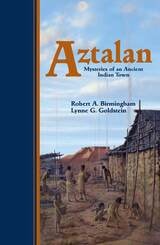
Aztalan has remained a mystery since the early nineteenth century when it was discovered by settlers who came to the Crawfish River, fifty miles west of Milwaukee. Who were the early indigenous people who inhabited this place? When did they live here? Why did they disappear?
Birmingham and Goldstein attempt to unlock some of the mysteries, providing insights and information about the group of people who first settled here in 1100 AD. Filled with maps, drawings, and photographs of artifacts, this small volume examines a time before modern Native American people settled in this area.
Birmingham and Goldstein attempt to unlock some of the mysteries, providing insights and information about the group of people who first settled here in 1100 AD. Filled with maps, drawings, and photographs of artifacts, this small volume examines a time before modern Native American people settled in this area.
[more]
Aztlán Arizona
Mexican American Educational Empowerment, 1968–1978Darius V. Echeverría
University of Arizona Press, 2014
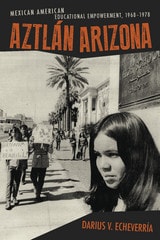
Aztlán Arizona is a history of the Chicano Movement in Arizona in the 1960s and 1970s. Focusing on community and student activism in Phoenix and Tucson, Darius V. Echeverría ties the Arizona events to the larger Chicano and civil rights movements against the backdrop of broad societal shifts that occurred throughout the country. Arizona’s unique role in the movement came from its (public) schools, which were the primary source of Chicano activism against the inequities in the judicial, social, economic, medical, political, and educational arenas.
The word Aztlán, originally meaning the legendary ancestral home of the Nahua peoples of Mesoamerica, was adopted as a symbol of independence by Chicano/a activists during the movement of the 1960s and 1970s. In an era when poverty, prejudice, and considerable oppositional forces blighted the lives of roughly one-fifth of Arizonans, the author argues that understanding those societal realities is essential to defining the rise and power of the Chicano Movement.
The book illustrates how Mexican American communities fostered a togetherness that ultimately modified larger Arizona society by revamping the educational history of the region. The concluding chapter outlines key Mexican American individuals and organizations that became politically active in order to address Chicano educational concerns. This Chicano unity, reflected in student, parent, and community leadership organizations, helped break barriers, dispel the Mexican American inferiority concept, and create educational change that benefited all Arizonans.
No other scholar has examined the emergence of Chicano Movement politics and its related school reform efforts in Arizona. Echeverría’s thorough research, rich in scope and interpretation, is coupled with detailed and exact endnotes. The book helps readers understand the issues surrounding the Chicano Movement educational reform and ethnic identity. Equally important, the author shows how residual effects of these dynamics are still pertinent today in places such as Tucson.
[more]