Results by title
5448 books match the query 'History and criticism' and 404 start with a
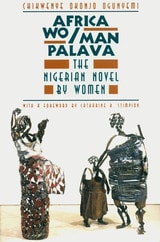
Africa Wo/Man Palava
The Nigerian Novel by WomenChikwenye Okonjo Ogunyemi
University of Chicago Press, 1995
Ogunyemi uses the novels to trace a Nigerian women's literary tradition that reflects an ideology centered on children and community. Of prime importance is the paradoxical Mammywata figure, the independent, childless mother, who serves as a basis for the new woman in these novels. Ogunyemi tracks this figure through many permutations, from matriarch to exile to woman writer, her multiple personalities reflecting competing loyalties—to self and other, children and nation. Such fragmented personalities characterize the postcolonial condition in their writing. Mapping geographies of pain and endurance, the work opens a space for addressing the palava between different groups of people. Valuable as the first sustained critical study of a substantial but little known body of literature, this book also counters the shortcomings of prevailing "masculinist" theories of black literature in a powerful narrative of the Nigerian world.
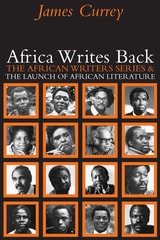
Africa Writes Back
The African Writers Series and the Launch of African LiteratureJames Currey
Ohio University Press, 2008
June 17, 2008, is the fiftieth anniversary of the publication of Chinua Achebe’s Things Fall Apart by Heinemann. This publication provided the impetus for the foundation of the African Writers Series in 1962 with Chinua Achebe as the editorial adviser.
Africa Writes Back: The African Writers Series and the Launch of African Literature captures the energy of literary publishing in a new and undefined field. Portraits of the leading characters and the many consultants and readers providing reports and advice to new and established writers make Africa Writes Back a stand-out book. James Currey’s voice and insights are an added bonus.
CONTENTS
Publishing and selling the African Writers Series
The African Writers Series Portfolio & George Hallett’s covers
Main dates for the African Writers Series
INTRODUCTION: The establishment of African Literature
Publishing Chinua Achebe
1. WRITERS FROM WEST AFRICA
Nigeria: The country where so much started
Negritude from Senegal to Cameroun
Magic & realism from Ghana, The Gambia & Sierra Leone
2. WRITERS FROM EASTERN AFRICA
Towards the oral & the popular in Kenya, Uganda & Tanzania
Publishing Ngugi
3. WRITERS FROM THE HORN & NORTH-EASTERN AFRICA
Emperors in Ethiopia
Publishing Nuruddin Farah
Arab authors in Egypt & Sudan
4. WRITERS FROM SOUTH AFRICA
Resistance in South Africa
Publishing Alex la Guma
Publishing Dennis Brutus
Publishing Bessie Head
Publishing Masizi Kunene
5. WRITERS FROM SOUTHERN AFRICAN
Guns & Guerrillas in Mozambique &Angola
Zambia Shall be Free
Death & detention in Malawi
The struggle to become Zimbabwe
Publishing Dambudzo Marechera
CONCLUSION: Is there still a role for the African Writers Series?
Africa in the Indian Imagination
Race and the Politics of Postcolonial CitationAntoinette Burton
Duke University Press, 2016
African American Political Thought
A Collected HistoryEdited by Melvin L. Rogers and Jack Turner
University of Chicago Press, 2021
While African American political thought is inextricable from the historical movement of American political thought, this volume stresses the individuality of Black thinkers, the transnational and diasporic consciousness, and how individual speakers and writers draw on various traditions simultaneously to broaden our conception of African American political ideas. This landmark volume gives us the opportunity to tap into the myriad and nuanced political theories central to Black life. In doing so, African American Political Thought: A Collected History transforms how we understand the past and future of political thinking in the West.
African American Satire
The Sacredly Profane NovelDarryl Dickson-Carr
University of Missouri Press, 2001
Satire's real purpose as a literary genre is to criticize through humor, irony, caricature, and parody, and ultimately to defy the status quo. In African American Satire, Darryl Dickson-Carr provides the first book-length study of African American satire and the vital role it has played. In the process he investigates African American literature, American literature, and the history of satire.
Dickson-Carr argues that major works by such authors as Rudolph Fisher, Ishmael Reed, Ralph Ellison, Langston Hughes, and George S. Schuyler should be read primarily as satires in order to avoid misinterpretation and to gain a greater understanding of their specific meanings and the eras in which they were written. He also examines the satirical rhetoric and ideological bases of complex works such as John Oliver Killens's The Cotillion and Cecil Brown's The Life and Loves of Mr. Jiveass Nigger—books that are currently out of print and that have received only scant critical attention since they were first published.
Beginning with the tradition of folk humor that originated in West Africa and was forcibly transplanted to the Americas through chattel slavery, Dickson-Carr focuses in each chapter on a particular period of the twentieth century in which the African American satirical novel flourished. He analyzes the historical contexts surrounding African American literature and culture within discrete crucial movements, starting with the Harlem Renaissance of the 1920s and ending in the present. He also demonstrates how the political, cultural, and literary ethos of each particular moment is manifested and contested in each text.
By examining these texts closely within their historical and ideological contexts, Dickson-Carr shows how African American satirical novels provide the reader of African American literature with a critique of popular ideologies seldom found in nonsatirical works. Providing a better understanding of what satire is and why it is so important for fulfilling many of the goals of African American literature, African American Satire will be an important addition to African American studies.
African American Travel Narratives from Abroad
Mobility and Cultural Work in the Age of Jim CrowGary Totten
University of Massachusetts Press, 2015
In this book, Gary Totten examines the global travel narratives of a diverse set of African American writers, including Ida B. Wells, Booker T. Washington, Matthew Henson, Jessie Redmon Fauset, and Zora Neale Hurston. While these writers deal with issues of identity in relation to a reimagined sense of self—in a way that we might expect to find in travel narratives—they also push against the constraints and conventions of the genre, reconsidering discourses of tourism, ethnography, and exploration. This book not only offers new insights about African American writers and mobility, it also charts the ideological distinctions and divergent agendas within this group of writers. Totten demonstrates how these travelers and their writings challenged dominant ideologies about African American experience, expression, and identity in a period of escalating racial violence. By setting these texts in their historical context and within the genre of travel writing, Totten presents a nuanced understanding of both popular and recovered work of the period.
African American Women and the Vote, 1837–1965
Ann D. Gordon
University of Massachusetts Press, 1997
Written by leading scholars of African American and women's history, the essays in this volume seek to reconceptualize the political history of black women in the United States by placing them “at the center of our thinking.” The book explores how slavery, racial discrimination, and gender shaped the goals that African American women set for themselves, their families, and their race and looks at the political tools at their disposal. By identifying key turning points for black women, the essays create a new chronology and a new paradigm for historical analysis. The chronology begins in 1837 with the interracial meeting of antislavery women in New York City and concludes with the civil rights movement of the 1960s.
The contributors focus on specific examples of women pursuing a dual ambition: to gain full civil and political rights and to improve the social conditions of African Americans. Together, the essays challenge us to rethink common generalizations that govern much of our historical thinking about the experience of African American women.
Contributors include Bettina Aptheker, Elsa Barkley Brown, Willi Coleman, Gerald R. Gill, Ann D. Gordon, Evelyn Brooks Higginbotham, Cynthia Neverdon-Morton, Martha Prescod Norman, Janice Sumler-Edmond, Rosalyn Terborg-Penn, and Bettye Collier-Thomas.
African American Writers and Classical Tradition
William W. Cook and James Tatum
University of Chicago Press, 2010
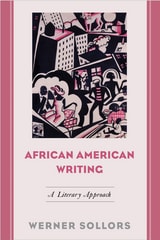
African American Writing
A Literary ApproachWerner Sollors
Temple University Press, 2016
Werner Sollors’ African American Writing takes a fresh look at what used to be called “Negro literature.” The essays collected here, ranging in topic from Gustavus Vassa/Olaudah Equiano to LeRoi Jones/Amiri Baraka, and in time from the Enlightenment to the Obama presidency, take a literary approach to black writing and present writers as readers and as intellectuals who were or are open to the world.
From W.E.B. Du Bois commenting on Richard Wagner and Elvis Presley, to Zora Neale Hurston attacking Brown v. Board of Ed. in a segregationist newspaper, to Charles Chesnutt’s effigy darkened for the black heritage postage stamp, Sollors alternates between close readings and broader cultural contextualizations to delineate the various aesthetic modes and intellectual exchanges that shaped a series of striking literary works.
Readers will make often-surprising discoveries in the authors’ writing and in their encounters and dialogues with others. The essays, accompanied by Winold Reiss’s pastels, Carl Van Vechten’s photographs, and other portraits, attempt to honor this important literature’s achievement, heterogeneity, and creativity.

African Intellectuals and Decolonization
Nicholas M. Creary
Ohio University Press, 2012

African Literature in the Twentieth Century
O.R. Dathorne
University of Minnesota Press, 1976
African Literature in the Twentieth Century was first published in 1976. Minnesota Archive Editions uses digital technology to make long-unavailable books once again accessible, and are published unaltered from the original University of Minnesota Press editions.
This paperback makes available the major part of Professor Dathorne's The Black Mind.It concentrates on the writings of Africans in various African and European languages and provides insight, both broad and deep, into the Black intellect. Professor Dathorne examines the literature of Africans as spoken or written in their local languages and in French, Portuguese, and English. This extensive survey and interpretation gives the reader a remarkable pathway to an understanding of the Black imagination and its relevance to thought and creativity throughout the world.
The author himself lived in Africa for ten years, and his view is not that of an outsider, since it is as a Black man that he speaks about Black people. Throughout the book, a major theme is the demonstration that, despite slavery and colonialism, Africans remained very close to their own cultures. Professor Dathorne shows that African writers may be, like some Afro-American writers, "marginal men," but that they are Black men and it is as Black men that they feel the nostalgia of their past and the corrosive influences of their present.
O. R. Dathorne is a member of the Department of Black Studies and of the Department of English at Ohio State University. He has taught at universities in Nigeria and Sierra Leone and served as a UNESCO adviser in Sierra Leone. He also has taught at Ohio State University, Howard University, and the University of Wisconsin and lectured at Yale, Federal City College, Michigan State, and other universities in and out of the United States. He is the author of two novels and editor of a number of anthologies of Black literature, and has written widely in journals on his subject.
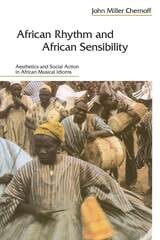
African Rhythm and African Sensibility
Aesthetics and Social Action in African Musical IdiomsJohn M. Chernoff
University of Chicago Press, 1981
"John Miller Chernoff, who spent 10 years studying African drumming, has a flair for descriptive writing, and his first-person narratives should be easily understood by any reader, while ringing unmistakably true for the reader who has also been to West Africa."—Roderick Knight, Washington Post Book World
"Ethnomusicologists must be proud that their discipline has produced a book that will, beyond doubt, rank as a classic of African studies."—Peter Fryer, Research in Literatures
"A marvelous book. . . . Not many scholars will ever be able to achieve the kind of synthesis of 'doing' and 'writing about' their subject matter that Chernoff has achieved, but he has given us an excellent illustration of what is possible."—Chet Creider, Culture
"Chernoff develops a brilliant and penetrating musicological essay that is, at the same time, an intensely personal and even touching account of musical and cultural discovery that anyone with an interest in Africa can and should read. . . . No other writing comes close to approaching Chernoff's ability to convey a feeling of how African music 'works'"—James Koetting, Africana Journal
"Four stars. One of the few books I know of that talks of the political, social, and spiritual meanings of music. I was moved. It was so nice I read it twice."—David Byrne of "Talking Heads"
The companion cassette tape has 44 examples of the music discussed in the book. It consists of field recordings illustrating cross-rhythms, multiple meters, call and response forms, etc.
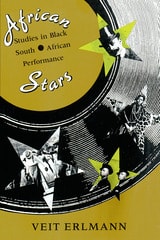
African Stars
Studies in Black South African PerformanceVeit Erlmann
University of Chicago Press, 1991
become ever more popular in the West, where they are now
widely celebrated as expressions of opposition to
discrimination and repression. Less well known is the
rich history of these arts, which were shaped by several
generations of black artists and performers whose
struggles, visions, and aspirations did not differ fundamentally
from those of their present-day counterparts.
In five detailed case studies Veit Erlmann digs deep to expose the roots of the most important of these performance traditions. He relates the early history of isicathamiya, the a cappella vocal style made famous by Ladysmith Black Mambazo.
In two chapters on Durban between the World Wars he charts the evolution of Zulu music and dance, studying in depth the transformation of ingoma, a dance form popular among migrant workers since the 1930s. He goes on to
record the colorful life and influential work of Reuben T. Caluza,
South Africa's first black ragtime composer. And Erlmann's reconstruction of the 1890s concert tours of an Afro-American vocal group, Orpheus M. McAdoo and the Virginia Jubilee Singers, documents the earliest link between the African and American performance traditions.
Numerous eyewitness reports, musicians' personal testimonies, and song texts enrich Erlmann's narratives and demonstrate that black performance evolved in response to the growing economic and racial segmentation of South African
society. Early ragtime, ingoma, and isicathamiya enabled the black urban population to comment on their precarious social position and to symbolically construct a secure space within a rapidly changing political world.
Today, South African workers, artists, and youth continue to build upon this performance tradition in their struggle for freedom and democracy. The early performers portrayed by Erlmann were guiding lights—African stars—by which the present and future course of South Africa is being determined.
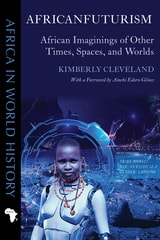
Africanfuturism
African Imaginings of Other Times, Spaces, and WorldsKimberly Cleveland
Ohio University Press, 2024
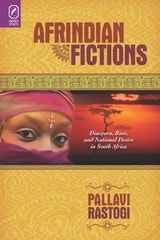
Afrindian Fictions
Diaspora, Race, and National Desire in South AfricaPallavi Rastogi
The Ohio State University Press, 2008
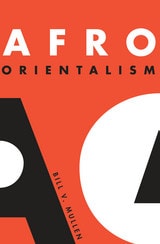
Afro Orientalism
Bill V. Mullen
University of Minnesota Press, 2004
Reveals a century of political solidarity uniting Asians and African Americans
As early as 1914, in his pivotal essay “The World Problem of the Color Line,” W. E. B. Du Bois was charting a search for Afro-Asian solidarity and for an international anticolonialism. In Afro-Orientalism, Bill Mullen traces the tradition of revolutionary thought and writing developed by African American and Asian American artists and intellectuals in response to Du Bois’s challenge.
Afro-Orientalism unfolds here as a distinctive strand of cultural and political work that contests the longstanding, dominant discourse about race and nation first fully named in Edward Said’s Orientalism. Mullen tracks Afro-Asian engagement with U.S. imperialism—including writings by Richard Wright, Grace and James Boggs, Robert F. Williams, and Fred Ho—and companion struggles against racism and capitalism around the globe. To this end, he offers Afro-Orientalism as an antidote to essentialist, race-based, or narrow conceptions of ethnic studies and postcolonial studies, calling on scholars in these fields to re-imagine their critical enterprises as mutually constituting and politically interdependent.
Afro-American Literary Study in the 1990s
Edited by Houston A. Baker Jr. and Patricia Redmond
University of Chicago Press, 1989
"This diverse and inspired collection . . . testifies to the Afro-Am academy's extraordinary vitality."—Voice Literary Supplement
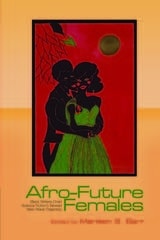
Afro-Future Females
Black Writers Chart Science Fiction's Newest New-Wave TrajectoryMarleen S. Barr
The Ohio State University Press, 2008
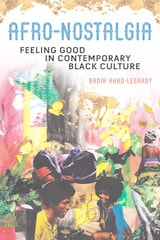
Afro-Nostalgia
Feeling Good in Contemporary Black CultureBadia Ahad-Legardy
University of Illinois Press, 2021
Badia Ahad-Legardy mines literature, visual culture, performance, and culinary arts to form an archive of black historical joy for use by the African-descended. Her analysis reveals how contemporary black artists find more than trauma and subjugation within the historical past. Drawing on contemporary African American culture and recent psychological studies, she reveals nostalgia’s capacity to produce positive emotions. Afro-nostalgia emerges as an expression of black romantic recollection that creates and inspires good feelings even within our darkest moments.
Original and provocative, Afro-Nostalgia offers black historical pleasure as a remedy to contend with the disillusionment of the present and the traumas of the past.
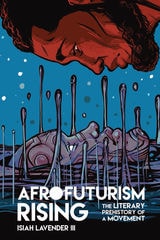
Afrofuturism Rising
The Literary Prehistory of a MovementIsiah Lavender III
The Ohio State University Press, 2019
By engaging with authors as diverse as Phillis Wheatley, David Walker, Frederick Douglass, Harriet Ann Jacobs, Samuel R. Delany Jr., Pauline Hopkins, Zora Neale Hurston, and Richard Wright, Afrofuturism Rising extends existing scholarly conversations about who creates and what is created via science fiction. Through a trans-historical rereading of texts by these authors as science fiction, Lavender highlights the ways black experience in America has always been an experience of spatial and temporal dislocation akin to science fiction. Compelling and ambitious in scope, Afrofuturism Rising redefines both science fiction and literature as a whole.
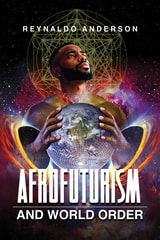
Afrofuturism and World Order
Reynaldo Anderson
The Ohio State University Press, 2025
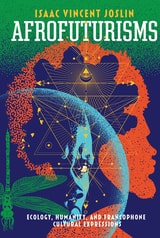
Afrofuturisms
Ecology, Humanity, and Francophone Cultural ExpressionsIsaac Vincent Joslin
Ohio University Press, 2023

After Brecht
British Epic TheaterJanelle G. Reinelt
University of Michigan Press, 1996
The book has been enriched by the author's in-depth conversations with the playwrights. The topics covered include contemporary politics and the theater, the National Theatre, the Royal Shakespeare Company, and such well-known fringe companies as Foco Novo, Joint Stock, Portable Theatre, and 7:84. Reinelt examines each playwright within an interpretive frame drawn from an application of Brecht's theories and practice to the historically specific situation of post-war British theater.
The book will appeal to those interested in the relationship between politics and art and contemporary European theater and its antecedents.
"After Brecht represents the best and most detailed engagement with the contemporary British theater scene to date." --Stanton B. Garner, Jr.
"This fine study . . . confronts issues that are important to all students and practitioners of the theater. Sensitive to the uniqueness of each of the playwrights in her study, Reinelt demonstrates that Brechtian theory can be modified in many ways by those who share the belief that 'politics and aesthetics are inseparably linked.'" --Choice
Janelle Reinelt is Chair of the Department of Dramatic Art and Dance, University of California-Davis.
After Django
Making Jazz in Postwar FranceTom Perchard
University of Michigan Press, 2015
After Empire
Scott, Naipaul, RushdieMichael Gorra
University of Chicago Press, 1997
Arguing against a model of cultural identity based on race, Gorra begins with Scott's portrait, in The Raj Quartet, of the character Hari Kumar—a seeming oxymoron, an "English boy with a dark brown skin," whose very existence undercuts the belief in an absolute distinction between England and India. He then turns to the opposed figures of Naipaul and Rushdie, the two great novelists of the Indian diaspora. Whereas Naipaul's long and controversial career maps the "deep disorder" spread by both imperialism and its passing, Rushdie demonstrates that certain consequences of that disorder, such as migrancy and mimicry, have themselves become creative forces.
After Empire provides engaging and enlightening readings of postcolonial fiction, showing how imperialism helped shape British national identity—and how, after the end of empire, that identity must now be reconfigured.
After Hitchcock
Influence, Imitation, and IntertextualityEdited by David Boyd and R. Barton Palmer
University of Texas Press, 2006
Alfred Hitchcock is arguably the most famous director to have ever made a film. Almost single-handedly he turned the suspense thriller into one of the most popular film genres of all time, while his Psycho updated the horror film and inspired two generations of directors to imitate and adapt this most Hitchcockian of movies. Yet while much scholarly and popular attention has focused on the director's oeuvre, until now there has been no extensive study of how Alfred Hitchcock's films and methods have affected and transformed the history of the film medium.
In this book, thirteen original essays by leading film scholars reveal the richness and variety of Alfred Hitchcock's legacy as they trace his shaping influence on particular films, filmmakers, genres, and even on film criticism. Some essays concentrate on films that imitate Hitchcock in diverse ways, including the movies of Brian de Palma and thrillers such as True Lies, The Silence of the Lambs, and Dead Again. Other essays look at genres that have been influenced by Hitchcock's work, including the 1970s paranoid thriller, the Italian giallo film, and the post-Psycho horror film. The remaining essays investigate developments within film culture and academic film study, including the enthusiasm of French New Wave filmmakers for Hitchcock's work, his influence on the filmic representation of violence in the post-studio Hollywood era, and the ways in which his films have become central texts for film theorists.
After Jews And Arabs
Remaking Levantine CultureAmmiel Alcalay
University of Minnesota Press, 1992
By exposing the rich and diverse textual and cultural legacy of this time and space, Alcalay reassesses the exclusion of Semitic culture in Europe from the perspective of contemporary Arabic culture and opposing images of the Israeli-Palestinian conflict. This book will compel a revision of Jewish studies by placing contemporary Israeli culture within its Middle Eastern context and the terms of colonial, postcolonial, and multicultural discourse.
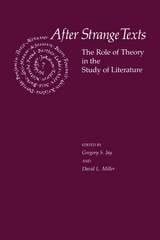
After Strange Texts
The Role of Theory in the Study of LiteratureGregory S. Jay and David L. Miller
University of Alabama Press, 1985
In this collection of essays by seven outstanding American scholars, interests as diverse as feminism, Marxism, deconstruction, and cultural poetics are brought together around a central question: how does the choice of a particular theory alter the practice of reading and do altered practices of reading in turn call forth more theory?
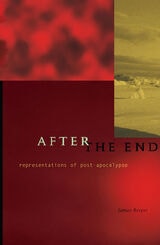
After The End
Representations Of Post-ApocalypseJames Berger
University of Minnesota Press, 1999
Explores the cultural function of the concept of “the end.”
Apocalyptic thought is hardly unique to the end of the twentieth century; it’s been a fixture of American culture for decades. Currently, the media are rife with omens and signs, and we’re bombarded with warnings that “the end is near.” But as James Berger argues here, the end never comes. There is always something left.
In this study of the cultural pursuit of the end and what follows, Berger contends that every apocalyptic depiction leaves something behind, some mixture of paradise and wasteland. Combining literary, psychoanalytic, and historical methods, Berger mines these depictions for their weight and influence on current culture. He applies wide-ranging evidence-from science fiction to Holocaust literature, from Thomas Pynchon to talk shows, from American politics to the fiction of Toni Morrison-to reveal how representations of apocalyptic endings are indelibly marked by catastrophic histories. These post-apocalyptic visions reveal as much about our perception of the past as they do about conceptions of the future. Berger examines the role of such historical crises as slavery, the Holocaust, and the Vietnam War and describes how these traumas continue to generate cultural symptoms. The shadow of impending apocalypse darkens today’s vision of the future, but it’s a familiar shadow: traumas we have already experienced as a culture are recycled into visions of new endings. Our “endings” are already after the end. Berger demonstrates that post-apocalyptic representations are both symptoms and therapies. Contemporary culture continually draws on these traumatic histories, trying to forget, remember, deny, and recover. After the End puts these visions in context, revealing them in some cases as dangerous evasions, in others as crucial tools for cultural survival. ISBN 0-8166-2932-3 Cloth £00.00 $47.95xxISBN 0-8166-2933-1 Paper £00.00 $18.95x248 Pages 5 7/8 x 9 MarchTranslation Inquiries: University of Minnesota Press
After the Death of Literature
Richard B. Schwartz
Southern Illinois University Press, 1997
Calling Samuel Johnson the greatest literary critic since Aristotle, Richard B. Schwartz assumes the perspective of that quintessential eighteenth-century man of letters to examine the critical and theoretical literary developments that gained momentum in the 1970s and stimulated the culture wars of the 1980s and 1990s.
Schwartz speculates that Johnson—who revered hard facts, a wide cultural base, and common sense—would have exhibited scant patience with the heavily academic approaches currently favored in the study of literature. He considers it probable that the combatants in the early struggles of the culture wars are losing energy and that, in the wake of Alvin Kernan’s declaration of the death of literature, new battlegrounds are developing. Ironically admiring the orchestration and staging of battles old and new—"superb" he calls them—he characterizes the entire cultural war as a "battle between straw men, carefully constructed by the combatants to sustain a pattern of polarization that could be exploited to provide continuing professional advancement."
In seven diverse essays, Schwartz calls for both the broad cultural vision and the sanity of a Samuel Johnson from those who make pronouncements about literature. Running through and unifying these essays is the conviction that the cultural elite is clearly detached from life: "Academics, fleeing in horror from anything smacking of the bourgeois, offer us something far worse: bland sameness presented in elitist terms in the name of the poor." Another theme is that the either/or absolutism of many of the combatants is "absurd on its face [and] belies the complexities of art, culture, and humanity."
Like Johnson, Schwartz would terminate the divorce between literature and life, make allies of literature and criticism, and remove poetry from the province of the university and return it to the domain of readers. Texts would carry meaning, embody values, and have a serious impact on life.
After the Death of Poetry
Poet and Audience in Contemporary AmericaVernon Shetley
Duke University Press, 1993
In exemplary case studies, Shetley identifies the very different ways in which three postwar poets—Elizabeth Bishop, James Merrill, and John Ashbery—try to restore some of the challenge and risk that characterized modernist poetry's relation to its first readers. Sure to be controversial, this cogent analysis offers poets and readers a clear sense of direction and purpose, and so, the hope of reaching each other again.
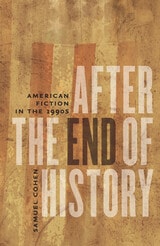
After the End of History
American Fiction in the 1990sCohe, Samuel
University of Iowa Press, 2009
In this bold book, Samuel Cohen asserts the literary and historical importance of the period between the fall of the Berlin wall and that of the Twin Towers in New York. With refreshing clarity, he examines six 1990s novels and two post-9/11 novels that explore the impact of the end of the Cold War: Pynchon's Mason & Dixon, Roth's American Pastoral, Morrison's Paradise, O'Brien's In the Lake of the Woods, Didion's The Last Thing He Wanted, Eugenides's Middlesex, Lethem's Fortress of Solitude, and DeLillo's Underworld. Cohen emphasizes how these works reconnect the past to a present that is ironically keen on denying that connection. Exploring the ways ideas about paradise and pastoral, difference and exclusion, innocence and righteousness, triumph and trauma deform the stories Americans tell themselves about their nation’s past, After the End of History challenges us to reconsider these works in a new light, offering fresh, insightful readings of what are destined to be classic works of literature.
At the same time, Cohen enters into the theoretical discussion about postmodern historical understanding. Throwing his hat in the ring with force and style, he confronts not only Francis Fukuyama’s triumphalist response to the fall of the Soviet Union but also the other literary and political “end of history” claims put forth by such theorists as Fredric Jameson and Walter Benn Michaels. In a straightforward, affecting style, After the End of History offers us a new vision for the capabilities and confines of contemporary fiction.
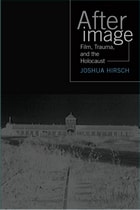
Afterimage
Film, Trauma And The HolocaustJoshua Hirsch
Temple University Press, 2003
Joshua Hirsch explores the changes in documentary brought about by cinema verite, culminating in Shoah. He then turns to teh appearance of a fictional posttraumatic cinema, tracing its development through the vivid flashbacks in Resnais' Hiroshima, mon amour to the portrayal of pain and memory in Pawnbroker. He excavates a posttraumatic autobiography in three early films by the Hungarian Istvan Szabo. Finally, Hirsch examines the effects of postmodernism on posttraumatic cinema, looking at Schindler's List and a work about a different form of historical trauma, History and Memory, a videotape dealing with the internment of Japanese Americans during the Second World War.
Sweeping in its scope, Afterimage presents a new way of thinking about film and history, trauma and its representation.
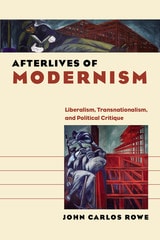
Afterlives of Modernism
Liberalism, Transnationalism, and Political CritiqueJohn Carlos Rowe
Dartmouth College Press, 2015
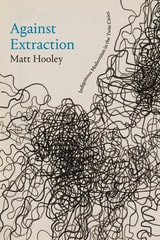
Against Extraction
Indigenous Modernism in the Twin CitiesMatt Hooley
Duke University Press, 2024
Against Marginalization
Convergences in Black and Latinx LiteraturesJose O. Fernandez
The Ohio State University Press, 2022
Against Normalization
Writing Radical Democracy in South AfricaAnthony O'Brien
Duke University Press, 2001
O’Brien brings together an unusual array of contemporary South African writing: cultural theory and debate, worker poetry, black and white feminist writing, Black Consciousness drama, the letters of exiled writers, and postapartheid fiction and film. Paying subtle attention to well-known figures like Nadine Gordimer, Bessie Head, and Njabulo Ndebele, but also foregrounding less-studied writers like Ingrid de Kok, Nise Malange, Maishe Maponya, and the Zimbabwean Dambudzo Marechera, he reveals in their work the construction of a political aesthetic more radically democratic than the current normalization of nationalism, ballot-box democracy, and liberal humanism in culture could imagine. Juxtaposing his readings of these writers with the theoretical traditions of postcolonial thinkers about race, gender, and nation like Paul Gilroy, bell hooks, and Gayatri Spivak, and with others such as Samuel Beckett and Vaclav Havel, O’Brien adopts a uniquely comparatist and internationalist approach to understanding South African writing and its relationship to the cultural settlement after apartheid.
With its appeal to specialists in South African fiction, poetry, history, and politics, to other Africanists, and to those in the fields of colonial, postcolonial, race, and gender studies, Against Normalization will make a significant intervention in the debates about cultural production in the postcolonial areas of global capitalism.
Against Theory
Literary Studies and the New PragmatismW. J. T. Mitchell
University of Chicago Press, 1985
The argument is directed against both sides of the current debates in literary theory, criticizing theoretical "objectivists" like E. D. Hirsch, Jr., on the one hand, and proponents of indeterminacy like Paul de Man on the other. The attack is not just on a particular way of doing theory but on the entire project of literary theory. The challenge is not only to a way of thinking and writing but to a way of making a living.
The resulting controversy has drawn so much attention among literary critics that it has been collected in a single volume so that the debate can be followed from start to finish. This collection includes the essay "Against Theory," seven responses to it, and a rejoinder by Knapp and Michaels (originally published in Critical Inquiry 9:4); in addition, there are two new statements plus a final reply by Knapp and Michaels.
The debate chronicled in this volume raises the most fundamental issues in the theory of meaning and the practice of interpretation. Are Knapp and Michaels confronting literary theory with a new "pragmatic" form of theory? Or are they (as some of their respondents suggest) arguing for a new form of nihilism? "If it is a nihilism," writes editor W. J. T. Mitchell, "it is one that demands an answer, not easy polemical dismissal, one that calls for theory to clarify its claims, not to mystify them and the easy assurance of intellectual fashion and institutional authority." It is the intention of Against Theory to aid in that clarification.
Against a Sharp White Background
Infrastructures of African American PrintEdited by Brigitte Fielder and Jonathan Senchyne
University of Wisconsin Press, 2019

Against!
Rebellious Daughters in Black Immigrant Fiction in the United StatesAsha Jeffers
The Ohio State University Press, 2025
Against! is the first book-length study of Afro-Caribbean and African immigrant and second-generation writing in the United States. In it, Asha Jeffers evaluates the relationship between Blackness and immigranthood in the US as depicted through the recurring theme of rebellious Black immigrant daughters. Considering the work of Paule Marshall, Edwidge Danticat, Chimamanda Ngozi Adichie, and Taiye Selasi, Jeffers untangles how rebellion is informed by race, gender, ethnicity, and migration status.
Immigrant and second-generation writers mobilize often complicated familial relationships to comment on a variety of political, social, and psychic contexts. Jeffers argues that rather than categorizing Black migrants as either immediately fully integrated into an African American experience or seeing them as another category altogether that is unbound by race, Marshall, Danticat, Adichie, and Selasi identify the unstable position of Black migrants within the American racial landscape. By highlighting the diverse ways Black migrants and their children negotiate this position amid the dual demands of the respectability politics imposed on African Americans and the model-minority myth imposed on immigrants, Jeffers reveals the unsteady nature of US racial categories.
Agony for Others
On Literature and PainJessica Colangelo
University of Michigan Press, 2026
Agony for Others investigates the phenomenological, rhetorical, and political challenges of representing pain in literature. Pain cries vary between cultural and linguistic groups, and pain expression (such as grimacing or crying) can likewise vary in quality and intensity from person to person, affected by disability, temperament, and past experiences with pain, as well as the experiencer’s own understanding of what that pain is and what it means. Jessica Colangelo explores pain's role as a subjective indication of objective damage; that, contrary to claims of its subjective privacy, the feeling of pain is always felt in terms of an objectively existing entity (one’s physical body) which is perceivable by others. Thus, pain enters into intersubjectivity through the physical body—one's expressions, words, actions, presence—which then mediates between the self and the other.
Drawing on disability studies, phenomenology, philosophy, and literary studies, Colangelo examines works by Virginia Woolf, James Baldwin, Sarah Kane, Elie Wiesel, and Margaret Edson to argue that the belief that pain is incommunicable and thought-destroying obscures its central role in relationships and community formation. Agony for Others demonstrates that pain is not excluded from, but rather constitutive of, intersubjectivity, and argues that the aesthetic dimension of interpretation is essential to understanding the ethical and political role of pain.
Ahab Unbound
Melville and the Materialist TurnMeredith Farmer
University of Minnesota Press, 2021
Why Captain Ahab is worthy of our fear—and our compassion
Herman Melville’s Captain Ahab is perennially seen as the paradigm of a controlling, tyrannical agent. Ahab Unbound leaves his position as a Cold War icon behind, recasting him as a contingent figure, transformed by his environment—by chemistry, electromagnetism, entomology, meteorology, diet, illness, pain, trauma, and neurons firing—in ways that unexpectedly force us to see him as worthy of our empathy and our compassion.
In sixteen essays by leading scholars, Ahab Unbound advances an urgent inquiry into Melville’s emergence as a center of gravity for materialist work, reframing his infamous whaling captain in terms of pressing conversations in animal studies, critical race and ethnic studies, disability studies, environmental humanities, medical humanities, political theory, and posthumanism. By taking Ahab as a focal point, we gather and give shape to the multitude of ways that materialism produces criticism in our current moment. Collectively, these readings challenge our thinking about the boundaries of both persons and nations, along with the racist and environmental violence caused by categories like the person and the human.
Ahab Unbound makes a compelling case for both the vitality of materialist inquiry and the continued resonance of Melville’s work.
Contributors: Branka Arsić, Columbia U; Christopher Castiglia, Pennsylvania State U; Colin Dayan, Vanderbilt U; Christian P. Haines, Pennsylvania State U; Bonnie Honig, Brown U; Jonathan Lamb, Vanderbilt U; Pilar Martínez Benedí, U of L’Aquila, Italy; Steve Mentz, St. John’s College; John Modern, Franklin and Marshall College; Mark D. Noble, Georgia State U; Samuel Otter, U of California, Berkeley; Donald E. Pease, Dartmouth College; Ralph James Savarese, Grinnell College; Russell Sbriglia, Seton Hall U; Michael D. Snediker, U of Houston; Matthew A. Taylor, U of North Carolina at Chapel Hill; Ivy Wilson, Northwestern U.
Ain't But a Few of Us
Black Music Writers Tell Their StoryWillard Jenkins, editor
Duke University Press, 2022
Contributors
Eric Arnold, Bridget Arnwine, Angelika Beener, Playthell Benjamin, Herb Boyd, Bill Brower, Jo Ann Cheatham, Karen Chilton, Janine Coveney, Marc Crawford, Stanley Crouch, Anthony Dean-Harris, Jordannah Elizabeth, Lofton Emenari III, Bill Francis, Barbara Gardner, Farah Jasmine Griffin, Jim Harrison, Eugene Holley Jr., Haybert Houston, Robin James, Willard Jenkins, Martin Johnson, LeRoi Jones, Robin D. G. Kelley, Tammy Kernodle, Steve Monroe, Rahsaan Clark Morris, John Murph, Herbie Nichols, Don Palmer, Bill Quinn, Guthrie P. Ramsey Jr., Ron Scott, Gene Seymour, Archie Shepp, Wayne Shorter, A. B. Spellman, Rex Stewart, Greg Tate, Billy Taylor, Greg Thomas, Robin Washington, Ron Welburn, Hollie West, K. Leander Williams, Ron Wynn
Air's Appearance
Literary Atmosphere in British Fiction, 1660-1794Jayne Elizabeth Lewis
University of Chicago Press, 2012
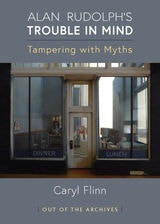
Alan Rudolph's Trouble in Mind
Tampering with MythsCaryl Flinn
University of Michigan Press, 2023
Despite a career spanning over forty years, filmmaker Alan Rudolph has flown largely under the radar of independent film scholars and enthusiasts, often remembered as Robert Altman’s protégé. Through a reading of his 1985 film Trouble in Mind, Caryl Flinn demonstrates that Rudolph is long overdue for critical re-evaluation.
Exploring Trouble in Mind’s influence on indie filmmaking, Rudolph’s dream-like style, and the external political influences of the Reagan era, Flinn effectively conveys the originality of Rudolph’s work through this multifaceted film. Utilizing archival materials and interviews with Rudolph himself and his collaborators, Flinn argues for this career-defining film’s relevance to American independent cinema and the decade of the 1980s. Amply illustrated with frame enlargements and set photographs, this book uncovers new production stories and reception contexts of a film that Flinn argues deserves a place in the limelight.
Alarms & Epitaphs
The Art of Eric AmblerPeter Wolfe
University of Wisconsin Press, 1993
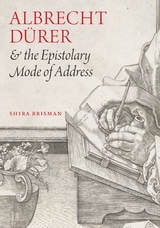
Albrecht Dürer and the Epistolary Mode of Address
Shira Brisman
University of Chicago Press, 2016
In the early modern period, before the establishment of a reliable postal system, letters faced risks of interception and delay. During the Reformation, the printing press threatened to expose intimate exchanges and blur the line between public and private life. Exploring the complex travel patterns of sixteenth-century missives, Brisman explains how these issues of sending and receiving informed Dürer’s artistic practices. His success, she contends, was due in large part to his development of pictorial strategies—an epistolary mode of address—marked by a direct, intimate appeal to the viewer, an appeal that also acknowledged the distance and delay that defers the message before it can reach its recipient. As images, often in the form of prints, coursed through an open market, and artists lost direct control over the sale and reception of their work, Germany’s chief printmaker navigated the new terrain by creating in his images a balance between legibility and concealment, intimacy and public address.
Alchemies of Theater
Plays, Scores, WritingsDick Higgins
University of Michigan Press, 2024
Alchemies of Theater brings together a broad selection of Higgins’s writings and theater-related work, much of it unpublished or long out of print, including plays and performance scores, drawings, and writings on theater and performance. As this book demonstrates, Higgins deconstructed the drama long before it became a project of theater; undercut the traditional roles of author and director; created what is now considered “devised” theater; pioneered the use of media in theater, writing the first electronic opera; and was a precursor in deconstruction and “postdramatic” avant-garde traditions. His Intermedia manifesto offered a sweeping view of interdisciplinarity—in effect, a new arts ecology.

Aleksandr Askoldov
The CommissarMarat Grinberg
Intellect Books, 2016
This book is the first companion to the film in any language. It recounts the film’s plot and turbulent production history, and it also offers a close analysis of the artistic vision of its director, Aleksandr Askoldov, and the ways that viewers can trace in the film not only his complex aesthetics, but also the personal crises he endured in the years leading up to the film. The result is an indispensable companion to an unforgettable film.
Aleksandr Sokurov
Russian ArkBirgit Beumers
Intellect Books, 2016
This companion to Russian Ark addresses all key aspects of the film, beginning with a comprehensive synopsis, an in-depth analysis, and an account of the production history. Birgit Beumers goes on from there to discuss the work that went into the now-legendary Steadicam shot—which required two thousand actors and three orchestras—and she also offers an account of the film’s critical and public reception, showing how it helped to establish director Aleksandr Sokurov as perhaps the leading filmmaker in Russia today.