Results by title
2335 books match the query 'Modern' and 184 start with a

Arabs of the Jewish Faith
The Civilizing Mission in Colonial AlgeriaSchreier, Joshua
Rutgers University Press, 2010
Archaism and Actuality
Japan and the Global Fascist ImaginaryHarry Harootunian
Duke University Press, 2023
Archival Fictions
Materiality, Form, and Media History in Contemporary LiteraturePaul Benzon
University of Massachusetts Press, 2021
Taking up works from Andy Warhol, Kevin Young, Don DeLillo, and Hari Kunzru, Archival Fictions considers how these writers have constructed a speculative history of media technology through formal experimentation. Although media technologies have determined the extent of what can be written, recorded, and remembered in the immediate aftermath of print's hegemony, Paul Benzon argues that literary form provides a vital means for critical engagement with the larger contours of media history. Drawing on approaches from media poetics, film studies, and the digital humanities, this interdisciplinary study demonstrates how authors who engage technology through form continue to imagine new roles for print literature across the late twentieth and early twenty-first centuries.
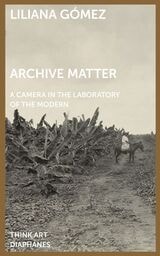
Archive Matter
A Camera in the Laboratory of the ModernLiliana Gómez
Diaphanes, 2023
A journey through the United Fruit Company’s photo archive and its documentation of corporate expansion into the Caribbean.
The establishment of the United Fruit Company as a global political agent with its banana plantations was met with considerable resistance. Now the company’s photographic records are the focal point of Archive Matter as it examines photography’s historical and political impact through the argument that this overlooked, but important, archive made capitalist expansion into the Caribbean possible.
Author Liliana Gómez examines the images from within their “optical unconscious” and via the archive’s silences and omissions. The implication of these silences, Gómez argues, is the attempt to conceal the violence embedded within the realities of the plantations’ daily operations and corporate efforts to “modernize” the Caribbean.
Arcticologies
Early Modern Actions for Our Warmer WorldLowell Duckert
University of Minnesota Press, 2025
Exploring the frozen past to rethink our warming future
Do we really know what cold is? In Arcticologies, Lowell Duckert delves into early modern European texts to trace how representations of frigidity from the sixteenth and seventeenth centuries have contributed to historical understandings of climate and contemporary debates on climate change. Arguing that human culture and science are, in fact, indebted to the cold, Duckert suggests that these early depictions offer critical terms for advancing the aims of climate-change activism and assisting in counterapocalyptic thinking.
An imaginative and intellectual journey, Arcticologies reveals the enduring role of cold in wide-ranging storytelling traditions. It draws on Shakespeare’s Hamlet and Othello and the works of Thomas Dekker, René Descartes, and Thomas Hobbes and is informed throughout by contemporary Indigenous writing, including that of Sheila Watt-Cloutier and Leanne Betasamosake Simpson. In reflecting on these assorted accounts, Duckert sees cold as not only an environmental hardship but a source of cultural creativity and resilience, highlighting moments of collaboration between humans and the icy world, from arctic exploration to urban fairs on frozen rivers.
Cold, Duckert makes clear, is more than the absence of warmth. Situating our contemporary obsession with impending planetary meltdown within the mazelike arcticologies of the past, Duckert shows how early modern cold brought about forms of curiosity, vocabulary, and interspecies relationality that can serve us today. In doing so, he asks us to identify what has been lost and who is at risk in today’s thinning cold—while also urging us to imagine alternative futures focused not on inevitable and total collapse but on adaptation and preserving what remains.
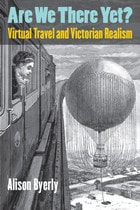
Are We There Yet?
Virtual Travel and Victorian RealismAlison Byerly
University of Michigan Press, 2012
Are We There Yet? Virtual Travel and Victorian Realismconnects the Victorian fascination with "virtual travel" with the rise of realism in nineteenth-century fiction and twenty-first-century experiments in virtual reality. Even as the expansion of river and railway networks in the nineteenth century made travel easier than ever before, staying at home and fantasizing about travel turned into a favorite pastime. New ways of representing place—360-degree panoramas, foldout river maps, exhaustive railway guides—offered themselves as substitutes for actual travel. Thinking of these representations as a form of "virtual travel" reveals a surprising continuity between the Victorian fascination with imaginative dislocation and twenty-first -century efforts to use digital technology to expand the physical boundaries of the self.
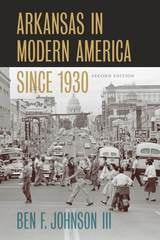
Arkansas in Modern America since 1930
Ben F. Johnson III
University of Arkansas Press, 2019
Particularly impressive for the breadth of its scope, Arkansas in Modern America since 1930 offers an overview of the factors that moved Arkansas from a primarily rural society to one more in step with the modern economy and perspectives of the nation as a whole. The narrative covers the roles of Daisy Bates, Sam Walton, Don Tyson, Bill Clinton, and other influential figures in the state’s history to reveal a state shaped by global as much as by local forces. The second edition of this important book will continue to set the standard for analysis and interpretation of Arkansas’s place in the contemporary world.
Around the Absurd
Essays on Modern and Postmodern DramaEdited by Enoch Brater and Ruby Cohn
University of Michigan Press, 1990
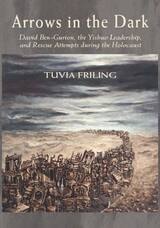
Arrows in the Dark (Volumes 1 and 2)
David Ben-Gurion, the Yishuv Leadership, and Rescue Attempts during the HolocaustTuvia Friling; Translated by Ora Cummings
University of Wisconsin Press, 2005
Art Of The Motor
Paul Virilio
University of Minnesota Press, 1995
Art without Boundaries
The World of Modern DanceJack Anderson
University of Iowa Press, 1999
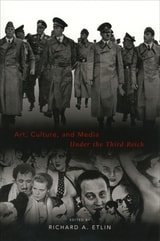
Art, Culture, and Media Under the Third Reich
Edited by Richard A. Etlin
University of Chicago Press, 2002
Contributors address nearly every facet of the arts and mass media under the Third Reich—efforts to define degenerate music and art; the promotion of race hatred through film and public assemblies; views of the racially ideal garden and landscape; race as portrayed in popular literature; the reception of art and culture abroad; the treatment of exiled artists; and issues of territory, conquest, and appeasement. Familiar subjects such as the Munich Accord, Nuremberg Party Rally Grounds, and Lebensraum (Living Space) are considered from a new perspective. Anyone studying the history of Nazi Germany or the role of the arts in nationalist projects will benefit from this book.
Contributors:
Ruth Ben-Ghiat
David Culbert
Albrecht Dümling
Richard A. Etlin
Karen A. Fiss
Keith Holz
Kathleen James-Chakraborty
Paul B. Jaskot
Karen Koehler
Mary-Elizabeth O'Brien
Jonathan Petropoulos
Robert Jan van Pelt
Joachim Wolschke-Bulmahn and Gert Gröning
Art, Theory, Revolution
The Turn to Generality in Contemporary LiteratureMitchum Huehls
The Ohio State University Press, 2022
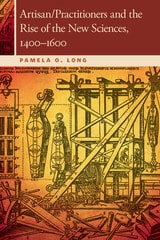
Artisan/Practitioners and the Rise of the New Sciences, 1400-1600
Pamela O. Long
Oregon State University Press, 2011
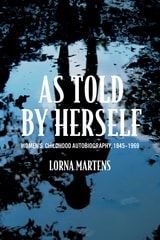
As Told By Herself
Women’s Childhood Autobiography, 1845-1969Lorna Martens
University of Wisconsin Press, 2022
Stopping just before second-wave feminism brought an explosion in women's childhood autobiographical writing, As Told by Herself explores the genre's roots and development from the mid-nineteenth century, and recovers many works that have been neglected or forgotten. The result illustrates how previous generations of women—in a variety of places and circumstances—understood themselves and their upbringing, and how they thought to present themselves to contemporary and future readers.
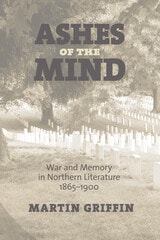
Ashes of the Mind
War and Memory in Northern Literature, 1865-1900Martin Griffin
University of Massachusetts Press, 2009
The memory of the American Civil War took many forms over the decades after the conflict ended: personal, social, religious, and political. It was also remembered and commemorated by poets and fiction writers who understood that the war had bequeathed both historical and symbolic meanings to American culture. Although the defeated Confederacy became best known for producing a literature of nostalgia and an ideological defensiveness intended to protect the South's own version of history, authors loyal to the Union also confronted the question of what the memory of the war signified, and how to shape the literary response to that individual and collective experience.
In Ashes of the Mind, Martin Griffin examines the work of five Northerners—three poets and two fiction writers—who over a period of four decades tried to understand and articulate the landscape of memory in postwar America, and in particular in that part of the nation that could, with most justification, claim the victory of its beliefs and values. The book begins with an examination of the rhetorical grandeur of James Russell Lowell's Harvard Commemoration Ode, ranges across Herman Melville's ironic war poetry, Henry James's novel of North-South reconciliation, The Bostonians, and Ambrose Bierce's short stories, and ends with the bitter meditation on race and nation presented by Paul Laurence Dunbar's elegy “Robert Gould Shaw.” Together these texts reveal how a group of representative Northern writers were haunted in different ways by the memory of the
conflict and its fraught legacy.
Griffin traces a concern with individual and community loss, ambivalence toward victory, and a changing politics of commemoration in the writings of Lowell, Melville, James, Bierce, and Dunbar. What links these very different authors is a Northern memory of the war that became more complex and more compromised as the century went on, often replacing a sense of justification and achievement with a perception of irony and failed promise.
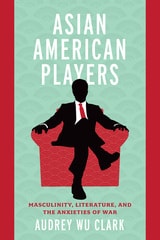
Asian American Players
Masculinity, Literature, and the Anxieties of WarAudrey Wu Clark
The Ohio State University Press, 2023
The player is a womanizer, a trickster, a gambler—but can Asian American men fully participate in this kind of masculinity? In Asian American Players, Audrey Wu Clark showcases how the literary figure of the Asian American player unsettles the hegemony of white American masculinity through mimicry, even as that masculinity socially and politically alienates him. She examines gendered and racialized US militarism through works written during major postmodern American wars, investigating how books by John Okada, David Henry Hwang, Chang-rae Lee, Frances Khirallah Noble, and Viet Thanh Nguyen (re)fashion Asian American masculinity in ways that ultimately mimic masculinist American foreign policy and military strategies during corresponding wars. She unearths a dual picture of Asian American players: as traces of the anxiety of America’s quest for empowerment and continued military and industrial dominance in the international arena and as those tarred as inferior and disloyal outsiders within this mirrored global dominance. She thus finds new inroads into understanding US imperialism and militarism and identifies ways that key literary figures have written against insidious tropes.
Assembling Ethnicities in Neoliberal Times
Ethnographic Fictions and Sri Lanka’s WarNimanthi Perera-Rajasingham
Northwestern University Press, 2019
Assembling Ethnicities in Neoliberal Times: Ethnographic Fictions and Sri Lanka’s War argues that the bloody war fought between the Sri Lankan state and the separatist Tamil Tigers from 1983 to 2009 should be understood as structured and animated by the forces of global capitalism. Using Aihwa Ong’s theorization of neoliberalism as a mobile technology and assemblage, this book explores how contemporary globalization has exacerbated forces of nationalism and racism.
Nimanthi Perera-Rajasingham finds that ethnographic fictions have both internalized certain colonial Orientalist impulses and critically engaged with categories of objective gazing, empiricism, and temporal distancing. She demonstrates that such fictions take seriously the task of bearing witness and documenting the complex productions of ethnic identities and the devastations wrought by warfare. To this end, Assembling Ethnicities
explores colonial-era travel writing by Robert Knox (1681) and Leonard Woolf (1913); contemporary works by Michael Ondaatje, Romesh Gunesekera, Shobasakthi, Dharmasiri Bandaranayake, and Thamotharampillai Shanaathanan; and cultural festivals and theater, including vernacular performances of Euripides’s The Trojan Women and women workers’ theater.
The book interprets contemporary fictions to unpack neoliberalism’s entanglements with nationalism and racism, engaging current issues such as human rights, the pastoral, Tamil militancy, immigrant lives, feminism and nationalism, and postwar developmentalism.
Association and Enlightenment
Scottish Clubs and Societies, 1700-1830Mark C. Wallace
Bucknell University Press, 2021

Astad Deboo
An Icon of Contemporary Indian DanceKetu H. Katrak
Seagull Books, 2024
Astad Deboo (1947–2020), widely considered a pioneer of modern dance in India, was globally renowned for his distinctive style, characterized by meditative minimalism, gravity-defying backbends, and signature whirls which defined his innovative approach to form and content. In this first biography and book-length appreciation of Deboo’s work, Ketu H. Katrak unveils the remarkable life, choreography, and legacy of this groundbreaking figure in Indian modern dance. Through a comprehensive exploration, readers journey from Deboo's formative years in Jamshedpur and Bombay to his global endeavors that shaped his unique dance style.
Divided into four parts, this biography sheds light on various aspects of Deboo’s life and career: his youth, schooling, and the friendships that shaped him; his solo choreography, which boldly addressed social issues and fused modern dance with traditional elements; his humanitarian spirit, showcasing group choreography with deaf performers and Manipuri drum-dancers; and his mastery in collaborating with artists from India and abroad.
From receiving prestigious awards to transforming lives through dance, traveling around the world for over five decades yet being firmly rooted in Indian soil, Deboo left an indelible mark on contemporary Indian dance. Astad Deboo: An Icon of Contemporary Indian Dance pays homage to the dancer’s legendary status, emphasizing his unparalleled dedication and resilience—a guiding light for aspiring dancers striving to realize their artistic visions. It is a valuable addition to scholarship on dance studies, performance studies, and South Asian studies.
At Home with the Holocaust
Postmemory, Domestic Space, and Second-Generation Holocaust NarrativesLucas F. W. Wilson
Rutgers University Press, 2025
At the Crossroads of the Avant-Garde
Ivan Aksyonov and Russian ModernismLars Kleberg, Charles Rougle
Northwestern University Press, 2026
This kaleidoscopic biography offers readers a compelling microhistory of a revolutionary moment in art and politics through its portrait of an enigmatic but influential figure: Ivan Aksyonov authored the first book-length study about Pablo Picasso, translated Elizabethan drama, and was a literary adviser to Vsevolod Meyerhold, as well as a teacher of Sergei Eisenstein in Meyerhold’s institute and an important critic, before dying in 1935. Lars Kleberg traces Aksyonov’s influences, interlocutors, and creative output in multiple genres and media to bring a complicated and fascinating character back to life. Kleberg invites us to reconsider the avant-garde and to understand the political and artistic ferment of the revolutionary era and its aftermath in new, deeper ways.
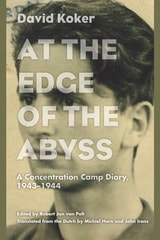
At the Edge of the Abyss
A Concentration Camp Diary, 1943-1944David Koker; Edited by Robert Jan van Pelt; Translated from the Dutch by Michiel Horn and John Irons
Northwestern University Press, 2012
Finalist for 2012 National Jewish Book Award in the Holocaust category
David Koker's diary is one of the most notable accounts of life in a German concentration camp written by a Jew during the years of the Holocaust. First brought to attention when the Dutch historian Jacob Presser-Koker's history teacher in high school-quoted from Koker's diary in his monumental history, published in English as The Destruction of the Dutch Jews (1968), the diary itself became a part of the Dutch literary canon when it was published in 1977 as Dagboek geschreven in Vught (Diary Written in Vught). It has remained in print ever since, and is notable for its literary qualities, weaving poetry and powerful observations of the emotional life of a camp prisoner, including reflections after an in-person visit by Heinrich Himmler. Surprisingly, the book has never before been translated into English.
During his time in the Vught concentration camp, the 21-year-old David recorded on an almost daily basis his observations, thoughts, and feelings. He mercilessly probed the abyss that opened around him and, at times, within himself. David's diary covers almost a year, both charting his daily life in Vught as it developed over time and tracing his spiritual evolution as a writer. Until early February 1944, David was able to smuggle some 73,000 words from the camp to his best friend Karel van het Reve, a non-Jew.
With an informative introduction, annotation, and list of dramatis personae by Robert Jan van Pelt, At the Edge of the Abyss offers an immediate and wholly original look into the life of a concentration camp prisoner.
At the Limit of the Obscene
German Realism and the Disgrace of MatterErica Weitzman
Northwestern University Press, 2021
As German-language literature turned in the mid-nineteenth century to the depiction of the profane, sensual world, a corresponding anxiety emerged about the terms of that depiction—with consequences not only for realist poetics but also for the conception of the material world itself. At the Limit of the Obscene examines the roots and repercussions of this anxiety in German realist and postrealist literature. Through analyses of works by Adalbert Stifter, Gustav Freytag, Theodor Fontane, Arno Holz, Gottfried Benn, and Franz Kafka, Erica Weitzman shows how German realism’s conflicted representations of the material world lead to an idea of the obscene as an excess of sensual appearance beyond human meaning: the obverse of the anthropocentric worldview that German realism both propagates and pushes to its crisis. At the Limit of the Obscene thus brings to light the troubled and troubling ontology underlying German realism, at the same time demonstrating how its works continue to shape our ideas about representability, alterity, and the relationship of human beings to the non-human well into the present day.
At the Point of a Cutlass
The Pirate Capture, Bold Escape, and Lonely Exile of Philip AshtonGregory N. Flemming
University Press of New England, 2015
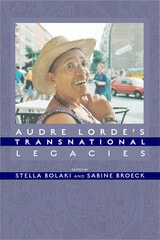
Audre Lorde’s Transnational Legacies
Stella Bolaki
University of Massachusetts Press, 2015
Audre Lorde's Transnational Legacies is the first book to systematically document and thoroughly investigate Lorde's influence beyond the United States. Arranged in three thematically interrelated sections—Archives, Connections, and Work—the volume brings together scholarly essays, interviews, Lorde's unpublished speech about Europe, and personal reflections and testimonials from key figures throughout the world. Using a range of interdisciplinary approaches, contributors assess the reception, translation, and circulation of Lorde's writing and activism within different communities, audiences, and circles. They also shed new light on the work Lorde inspired across disciplinary borders.
In addition the volume editors, contributors include Sarah Cefai, Cassandra Ellerbe-Dueck, Paul M. Farber, Tiffany N. Florvil, Katharina Gerund, Alexis Pauline Gumbs, Gloria Joseph, Jackie Kay, Marion Kraft, Christiana Lambrinidis, Zeedah Meierhofer-Mangeli, Rina Nissim, Chantal Oakes, Lester C. Olson, Pratibha Parmar, Peggy Piesche, Dagmar Schultz, Tamara Lea Spira, and Gloria Wekker.
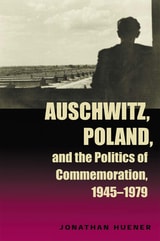
Auschwitz, Poland, and the Politics of Commemoration, 1945–1979
Jonathan Huener
Ohio University Press, 2003
Few places in the world carry as heavy a burden of history as Auschwitz. Recognized and remembered as the most prominent site of Nazi crimes, Auschwitz has had tremendous symbolic weight in the postwar world.
Auschwitz, Poland, and the Politics of Commemoration is a history of the Auschwitz memorial site in the years of the Polish People’s Republic. Since 1945, Auschwitz has functioned as a memorial and museum. Its monuments, exhibitions, and public spaces have attracted politicians, pilgrims, and countless participants in public demonstrations and commemorative events.
Jonathan Huener’s study begins with the liberation of the camp and traces the history of the State Museum at Auschwitz from its origins immediately after the war until the 1980s, analyzing the landscape, exhibitions, and public events at the site.
Based on extensive research and illustrated with archival photographs, Auschwitz, Poland, and the Politics of Commemoration accounts for the development and durability of a Polish commemorative idiom at Auschwitz. Emphasis on Polish national “martyrdom” at Auschwitz, neglect of the Shoah as the most prominent element of the camp’s history, political instrumentalization of the grounds and exhibitions—these were some of the more controversial aspects of the camp’s postwar landscape.
Professor Huener locates these and other public manifestations of memory at Auschwitz in the broad scope of Polish history, in the specific context of postwar Polish politics and culture, and against the background of Polish-Jewish relations. Auschwitz, Poland, and the Politics of Commemoration will be of interest to scholars, students, and general readers of the history of modern Poland and the Holocaust.
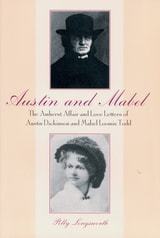
Austin and Mabel
The Amherst Affair and Love Letters of Austin Dickinson and Mabel Loomis ToddPolly Longsworth
University of Massachusetts Press, 1999
Authorizing Superhero Comics
On the Evolution of a Popular Serial GenreDaniel Stein
The Ohio State University Press, 2021
Authorship in the Long Eighteenth Century
Dustin Griffin
University of Delaware Press, 2014
Published by University of Delaware Press. Distributed worldwide by Rutgers University Press.
Autobiography and Decolonization
Modernity, Masculinity, and the Nation-StatePhilip Holden
University of Wisconsin Press, 2008
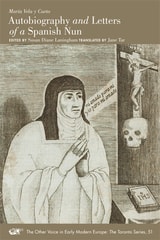
Autobiography and Letters of a Spanish Nun
María Vela y Cueto
Iter Press, 2016
When María Vela y Cueto (1561–1617) declared that God had personally ordered her to take only the Eucharist as food and to restore primitive dress and public penance in her aristocratic convent, the entire religious community, according to her confessor, “rose up in wrath.” Yet, when Vela died, her peers joined with the populace to declare her a saint. In her autobiography and personal letters, Vela speaks candidly of the obstacles, perils, and rewards of re-negotiating piety in a convent where devotion to God was no longer expressed through rigorous asceticism. Vela’s experience, told in her own words, reveals her shrewd understanding of the persuasive power of a woman’s body.

Autobiography and Postmodernism
Kathleen Ashley
University of Massachusetts Press, 1994
In contrast to those critics of postmodernism who fear the dissolution of the active subject, the contributors here demonstrate that autobiography gives postmodernism a discourse through which to theorize human agency. The autobiographical subject that emerges is not the decentered human agent of so many versions of postmodernism but the producer of texts that call attention to the contradictions in dominant modes of self-representation and demonstrate the possibilities of writing from from other locations.
Contributors are Betty Bergland, Andrei Codrescu, Michael M. J. Fischer, Leigh Gilmore, David P. Haney, Paul Jay, Shirley Neuman, Christopher Ortiz, Sidonie Smith, Kirsten Wasson, and Hertha D. Wong.
Autophobia
Love and Hate in the Automotive AgeBrian Ladd
University of Chicago Press, 2008