Results by title
28167 books match the query 'History' and 2536 start with a
Architecture and Modern Literature
David Spurr
University of Michigan Press, 2012
Architecture and Modern Literature explores the representation and interpretation of architectural space in modern literature from the early nineteenth century to the present, with the aim of showing how literary production and architectural construction are related as cultural forms in the historical context of modernity. In addressing this subject, it also examines the larger questions of the relation between literature and architecture and the extent to which these two arts define one another in the social and philosophical contexts of modernity. Architecture and Modern Literature will serve as a foundational introduction to the emerging interdisciplinary study of architecture and literature. David Spurr addresses a broad range of material, including literary, critical, and philosophical works in English, French, and German, and proposes a new historical and theoretical overview of this area, in which modern forms of "meaning" in architecture and literature are related to the discourses of being, dwelling, and homelessness.
Architecture and Planning of Graham, Anderson, Probst and White, 1912-1936
Transforming TraditionSally A. Kitt Chappell
University of Chicago Press, 1992
Interpreting buildings as cultural artifacts as well as architectural monuments, Chappell illuminates broader aspects of American history, such as the role of public-private collaboration in city making, the image of women reflected in the specially created feminine world of the department store, the emergence of the idea of an urban group in the heyday of soaringly individual skyscrapers, and the new importance of electricity in the social order. It is Chappell's contention that what people cherish and preserve says more about them than what they discard in favor of the new. Working from this premise, she considers the values conserved by architects under the pressures of ever changing demands. Her work enlarges the scope of inquiry to include ordinary buildings as well as major monuments, thus offering a view of American architecture of the period at once more intimate and more substantial than any seen until now.
Richly illustrated with photographs and plans, this volume also includes handsome details of such first-rate works as the Thirtieth Street Station in Philadelphia, the Cleveland Terminal Group, and the Wrigley Building in Chicago.

Architecture and Suburbia
From English Villa to American Dream House, 1690-2000John Archer
University of Minnesota Press, 2008
The American suburban dream house-a single-family, detached dwelling, frequently clustered in tight rows and cul-de-sacs-has been attacked for some time as homogeneous and barren, yet the suburbs are home to half of the American population. Architectural historian John Archer suggests the endurance of the ideal house is deeply rooted in the notions of privacy, property, and selfhood that were introduced in late seventeenth-century England and became the foundation of the American nation and identity.
Spanning four centuries, Architecture and Suburbia explores phenomena ranging from household furnishings and routines to the proliferation of the dream house in parallel with Cold War politics. Beginning with John Locke, whose Enlightenment philosophy imagined individuals capable of self-fulfillment, Archer examines the eighteenth-century British bourgeois villa and the earliest London suburbs. He recounts how early American homeowners used houses to establish social status and how twentieth-century Americans continued to flock to single-family houses in the suburbs, encouraged by patriotism, fueled by consumerism, and resisting disdain by disaffected youths, designers, and intellectuals. Finally, he recognizes “hybridized” or increasingly diverse American suburbs as the dynamic basis for a strengthened social fabric.
From Enlightenment philosophy to rap lyrics, from the rise of a mercantile economy to discussions over neighborhoods, sprawl, and gated communities, Archer addresses the past, present, and future of the American dream house.
John Archer is professor of cultural studies and comparative literature at the University of Minnesota. His book The Literature of British Domestic Architecture, 1715-1842, is the standard reference on the subject, and he also contributed to the Encyclopedia of Urban America and the Encyclopedia of Twentieth-Century Architecture.
Architecture and the Right to Heal
Resettler Nationalism in the Aftermath of Conflict and DisasterEsra Akcan
Duke University Press, 2025

Architecture and the Virtual
Marta Jecu
Intellect Books, 2018
Architecture at the End of the Earth
Photographing the Russian NorthWilliam Craft Brumfield
Duke University Press, 2015
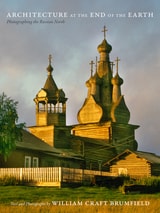
The architectural masterpieces Brumfield photographed are diverse: they range from humble chapels to grand cathedrals, buildings that are either dilapidated or well cared for, and structures repurposed during the Soviet era. Included are onion-domed wooden churches such as the Church of the Dormition, built in 1674 in Varzuga; the massive walled Transfiguration Monastery on Great Solovetsky Island, which dates to the mid-1550s; the Ferapontov-Nativity Monastery's frescoes, painted in 1502 by Dionisy, one of Russia's greatest medieval painters; nineteenth-century log houses, both rustic and ornate; and the Cathedral of St. Sophia in Vologda, which was commissioned by Ivan the Terrible in the 1560s. The text that introduces the photographs outlines the region's significance to Russian history and culture.
Brumfield is challenged by the immense difficulty of accessing the Russian North, and recounts traversing sketchy roads, crossing silt-clogged rivers on barges and ferries, improvising travel arrangements, being delayed by severe snowstorms, and seeing the region from the air aboard the small planes he needs to reach remote areas.
The buildings Brumfield photographed, some of which lie in near ruin, are at constant risk due to local indifference and vandalism, a lack of maintenance funds, clumsy restorations, or changes in local and national priorities. Brumfield is concerned with their futures and hopes that the region's beautiful and vulnerable achievements of master Russian carpenters will be preserved. Architecture at the End of the Earth is at once an art book, a travel guide, and a personal document about the discovery of this bleak but beautiful region of Russia that most readers will see here for the first time.
Architecture for the Shroud
Relic and Ritual in TurinJohn Beldon Scott
University of Chicago Press, 2003
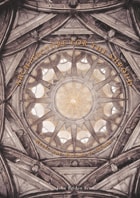
In this amply illustrated volume, John Beldon Scott traces the history of the unique relic, focusing especially on the black-marble and gilt-bronze structure Guarino Guarini designed to house and exhibit it. A key Baroque monument, the chapel comprises many unusual architectural features, which Scott identifies and explains, particulary how the chapel's unprecedented geometry and bizarre imagery convey to the viewer the supernatural powers of the object enshrined there. Drawing on early plans and documents, he demonstrates how the architect's design mirrors the Shroud's strange history as well as political aspirations of its owners, the Dukes of Savoy. Exhibiting it ritually, the Savoy prized their relic with its godly vestige as a means to link their dynasty with divine purposes. Guarini, too, promoted this end by fashioning an illusionary world and sacred space that positioned the duke visually so that he appeared close to the Shroud during its ceremonial display. Finally, Scott describes how the additional need for an outdoor stage for the public showing of the relic to the thousands who came to Turin to see it also helped shape the urban plan of the city and its transformation into the Savoyard capital.
Exploring the mystique of this enigmatic relic and investigating its architectural and urban history for the first time, Architecture for the Shroud will appeal to anyone curious about the textile, its display, and the architectural settings designed to enhance its veneration and boost the political agenda of the ruling family.
Architecture in Texas
1895-1945By Jay C. Henry
University of Texas Press, 1993
Texas architecture of the twentieth century encompasses a wide range of building styles, from an internationally inspired modernism to the Spanish Colonial Revival that recalls Texas' earliest European heritage. This book is the first comprehensive survey of Texas architecture of the first half of the twentieth century.
More than just a catalog of buildings and styles, the book is a social history of Texas architecture. Jay C. Henry discusses and illustrates buildings from around the state, drawing a majority of his examples from the ten to twelve largest cities and from the work of major architects and firms, including C. H. Page and Brother, Trost and Trost, Lang and Witchell, Sanguinet and Staats, Atlee B. and Robert M. Ayres, David Williams, and O'Neil Ford. The majority of buildings he considers are public ones, but a separate chapter traces the evolution of private housing from late-Victorian styles through the regional and international modernism of the 1930s. Nearly 400 black-and-white photographs complement the text.
Written to be accessible to general readers interested in architecture, as well as to architectural professionals, this work shows how Texas both participated in and differed from prevailing American architectural traditions.
Architecture in Translation
Germany, Turkey, and the Modern HouseEsra Akcan
Duke University Press, 2012
Architecture of Life
Soviet Modernism and the Human SciencesAlla Vronskaya
University of Minnesota Press, 2022
Explores how Soviet architects reimagined the built environment through the principles of the human sciences
During the 1920s and 1930s, proponents of Soviet architecture looked to various principles within the human sciences in their efforts to formulate a methodological and theoretical basis for their modernist project. Architecture of Life delves into the foundations of this transdisciplinary and transnational endeavor, analyzing many facets of their radical approach and situating it within the context of other modernist movements that were developing concurrently across the globe.
Examining the theories advanced by El Lissitzky, Moisei Ginzburg, and Nikolay Ladovsky, as well as those of their lesser-known colleagues, this illuminating study demonstrates how Soviet architects of the interwar period sought to mitigate Fordist production methods with other, ostensibly more human-oriented approaches that drew on the biological and psychological sciences. Envisioning the built environment as innately connected to social evolution, their methods incorporated aspects of psychoanalysis, personality theory, and studies in spatial perception, all of which were integrated into an ideology that grounded functional design firmly within the attributes of the individual.
A comprehensive overview of the ideals that permeated its expanded project, Architecture of Life explicates the underlying impulses that motivated Soviet modernism, highlighting the deep interconnections among the ways in which it viewed all aspects of life, both natural and manufactured.
.
Architecture of Memory
Exploring (Post-) Jewish Spaces in Eastern EuropeNatalia Romik
University College London, 2025
Using archival, architectural, and artistic methods, Architecture of Memory investigates the spectral architecture of former shtetls, predominantly Jewish towns in Central and Eastern Europe before World War II. Through architectural designs, art, and theoretical discussions mapping the historical legacy and present condition of shtetls, author Natalia Romik explores themes of architectural disappearance, urban remembrance, and functional change amid social upheaval. Romik’s unique design research of synagogue ruins, burial grounds, former ritual baths, and other “difficult heritage” contributes to discussions about the protection of Jewish heritage in places where there is no longer any Jewish population.
Architecture of Middle Tennessee
The Historic American Buildings SurveyThomas B. Brumbaugh
Vanderbilt University Press, 1974
Vanderbilt staffers discovered a treasure trove of photos and diagrams from the HABS survey that did not make the original edition in the Press archives. This new, expanded edition contains all of the original text and images from the first volume, plus many of the forgotten archived materials collected by HABS in the 1970s.
In her new introduction to this reissue, Aja Bain discusses why these buildings were saved and wonders about what lessons preservationists can learn now about how to preserve a wider swath of our shared history.
Architecture of Migration
The Dadaab Refugee Camps and Humanitarian SettlementAnooradha Iyer Siddiqi
Duke University Press, 2024
Architecture of Minoan Crete
Constructing Identity in the Aegean Bronze AgeBy John C. McEnroe
University of Texas Press, 2010
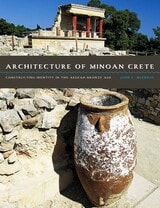
Ever since Sir Arthur Evans first excavated at the site of the Palace at Knossos in the early twentieth century, scholars and visitors have been drawn to the architecture of Bronze Age Crete. Much of the attraction comes from the geographical and historical uniqueness of the island. Equidistant from Europe, the Middle East, and Africa, Minoan Crete is on the shifting conceptual border between East and West, and chronologically suspended between history and prehistory. In this culturally dynamic context, architecture provided more than physical shelter; it embodied meaning. Architecture was a medium through which Minoans constructed their notions of social, ethnic, and historical identity: the buildings tell us about how the Minoans saw themselves, and how they wanted to be seen by others.
Architecture of Minoan Crete is the first comprehensive study of the entire range of Minoan architecture—including houses, palaces, tombs, and cities—from 7000 BC to 1100 BC. John C. McEnroe synthesizes the vast literature on Minoan Crete, with particular emphasis on the important discoveries of the past twenty years, to provide an up-to-date account of Minoan architecture. His accessible writing style, skillful architectural drawings of houses and palaces, site maps, and color photographs make this book inviting for general readers and visitors to Crete, as well as scholars.
Architecture of the Well-Tempered Environment
Reyner Banham
University of Chicago Press, 1984
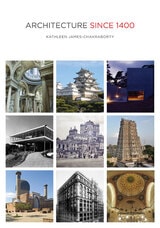
Architecture since 1400
Kathleen James-Chakraborty
University of Minnesota Press, 2014
The first global history of architecture to give equal attention to Western and non-Western structures and built landscapes, Architecture since 1400 is unprecedented in its range, approach, and insight. From Tenochtitlan’s Great Pyramid in Mexico City and the Duomo in Florence to Levittown’s suburban tract housing and the Bird’s Nest Stadium in Beijing, its coverage includes the world’s most celebrated structures and spaces along with many examples of more humble vernacular buildings. Lavishly illustrated with more than 300 photographs, plans, and interiors, this book presents key moments and innovations in architectural modernity around the globe.
Deftly integrating architectural and social history, Kathleen James-Chakraborty pays particular attention to the motivations of client and architect in the design and construction of environments both sacred and secular: palaces and places of worship as well as such characteristically modern structures as the skyscraper, the department store, and the cinema. She also focuses on the role of patrons and addresses to an unparalleled degree the impact of women in commissioning, creating, and inhabiting the built environment, with Gertrude Jekyll, Lina Bo Bardi, and Zaha Hadid taking their place beside Brunelleschi, Sinan, and Le Corbusier.
Making clear that visionary architecture has never been the exclusive domain of the West and recognizing the diversity of those responsible for commissioning, designing, and constructing buildings, Architecture since 1400 provides a sweeping, cross-cultural history of the built environment over six centuries.
Architecture's Model Environments
Lisa Moffitt
University College London, 2023
Making innovative use of the distilling lens of the architectural model, Architecture’s Model Environments is a novel and far-reaching exploration of the many dialogues buildings have with their environmental surroundings. Expanding on histories of building technology, the book sheds new light on how physical models, conventionally understood as engineering experimentation devices, enable architectural design speculation. The book begins with a catalog of ten original model prototypes—of wind tunnels, water tables, and filling boxes—and is the first of its kind to establish an architectural approach to fabricating such environmental models. Subsequent chapters feature three precedent models that have been largely overlooked within the wider oeuvres of their authors: French polymath Étienne-Jules Marey’s wind tunnels, Hungarian-American architects Victor and Aladár Olgyay’s thermoheliodon, and Scottish chemist and building ventilation expert David Boswell “The Ventilator” Reid’s test tube convection experiments. Moving between historic moments and the present day, between case studies and original prototypes, the book reveals the potent ability of models, as both physical artifacts and mental ideals, to reflect prevailing cultural views about the world and to even reshape those views.
Architectures of Revolt
The Cinematic City circa 1968Mark Shiel
Temple University Press, 2018
Coinciding with the fiftieth anniversary of the worldwide mass protest movements of 1968—against war, imperialism, racism, poverty, misogyny, and homophobia—the exciting anthology Architectures of Revolt explores the degree to which the real events of political revolt in the urban landscape in 1968 drove change in the attitudes and practices of filmmakers and architects alike.
In and around 1968, as activists and filmmakers took to the streets, commandeering public space, buildings, and media attention, they sought to re-make the urban landscape as an expression of utopian longing or as a dystopian critique of the established order. In Architectures of Revolt, the editor and contributors chronicle city-specific case studies from Paris, Berlin, Milan, and Chicago to New York, Los Angeles, Mexico City, and Tokyo. The films discussed range from avant-garde and agitprop shorts to mainstream narrative feature films. All of them share a focus on the city and, often, particular streets and buildings as places of political contestation and sometimes violence, which the medium of cinema was uniquely equipped to capture.
Contributors include: Stephen Barber, Stanley Corkin, Jesse Lerner, Jon Lewis, Gaetana Marrone, Jennifer Stob, Andrew Webber, and the editor.
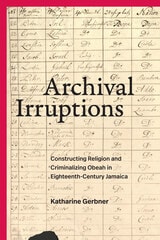
Archival Irruptions
Constructing Religion and Criminalizing Obeah in Eighteenth-Century JamaicaKatharine Gerbner
Duke University Press, 2025

Archive Activism
Memoir of a "Uniquely Nasty" JourneyCharles Francis
University of North Texas Press, 2023
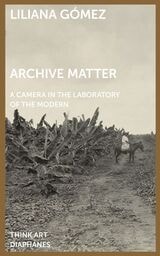
Archive Matter
A Camera in the Laboratory of the ModernLiliana Gómez
Diaphanes, 2023
A journey through the United Fruit Company’s photo archive and its documentation of corporate expansion into the Caribbean.
The establishment of the United Fruit Company as a global political agent with its banana plantations was met with considerable resistance. Now the company’s photographic records are the focal point of Archive Matter as it examines photography’s historical and political impact through the argument that this overlooked, but important, archive made capitalist expansion into the Caribbean possible.
Author Liliana Gómez examines the images from within their “optical unconscious” and via the archive’s silences and omissions. The implication of these silences, Gómez argues, is the attempt to conceal the violence embedded within the realities of the plantations’ daily operations and corporate efforts to “modernize” the Caribbean.
Archive Stories
Facts, Fictions, and the Writing of HistoryAntoinette Burton, ed.
Duke University Press, 2005
Archive Stories brings together ethnographies of the archival world, most of which are written by historians. Some contributors recount their own experiences. One offers a moving reflection on how the relative wealth and prestige of Western researchers can gain them entry to collections such as Uzbekistan’s newly formed Central State Archive, which severely limits the access of Uzbek researchers. Others explore the genealogies of specific archives, from one of the most influential archival institutions in the modern West, the Archives nationales in Paris, to the significant archives of the Bakunin family in Russia, which were saved largely through the efforts of one family member. Still others explore the impact of current events on the analysis of particular archives. A contributor tells of researching the 1976 Soweto riots in the politically charged atmosphere of the early 1990s, just as apartheid in South Africa was coming to an end. A number of the essays question what counts as an archive—and what counts as history—as they consider oral histories, cyberspace, fiction, and plans for streets and buildings that were never built, for histories that never materialized.
Contributors. Tony Ballantyne, Marilyn Booth, Antoinette Burton, Ann Curthoys, Peter Fritzsche, Durba Ghosh, Laura Mayhall, Jennifer S. Milligan, Kathryn J. Oberdeck, Adele Perry, Helena Pohlandt-McCormick, John Randolph, Craig Robertson, Horacio N. Roque Ramírez, Jeff Sahadeo, Reneé Sentilles
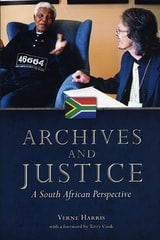
Archives and Justice
Verne Harris
Society of American Archivists, 2007
Archives of Empire
Volume 2. The Scramble for AfricaBarbara Harlow and Mia Carter, eds.
Duke University Press, 2004
While focusing on the expansion of the British Empire, The Scramble for Africa illuminates the intense nineteenth-century contest among European nations over Africa’s land, people, and resources. Highlighting the 1885 Berlin Conference in which Britain, France, Germany, Portugal, and Italy partitioned Africa among themselves, this collection follows British conflicts with other nations over different regions as well as its eventual challenge to Leopold of Belgium’s rule of the Congo. The reports, speeches, treatises, proclamations, letters, and cartoons assembled here include works by Henry M. Stanley, David Livingstone, Joseph Conrad, G. W. F. Hegel, Winston Churchill, Charles Darwin, and Arthur Conan Doyle. A number of pieces highlight the proliferation of companies chartered to pursue Africa’s gold, diamonds, and oil—particularly Cecil J. Rhodes’s British South Africa Company and Frederick Lugard’s Royal Niger Company. Other documents describe debacles on the continent—such as the defeat of General Gordon in Khartoum and the Anglo-Boer War—and the criticism of imperial maneuvers by proto-human rights activists including George Washington Williams, Mark Twain, Olive Schreiner, and E.D. Morel.
Archives of Empire
Volume I. From The East India Company to the Suez CanalBarbara Harlow and Mia Carter, eds.
Duke University Press, 2003
Tracing the beginnings of the British colonial enterprise in South Asia and the Middle East, From the Company to the Canal brings together key texts from the era of the privately owned British East India Company through the crises that led to the company’s takeover by the Crown in 1858. It ends with the momentous opening of the Suez Canal in 1869. Government proclamations, military reports, and newspaper articles are included here alongside pieces by Rudyard Kipling, Charles Dickens, John Stuart Mill, Karl Marx, Benjamin Disraeli, and many others. A number of documents chronicle arguments between mercantilists and free trade advocates over the competing interests of the nation and the East India Company. Others provide accounts of imperial crises—including the trial of Warren Hastings, the Indian Rebellion (Sepoy Mutiny), and the Arabi Uprising—that highlight the human, political, and economic costs of imperial domination and control.
Archives of Infamy
Foucault on State Power in the Lives of Ordinary CitizensNancy Luxon
University of Minnesota Press, 2019
Expanding the insights of Arlette Farge and Michel Foucault’s Disorderly Families into policing, public order, (in)justice, and daily life
What might it mean for ordinary people to intervene in the circulation of power between police and the streets, sovereigns and their subjects? How did the police come to understand themselves as responsible for the circulation of people as much as things—and to separate law and justice from the maintenance of a newly emergent civil order? These are among the many questions addressed in the interpretive essays in Archives of Infamy.
Crisscrossing the Atlantic to bring together unpublished radio broadcasts, book reviews, and essays by historians, geographers, and political theorists, Archives of Infamy provides historical and archival contexts to the recent translation of Disorderly Families by Arlette Farge and Michel Foucault. This volume includes new translations of key texts, including a radio address Foucault gave in 1983 that explains the writing process for Disorderly Families; two essays by Foucault not readily available in English; and a previously untranslated essay by Farge that describes how historians have appropriated Foucault.
Archives of Infamy pushes past old debates between philosophers and historians to offer a new perspective on the crystallization of ideas—of the family, gender relations, and political power—into social relationships and the regimes of power they engender.
Contributors: Roger Chartier, Collège de France; Stuart Elden, U of Warwick; Arlette Farge, Centre national de recherche scientifique; Michel Foucault (1926–1984); Jean-Philippe Guinle, Catholic Institute of Paris; Michel Heurteaux; Pierre Nora, École des Hautes Études en Sciences Sociales; Michael Rey (1953–1993); Thomas Scott-Railton; Elizabeth Wingrove, U of Michigan.
Archives of Instruction
Nineteenth-Century Rhetorics, Readers, and Composition Books in the United StatesJean Ferguson Carr, Stephen L. Carr, and Lucille M. Schultz
Southern Illinois University Press, 2005
Both a historical recovery and a critical rethinking of the functions and practices of textbooks, Archives of Instruction: Nineteenth-Century Rhetorics, Readers, and Composition Books in the United States argues for an alternative understanding of our rhetorical traditions. The authors describe how the pervasive influence of nineteenth-century literacy textbooks demonstrate the early emergence of substantive instruction in reading and writing. Tracing the histories of widespread educational practices, the authors treat the textbooks as an important means of cultural formation that restores a sense of their distinguished and unique contributions.
At the beginning of the nineteenth century, few people in the United States had access to significant school education or to the materials of instruction. By century’s end, education was a mass—though not universal—experience, and literacy textbooks were ubiquitous artifacts, used both in home and in school by a growing number of learners from diverse backgrounds. Many of the books have been forgotten, their contributions slighted or dismissed, or they are remembered through a haze of nostalgia as tokens of an idyllic form of schooling. Archives of Instruction suggests strategies for re-reading the texts and details the watersheds in the genre, providing a new perspective on the material conditions of schooling, book publication, and emerging practices of literacy instruction. The volume includes a substantial bibliography of primary and secondary works related to literacy instruction at all levels of education in the United States during the nineteenth century.
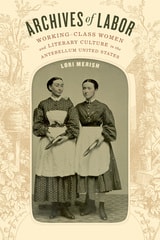
Archives of Labor
Working-Class Women and Literary Culture in the Antebellum United StatesLori Merish
Duke University Press, 2017
Archives of the Anthropocene
Visual Grammars of Deep TimeYuriko Furuhata
Duke University Press, 2026
Archives, Archival Practices, and the Writing of History in Premodern Korea
Jungwon Kim, special issue editor
Duke University Press, 0
Contributors. Ksenia Chizhova, Jungwon Kim, Sung-Eun Thomas Kim, Franklin Rausch, Graeme Reynolds, Sem Vermeersch, Sixiang Wang, Yuan Ye
Archives, Documentation, and Institutions of Social Memory
Essays from the Sawyer SeminarFrancis X. Blouin, Jr. and William G. Rosenberg, Editors
University of Michigan Press, 2011
Archiving Medical Violence
Consent and the Carceral StateChristopher Perreira
University of Minnesota Press, 2023
A major new reading of a U.S. public health system shaped by fraught perceptions of culture, race, and criminality
At the heart of Archiving Medical Violence is an interrogation of the notions of national and scientific progress, marking an advance in scholarship that shows how such violence is both an engine of medical progress and, more broadly, the production of empire. It reads the medical archive through a lens that centers how it is produced, remembered, and contested within cultural production and critical memory.
In this innovative and interdisciplinary book, Christopher Perreira argues that it is in the contradictions of settler colonialism and racial capitalism that we find how medical violence is narrated as a public good. He presents case studies from across a range of locations—Hawai‘i, California, Louisiana, Guatemala—and historical periods from the nineteenth century on. Examining national and scientific conceptions of progress through the lens of medicine and public health, he places official archives in dialogue with visual and literary works, patient writing, and more.
Archiving Medical Violence explores the contested public terrains for narrating value and vulnerabilities, bodies and geographical locations. Ultimately, Perreira reveals for us a medical imaginary built on racialized criminality driving contemporary politics of citizenship, memory, and identity.
Retail e-book files for this title are screen-reader friendly with images accompanied by short alt text and/or extended descriptions.
Archiving Mexican Masculinities in Diaspora
Nicole M. Guidotti-Hernández
Duke University Press, 2021
Archiving the Unspeakable
Silence, Memory, and the Photographic Record in CambodiaMichelle Caswell
University of Wisconsin Press, 2014
Winner, Waldo Gifford Leland Award, Society of American Archivists
Longlist, ICAS Book Prize, International Convention of Asia Scholars
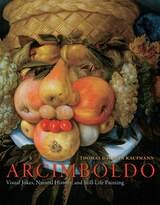
Arcimboldo
Visual Jokes, Natural History, and Still-Life PaintingThomas DaCosta Kaufmann
University of Chicago Press, 2010
In Giuseppe Arcimboldo’s most famous paintings, grapes, fish, and even the beaks of birds form human hair. A pear stands in for a man’s chin. Citrus fruits sprout from a tree trunk that doubles as a neck. All sorts of natural phenomena come together on canvas and panel to assemble the strange heads and faces that constitute one of Renaissance art’s most striking oeuvres. The first major study in a generation of the artist behind these remarkable paintings, Arcimboldo tells the singular story of their creation.
Drawing on his thirty-five-year engagement with the artist, Thomas DaCosta Kaufmann begins with an overview of Arcimboldo’s life and work, exploring the artist’s early years in sixteenth-century Lombardy, his grounding in Leonardesque traditions, and his tenure as a Habsburg court portraitist in Vienna and Prague. Arcimboldo then trains its focus on the celebrated composite heads, approaching them as visual jokes with serious underpinnings—images that poetically display pictorial wit while conveying an allegorical message. In addition to probing the humanistic, literary, and philosophical dimensions of these pieces, Kaufmann explains that they embody their creator’s continuous engagement with nature painting and natural history. He reveals, in fact, that Arcimboldo painted many more nature studies than scholars have realized—a finding that significantly deepens current interpretations of the composite heads.
Demonstrating the previously overlooked importance of these works to natural history and still-life painting, Arcimboldo finally restores the artist’s fantastic visual jokes to their rightful place in the history of both science and art.
Arctic Adaptations
Native Whalers and Reindeer Herders of Northern EurasiaIgor Krupnik
Dartmouth College Press, 2002

Arctic Madness
The Anthropology of a DelusionPierre Déléage
HAU, 2020
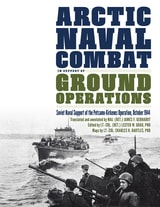
Arctic Naval Combat in Support of Ground Operations
Soviet Naval Support of the Petsamo-Kirkenes Operation, October 1944James F Gebhardt
University of Alaska Press, 2025
The largest Arctic battle on record, involving 133,500 Soviets and 45,000 Germans and Quisling Norwegians, the Petsamo-Kirkenes Operation sought to liberate the northernmost part of Norway from German occupation during World War II. The Soviet navy played a previously unrecognized crucial role in the operation by providing fire support and transportation, as well as conducting raids and combat landings on the enemy-held coast. The harsh Arctic environment, including extreme cold, ice, and limited daylight, posed significant challenges to the Soviet and German forces. Despite these hardships, the Soviet forces achieved their objectives, defeated the German Army, and successfully liberated the area.
Arctic Naval Combat in Support of Ground Operations is a powerful companion to Gebhardt’s previous translation, The Petsamo-Kirkenes Operation: Soviet Breakthrough and Pursuit in the Arctic, October 1944, which details this operation’s ground offensive. Providing a starting point for the study and understanding of combined arms and services combat in the Arctic, an increasingly important and accessible part of the planet where military concerns are rapidly expanding, this work is a valuable addition to the literature of World War II military history and a significant additional perspective on the Soviet military.

Arctic Politics
Conflict and Cooperation in the Circumpolar NorthOran R. Young
Dartmouth College Press, 1992

Arctic Village
A 1930's Portrait of Wiseman, AlaskaRobert Marshall
University of Alaska Press, 1991
The richness of statistical coverage in this book, and Marshall's careful descriptions of the characters he met, provide readers with a window to the world of 1930 and a nearly complete record of the Koyukuk civilization as he saw it. Readers learn what the people of Wiseman thought about sex, religion, politics, and the myriad of ways they found to cope with and enjoy life in a wilderness community.
Arctic Wars, Animal Rights, Endangered Peoples
Finn. Lynge
Dartmouth College Press, 2002
Arcticologies
Early Modern Actions for Our Warmer WorldLowell Duckert
University of Minnesota Press, 2025
Exploring the frozen past to rethink our warming future
Do we really know what cold is? In Arcticologies, Lowell Duckert delves into early modern European texts to trace how representations of frigidity from the sixteenth and seventeenth centuries have contributed to historical understandings of climate and contemporary debates on climate change. Arguing that human culture and science are, in fact, indebted to the cold, Duckert suggests that these early depictions offer critical terms for advancing the aims of climate-change activism and assisting in counterapocalyptic thinking.
An imaginative and intellectual journey, Arcticologies reveals the enduring role of cold in wide-ranging storytelling traditions. It draws on Shakespeare’s Hamlet and Othello and the works of Thomas Dekker, René Descartes, and Thomas Hobbes and is informed throughout by contemporary Indigenous writing, including that of Sheila Watt-Cloutier and Leanne Betasamosake Simpson. In reflecting on these assorted accounts, Duckert sees cold as not only an environmental hardship but a source of cultural creativity and resilience, highlighting moments of collaboration between humans and the icy world, from arctic exploration to urban fairs on frozen rivers.
Cold, Duckert makes clear, is more than the absence of warmth. Situating our contemporary obsession with impending planetary meltdown within the mazelike arcticologies of the past, Duckert shows how early modern cold brought about forms of curiosity, vocabulary, and interspecies relationality that can serve us today. In doing so, he asks us to identify what has been lost and who is at risk in today’s thinning cold—while also urging us to imagine alternative futures focused not on inevitable and total collapse but on adaptation and preserving what remains.
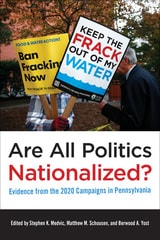
Are All Politics Nationalized?
Evidence from the 2020 Campaigns in PennsylvaniaEdited by Stephen K. Medvic, Matthew M. Schousen, and Berwood A. Yost
Temple University Press, 2023
Given the news media’s focus on national issues and debates, voters might be expected to make decisions about state and local candidates based on their views of the national parties and presidential candidates. However, nationalization as a concept, and the process by which politics becomes nationalized, are not fully understood. Are All Politics Nationalized? addresses this knowledge gap by looking at the behavior of candidates and the factors that influence voters’ electoral choices.
The editors and contributors examine the 2020 elections in six Pennsylvania districts to explore the level of nationalization in campaigns for Congress and state legislature. They also question if politicians are encouraging nationalized behavior and straight ticket voting—especially with down-ballot races.
Are All Politics Nationalized? concludes that issues specific to particular districts—such as fracking and local union politics—still matter, and candidates are eager to connect with voters by highlighting their ties to the local community. National politics do trickle down to local races, but races up and down the ballot are still heavily localized.

Are Girls Necessary?
Lesbian Writing and Modern HistoriesJulie Abraham
University of Minnesota Press, 2008

Are We One?
Jewish Identity in the United States and IsraelAuerbach, Jerold S
Rutgers University Press, 2001
What binds together Jews of Israel and the United States? Amid the hope and frustration generated by the Middle East peace process, the meaning of Jewish statehood is more vigorously contested than ever before. A secular democratic Israel, responsive to Western liberal values, is prepared to make peace with the Palestinians by sacrificing its own historic homeland. But a covenantal Israel, which draws its Jewish identity from divine promise and the biblical narrative, refuses to surrender to modern imperatives. As the very nature of Jewish statehood has become ever more polarized, American Jewish life has been profoundly affected by this fateful Zionist contradiction.
In Are We One? Jerold S. Auerbach presents a surprising new interpretation of this contemporary Jewish dilemma. The modern Jewish impulse to embrace Western values, he writes, exacts a terrible price. He offers a critical reassessment of Zionism, a challenging analysis of the sources of the identification of American Jews with Israel—and a gloomy prognosis of the future of Jewish life, both in Israel and the United States.
In a ringing indictment that is sure to spark controversy, he states that the eagerness of secular Israelis to import American culture reflects their sweeping rejection of Jewish and Zionist values. Indeed, the diminishing number of Israelis who actually remain faithful to Jewish religious and historical imperatives are denigrated as fundamentalist zealots by Israeli and American Jews alike. Present-day Israel now exhibits such Jewish self-loathing, he states, that it has depleted its own ability to inspire world Jewry.
In a groundbreaking book that draws upon original historical analysis and extensive personal experience in Israel, Auerbach invites readers to consider the debilitating consequences of an adulterated Jewish identity in Israel and in the United States for the very future of Judaism.
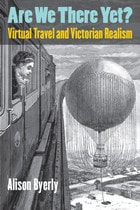
Are We There Yet?
Virtual Travel and Victorian RealismAlison Byerly
University of Michigan Press, 2012
Are We There Yet? Virtual Travel and Victorian Realismconnects the Victorian fascination with "virtual travel" with the rise of realism in nineteenth-century fiction and twenty-first-century experiments in virtual reality. Even as the expansion of river and railway networks in the nineteenth century made travel easier than ever before, staying at home and fantasizing about travel turned into a favorite pastime. New ways of representing place—360-degree panoramas, foldout river maps, exhaustive railway guides—offered themselves as substitutes for actual travel. Thinking of these representations as a form of "virtual travel" reveals a surprising continuity between the Victorian fascination with imaginative dislocation and twenty-first -century efforts to use digital technology to expand the physical boundaries of the self.
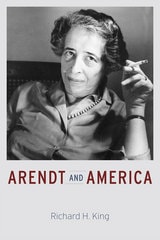
Arendt and America
Richard H. King
University of Chicago Press, 2015
Situating Arendt within the context of U.S. intellectual, political, and social history, King reveals how Arendt developed a fascination with the political thought of the Founding Fathers. King also re-creates her intellectual exchanges with American friends and colleagues, such as Dwight Macdonald and Mary McCarthy, and shows how her lively correspondence with sociologist David Riesman helped her understand modern American culture and society. In the last section of Arendt and America, King sets out the context in which the Eichmann controversy took place and follows the debate about “the banality of evil” that has continued ever since. As King shows, Arendt’s work, regardless of focus, was shaped by postwar American thought, culture, and politics, including the Civil Rights Movement and the Cold War.
For Arendt, the United States was much more than a refuge from Nazi Germany; it was a stimulus to rethink the political, ethical, and historical traditions of human culture. This authoritative combination of intellectual history and biography offers a unique approach for thinking about the influence of America on Arendt’s ideas and also the effect of her ideas on American thought.
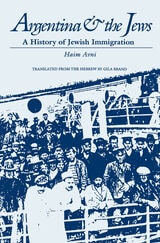
Argentina and the Jews
A History of Jewish ImmigrationHaim Avni
University of Alabama Press, 1991
Traces the shifting patterns of Jewish immigration and Argentine immigration policy.
Argentina is home to the largest Jewish community in the Hispanic world, the second largest in the Western hemisphere. During successive political and social regimes, Argentina alternately barred Jews from entering the country and recruited them to immigrate, persecuted Jews as heretics or worse and welcomed them as productive settlers, restricted Jews by law and invested them with the fullest rights of citizenship. This volume traces the shifting patterns of Jewish immigration and Argentine immigration policy, both as manifestations of cultural and historical processes and as forces shaping the emergence of a large and energetic Jewish community.
Within Argentina, many Jews followed traditional immigration strategies by consolidating communities and institutions in Buenos Aires and other cities. But many others settled on the land, in agricultural colonies sponsored by Baron Maurice de Hirsch’s Jewish Colonization Association, a group with far-reaching impact that is examined closely in this book. The Israeli kibbutz movement drew strength from the Argentine farming colonies, when beginning in 1949 groups of Argentine Jews immigrated to Israel to found kibbutzes. Eventually, in the face of political and economic upheavals with anti-Semitic undercurrents, almost 40,000 Jews left Argentina for Israel. A country of absorption became a country of exodus, and Zionism became a central focus of Argentine Jewry, interlocking families and fates separated by oceans and continents.
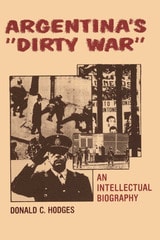
Argentina's "Dirty War"
An Intellectual BiographyBy Donald C. Hodges
University of Texas Press, 1991
Argentines ask how their ultracivilized country, reputedly the most European in Latin America, could have relapsed into near-barbarism in the 1970s. This enlightening study seeks to answer that question by reviewing the underlying political events and intellectual foundations of the "dirty war" (1975–1978) and overlapping Military Process (1976–1982). It examines the ideologies and actions of the main protagonists—the armed forces, guerrillas, and organized labor—over time and traces them to their roots.
In the most comprehensive treatment of the subject to date, Hodges examines primary materials never seen by other researchers, including clandestinely published guerrilla documents, and interviews important actors in Argentina's political drama. His wide-ranging scholarship traces the origins of the national security and national salvation doctrines to the Spanish Inquisition, sixteenth-century witch hunts, and nineteenth-century reactions to the modernizing ideologies of liberalism, democracy, socialism, and communism.
Hodges posits that the "dirty war," Military Process, and revolutionary war to which they responded represented the culmination of social tensions that arose in 1930 with the launching of the Military Era by Argentina's first successful twentieth-century coup. He offers the disquieting hypothesis that as long as the "Argentine Question" remains unsettled the military may intervene again, the resistance movement will remain strong, and violence may continue even under a democratic government.

Argentina, the United States, and the Anti-Communist Crusade in Central America, 1977–1984
Mis Lam#26Ariel Armony
Ohio University Press, 1997
Ariel Armony focuses, in this study, on the role played by Argentina in the anti–Communist crusade in Central America. This systematic examination of Argentina’s involvement in the Central American drama of the late 1970s and early 1980s fine–tunes our knowledge of a major episode of the Cold War era.
Basing his study on exhaustive research in the United States, Argentina, and Nicaragua, Armony adroitly demolishes several key assumptions that have shaped the work of scholars in U.S. foreign policy, Argentine military politics, and Central American affairs.