Results by title
8642 books match the query '20th Century' and 836 start with a
A Promise And A Way Of Life
White Antiracist ActivismBecky Thompson
University of Minnesota Press, 2001
The first in-depth look at white people’s activism in fighting racism during the past fifty years.
Not since the Civil Rights Movement of the 1950s and 1960s, when many white college students went south to fight against Jim Crow laws, has white antiracist activity held the public’s attention. Yet there have always been white people involved in fighting racism. In this passionate work, Becky Thompson looks at white Americans who have struggled against racism, offering examples of both successes and failures, inspirations, practical philosophies, and a way ahead.
A Promise and a Way of Life weaves an account of the past half-century based on the life histories of thirty-nine people who have placed antiracist activism at the center of their lives. Through a rich and fascinating narrative that links individual experiences with social and political history, Thompson shows the ways, both public and personal, in which whites have opposed racism during several social movements: the Civil Rights and Black Power movements, multiracial feminism, the Central American peace movement, the struggle for antiracist education, and activism against the prison industry. Beginning with the diverse catalysts that started these activists on their journeys, this book demonstrates the contributions and limitations of white antiracism in key social justice movements.
Through these stories, crucial questions are raised: Does antiracist work require a repudiation of one’s whiteness or can that identity be transformed through political commitment and alliances? What do white people need to do to undermine white privilege? What would it take to build a multiracial movement in which white people are responsible for creating antiracist alliances while not co-opting people of color?
Unique in its depth and thoroughness, A Promise and a Way of Life is essential for anyone currently fighting racism or wondering how to do so. Through its demonstration of the extraordinary personal and social transformations ordinary people can make, it provides a new paradigm for movement activity, one that will help to incite and guide future antiracist activism.
A Promise at Sobibór
A Jewish Boy’s Story of Revolt and Survival in Nazi-Occupied PolandPhilip “Fiszel” Bialowitz, with Joseph Bialowitz; Foreword by Wladyslaw Bartoszewski
University of Wisconsin Press, 2012
A Promise at Sobibór is the story of Fiszel Bialowitz, a teenaged Polish Jew who escaped the Nazi gas chambers. Between April 1942 and October 1943, about 250,000 Jews from European countries and the Soviet Union were sent to the Nazi death camp at Sobibór in occupied Poland. Sobibór was not a transit camp or work camp: its sole purpose was efficient mass murder. On October 14, 1943, approximately half of the 650 or so prisoners still alive at Sobibór undertook a daring and precisely planned revolt, killing SS officers and fleeing through minefields and machine-gun fire into the surrounding forests, farms, and towns. Only about forty-two of them, including Fiszel, are known to have survived to the end of the war.
Philip (Fiszel) Bialowitz, now an American citizen, tells his eyewitness story here in the real-time perspective of his own boyhood, from his childhood before the war and his internment in the brutal Izbica ghetto to his harrowing six months at Sobibór—including his involvement in the revolt and desperate mass escape—and his rescue by courageous Polish farmers. He also recounts the challenges of life following the war as a teenaged displaced person, and his eventual efforts as a witness to the truth of the Holocaust.
In 1943 the heroic leaders of the revolt at Sobibór, Sasha Perchersky and Leon Feldhendler, implored fellow prisoners to promise that anyone who survived would tell the story of Sobibór: not just of the horrific atrocities committed there, but of the courage and humanity of those who fought back. Bialowitz has kept that promise.
Best Books for General Audiences, selected by the American Association for School Libraries
Best Books for High Schools, selected by the American Association for School Libraries
Best Books for Special Interests, selected by the Public Library Association

A Pryor Commitment
David Pryor
Butler Center for Arkansas Studies, 2009
A Publisher's Paradise
Expatriate Literary Culture in Paris, 1890-1960Colette Colligan
University of Massachusetts Press, 2014
From 1890 to 1960, some of Anglo-America's most heated cultural contests over books, sex, and censorship were staged not at home, but abroad in the City of Light. Paris, with its extraordinary liberties of expression, became a special place for interrogating the margins of sexual culture and literary censorship, and a wide variety of English language “dirty books” circulated through loose expatriate publishing and distribution networks.
A Publisher's Paradise explores the political and literary dynamics that gave rise to this expatriate cultural flourishing, which included everything from Victorian pornography to the most daring and controversial modernist classics. Colette Colligan tracks the British and French politicians and diplomats who policed Paris editions of banned books and uncovers offshore networks of publishers, booksellers, authors, and readers. She looks closely at the stories the “dirty books” told about this publishing haven and the smut peddlers and literary giants it brought together in transnational cultural formations. The book profiles an eclectic group of expatriates living and publishing in Paris, from relatively obscure figures such as Charles Carrington, whose list included both The Picture of Dorian Gray and the pornographic novel Randiana, to bookshop owner Sylvia Beach, famous for publishing James Joyce's Ulysses in 1922.
A Publisher's Paradise is a compelling exploration of the little-known history of foreign pornography in Paris and the central role it played in turning the city into a modernist outpost for literary and sexual vanguardism, a reputation that still lingers today in our cultural myths of midnight in Paris.
A Queer Mother For The Nation
The State And Gabriela MistralLicia Fiol-Matta
University of Minnesota Press, 2002
Chilean writer Gabriela Mistral (1889-1957), the first Latin American to win theNobel Prize for Literature, was a poetic idol for generations of Latin Americans who viewed her as Womanhood incarnate, the national schoolteacher-mother. How this distinctly masculine woman who never gave birth came to occupy this role, and what Mistral’s image, poetry, and life have to say about the relations-and realities-of race, gender, and sexual politics in her time, are the questions Licia Fiol-Matta pursues in this book, recreating the story of a woman whose misrepresentation is at least as intriguing, and as instructive, as her fame.
A Queer Mother for the Nation weaves a nuanced understanding of how Mistral cooperated with authority and fashioned herself as the figure of Motherhood in collaboration with the state. Drawing on Mistral’s little-known political and social essays, her correspondence and photographs, Fiol-Matta reconstructs Mistral’s relationship to state politics. Her work questions the notion of queer bodies as outlaws, and insists on the many ways in which queer subjects have participated in and sustained the normative discourses they seem to rebel against
A Queer Sort of Materialism
Recontextualizing American TheaterDavid Savran
University of Michigan Press, 2003
The selections presented here are by turns entertaining, informative, sophisticated, and polemical, reflecting the author's dual citizenship as rigorous scholar and engaging theater critic. This book also provides a model for a kind of queer historical materialism that will prove useful to a wide range of disciplines, including theater and performance, gender and sexuality, queer/gay/lesbian/transgender studies, American studies, and popular culture.
David Savran is Professor of Theater, the Graduate Center, the City University of New York, and author of Cowboys, Communists, and Queers and Taking It Like a Man.
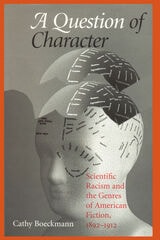
A Question of Character
Scientific Racism and the Genres of American Fiction, 1892-1912Catherine Ann Boeckmann
University of Alabama Press, 2005
Boeckmann links character, literary genre, and science, revealing how major literary works both contributed to and disrupted the construction of race in turn-of-the-century America.
In A Question of Character, Cathy Boeckmann establishes a strong link between racial questions and the development of literary traditions at the end of the 19th century in America. This period saw the rise of "scientific racism," which claimed that the races were distinguished not solely by exterior appearance but also by a set of inherited character traits. As Boeckmann explains, this emphasis on character meant that race was not only a thematic concern in the literature of the period but also a generic or formal one as well.
Boeckmann explores the intersections between race and literary history by tracing the language of character through both scientific and literary writing. Nineteenth-century pseudo-sciences such as phrenology and physiognomy had a vocabulary for discussing racial character that overlapped conceptually with the conventions for portraying race in literature. Through close readings of novels by Thomas Dixon, Mark Twain, William Dean Howells, Charles Chesnutt, and James Weldon Johnson—each of which deals with a black character "passing" as white—Boeckmann shows how this emphasis on character relates to the shift from romantic and sentimental fiction to realism. Because each of these genres had very specific conventions regarding the representation of character, genres often dictated how races could be depicted.
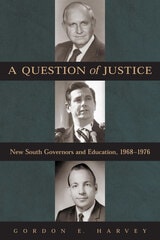
A Question of Justice
New South Governors and Education, 1968-1976Gordon E. Harvey
University of Alabama Press, 2005
The governors who used education to transform the modern South.
In southern politics, 1970 marked a watershed. A group of southern governors entered office that year and changed both the way the nation looked at the South and the way the constituents of those states viewed themselves. Reubin Askew in Florida, John West in South Carolina, Jimmy Carter in Georgia, and Albert Brewer in Alabama all represented a new breed of progressive moderate politician that helped demolish Jim Crow segregation and the dual economies, societies, and educational systems notorious to the Sunbelt South. Historian Gordon Harvey explores the political lives and legacies of three of these governors, examining the conditions that led to such a radical change in political leadership, the effects their legislative agendas had on the identity of their states, and the aftermath of their terms in elected office.
A common thread in each governor's agenda was educational reform. Albert Brewer's short term as Alabama governor resulted in a sweeping education package that still stands as the most progressive the state has seen. Reubin Askew, far more outspoken than Brewer, won the Florida gubernatorial election through a campaign that openly promoted desegregation, busing, and tax reform as a means of equal school funding. John West's commitment to a policy of inclusion helped allay fears of both black and white parents and made South Carolina's one of the smoothest transitions to integrated schools.
As members of the first generation of New South governors, Brewer, Askew, and West played the role of trailblazers. Their successful assaults on economic and racial injustice in their states were certainly aided by such landmark events as Brown v. Board of Education, the civil rights movement, and the expansion of voting rights-all of which sounded the death knell for the traditional one-party segregated South. But in this critical detailing of their work for justice, we learn how these reform-minded men made education central to their gubernatorial terms and, in doing so, helped redefine the very character of the place they called home.

A Question of Quality
Popularity and Value in Modern Creative WritingEdited by Louis Filler
University of Wisconsin Press, 1976
The subjects treated in this symposium have one major characteristic in common, that they have recently, or relatively recently, enjoyed high popularity among readers. Also, they have received from substantial to torrents of comment.
A Quiet Victory for Latino Rights
FDR and the Controversy Over "Whiteness"Patrick D. Lukens
University of Arizona Press, 2012
In 1935 a federal court judge handed down a ruling that could have been disastrous for Mexicans, Mexican Americans, and all Latinos in the United States. However, in an unprecedented move, the Roosevelt administration wielded the power of "administrative law" to neutralize the decision and thereby dealt a severe blow to the nativist movement. A Quiet Victory for Latino Rights recounts this important but little-known story.
To the dismay of some nativist groups, the Immigration Act of 1924, which limited the number of immigrants who could be admitted annually, did not apply to immigrants from Latin America. In response to nativist legal maneuverings, the 1935 decision said that the act could be applied to Mexican immigrants. That decision, which ruled that the Mexican petitioners were not "free white person[s]," might have paved the road to segregation for all Latinos.
The League of United Latin American Citizens (LULAC), founded in 1929, had worked to sensitize the Roosevelt administration to the tenuous position of Latinos in the United States. Advised by LULAC, the Mexican government, and the US State Department, the administration used its authority under administrative law to have all Mexican immigrants—and Mexican Americans—classified as "white." It implemented the policy when the federal judiciary "acquiesced" to the New Deal, which in effect prevented further rulings.
In recounting this story, complete with colorful characters and unlikely bedfellows, Patrick D. Lukens adds a significant chapter to the racial history of the United States.
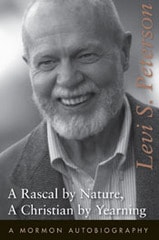
A Rascal by Nature, A Christian by Yearning
A Mormon AutobiographyPeterson, Levi S
University of Utah Press, 2006
Peterson has won a wide readership for his novels and short stories, his prize-winning biography of historian Juanita Brooks, and the essays that have appeared with regularity in western and Mormon literary and historical journals. In his autobiography, Peterson describes growing up on the Mormon frontier of rural Arizona, his growing skepticism with his Mormon faith, his teaching career at Weber State University, and his struggle to understand and master personal crises of confidence that kept him in therapy for almost two decades. Of particular interest to readers familiar with Peterson’s fiction are the many pages devoted to the creative process.
Winner of the Mormon History Association Turner-Bergera Best Biography Award.

A Reader's Guide to Andrei Bely's "Petersburg"
Edited by Leonard Livak
University of Wisconsin Press, 2021
Bely expected his audience to participate in unraveling the work's many meanings, narrative strains, and patterns of details. In their essays, the contributors clarify these complexities, summarize the intellectual and artistic contexts that informed Petersburg's creation and reception, and review the interpretive possibilities contained in the novel. This volume will aid a broad audience of Anglophone readers in understanding and appreciating Petersburg.
A Rebellious People
Basques, Protests, And PoliticsCyrus Ernesto Zirakzadeh
University of Nevada Press, 1991
In this scholarly work, Zirakzadeh argues that there is a calculated reasoning behind ETA's political violence that is often overlooked by researchers. His book is a comprehensive account of the Basque region's grassroots politics.
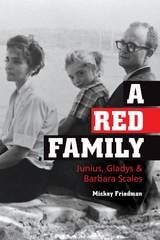
A Red Family
Junius, Gladys, and Barbara ScalesMickey Friedman. Afterword by Barbara Scales. Historical Essay by Gail O'Brien.
University of Illinois Press, 2008
Through the distinct perspectives of Junius, his wife Gladys, and his daughter Barbara, this book deepens and personalizes the story of American radicalism. Conversational, intimate, and exceptionally accessible, A Red Family offers a unique look at the American communist experience from the inside out.
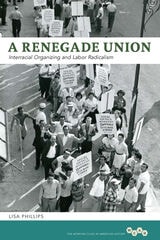
A Renegade Union
Interracial Organizing and Labor RadicalismLisa Phillips
University of Illinois Press, 2013
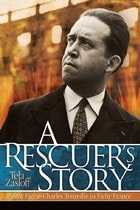
A Rescuer's Story
Pastor Pierre-Charles Toureille in Vichy FranceTela Zasloff
University of Wisconsin Press, 2014
This is the story of a Holocaust rescuer, Pierre Toureille, a French Protestant pastor whose efforts resulted in the rescue of hundreds of refugees, most of them Jewish. Inspired by his Huguenot heritage, Pastor Toureille participated in international Protestant church efforts to combat Nazism during the 1930s and headed a major refugee aid organization in Vichy France during World War II. After the war, Pastor Toureille was honored by the Jewish organization Yad Vashem as one of the "Righteous Among the Nations."
In telling Toureille’s story, Tela Zasloff also depicts the wide-ranging network of Protestant pastors and lay people in southern French villages who participated in an aggressive rescue effort. She delves into their motivations, including their heritage as members of a religious minority. Toureille’s rescue work under the Vichy regime, partly official and then increasingly clandestine as the war progrressed. was a crucial part of the French non-violent "spiritual resistance" against Nazism.
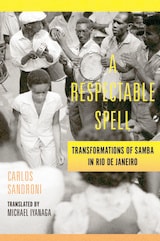
A Respectable Spell
Transformations of Samba in Rio de JaneiroCarlos Sandroni
University of Illinois Press, 2021
Incisive and comprehensive, A Respectable Spell tells the compelling story of an iconic Brazilian musical genre.
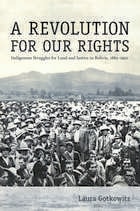
A Revolution for Our Rights
Indigenous Struggles for Land and Justice in Bolivia, 1880-1952Laura Gotkowitz
Duke University Press, 2008
Gotkowitz combines an emphasis on national political debates and congresses with a sharply focused analysis of Indian communities and large estates in the department of Cochabamba. The fragmented nature of Cochabamba’s Indian communities and the pioneering significance of its peasant unions make it a propitious vantage point for exploring contests over competing visions of the nation, justice, and rights. Scrutinizing state authorities’ efforts to impose the law in what was considered a lawless countryside, Gotkowitz shows how, time and again, indigenous activists shrewdly exploited the ambiguous status of the state’s pro-Indian laws to press their demands for land and justice. Bolivian indigenous and social movements have captured worldwide attention during the past several years. By describing indigenous mobilization in the decades preceding the revolution of 1952, A Revolution for Our Rights illuminates a crucial chapter in the long history behind present-day struggles in Bolivia and contributes to an understanding of indigenous politics in modern Latin America more broadly.
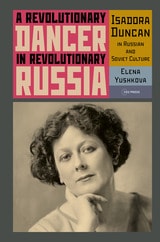
A Revolutionary Dancer in Revolutionary Russia
Isadora Duncan in Russian and Soviet CultureElena Yushkova
Central European University Press, 2026
This monograph offers a compelling exploration of Duncan’s Russian years—both before and after the October Revolution—drawing on rare archival sources and never-before-published Russian materials. It illuminates her artistic vision, her role in shaping early Soviet cultural debates, and the shifting political and aesthetic landscapes she navigated. From Silver Age reimaginations of antiquity to the rise of Socialist Realism and the modern revival of Duncan’s dance, this book traces the enduring legacy of a revolutionary artist in a world undergoing radical transformation.
A Rhetorical Crime
Genocide in the Geopolitical Discourse of the Cold WarWeiss-Wendt, Anton
Rutgers University Press, 2018
A Rhetorical Crime shows how genocide morphed from a legal concept into a political discourse used in propaganda battles between the United States and the Soviet Union. Over the course of the Cold War era, nearly eighty countries were accused of genocide, and yet there were few real-time interventions to stop the atrocities committed by genocidal regimes like the Cambodian Khmer Rouge.
Renowned genocide scholar Anton Weiss-Wendt employs a unique comparative approach, analyzing the statements of Soviet and American politicians, historians, and legal scholars in order to deduce why their moral posturing far exceeded their humanitarian action.
A Rift in the Clouds
Race and the Southern Federal Judiciary, 1900-1910Brent J. Aucoin
University of Arkansas Press, 2007

A Right to Childhood
The U.S. Children's Bureau and Child Welfare, 1912-46Kriste Lindenmeyer
University of Illinois Press, 1997
for their political agendas as Americans try to determine the role--if
any--of the federal government in the lives of children. But what is the
history of child welfare policy in the United States? What can we learn
from the efforts to found the U.S. Children's bureau in 1903 and its eventual
dismemberment in 1946?
This is the first history of the Children's Bureau and the first in-depth
examination of federal child welfare policy from the perspective of that
agency. Its goal was to promote "a right to childhood," and
Kriste Lindenmeyer unflinchingly examines the successes--and the failures--of
the Bureau. She analyzes infant and maternal mortality, the promotion
of child health care, child labor reform, and the protection of children
with "special needs" from the Bureau's inception through the
Depression, and through all the legislation that impacted on its work
for children. The meaningful accomplishments and the demise of the Children's
Bureau have much to tell parents, politicians, and policy-makers everywhere.

A Right to Read
Segregation and Civil Rights in Alabama's Public Libraries, 1900–1965Patterson Toby Graham
University of Alabama Press, 2006
This original and significant contribution to the historiography of the civil rights movement and education in the South details a dramatic and disturbing chapter in American cultural history.
The tradition of American public libraries is closely tied to the perception that these institutions are open to all without regard to social background. Such was not the case in the segregated South, however, where public libraries barred entry to millions of African Americans and provided tacit support for a culture of white supremacy. A Right to Read is the first book to examine public library segregation from its origins in the late 19th century through its end during the tumultuous years of the 1960s civil rights movement. Graham focuses on Alabama, where African Americans, denied access to white libraries, worked to establish and maintain their own "Negro branches." These libraries-separate but never equal-were always underfunded and inadequately prepared to meet the needs of their constituencies.
By 1960, however, African Americans turned their attention toward desegregating the white public libraries their taxes helped support. They carried out "read-ins" and other protests designed to bring attention and judicial pressure upon the segregationists. Patterson Toby Graham contends that, for librarians, the civil rights movement in their institutions represented a conflict of values that pitted their professional ethics against regional mores. He details how several librarians in Alabama took the dangerous course of opposing segregationists, sometimes with unsettling results.
This groundbreaking work built on primary evidence will have wide cross-disciplinary appeal. Students and scholars of southern and African-American history, civil rights, and social science, as well as academic and public librarians, will appreciate Graham's solid research and astute analysis.
A Righteous Smokescreen
Postwar America and the Politics of Cultural GlobalizationSam Lebovic
University of Chicago Press, 2022
When the dust settled after World War II, the United States stood as the world’s unquestionably pre-eminent military and economic power. In the decades that followed, the country exerted its dominant force in less visible but equally powerful ways, too, spreading its trade protocols, its media, and—perhaps most importantly—its alleged values. In A Righteous Smokescreen, Sam Lebovic homes in on one of the most prominent, yet ethereal, of those professed values: the free flow of information. This trope was seen as capturing what was most liberal about America’s self-declared leadership of the free world. But as Lebovic makes clear, even though diplomats and public figures trumpeted the importance of widespread cultural exchange, these transmissions flowed in only one direction: outward from the United States. Though other countries did try to promote their own cultural visions, Lebovic shows that the US moved to marginalize or block those visions outright, highlighting the shallowness of American commitments to multilateral institutions, the depth of its unstated devotion to cultural and economic supremacy, and its surprising hostility to importing foreign cultures. His book uncovers the unexpectedly profound global consequences buried in such ostensibly mundane matters as visa and passport policy, international educational funding, and land purchases for embassies. Even more crucially, A Righteous Smokescreen does nothing less than reveal that globalization was not the inevitable consequence of cultural convergence or the natural outcome of putatively free flows of information—it was always political to its core.

A Route 66 Companion
Edited by David King Dunaway
University of Texas Press, 2012
Even before there was a road, there was a route. Buffalo trails, Indian paths, the old Santa Fe trace—all led across the Great Plains and the western mountains to the golden oasis of California. America’s insatiable westering urge culminated in Route 66, the highway that ran from Chicago to Los Angeles. Opened in 1926, Route 66 became the quintessential American road. It offered the chance for freedom and a better life, whether you were down-and-out Okies fleeing the Dust Bowl in the 1930s or cool guys cruising in a Corvette in the 1960s. Even though the interstates long ago turned Route 66 into a bylane, it still draws travelers from around the world who long to experience the freedom of the open road.
A Route 66 Companion gathers fiction, poetry, memoir, and oral history to present a literary historical portrait of America’s most storied highway. From accounts of pioneering trips across the western plains to a sci-fi fantasy of traveling Route 66 in a rocket, here are stories that explore the mystique of the open road, told by master storytellers ranging from Washington Irving to Raymond Chandler, Joan Didion, Sylvia Plath, Leslie Marmon Silko, and John Steinbeck. Interspersed among them are reminiscences that, for the first time, honor the varied cultures—Native American, Mexican American, and African American, as well as Anglo—whose experiences run through the Route 66 story like the stripe down the highway. So put the top down, set the cruise control, and “make that California trip” with A Route 66 Companion.
A Second Exodus
The American Movement to Free Soviet JewsEdited by Murray Friedman and Albert D. Chernin
Brandeis University Press, 1999
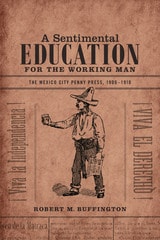
A Sentimental Education for the Working Man
The Mexico City Penny Press, 1900-1910Robert M. Buffington
Duke University Press, 2015

A Settler's Year
Pioneer Life through the SeasonsKathleen Ernst
Wisconsin Historical Society Press, 2015
"This is a book with great meaning for those of us who grew up on farms, and a book to be shared with young people eager to know more about pioneer life." --Jerry Apps, author of "Old Farm: A History" and "Whispers and Shadows: A Naturalist's Memoir"
"A Settler's Year" provides a rare glimpse into the lives of early immigrants to the upper Midwest. Evocative photographs taken at Old World Wisconsin, the country's largest outdoor museum of rural life, lushly illustrate stories woven by historian, novelist, and poet Kathleen Ernst and compelling firsthand accounts left by the settlers themselves.
In this beautiful book, readers will discover the challenges and triumphs found in the seasonal rhythms of rural life in the nineteenth and early twentieth centuries. As they turn the pages--traveling from sprawling farm to tidy crossroads village, and from cramped and smoky cabins to gracious, well-furnished homes--they'll experience the back-straining chores, cherished folk traditions, annual celebrations, and indomitable spirit that comprised pioneer life.
At its heart "A Settler's Year" is about people dreaming of, searching for, and creating new homes in a new land. This moving book transports us back to the pioneer era and inspires us to explore the stories found on our own family trees.
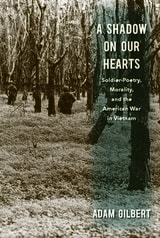
A Shadow on Our Hearts
Soldier-Poetry, Morality, and the American War in VietnamAdam Gilbert
University of Massachusetts Press, 2018
The soldier-poets provide important insights into the ethical dimensions of their physical and psychological surroundings before, during, and after the war. They also offer profound perspectives on the relationships between American soldiers and the Vietnamese people. From firsthand experiences, they reflect on what it meant to be witnesses, victims, and perpetrators of the war's violence. And they advance an uncompromising vision of moral responsibility that indicts a range of culprits for the harms caused by the conflict. Gilbert explores the powerful and perceptive work of these soldier-poets through the lens of morality and presents a radically alternative, deeply personal, and ethically penetrating account of the American war in Vietnam.

A Singing Army
Zilphia Horton and the Highlander Folk SchoolBy Kim Ruehl
University of Texas Press, 2021
Zilphia Horton was a pioneer of cultural organizing, an activist and musician who taught people how to use the arts as a tool for social change, and a catalyst for anthems of empowerment such as “We Shall Overcome” and “We Shall Not Be Moved.” Her contributions to the Highlander Folk School, a pivotal center of the labor and civil rights movements in the mid-twentieth century, and her work creating the songbook of the labor movement influenced countless figures, from Woody Guthrie to Eleanor Roosevelt to Rosa Parks. Despite her outsized impact, Horton’s story is little known. A Singing Army introduces this overlooked figure to the world.
Drawing on extensive archival and oral history research, as well as numerous interviews with Horton's family and friends, Kim Ruehl chronicles her life from her childhood in Arkansas coal country, through her formative travels and friendship with radical Presbyterian minister Claude C. Williams, and into her instrumental work in desegregation and fostering the music of the civil rights era. Revealing these experiences—as well as her unconventional marriage and controversial death by poisoning—A Singing Army tells the story of an all-but-forgotten woman who inspired thousands of working-class people to stand up and sing for freedom and equality.
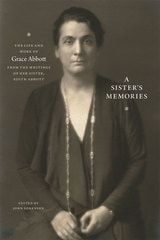
A Sister's Memories
The Life and Work of Grace Abbott from the Writings of Her Sister, Edith AbbottEdited by John Sorensen
University of Chicago Press, 2015
A Sister’s Memories is the inspiring story of Grace Abbott (1878–1939), as told by her sister and social justice comrade, Edith Abbott (1876–1957). Edith recalls in vivid detail the Nebraska childhood, impressive achievements, and struggles of her sister who, as head of the Immigrants’ Protective League and the U.S. Children’s Bureau, championed children’s rights from the slums of Chicago to the villages of Appalachia. Grace’s crusade can perhaps be best summed up in her well-known credo: “Justice for all children is the high ideal in a democracy.” Her efforts saved the lives of thousands of children and immigrants and improved those of millions more. These trailblazing social service works led the way to the creation of the Social Security Act and UNICEF and caused the press to nickname her “The Mother of America’s 43 Million Children.” She was the first woman in American history to be nominated to the presidential cabinet and the first person to represent the United States at a committee of the League of Nations.
Edited by Abbott scholar John Sorensen, A Sister’s Memories is destined to become a classic. It shapes the diverse writings of Edith Abbott into a cohesive narrative for the first time and fills in the gaps of our understanding of Progressive Era reforms. Readers of all backgrounds will find themselves engrossed by this history of the unstoppable, pioneer feminist Abbott sisters.
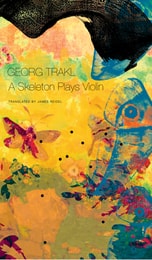
A Skeleton Plays Violin
Book Three of Our TraklGeorg Trakl
Seagull Books, 2017
A Skeleton Plays Violin comprises the final volume in a trilogy of works by Trakl published by Seagull Books. This selection gathers Trakl’s early, middle, and late work, none of it published in book form during his lifetime. The work here ranges widely, from his haunting prose pieces to his darkly beautiful poems documenting the first bloody weeks of World War I on the Eastern Front.
Book Three of Our Trakl—the series that began with Trakl’s first book Poems and his posthumously published Sebastian Dreaming—also includes translations of unpublished poems and significant variants. Interpolated throughout this comprehensive and chronological selection is a biographical essay that provides more information about Trakl’s gifted and troubled life, especially as it relates to his poetry, as well as the necessary context of his relationship with his favorite sibling, his sister Grete, whose role as a muse to her brother is still highly controversial. Trakl’s life was mysterious and fascinating, a fact reflected in his work. A Skeleton Plays Violin should not be missed.
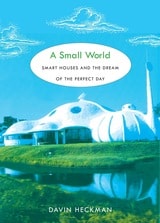
A Small World
Smart Houses and the Dream of the Perfect DayDavin Heckman
Duke University Press, 2007
Heckman’s narrative stretches from the early-twentieth-century introduction into the home of electric appliances and industrial time-management techniques, through the postwar advent of television and the space-age “house of tomorrow,” to the contemporary automated, networked “smart home.” He considers all these developments in relation to lifestyle and consumer narratives. Building on the tension between agency and control within the walls of homes designed to anticipate and fulfill desires, Heckman engages debates about lifestyle, posthumanism, and rights under the destabilizing influences of consumer technologies, and he considers the utopian and dystopian potential of new media forms. Heckman argues that the achievement of an environment completely attuned to its inhabitants’ specific wants and needs—what he calls the “Perfect Day”—institutionalizes everyday life as the ultimate consumer practice.
A Society Transformed
Hungary in Time-Space PerspectiveRichard Rose
Central European University Press, 1999
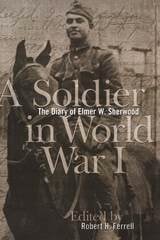
A Soldier in World War I
The Diary of Elmer W. SherwoodRobert H. Ferrell
Indiana Historical Society Press, 2004
A Sound History
Lawrence Gellert, Black Musical Protest, and White DenialSteven P. Garabedian
University of Massachusetts Press, 2020
Lawrence Gellert has long been a mysterious figure in American folk and blues studies, gaining prominence in the left-wing folk revival of the 1930s for his fieldwork in the U.S. South. A “lean, straggly-haired New Yorker,” as Time magazine called him, Gellert was an independent music collector, without formal training, credentials, or affiliation. At a time of institutionalized suppression, he worked to introduce white audiences to a tradition of black musical protest that had been denied and overlooked by prior white collectors.
By the folk and blues revival of the 1960s, however, when his work would again seem apt in the context of the civil rights movement, Gellert and his collection of Negro Songs of Protest were a conspicuous absence. A few leading figures in the revival defamed Gellert as a fraud, dismissing his archive of black vernacular protest as a fabrication—an example of left-wing propaganda and white interference. A Sound History is the story of an individual life, an excavation of African American musical resistance and dominant white historiography, and a cultural history of radical possibility and reversal in the defining middle decades of the U.S. twentieth century.
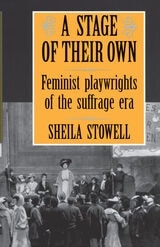
A Stage of Their Own
Feminist Playwrights of the Suffrage EraSheila Stowell
University of Michigan Press, 1994
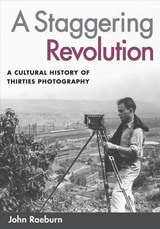
A Staggering Revolution
A Cultural History of Thirties PhotographyJohn Raeburn
University of Illinois Press, 2006
While other studies of thirties photography have concentrated on the documentary work of the Farm Security Administration (FSA), no previous book has considered it alongside so many of the decade's other important photographic projects. A Staggering Revolution includes individual chapters on Edward Steichen's celebrity portraiture; Berenice Abbott's Changing New York project; the Photo League's ethnography of Harlem; and Edward Weston's western landscapes, made under the auspices of the first Guggenheim Fellowship awarded to a photographer. It also examines Margaret Bourke-White's industrial and documentary pictures, the collective undertakings by California's Group f.64, and the fashion magazine specialists, as well as the activities of the FSA and the Photo League.
A Stanislaw Lem Reader
Peter Swirski
Northwestern University Press, 1997

A Story Teller's Story
A MemoirSherwood Anderson
University of Michigan Press, 2005
"The voice of the soliloquist . . . amplifies the drama of A Story Teller's Story, as does the persistent theme of escape, from an America of fact and factories, marketing and manufacturing, to the borderless Ohios of imagination and creation."
—From the introduction by Thomas Lynch
A Study of Crisis
Michael Brecher and Jonathan Wilkenfeld
University of Michigan Press, 2000
The culmination of more than twenty years of research by Michael Brecher and Jonathan Wilkenfeld, the book analyzes crucial themes about crisis, conflict, and war and presents systematic knowledge about more than 400 crises, thirty-one protracted conflicts and almost 900 state participants. The authors explore many aspects of conflict, including the ethnic dimension, the effect of different kinds of political regimes--notably the question whether democracies are more peaceful than authoritarian regimes, and the role of violence in crisis management. They employ both case studies and aggregate data analysis in a Unified Model of Crisis to focus on two levels of analysis--hostile interactions among states, and the behavior of decision-makers who must cope with the challenge posed by a threat to values, time pressure, and the increased likelihood that military hostilities will engulf them.
This book will appeal to scholars in history, political science, sociology, and economics as well as policy makers interested in the causes and effects of crises in international relations. The rich data sets will serve researchers for years to come as they probe additional aspects of crisis, conflict and war in international relations.
Michael Brecher is R. B. Angus Professor of Political Science, McGill University. Jonathan Wilkenfeld is Professor and Chair of the Department of Government and Politics, University of Maryland. They are the coauthors of Crises in the Twentieth Century: A Handbook of International Crisis, among other books and articles.
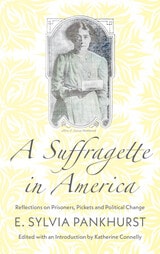
A Suffragette in America
Reflections on Prisoners, Pickets and Political ChangeSylvia Pankhurst
Pluto Press, 2019
This book gathers Pankhurst’s writings from the year-long visit, in which she reveals her shock at the darkness hidden in American life, and draws parallels to her experiences of imprisonment and misogyny in her own country. Never before published, these writings mark an important stage in the development of the suffragette's thought, which she brought back to Britain to inform the burgeoning suffrage campaign there.
A Sugar Creek Chronicle
Observing Climate Change from a Midwestern WoodlandCornelia F. Mutel
University of Iowa Press, 2016
Moving between two timelines, Mutel pairs chapters about a single year in her Iowa woodland with chapters about her life as a fledgling and then professional student of nature. Stories of her childhood ramblings in Wisconsin and the solace she found in the Colorado mountains during early adulthood are merged with accounts of global environmental dilemmas that have redefined nature during her lifespan. Interwoven chapters bring us into her woodland home to watch nature’s cycles of life during a single year, 2012, when weather records were broken time and time again. Throughout, in a straightforward manner for a concerned general audience, Mutel integrates information about the science of climate change and its dramatic alteration of the planet in ways that clarify its broad reach, profound impact, and seemingly relentless pace.
It is not too late, she informs us: we can still prevent the most catastrophic changes. We can preserve a world full of biodiversity, one that supports human lives as well as those of our myriad companions on this planet. In the end, Mutel offers advice about steps we can all take to curb our own carbon emissions and strategies we can suggest to our policy-makers.
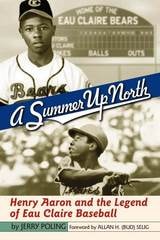
A Summer Up North
Henry Aaron and the Legend of Eau Claire BaseballJerry Poling
University of Wisconsin Press, 2002
June 12, 1952—only a local sportswriter showed up at the Eau Claire airport to greet a newly signed eighteen-year-old shortstop from Alabama toting a cardboard suitcase. "I was scared as hell," said Henry Aaron, recalling his arrival as the new recruit on the city’s Class C minor league baseball team.
Forty-two years later, as Aaron approached the stadium where the Eau Claire Bears once played, an estimated five thousand people surrounded a newly raised bronze statue of a young "Hank" Aaron at bat. "I had goosebumps," he said later. "A lot of things happened to me in my twenty-three years as a ballplayer, but nothing touched me more than that day in Eau Claire." For the people of Eau Claire, Aaron’s summer two years before his Major League debut with the Milwaukee Braves symbolizes a magical time, when baseball fans in a small city in northern Wisconsin could live a part of the dream.
A Supreme Court Unlike Any Other
The Deepening Divide Between the Justices and the PeopleKevin J. McMahon
University of Chicago Press, 2024
A data-rich examination of the US Supreme Court's unprecedented detachment from the democratic processes that buttress its legitimacy.
Today’s Supreme Court is unlike any other in American history. This is not just because of its jurisprudence but also because the current Court has a tenuous relationship with the democratic processes that help establish its authority. Historically, this “democracy gap” was not nearly as severe as it is today. Simply put, past Supreme Courts were constructed in a fashion far more in line with the promise of democracy—that the people decide and the majority rules.
Drawing on historical and contemporary data alongside a deep knowledge of court battles during presidencies ranging from FDR to Donald Trump, Kevin J. McMahon charts the developments that brought us here. McMahon offers insight into the altered politics of nominating and confirming justices, the shifting pool of Supreme Court hopefuls, and the increased salience of the Court in elections. A Supreme Court Unlike Any Other is an eye-opening account of today’s Court within the context of US history and the broader structure of contemporary politics.
A THOUSAND WORDS
PORTRAITURE, STYLE, AND QUEER MODERNISMJaime Hovey
The Ohio State University Press, 2006
Portraiture speaks to the complex relationship between identity, sexuality, and art, and the presence of so many portraits in this era suggests that sexual, gender, and racial aspects of character, personality, and personal identity were of major concern to most modernist writers. Yet it took most of the twentieth century for critical work to appear that meaningfully explored these themes, and very little has been said about the queerness of literary portraiture. This book demonstrates that literary portraiture is enamored of its own self-consciousness, with the pleasures of looking at itself seeing itself, and that its texts circulate this pleasure between writers, narrators and other characters, and readers as a perverse aesthetics
A Tale of Two Villages
Coerced Modernization in the East European CountrysideAlina Mungiu-Pippidi
Central European University Press, 2010
A Tawdry Place of Salvation
The Art of Jane BowlesEdited by Jennie Skerl
Southern Illinois University Press, 1997
Through these essays—which deal with Bowles’s published as well as her unpublished work—Skerl seeks to generate serious critical attention for an important but neglected female experimental writer of the mid-twentieth century and to celebrate her originality, power, and craft.
Based in disciplines and theoretical approaches that range from feminist criticism to Middle Eastern studies, from postmodernism to queer theory, and from Victorianism to the Beat Generation, the essayists naturally approach Bowles’s fiction and drama from a wide variety of critical perspectives. All of these essays are unpublished and written for this volume.
A Theater of Our Own
A History and a Memoir of 1,001 Nights in ChicagoRichard Christiansen, with a foreword by Brian Dennehy
Northwestern University Press, 2004
A Theater of Our Own is a fascinating, fast-paced, and fact-filled chronicle of Chicago's legendary theater scene by the long-time chief critic for the Chicago Tribune. Who produced the first stage adaptation of "The Wizard of Oz" in 1902-nearly forty years before the movie classic? What entertainment juggernaut began in a converted Chinese laundry on Wells Street in 1959? Where did Louis (Studs) Terkel make his stage debut? When did the original production of "Grease" open at Kingston Mines Theater? Richard Christiansen, former chief critic for the Chicago Tribune, answers these and many more questions about the rich role of the theater in Chicago, from its earliest days in 1837 to its present state as a diverse community of artists with international stature.
In A Theater of Our Own, he draws upon his exclusive interviews, insights, and memories gathered over a period of more than forty years of reviewing the arts. This history and memoir traces the evolution of the Chicago theater scene from small theaters to major institutions such as the Steppenwolf Theatre Company, the Goodman Theater, and The Second City. Along the way, Richard Christiansen relates his behind-the-scenes conversations with some of Chicago's most acclaimed writers, directors, and actors--David Mamet, Frank Galati, Mary Zimmerman, John Malkovich, Laurie Metcalf, Harold Ramis, Gary Sinise, and Joe Mantegna--all a part of Chicago's theater renaissance from the 1970s onward. To this day, Chicago remains a city known for its imaginative, innovative, and influential theaters and artists. A Theater of Our Own, a valuable contribution to the history of theater, is a book written for anyone who enjoys the theater and its people as well as the story of Chicago.
A Theology of Sense
John Updike, Embodiment, and Late Twentieth-Century American LiteratureScott Dill
The Ohio State University Press, 2018