Results by title
4127 books match the query 'Science' and 288 start with a

An Image of God
The Catholic Struggle with EugenicsSharon M. Leon
University of Chicago Press, 2013

An Intellectual History of Psychology
Daniel N. Robinson
University of Wisconsin Press, 1995
An Intellectual History of Psychology, already a classic in its field, is now available in a concise new third edition. It presents psychological ideas as part of a greater web of thinking throughout history about the essentials of human nature, interwoven with ideas from philosophy, science, religion, art, literature, and politics.
Daniel N. Robinson demonstrates that from the dawn of rigorous and self-critical inquiry in ancient Greece, reflections about human nature have been inextricably linked to the cultures from which they arose, and each definable historical age has added its own character and tone to this long tradition. An Intellectual History of Psychology not only explores the most significant ideas about human nature from ancient to modern times, but also examines the broader social and scientific contexts in which these concepts were articulated and defended. Robinson treats each epoch, whether ancient Greece or Renaissance Florence or Enlightenment France, in its own terms, revealing the problems that dominated the age and engaged the energies of leading thinkers.
Robinson also explores the abiding tension between humanistic and scientific perspectives, assessing the most convincing positions on each side of the debate. Invaluable as a text for students and as a stimulating and insightful overview for scholars and practicing psychologists, this volume can be read either as a history of psychology in both its philosophical and aspiring scientific periods or as a concise history of Western philosophy’s concepts of human nature.

An Introduction to Nuclear Astrophysics
Richard N. Boyd
University of Chicago Press, 2008
In An Introduction to Nuclear Astrophysics, author Richard Boyd includes basic nomenclature and information so that students from astronomy or physics can quickly orient themselves in the material. Subsequent chapters describe earthbound and space born instruments operating in service to nuclear astrophysics worldwide; background topics such as nuclear and neutrino physics, scattering formalism, and thermonuclear reaction rates; and information on galactic chemical evolution, solar nucleosynthesis, s- and r-processes, and gamma-ray bursts. Each chapter includes problem sets against which students may test their knowledge before moving ahead, and the author has included copious references intended to guide students to further study.
An Introduction to Nuclear Astrophysics is an essential textbook for undergraduate and graduate students in astronomy and astrophysics. It is also an invaluable overview of the subject for researchers in nuclear astrophysics and related fields.

An Introduction to Tree-Ring Dating
Marvin A. Stokes
University of Arizona Press, 1996
Authors Stokes and Smiley first explain the basic principles of tree-ring dating, then describe details of the process, step by step, from the time a sample is collected until it is incorporated into a master chronology.
The book focuses on coniferous evergreens of the Southwest, particularly piñons, because they have wide geographic distribution, constitute a large population, and show excellent growth response to certain controlling factors. The book is specifically concerned with the task of establishing a calendar date for a wood or charcoal specimen.
This concise but thorough explication of an important discipline will make dendrochonology more meaningful to students and professionals in archaeology, forestry, hydrology, and global change.
An Observer's Guide to Clouds and Weather
A Northeastern Primer on PredictionToby Carlson, Paul Knight, and Celia Wyckoff
American Meteorological Society, 2014
This informative and accessible guide walks readers through the basics of making weather predictions through understanding cloud types and sky formations. It explains, in nontechnical terms, the science behind the weather, connecting fundamental meteorological concepts with the processes that shape weather patterns. Readers will learn how to develop their powers of observation and hone their ability to make quick forecasts without complicated tools. Whether you're an amateur weather enthusiast or a beginning meteorology student, An Observer’s Guide to Clouds and Weather will help anyone who prefers looking up to looking it up.
An Orchard Invisible
A Natural History of SeedsJonathan Silvertown
University of Chicago Press, 2009
The story of seeds, in a nutshell, is a tale of evolution. From the tiny sesame that we sprinkle on our bagels to the forty-five-pound double coconut borne by the coco de mer tree, seeds are a perpetual reminder of the complexity and diversity of life on earth. With An Orchard Invisible, Jonathan Silvertown presents the oft-ignored seed with the natural history it deserves, one nearly as varied and surprising as the earth’s flora itself.
Beginning with the evolution of the first seed plant from fernlike ancestors more than 360 million years ago, Silvertown carries his tale through epochs and around the globe. In a clear and engaging style, he delves into the science of seeds: How and why do some lie dormant for years on end? How did seeds evolve? The wide variety of uses that humans have developed for seeds of all sorts also receives a fascinating look, studded with examples, including foods, oils, perfumes, and pharmaceuticals. An able guide with an eye for the unusual, Silvertown is happy to take readers on unexpected—but always interesting—tangents, from Lyme disease to human color vision to the Salem witch trials. But he never lets us forget that the driving force behind the story of seeds—its theme, even—is evolution, with its irrepressible habit of stumbling upon new solutions to the challenges of life.
"I have great faith in a seed," Thoreau wrote. "Convince me that you have a seed there, and I am prepared to expect wonders." Written with a scientist’s knowledge and a gardener’s delight, An Orchard Invisible offers those wonders in a package that will be irresistible to science buffs and green thumbs alike.
An Orderly Mess
Helga Nowotny
Central European University Press, 2017

Analyses of Theories and Methods of Physics and Psychology
Michael Radner
University of Minnesota Press, 1970
Analyzing Animal Societies
Quantitative Methods for Vertebrate Social AnalysisHal Whitehead
University of Chicago Press, 2008
Analyzing AnimalSocieties presents a conceptual framework for analyzing social behavior and demonstrates how to put this framework into practice by collecting suitable data on the interactions and associations of individuals so that relationships can be described, and, from these, models can be derived. In addition to presenting the tools, Hal Whitehead illustrates their applicability using a wide range of real data on a variety of animal species—from bats and chimps to dolphins and birds. The techniques that Whitehead describes will be profitably adopted by scientists working with primates, cetaceans, birds, and ungulates, but the tools can be used to study societies of invertebrates, amphibians, and even humans. Analyzing AnimalSocieties will become a standard reference for those studying vertebrate social behavior and will give to these studies the kind of quality standard already in use in other areas of the life sciences.
Anaximander
Carlo Rovelli
Westholme Publishing, 2011
THIS EBOOK IS NO LONGER AVAILABLE.
Ancient Life of the Great Lakes Basin
Precambrian to PleistoceneJ. Alan Holman
University of Michigan Press, 1995
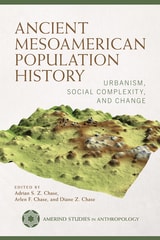
Ancient Mesoamerican Population History
Urbanism, Social Complexity, and ChangeAdrian S. Z. Chase, Arlen F. Chase, and Diane Z. Chase
University of Arizona Press, 2024
Establishing ancient population numbers and determining how they were distributed across a landscape over time constitute two of the most pressing problems in archaeology. Accurate population data is crucial for modeling, interpreting, and understanding the past. Now, advances in both archaeology and technology have changed the way that such approximations can be achieved.
Including research from both highland central Mexico and the tropical lowlands of the Maya and Olmec areas, this book reexamines the demography in ancient Mesoamerica. Contributors present methods for determining population estimates, field methods for settlement pattern studies to obtain demographic data, and new technologies such as LiDAR (light detecting and ranging) that have expanded views of the ground in forested areas. Contributions to this book provide a view of ancient landscape use and modification that was not possible in the twentieth century. This important new work provides new understandings of Mesoamerican urbanism, development, and changes over time.
Contributors
Traci Ardren
M. Charlotte Arnauld
Bárbara Arroyo
Luke Auld-Thomas
Marcello A. Canuto
Adrian S. Z. Chase
Arlen F. Chase
Diane Z. Chase
Elyse D. Z. Chase
Javier Estrada
Gary M. Feinman
L. J. Gorenflo
Julien Hiquet
Scott R. Hutson
Gerardo Jiménez Delgado
Eva Lemonnier
Rodrigo Liendo Stuardo
José Lobo
Javier López Mejía
Michael L. Loughlin
Deborah L. Nichols
Christopher A. Pool
Ian G. Robertson
Jeremy A. Sabloff
Travis W. Stanton
Ancient Perspectives
Maps and Their Place in Mesopotamia, Egypt, Greece, and RomeEdited by Richard J. A. Talbert
University of Chicago Press, 2012
Ancient Perspectives encompasses a vast arc of space and time—Western Asia to North Africa and Europe from the third millennium BCE to the fifth century CE—to explore mapmaking and worldviews in the ancient civilizations of Mesopotamia, Egypt, Greece, and Rome. In each society, maps served as critical economic, political, and personal tools, but there was little consistency in how and why they were made. Much like today, maps in antiquity meant very different things to different people.
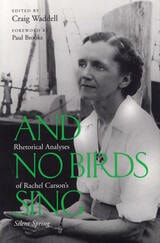
And No Birds Sing
Rhetorical Analyses of Rachel Carson's Silent SpringEdited by Craig Waddell. Foreword by Paul Brooks. Afterword by Linda Lear
Southern Illinois University Press, 2000
Craig Waddell presents essays investigating Rachel Carson’s influential 1962 book, Silent Spring. In his foreword, Paul Brooks, Carson’s editor at Houghton Mifflin, describes the process that resulted in Silent Spring. In an afterword, Linda Lear, Carson’s recent biographer, recalls the end of Carson’s life and outlines the attention that Carson’s book and Carson herself received from scholars and biographers, attention that focused so minutely on her life that it detracted from a focus on her work. The foreword by Brooks and the afterword by Lear frame this exploration within the context of Carson’s life and work.
Contributors are Edward P. J. Corbett, Carol B, Gartner, Cheryll Glotfelty, Randy Harris, M. Jimmie Killingsworth, Linda Lear, Ralph H. Lutts, Christine Oravec, Jacqueline S. Palmer, Markus J. Peterson, Tarla Rai Peterson, and Craig Waddell. Together, these essays explore Silent Spring’seffectiveness in conveying its disturbing message and the rhetorical strategies that helped create its wide influence.

André Michaux in North America
Journals and Letters, 1785–1797Translated from the French, Edited, and Annotated by Charlie Williams, Eliane M. Norman, and Walter Kingsley Taylor
University of Alabama Press, 2020
Tracing the roots of American botany through the journals of an eighteenth-century explorer.
Known to today’s biologists primarily as the “Michx.” at the end of more than 700 plant names, André Michaux was an intrepid French naturalist. Under the directive of King Louis XVI, he was commissioned to search out and grow new, rare, and never-before-described plant species and ship them back to his homeland in order to improve French forestry, agriculture, and horticulture. He made major botanical discoveries and published them in his two landmark books, Histoire des chênes de l’Amérique (1801), a compendium of all oak species recognized from eastern North America, and Flora Boreali-Americana (1803), the first account of all plants known in eastern North America.
Straddling the fields of documentary editing, history of the early republic, history of science, botany, and American studies, André Michaux in North America: Journals and Letters, 1785–1797 is the first complete English edition of Michaux’s American journals. This copiously annotated translation includes important excerpts from his little-known correspondence as well as a substantial introduction situating Michaux and his work in the larger scientific context of the day.
To carry out his mission, Michaux traveled from the Bahamas to Hudson Bay and west to the Mississippi River on nine separate journeys, all indicated on a finely rendered, color-coded map in this volume. His writings detail the many hardships—debilitating disease, robberies, dangerous wild animals, even shipwreck—that Michaux endured on the North American frontier and on his return home. But they also convey the soaring joys of exploration in a new world where nature still reigned supreme, a paradise of plants never before known to Western science. The thrill of discovery drove Michaux ever onward, even ultimately to his untimely death in 1802 on the remote island of Madagascar.
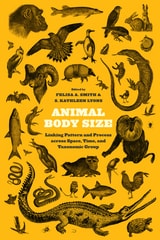
Animal Body Size
Linking Pattern and Process across Space, Time, and Taxonomic GroupEdited by Felisa A. Smith and S. Kathleen Lyons
University of Chicago Press, 2013
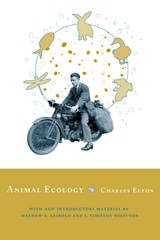
Animal Ecology
Charles S. Elton
University of Chicago Press, 2001
For Chicago's reprint of this classic work, ecologists Mathew A. Leibold and J. Timothy Wootton have provided new introductions to each chapter, placing Elton's ideas in historical and scientific context. They trace modern developments in each of the key themes Elton introduced, and provide references to the most current literature. The result will be an important work for ecologists interested in the roots of their discipline, for educated readers looking for a good overview of the field, and for historians of science.
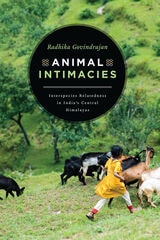
Animal Intimacies
Interspecies Relatedness in India's Central HimalayasRadhika Govindrajan
University of Chicago Press, 2018
Built on extensive ethnographic fieldwork in the mountain villages of India’s Central Himalayas, Radhika Govindrajan’s book explores the number of ways that human and animal interact to cultivate relationships as interconnected, related beings. Whether it is through the study of the affect and ethics of ritual animal sacrifice, analysis of the right-wing political project of cow-protection, or examination of villagers’ talk about bears who abduct women and have sex with them, Govindrajan illustrates that multispecies relatedness relies on both difference and ineffable affinity between animals. Animal Intimacies breaks substantial new ground in animal studies, and Govindrajan’s detailed portrait of the social, political and religious life of the region will be of interest to cultural anthropologists and scholars of South Asia as well.

Animal Minds
Donald R. Griffin
University of Chicago Press, 1992

Animal Minds
Beyond Cognition to ConsciousnessDonald R. Griffin
University of Chicago Press, 2001
With this new edition of his classic book, which he has completely revised and updated, Griffin moves beyond considerations of animal cognition to argue that scientists can and should investigate questions of animal consciousness. Using examples from studies of species ranging from chimpanzees and dolphins to birds and honeybees, he demonstrates how communication among animals can serve as a "window" into what animals think and feel, just as human speech and nonverbal communication tell us most of what we know about the thoughts and feelings of other people. Even when they don't communicate about it, animals respond with sometimes surprising versatility to new situations for which neither their genes nor their previous experiences have prepared them, and Griffin discusses what these behaviors can tell us about animal minds. He also reviews the latest research in cognitive neuroscience, which has revealed startling similarities in the neural mechanisms underlying brain functioning in both humans and other animals. Finally, in four chapters greatly expanded for this edition, Griffin considers the latest scientific research on animal consciousness, pro and con, and explores its profound philosophical and ethical implications.
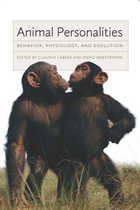
Animal Personalities
Behavior, Physiology, and EvolutionEdited by Claudio Carere and Dario Maestripieri
University of Chicago Press, 2013
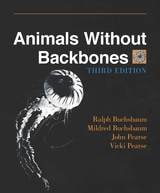
Animals Without Backbones
An Introduction to the InvertebratesRalph Buchsbaum, Mildred Buchsbaum, John Pearse, and Vicki Pearse
University of Chicago Press, 1987
This new edition has been completely rewritten and redesigned, but it retains the same clarity and careful scholarship that have earned this book its continuing readership for half a century. It is even more lavishly illustrated than earlier editions, incorporating many new drawings and photographs. Informative, concise legends that form an integral part of the text accompany the illustrations. The text has been updated to include findings from recent research. Eschewing pure morphology, the authors use each group of animals to introduce one or more biological principles.
In recent decades, courses and texts on invertebrate zoology at many universities have been available only for advanced biology majors specializing in this area. The Third Edition of Animals Without Backbones remains an ideal introduction to invertebrates for lower-level biology majors, nonmajors, students in paleontology and other related fields, junior college and advanced high school students, and the general reader who pursues the rewarding study of the natural world.
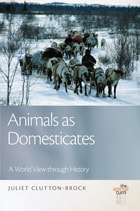
Animals as Domesticates
A World View through HistoryJuliet Clutton-Brock
Michigan State University Press, 2012
Drawing on the latest research in archaeozoology, archaeology, and molecular biology, Animals as Domesticates traces the history of the domestication of animals around the world. From the llamas of South America and the turkeys of North America, to the cattle of India and the Australian dingo, this fascinating book explores the history of the complex relationships between humans and their domestic animals. With expert insight into the biological and cultural processes of domestication, Clutton-Brock suggests how the human instinct for nurturing may have transformed relationships between predator and prey, and she explains how animals have become companions, livestock, and laborers. The changing face of domestication is traced from the spread of the earliest livestock around the Neolithic Old World through ancient Egypt, the Greek and Roman empires, South East Asia, and up to the modern industrial age.
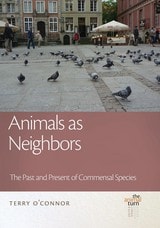
Animals as Neighbors
The Past and Present of Commensal AnimalsTerry O'Connor
Michigan State University Press, 2013
In this fascinating book, Terry O’Connor explores a distinction that is deeply ingrained in much of the language that we use in zoology, human-animal studies, and archaeology—the difference between wild and domestic. For thousands of years, humans have categorized animals in simple terms, often according to the degree of control that we have over them, and have tended to see the long story of human-animal relations as one of increasing control and management for human benefit. And yet, around the world, species have adapted to our homes, our towns, and our artificial landscapes, finding ways to gain benefit from our activities and so becoming an important part of our everyday lives. These commensal animals remind us that other species are not passive elements in the world around us but intelligent and adaptable creatures. Animals as Neighbors shows how a blend of adaptation and opportunism has enabled many species to benefit from our often destructive footprint on the world. O’Connor investigates the history of this relationship, working back through archaeological records. By requiring us to take a multifaceted view of human-animal relations, commensal animals encourage a more nuanced understanding of those relations, both today and throughout the prehistory of our species.
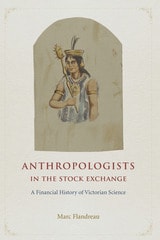
Anthropologists in the Stock Exchange
A Financial History of Victorian ScienceMarc Flandreau
University of Chicago Press, 2016
Flandreau argues that finance and science were at the heart of a new brand of imperialism born during Benjamin Disraeli’s first term as Britain’s prime minister in the 1860s. As anthropologists advocated the study of Miskito Indians or stated their views on a Jamaican rebellion, they were in fact catering to the impulses of the stock exchange—for their own benefit. In this way the very development of the field of anthropology was deeply tied to issues relevant to the financial market—from trust to corruption. Moreover, this book shows how the interplay between anthropology and finance formed the foundational structures of late nineteenth-century British imperialism and helped produce essential technologies of globalization as we know it today.
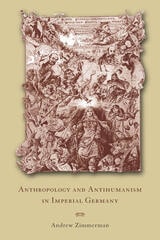
Anthropology and Antihumanism in Imperial Germany
Angela Elisabeth Zimmerman
University of Chicago Press, 2001
Drawing on sources ranging from scientific papers and government correspondence to photographs, pamphlets, and police reports of "freak shows," Zimmerman demonstrates how German imperialism opened the door to antihumanism. As Germans interacted more frequently with peoples and objects from far-flung cultures, they were forced to reevaluate not just those peoples, but also the construction of German identity itself. Anthropologists successfully argued that their discipline addressed these issues more productively—and more accessibly—than humanistic studies.
Scholars of anthropology, European and intellectual history, museum studies, the history of science, popular culture, and colonial studies will welcome this book.

Anthropology at War
World War I and the Science of Race in GermanyAndrew D. Evans
University of Chicago Press, 2010
Between 1914 and 1918, German anthropologists conducted their work in the midst of full-scale war. The discipline was relatively new in German academia when World War I broke out, and, as Andrew D. Evans reveals in this illuminating book, its development was profoundly altered by the conflict. As the war shaped the institutional, ideological, and physical environment for anthropological work, the discipline turned its back on its liberal roots and became a nationalist endeavor primarily concerned with scientific studies of race.
Combining intellectual and cultural history with the history of science, Anthropology at War examines both the origins and consequences of this shift. Evans locates its roots in the decision to allow scientists access to prisoner-of-war camps, which prompted them to focus their research on racial studies of the captives. Caught up in wartime nationalism, a new generation of anthropologists began to portray the country’s political enemies as racially different. After the war ended, the importance placed on racial conceptions and categories persisted, paving the way for the politicization of scientific inquiry in the years of the ascendancy of National Socialism.

Antidesma in Malesia and Thailand
Petra Hoffmann
Royal Botanic Gardens, Kew, 2005

Antipredator Defenses in Birds and Mammals
Tim Caro
University of Chicago Press, 2005
In Antipredator Defenses in Birds and Mammals, Tim Caro ambitiously synthesizes predator defenses in birds and mammals and integrates all functional and evolutionary perspectives on antipredator defenses that have developed over the last century. Structured chronologically along a hypothetical sequence of predation—Caro evokes a gazelle fawn desperate to survive a cheetah attack to illustrate the continuum of the evolution of antipredator defenses—Antipredator Defenses in Birds and Mammals considers the defenses that prey use to avoid detection by predators; the benefits of living in groups; morphological and behavioral defenses in individuals and groups; and, finally, flight and adaptations of last resort.
Antipredator Defenses in Birds and Mammals will be of interest to both specialists and general readers interested in ecological issues.

Apes on the Edge
Chimpanzee Life on the West African SavannaJill Pruetz
University of Chicago Press, 2025
Fongoli chimpanzees are unique for many reasons. Their female hunters are the only apes that regularly hunt with tools, seeking out tiny bush babies with wooden spears. Unlike most other chimps, these apes fear neither water nor fire, using shallow pools to cool off in the Senegalese heat. Up to 90 percent of their home range burns annually—the result of human hunting or clearing for gold mining—and Fongoli chimpanzees have learned to predict the movement of such fires and to avoid them.
The study of Fongoli chimps is also unique. While most primate research occurs in isolated reserves, Fongoli chimpanzees live alongside humans, and as primatologist and anthropologist Jill Pruetz reports, this shared habitat creates both challenges and opportunities. The issues faced by Fongoli chimpanzees—particularly food scarcity and environmental degradation—are also issues faced by their human neighbors. This connection is one reason Pruetz, who has studied Fongoli apes for over two decades, created the nonprofit Neighbor Ape in 2008 to provide for the welfare of the humans who share their landscape with apes. It is also why Pruetz decided to write this book, the first to offer readers a view of these chimps’ lives and to explain the specific conservation efforts needed to help them. Incorporating stories from Pruetz’s time in the field, including the compelling rescue of a young chimp from poachers, Apes on the Edge opens a fascinating window into primate research, conservation, and the inner workings of a very special population of our closest nonhuman relatives.

Apes on the Edge
Chimpanzee Life on the West African SavannaJill Pruetz
University of Chicago Press, 2025
A moving story of survival and an eye-opening introduction to an extraordinary community of chimps and people.
Fongoli chimpanzees are unique for many reasons. Their female hunters are the only apes that regularly hunt with tools, seeking out tiny bush babies with wooden spears. Unlike most other chimps, these apes fear neither water nor fire, using shallow pools to cool off in the Senegalese heat. Up to 90 percent of their home range burns annually—the result of human hunting or clearing for gold mining—and Fongoli chimpanzees have learned to predict the movement of such fires and to avoid them.
The study of Fongoli chimps is also unique. While most primate research occurs in isolated reserves, Fongoli chimpanzees live alongside humans, and as primatologist and anthropologist Jill Pruetz reports, this shared habitat creates both challenges and opportunities. The issues faced by Fongoli chimpanzees—particularly food scarcity and environmental degradation—are also issues faced by their human neighbors. This connection is one reason Pruetz, who has studied Fongoli apes for over two decades, created the nonprofit Neighbor Ape in 2008 to provide for the welfare of the humans who share their landscape with apes. It is also why Pruetz decided to write this book, the first to offer readers a view of these chimps’ lives and to explain the specific conservation efforts needed to help them. Incorporating stories from Pruetz’s time in the field, including the compelling rescue of a young chimp from poachers, Apes on the Edge opens a fascinating window into primate research, conservation, and the inner workings of a very special population of our closest nonhuman relatives.

Apocalyptic Anxiety
Religion, Science, and America's Obsession with the End of the WorldAnthony Aveni
University Press of Colorado, 2016
The book begins with the Millerites, the nineteenth-century religious sect of Pastor William Miller, who used biblical calculations to predict October 22, 1844 as the date for the Second Advent of Christ. Aveni also examines several other religious and philosophical movements that have centered on apocalyptic themes—Christian millennialism, the New Age movement and the Age of Aquarius, and various other nineteenth- and early twentieth-century religious sects, concluding with a focus on the Maya mystery of 2012 and the contemporary prophets who connected the end of the world as we know it with the overturning of the Maya calendar.
Apocalyptic Anxiety places these seemingly never-ending stories of the world’s end in the context of American history. This fascinating exploration of the deep historical and cultural roots of America’s voracious appetite for apocalypse will appeal to students of American history and the histories of religion and science, as well as lay readers interested in American culture and doomsday prophecies.

Appetite and Its Discontents
Science, Medicine, and the Urge to Eat, 1750-1950Elizabeth A. Williams
University of Chicago Press, 2020
Williams charts the history of inquiry into appetite between 1750 and 1950, as scientific and medical concepts of appetite shifted alongside developments in physiology, natural history, psychology, and ethology. She shows how, in the eighteenth century, trust in appetite was undermined when researchers who investigated ingestion and digestion began claiming that science alone could say which ways of eating were healthy and which were not. She goes on to trace nineteenth- and twentieth-century conflicts over the nature of appetite between mechanists and vitalists, experimentalists and bedside physicians, and localists and holists, illuminating struggles that have never been resolved. By exploring the core disciplines in investigations in appetite and eating, Williams reframes the way we think about food, nutrition, and the nature of health itself..

Applications of Deep Learning in Electromagnetics
Teaching Maxwell's equations to machinesMaokun Li
The Institution of Engineering and Technology, 2022

Apun
The Arctic SnowMatthew Sturm
University of Alaska Press, 2009
There are some twenty-five words for “snow” in the Inupiaq language. Each word denotes a different kind of snow—fresh powder snow, hard pack, soft snow, very wet snow, or just snow. Such fine distinction is reasonable, for over the centuries, Natives of the Arctic have had to rely on their knowledge of the snow to survive. Now Matthew Sturm has prepared an educational children’s book designed to teach a new generation of Arctic residents the importance of Arctic snow cover. Fully illustrated to demonstrate the cycle of the snow cover, Apun covers each phase of the “snow year.” Geared towards grades 3–4, this is a must read for elementary science classes.
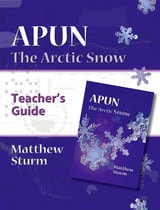
Apun
The Arctic Snow (A Teacher's Guide)Matthew Sturm
University of Alaska Press, 2009
There are some twenty-five words for “snow” in the Inupiaq language. Each word denotes a different kind of snow—fresh powder snow, hard pack, soft snow, very wet snow, or just snow. Such fine distinction is reasonable, for over the centuries, Natives of the Arctic have had to rely on their knowledge of the snow to survive. Now Matthew Sturm has prepared an educational children’s book designed to teach a new generation of Arctic residents the importance of Arctic snow cover. Fully illustrated to demonstrate the cycle of the snow cover, Apun covers each phase of the “snow year.” Geared towards grades 3–4, this is a must read for elementary science classes.
Aquatic and Wetland Plants of Northeastern North America
Garrett E. Crow and C. Barre Hellquist
University of Wisconsin Press, 2023
This is by far the best and most comprehensive manual and illustrated guide to native and naturalized vascular plants—ferns, conifers, and flowering plants—growing in aquatic and wetland habitats in northeastern North America, from Newfoundland west to Minnesota and south to Virginia and Missouri. Published in two volumes, this long-awaited work completely revises and greatly expands Norman Fassett’s 1940 classic A Manual of Aquatic Plants, yet retains the features that made Fassett’s book so useful.
Features include:
* coverage of 1139 plant species, 1186 taxa, 295 genera, 109 families
* more than 600 pages of illustrations, and illustrations for more than 90% of the taxa
* keys for each species include references to corresponding illustrations
* habitat information, geographical ranges, and synonomy
* a chapter on nuisance aquatic weeds
* glossaries of botanical and habitat terms
* a full index for each volume
Wetland ecologists, botanists, resource managers, public naturalists, and environmentalists concerned with the preservation of wetland areas, which are increasingly threatened, will welcome this clear, workable, and comprehensive guide.
Aquatic and Wetland Plants of Northeastern North America, Volume I
A Revised and Enlarged Edition of Norman C. Fassett's A Manual of Aquatic Plants, Volume I: Pteridphytes, Gymnosperms, and Angiosperms: DicotyledonsGarrett E. Crow and C. Barre Hellquist
University of Wisconsin Press, 2000
This is by far the best and most comprehensive manual and illustrated guide to native and naturalized vascular plants—ferns, conifers, and flowering plants—growing in aquatic and wetland habitats in northeastern North America, from Newfoundland west to Minnesota and south to Virginia and Missouri. Published in two volumes, this long-awaited work completely revises and greatly expands Norman Fassett’s 1940 classic A Manual of Aquatic Plants, yet retains the features that made Fassett’s book so useful.
Features include:
* coverage of 1139 plant species, 1186 taxa, 295 genera, 109 families
* more than 600 pages of illustrations, and illustrations for more than 90% of the taxa
* keys for each species include references to corresponding illustrations
* habitat information, geographical ranges, and synonomy
* a chapter on nuisance aquatic weeds
* glossaries of botanical and habitat terms
* a full index for each volume
Wetland ecologists, botanists, resource managers, public naturalists, and environmentalists concerned with the preservation of wetland areas, which are increasingly threatened, will welcome this clear, workable, and comprehensive guide.
Aquatic and Wetland Plants of Northeastern North America, Volume II
A Revised and Enlarged Edition of Norman C. Fassett's A Manual of Aquatic Plants, Volume II: Angiosperms: MonocotyledonsGarrett E. Crow and C. Barre Hellquist
University of Wisconsin Press, 2000
This is by far the best and most comprehensive manual and illustrated guide to native and naturalized vascular plants—ferns, conifers, and flowering plants—growing in aquatic and wetland habitats in northeastern North America, from Newfoundland west to Minnesota and south to Virginia and Missouri. Published in two volumes, this long-awaited work completely revises and greatly expands Norman Fassett’s 1940 classic A Manual of Aquatic Plants, yet retains the features that made Fassett’s book so useful.
Features include:
* coverage of 1139 plant species, 1186 taxa, 295 genera, 109 families
* more than 600 pages of illustrations, and illustrations for more than 90% of the taxa
* keys for each species include references to corresponding illustrations
* habitat information, geographical ranges, and synonomy
* a chapter on nuisance aquatic weeds
* glossaries of botanical and habitat terms
* a full index for each volume
Wetland ecologists, botanists, resource managers, public naturalists, and environmentalists concerned with the preservation of wetland areas, which are increasingly threatened, will welcome this clear, workable, and comprehensive guide.
Archaeological Landscapes on the High Plains
Laura L. Scheiber
University Press of Colorado, 2008
Focusing on long-term change, this book considers ethnographic literature, archaeological evidence, and environmental data spanning thousands of years of human presence to understand human perception and construction of landscape. The contributors offer cohesive and synthetic studies emphasizing hunter-gatherers and subsistence farmers.
Using landscape as both reality and metaphor, Archaeological Landscapes on the High Plains explores the different and changing ways that people interacted with place in this transitional zone between the Rocky Mountains and the eastern prairies.
The contemporary archaeologists working in this small area have chosen diverse approaches to understand the past and its relationship to the present. Through these ten case studies, this variety is highlighted but leads to a common theme - that the High Plains contains important locales to which people, over generations or millennia, return. Providing both data and theory on a region that has not previously received much attention from archaeologists, especially compared with other regions in North America, this volume is a welcome addition to the literature. Contributors:
o Paul Burnett
o Oskar Burger
o Minette C. Church
o Philip Duke
o Kevin Gilmore
o Eileen Johnson
o Mark D. Mitchell
o Michael R. Peterson
o Lawrence Todd
Archaeologies of Touch
Interfacing with Haptics from Electricity to ComputingDavid Parisi
University of Minnesota Press, 2018
A material history of haptics technology that raises new questions about the relationship between touch and media
Since the rise of radio and television, we have lived in an era defined increasingly by the electronic circulation of images and sounds. But the flood of new computing technologies known as haptic interfaces—which use electricity, vibration, and force feedback to stimulate the sense of touch—offering an alternative way of mediating and experiencing reality.
In Archaeologies of Touch, David Parisi offers the first full history of these increasingly vital technologies, showing how the efforts of scientists and engineers over the past three hundred years have gradually remade and redefined our sense of touch. Through lively analyses of electrical machines, videogames, sex toys, sensory substitution systems, robotics, and human–computer interfaces, Parisi shows how the materiality of touch technologies has been shaped by attempts to transform humans into more efficient processors of information.
With haptics becoming ever more central to emerging virtual-reality platforms (immersive bodysuits loaded with touch-stimulating actuators), wearable computers (haptic messaging systems like the Apple Watch’s Taptic Engine), and smartphones (vibrations that emulate the feel of buttons and onscreen objects), Archaeologies of Touch offers a timely and provocative engagement with the long history of touch technology that helps us confront and question the power relations underpinning the project of giving touch its own set of technical media.
Archeology and Volcanism in Central America
The Zapotitán Valley of El SalvadorEdited by Payson D. Sheets
University of Texas Press, 1983
Scientists have long speculated on the impact of extreme natural catastrophes on human societies. Archeology and Volcanism in Central America provides dramatic evidence of the effects of several volcanic disasters on a major civilization of the Western Hemisphere, that of the Maya.
During the past 2,000 years, four volcanic eruptions have taken place in the Zapotitán Valley of southern El Salvador. One, the devastating eruption of Ilopango around A.D. 300, forced a major migration, pushing the Mayan people north to the Yucatán Peninsula. Although later eruptions did not have long-range implications for cultural change, one of the subsequent eruptions preserved the Cerén site—a Mesoamerican Pompeii where the bodies of the villagers, the palm-thatched roofs of their houses, the pots of food in their pantries, even the corn plants in their fields were preserved with remarkable fidelity.
Throughout 1978, a multidisciplinary team of anthropologists, archeologists, geologists, biologists, and others sponsored by the University of Colorado's Protoclassic Project researched and excavated the results of volcanism in the Zapotitan Valley—a key Mesoamerican site that contemporary political strife has since rendered inaccessible.
The result is an outstanding contribution to our understanding of the impact of volcanic eruptions on early Mayan civilization. These investigations clearly demonstrate that the Maya inhabited this volcanically hazardous valley in order to reap the short-term benefits that the volcanic ash produced—fertile soil, fine clays, and obsidian deposits.
Archetypes and Ancestors
Palaeontology in Victorian London, 1850-1875Adrian Desmond
University of Chicago Press, 1982
"A sophisticated study of the colonization of scientific territory—specifically of rival attempts to design the dinosaur—and of the constructive (not just obstructive) role of social pressures in the making of 'lasting contributions' to science. Not least it is a joy to read, perkily irreverent at times and full of nice vignettes and memorable turns of phrase."—Roy Porter, Times Higher Education Supplement

Archimedes and the Roman Imagination
Mary Jaeger
University of Michigan Press, 2013
The great mathematician Archimedes, a Sicilian Greek whose machines defended Syracuse against the Romans during the Second Punic War, was killed by a Roman after the city fell, yet it is largely Roman sources, and Greek texts aimed at Roman audiences, that preserve the stories about him. Archimedes' story, Mary Jaeger argues, thus becomes a locus where writers explore the intersection of Greek and Roman culture, and as such it plays an important role in Roman self-definition. Jaeger uses the biography of Archimedes as a hermeneutic tool, providing insight into the construction of the traditional historical narrative about the Roman conquest of the Greek world and the Greek cultural invasion of Rome.
By breaking down the narrative of Archimedes' life and examining how the various anecdotes that comprise it are embedded in their contexts, the book offers fresh readings of passages from both well-known and less-studied authors, including Polybius, Cicero, Livy, Vitruvius, Plutarch, Silius Italicus, Valerius Maximus, Johannes Tzetzes, and Petrarch.
---Helen King, Times Literary Supplement
"An absolutely wonderful book on a truly original and important topic. As Jaeger explores neglected texts that together tell an important story about the Romans' views of empire and their relationship to Greek cultural accomplishments, so she has written an important new chapter in the history of science. A genuine pleasure to read, from first page to last."
---Andrew Feldherr, Associate Professor of Classics, Princeton University
"This elegantly written and convincingly argued project analyzes Archimedes as a vehicle for reception of the Classics, as a figure for loss and recovery of cultural memory, and as a metaphorical representation of the development of Roman identity. Jaeger's fastening on the still relatively obscure figure of the greatest ancient mathematician as a way of understanding cultural liminality in the ancient world is nothing short of a stroke of genius."
---Christina S. Kraus, Professor and Chair of Classics, Yale University
"Archimedes and the Roman Imagination forms a useful addition to our understanding of Roman culture as well as of the reception of science in antiquity. It will make a genuine contribution to the discipline, not only in terms of its original interpretative claims but also as a fascinating example of how we may follow the cultural reception of historical figures."
---Reviel Netz, Professor of Classics, Stanford University
Cover art: Benjamin West. Cicero Discovering the Tomb of Archimedes. Yale University Art Gallery. John Hill Morgan, B.A. 1893, LL.B. 1898, M.A. (Hon.) 1929, Fund.

Architexts of Memory
Literature, Science, and AutobiographyEvelyne Ender
University of Michigan Press, 2005
"An important, cogently argued, subtle and rich study of a topic of great interest."
--Mieke Bal, University of Amsterdam
"A work of literary studies positioned at the intersection of tradition and innovation. Evelyne Ender's book brings fashionable cultural concerns to bear on traditional literary texts-her superb pedagogical skills lure and guide the reader through the most difficult psychoanalytical concepts."
--Nelly Furman, Cornell University
Evelyne Ender is Professor of French Studies, University of Washington. She is the author of Sexing the Mind: Nineteenth-Century Fictions of Hysteria.
Archives of the Anthropocene
Visual Grammars of Deep TimeYuriko Furuhata
Duke University Press, 2026
Arcticness
Power and Voice from the NorthIlan Kelman
University College London, 2017
Arid Lands in Perspective
Edited by William G. McGinnies and Bram J. Goldman
University of Arizona Press, 1969
Contributors:
Michel Batisse
William A. Dick-Peddie
Carl N. Hodges
Richard F. Logan
Roy E. Cameron
Clifford S. Christian
Klaus W. Flach
Ronald L. Heathcote
Douglas H. K. Lee
Lawrence K. Lustig
William G. McGinnies
Peveril Meigs
James T. Neal
Daniel A. Okun
Harland I. Padfield
Patricia Paylore
Rayden A. Perry
Roald A. Peterson
Robert L. Raikes
Courtland L. Smith
Guy D. Smith
Andrew Warren
John C. York
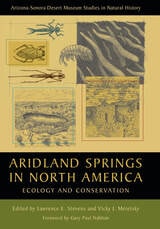
Aridland Springs in North America
Ecology and ConservationEdited by Lawrence E. Stevens and Vicky J. Meretsky; Foreword by Gary Paul Nabhan
University of Arizona Press, 2008
Aridland Springs in North America offers a much-needed comprehensive synthesis of aridland springs ecology. Stevens and Meretsky have assembled chapters from numerous and diverse experts from the fields of geology, hydrology, geomorphology, water quality, ecosystem dynamics, water law, and conservation biology. Through analyses and case studies, these contributors provide an in-depth overview of these topics and address issues critical for improving the knowledge and conservation of springs. This volume goes beyond examining the ecological importance of aridland springs to provide practical and productive ideas for their preservation. The authors facilitate future research by cultivating a language with which to collectively describe and study springs ecosystems, creating the beginnings of a comprehensive springs classification system. This book could not be more timely, as groundwater depletion throughout the continent is rapidly decimating these vital sources of life.
CONTENTS
Prologue
Gary P. Nabhan
1 Springs Ecosystem Ecology And Conservation
Lawrence E. Stevens And Vicky J. Meretsky
2 The Demise Of Desert Springs
Peter J. Unmack And W. L. Minckley*
3 The Hydrology Of Desert Springs In North America
David K. Kreamer And Abe Springer
4 A Comprehensive Springs Classification System: Integrating Geomorphic, Hydrogeochemical, And Ecological Criteria
Abraham E. Springer, Lawrence E. Stevens, Diana E. Anderson, Roderic A. Parnell1, David K. Kreamer, Lisa Levin, And Stephen P. Flora1
5 Quaternary Cauldron Springs As Paleoecological Archives
C. Vance Haynes Jr.
6 The Extreme Environment, Trophic Structure, And Ecosystem Dynamics Of A Large Fishless Desert Spring: Montezuma Well, Arizona
Dean W. Blinn
7 Combining Ecological Research And Conservation: A Case Study In Cuatro Ciénegas, Coahuila, México
Dean A. Hendrickson, Jane C. Marks, Angie Moline, Eric Dinger, Adam Cohen
8 The Desert Fan Palm Oasis
James W. Cornett
9 Spring-Supported Vegetation Along The Colorado River, Colorado Plateau: Floristics, Vegetation Structure And Environment
John R. Spence
10 Mechanisms Of Change In Seep/Spring Plant Communities On The Southern Colorado Plateau
Vicky J. Meretsky
11 Biodiversity And Productivity At An Undisturbed Spring In Comparison With Adjacent Grazed Riparian And Upland Habitats
Bianca S. Perla And Lawrence E. Stevens
12 Plant Diversity Influenced By Indigenous Management Of Freshwater Springs: Flora Of Quitovac, Sonora, Mexico
Gary Paul Nabhan
13 Historic And Prehistoric Ethnobiology Of Desert Springs
Amadeo M. Rea
14 Vegetation Dynamics Of Great Basin Springs: Potential Effects Of Groundwater Withdrawal
Duncan Patten, Leigh Rouse, Juliet Stromberg
15 The Knowles Canyon Hanging Garden, Glen Canyon National Recreation Area, Eight Years After Burning: Changes In Vegetation And Soil Biota
Tim B. Graham
16 Between The Cracks: Water Law And Spring Conservation In Arizona
Nancy Nelson
17 Ep

Arikara Agriculture
Mother Corn’s Gift to the Sahnish PeopleArikara Agriculture Project; With collaborators Kelly Kindscher, Loren Yellow Bird, Michael Yellow Bird, Logan Sutton, Loren White, and Lisa Castle
University of Arizona Press, 2027
Drawing on a remarkable combination of early twentieth-century field notes, archaeological evidence, historical accounts, and the voices of Arikara collaborators, Arikara Agriculture: Mother Corn’s Gift to the Sahnish People offers a richly layered account of one of the Plains’ most accomplished agricultural societies.
Living along the Missouri River in present-day North and South Dakota, the Sahnish (Arikara) people cultivated expansive fields of corn, beans, squash, sunflowers, and other crops, sustaining vibrant communities and extensive trade networks. At the heart of this remarkable book are the invaluable records of ethnobotanist Melvin Gilmore, who documented the knowledge of Arikara elders between 1916 and 1924, capturing a lifeway on the cusp of profound change.
More than a historical study, this volume foregrounds the cultural, spiritual, and ecological significance of agriculture in Sahnish life. The contributors discuss how corn was the center of the Arikaras’ world and how it, and other agricultural crops, were important not just as food but also for the culture. The book illuminates traditional horticultural methods, food preparation techniques, and the enduring relevance of these practices today.
Both a vital contribution to ethnobiology and a community-centered preservation of knowledge, this work speaks to ongoing conversations about Indigenous foodways, resilience, and the revitalization of traditional ecological knowledge.